Category: Mexico

  • The impossible miracle of Biblioteca Vasconcelos

    Anyone who has moved boxes of books around knows how heavy they are. To have 600,000 volumes suspended in space is close to a miracle! Biblioteca Vasconcelos in Mexico City achieves this remarkable feat, extending the creative practice of Mexico City architecture by floating its stacks in the air. This unique architectural marvel not only serves as a library but also as a cultural hub, attracting visitors who are eager to experience its stunning design.
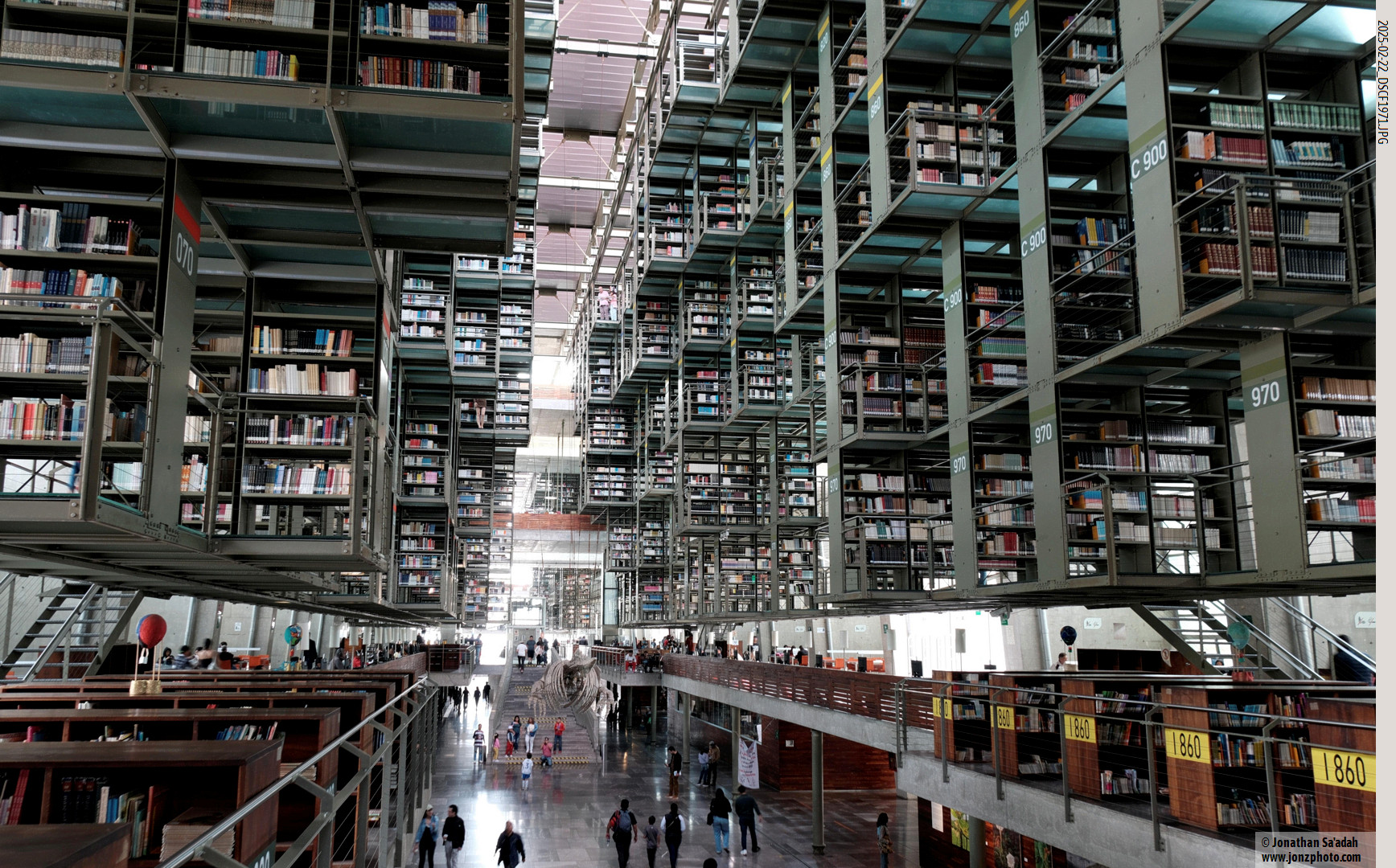
    Biblioteca Vasconcelos Mexico City Architecture at its best!
    Architect Alberto Kalach made a significant contribution to Mexico City architecture with his daring design – suspending the stacks from the ceiling of the building.

    The architectural design of Biblioteca Vasconcelos is an example of modern creative ingenuity. The building’s side windows allow natural light to flood the interior, creating a serene reading environment that inspires contemplation and study. The stacks, suspended from the ceiling, give the impression of books floating in mid-air, challenging conventional library design and offering a visually striking experience. This innovative concept encourages visitors to engage with the space in a more dynamic way, as they navigate through the airy layout.

    I’ve always photographed in libraries. I enjoy books and the spaces designed for their use. This time there was a problem though. A woman in a semi-official uniform approached me, informing me in Spanish that photography was not allowed. To be honest, it seemed quite permitted, given the number of people snapping pictures on their phones. Unfortunately, a “Real Camera” is viewed differently. There was a loophole: I could apply for a permit at a specific office, allowing me to capture the stunning Mexico City architecture within. I was determined to document this unique space, since to me its beauty and functionality was worth sharing with a wider audience.

    As I filled out the form for the photography permit, I couldn’t help but admire the intricate details of the library’s design. The open spaces were filled with the soft sounds of pages turning and quiet whispers. The atmosphere felt filled warmed by the shared love of literature, making it an inspiring environment for both photographers and bibliophiles alike!

    The office I had been directed to was in the back of the library. I faced another woman, this one sitting at a crowded L-shaped desk near one of the doors that opened out onto the gardens. I asked if I could take pictures and was given a form to fill out. That, coupled with a Quebec driver’s license, and soon I received a plastic tag on a lanyard which gave me Official Status. Hooray, okay to use a camera!
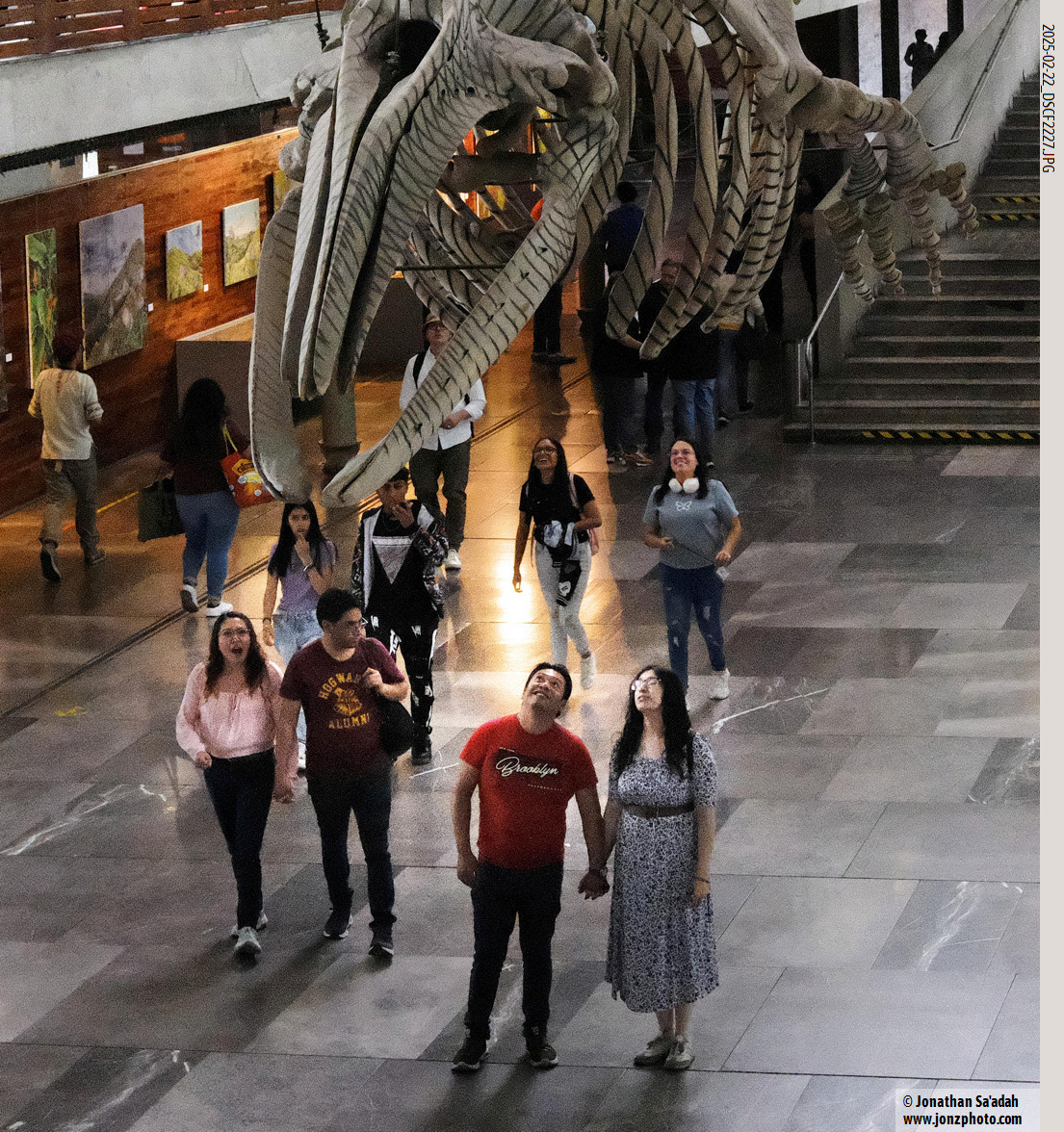
    Visitors reacting to the reworked white whale skeleton by Mexican-born artist Gabriel Orozco at Biblioteca Vasconcelos.
    Visitors reacting to the reworked white whale skeleton by Mexican-born artist Gabriel Orozco, which adds a unique artistic element to the library’s ambiance.

    Mexico City’s Biblioteca Vasconcelos is such an unusual space – one can see the surprise and glee on the faces of people entering for the first time. Any resident can use the library, and many people do. The manner in which the stacks are suspended in mid-air creates a faceted and irregular space, playing with light and transparency. It’s a brilliantly imaginative way to design a library, and brave too in a city prone to powerful earthquakes. The library not only serves its primary purpose but also acts as a community gathering space, hosting events, workshops, and exhibitions that engage the public and foster a love for reading and learning. I don’t know if perhaps a part of what I was sensing was the public pride in the hard-fought win to break away from the book-banning controls of the Catholic Church – but it seems possible that this space embodies some of that pride too.

    The library opened in May of 2006, designed by the architect Alberto Kalach and built next to the old Buenavista railway station, north of the city center. Housing a collection of 600,000 books (using the Dewey Decimal System!), it also features the hanging skeleton of a large gray whale decorated by the artist Gabriel Orozco called “Matrix Móvil”. I saw a retrospective of Orozco’s work in the Museo Jumex (March, 2025) which I’ll describe in a later post. The whale creation is well traveled, having been shown at the Museum of Modern Art in New York in 2009.

    Biblioteca Vasconcelos stands as a beacon of modern architecture and culture in Mexico City. Its unique design honors the communities, reading public, artists, and scholars that use it. The library exemplifies how architecture can inspire a love for literature and create a sense of belonging among its visitors. Whether you are an avid reader, a photography enthusiast, or simply curious about innovative design, a visit to Biblioteca Vasconcelos is sure to leave a lasting impression. If you are in Mexico City it’s a must. It’s a short Metrobus ride north of the city center, and there’s a metro stop (Buenavista) nearby. The combination of literature, art, and innovative design makes Biblioteca Vasconcelos an essential stop for anyone visiting the city.

  • In search of Auxilio Lacouture

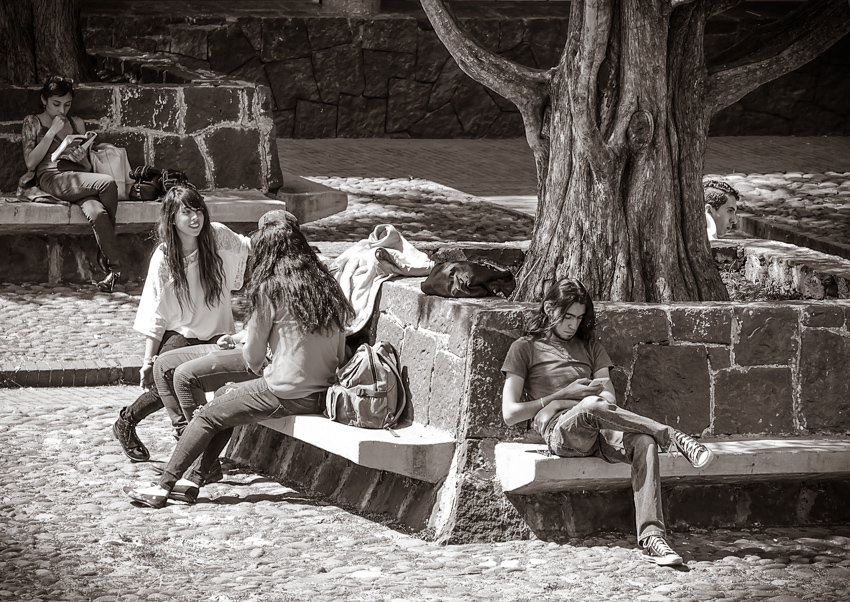
    Students reading and talking  In the southern part of Mexico City, the Universidad Nacional Autónoma de México (UNAM) is a 425,000 student campus with many departments. Its graduates form a backbone of recent Mexican history. The current campus replaced a metropolitan location in the 1950s, but the school traces its lineage back to 1551.

    I’m not as big a recreational reader as I’d like to be. I’m not that fast a reader and I feel like after I’ve waded through all the web and print articles and news reports I’m interested in there isn’t a lot of extra time left over. But before going to Mexico City I set a goal of reading several books about the city and Mexico, and one of them was Savage Detectives by Roberto Bolaño. I have a hard time understanding why this book isn’t generally known and acknowledged to be one of the great novels of the 20th century. Bolaño, a Chilean who lived mostly in Mexico City and Barcelona, was an enfant terrible of the literary world and a complicated, evocative writer. I haven’t read his masterpiece 2666 yet, but I’m looking forward to it.

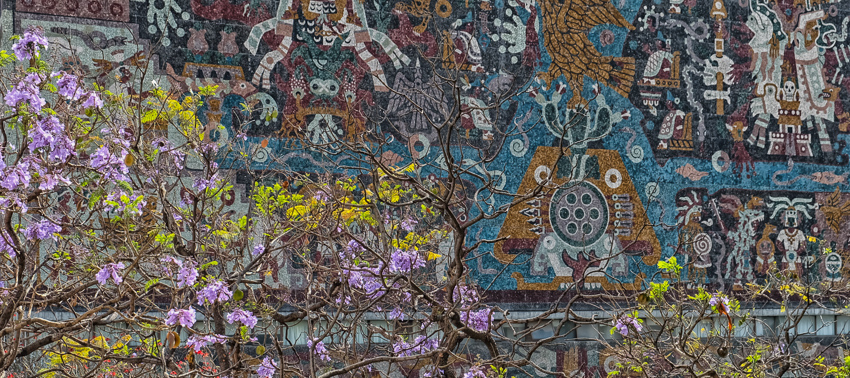
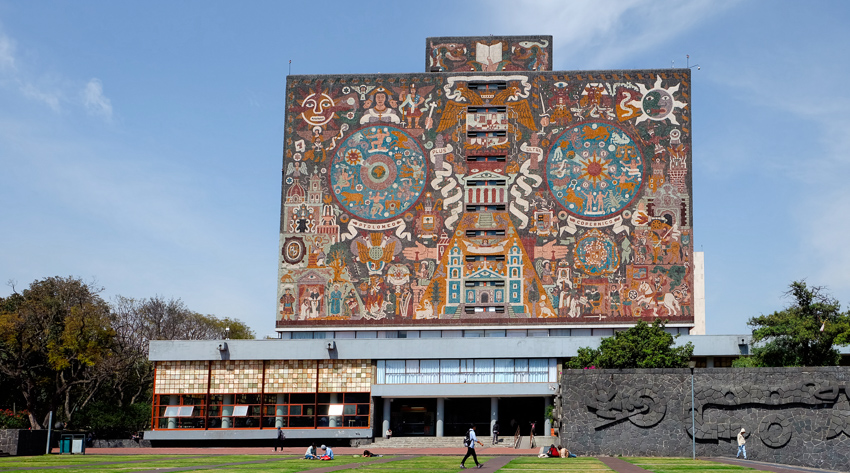
    The outside surfaces of the university library are covered with a wrap-around mural by Juan O’Gorman depicting different periods of Mexican history. The generally huge scale of the campus is home to other building-sized murals.

    Savage Detectives is mostly set in Mexico City and strings together a story of a group of young scruffy Mexican poets searching for a woman (Cesárea Tinajero) who had disappeared from the city several decades before. They considered her to be the mother of Visceral Realism, their faction of the Mexican poetry world. In a complex weave the story line touches many subplots, and one of them involves a character who is a Uruguayan female poet and teacher named Auxilio Lacouture.

    Auxilio Lacouture taught at the Universidad Nacional Autónoma de México (UNAM) for several years. According to her own narrative, she was not quite sure what those years were, but one event fixes her as being there in 1968. That event was the Mexican army and riot police killing an unknown number of students in Tlatelolco, a section of Mexico City. A sadly familiar story having a contemporary ring.

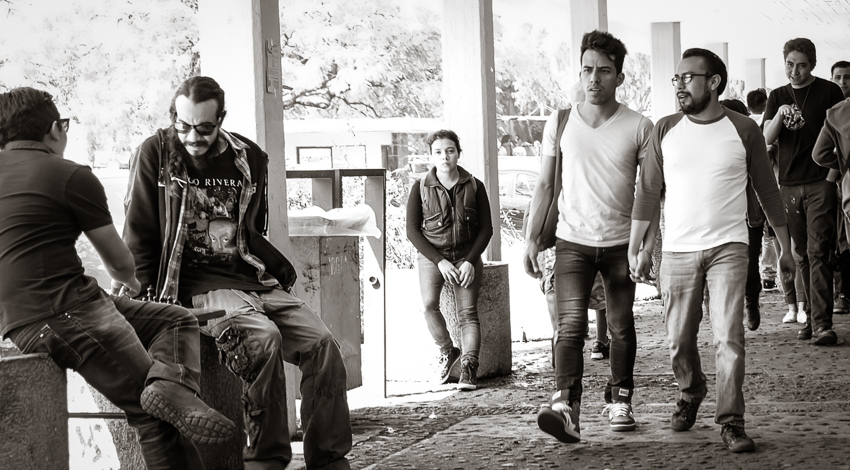
    UNAM students on lunch break.

    Subsequently, the Army occupied UNAM.

    Auxilio Lacouture had the distinction of spending thirteen days in September of 1968 shut up in the women’s bathroom on the fourth floor of the Faculty of Philosophy and Literature as a protest against the Army’s occupation of the campus. She had been reading a book of poetry of Pedro Garfías in a toilet stall and simply stayed there undiscovered – alone and stubborn – standing up (or sitting down!) against tanks and militarism until they left thirteen days later.

    I thought it would be interesting to go to UNAM and see if I could find the her fourth floor perch. I was also interested because our friend, Magda, had gone to Medical School there and I wanted to see where she had spent that time.

    A more conventional look at the unconventional exterior of the central university library. The mural wraps around all four sides.

    UNAM is a huge campus – there are almost 400,000 students. To be a student there involves a lot of competition and carries prestige. UNAM reflects both a tradition of academic freedom and social activism that seems part of Mexico.

    The feeling on campus was not especially comfortable for me. It was obvious that I was an outsider, as well as being several decades older than almost everyone we saw.

    We tracked down the building and floor that Auxilio had been in. A narrow staircase led to the fourth floor. A small – almost claustrophobic – hallway formed a central corridor with many closed wooden doors. The interesting fact was that no one save one student had heard of Roberto Bolaño, and on the subject of Auxilio Lacouture – a complete blank. We found a locked women’s bathroom, but the closest we got to Auxilio’s memory were raised eyebrows as an adult staff member and secretary Googled her. A picture of me outside the bathroom was on the phone stolen later in the day on the Metrobus. It really doesn’t matter to me that Auxilio Lacouture never actually existed. She was fashioned after a real person who was at UNAM (Alcira Soust Scaffo), herself a Uruguayan poet. Considering the position of both Bolaño as a writer and Savages as a book, there should have been no hesitation recognizing him as a writer and Lacouture as a character …

    I’m not sure what all of this says. A friend in Montreal who is from South America said it’s typical in Columbia, where she grew up, for the government to eradicate memory. This may be an example of that same phenomena in Mexico.

    Sometimes, I have to admit, I feel the same way about the 1960s here.


  • Eating camel

    I probably have the distinction of being the only member of my family ever to have eaten camel. Or is it the shame? My father was so shocked when I told him what I had done that his normally eloquent vocabulary left him stammering. I think he was, in reality, half-horrified and half-amused.

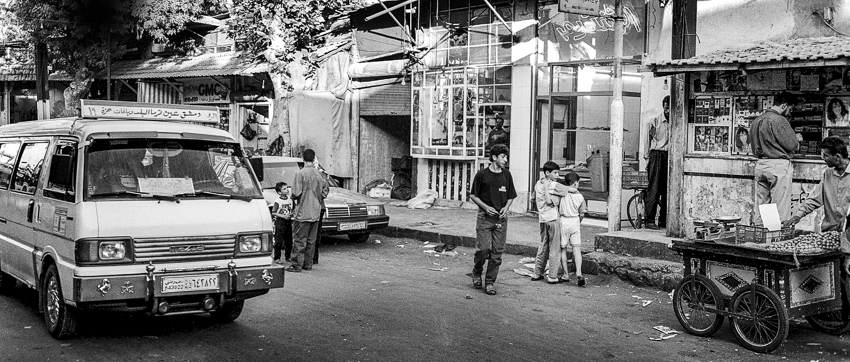
    Camel meat restaurant in centre with vertical windows. The street vendor on the far right is selling fresh almonds. Al Malek Faisal Street, Damascus, 2000.

    There was a comment in the last thread about how different my experiences seem. I’ve always enjoyed a kind of rough-and-tumble form of travel, which is how I ended up in the camel restaurant. But in a larger and more general sense I’ve been wondering if I gloss over the negative sides of places too much – Montreal and Mexico City, for example.

    I’ve also been thinking how I could, just as easily, take my photographs from Mexico City and paint a rather dismal picture of the place – make it into a place that no sane person would want to travel to.

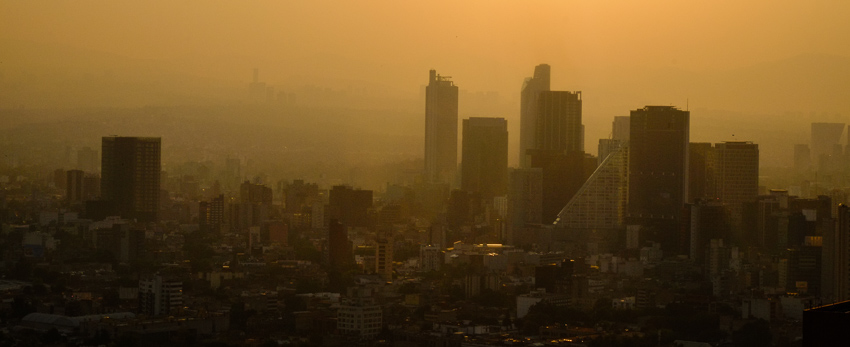
    Is this the sort of thing you want to breathe? Afternoon in Mexico City…  This hurts both the eyes and the lungs. According to WHO statistics, Mexico has the dubious distinction of placing four cities in the top 35 pollution rankings worldwide. Mexico City ranks 23rd. Above it are Torino (12), Milano (16), Beirut (18), Athens (20) and just below Paris (28). Full rankings here, based on 2009 data. View from Torre Latinoamericano late in the day, March 2016.

    Do you see what I mean? And that’s not all, by any means … there’s plenty that I have photographed – and could show – to back up an argument about the badnesses and injustices in Mexico, or Montreal, or even Vermont.

    It’s a requirement in journalistic photography that you’re supposed to be honest about what’s shown, but the warp lies in what’s not shown (or talked about). I certainly am showing what I like about Mexico, but I also have plenty of negative opinions (and photos to support them), and not limited to Mexico.

    I do think, however, that it’s important to see both sides of a coin. Is that glossing over? Yes, I think it is sometimes. But I think it’s also useful to talk in different terms, especially about a place that gets editorially stomped on. I said in an early post, before going there, that I wanted to present a positive view, since so much of what’s published is negative.

    On our last day in Mexico I was speaking to a young Mexican man who was working behind the desk in our hotel. He was young and hip-city-relaxed, with spiky black hair and lime-green framed glasses. He and I had just settled up the bill so he knew we had been there for a relatively long period of time and he wanted to know why. It’s not a hotel frequented by North Americans – most of the people who stay there come up from the South instead. In an abbreviated answer I said we liked the hotel and the neighborhood. He response was that most North Americans – by which I assume he meant Americans – complain about staying there because they don’t want to stay in a “ghetto”.

    Well, if that’s a “ghetto”, then I guess I’m really out to lunch. But I don’t think I am. It’s a relatively affluent upper class neighborhood, nothing like the rich ones but nothing like the poor ones either.

    I’ve always liked living in these in-between neighborhoods. In Montreal we live in a pretty swanky part of town – The Plateau – but under the caché it too has its rough edges (though nothing like the other places).

    I hope I won’t avoid politics, the environment, and social issues on this blog. But most of the time I’d rather not go at them head-on. There is a lot to talk about, in Canada as well as in Mexico.  I’m not blind about this, but personally I get tired of feeling inundated by other points of view. I know that mine seep out, and whether you agree or disagree, I hope most of all that you will feel welcome here (and able to say what you think). That’s the way I’d like it to be, and it’s a roundabout answer in my general approach to this blog. I hope it comes through, because it’s not always easy.

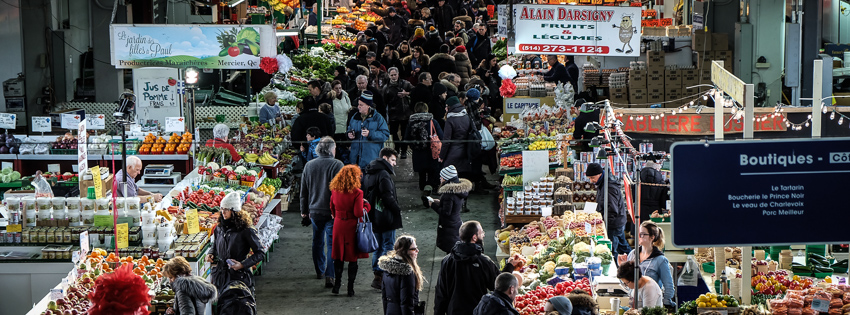
    Perhaps you remember the market photo a few posts ago (scroll down). I thought, as a contrast, a photo from last weekend would be fun. It’s Montrealers coming out of the winter funk and flocking to one of our largest markets – the stalls are still confined to the indoors but in everyone’s mind it’s already spring!

    Jean-Talon Market the first weekend in March.


  • How different and goodbye to a Montreal institution

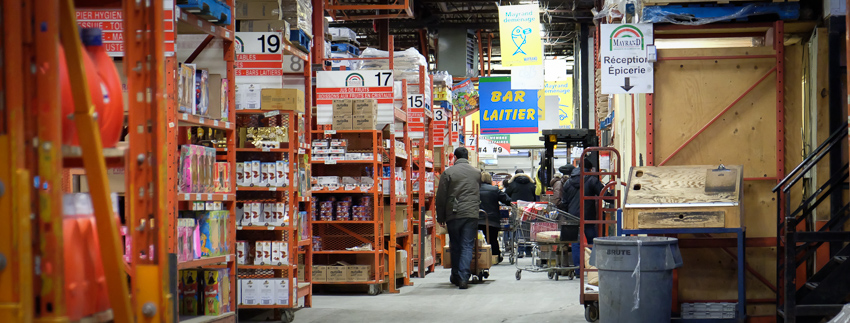
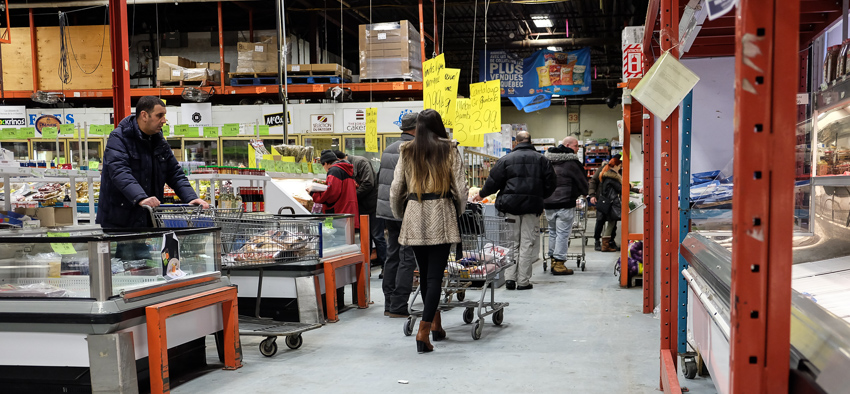
    Since moving to Montreal in 2006 we’ve done a steady rotation of food shopping which consists of visits to an Arab-derived supermarket (Marché Adonis, now a province super-star), Kim Phat (an “oriental” supermarket), Costco, the farmer’s produce market just north of us (Jean-Talon), and a kind of mongrel restaurant supply warehouse full of food called Mayrand. I say “mongrel” because I’ve never been able to identify its ethnic group. It’s housed in an old industrial building with loading docks shoved right into the aisles, and its employees speak various languages. Unlike other places here, Mayrand seems to have no particular ethnic focus. It’s also seemed an odd place because it’s never appeared to have any particular ambition to be anything other than what it is. Which is a noisy warehouse with hand-lettered signs catering to the restaurant trade but accepting anyone as customer. Unlike modern box stores, there are no flashing-light barricades put up when a forklift is working, and it’s up to you to dodge the wheeled traffic and figure out the signage, which is often creative.

    All that is about to change. Next week, after probably decades in its current form, Mayrand is about to move to a new location which promises to be more – what ever that means. In honesty it may be a good move for them. From personal experience I can say that we’ve converted some of our friends to shopping in places like Adonis (the Arab market), but I don’t believe a single soul has visited Mayrand. I don’t know why. Perhaps there’s a dark secret I am not privy to, or that it’s just too free-form and gritty.

    We’ll see – I have a feeling the new space will be a lot different plus they are positioning it close to a Costco.

    I’ll actually be sad to see the old store go. I like the bustle and the amorphous nature of it … that it’s all by itself in how it sees retailing and it makes no pretensions. If you like it you are welcome to shop there, and if you don’t there are a lot of other places just up the road.

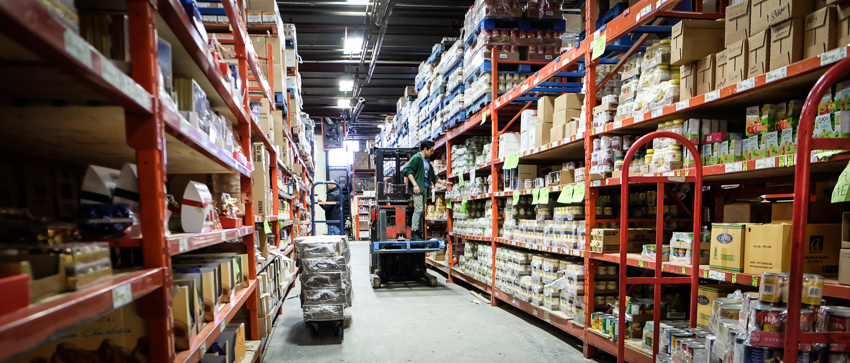
    This shows restocking by forklift. Normally there would be more people in the aisles, but this was late Sunday afternoon during a snow an ice storm, so there were fewer customers than usual.

    Now the different part

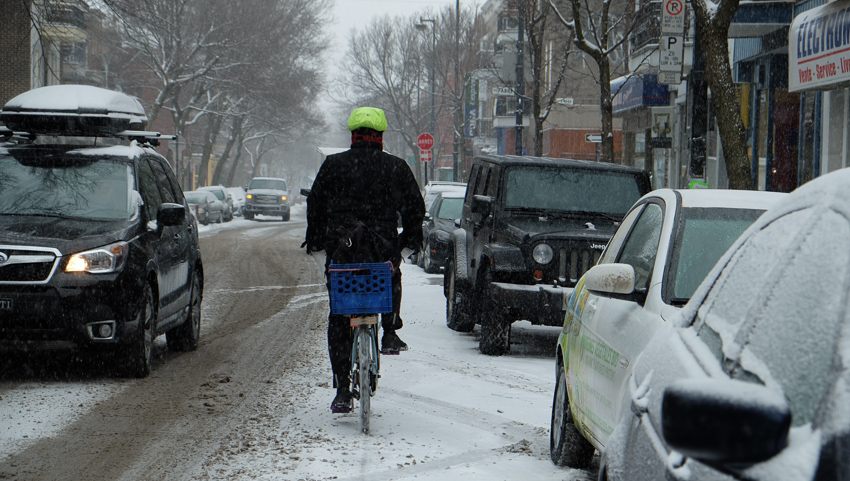
    Part of why I enjoy travelling so much are the contrasts. We have market shopping in Montreal too but in our reality it’s seasonal. Jean-Talon, our “outdoor” market, retreats into a heated space (much smaller) during the winter so it’s still possible to shop there. But there’s a big difference between biking to the market for a few vegetables, and hassling with the car for the same. So during the winter we tend towards the warehouses, and in the summer we eat market food.

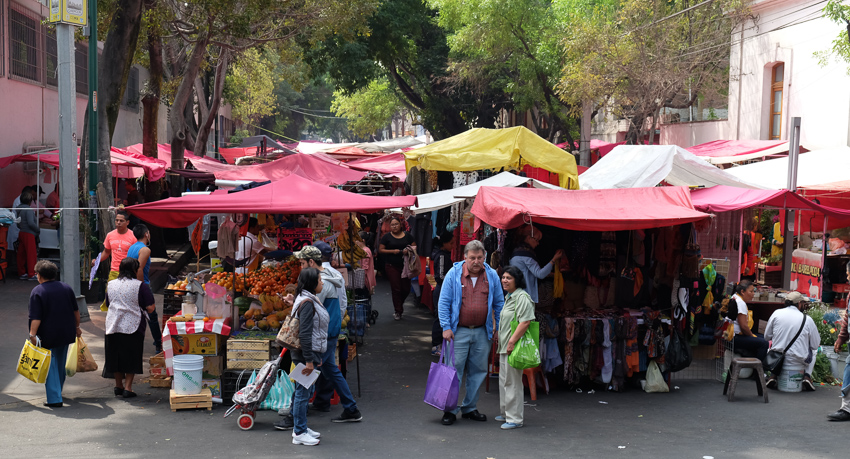
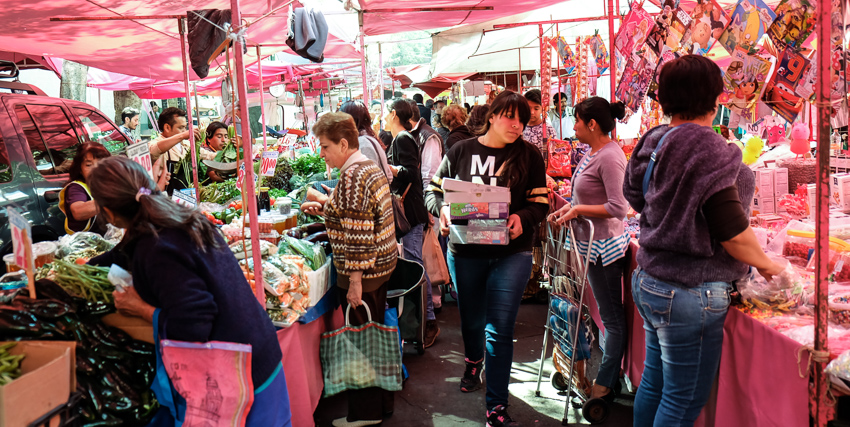
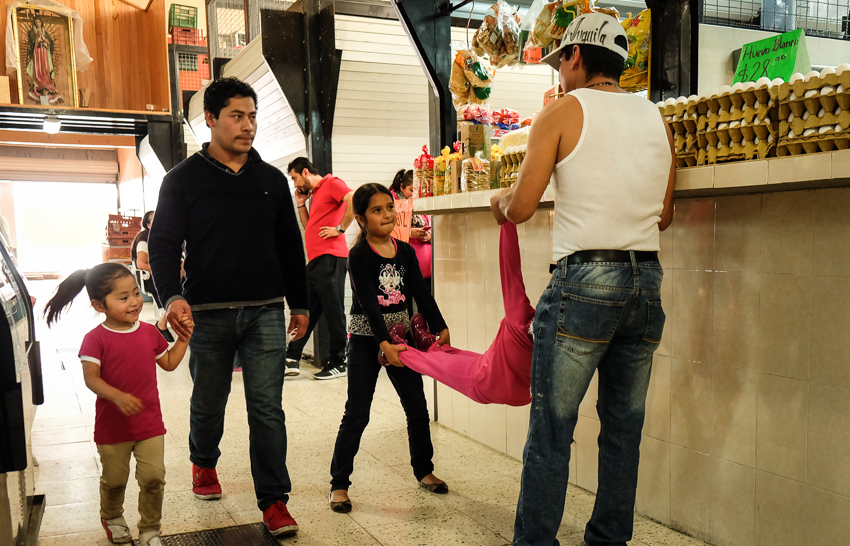
    But last week shopping in Mexico looked like this for us:

    Unfortunately, it wasn’t just a contrast in style but a contrast in content as well.

    I look on the boxes in Montreal and most of the fruit and vegetables are either from the US or Mexico, but none of it is as fresh and abundant as is easily available in this local market.


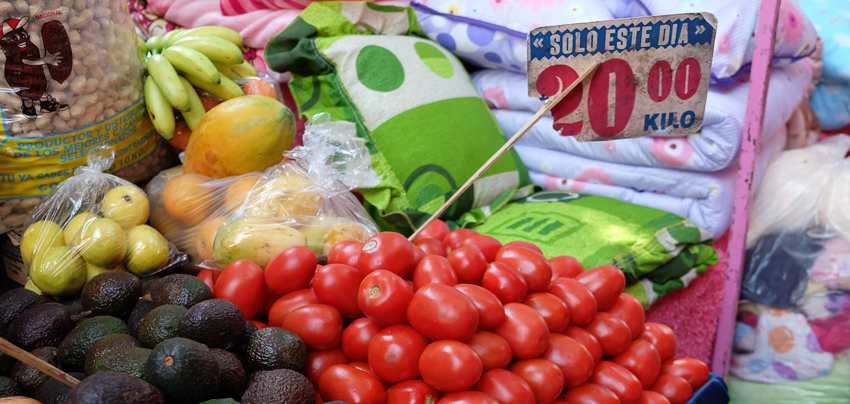
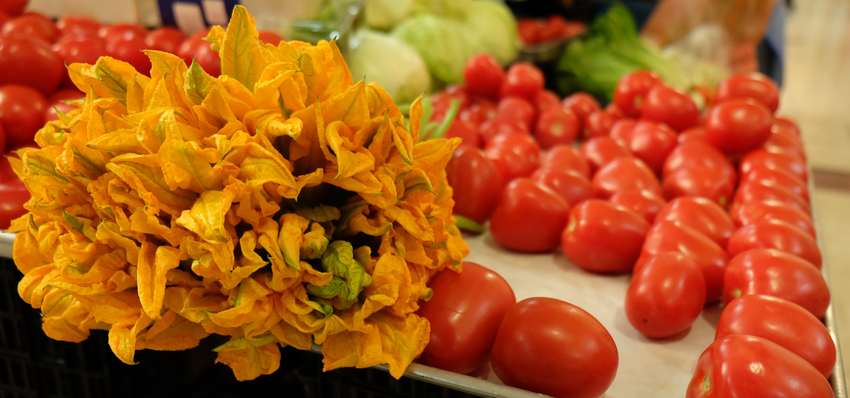
    I lamented earlier in these posts about how there hadn’t been a red plum tomato sighted in Montreal since the end of October. I can report currently that the situation has eased somewhat but still what’s available looks nothing like these unwaxed and fresh tomatoes.

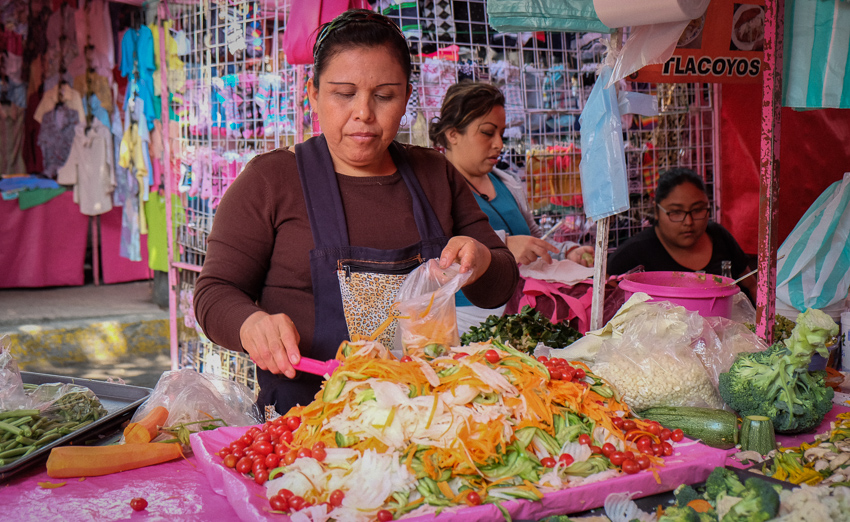
    Or the vegetables this woman is bagging.

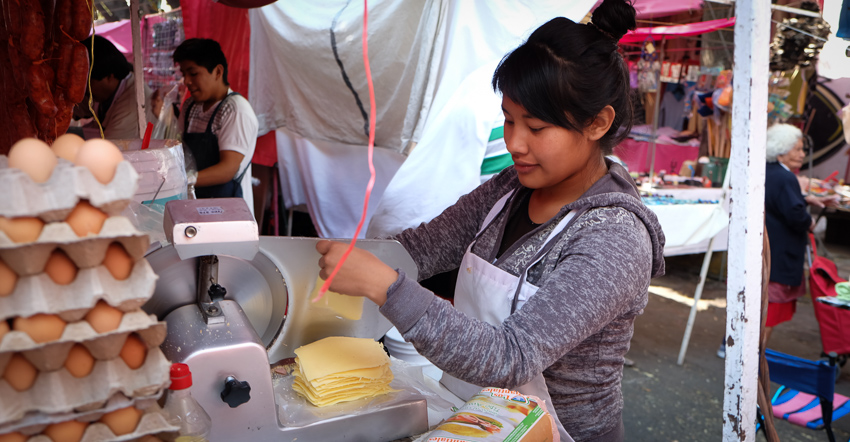
    But Mexico wasn’t ahead everywhere! Quebec really shines in cheeses, which I am grateful have no season. We bought one farmer’s type cheese in Mexico that was mixed with jalapeño peppers (that was okay), but there was none of the variety (and quality) that we have up here.

    But I’d be lying to say that I don’t like the idea of being able to shop year-round in a market, and a market close to home. But we do the best we can. Like I said, it’s a snow and ice storm today, which really does not mix with this lifestyle.

  • Flaps down and coming in

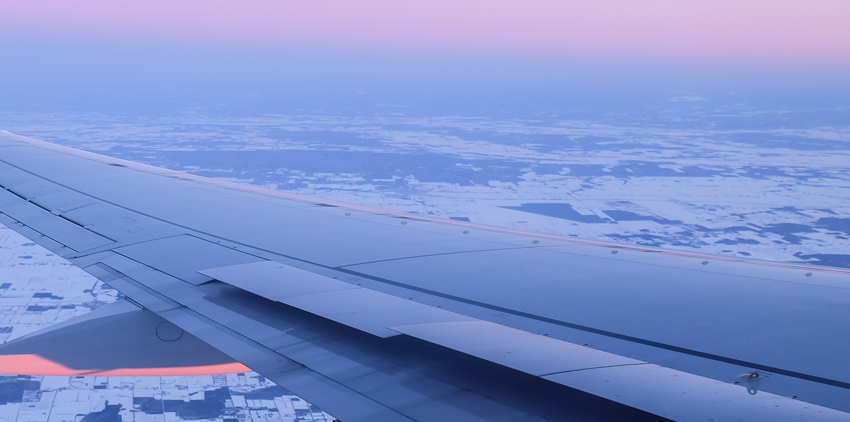
    It’s a long night-time flight back to Montreal from Mexico City. When I landed part of me felt like I had just arrived on a distant planet and part of me felt at home. It’s cold, it’s monochrome, it’s winter, and it’s familiar.


    Travelling to a place like Mexico City heaps perspective on your home environment. Its safety, its affluence, its respect and personal freedom. The familiarity of it all is a double edged sword – enjoyable, but lulling too.

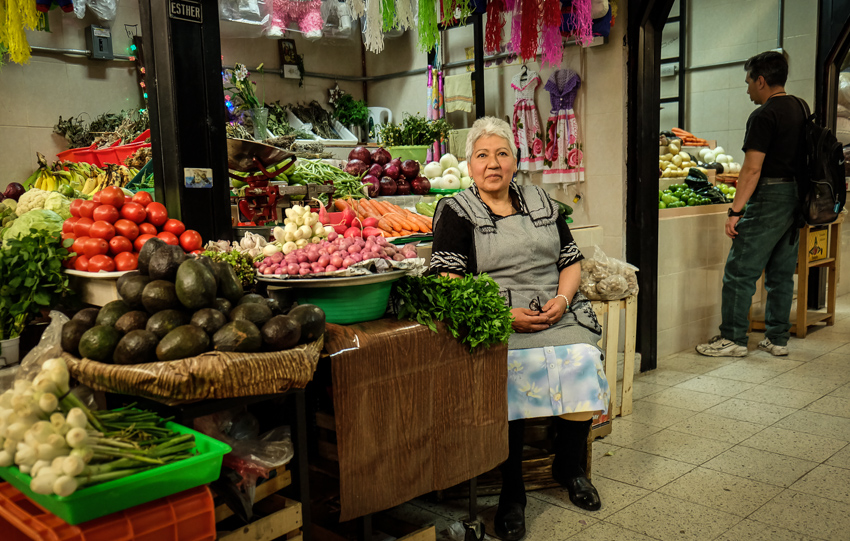
    Before leaving Mexico I took a few photographs that showed things I’d like to remember. This is the woman we bought avocados, tomatoes, oranges, and carrots from.

    I went shopping yesterday in Montreal, and I can tell you that the plum tomatoes looked nothing like these, which were 20 pesos a kilo (a little over a US dollar).

    One of the days we were shopping in this market two eager people with clipboards surveyed us about why we were there. I kept on thinking “why shouldn’t we be here, it’s the same way we like to shop in Montreal.” I think I communicated this in Spanish. For our efforts we were given shopping bags.

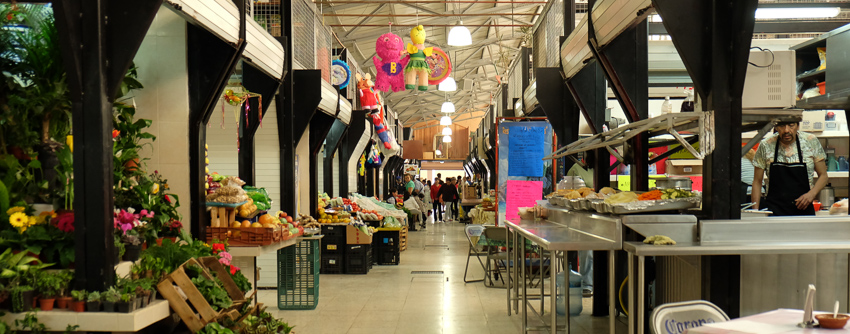
    The market houses approximately 75 vendors, each in stalls with pull-down doors. The city district owns the markets.

    This is what the market looks like inside – there are three aisles this long. Pretty much everything you need is available.

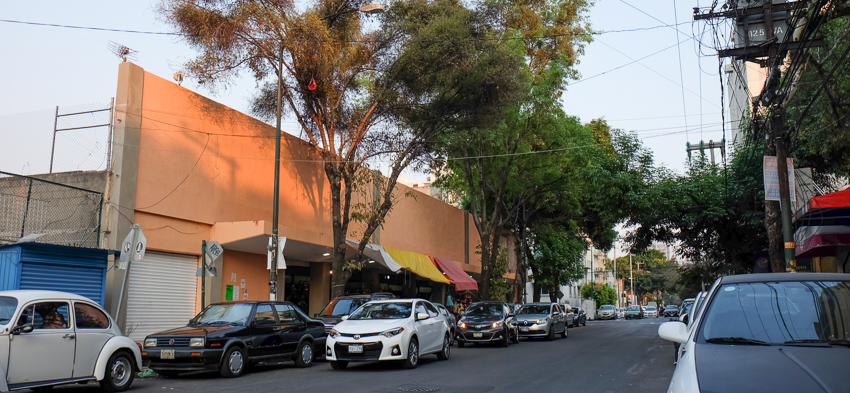
    And the market from the outside…

    During the day all the doors to the market are up and the building is wide open. As night-time approaches, more and more doors are closed until only one is open. At that point most of the vendors are closed too, but a few stay open late. And then around eight the final door goes down and the market is closed. There are still stores on the street that stay open a lot later.

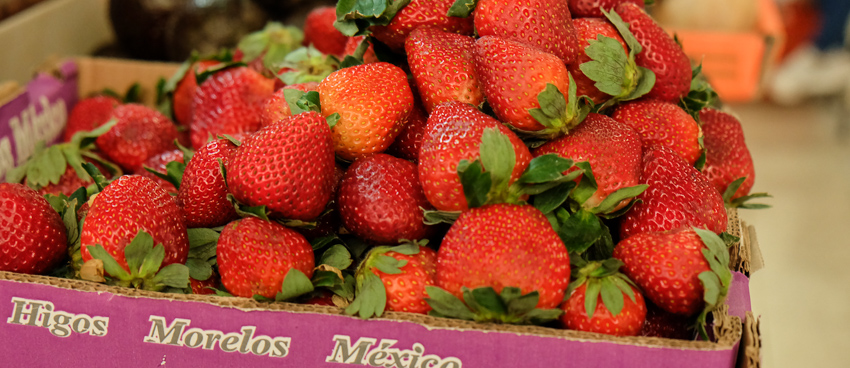
    I didn’t want to be mean to myself – or to you – but we ate quite a few of these and they were fresh, recently picked.

    This is mean – but it’s mean to me. Taken a few minutes ago, a store-front window near our studio…

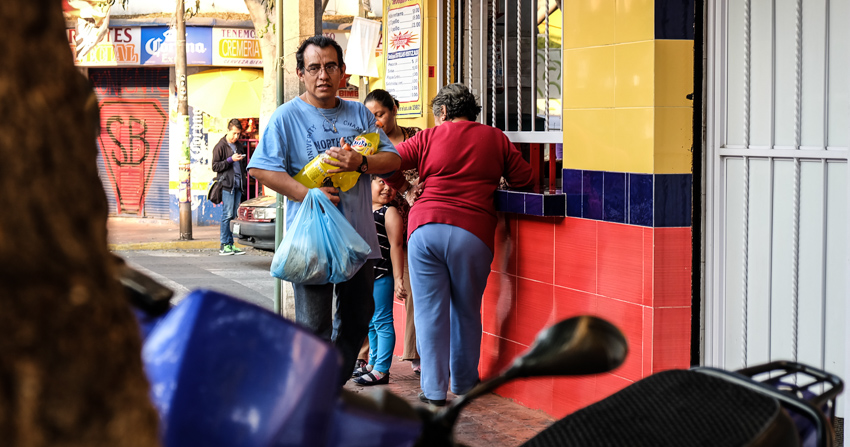
    And then a couple of days ago, on the street in Mexico…

    (It doesn’t seem fair)