Category: Artists

  • Moki Cherry: Swedish Artist and Designer

    I met Moki Cherry in 1969 when she and Don were living in Vermont. Jon Appleton, a professor in the Music Department of Dartmouth College, had invited Don and Moki to come to the United States and teach a course for the spring term.
    Later, I went to Sweden where I spent part a summer living with the family in Stockholm during the Utopias & Visions 1871-1981 exhibit at the Moderna Museet and traveling to Tågarp just after they had purchased the schoolhouse. These pictures are from that period.
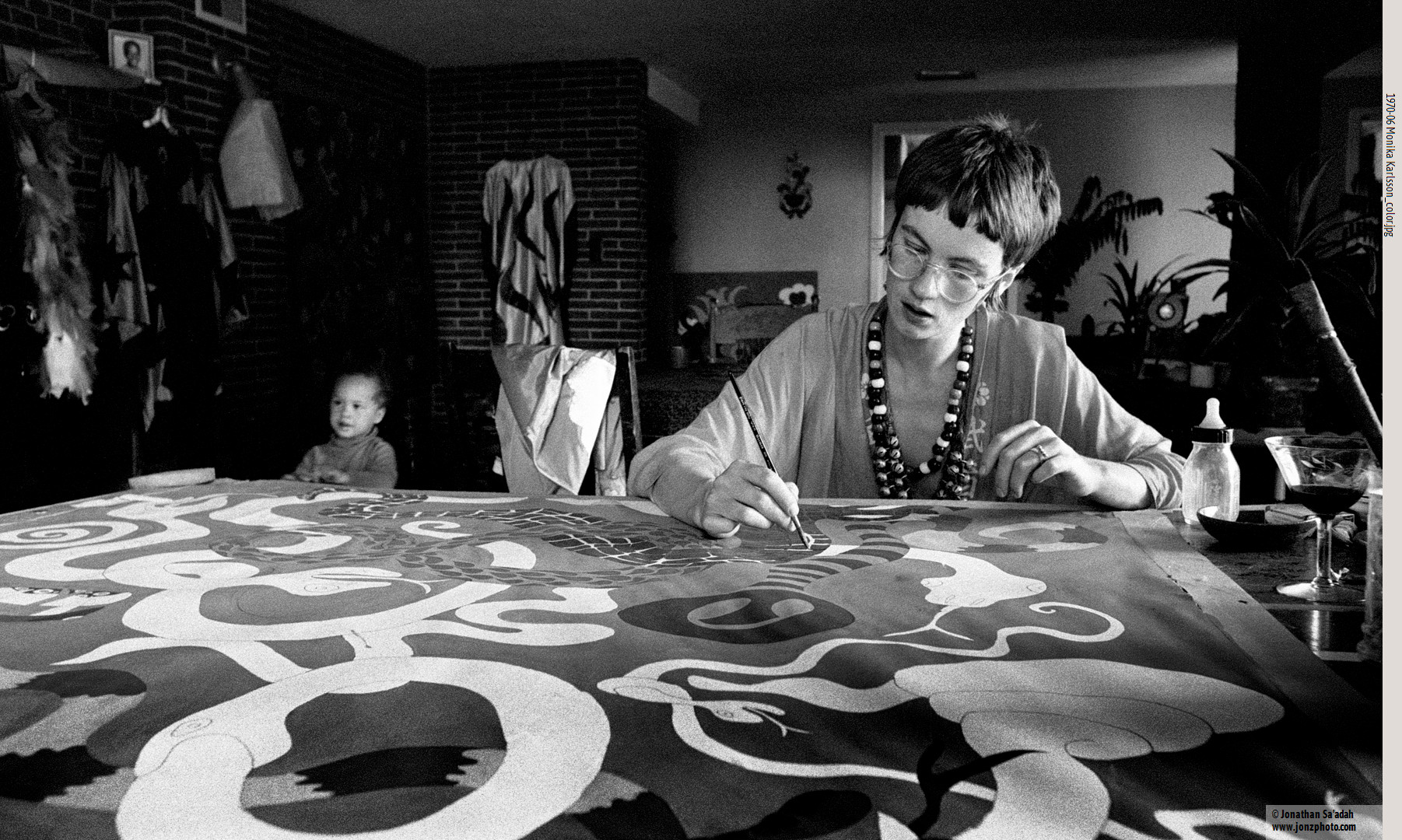
    A delicate balance Moki Karlsson surrounded by her work and family in her Post Mills, Vermont home. Every detail of this photograph represents Moki – her son Eagle-Eye, Don’s performance costumes hanging on the wall, the plants…Moki created worlds where she lived, centered around her family and her projects. (Vermont, 1970)

    Early Life and Education

    Monika Marianne Karlsson was born on February 8, 1943, in Koler, a small town in Norrbotten, Sweden’s far northern region. Her parents, Verner Karlsson and Marianne Karlsson, were from opposite ends of Sweden – her father was from Skåne in the south and her mother from Norrland in the north. Verner worked as a station master for the railway company, while Marianne ran the local post office. The family moved frequently throughout Sweden as Verner was posted to different stations.

    From an early age, Moki displayed an independent spirit and a deep connection to nature. She was absorbed by the world of animals and the natural environment, preferring to spend time in the forest rather than with other children.

    After leaving school in 1959, Moki apprenticed at the Haute Couture Atelier Anna-Greta Blom before working as a design assistant with Vera Öhrn at Distingo, a women’s coat and suit manufacturer in Kristianstad. In 1962, she moved to Stockholm to study fashion design, illustration, and pattern-cutting at Beckman’s School of Design (now Beckmans College of Design).

    Meeting Don Cherry and Early Artistic Collaboration

    In 1963, while still a student, Moki met American jazz trumpeter Don Cherry at Gyllene Cirkeln (The Golden Circle) in Stockholm, where he was performing with saxophonist Sonny Rollins. Don was already recognized as one of the leading figures in American avant-garde jazz, having been a key member an innovative quartet that shook up American jazz in 1959 (The Ornette Coleman Quartet).
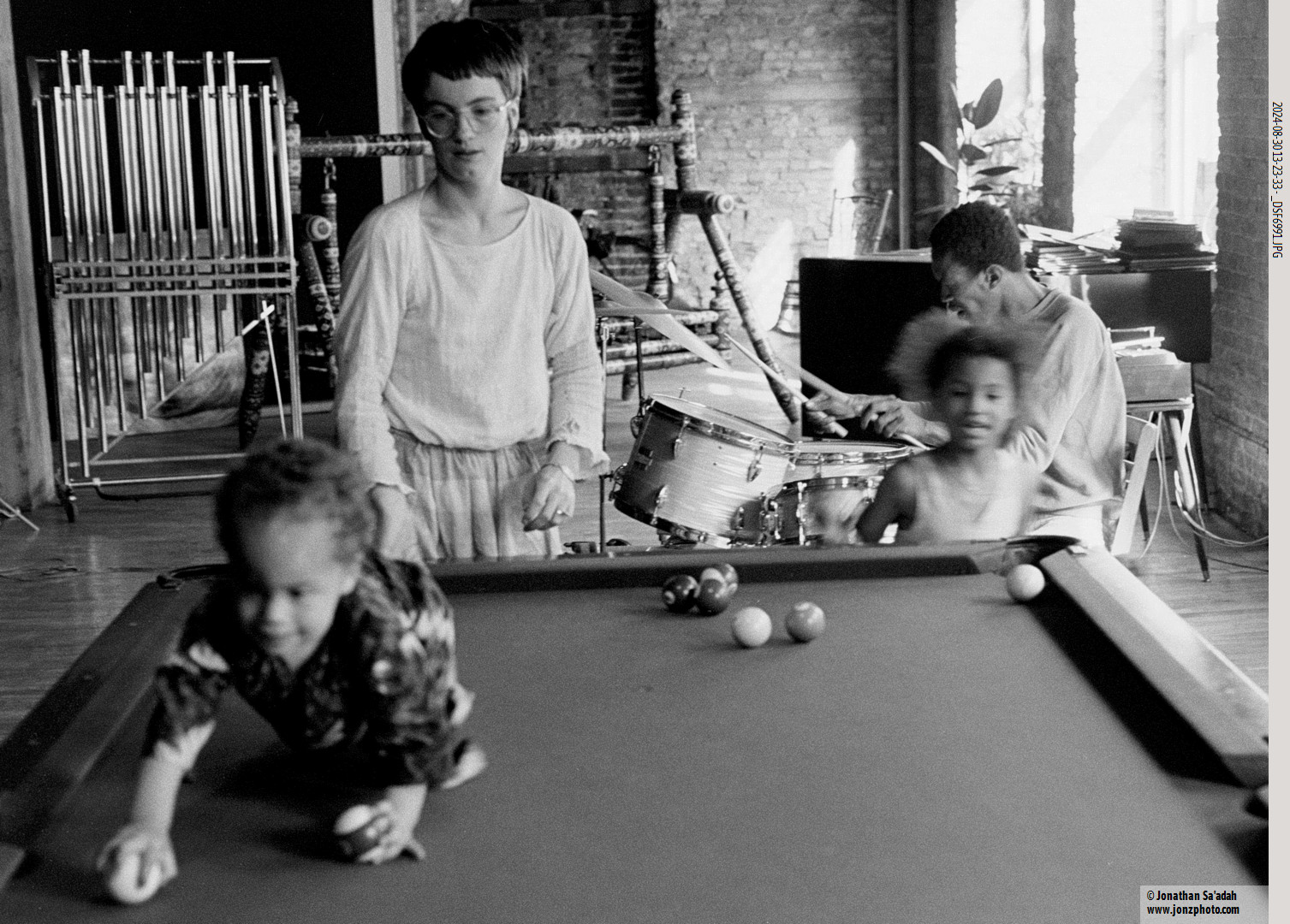
    Often multi-tasking Eagle-Eye has a clear idea of where he wants to pocket the shot (with Neneh’s encouragement). Don is practicing drums while waiting for Ornette Coleman to show up in Coleman’s Prince Street loft. (New York, 1970)

    Artistic Practice and Philosophy

    Moki’s artistic practice was inherently interdisciplinary, encompassing textiles, painting, sculpture, ceramics, collage, set design, and costume creation. Her work was characterized by bold colors, organic forms, hybrid creatures, and spiritual symbolism drawn from various cultural traditions including Indian art, Tibetan Buddhism, African aesthetics, and Scandinavian folk art.

    Textiles and Tapestries

    Moki’s textile work became her signature medium, born out of practical necessity. Living a nomadic lifestyle with Don and her family, she found that fabric was lightweight, transportable, and versatile. She could “roll it up, put it in a couple of duffel bags” and carry her studio anywhere. Her large-scale textile appliqué tapestries served multiple functions: as stage backdrops for Don’s performances, album covers, as educational tools for children’s workshops, and as independent artworks displayed in galleries.

    Major Exhibitions and Recognition

    Moderna Museet Stockholm (1971)

    One of Moki’s most significant early exhibitions was at Moderna Museet Stockholm in 1971, as part of the Utopias & Visions 1871-1981 exhibition. Pontus Hultén, the museum’s director, commissioned Don and Moki to create an installation which was housed in a Buckminster Fuller geodesic dome. Moki created artwork which defined the performance space, which was used to gather artists and musicians from Europe and beyond.

    From 1977 onward, Moki split her time between Tågarp (the family home near Malmö) and Long Island City, New York, maintaining her connection to both her Swedish roots and the international art community. She continued to exhibit regularly, with solo shows in galleries across Sweden, the United States, and Europe.
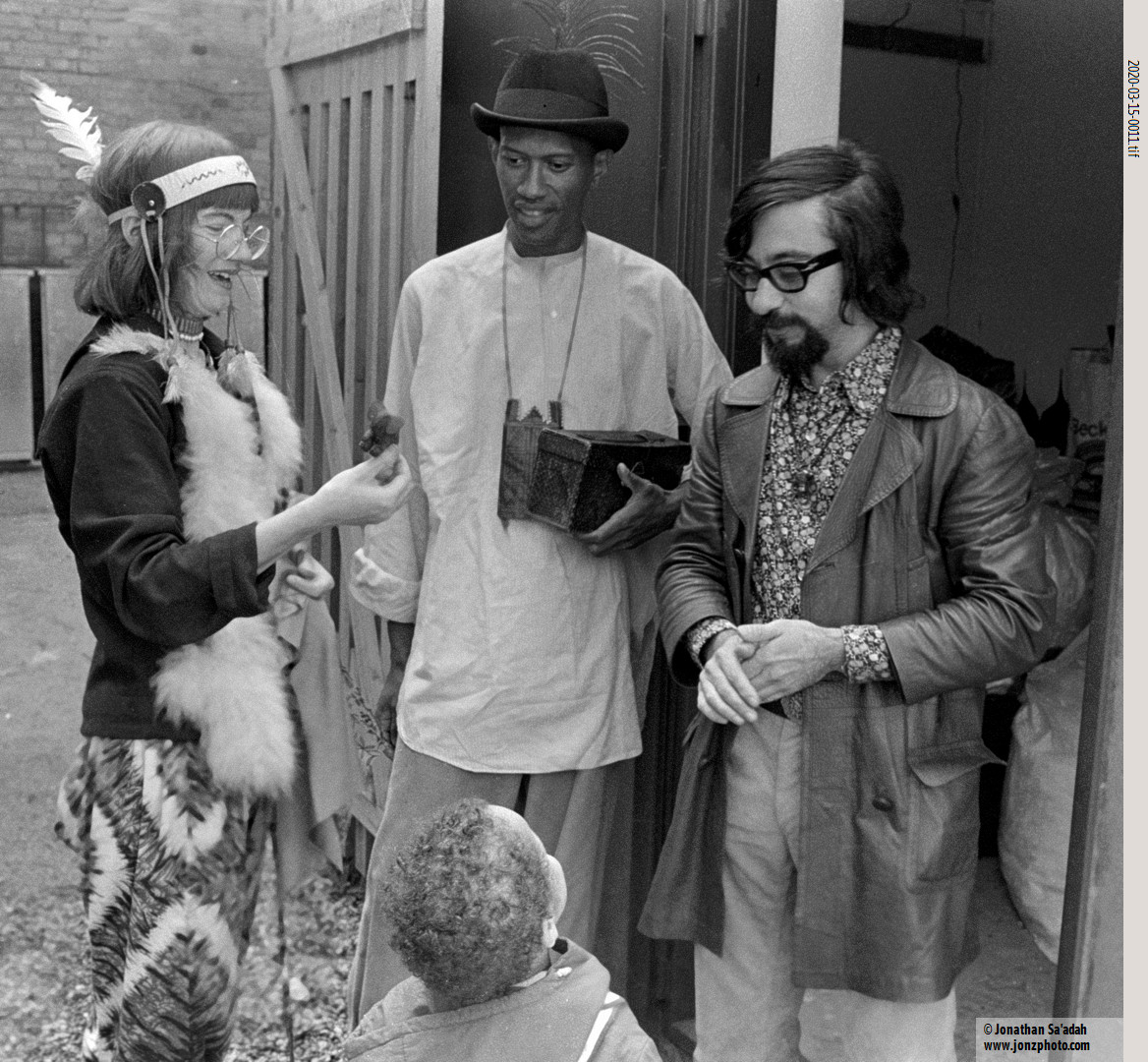
    Collaborators in Stockholm Don Cherry is holding the leather case, home to his pocket trumpet, while the Turkish percussionist Okay Temiz talks to Eagle-Eye. They are standing immediately outside the naval brig on the Stockholm island of Skeppsholmen that was used as housing for the family during the 1970 summer exposition. (Stockholm, 1971)

    Personal Life and Family

    Moki’s personal life was inextricably linked to her artistic practice. Moki successfully balanced motherhood, artistic practice, and professional collaboration. She said about the challenges: “I was my husband’s muse, companion and collaborator. At the same time, I did all the practical maintenance. I was never trained to be a female, so I survived by taking a creative attitude to daily life and chores.”

    Legacy and Rediscovery

    Moki Cherry died on August 29, 2009, in her Tågarp home. For much of her lifetime, her contributions were overshadowed by Don’s fame and the gendered biases of the art world toward textile work. However, the period following her death has seen a resurgence of interest in her work.

    Major retrospectives include Moki Cherry: A Journey Eternal at Moderna Museet Malmö (2023), the most comprehensive presentation of her work to date, and Moki Cherry: Here and Now at the Institute of Contemporary Arts, London (2023), her first solo exhibition in a UK institution.

    These exhibitions have been curated in collaboration with her granddaughter Naima Karlsson, who has become a key advocate for her grandmother’s legacy.
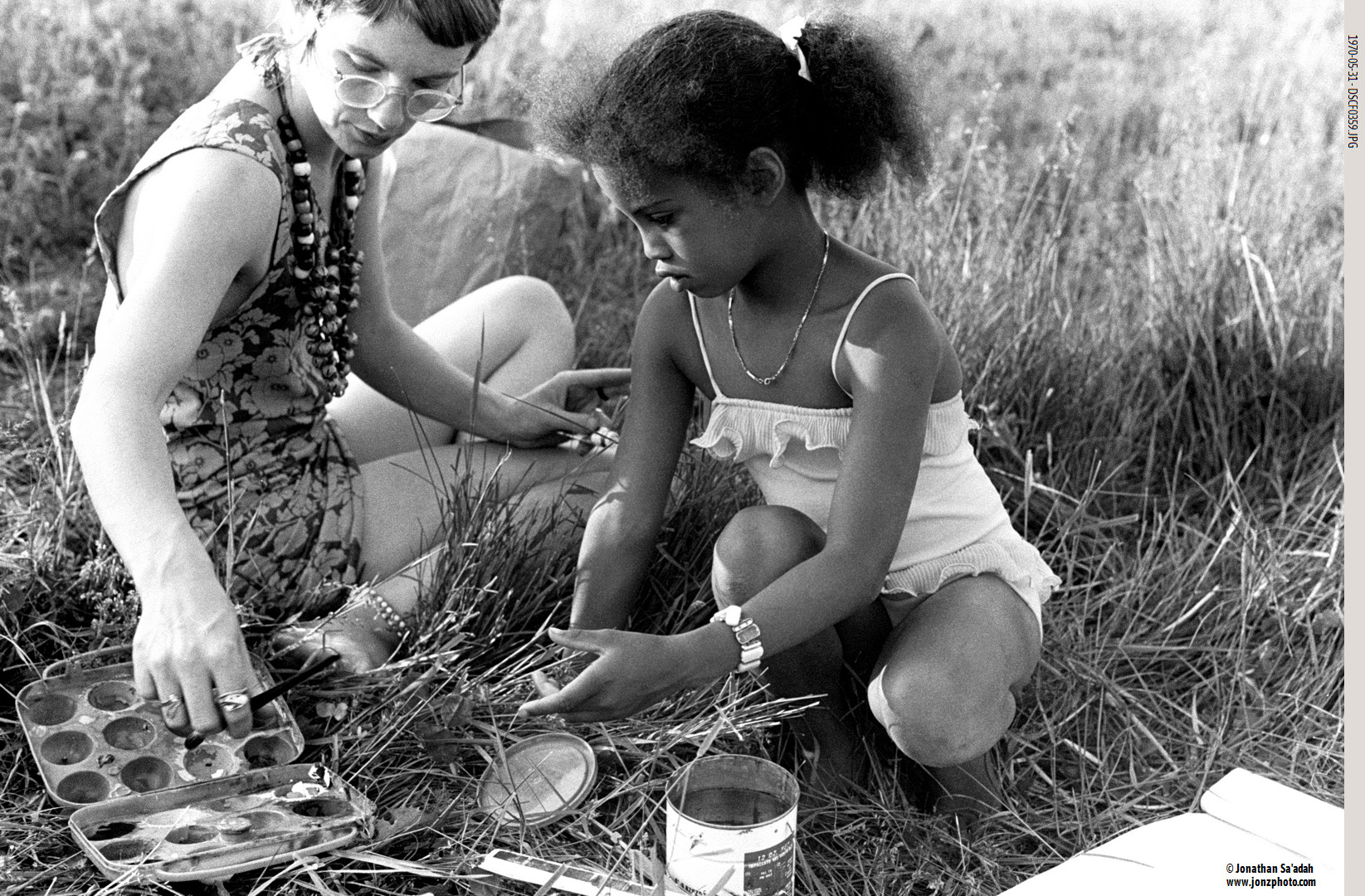
    Moki helping Neneh with color Neneh was a voracious daughter to Moki’s sensibilities which she combined with her step-father’s musical world. Both have served her well. (Vermont, 1970)

    Writing and other media about Moki’s work and life

    Moki’s work abounded in color. These articles and web pages have reproductions which often do justice to her chromatic sensibilities.

    Adesina, Precious. “Moki Cherry: The Overlooked Swedish Artist Who Created a ‘Soulful Home,’” January 1, 2024. https://www.bbc.com/culture/article/20231222-moki-cherry-the-overlooked-swedish-artist-who-created-a-soulful-home.
    Carsel, Casey. “Moki Cherry’s Art and Life Remembered,” September 29, 2021. https://ocula.com/magazine/spotlights/moki-cherrys-art-and-life-remembered/.
    Compton, Gemma. “Moki Cherry – Here and Now. – Blog.” Gemma Compton, February 6, 2024. https://www.gemmacompton.com/blog/2024/2/6/moki-cherry-here-and-now.
    Denman, Tom. “Moki Cherry at the Juncture of Art and Life.” ArtReview, August 22, 2023. https://artreview.com/moki-cherry-at-the-juncture-of-art-and-life/.
    “Don and Moki Cherry’s Organic Dreams Made Real.” National Public Radio, June 18, 2021. https://www.npr.org/2021/06/18/1007252382/don-cherry-and-moki-cherry-organic-music-society.
    “Don Cherry — Brown Rice (LP, Brown Vinyl) — Soundohm.” https://www.soundohm.com/product/brown-rice-lp-brown-vinyl.
    E-flux. “Don and Moki Cherry: Organic Music Societies, Alexander Kluge: Minutenfilme #3 – Announcements,” February 8, 2022. https://www.e-flux.com/announcements/438577/don-and-moki-cherryorganic-music-societiesalexander-kluge-minutenfilme-3.
    E-flux. “Moki Cherry: A Journey Eternal – Announcements.” https://www.e-flux.com/announcements/557927/moki-cherrya-journey-eternal.
    Krasinkski, Jennifer. “Krasinski_Artforum_Cherry.” ArtForum, June 1, 2021. https://www.blankforms.org/sites/default/files/2022-07/Krasinski_Artforum_Cherry.pdf.
    Larsen, Lars Bang. “Moki Cherry Exhibit at Galleri Nicolia Wallner, Copenhagen.” Nicolai Wallner (blog), April 7, 2022. https://nicolaiwallner.com/exhibition/moki-cherry-2/.
    Moderna Museet I Malmö. “A Journey Eternal.” https://www.modernamuseet.se/malmo/en/exhibitions/moki-cherry/a-journey-eternal/.
    Moderna Museet I Malmö. “From Norrbotten to New York.” https://www.modernamuseet.se/malmo/en/exhibitions/moki-cherry/from-norrbotten-to-new-york/.
    Mokicherry.com. “About Moki Cherry.” https://mokicherry.com/about.
    Mokicherry.com. “Moki Cherry Exhibitions.” https://mokicherry.com/exhibitions.
    Neneh Cherry, Naima Karlsson + More on Moki Cherry’s Life, Love and Work as an Artist and Mother | ICA Infrequencies, 2023. https://shows.acast.com/ica-infrequencies/episodes/moki-cherry-home-as-stage-stage-as-home.
    NOBA Nordic Baltic Contemporary Art Platform. “Moki Cherry Exhibit in Malmö.” https://noba.ac/en/exhibition/moki-cherry.
    Psimikakis-Chalkokondylis, Laonikos. “Imagine! Play! Learn! – By Evie Ward.” Sound and Music (blog), August 31, 2022. https://soundandmusic.org/post/imagine-play-learn-by-evie-ward/.
    Reeves, Chris. “A Praxis of Art and Life: A Review of Moki Cherry at Corbett vs. Dempsey | Newcity Art a Praxis of Art and Life: A Review of Moki Cherry at Corbett vs. Dempsey,” September 15, 2021. https://art.newcity.com/2021/09/15/a-praxis-of-art-and-life-a-review-of-moki-cherry-at-corbett-vs-dempsey/.
    Russonello, Giovanni. “A Fresh Look at the ‘Organic Music’ of Moki and Don Cherry..” Jordan News, April 30, 2021. https://www.jordannews.jo/Section-117/Culture-Arts/A-fresh-look-at-the-organic-music-of-Moki-and-Don-cherry-2283.
    Snoekx, Kurt. “Home Is Where the (He)Art Is: Argos Revisits Don & Moki Cherry’s Organic Music Society,” December 2, 2022. https://www.bruzz.be/en/culture/art-books/home-where-heart-argos-revisits-don-moki-cherrys-organic-music-society-2022-02-11.
    Tolhurst, Sophie. “Rediscovering Swedish Designer and Artist Moki Cherry.” Design Week, June 9, 2023. https://www.designweek.co.uk/issues/05-june-09-june-2023/swedish-designer-artist-moki-cherry/.
    Walton, Millie. “Burlington Contemporary – Reviews,” August 23, 2023. https://contemporary.burlington.org.uk/reviews/reviews/moki-cherry-here-and-now.
    Ward, Evie. “Mobile Aesthetic Environments.” Moderna Museet I Malmö. https://www.modernamuseet.se/malmo/en/exhibitions/moki-cherry/mobile-aesthetic-environments/.
  • Reginald Beck: Invisible Artisan of Cinema

    Reginald Beck (1902-1992) edited eighteen films of Losey’s, beginning in 1958 and stretching to Losey’s last, in 1985. It was a multi-decade professional partnership based on mutual respect. Beck was a small man, of modest manner and somewhat taciturn yet insightful in his opinions and generous in training younger editors. He and cinematographer Gerry Fisher formed the core team that supported Losey’s second career as an European director.
    Beck’s demeanor deceitfully feigned that of a small bland Englishman, but inside burned a brightly shining personality with an unusual background. His career, spanning from the early days of British cinema through the European auteur movement, illustrates a complex mix of artistic vision, political conviction, and professional self-determination.

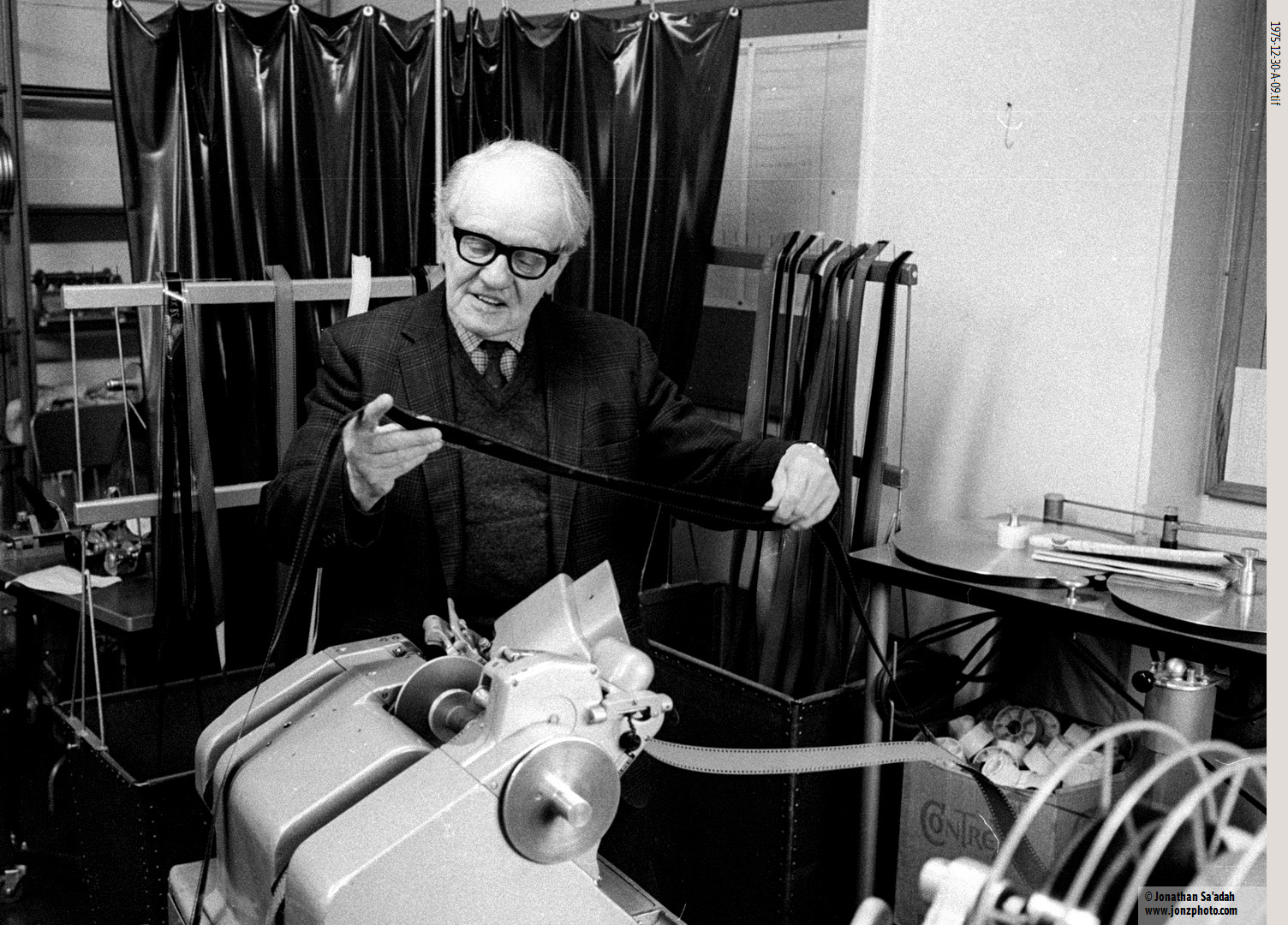
    Reginald Beck editing
    ▲ Beck using a Moviola machine in the cutting room. The Moviola defined film editing from the 1920’s through the mid-Seventies, neatly overlaying Beck’s career. Beck’s familiarity and skill in using it made the complex task of cutting the film seem relaxed and easy – something it was anything but.

    The M Klein Credit Controversy: Union Rules and Artistic Recognition

    The case of M Klein exemplifies the bureaucratic obstacles that could overshadow artistic collaboration in the film industry. Despite Beck’s editing M Klein, he was unable to receive proper screen credit due to British film union regulations. The film’s credits instead list Henri Lanoë, Marie Castro-Vasquez, and Michèle Neny as editors. Beck gets credit but as a “Adviser to Joseph Losey”. Indeed!

    British film union rules, particularly those enforced by the Association of Cinematograph, Television and Allied Technicians (ACTT), strictly governed credit allocation during the 1970s. These regulations often prevented editors from receiving recognition for work performed outside their home territories or under specific contractual arrangements. The ACTT, founded in 1933 and representing over 20,000 members by 1982, maintained rigid protocols about screen credits that sometimes conflicted with the realities of international film-making. The solution in the case of this film was to employ a French editor who was credited for Beck’s work. This arrangement, though unfair to Beck, preserved the artistic continuity of the Losey-Beck collaboration while accommodating the logistical requirements of filming in France. It was the only time Beck didn’t receive credit for his work through his entire collaboration with Losey.

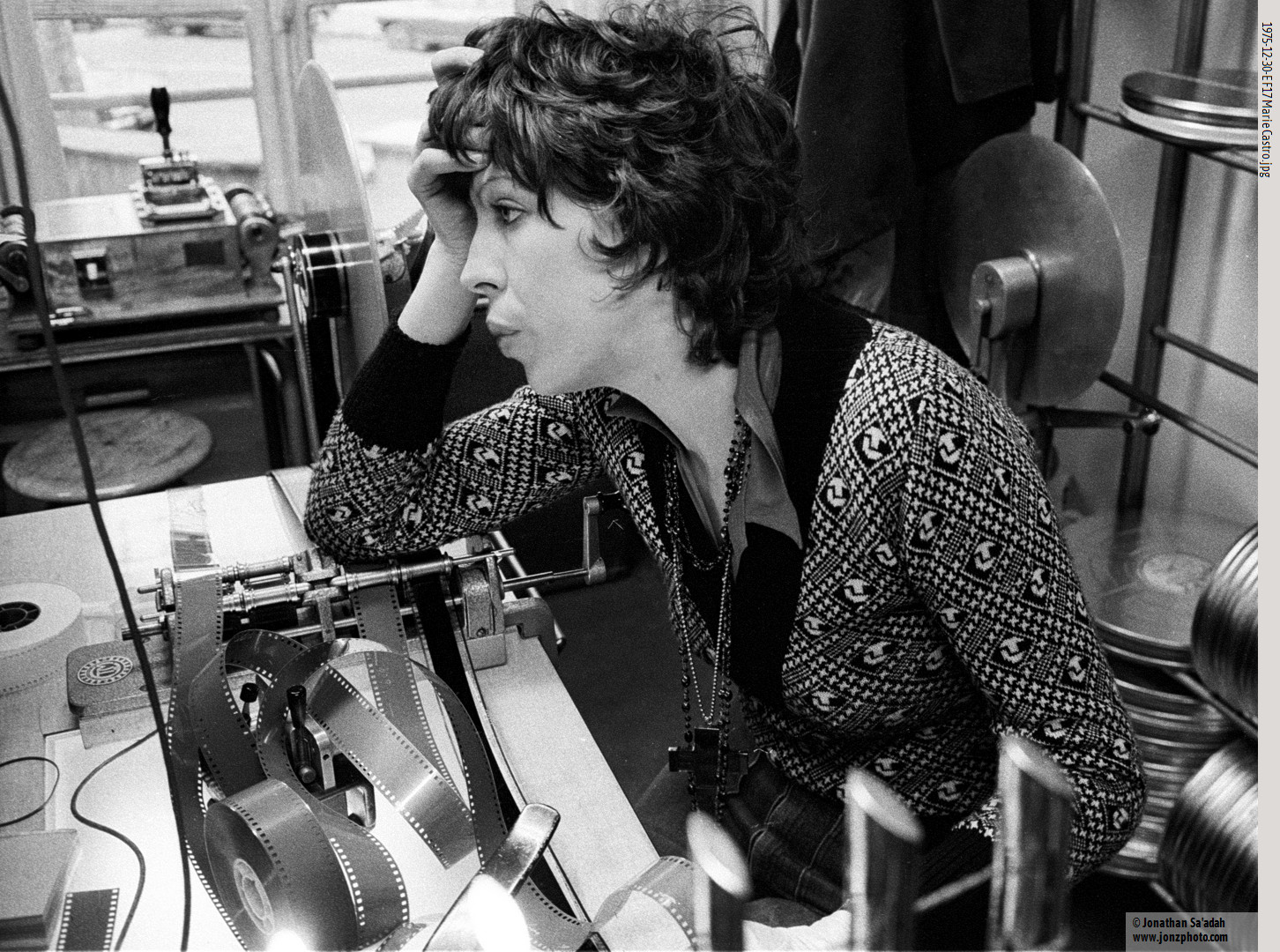
    ▲ In truth there was always pressure to get things done. Marie Castro-Vasquez was the first assistant to Beck in M Klein. Following her work with him she had a career as an editor of feature films and tv series in the French market.

    Artistic Freedom: The Freelance Editor’s Independence

    Beck’s career was unusual because he was able to make (and stick to) a deliberate choice to work as a freelance editor rather than being tied to any particular studio. This independence, which he was proud of, allowed him artistic freedom but also created difficulties in an industry that was increasingly dominated by corporate structures. His freelance status enabled him to work with diverse directors across different production systems, from the quota quickies of the 1930s to the art films of the 1970s.

    Working outside the studio system affected Beck’s approach to editing. Unlike editors employed by major studios who were often constrained by house styles and executive interference, Beck could develop distinctive collaborative relationships with individual directors. This freedom was particularly evident in his work with Losey. Beck pursued skillful editing techniques that supported Losey’s complex thematic concerns without outside pressure to conform to commercial formulas.

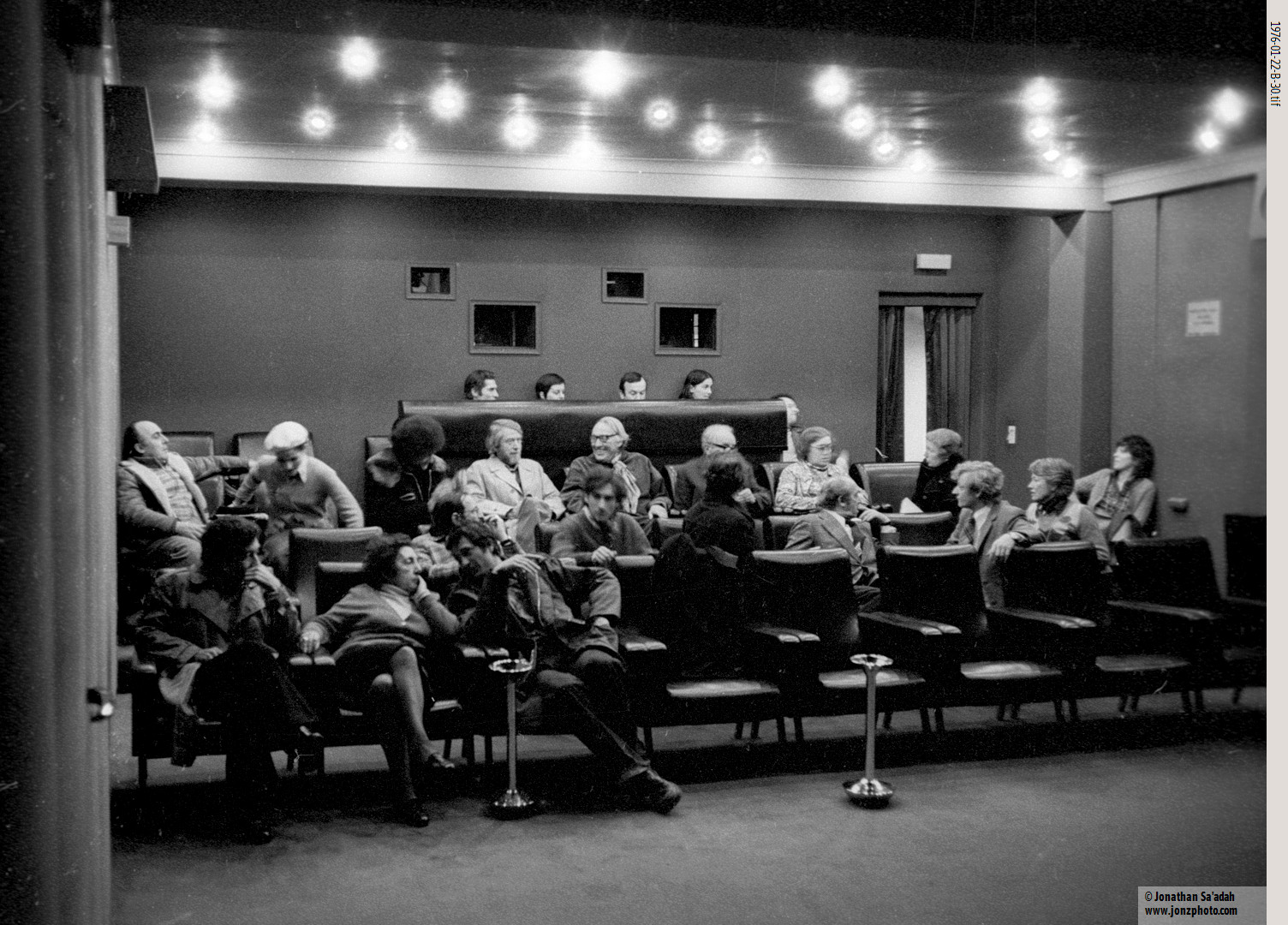
    ▲ A clear hierarchy is visible through the screening room seating arrangement as people wait to watch film rushes. Losey is center with Beck on his left and cinematographer Gerry Fisher on his right. The assistant directors sit in front of Losey. Margo Capelier, casting director, is in the front row. Marie Castro-Vasquez is far right, and Henri Lanoë’s head is just visible in the back.

    Beck’s independent status also meant he could select projects based on artistic merit rather than contractual obligations. His filmography reflects this selective approach, spanning from Laurence Olivier’s Henry V (1944) to works by international auteurs, illustrating his commitment to cinematic excellence over financial security. Importantly, the freelance model allowed Beck to maintain creative autonomy while building long-term partnerships with directors who valued his unique skills. Like Fisher’s camerawork, Beck’s editing was central in supporting Losey’s complex themes and visual identity.

    Political Beliefs: Russian Origins and Radical Sympathies

    Beck’s political world-view was fundamentally shaped by his early experiences as a Russian-born émigré. Born in St. Petersburg in 1902 to a British father and Finnish mother, Beck’s family emigrated to Britain when he was thirteen (1915). Beck’s childhood exposure to revolutionary Russia and his family’s subsequent displacement instilled in him an understanding of political persecution and the arbitrary nature of state power. These experiences resonated with the themes explored in many of his later collaborations, particularly Losey’s films that examined outsiders, persecution, and the abuse of authority.

    The intersection of Beck’s political beliefs with Losey’s anti-establishment stance created a powerful creative partnership. Beck’s Russian origins and immigrant experience gave him a unique perspective on British class society that proved invaluable in interpreting Losey’s critiques of social hierarchies. His editing choices consistently supported narratives that exposed the violence and corruption underlying respectable facades, reflecting a political sensibility forged in revolutionary upheaval. What Losey found in Beck was an editor who intuitively understood the psychology of displacement and persecution. Their collaboration on films like Accident (1967) and The Go-Between (1971) explored themes of class oppression and social hypocrisy that reflected both men’s critical views of established power structures.

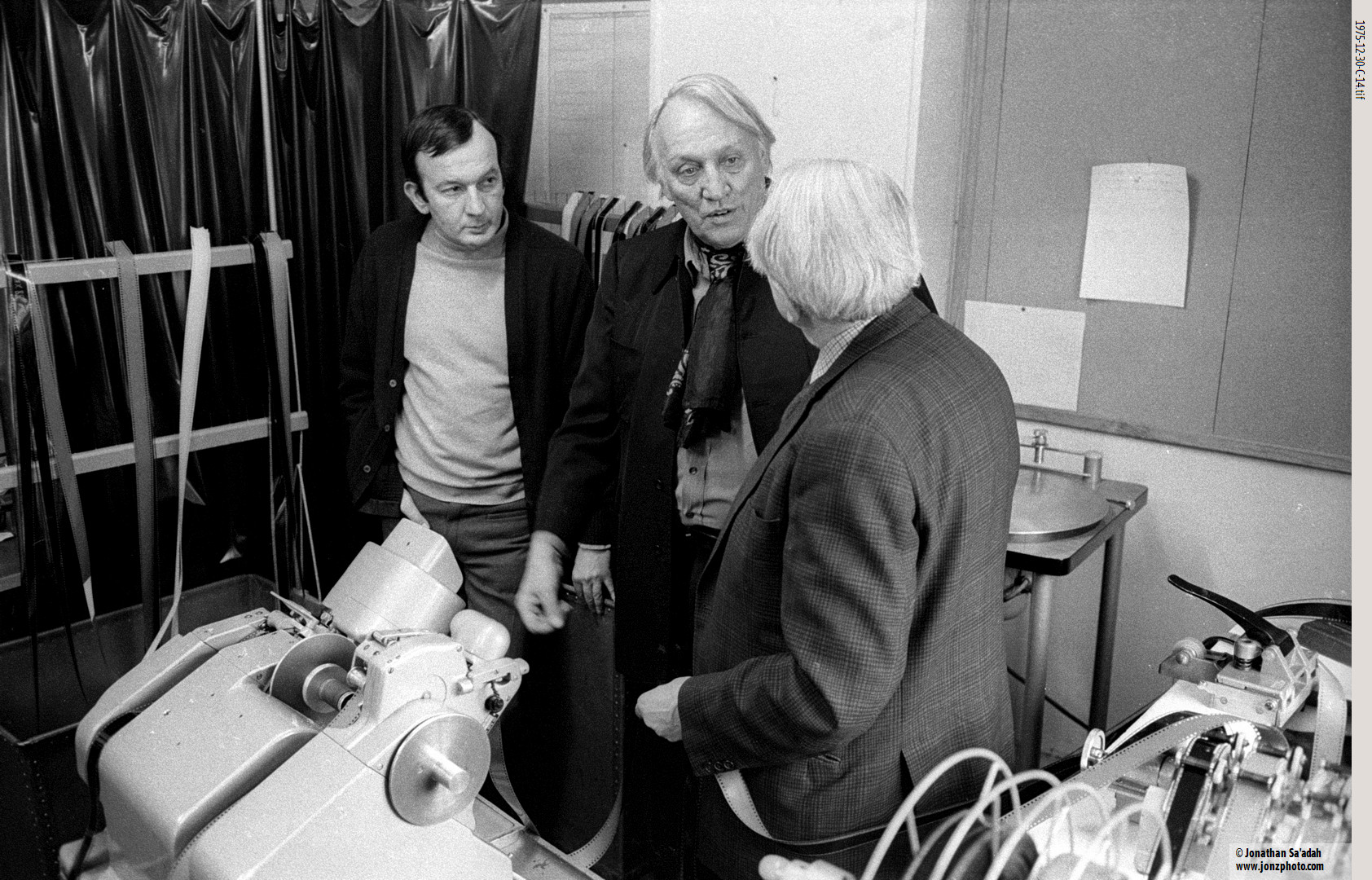
    ▲ Losey speaking with Beck as Henri Lanoë, the credited editor, listens.

    Style as an Editor: Invisible Craft and Sustained Tension

    Beck’s editing style was rooted in the theories of Vsevolod Pudovkin which held that the assembly of shots served as bricks in creating narrative. His approach emphasized psychological complexity over flashy technique (contrasting with the theories of Sergei Eisenstein).

    In M Klein, Beck’s editing supported the film’s Kafkaesque atmosphere of paranoia and identity confusion. The film’s exploration of a French Catholic being mistaken for a Jewish namesake required editing that could sustain psychological tension while maintaining narrative clarity. Beck’s work created a labyrinthine with life-or-death consequences through careful pacing and strategic withholding of information. A mark of his work with Losey was lengthy shots that built tension through duration rather than cutting. This technique demonstrated Beck’s understanding that editing’s power often lay in restraint rather than flashiness, and in M Klein this approach supported the film’s meditation on identity and persecution by allowing scenes to develop psychological complexity through sustained observation.

    Relationship with Losey: Mutual Respect and Creative Partnership

    The professional relationship between Beck and Losey represented one of cinema’s most productive editor-director partnerships, spanning eighteen films from The Gypsy and the Gentleman (1958) through Steaming (1985). Losey considered Beck one of the two best editors he ever worked with, the other being his first editor, Reginald Mills. Beck’s collaboration with Losey began after the director’s public falling-out with Mills over The Servant (1963). Beck then edited all of Losey’s subsequent films, establishing a working relationship characterized by shared political sensibilities and complementary artistic approaches. Their partnership proved particularly fruitful in films that explored themes of persecution, identity, and social hypocrisy.

    What is ironic about the contribution that Reginald Beck made to M Klein, and Joseph Losey’s films in general, was that they were two people who worked on the margins of established systems, both dealing with issues of political exile and artistic displacement, and together they transformed these restraints of blacklisting and emigration into innovative film-making that challenged social norms as well as cinematic conventions. In some ways this wasn’t a surprising outcome for two such talented people, but it certainly represented a struggle and an opposition to forces and obstacles quite similar to those that many artists face today.


    If you would like further information:

    ‘Association of cinematograph, television and allied technicians’ (2025) Wikipedia. Available at: https://en.wikipedia.org/w/index.php?title=Association_of_Cinematograph,_Television_and_Allied_Technicians&oldid=1278926362 (Accessed: 29 June 2025).
    BFI Screenonline: Beck, Reginald (1902-1992) Biography (no date). Available at: http://www.screenonline.org.uk/people/id/1299434/index.html (Accessed: 13 March 2023).
    BFI screenonline: beck, reginald (1902-1992) biography (no date). Available at: http://www.screenonline.org.uk/people/id/1299434/index.html (Accessed: 28 June 2025).
    Burman, J. (no date) An Age of Transition and Turmoil: Editors Guild History 1965-75 -, CineMontage Journal of the Motion Pictures Editors Guild. Available at: https://cinemontage.org/an-age-of-transition-and-turmoil-editors-guild-history-1965-75/ (Accessed: 28 June 2025).
    ‘Reginald Beck’ (2022) Wikipedia. Available at: https://en.wikipedia.org/w/index.php?title=Reginald_Beck&oldid=1108833609 (Accessed: 9 April 2023).
    Ryder, W. and Lawson, A. (1987) Reginald Beck Interview. (The British Entertainment History Project). Available at: https://historyproject.org.uk/interview/reginald-reggie-beck (Accessed: 13 March 2023).
    Sloman, T. (1992) Obituary: Reginald Beck, The Independent. Available at: https://www.independent.co.uk/news/people/obituary-reginald-beck-1536223.html (Accessed: 29 March 2023).

    Films Beck Edited (List adapted from “Reginald Beck.” In Wikipedia, September 6, 2022. https://en.wikipedia.org/w/index.php?title=Reginald_Beck&oldid=1108833609)

    YearFilm NameDirector(s)
    1932The Return of RafflesMansfield Markham
    1933Death at Broadcasting HouseReginald Denham
    1935Late ExtraAlbert Parker
    1935Blue SmokeEdwin L. Ince
    1936Wedding GroupAlex Bryce & Campbell Gullan
    1936Find the LadyRoland Grillette
    1937Calling All Ma’sRedd Davis
    1937Variety HourRedd Davis
    1938Father O’NineMaclean Rogers (aka Oswald Mitchell)
    1938This Man Is NewsDavid MacDonald
    1939This Man in ParisDavid MacDonald
    1939The Stars Look DownCarol Reed
    1940The Stars Look DownCarol Reed
    1941Freedom RadioAnthony Asquith
    1941Quiet WeddingAnthony Asquith
    1942In Which We ServeNoël Coward & David Lean
    1942Unpublished StoryHarold French
    1943The Lamp Still BurnsMaurice Elvey
    1944Henry VLaurence Olivier
    1945Journey TogetherJohn Boulting (supervising editor)
    1947They Made Me a FugitiveAlberto Cavalcanti (supervising editor)
    1947I Became a CriminalAlberto Cavalcanti (editorial supervisor)
    1948HamletLaurence Olivier (associate producer)
    1950The Angel with the TrumpetAnthony Bushell (supervising editor)
    1951The Long Dark HallReginald Beck & Anthony Bushell
    1952The Wonder KidKarl Hartl
    1953The Beggar’s OperaPeter Brook
    1953Laughing AnneHerbert Wilcox (supervising editor)
    1953The Big FrameDavid MacDonald
    1954Trouble in the GlenHerbert Wilcox (supervising editor)
    1954Let’s Make UpDenis Kavanagh (supervising editor)
    1955King’s RhapsodyHerbert Wilcox (supervising editor)
    1957Island in the SunRobert Rossen
    1958Harry Black and the TigerHugo Fregonese
    1958The Gypsy and the GentlemanJoseph Losey
    1959Serious ChargeTerence Young
    1962EvaJoseph Losey
    1963The Leather BoysSidney J. Furie
    1965The Leather BoysSidney J. Furie
    1966Modesty BlaiseJoseph Losey
    1967AccidentJoseph Losey
    1967RobberyPeter Yates
    1968Boom!Joseph Losey
    1968Secret CeremonyJoseph Losey
    1971The Go-BetweenJoseph Losey
    1971Figures in a LandscapeJoseph Losey
    1971Something to HideAlastair Reid
    1972The Assassination of TrotskyJoseph Losey
    1973A Doll’s HouseJoseph Losey
    1973GalileoJoseph Losey
    1975The Romantic EnglishwomanJoseph Losey
    1977Un amour de sableChristian Lara
    1978DespairRainer Werner Fassbinder
    1978Roads to the SouthJoseph Losey
    1979Don GiovanniJoseph Losey
    1985SteamingJoseph Losey
  • Laughter in the shadows: The chilling cabaret scene of M Klein

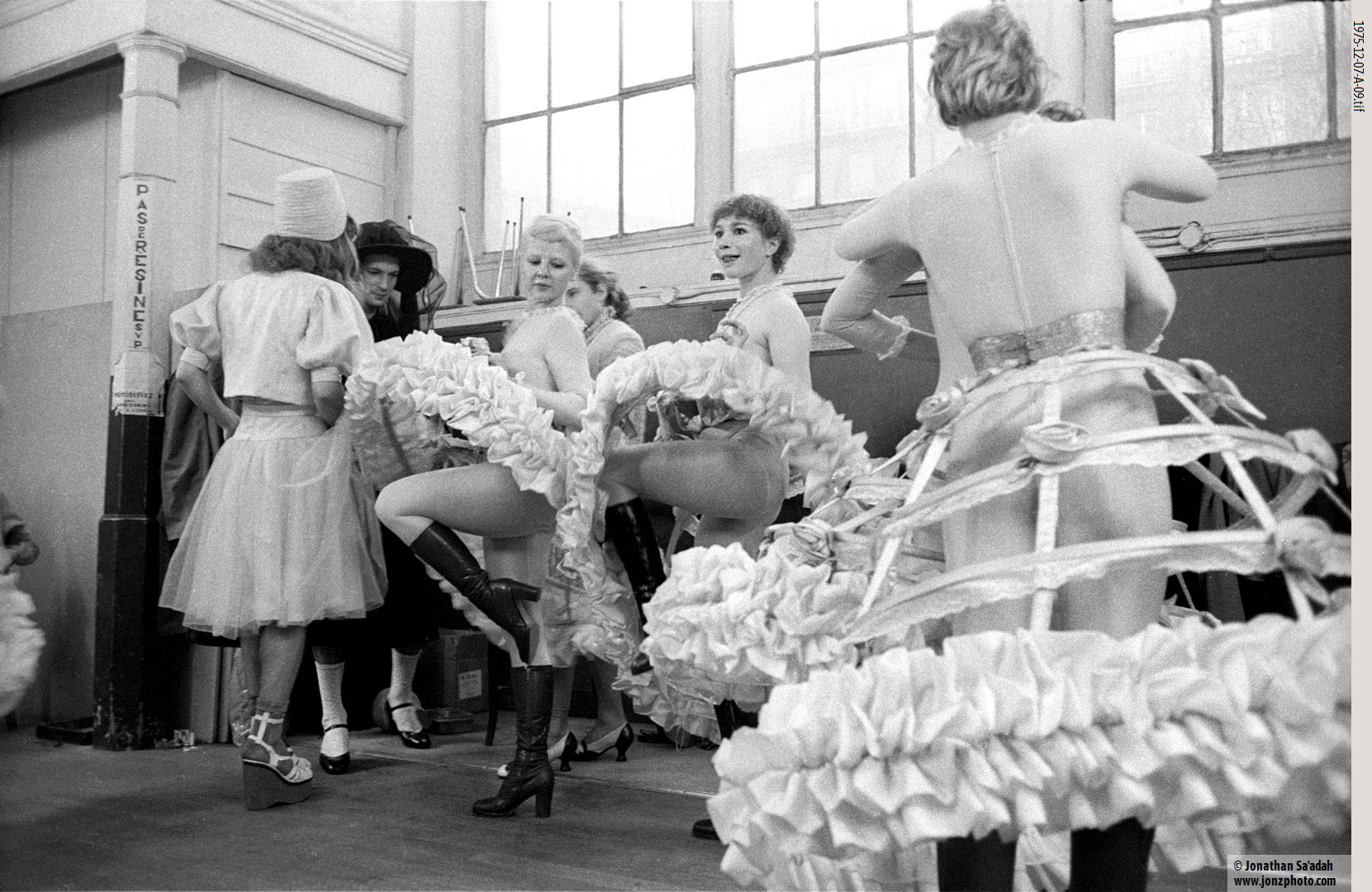
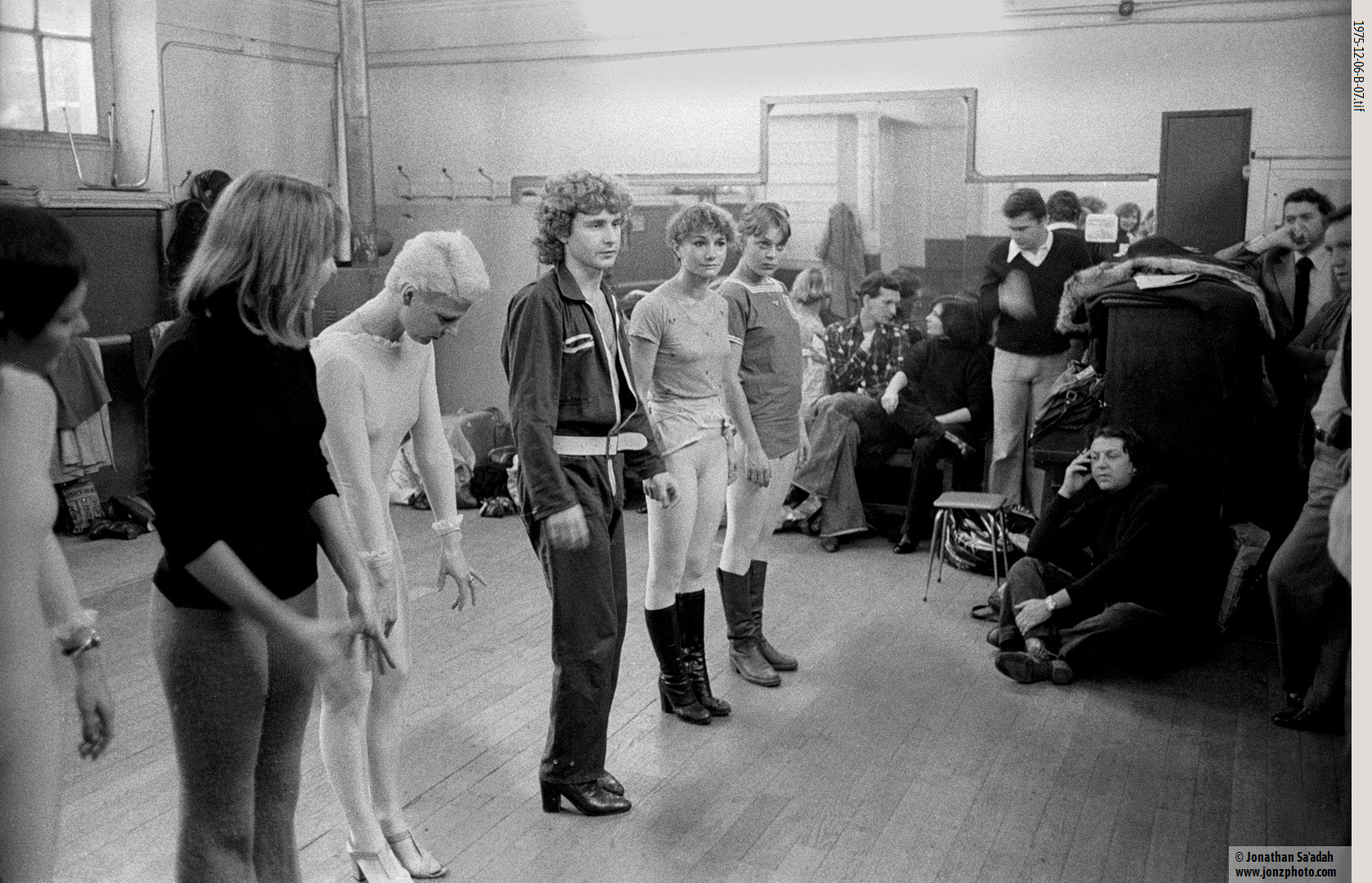
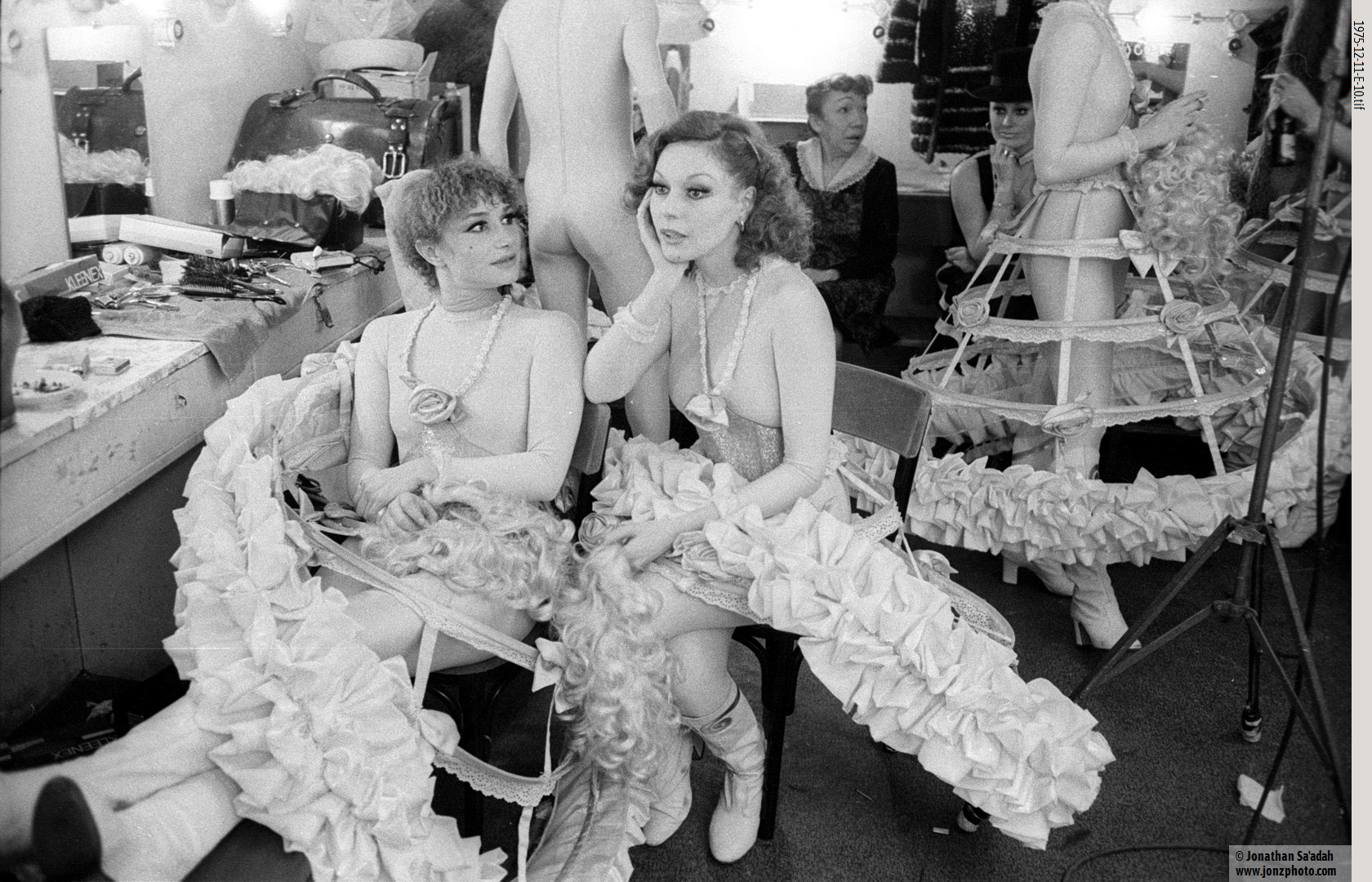
    ▲ In the final shot of the cabaret scene, a chorus line of dancing girls in hoop skirts kick their way out onto the stage. These women were practicing dancing with the hoops, which was an acquired skill.

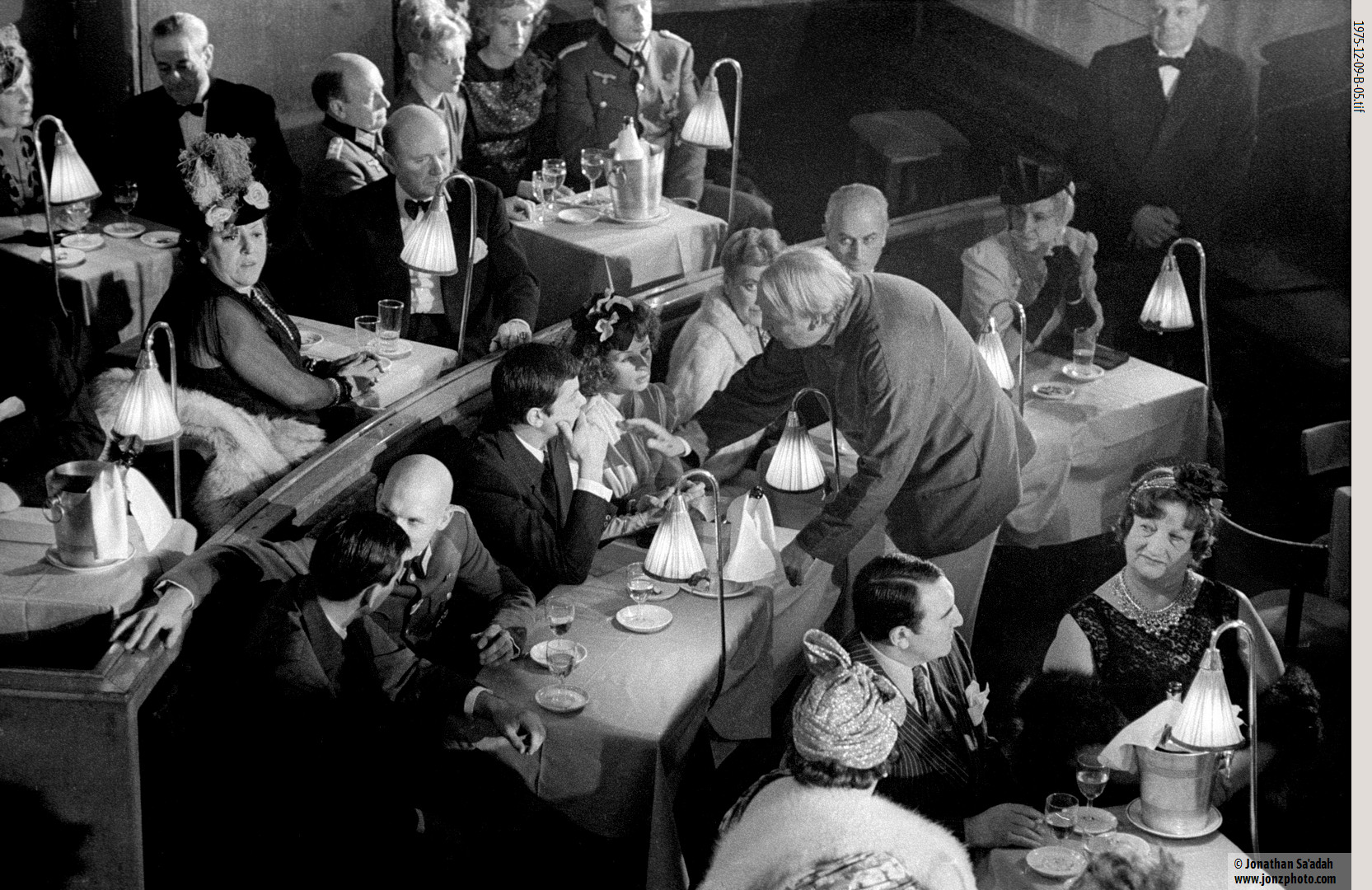
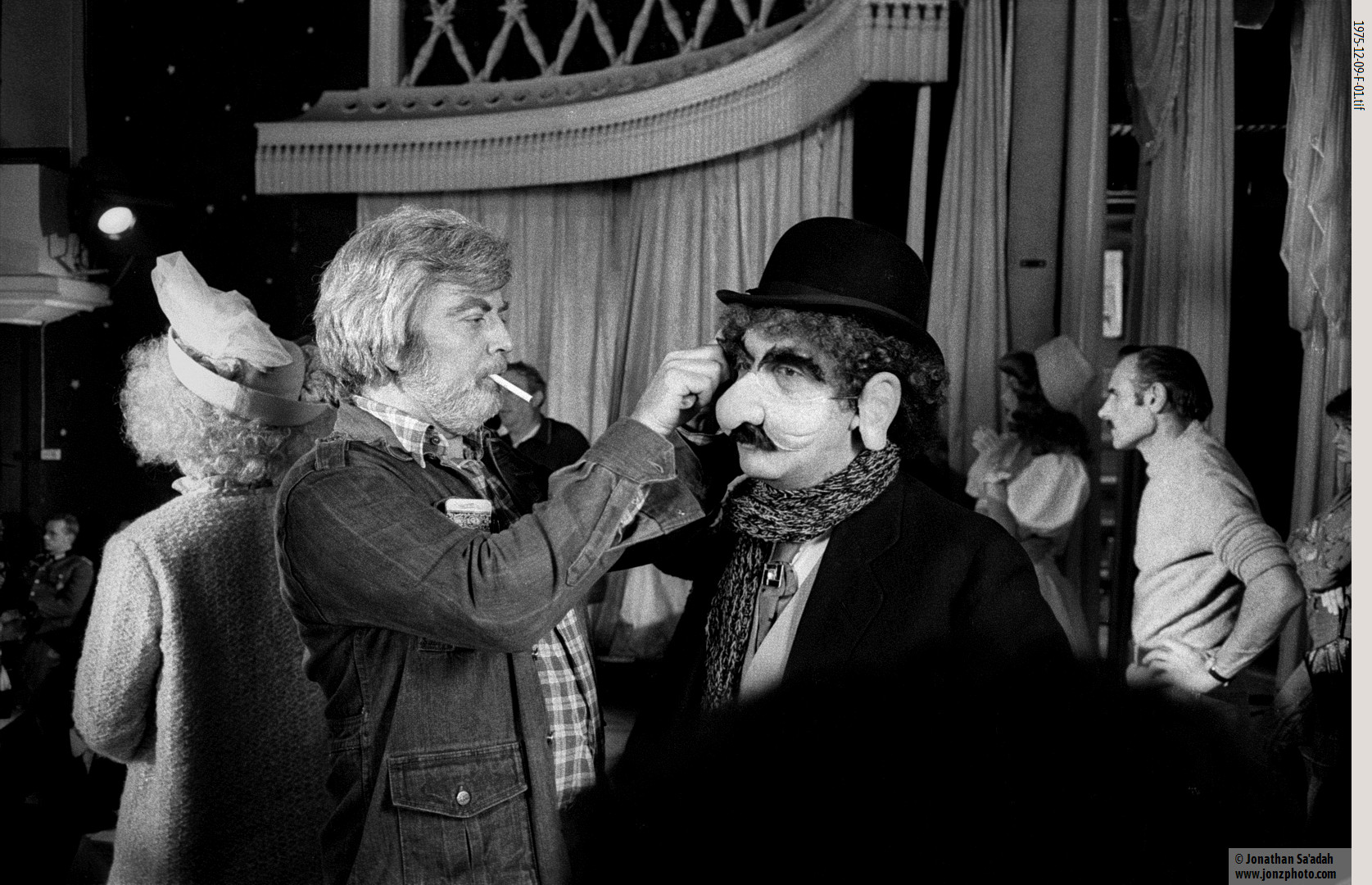
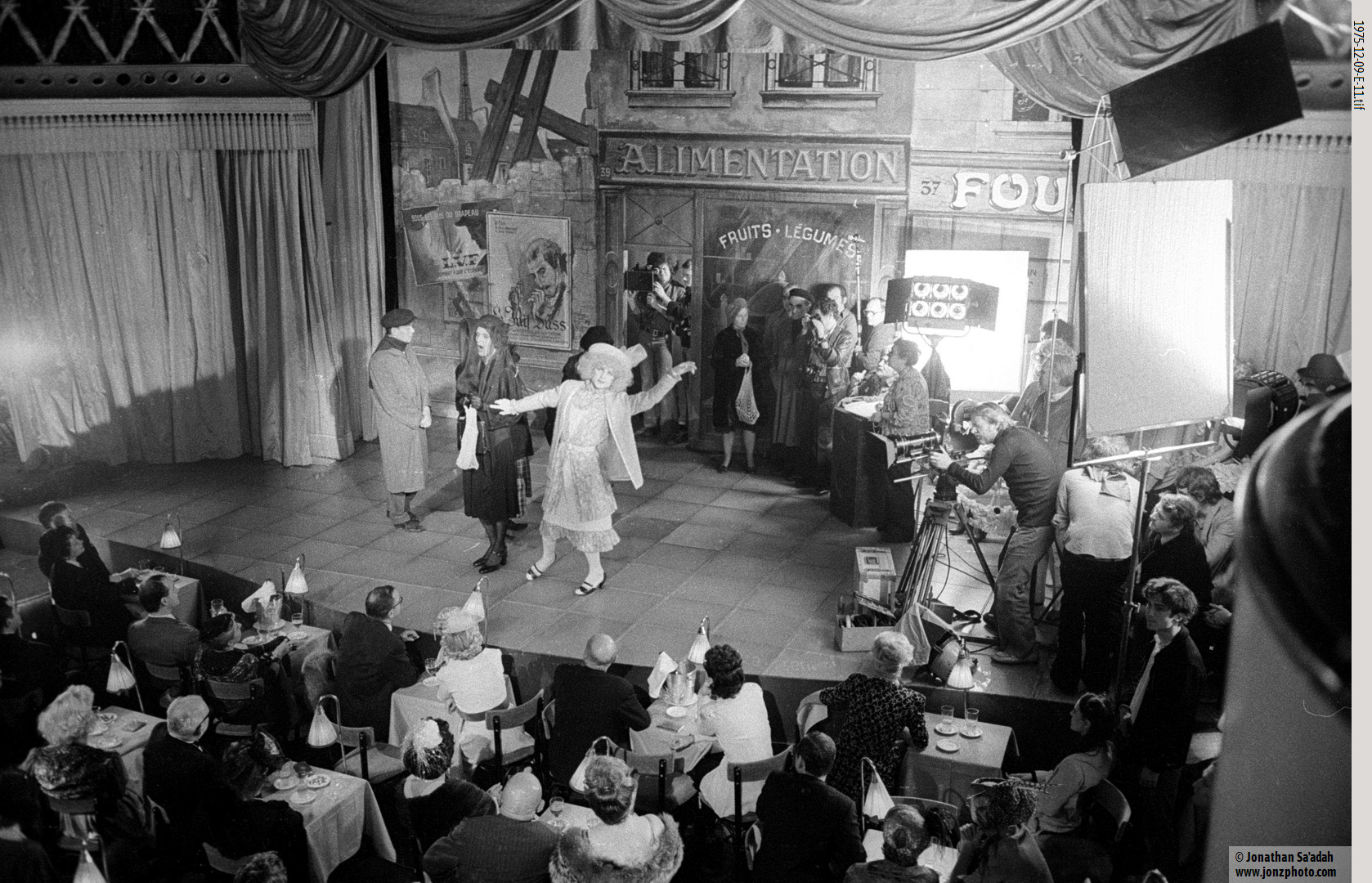
    The cabaret scene in Joseph Losey’s M Klein, which occupies a full five minutes in the film, is the pivotal scene in the movie – when Klein first wakes up (with some prodding from his girlfriend) and realizes that the racist skit that he and others are mindlessly applauding in a WWII Paris cabaret is actually insulting, repulsive and sinister. The scene was drawn out as a sketch in the original screenplay but was developed in detail as Losey worked with the cabaret artist Frantz Salieri to bring into focus the violent hatred that underpins the action in this scene and the film overall. Losey created an audience of predatory scavengers to applaud and dine while watching the anti-Semitic stage show.

    Joseph Losey directing actors

    Losey Salieri collaboration
    Frantz Salieri was given the role by Joseph Losey of creating the stage show component in the film’s cabaret scene. Salieri, a multi-discipline artist working under a variety of names (Francis Savel as a painter, Dietrich de Velsa as film director), later collaborated with Losey on the film Don Giovanni. As a painter (Francis Savel) he had been the subject of an 18 minute documentary portrait (“Le Journal d’un Combat, Guy Gilles, 1964) which captured his painting process and, interestingly enough, was narrated by Alain Delon. A later work under the Dietrich de Velsa identity was his 1980 film, Équation à un inconnu (Equation to an Unknown), which was an erotic rendering of queer culture in France in the period preceding AIDS and was distinguished by his directorial vision.

    Several years prior to the filming of M Klein Salieri created a Parisian transvestite cabaret show called “La Grande Eugène”, which performed on rue de Marignan in the 8th arrondissement in Paris and was known for its flamboyance and innovative theatrical staging. Salieri created a show that represented a radical departure from what was offered in the traditional Parisian entertainment venues, featuring transformiste performances with elaborate drag shows and sophisticated theatrical presentations. The show was the subject of a David Bailey photo essay published in London Sunday Times in 1973. The cast of “La Grande Eugène” was used as the mainstay for the cabaret show in M Klein. It’s likely that Losey had learned of Salieri’s work from the 1973 run of “La Grande Eugène” in London, and that’s what led to the connection and his collaboration in this film.[1] Losey, throughout his life, was always on the lookout for talented artists whose work he perhaps could incorporate in his film projects. Examples I knew of personally were Salieri, who he used, and also Pilobolus,[2] and jazz musician Don Cherry, both of whom he never collaborated with but followed closely.

    Losey’s concerns and background in theatrical production
    In approaching the scene Losey concern was in creating content that might be attractive to racists. This concern arose because of a previous incident at La Cinémathèque française in Paris where a film festival screening wartime films had to be closed down because the anti-Semitic content attracted an audience looking for and cheering along what was shown. His goal was to find a way to stage the cabaret show in a manner that wouldn’t appeal to racists, and by using male actors to play the female roles, he was brilliantly successful in turning off racist interest.[3]

    In the script Klein tries to track down the other Klein, and in the course of this search goes looking for “Isabelle”, who he thinks is the second Klein’s girlfriend. This leads him first to the cabaret show being staged in the Parisian cabaret “La Nouvelle Eve”, and then to the stage entrance where he bribes the concierge to let him question one of the dancers. After questioning the dancer (Lola) she says that “Isabelle” is really “Cathy” and and that she doesn’t work at the Cabaret any more, but rather in a munitions factory near Metro Ballard.

    Losey was adept at actual theatrical stage managing, with many credits during his American career. He was, for example, the stage managing the 1946 Academy Awards, so he knew how to create dynamic flow and excitement. He was good at timing pieces to come together and create energy, and he worked with Salieri to that end.

    But there were challenges to the shooting at La Nouvelle Eve.

    Issues in working on location
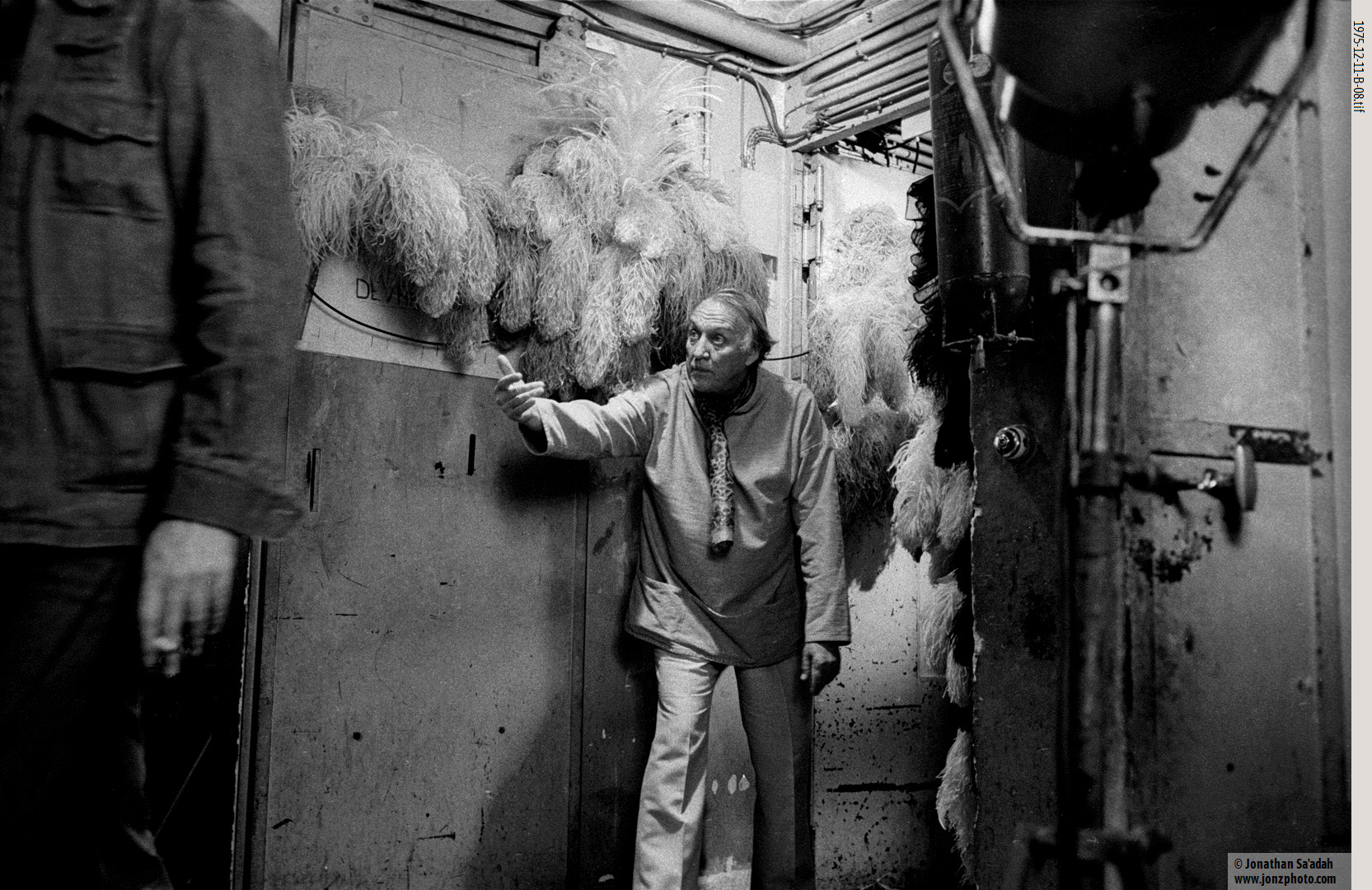
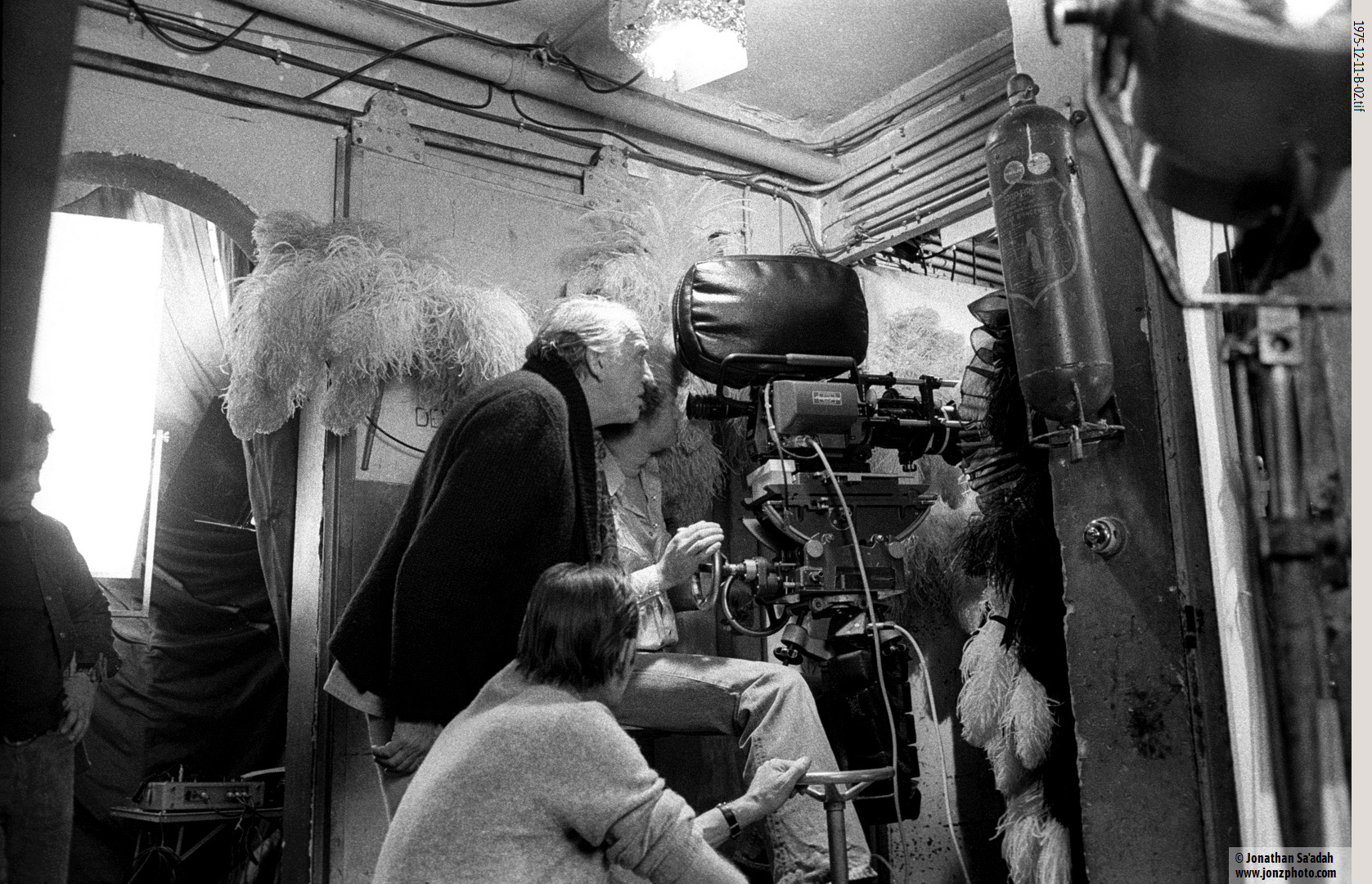
    It was technically difficult to work in the cramped, narrow corridors of the location. As a result cinematographer used the 35 mm camera both shoulder-held and on a crab dolly, both of which were difficult and took a lot of skill and strength under these conditions. Klein is first seen questioning the concierge. The camera is on a hydraulic stand (shown in the photographs) for that shot, but then is shoulder-held in the stairwell, and all the shots flowed together seamlessly. Gerry Fisher, the Cinematographer, had set up the lighting to work with almost no space.

    The two sequences that make up the cabaret scene were shot first for the stage show in the cabaret La Nouvelle Eve on December 9th and 10th, and then the stage entrance scene was filmed at the same location on December 11th.

    The results of the Salieri-Losey collaboration show camera and actor movement tied together skillfully. The result was the creation of the two memorable central scenes in the movie.

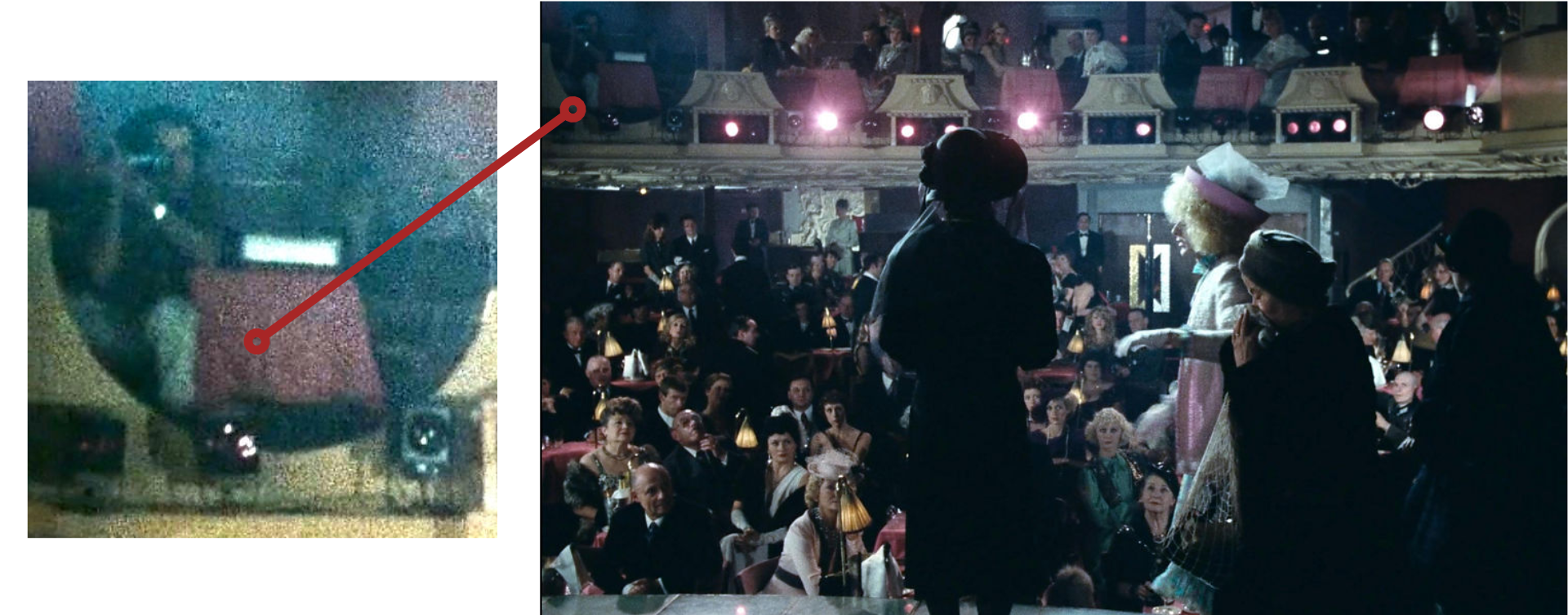
    It’s also my only ever appearance in a feature movie. I was actually at my perch taking the photo above and got through editing unnoticed. It’s the third shot of the cabaret performance sequence (2:03:27).

    Frame © Lira Films – Nova Films

    Other related posts:
    Joseph Losey’s film M Klein: A behind-the-scenes look
    Exploring location shooting in Joseph Losey’s M Klein
    Homage to Margot Capelier, Casting Director
    Sign up to get future posts on M Klein and other subjects …

    [1] Le Monde. 1986. Frantz Salieri, May 3, 1986.

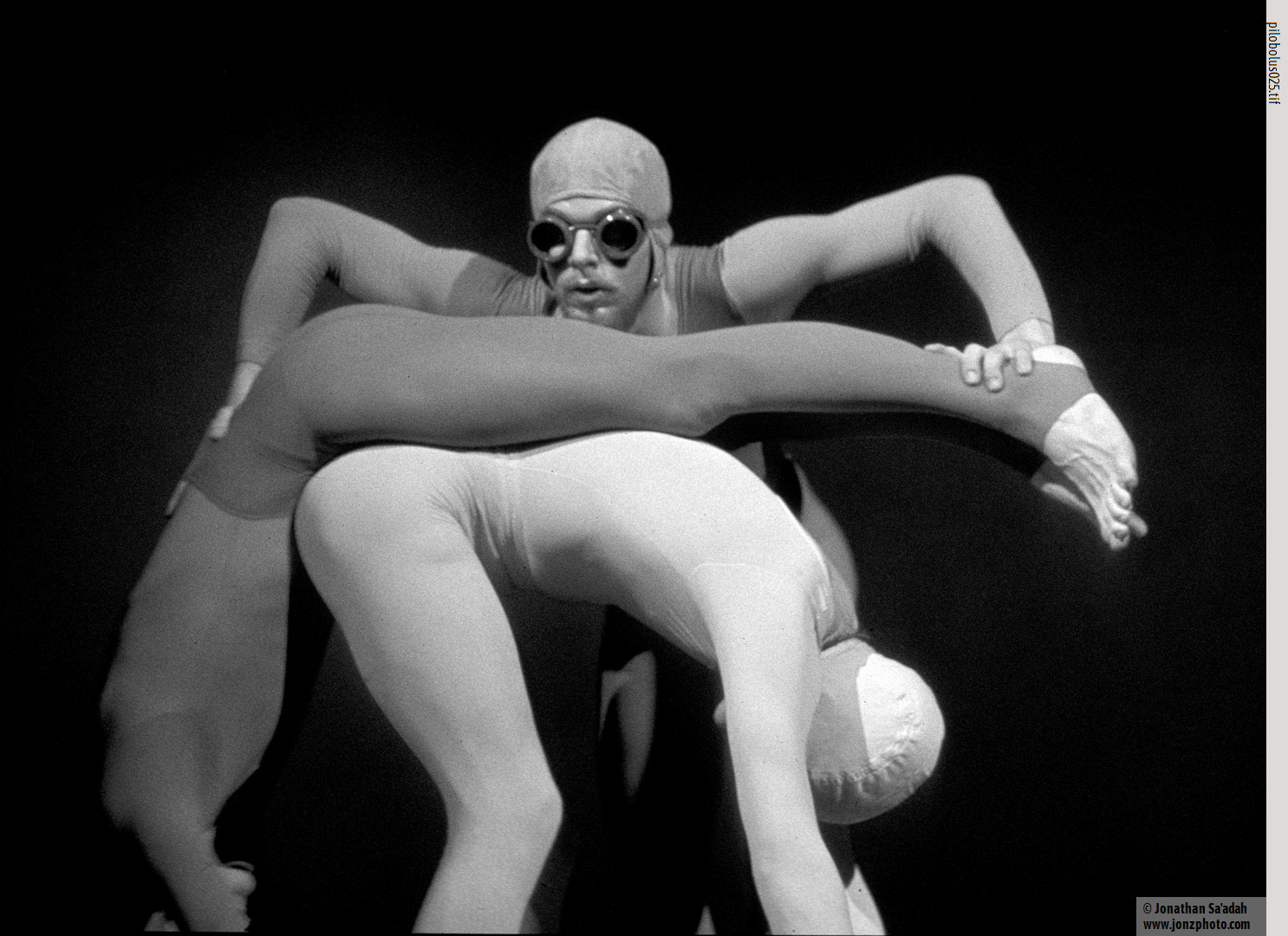
    [2] Salieri’s conceptions and imaginative costume design were more radically stylized but recalled for me the costumes Pilobolus used (for instance, the “Tall Ladies” in the dance “Untitled”) in the same period.

    [3] Losey, Joseph, and Michel Ciment. 1985. Conversations with Losey. London ; New York: Methuen. Pages 347-348.

  • Rebels in class: The birth of Pilobolus Dance Theater

    There aren’t many arts organizations that survive fifty years, but the energetic dance group Pilobolus has surpassed the half-century mark and is still going strong. That’s not to say that getting to fifty has been easy. Part of its secret in attaining longevity has been that since birth it’s had an audacity and questioning of conventions that’s part of its DNA. The group has not been afraid of going against the rules and even reinventing itself when needed. When under stress, much like the fungus from which it took its name, Pilobolus fires out high speed spores for propagation and that’s proven to be an effective strategy for survival.

    Pilobolus in Center Theater, 1972
    Pilobolus never cared too much for what was expected of dancers. Rebellious by nature, they defined a new vocabulary and were rewarded with quick critical acclaim.

    The original hot spark that ignited Pilobolus was struck in Professor Alison Chase’s dance class at Dartmouth College. It was 1971 – Vietnam years – and the Dartmouth administration, along with parts of the student body, were still stubbornly holding on to being an all-male college. Regardless, women were beginning to be a presence on campus. In reality, a majority of the students were rebellious and seeking teachers who not only opposed the war but embraced alternative approaches. Alison Chase was young – closer in age to her students than to other professors in her department – and as a teacher she had a collective and improvisational style of teaching choreography that caught the times. Just that there was a dance class on campus was a big step for the college. When most professors at Dartmouth were stodgy academics often tacitly supporting the status quo, Chase was a young attractive female teaching testosterone saturated students in leotards – a sure recipe to create sparks if not smoke and fire. She connected them with the world of dance, and in doing so she altered their lives and they, in turn, hers.

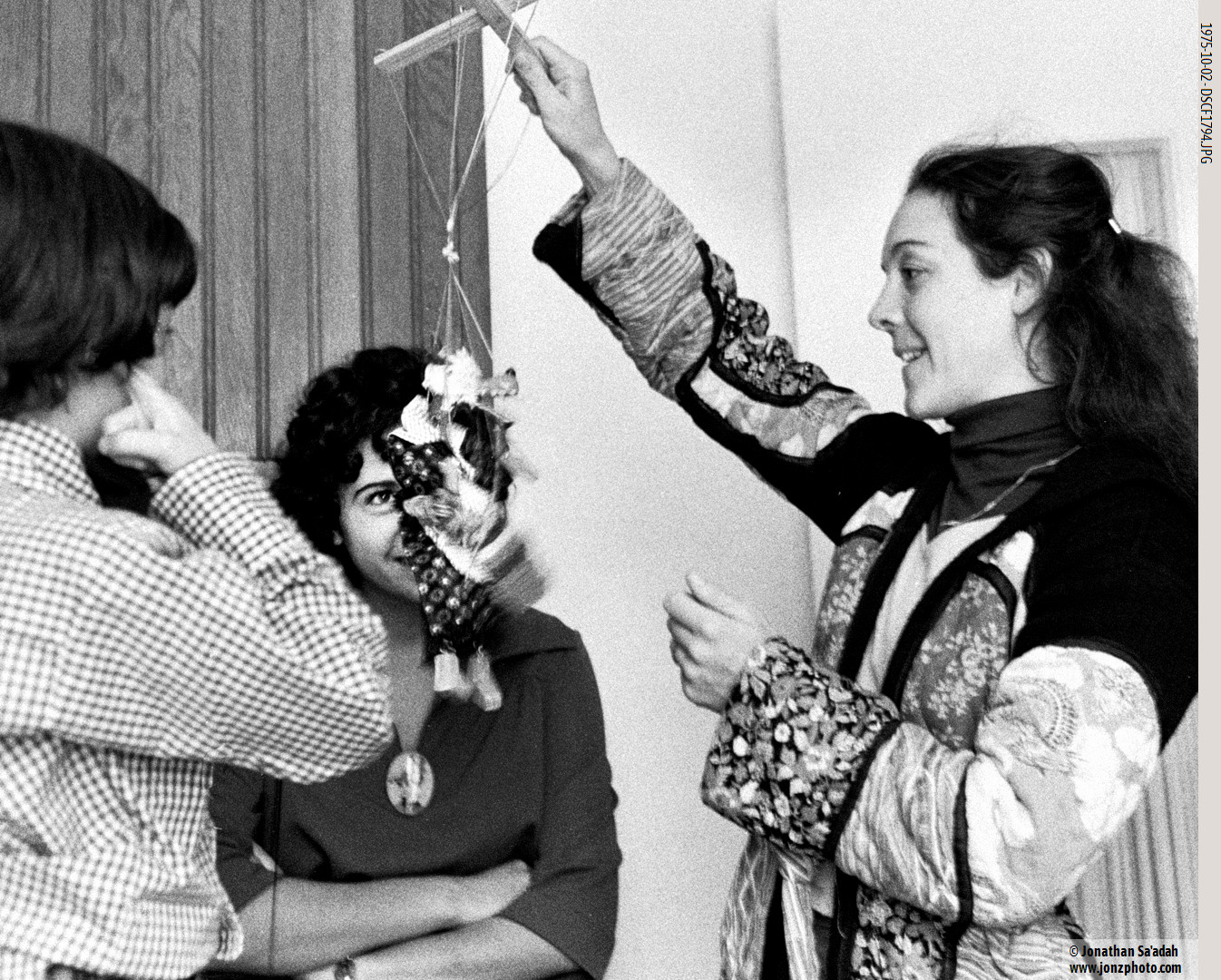
    Alison Chase entertaining Martha Clarke’s son with a marionette. October, 1975 in-between performances at Espace Cardin in Paris.

    I too was a Dartmouth student during those years, and the original dancers were friends or schoolmates. Being aware of the campus buzz surrounding their work, I photographed one of their first public performances on a small experimental stage in the college’s art center.

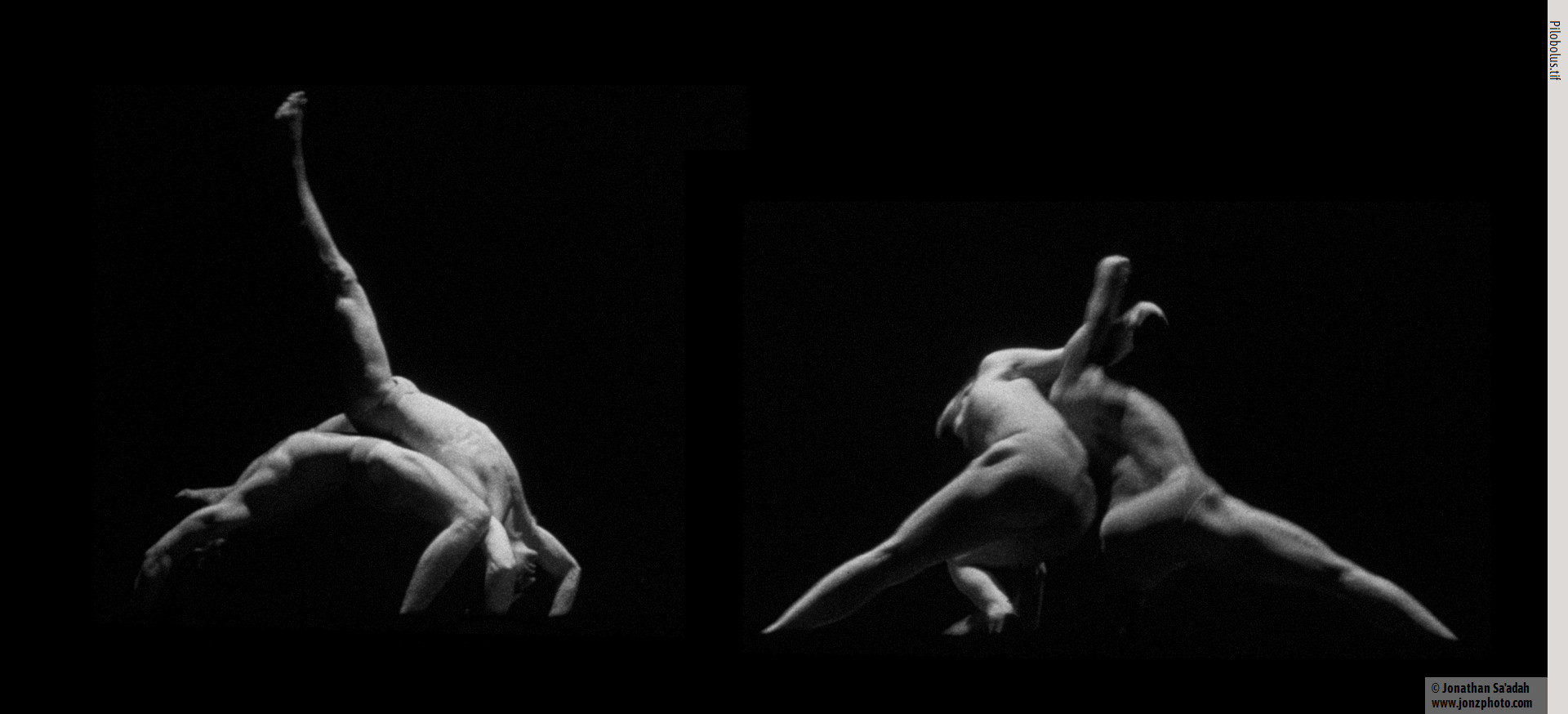
    Ocellus was a dance linking bodies in fluid, sculptural sequences. Created before the women joined by Barnett, Wolken, Pendleton, and Harris it combined strength with languid beauty and was one of their early signature pieces.

    Some months later, after graduation and during the winter of 1972-1973, I caravaned with them through northern New England photographing some of their early public performances. These performances were on small stages in college towns. The truth was that having a stage on which to rehearse and communally choreograph was as valuable to them as the small fee they were being paid. This was truly the birth period of the dance group, as it built up a repertoire and expanded from the original male quartet to six, adding two women. One, not completely surprisingly, was their former teacher and the other, Martha Clarke.

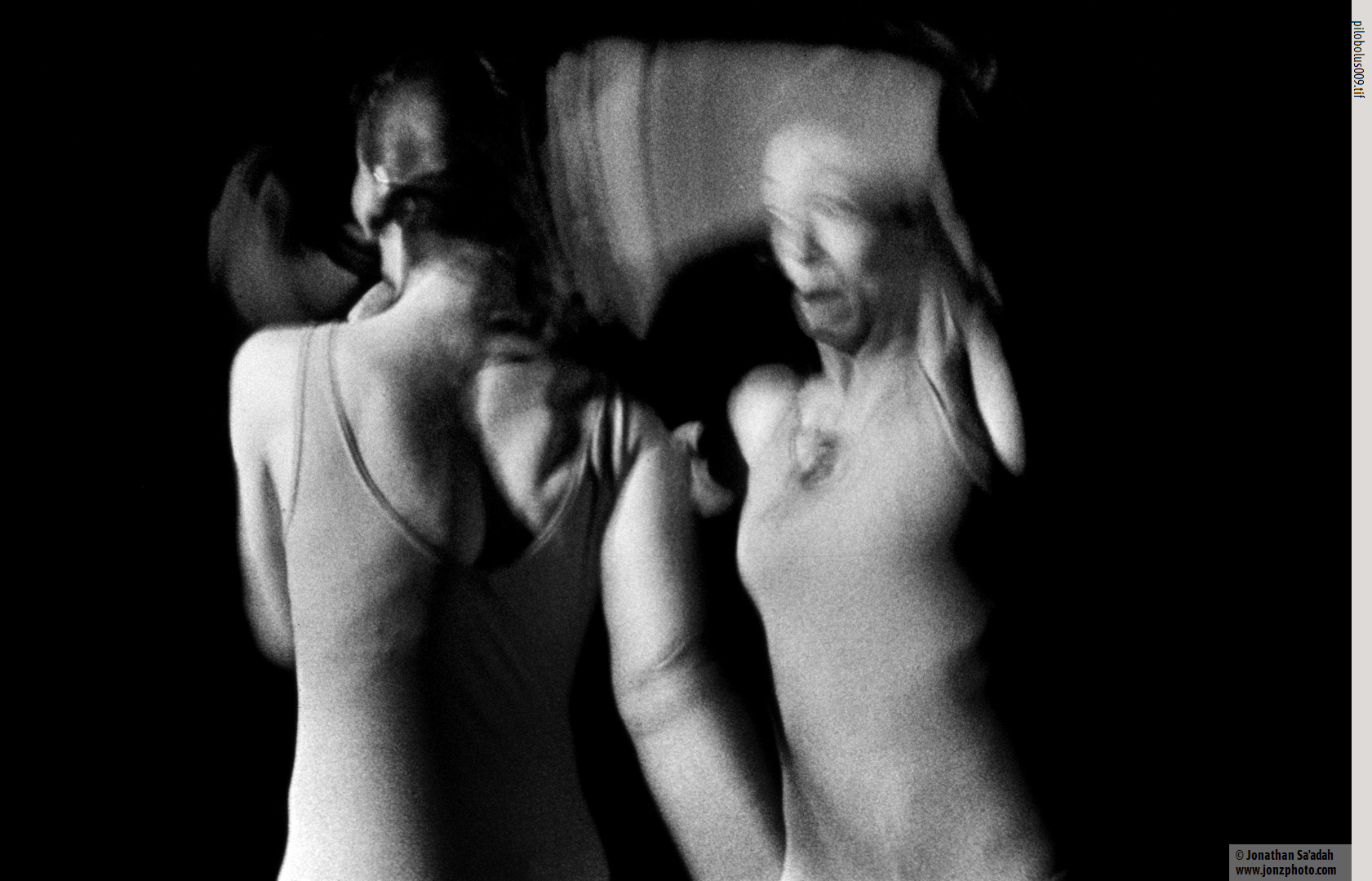
    Martha Clarke and Alison Chase in Cameo (1973), their first duet after joining Piloblus.

    In looking back at these photographs I think how different they would have been if I were shooting them today. They were shot on high speed black-and-white negative film (Tri-X) that was then processed to reverse the image, yielding a positive transparency. The reversal was to get around not having a darkroom, since I was living in the woods with no electricity and only rudimentary plumbing. The grit (organic material) in the water shows up as a lot of “dust” in the photos. More light was required for the exposures than what we need now, so even though I was using a Leica camera with fast lenses (and a silent shutter), taking photos that were representative of the dances was a challenge, especially since they were shot during actual performances and I was using dim stage lighting.

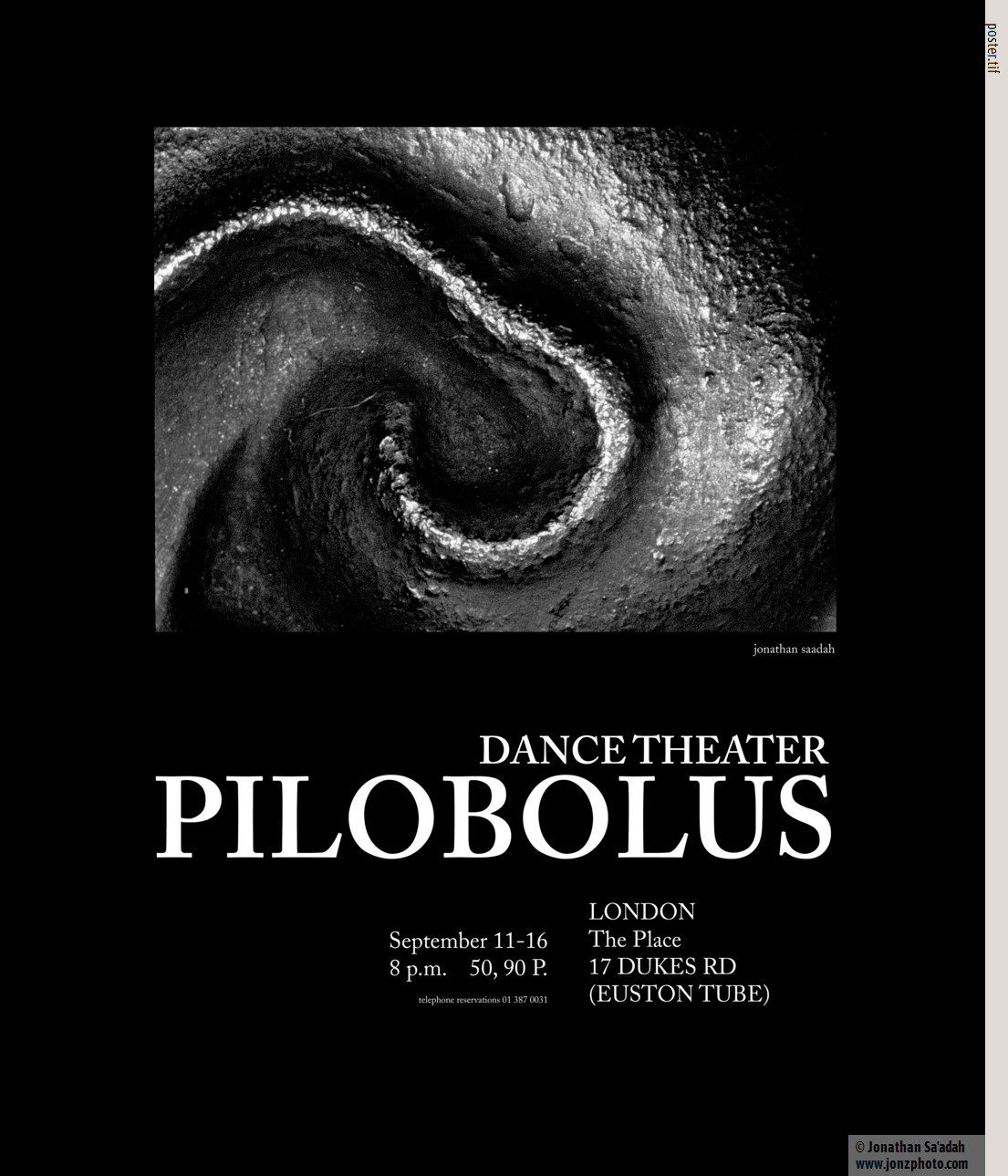
    London 1973 poster

    After these pictures were taken Pilobolus traveled to Edinburgh where it was the hit of the Fringe Festival, being awarded the “Fringe First Prize”, and continued on to shows in London. At Moses Pendleton’s suggestion, a photograph of mine (a detail of a Glenwood stove) was used for their poster. Their receptions in Edinburgh and later London were big steps to their widening success. Soon after they left their base in Vermont and moved to southern Connecticut, which is still their home. In late summer of 1975 our paths crossed again when they were in Paris performing at Espace Pierre-Cardin. It was fun to see them being courted by the European arts aristocracy, as they continued gathering steam.

    A selection of these pictures appeared in the book Pilobolus A Story of Dance and Life by Robert Pranzatelli (2024, University Press of Florida), which colorfully weaves together the complicated story threads underlying the history of this pioneering and maverick dance company.

  • Joseph Losey’s film M Klein: A behind-the-scenes look


    Joseph Losey
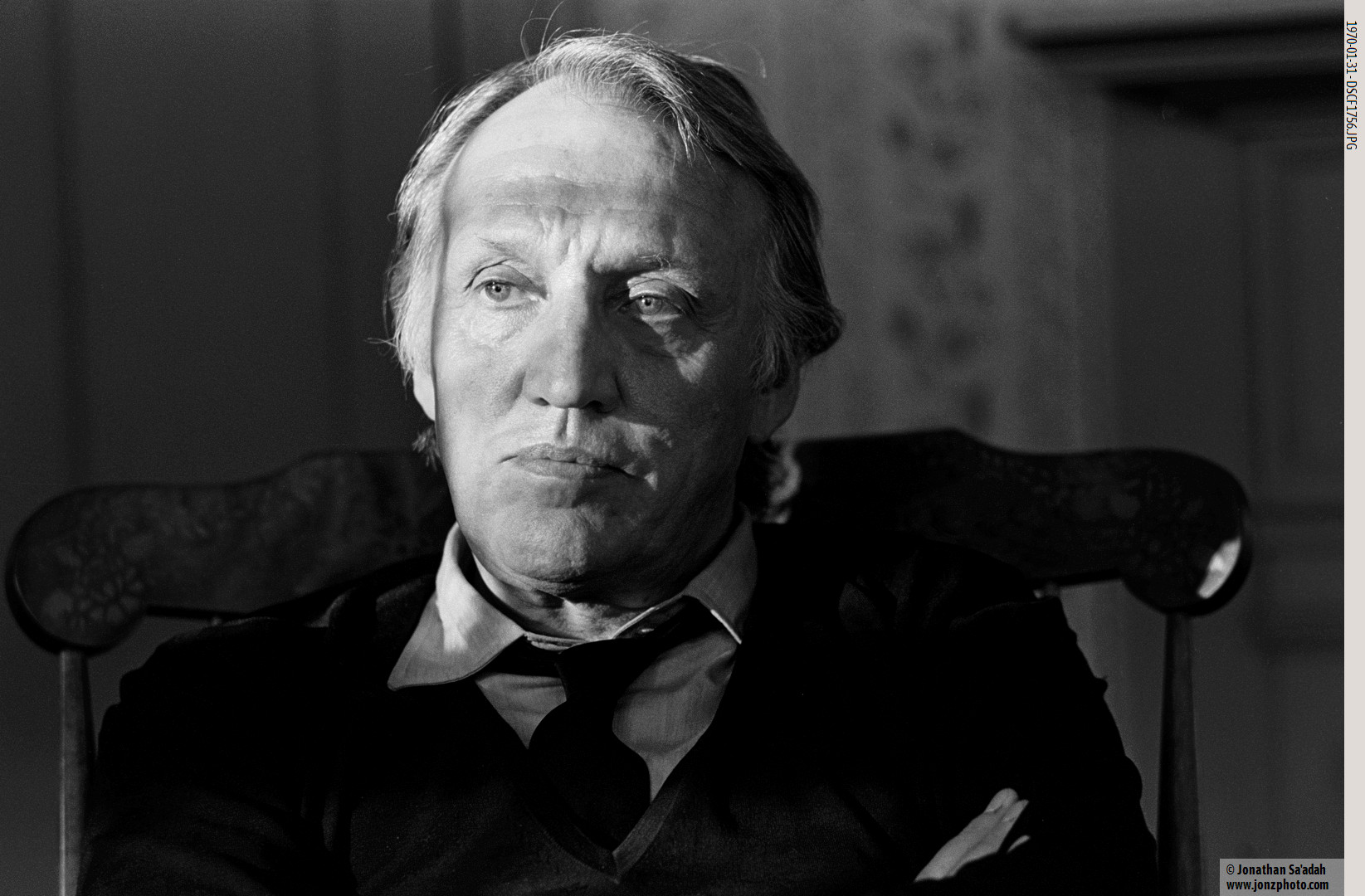
    ▲ Joseph Losey 1970

    Part of a series on the making of the Losey film, M Klein (available on the Criterion Channel)


    Joseph Losey in Hollywood

    People often don’t fit into neat boxes. Joseph Losey defied easy classification. In the 1930s and 40s he was a young, breathtakingly handsome Hollywood director with an expanding stage and film reputation, known for his leftist politics and creative directing. He drove a pink Jaguar around town and had a highly public persona decorated with female movie stars and expensive tastes. He could be gracious in one moment and furious in the next, when his quizzical grin would turn hard steel. He could also be almost simultaneously thoughtful and thoughtless, the later often fueled by large amounts of alcohol.

    Losey in forced exile and how this project started

    Losey and many other people found their match in the vitriolic storm of McCarthyism that swept into United States in the late 1940s, because of which he was forced into personal and professional exile in England.

    I met him on his first trip back to the United States in 1970. He had been hired as a “Visiting Professor” at Dartmouth College, where he picked me out of a class as a creative photographer. He returned to England after that term but we stayed in touch by letter. Five years later I received a fellowship to spend a year taking pictures in Beirut, and in late summer 1975, faced with the beginning of the Lebanese civil war, I was searching for another project to focus on. Losey suggested that I meet him in Paris where he’d give me access to photograph the making of his next film, to be shot both in a studio and on locations around the city. He wrote a convincing letter to the fellowship committee about how I should be allowed to change from low-cost Beirut to expensive Paris, and in due course I started taking pictures of him making the film M Klein in early October of 1975.

    M Klein and French attitudes towards the Jews during WWII

    I was lucky in that this film ended up being one of Losey’s enduring works. It was a disappointing failure commercially but it ranks as one of his most respected films. It also had the added dimension of bringing to light an unpopular topic in postwar French society: French racism and complicity in the Nazi extermination of the Jews and other ethnic minorities.

    Losey wasn’t the first to deal with this subject. Marcel Ophul’s 1969 documentary The Sorrow and the Pity pre-dated M Klein by six years, and Louis Malle’s Lacombe, Lucien was released in the same period as Losey’s film, but Losey’s film was also high visibility and went into distribution in France, helped along by the popularity of the lead (Alain Delon). Even though the film wasn’t popular it increased the pressure and helped penetrate the French wall of resistance to even talking about what had happened during the war.

    On the production side, both the Casting Director, Margot Capelier, and the Art Director, Alexandre Trauner, were Jews living in Paris at the start of the war (Capelier born there, and Trauner an immigrant) who had been forced to flee to southern France to escape the Nazi occupation, and the centrality of the Jewish persecution in the screenplay attracted them to the project. Capelier had lost members of her family. The film was typical of Losey’s best films: embracing large themes and weaving them into a cautionary tale with present-day relevance.

    What made M Klein unusual

    M Klein was the twenty-eighth feature length film directed by Losey, but his first in French. It tells the story of Robert Klein, a privileged but shady French art dealer who, through wartime suspicion and his own subsequent actions, becomes trapped in a web of bureaucratic confusion, ultimately coming face to face with the persecution of Jews during the WWII Nazi occupation of France.

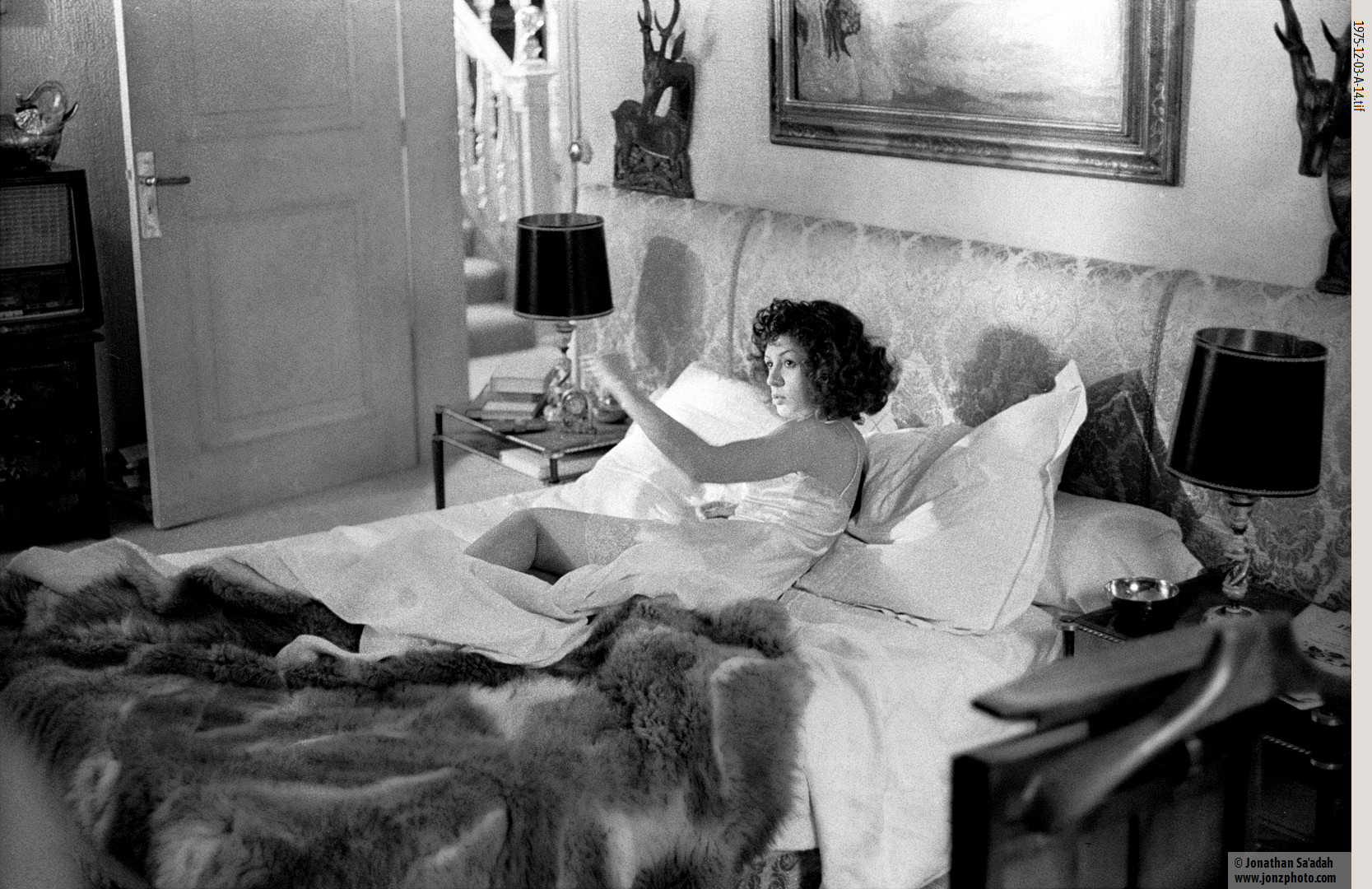
    Robert Klein’s girlfriend Jeanine (Actress Juliet Berto) resplendent in his bedroom. She felt doomed to a life in bed, and Berto played her character as bored and petulant.

    There are, in fact, two M Kleins: Robert, who believes he is “French and Catholic since Louis XIV” and another who is a Jew fighting for the Resistance. The Catholic Klein, smoothly played by Alain Delon, is drawn like a moth to the Jewish Klein. Delon is joined by a standout cast including a caustically dour Jeanne Moreau, a two-faced French lawyer played by Michael Lonsdale, Suzanne Flon who gives a nuanced portrayal of the Jewish Klein’s concierge, and a laconically skillful performance by an elderly Louis Seigner in one of his final roles, as Klein’s father.

    Most films contain a disclaimer that they are fictional. M Klein flips convention around, stating right at the beginning that what is shown is based on a composite of true stories from 1942 France.

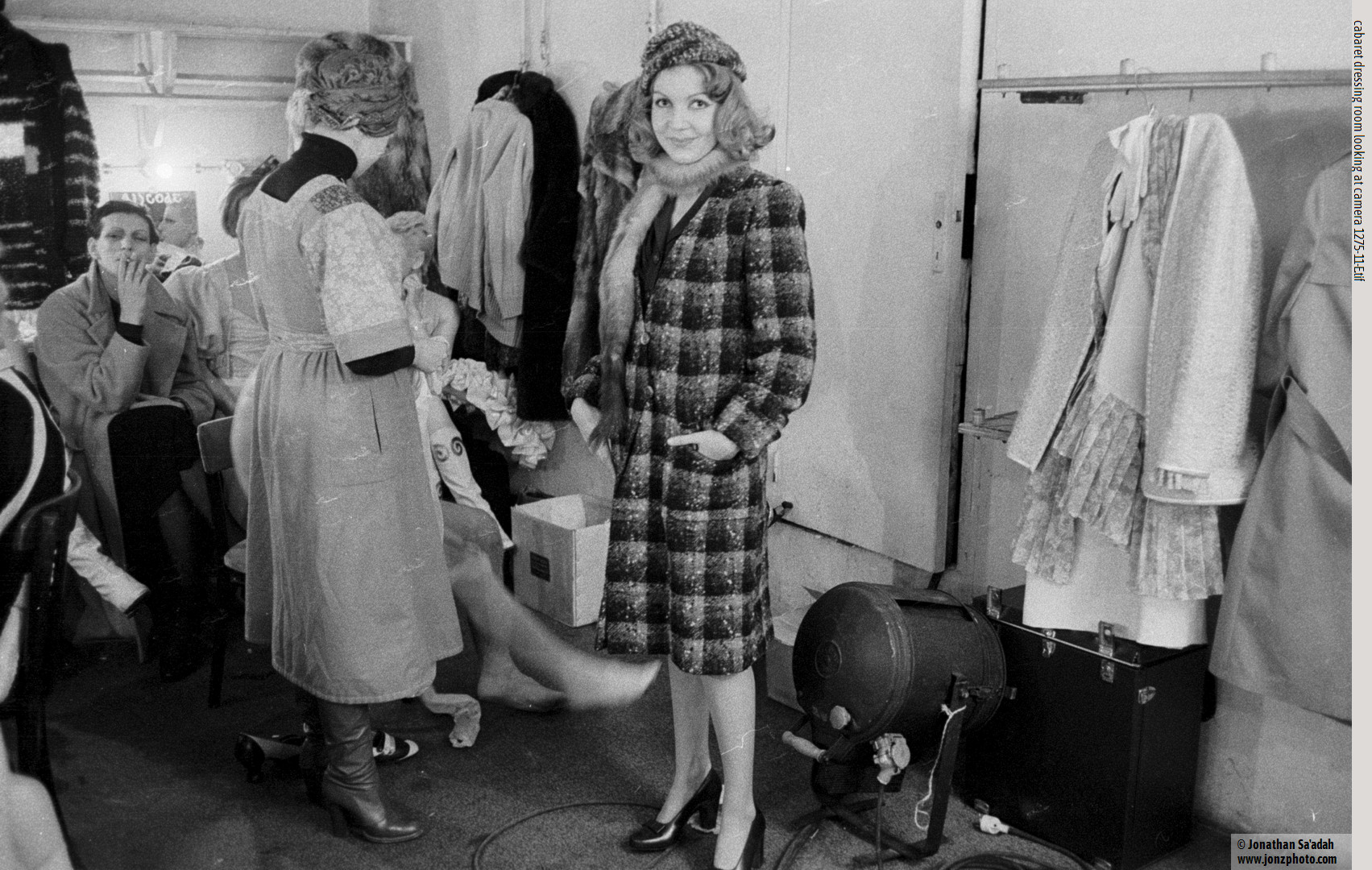
    Costume fitting Transvestite performers being fitted with costumes for a wartime cabaret scene.

    In filming this story, Losey has several themes, and all of them center around questioning racism. One is that he highlights the transient nature of human identity. Who are we, how do we define ourselves, and how do others define us? Robert Klein is a comfortable, refined French Catholic minding his own business during the war period. However, when he is mistakenly identified as a Jew, his world is turned upside down. In delving into his past he is forced to confront the fact that his identity is not as fixed as he was brought up to believe – that there are shades of grey that are easy to exploit in a fascist environment.

    The film also deals with the question of societal and personal guilt in racism. Robert Klein is not a Nazi sympathizer, but on the other hand he doesn’t much care (or think) about what is happening. He is a man who, like many others, is content to go about his business and ignore the suffering of others. The end of the film makes it so he has to confront his own complicity in the racism that he had ignored before.

    Finally, there are themes of memory and history in constructing narratives of racism. As Robert Klein delves deeper into the mystery of his mistaken identity, he begins to uncover a web of lies and deception that have been woven around him since childhood by his family. He realizes that the past is not always what it seems, and that truth can be elusive, and again can easily be used against a person.

    M Klein is a thought-provoking film that explores some of the most complex and difficult themes of the 20th century. It is a film that challenges us as viewers to confront our own beliefs and assumptions about identity, guilt, and history. It’s not by accident that these themes attracted major actors and film professionals who were, like Joseph Losey, committed to social justice and truth, nor is it at all surprising that in view of its unpopular themes the film failed to find a favorable reception in France. What made the M Klein unusual was to have committed people working together on a theme that they knew would be unpopular, but still wanted to make it and advance the discussion of racism during the war.