Tag: Transit

  • The Driver’s Dilemma: My Racing Dreams in a City of Bike Paths

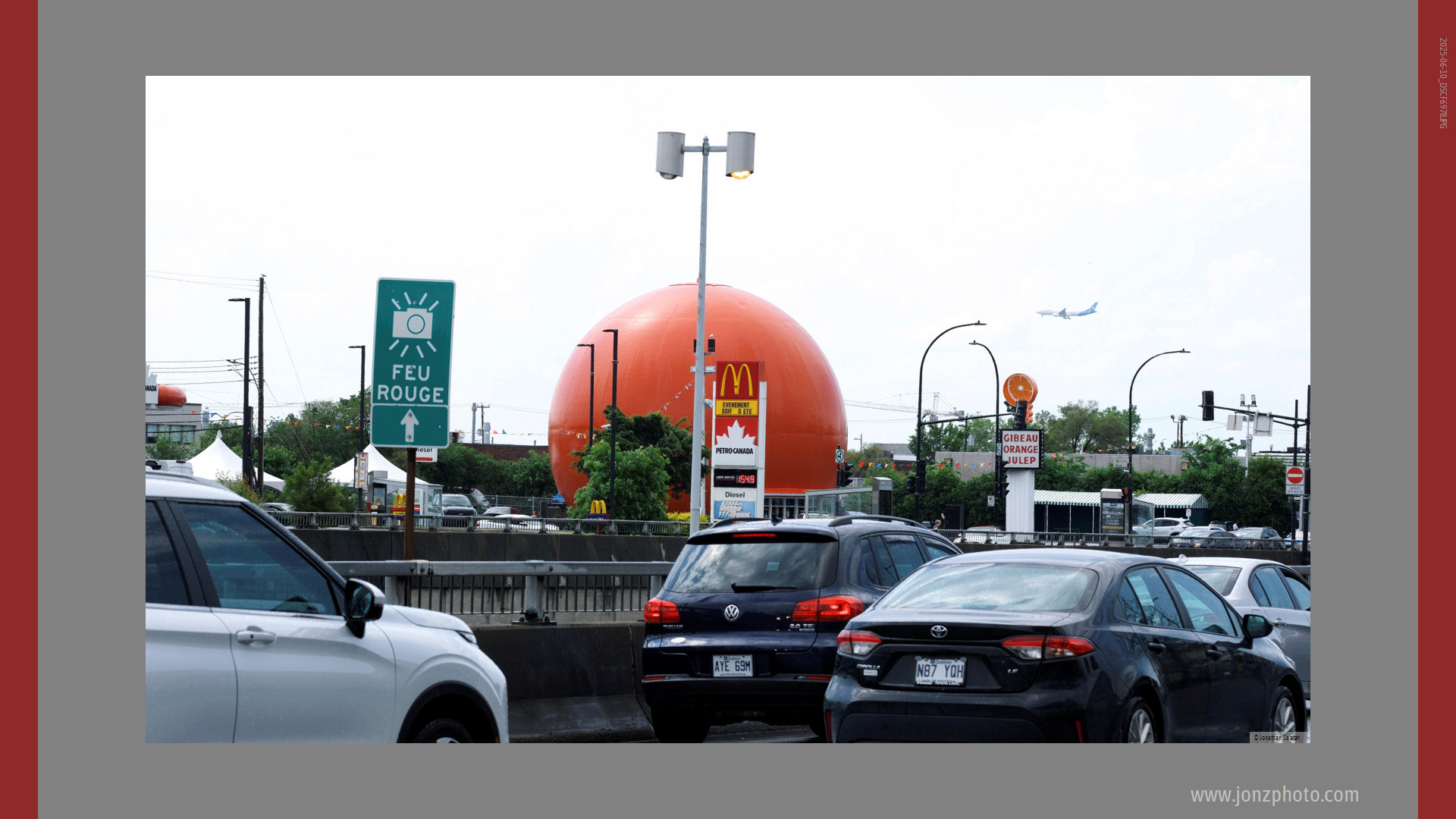
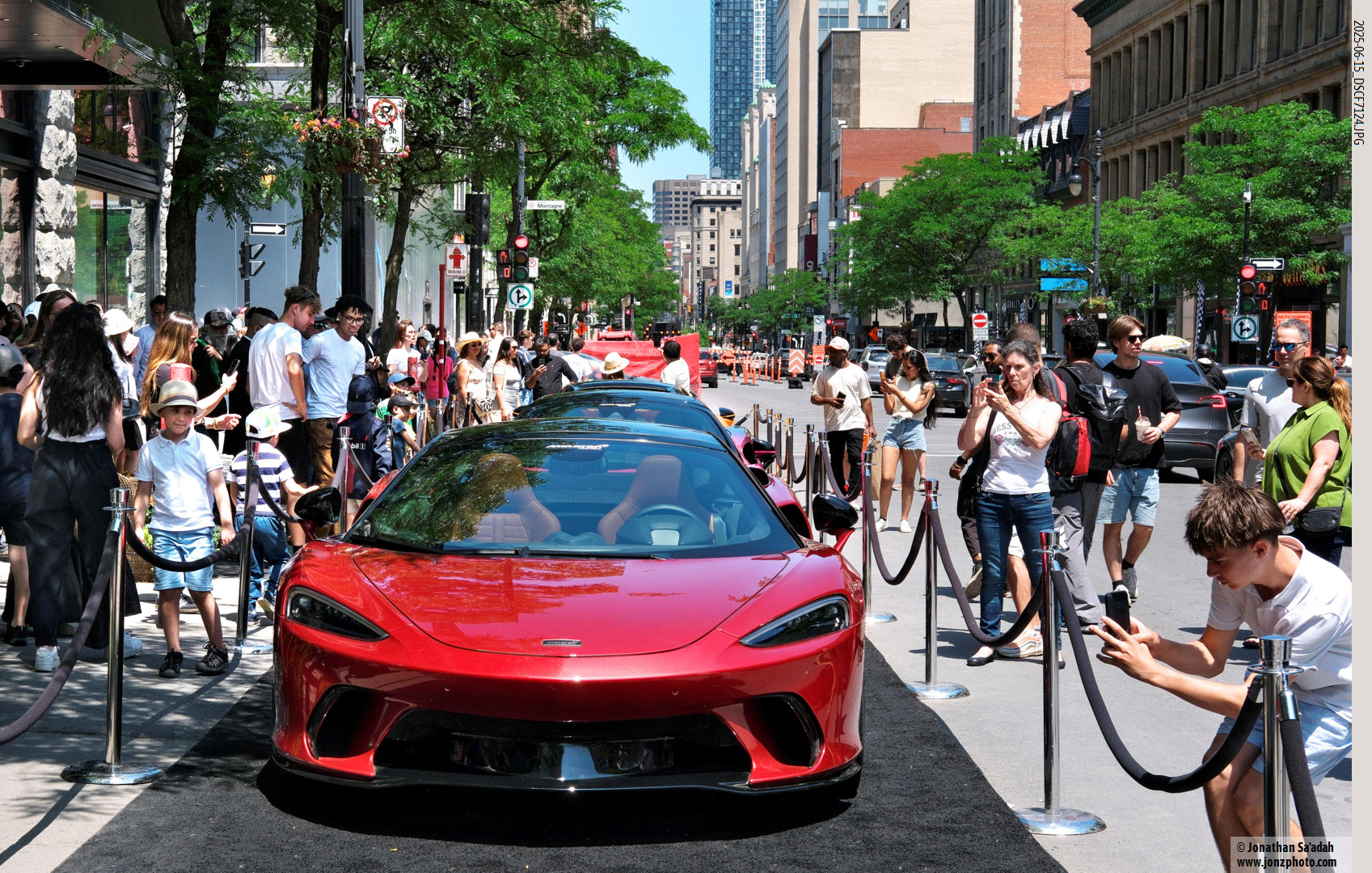
    ▲ Formula 1 weekend, Montreal, 2025.

    There’s something beautifully absurd about dreaming of Formula One glory while religiously using the metro and my bike in the city. It’s like being a vegetarian who fantasizes about winning hot dog eating contests – technically possible, but requiring some serious mental gymnastics to reconcile the contradiction.

    The Making of a 36-Horsepower Speed Demon

    My personal journey to Formula One dreams began in the most modest way possible: behind the wheel of my parent’s 1958 Volkswagen Beetle. While other kids were playing touch football or watching TV, I was sitting in our family’s parked Beetle, gripping the steering wheel with white knuckles, shifting through imaginary gears with the precision of someone who was still more than ten years away from having a driver’s license.

    It was an ironic situation even then. Here I was, fantasizing about joining the ranks of Stirling Moss – while my automotive reality consisted of a parked car that even when running took roughly the same time to reach highway speed as it takes to get from Lionel-Groux to Snowdon (stops on our metro).

    Those BBC radio reports crackling through our family’s shortwave radio painted vivid pictures of Monaco’s glamour, but they somehow missed mentioning the modern issues of environmental rape and pillage tied to petro use. They certainly didn’t prepare me for the cognitive dissonance I’d experience many decades later as a Montreal resident torn between childhood racing fantasies and an adult commitment to sustainable transportation.

    Montreal’s Great Transportation Transformation

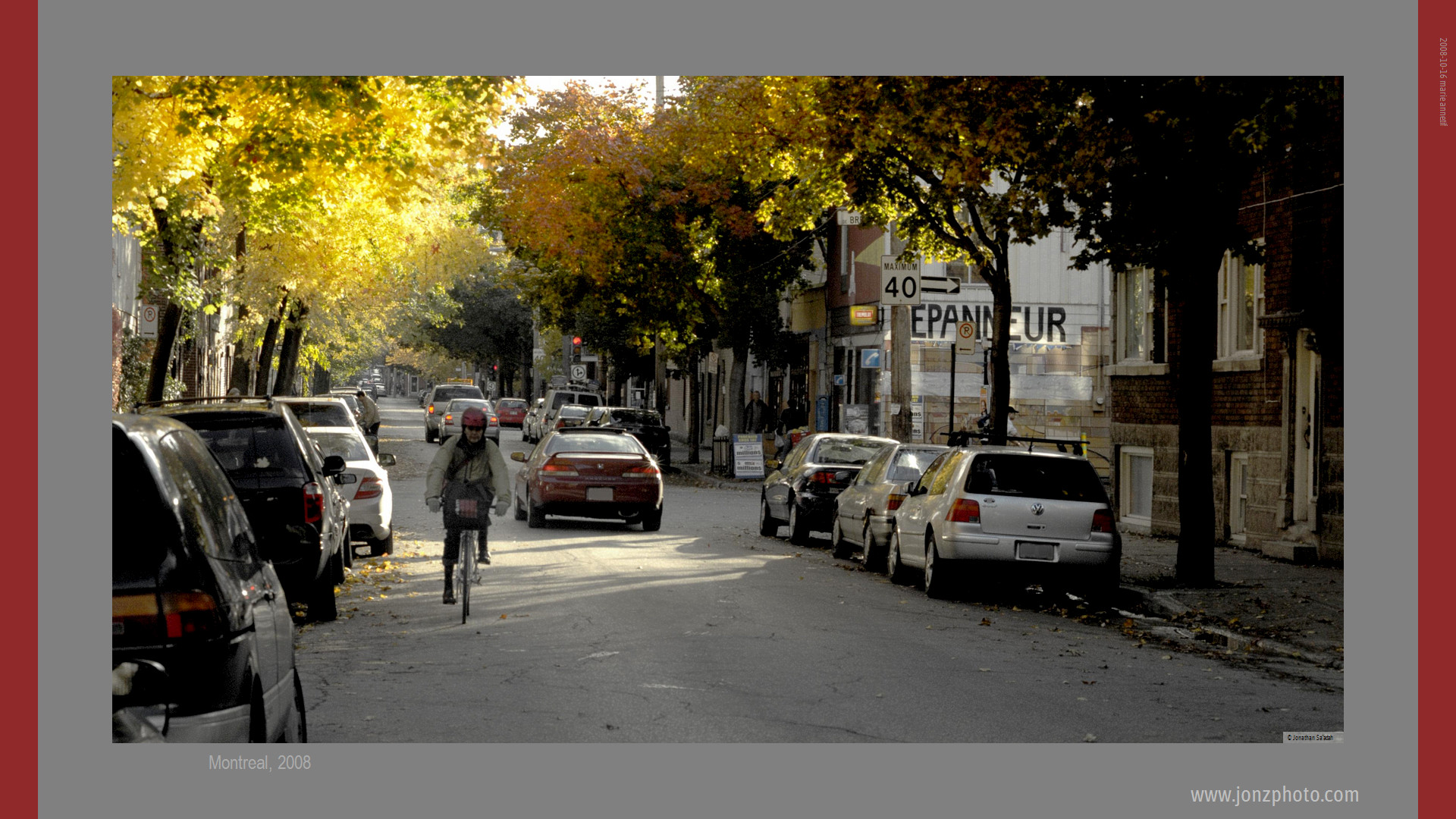
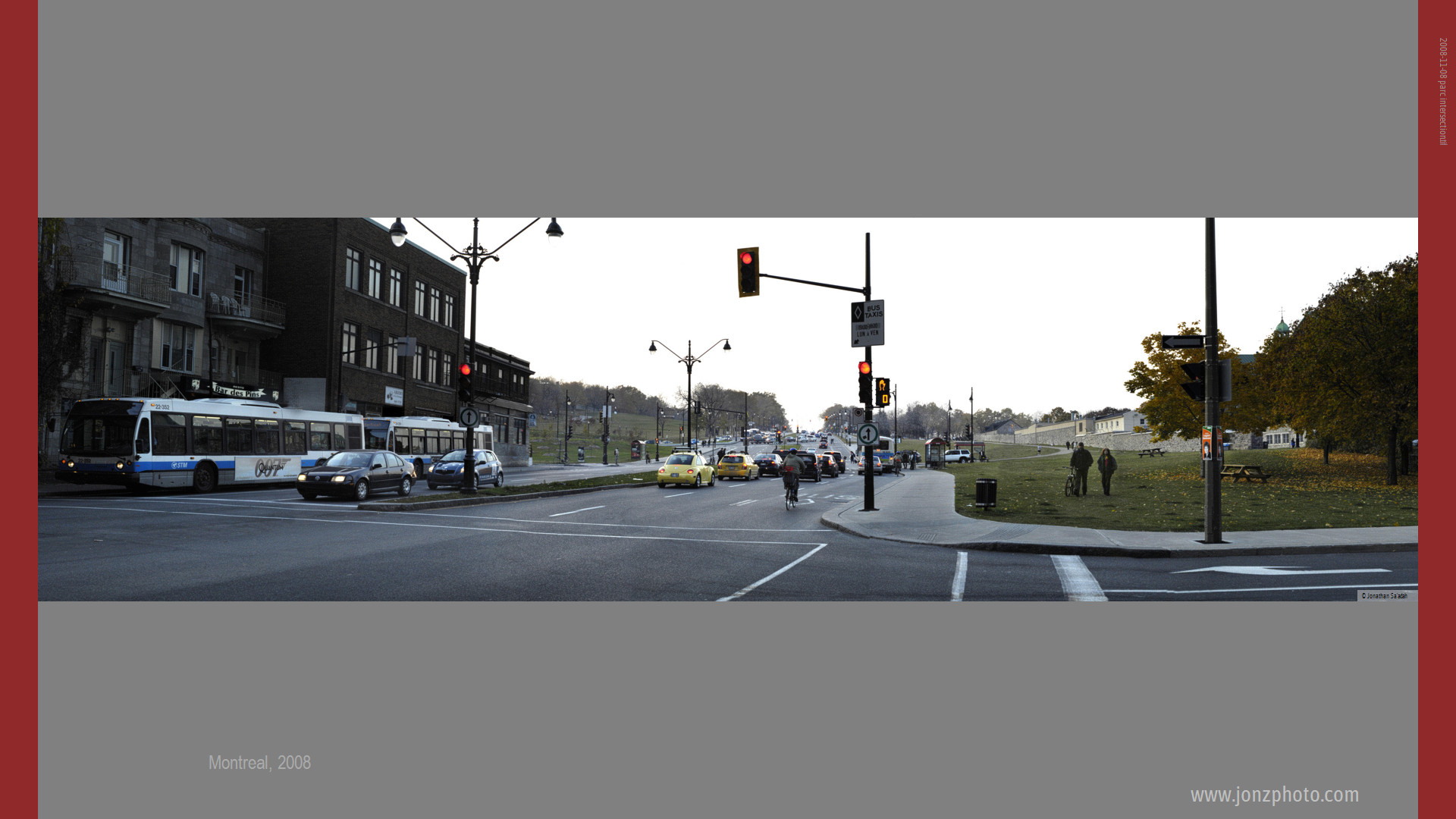
    Moving to Montreal in 2003 was like stepping into a city caught between two realities. The Montreal public transit system was already one of North America’s most heavily used systems. Yet Montreal remained (and remains) a city where cars dominate the landscape. There’s a dream of urban sustainability but even in me there’s a conflict with secret Formula One fantasies.

    The Annual Montreal Contradiction

    Every June, when Formula One descends upon Circuit Gilles Villeneuve, Montreal experiences a total ethical meltdown. The small island in the Saint Lawrence that hosts our Grand Prix was originally created for Expo 67, then re-purposed into a racing circuit that celebrates everything Montreal’s current transportation policies are trying to discourage.

    The race circuit itself embodies this paradox perfectly. The city lavishly hosts a sport that burns fossil fuels at obscene rates while promoting electric vehicles and public transit.

    The Netflix Effect and Modern Racing Culture

    The popularity of Netflix’s “Drive to Survive” has created a new generation of Formula One fans who, like me, experience the sport primarily through screens rather than exhaust fumes. It’s not exactly socially acceptable to be interested in a sport that represents everything we’re supposed to be moving away from, but secretly I am.

    When my wife mentioned to a very close friend that we’d watched all seven seasons, the look of bewilderment that crossed her face was eloquent. Even if it was brief before she masked it. It was the expression of someone trying to reconcile how two people who take public transit everywhere and enthusiastically support biking could simultaneously be enthralled by the world’s most environmentally questionable sport.

    Living with the Paradox

    Montreal’s approach to transportation politics reflects a city that deals in nuance. We promote walkability through indices that measure access to employment and amenities while simultaneously maintaining one of Formula One’s most visible venues. Somehow, both realities coexist in the same metropolitan area without the universe completely collapsing from the contradiction.

    Embracing the Contradiction

    Perhaps the real wisdom lies in accepting that humans are complicated creatures capable of holding multiple truths simultaneously. I can genuinely believe that Montreal’s future depends on reducing car dependency while still hoping Lewis Hamilton will win as I hear the obnoxious bellowing of Formula One engines echoing across the St. Lawrence River.

    There’s no doubt though that Montreal’s approach to transportation doesn’t adhere to ideological purity. The city that gives us extensive bike networks also gives us a yearly walk on the dark side. It’s an approach that acknowledges that progress is perhaps served by not abandoning everything from our past in our quest for purity.

    After all, even as a committed environmentalist I can still appreciate the engineering marvel of a Formula One car, just as I hope the most dedicated tourist racing fan can get on our fancy new metro trains and wish they had them in their city. Montreal has figured out how to celebrate both, and maybe that’s the a sophisticated approach for where we are now.
  • Renting a bike in Mexico City

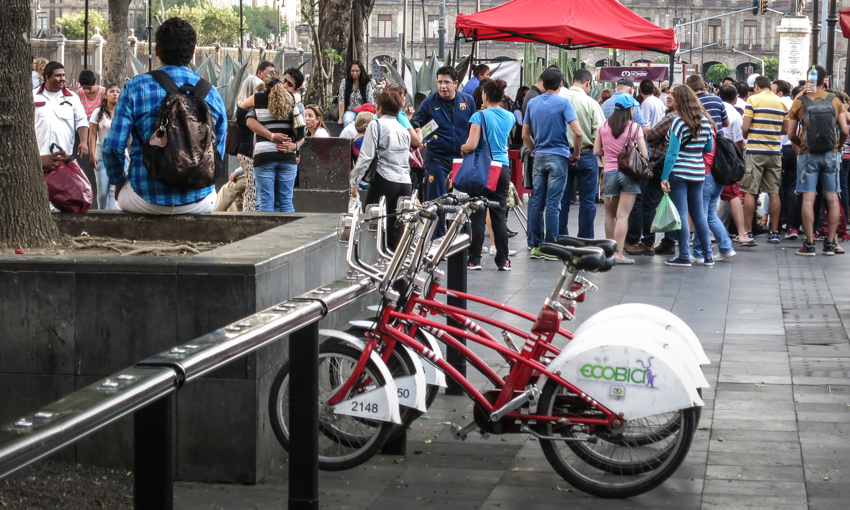
    Theoretically, renting a bike in Mexico City as a tourist should be easy. In practice, it’s a bit of a pain (but follow me out). Mexicans with national cards can buy a year pass to ecobici for 400 pesos/21.26USD. As a tourist the rate is 300 pesos/15.95USD per week. In addition the weekly pass needs to get renewed every seven days (surprise!), and that means a trip to the ecobici office and, sometimes, a wait. Of course have an ID (you only need a driver’s license). As tourist it’s still a good deal – see the chart below for comparisons to other cities – but no where as sweet as the year pass. In addition, count on your credit card getting docked for 1500 pesos/79.77 USD for each week. I guess they are protecting themselves in case you turn out to be a criminal with a passport and a desire for the heavy bikes. The deposit is refunded after the rental period is over; our deposits have been returned promptly.

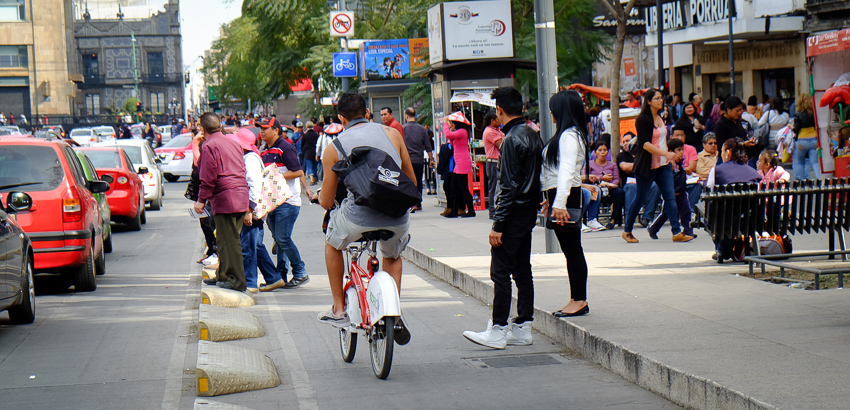
    Pedestrians in the bike path One of the first things to practice is using the bell on the handlebars. I put this photo in for Blork, since I know how much he adores pedestrians in bike paths!

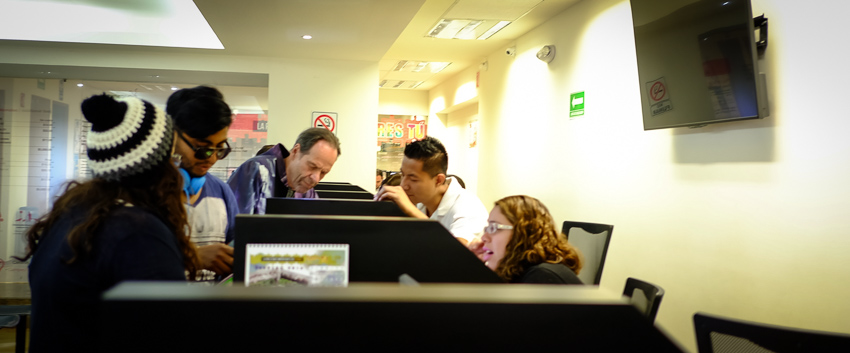
    You get the treat of lining up with everyone else to get your pass. Unlike polite Canadians your line-companions will be openly annoyed by the long waits, but along with them you too are required to take a written test to prove your extensive knowledge of the traffic laws in the DF. If you’re there when everyone isn’t arguing with each other, you might get some help (and a pass) from the generally friendly staff. Recently they have allowed for an English version of the test, which certainly makes things easier. If you are a normal rider most of the answers are common sense.

    ecobici office There are several forms (besides the biking test) that need to be completed and signed; it takes about 15 minutes per person at the counter.

    I’m perverse enough that I enjoyed going to the office, at least the first couple of times. After that it gets a little old, and you wish they might at least consider a two week or month pass, so you don’t have to go back repeatedly.

    What you can’t complain about, though, is the cost. It’s less than of the cost of other systems, which follows in the pricing in general for public transport: subsidized and affordable from a tourist point of view.

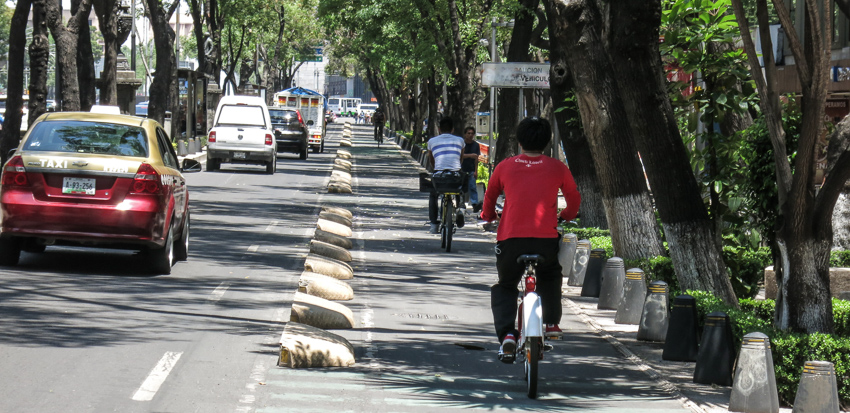
    The ecobici bike rental system in Mexico City has stands throughout the core of the city. It’s not everywhere, though, by any means. It is popular and after sounding whiny I have to say that I enjoy using it, and appreciate the bike lanes that are often spacious and well segregated from both pedestrian and car traffic  (the photo above with pedestrians wandering around is on a Saturday afternoon across from the Alamada – a worst case scenario!). Even where there aren’t bike lanes, in my experience if you stick to the interior streets (and not the high speed avenues) riding is not too intimidating if you are attentive and experienced. There’s room and when there isn’t it’s because traffic is stopped, and you can do quite a bit better than everyone else! Don’t even consider going on the high speed streets and avenues.

    Bike path on Reforma This is a best-case scenario, but in general the streets are wide enough that ample sized bike paths can co-exist with traffic. This lane isn’t even the main avenue, it’s a service road that runs double-parallel to the main avenue of Reform. It’s a variation on the six-lane highway but with a more workable pedestrian and bike scale to it.

    Unlike the Bixi system in Montreal and bike rental systems in many other cities, in the DF there is no way around having the plastic card, so it’s not as friendly to the visitor. But if you are curious about the city and its people, you’ll learn a lot …

    How bike rental systems stack up

    Mexico CityMontrealNew York
    Year started201020082013
    One year subscription400 pesos/21.26 USD (2015)87.00 CAD/62.52USD (2015)149.00 USD (2015)
    One week subscription300 pesos/15.95 USD (2015)Not available, 72 hrs for 14.00 CAD/10.06USD (2015)25.00 USD (2015)
    Number of rides~9.5 million (2015)3.5 million (2015)~12 million (2014)
    Number of subscribers~1 million (2015)38,000 (2015)97,864 (2015)
    Number of stations444 (2015)460 (2015)332 (2015)
    Number of bikes6,500 (2015)5,200 (2015)6,000 (2015)
    Free ride period45 min30 min (1 or 3 day pass)
    45 min (other passes)
    45 min with annual pass
    30 min with others
    Additional cost for 2 hour ride45 pesos/2.39USD (2015)12.25 CAD/8.04USD (2015)20.50 USD annual pass (2015)
    25.00 USD other passes
    Links to websitesecobiciBixiCiti Bike

    Table notes: Cost and usage figures are taken (February 2016) from the following sources: Mexico City/ecobici, Montreal/Bixi, stations and bikes from Wikipedia and news reports. Price differences are amplified by the weakness of the peso and the Canadian dollar currently against the USD (Feb 2016). Currently 1USD=18.5 pesos=1.40CAD

  • Mexico City transit

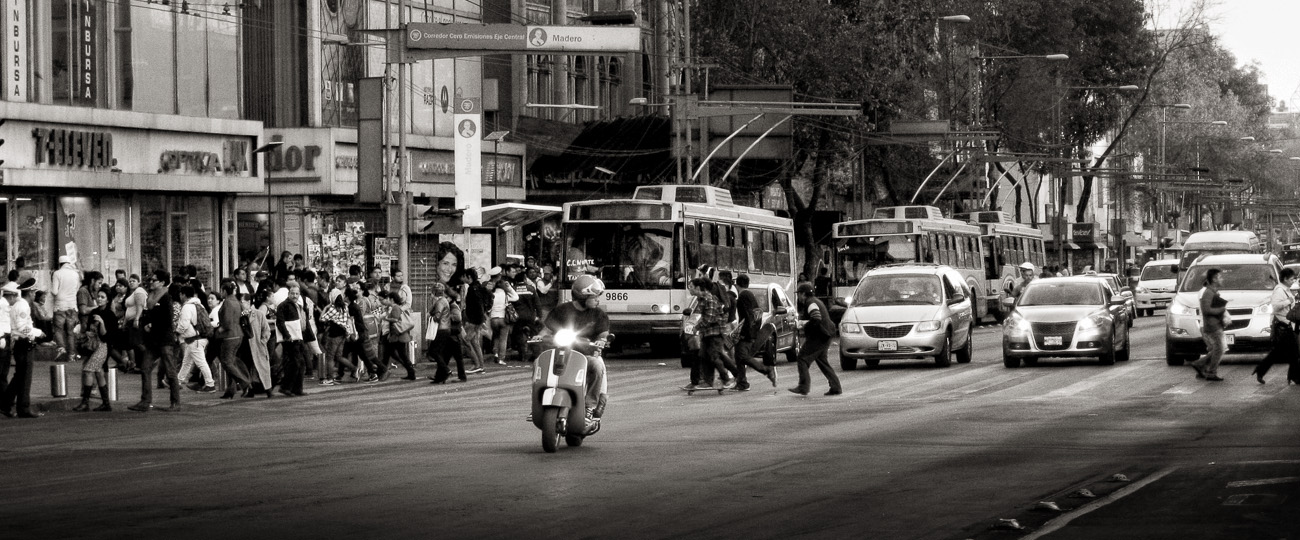
    Lázaro Cárdenas looking south near Bellas Artes
    Mexico City trolley line and traffic on Lázaro Cárdenas

    Mexico City always gets a bad rap – crowded, worn, dangerous, polluted – take your choice. The stereotyping gets a little tiring. Yes, Mexico has its problems, but so too does Montreal, or New York, or  for that matter any other city in the world. On a recent trip to Chicago, for example, the daughter of a friend who picked me up at the airport couldn’t help but tell me how many recent killings there had been block by block as we approached her parent’s home. Thanks but no thanks.

    One of the things I like about travel is comparing the places I go to the place I live. I’m especially attuned to public transport and traffic; one I like and the other I don’t. My best traffic avoidance technique is a bike. In Montreal we have an extensive and expanding bike path system, but also serious problems with bike-truck accidents and figuring out how to balance the shared use of roadways and sidewalks. So when I got to Mexico City I had my antennas out.

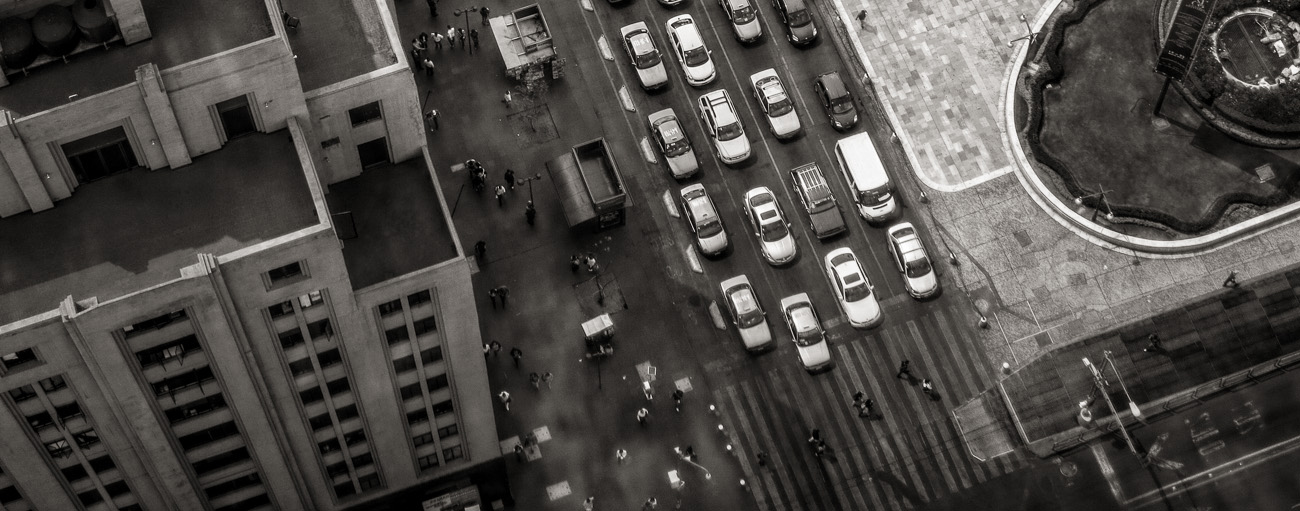
    View of Juárez and Lázaro Cárdenas from Torre Latinoamericana
    Traffic looking down on Juaréz from the Tower Latinoamericana

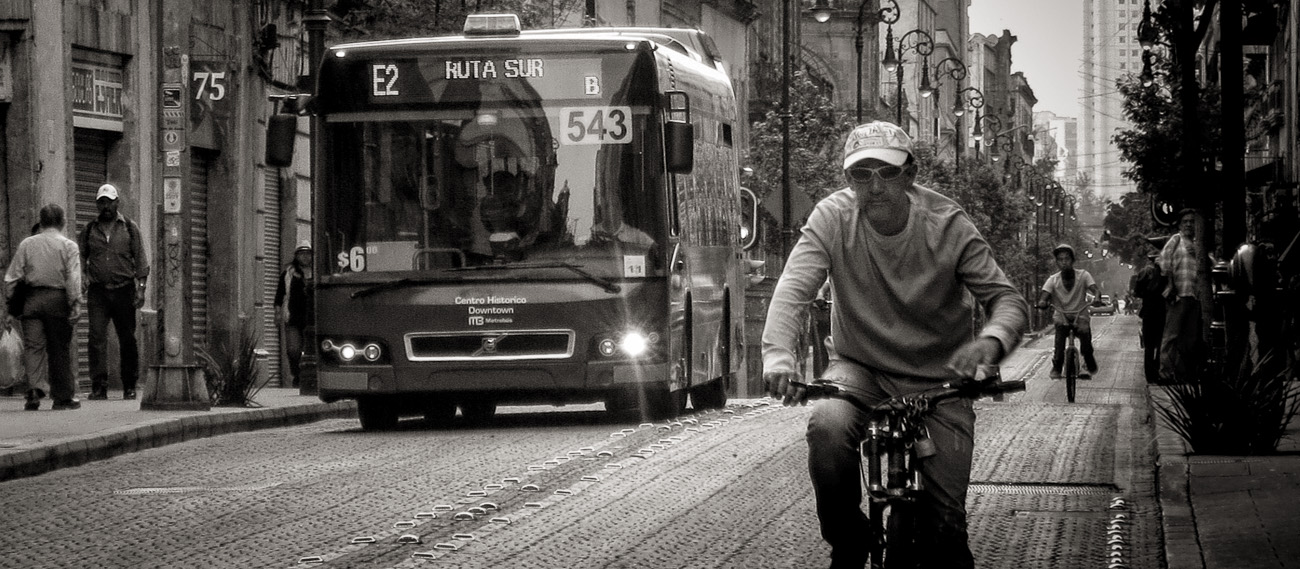
    We travelled by taxi from the airport and the right away the experience seemed like an invitation to take public transit. In Montreal we talk about using different forms of transport but in Mexico City it’s being done. Their systems handle a lot of people, often with creative solutions to difficult problems. An example would be extending the popular Metrobús system through the narrow streets of the Centro Histórico.

    Metrobús line through Centro Histórico - notice bikes
    Narrow lane Metrobús line through Centro Histórico – notice bikes using other lane

    Mexico City is the third largest city in the world – and the metro system carries 4.4 million people a day (2012), versus the Montreal metro system’s .975 million (2013) people per day  – that’s roughly four and a half  times more volume per day, ranking  it eighth in the world.

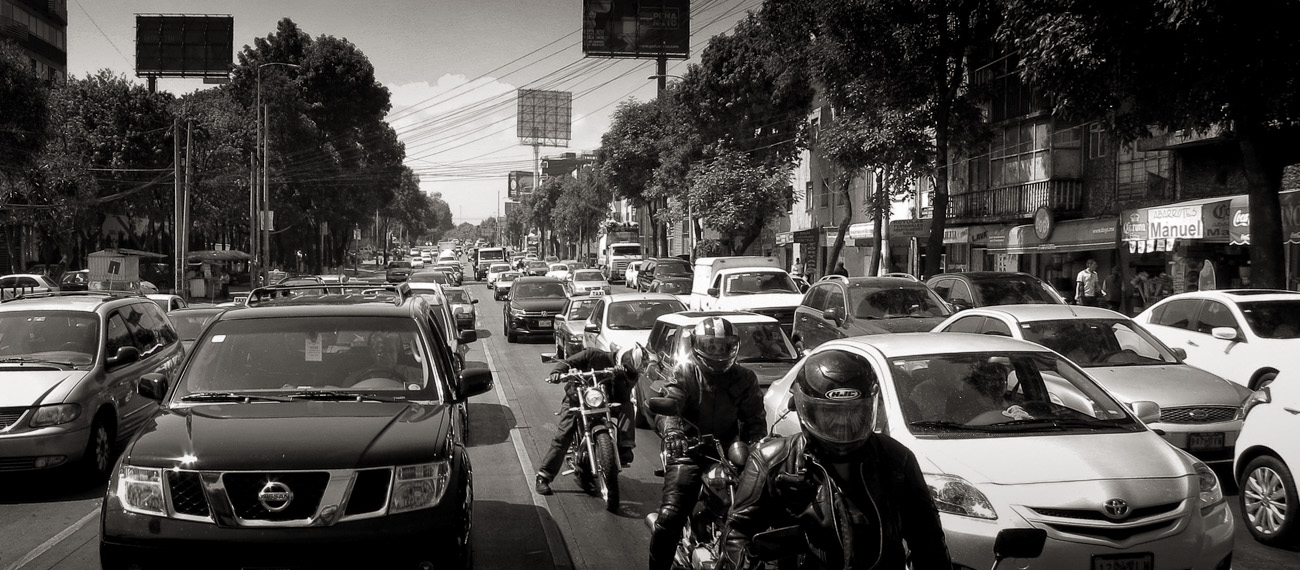
    The only time this street quiets is on holidays or late at night
    Main artery traffic: The only time this street quiets is on holidays or late at night

    The main avenues are rivers of traffic. They start flowing as soon as the light turns green and run fast until the next red. On the main arteries merges are not anything that can be called polite. The protocol is to barge in and whoever is chicken ends up last.

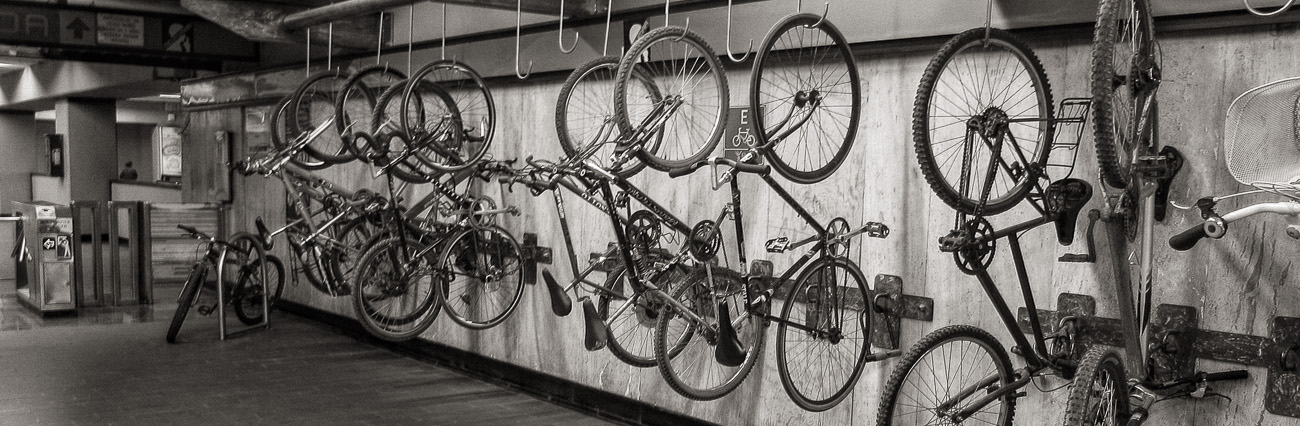
    Locked personally owned bikes near Tacubaya turnstiles
    Not for the weak: Locked personally owned bikes near Tacubaya turnstiles

    It’s that same vehicular aggressiveness that makes it hard to believe that biking in the city would have a happy ending. To be honest, my first reaction was that biking was out in Mexico City. That was my first impression. But I always watch people on bikes trying to gauge what it would be like to be one myself. I saw hopeful signs. Some riders had their own bikes but a lot of people were using bikes from the ecobici rental system. After exploring around on foot I found easy (and used) ways through neighborhoods that avoided the main arteries. I also found well constructed bike paths.

    Next post: bikes in the city