Tag: Mexico

  • The impossible miracle of Biblioteca Vasconcelos

    Anyone who has moved boxes of books around knows how heavy they are. To have 600,000 volumes suspended in space is close to a miracle! Biblioteca Vasconcelos in Mexico City achieves this remarkable feat, extending the creative practice of Mexico City architecture by floating its stacks in the air. This unique architectural marvel not only serves as a library but also as a cultural hub, attracting visitors who are eager to experience its stunning design.
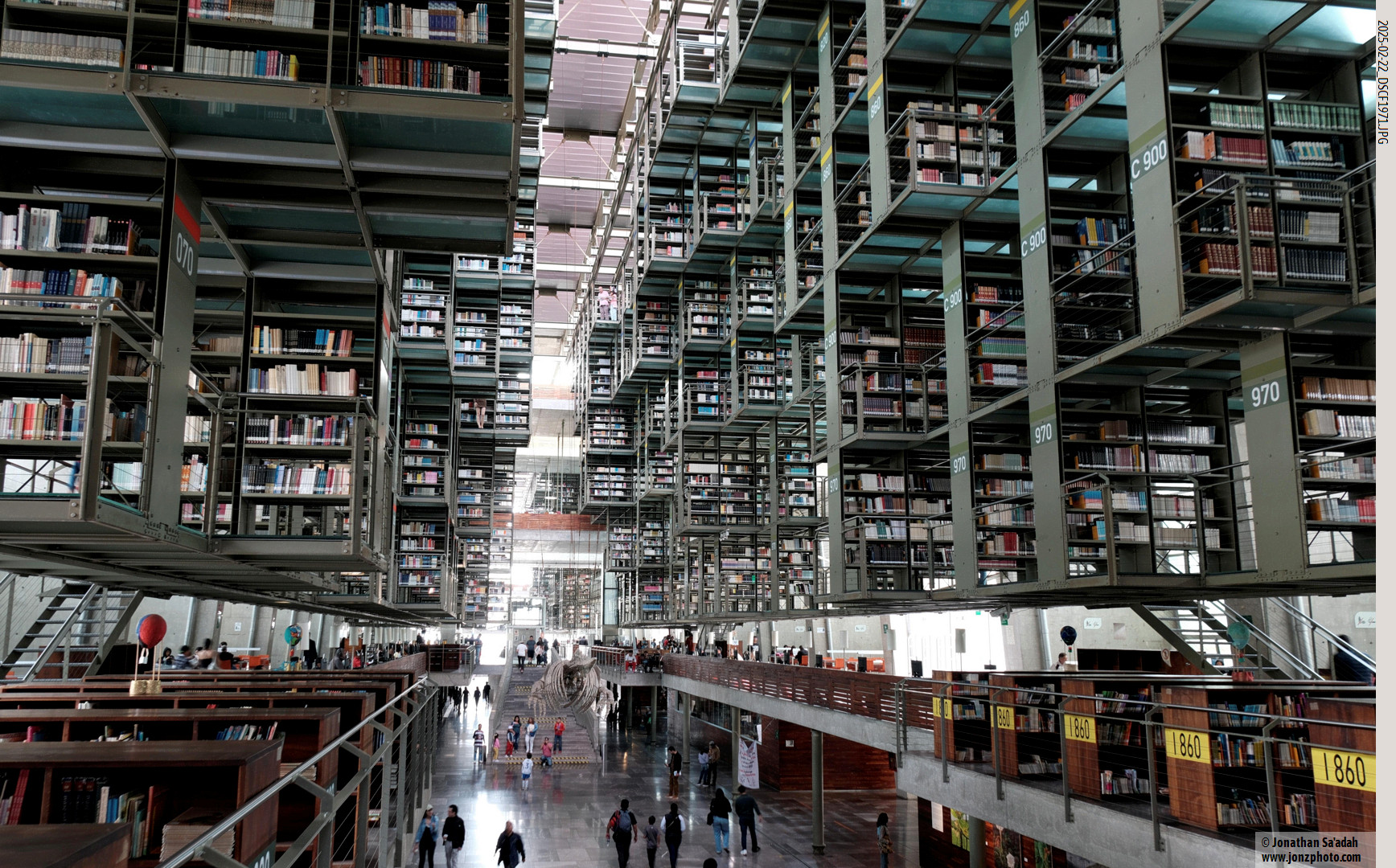
    Biblioteca Vasconcelos Mexico City Architecture at its best!
    Architect Alberto Kalach made a significant contribution to Mexico City architecture with his daring design – suspending the stacks from the ceiling of the building.

    The architectural design of Biblioteca Vasconcelos is an example of modern creative ingenuity. The building’s side windows allow natural light to flood the interior, creating a serene reading environment that inspires contemplation and study. The stacks, suspended from the ceiling, give the impression of books floating in mid-air, challenging conventional library design and offering a visually striking experience. This innovative concept encourages visitors to engage with the space in a more dynamic way, as they navigate through the airy layout.

    I’ve always photographed in libraries. I enjoy books and the spaces designed for their use. This time there was a problem though. A woman in a semi-official uniform approached me, informing me in Spanish that photography was not allowed. To be honest, it seemed quite permitted, given the number of people snapping pictures on their phones. Unfortunately, a “Real Camera” is viewed differently. There was a loophole: I could apply for a permit at a specific office, allowing me to capture the stunning Mexico City architecture within. I was determined to document this unique space, since to me its beauty and functionality was worth sharing with a wider audience.

    As I filled out the form for the photography permit, I couldn’t help but admire the intricate details of the library’s design. The open spaces were filled with the soft sounds of pages turning and quiet whispers. The atmosphere felt filled warmed by the shared love of literature, making it an inspiring environment for both photographers and bibliophiles alike!

    The office I had been directed to was in the back of the library. I faced another woman, this one sitting at a crowded L-shaped desk near one of the doors that opened out onto the gardens. I asked if I could take pictures and was given a form to fill out. That, coupled with a Quebec driver’s license, and soon I received a plastic tag on a lanyard which gave me Official Status. Hooray, okay to use a camera!
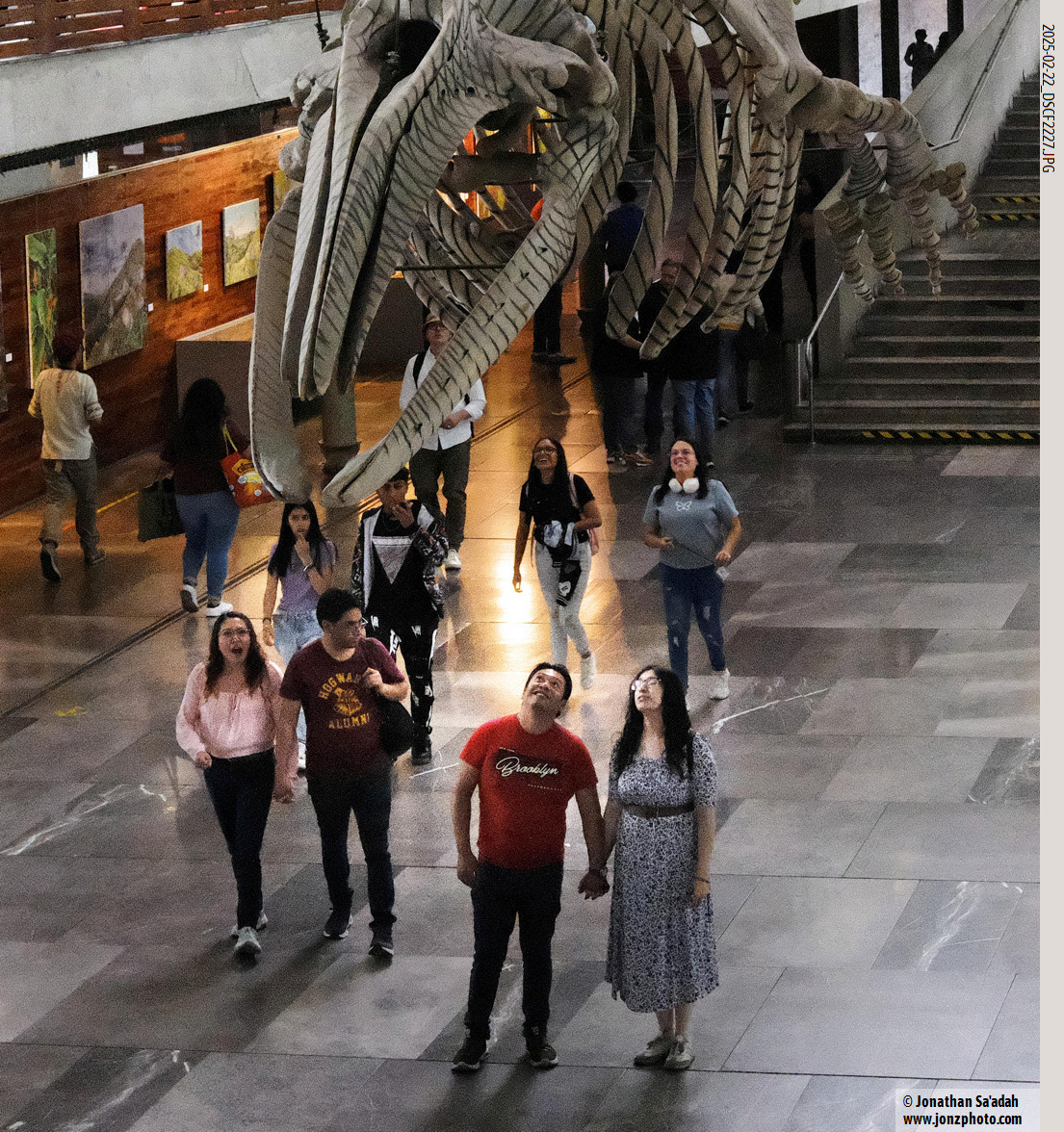
    Visitors reacting to the reworked white whale skeleton by Mexican-born artist Gabriel Orozco at Biblioteca Vasconcelos.
    Visitors reacting to the reworked white whale skeleton by Mexican-born artist Gabriel Orozco, which adds a unique artistic element to the library’s ambiance.

    Mexico City’s Biblioteca Vasconcelos is such an unusual space – one can see the surprise and glee on the faces of people entering for the first time. Any resident can use the library, and many people do. The manner in which the stacks are suspended in mid-air creates a faceted and irregular space, playing with light and transparency. It’s a brilliantly imaginative way to design a library, and brave too in a city prone to powerful earthquakes. The library not only serves its primary purpose but also acts as a community gathering space, hosting events, workshops, and exhibitions that engage the public and foster a love for reading and learning. I don’t know if perhaps a part of what I was sensing was the public pride in the hard-fought win to break away from the book-banning controls of the Catholic Church – but it seems possible that this space embodies some of that pride too.

    The library opened in May of 2006, designed by the architect Alberto Kalach and built next to the old Buenavista railway station, north of the city center. Housing a collection of 600,000 books (using the Dewey Decimal System!), it also features the hanging skeleton of a large gray whale decorated by the artist Gabriel Orozco called “Matrix Móvil”. I saw a retrospective of Orozco’s work in the Museo Jumex (March, 2025) which I’ll describe in a later post. The whale creation is well traveled, having been shown at the Museum of Modern Art in New York in 2009.

    Biblioteca Vasconcelos stands as a beacon of modern architecture and culture in Mexico City. Its unique design honors the communities, reading public, artists, and scholars that use it. The library exemplifies how architecture can inspire a love for literature and create a sense of belonging among its visitors. Whether you are an avid reader, a photography enthusiast, or simply curious about innovative design, a visit to Biblioteca Vasconcelos is sure to leave a lasting impression. If you are in Mexico City it’s a must. It’s a short Metrobus ride north of the city center, and there’s a metro stop (Buenavista) nearby. The combination of literature, art, and innovative design makes Biblioteca Vasconcelos an essential stop for anyone visiting the city.

  • In search of Auxilio Lacouture

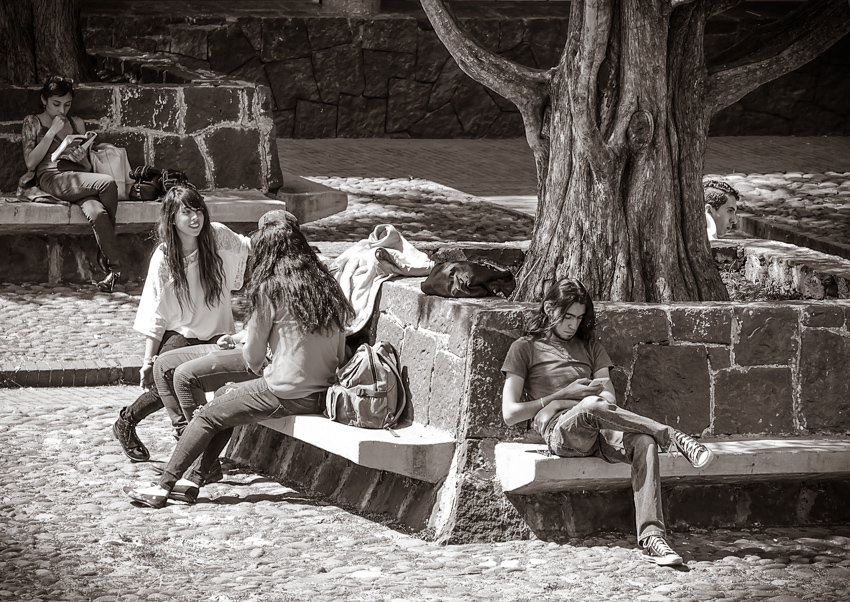
    Students reading and talking  In the southern part of Mexico City, the Universidad Nacional Autónoma de México (UNAM) is a 425,000 student campus with many departments. Its graduates form a backbone of recent Mexican history. The current campus replaced a metropolitan location in the 1950s, but the school traces its lineage back to 1551.

    I’m not as big a recreational reader as I’d like to be. I’m not that fast a reader and I feel like after I’ve waded through all the web and print articles and news reports I’m interested in there isn’t a lot of extra time left over. But before going to Mexico City I set a goal of reading several books about the city and Mexico, and one of them was Savage Detectives by Roberto Bolaño. I have a hard time understanding why this book isn’t generally known and acknowledged to be one of the great novels of the 20th century. Bolaño, a Chilean who lived mostly in Mexico City and Barcelona, was an enfant terrible of the literary world and a complicated, evocative writer. I haven’t read his masterpiece 2666 yet, but I’m looking forward to it.

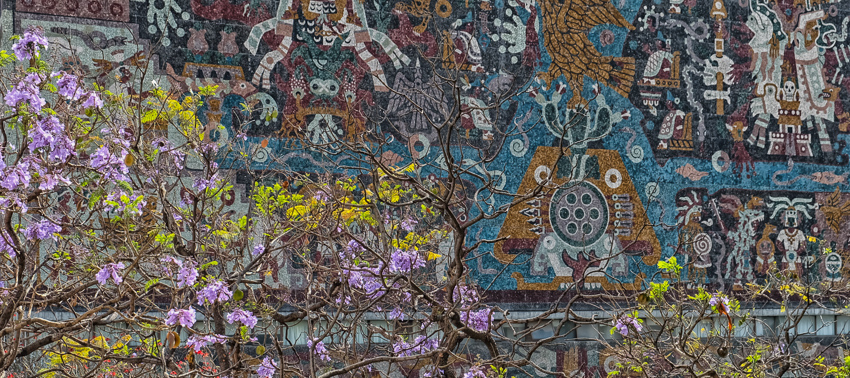
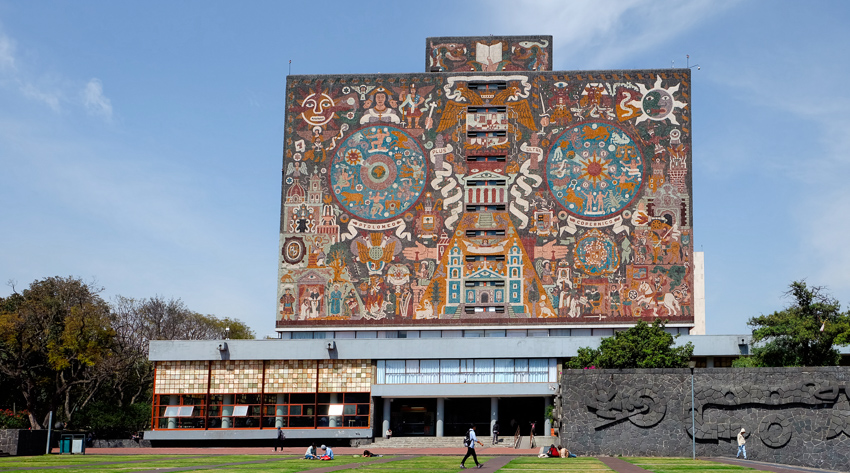
    The outside surfaces of the university library are covered with a wrap-around mural by Juan O’Gorman depicting different periods of Mexican history. The generally huge scale of the campus is home to other building-sized murals.

    Savage Detectives is mostly set in Mexico City and strings together a story of a group of young scruffy Mexican poets searching for a woman (Cesárea Tinajero) who had disappeared from the city several decades before. They considered her to be the mother of Visceral Realism, their faction of the Mexican poetry world. In a complex weave the story line touches many subplots, and one of them involves a character who is a Uruguayan female poet and teacher named Auxilio Lacouture.

    Auxilio Lacouture taught at the Universidad Nacional Autónoma de México (UNAM) for several years. According to her own narrative, she was not quite sure what those years were, but one event fixes her as being there in 1968. That event was the Mexican army and riot police killing an unknown number of students in Tlatelolco, a section of Mexico City. A sadly familiar story having a contemporary ring.

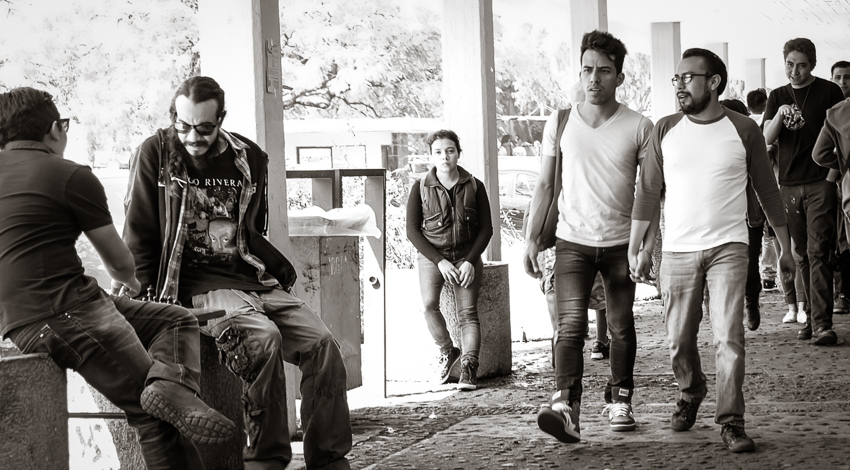
    UNAM students on lunch break.

    Subsequently, the Army occupied UNAM.

    Auxilio Lacouture had the distinction of spending thirteen days in September of 1968 shut up in the women’s bathroom on the fourth floor of the Faculty of Philosophy and Literature as a protest against the Army’s occupation of the campus. She had been reading a book of poetry of Pedro Garfías in a toilet stall and simply stayed there undiscovered – alone and stubborn – standing up (or sitting down!) against tanks and militarism until they left thirteen days later.

    I thought it would be interesting to go to UNAM and see if I could find the her fourth floor perch. I was also interested because our friend, Magda, had gone to Medical School there and I wanted to see where she had spent that time.

    A more conventional look at the unconventional exterior of the central university library. The mural wraps around all four sides.

    UNAM is a huge campus – there are almost 400,000 students. To be a student there involves a lot of competition and carries prestige. UNAM reflects both a tradition of academic freedom and social activism that seems part of Mexico.

    The feeling on campus was not especially comfortable for me. It was obvious that I was an outsider, as well as being several decades older than almost everyone we saw.

    We tracked down the building and floor that Auxilio had been in. A narrow staircase led to the fourth floor. A small – almost claustrophobic – hallway formed a central corridor with many closed wooden doors. The interesting fact was that no one save one student had heard of Roberto Bolaño, and on the subject of Auxilio Lacouture – a complete blank. We found a locked women’s bathroom, but the closest we got to Auxilio’s memory were raised eyebrows as an adult staff member and secretary Googled her. A picture of me outside the bathroom was on the phone stolen later in the day on the Metrobus. It really doesn’t matter to me that Auxilio Lacouture never actually existed. She was fashioned after a real person who was at UNAM (Alcira Soust Scaffo), herself a Uruguayan poet. Considering the position of both Bolaño as a writer and Savages as a book, there should have been no hesitation recognizing him as a writer and Lacouture as a character …

    I’m not sure what all of this says. A friend in Montreal who is from South America said it’s typical in Columbia, where she grew up, for the government to eradicate memory. This may be an example of that same phenomena in Mexico.

    Sometimes, I have to admit, I feel the same way about the 1960s here.