Tag: Mexico City

  • The Long, Uneven Life of Mexico City’s Palacio de Bellas Artes

    The Long, Uneven Life of Mexico City’s Palacio de Bellas Artes

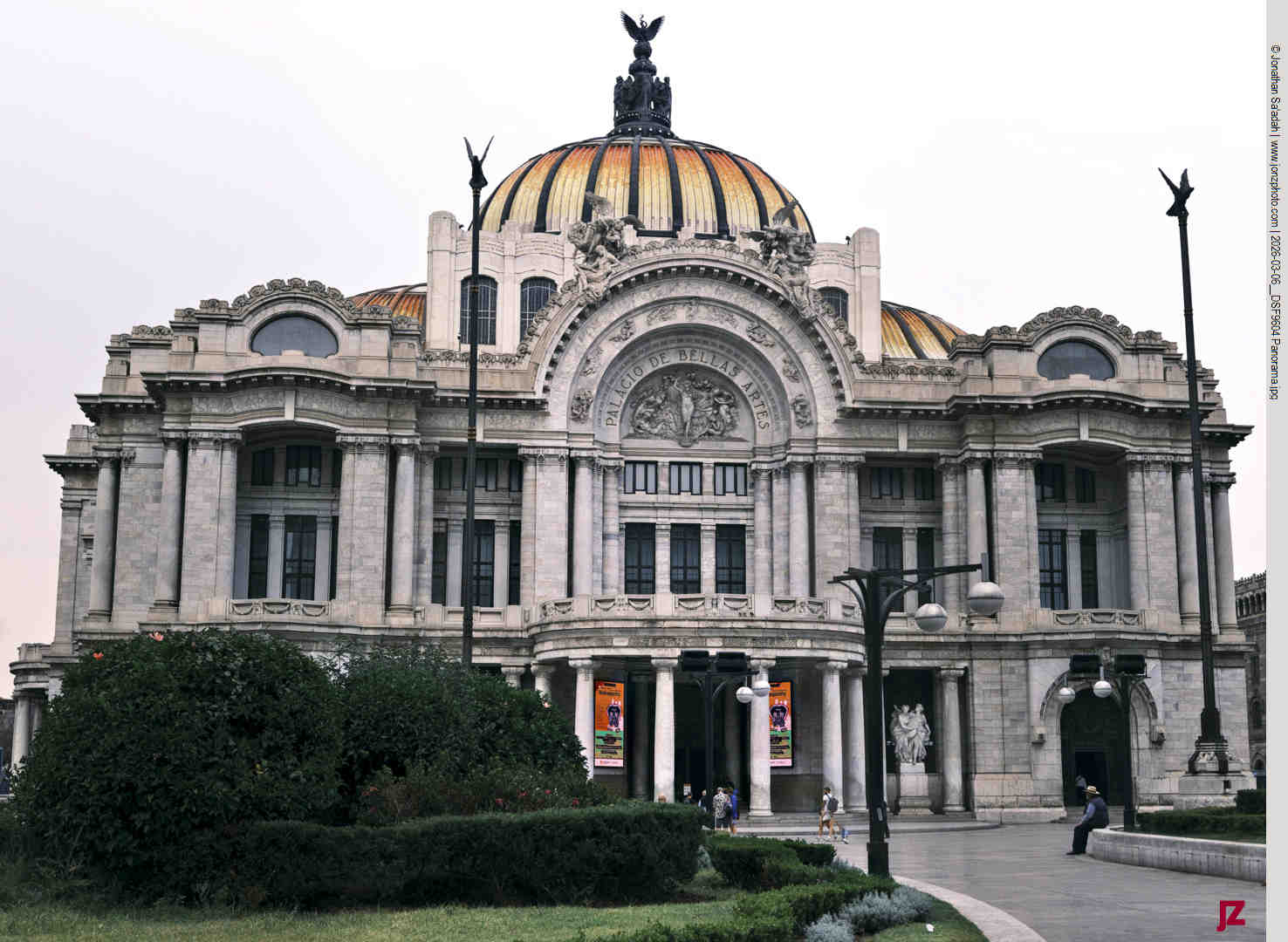
    The Palacio de Bellas Artes looks, at first glance, like the kind of building that surely must have arrived in the world fully resolved: a white-marble monument, ceremonious and self-assured, facing Avenida Juárez in the center of Mexico City. Its actual history is the opposite. The building was conceived as a florid last gasp of the Porfirian regime, stalled by bad ground and political upheaval, and completed only after the revolution had transformed the country that it was meant to represent. What stands today is not a pure work from one era but a layered object, half dream of the old Mexican order and half invention of the new Mexico.
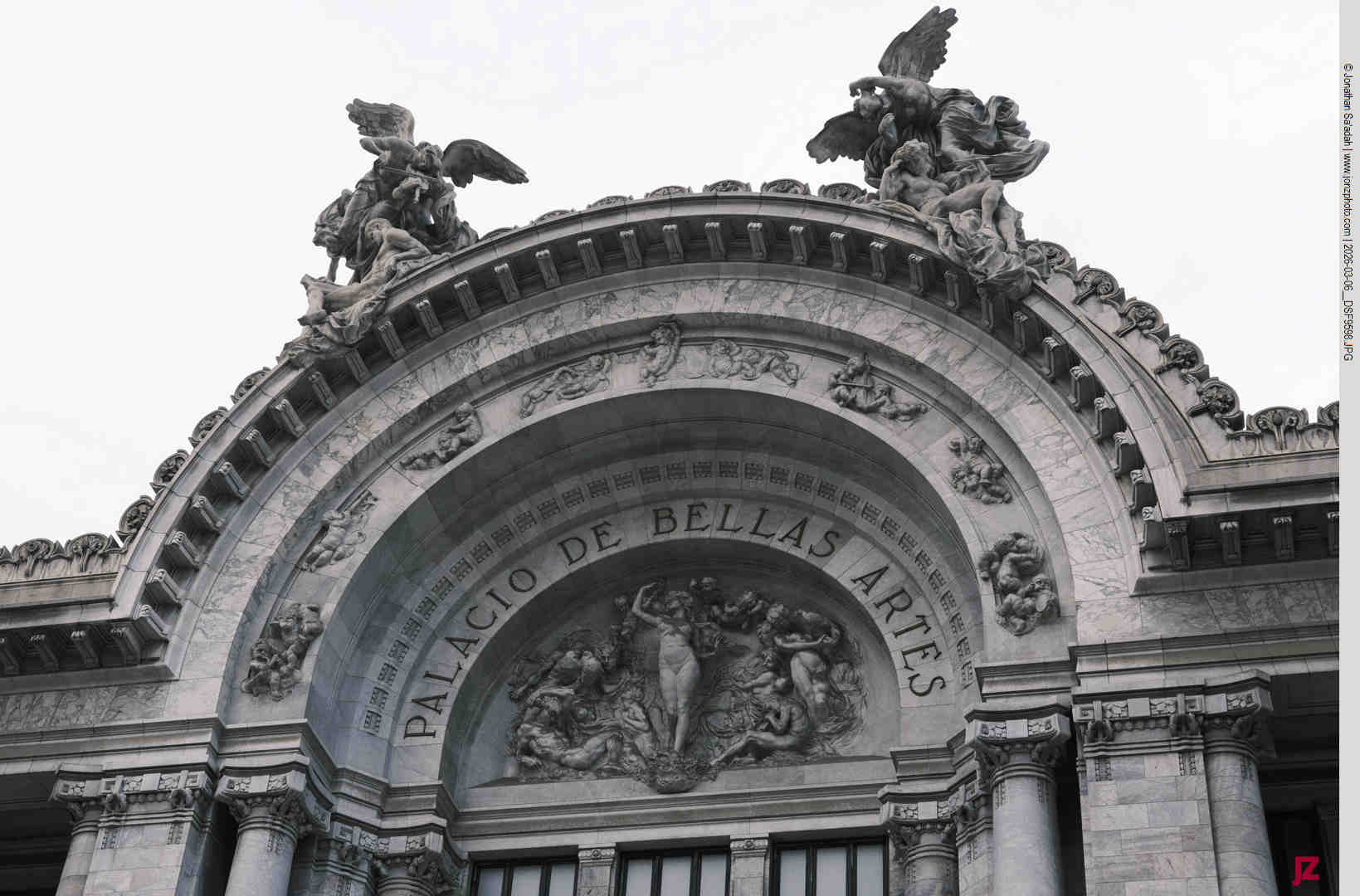
    The sculptural relief above the entry doors was created by Italian sculptor Leonardo Bistolfi depicting “La Armonía” (Harmony). The central figure is a nude woman representing Harmony, surrounded by allegorical figures depicting emotions such as “Pain,” “Rage,” “Happiness,” “Peace,” and “Love”.

    The Porfirian Dream

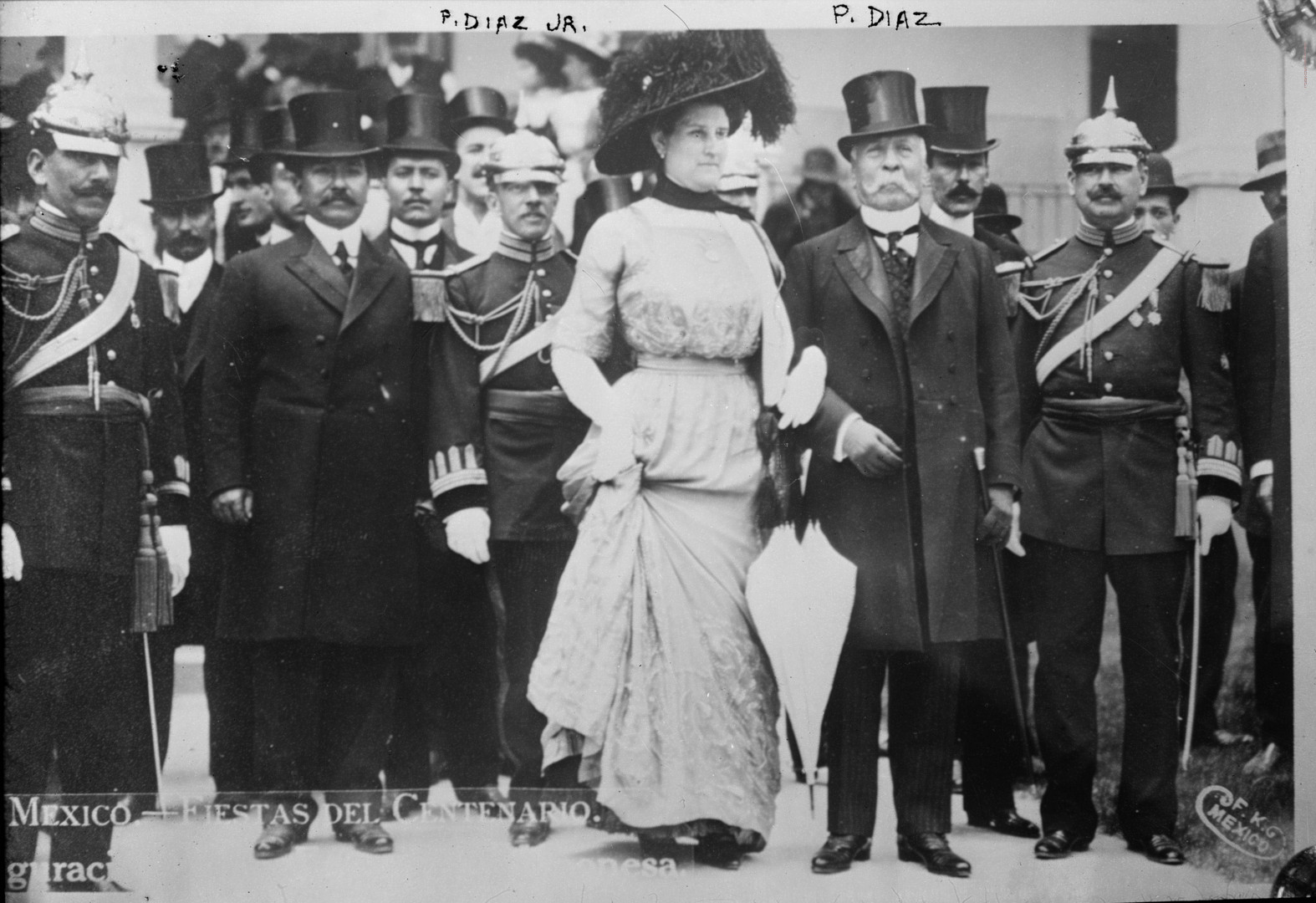
    After Porfirio Díaz’s first wife died, he married Carmen Romero Rubio who was just 17 years old while Díaz was 51. The couple met at a reception at the American embassy in Mexico City, where the her family were frequent guests. Carmen agreed to teach Díaz English, and their relationship developed from there. Source: American Library of Congress.

    That tension begins with the president who wanted it: President Porfirio Díaz. Díaz governed Mexico for decades, directly and effectively, during the long period known as the Porfiriato, and his rule was marked by centralization, order, technocratic ambition, and an intense desire to present Mexico as a modern nation equal to the great capitals of Europe. Bellas Artes was part of that national self-staging. It was planned as a grand new opera house to replace the old National Theater and to help commemorate the centennial of Mexican independence happening in 1910. Díaz wanted to frame the date with monuments, boulevards, and public architecture that could display progress and shine a positive light on his legacy.
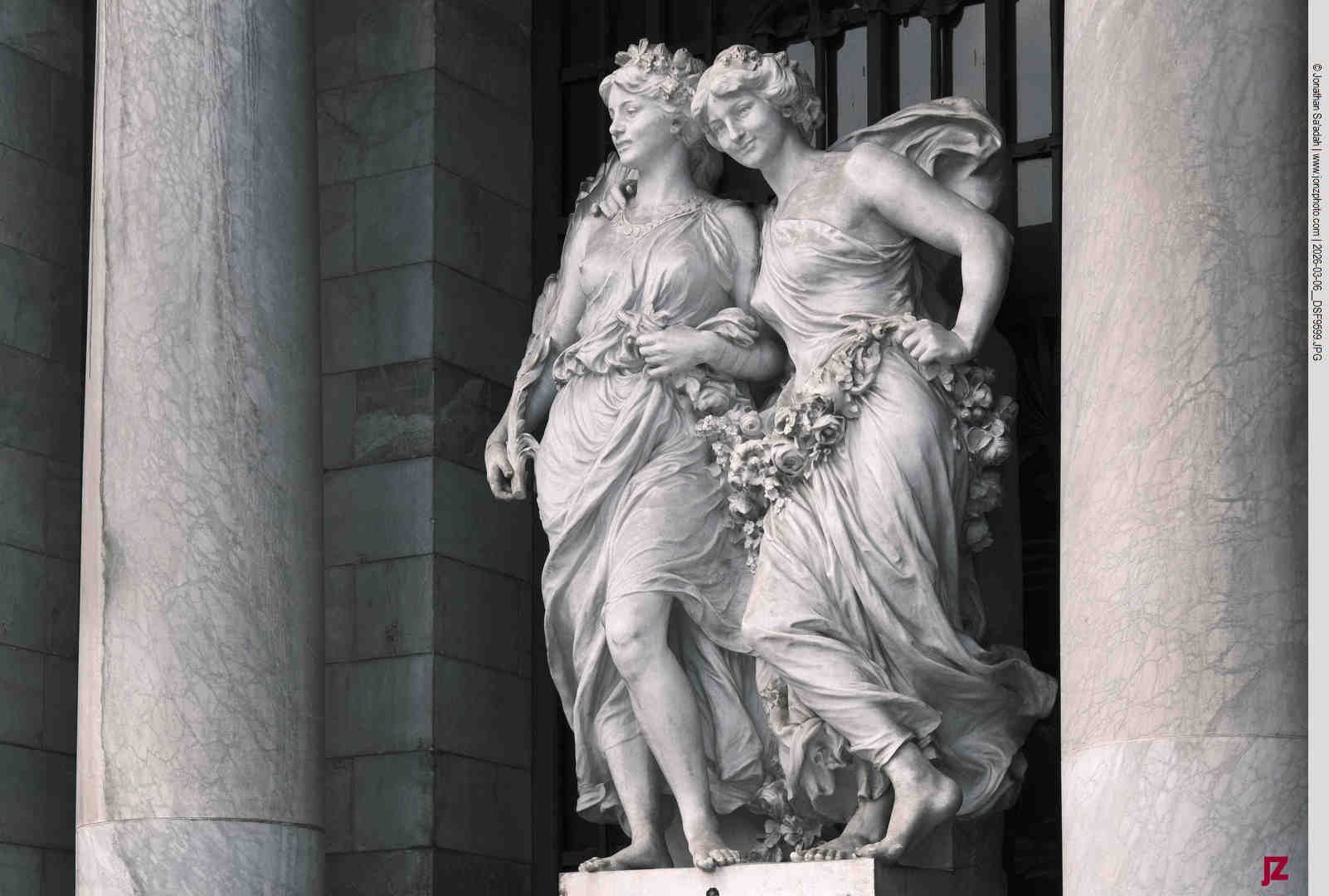
    Ìt’s not difficult to see how the man – President Porfirio Díaz – would choose this sculpture to adorn a public building. It’s also not difficult to see the conflict of his views and those of the muralists inside the building.

    Díaz’s political style helps explain why the project was so grand. He was an authoritarian modernizer: admired by supporters for stability and infrastructure, criticized by opponents for repression, inequality, and the concentration of power. The Palacio fits that mixture of confidence and contradiction. It was meant to signal refinement, control, and cosmopolitan prestige, and Díaz awarded the commission to the Italian architect Adamo Boari, whose European training suited the regime’s cultural aspirations. In that sense the building was never just a building, it was propaganda in the dignified form of architecture.
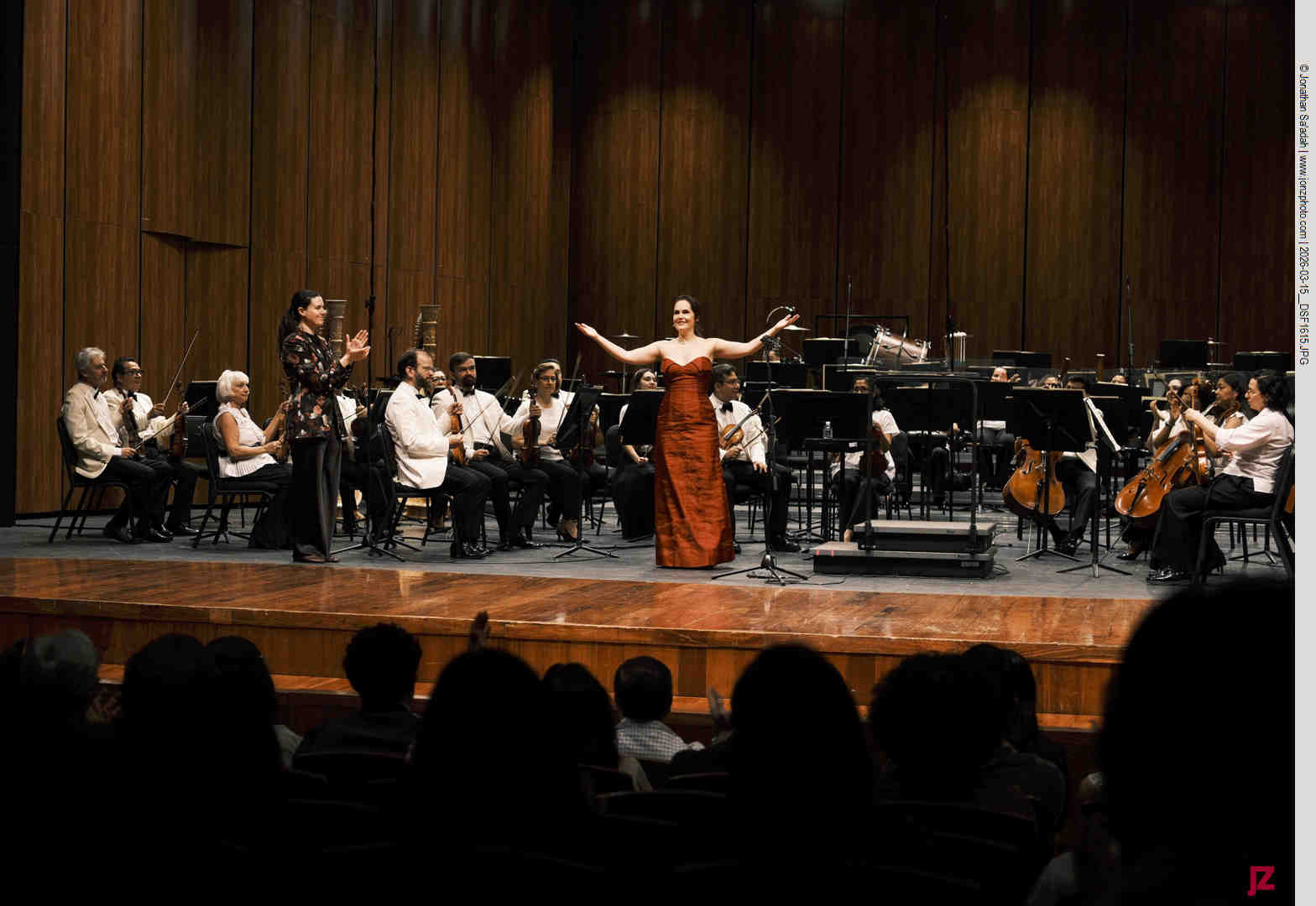
    Soprano Anabel de la Mora taking a bow on the Bellas Artes stage after performing three Mozart arias in March, 2026. The conductor was Shira Samuels-Shragg, making her Mexican debut.

    Boari began work in 1904 on the site of the former National Theater, itself part of a changing district along the Alameda. His design used white Carrara marble and combined neoclassical grandeur with the curving ornament of Art Nouveau. The exterior sculpture was international in character as well, with contributions by European artists, and the whole composition played into the Porfirian taste for imported prestige. The palace was expected to open in time for the 1910 centennial celebrations, but almost immediately the site threw up roadblocks to that timetable.

    Reality Interferes

    The problem was the ground beneath it. Mexico City rests on the old lakebed of Tenochtitlan, and the heavy marble structure began to sink into the soft subsoil even as construction advanced. This was not a cosmetic inconvenience but a structural and logistical problem that slowed the project and complicated its engineering. Then, to make matters more complicated, history intervened violently. The Mexican Revolution, beginning in 1910, disrupted public works, shattered the world that had sponsored the palace, and eventually drove Boari from the country. By 1916 the exterior was essentially finished and the domes were rising, but for years afterward the project lingered in suspension, stranded between regimes and between meanings.

    That interruption explains the building’s architectural disjointedness. The exterior belongs to one political and aesthetic moment, while the interior belongs to another. When work resumed in 1930 under the Mexican architect Federico Mariscal, he did not simply complete Boari’s original vision. Instead, he finished the interior largely in Art Deco, incorporating more geometric forms and motifs that reflected both international modern design and a stronger post-revolutionary interest in Mexico’s own ancient past. The result is one of the palace’s great oddities: an outside skin shaped by late Porfirian European elegance and an inside world shaped by the 1930s, by modernism, and by a different national ideology.
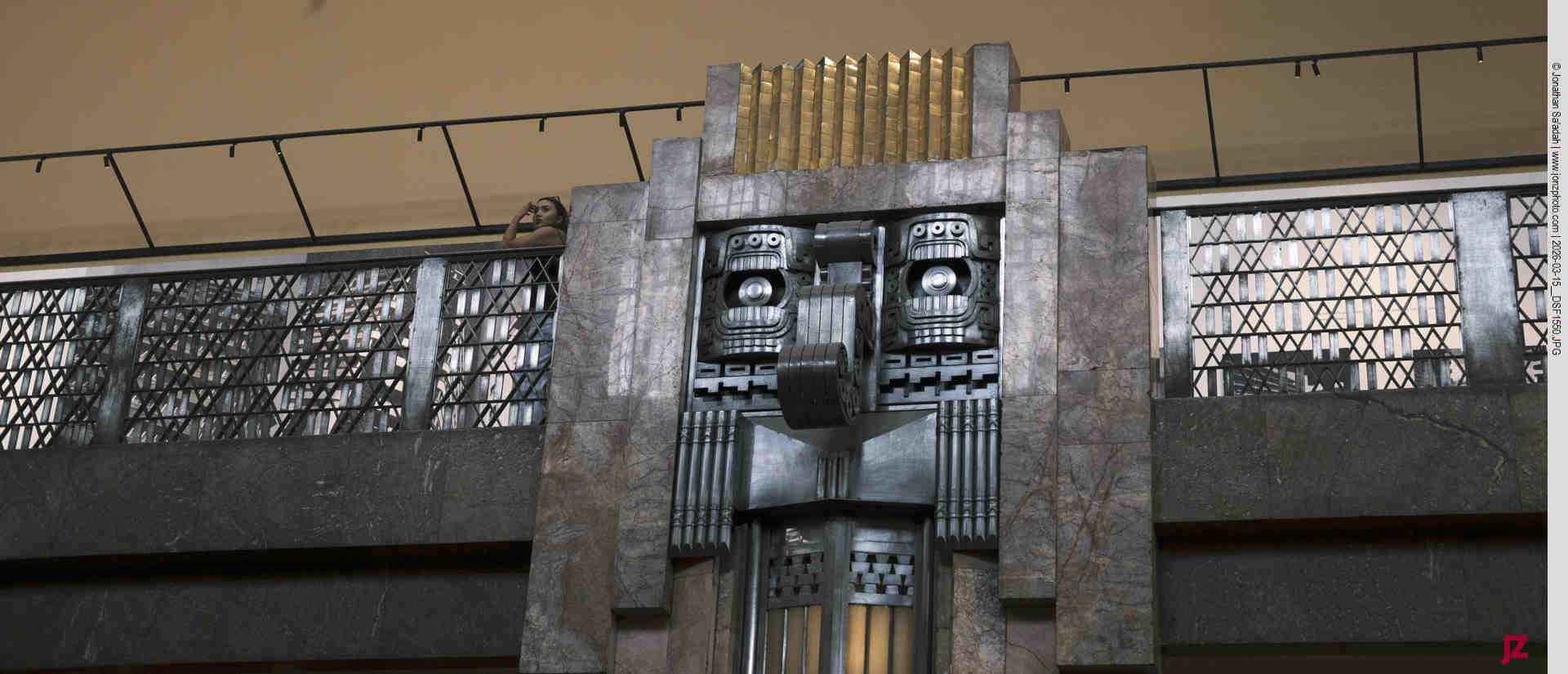
    The vertical Art Deco columns are headed by pre‑Hispanic motifs. The materials are rich, with colored marbles and bronze or dark metal. The marble-clad piers dissolve into bronze, mask-like reliefs with stepped geometric bands.

    Yet the building is not disjointed only in style. It is disjointed in historical mood. Bellas Artes is a palace born from elite aspiration that later became a public temple of national culture. A project first imagined as a grand opera house for an authoritarian regime opened in 1934 as a cultural center for a post-revolutionary state more interested in social identity, civic education, and the arts as national narrative. That transformation gives the building much of its emotional force. It represents the tension between the Porfiriato and the cultural programs of revolutionary Mexico.

    Bellas Artes as a Living Home to the Arts

    What made Bellas Artes unique was its mixing of conflicting aspirations. Its excessiveness feels like a collaboration among architecture, decorative arts, engineering, and stagecraft on a nearly operatic scale.

    The murals came later, and their presence changed the meaning of the building again. After the revolution, muralism became one of the state’s most powerful cultural languages: public, didactic, monumental, and intensely concerned with history, labor, indigeneity, class, and modern Mexico. These paintings did not merely decorate the palace. They turned it into a walk-through argument about Mexican identity, replacing the courtly atmosphere of the original theater conception with a much more contested and democratic visual program.

    That is why walking through Bellas Artes can feel so startling. The building’s marble, staircases, and ceremonial spaces suggest European grandeur, yet on the walls appear revolutionary images, anti-capitalist allegories, indigenous references – the modern Mexican mythmaking. Rivera’s remade Man, Controller of the Universe is the best-known example of this collision of worlds, but the broader mural ensemble is just as important because it places the palace within the central story of twentieth-century Mexican art. Bellas Artes became not simply a venue where art was shown but a monumental frame for the state-sponsored visual imagination of modern Mexico.
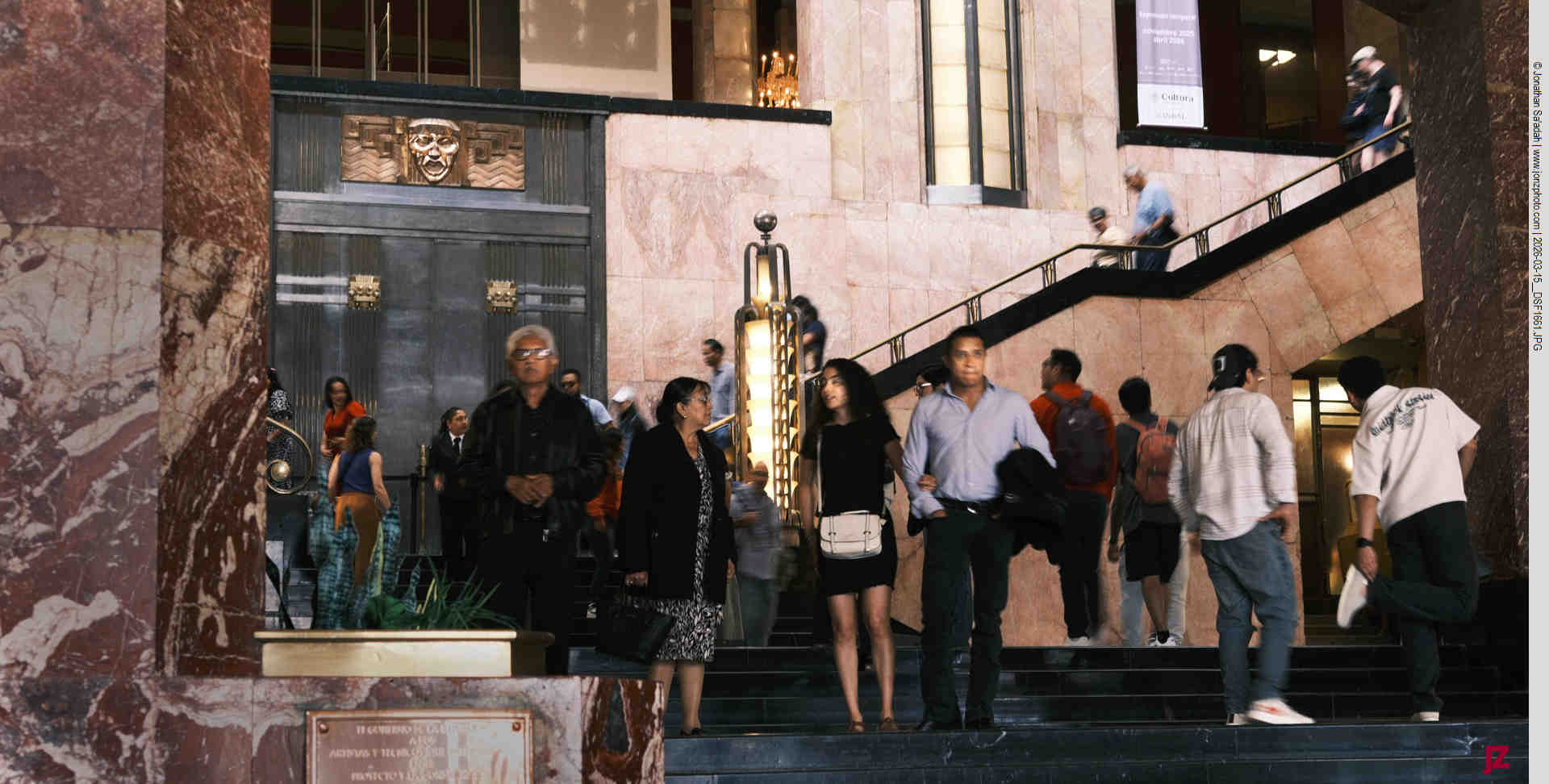
    An average of ten thousand people a day visit Bellas Artes, or about a half million people a year.

    The building has also remained a place for temporary exhibitions, which is one reason visits there can feel personal as well as historical. In 2015 we were lucky to see a remarkable show when the museum presented a Henri Cartier-Bresson exhibition called La mirada del siglo XX (“The View of the 20th Century”), bringing the French photographer back into a building that already had an earlier connection to him. Cartier-Bresson had in fact exhibited work at the Palacio de Bellas Artes as early as March 1935, alongside Manuel Álvarez Bravo, during his first important Mexican period. Bellas Artes is often thought of chiefly as a mural and performance space, but exhibitions like the 2015 Cartier-Bresson show demonstrate how the building also functions as a site where international modernism, photography, and Mexico’s own visual culture meet inside the same institution (LINK in French and Spanish to video about Cartier-Bresson show).
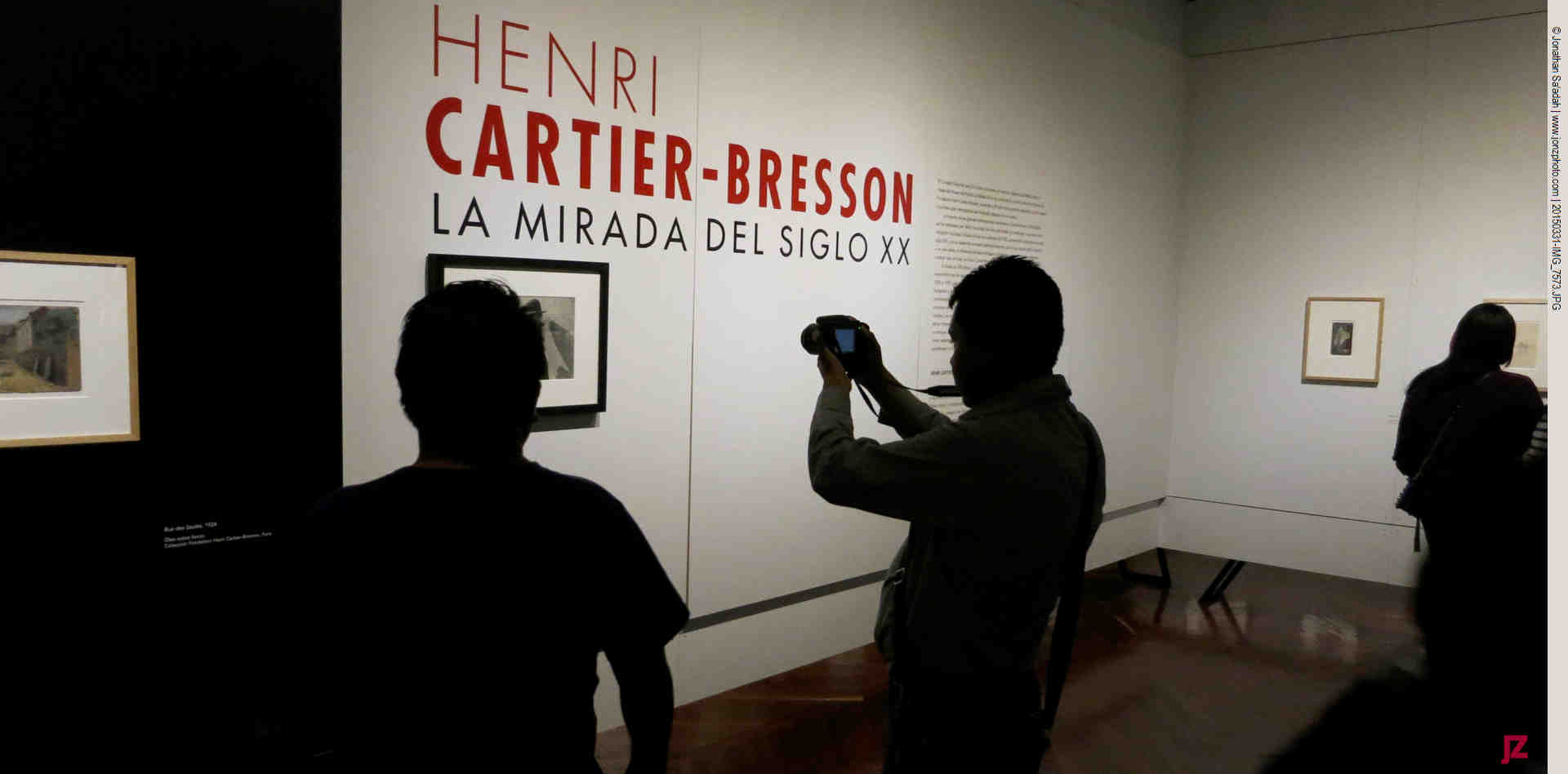
    Henri Cartier-Bresson is a photographer close to my heart, so the 2015 show of his work at Bellas Artes was especially meaningful to me. It honored him both as an artist and as someone previously personally connected to the city. He spent nine months in Mexico City in 1934-35, during which time he exhibited in Bellas Artes with Manuel Álvarez Bravo.

    The performance spaces remain central to its identity. Bellas Artes is home to major national companies and institutions, including the National Theater Company, the National Dance Company, the National Symphony Orchestra, the National Opera Company, the Ballet Folklórico de México, and the Fine Arts Chamber Orchestra. Its main hall seats about 1,700 people, and the building also contains recital spaces named for Adamo Boari and Manuel M. Ponce. In practical terms, that means the palace is not a frozen monument but a working cultural machine, used for opera, orchestral concerts, dance, theater, touring performances, state ceremonies, and the Ballet Folklórico presentations that many visitors first associate with it.

    Bellas Artes survives not because it is merely old or photogenic, but because it still performs the civic role that architecture of its scale always hopes to achieve. Audiences enter for a symphony or dance program; museum visitors come for murals, architecture, or exhibitions; students and tourists cross paths in the same stair halls and galleries. The building’s mixed life mirrors its mixed design.

    To me the palace’s architectural inconsistency is less a flaw than a record. Its Art Nouveau shell, Art Deco interior, revolutionary murals, and Tiffany curtain do not resolve into one tidy style because Mexico itself did not pass tidily from the Porfiriato into the twentieth century. Bellas Artes preserves that break in political identity in material form. It tells various stories: a ruler who wanted grandeur, a capital built on unstable ground, a revolution that interrupted Días’s dream, and a later nation that reused the same palace to tell a strikingly different narrative about itself. That is why the building still feels alive: not despite its contradictions, but because of them. It’s also what keeps us coming back to it.
  • The Ghosts of Chapultepec

    The Ghosts of Chapultepec

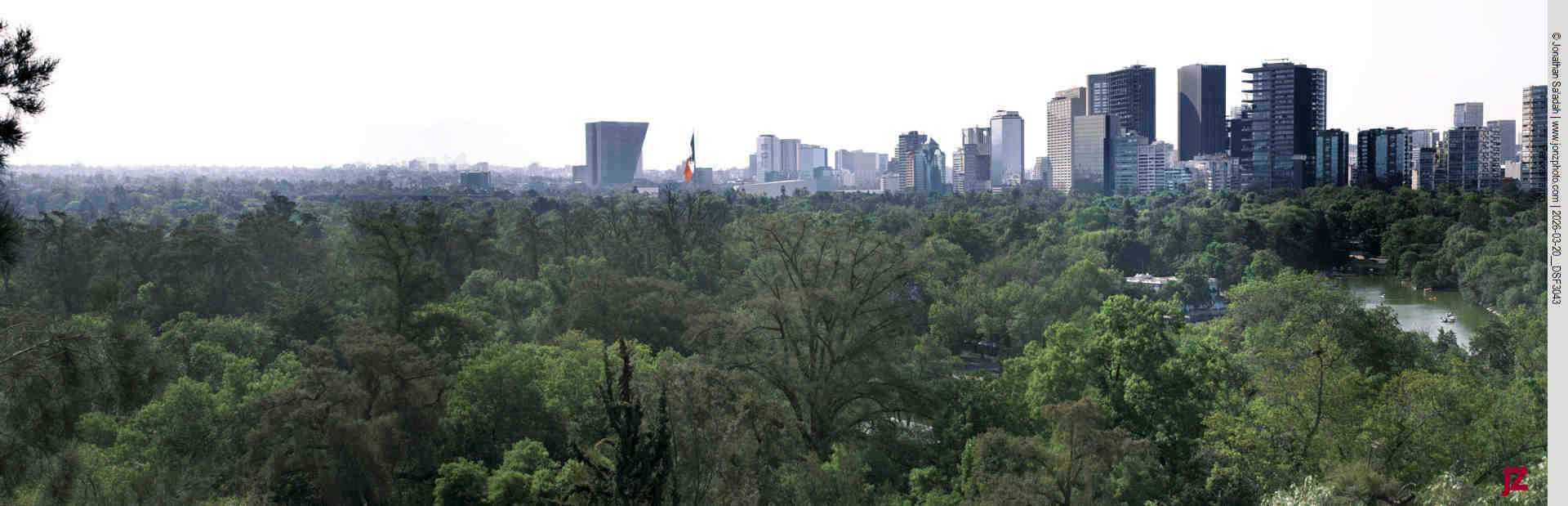
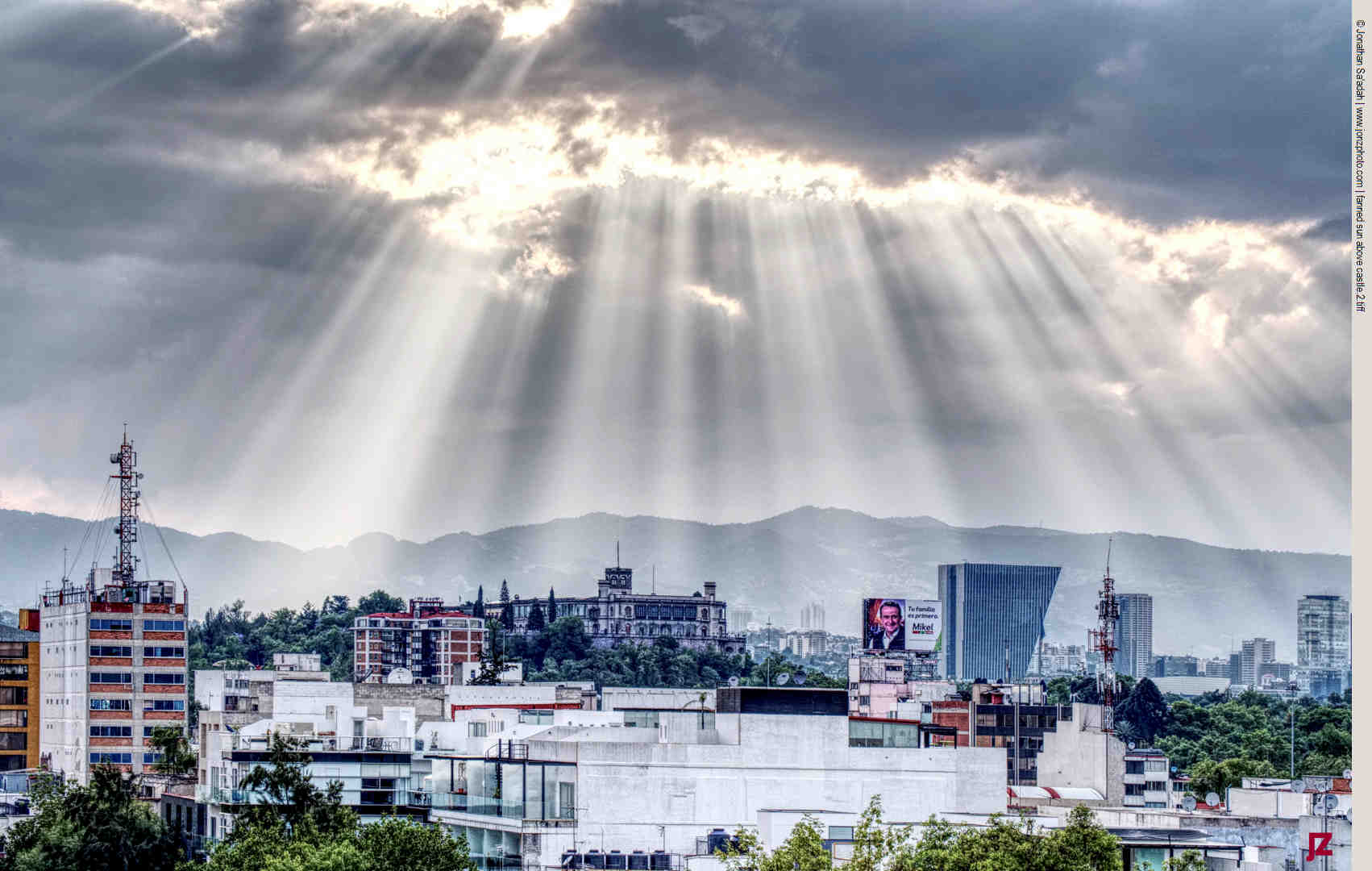
    Mexico City skyline with Chapultepec Castle, center.

    Each time we’ve visited Mexico City we’ve moved between different neighborhoods. This trip we settled down in a decidedly affluent section, called Polanco, which borders on Chapultepec Park. The park is a huge, mostly forested space, which occupies an important position in the city. Physically it’s roughly in the center of the metropolis, but historically it has a long narrative that is hidden from the casual eye.

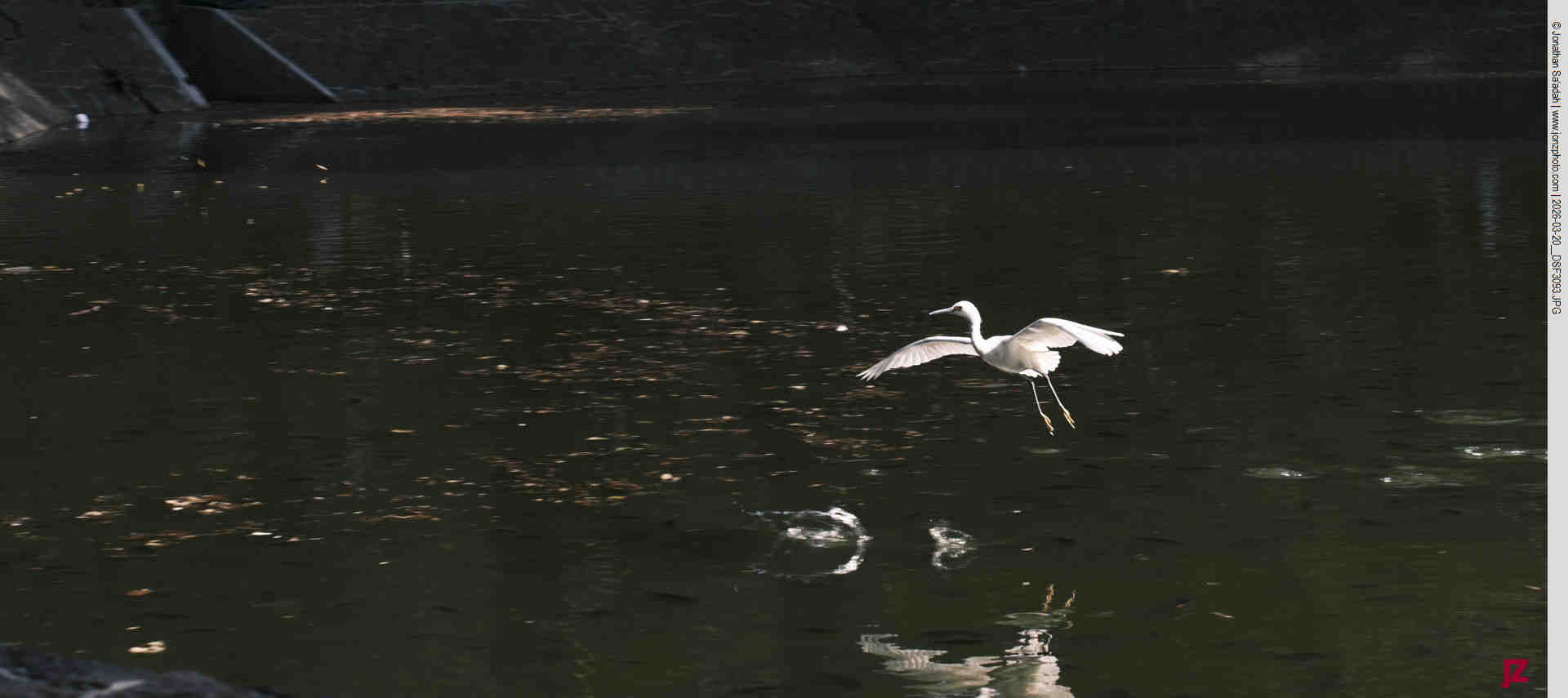
    A Snowy Egret in one of Chapultepec’s lakes.

    Walking through it has an eerie feeling. Yes, it’s inhabited by a lot of public buildings and institutions, but lurking under the surface there’s more to it. Walking under the tall trees of Chapultepec, there’s a feeling of ghosts watching you. Today it’s full of families, street vendors, and paddle boats, but the paths weave through a landscape shaped by invasion, survival, and resistance. The Spanish conquest is there, written into the stones, hills, and trees,

    A sacred hill turned seat of power

    Seen from the vantage point of the Castle, the park occupies a central position in the city.

    Long before the first Spanish soldiers saw the Valley of Mexico, Chapultepec Hill was sacred ground for the Mexica (Aztec). It was a royal retreat, a place of springs and ahuehuete trees (a type of cypress) where rulers came to rest and perform ceremonies. When the Spanish invaded, this forested hill became part of the battlefield of 1521, and later, the perfect lookout from which to control a conquered city.

    Chapultepec Castle, which now crowns the hill, was built in the 18th century as a symbol of colonial and later national power. Seen from below, the fortress on the skyline is a reminder of how Spanish rule tried to place itself above the world the Mexica had built. Yet the forest at its feet, still filled with life, recalls a much older relationship to this land – one rooted in water, trees, and ceremony rather than walls and cannons.

    A new city on top of an old one

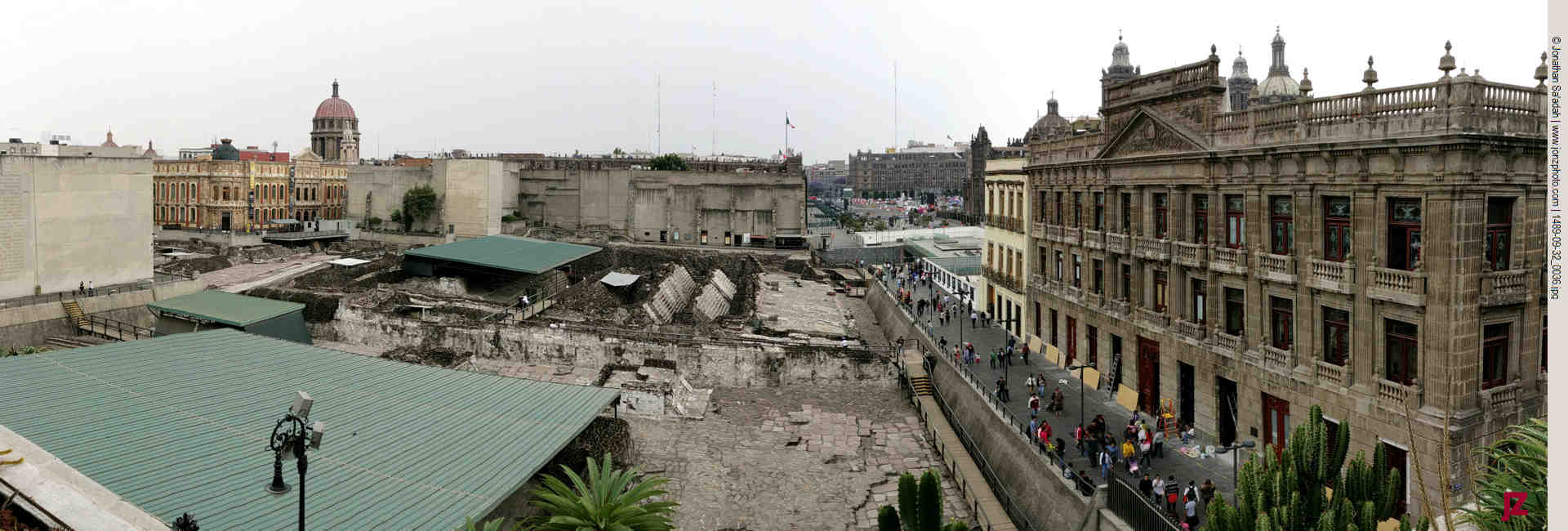
    The green roofs are over excavation sites of Templo Mayor, just adjacent to the Metropolitan Cathedral and the National Palace. The Zócalo (main square) is just visible in the centre right, the Cathedral spikes up above the buildings on the right, and the National Palace is the long flat building in the center, just adjacent to the the excavations.

    A short metro ride from the park, the Centro Histórico makes the violence of conquest visible in stone. After the fall of Tenochtitlan, the Spanish tore down much of the Mexica capital and used its stones to build their own city. The massive cathedral that dominates the Zócalo stands where important sacred buildings once rose, its walls literally made from the ruins of temples it replaced.

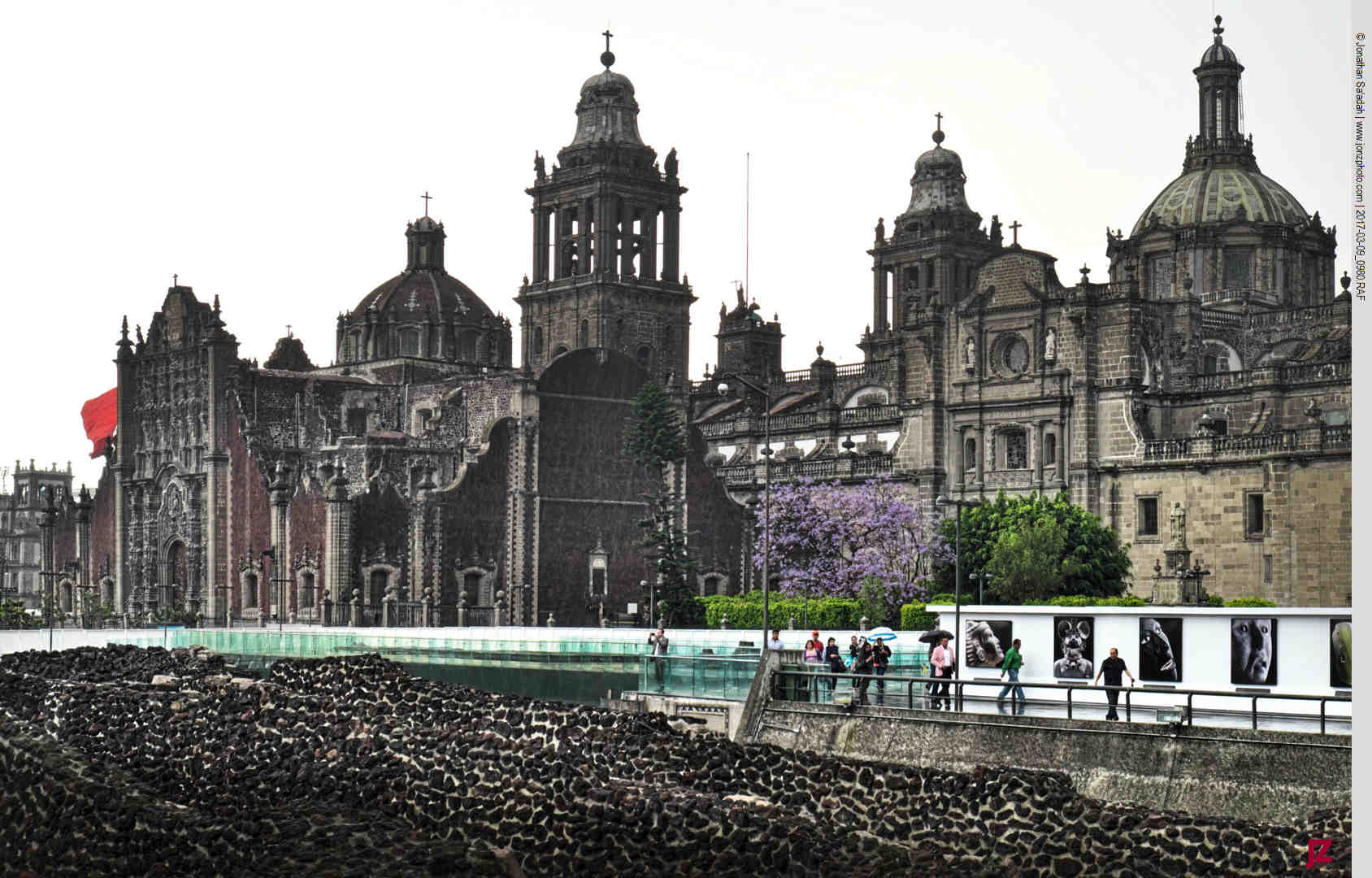
    The Metropolitan Cathedral towers over the Templo Mayor excavations, the walls of which are visible in the foreground.

    Standing in the plaza, you can see two worlds at once. On one side, the cathedral bell towers and the presidential palace represent the institutions Spain introduced – Christianity, monarchy, and European law. On the other, just behind a low fence, the excavated ruins of the Templo Mayor reveal the foundations of Mexica religious and political life. The two sites almost touch, but they do not blend; that gap between them holds centuries of conflict, forced conversion, and survival.

    Epidemics, forced labor, and broken worlds

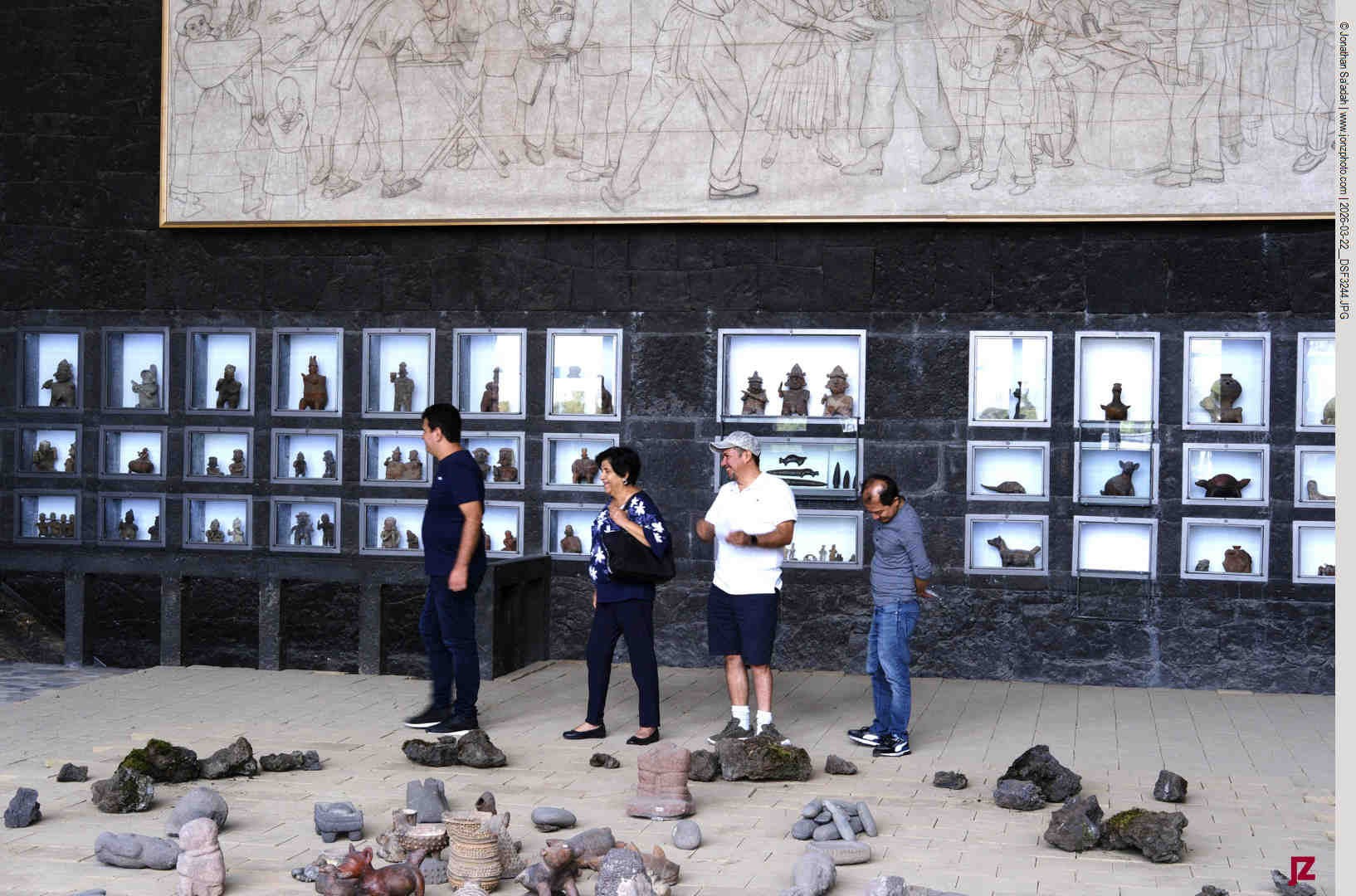
    On the third floor of Diego Rivera’s Anahuacalli Museum, the room he hoped to have as his studio. He died before it was completed, but it now stands as a foundational display of Mexico’s cultural wealth.

    The Spanish invasion hit indigenous communities with more than swords and cannons. Within a century of first contact, up to 90 percent of the population in central Mexico died (plunging the indigenous population from 20-25 million people, to 1-3 million), mostly from epidemic diseases like smallpox and cocoliztli (a particularly lethal viral or mixed-cause hemorrhagic disease), made worse by famine and war. Survivors were pulled into the encomienda and later hacienda systems, where their labor and tribute supported Spanish landowners and the colonial state.

    Land that had been held and worked communally before the conquest was carved up, privatized, or simply seized. Indigenous religions were suppressed, temples demolished, and a racial hierarchy put in place that unsurprising pushed indigenous people to the bottom of society. These structures didn’t disappear with independence; they laid the groundwork for inequalities that still shape Mexico today.

    Everyday resistance in the present tense

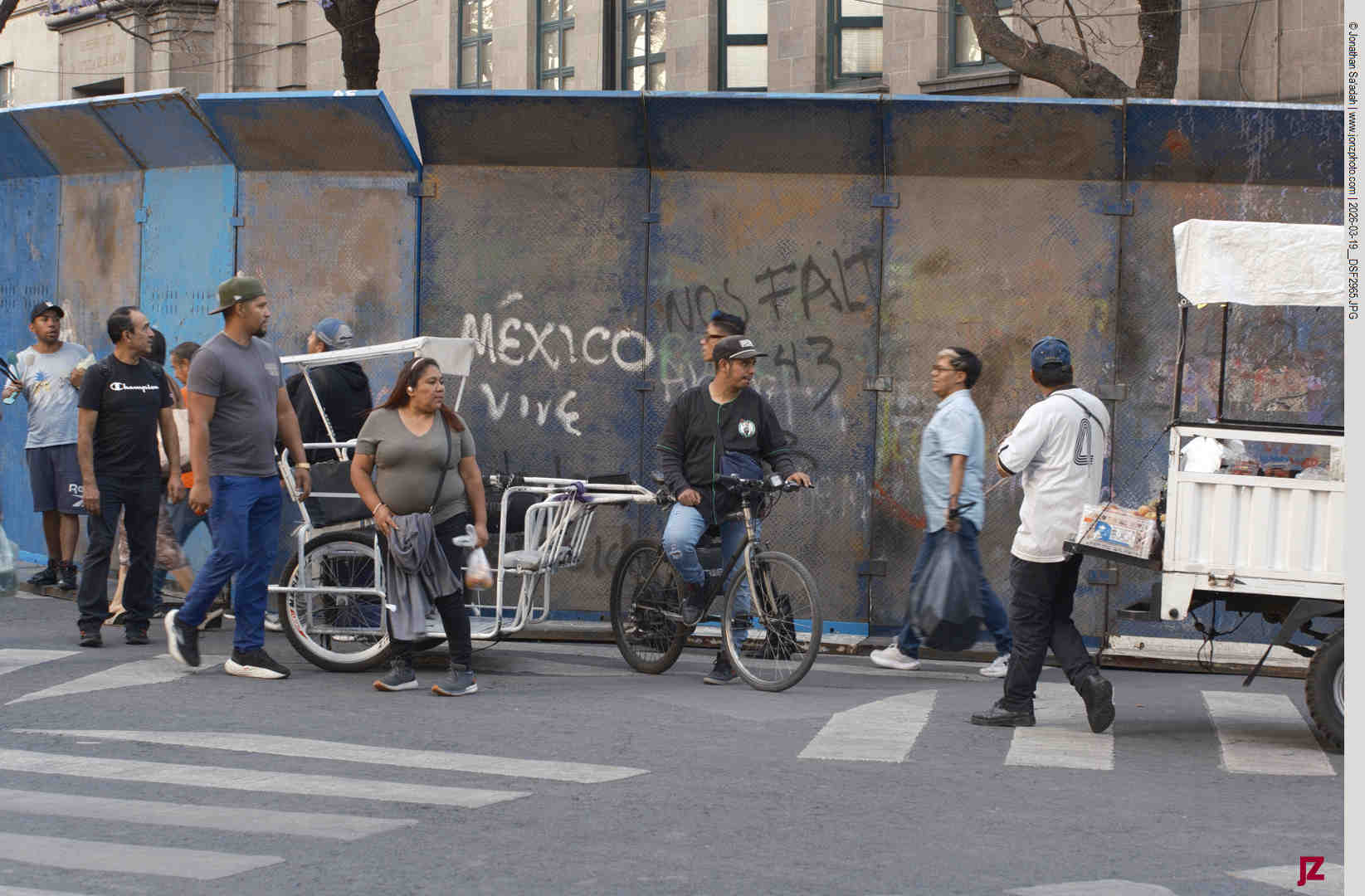
    As soon as the steel barriers went up around the National Palace people started covering them with graffiti as if to say “you can exclude us physically, but not our voices – we are here”.

    And yet, every time you walk through Chapultepec on a Sunday or cross the Zócalo on a busy afternoon, you’re seeing another side of this history. Despite centuries of pressure, many indigenous communities have kept their spirit, languages, festivals, and communal ways of organizing land and life. People from Oaxaca, Guerrero, and beyond come to the capital to for many reasons – to work, protest, study, and sell food and crafts – at the same time bringing their cultures into the city’s plazas and parks.

    The woman taking care of her child near the National Palace, the family resting under an ahuehuete in Chapultepec, the musician playing traditional melodies in the Zócalo – each of them have survived conquest, epidemics, and attempts at erasure. Their presence is a reminder that the impact of the Spanish invasion is not just a tragic past, but exists in the present.

    This is what makes photography so meaningful to me here, it’s not just capturing pretty views. I see a city built on another city, a sacred hill turned fortress and subject to different battles, a people who move through streets laid out to control their ancestors that they now claim as their own through relentless protest. Five centuries after the first Spanish soldiers crossed into this valley, the story continues and is visible. I’m almost an irrelevant part of it, but still there’s a quiet remembering whose land this has always been, and the observant viewer will see it.

  • The Iztapalapa Passion Play: Walking Into 200 Years of History

    The Iztapalapa Passion Play: Walking Into 200 Years of History

    Iztapalapa

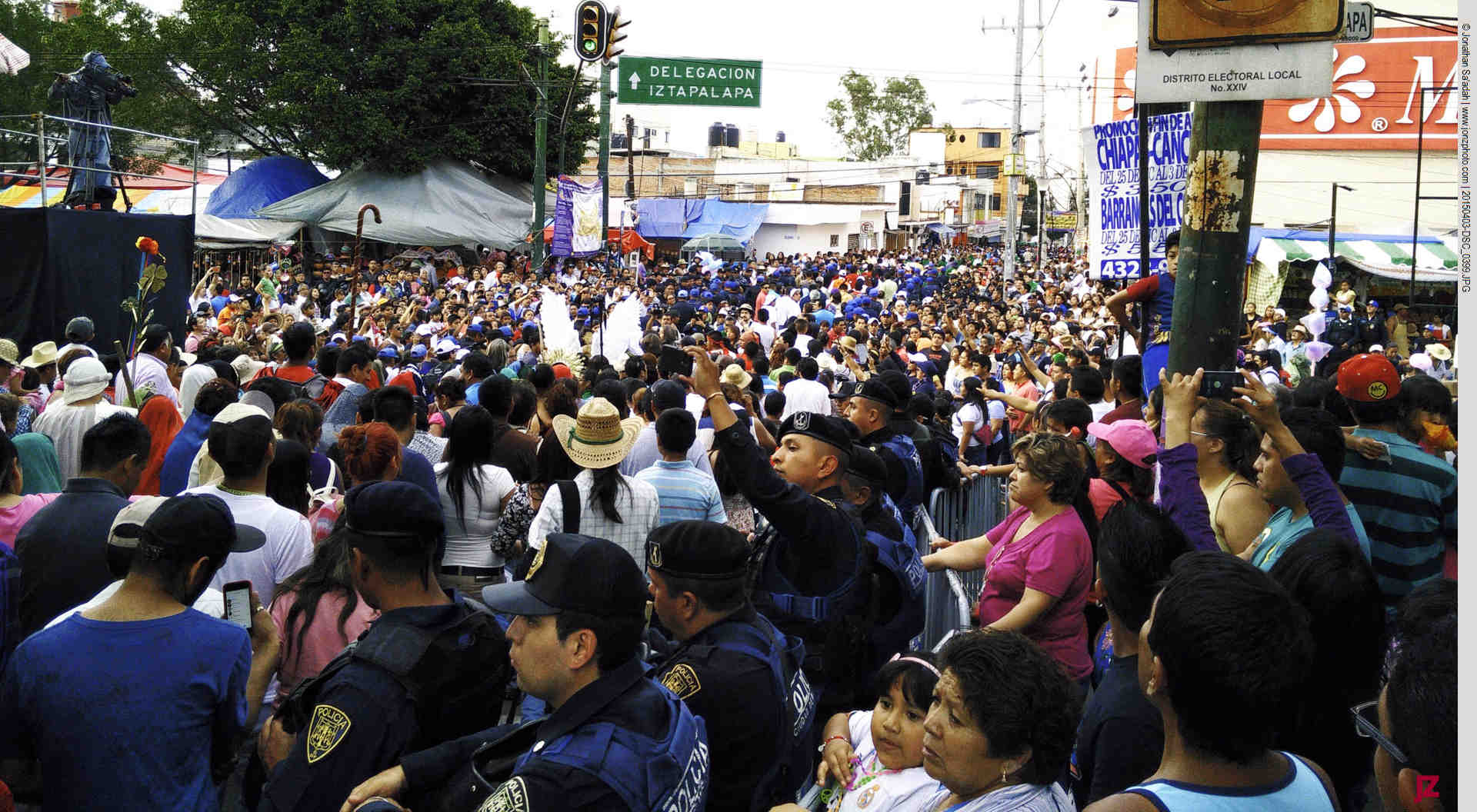
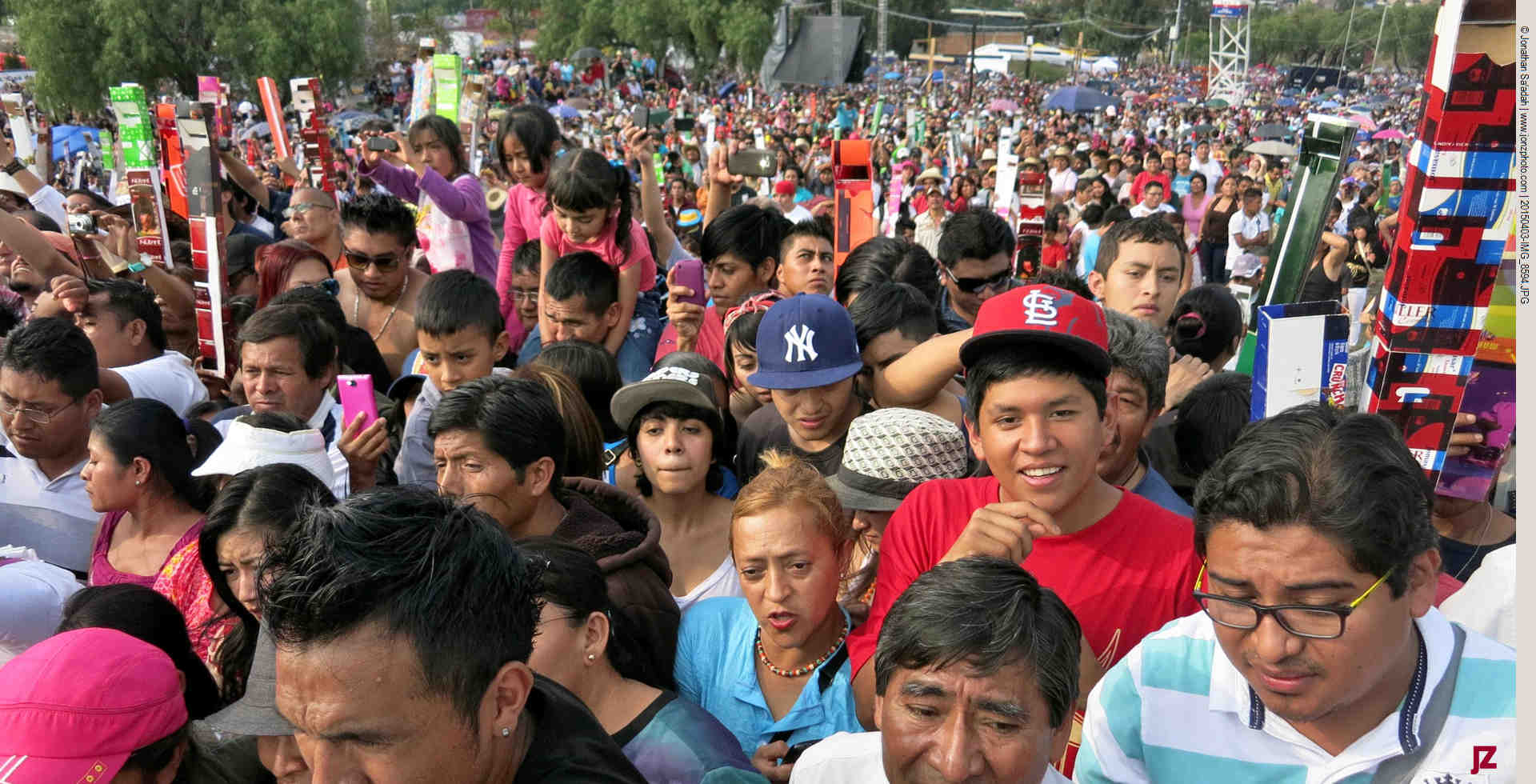
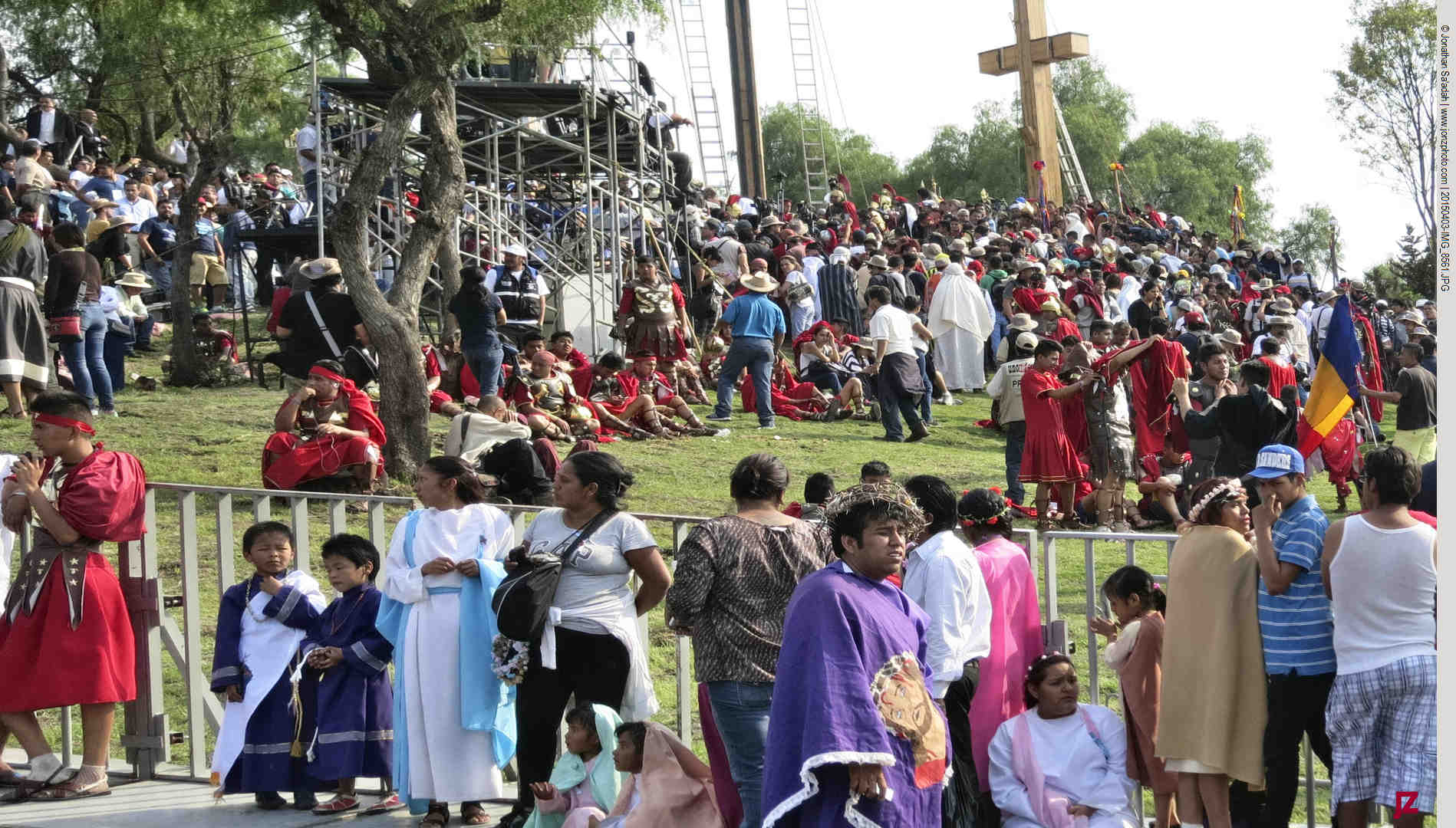
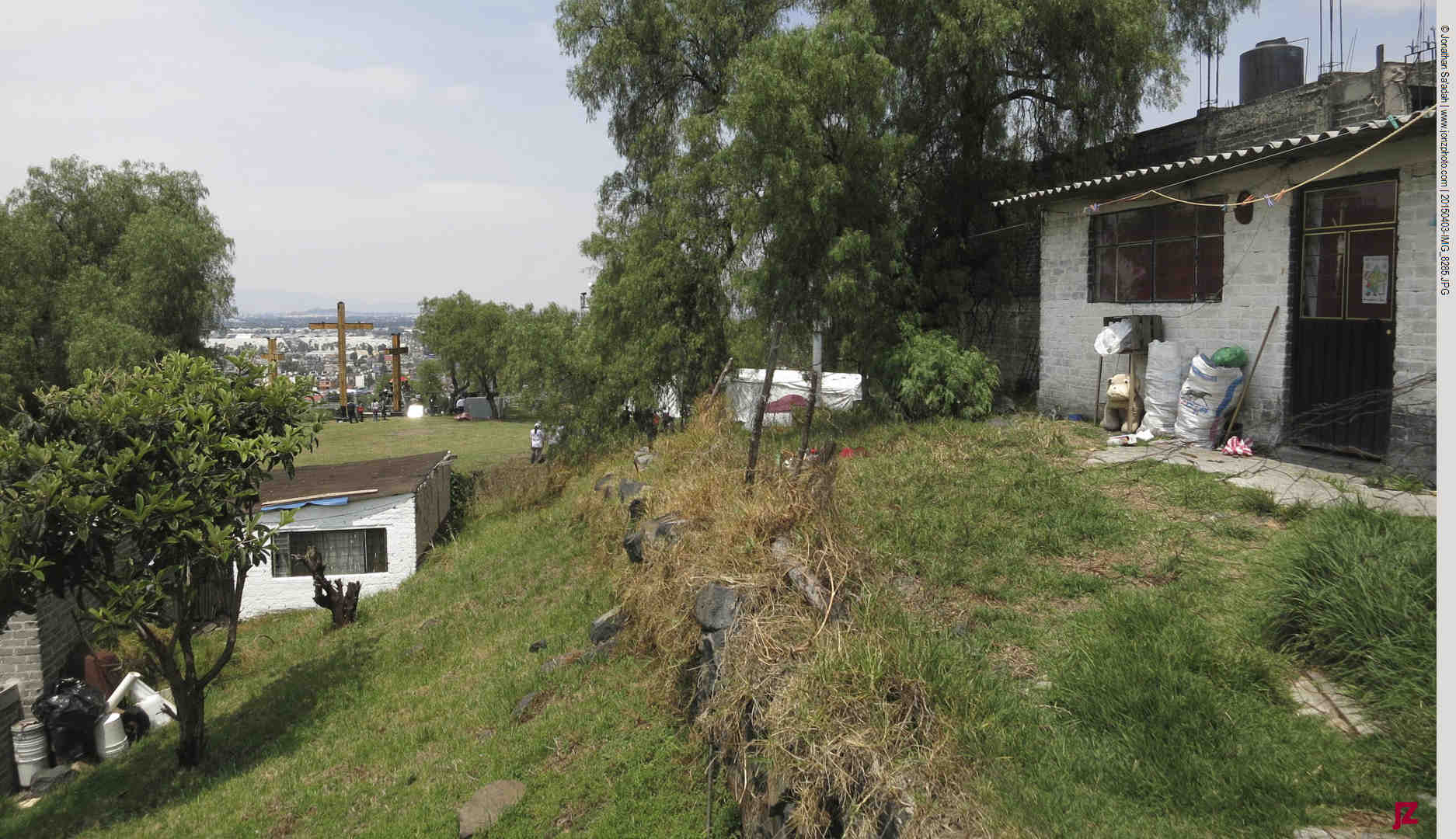
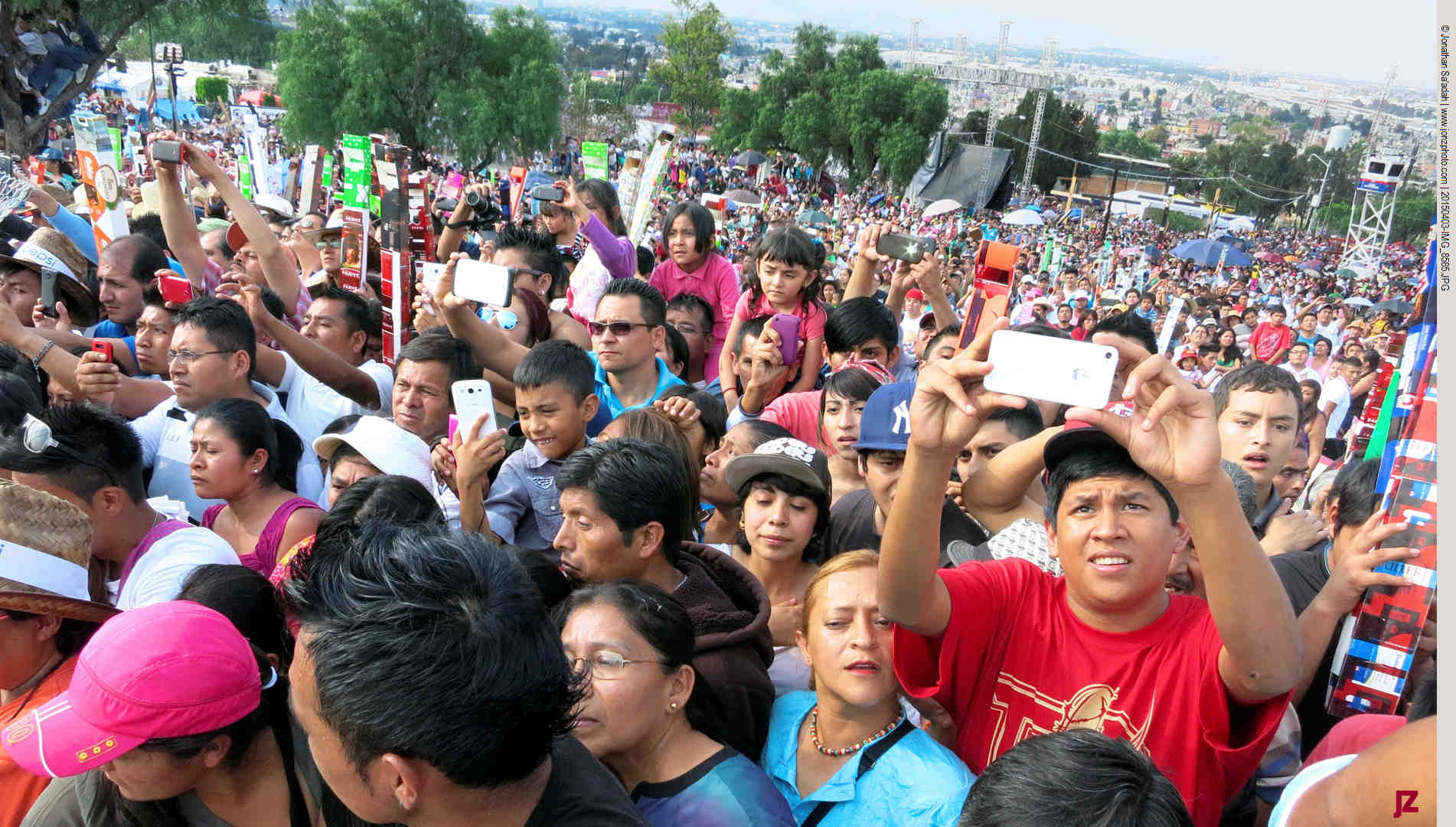
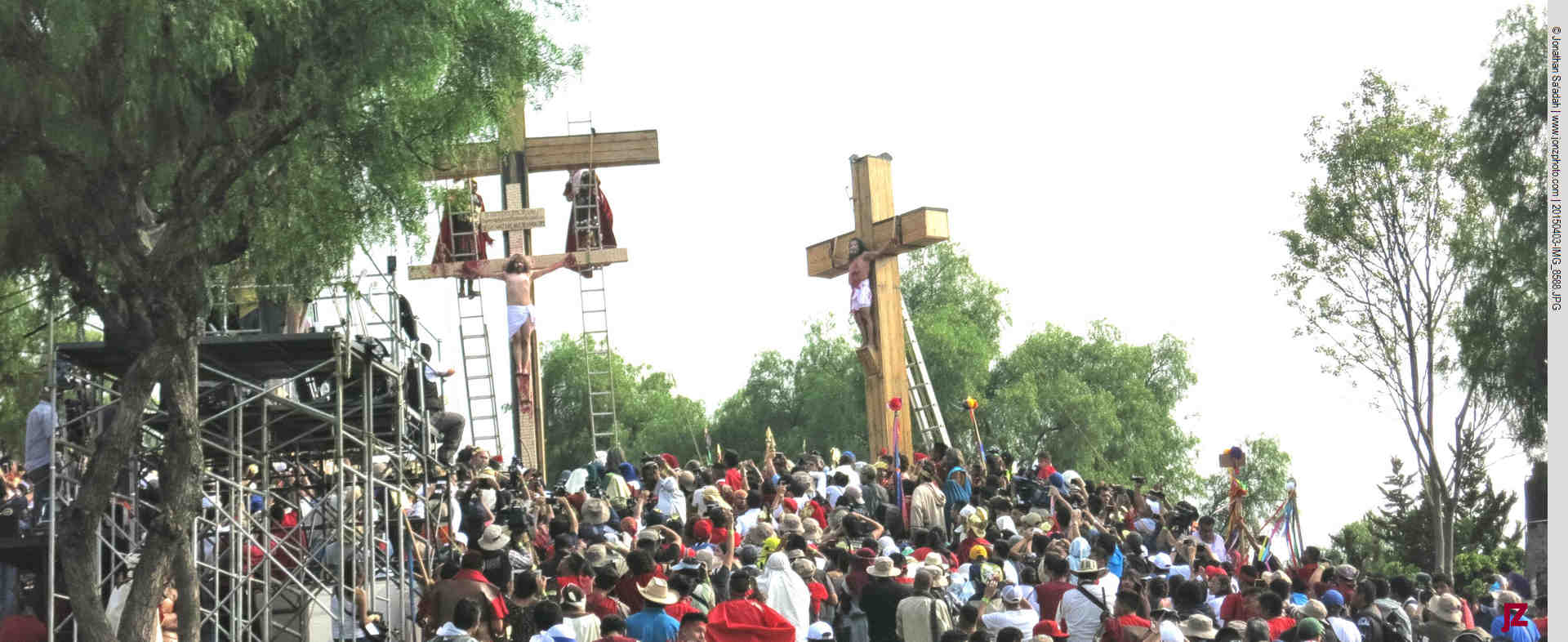
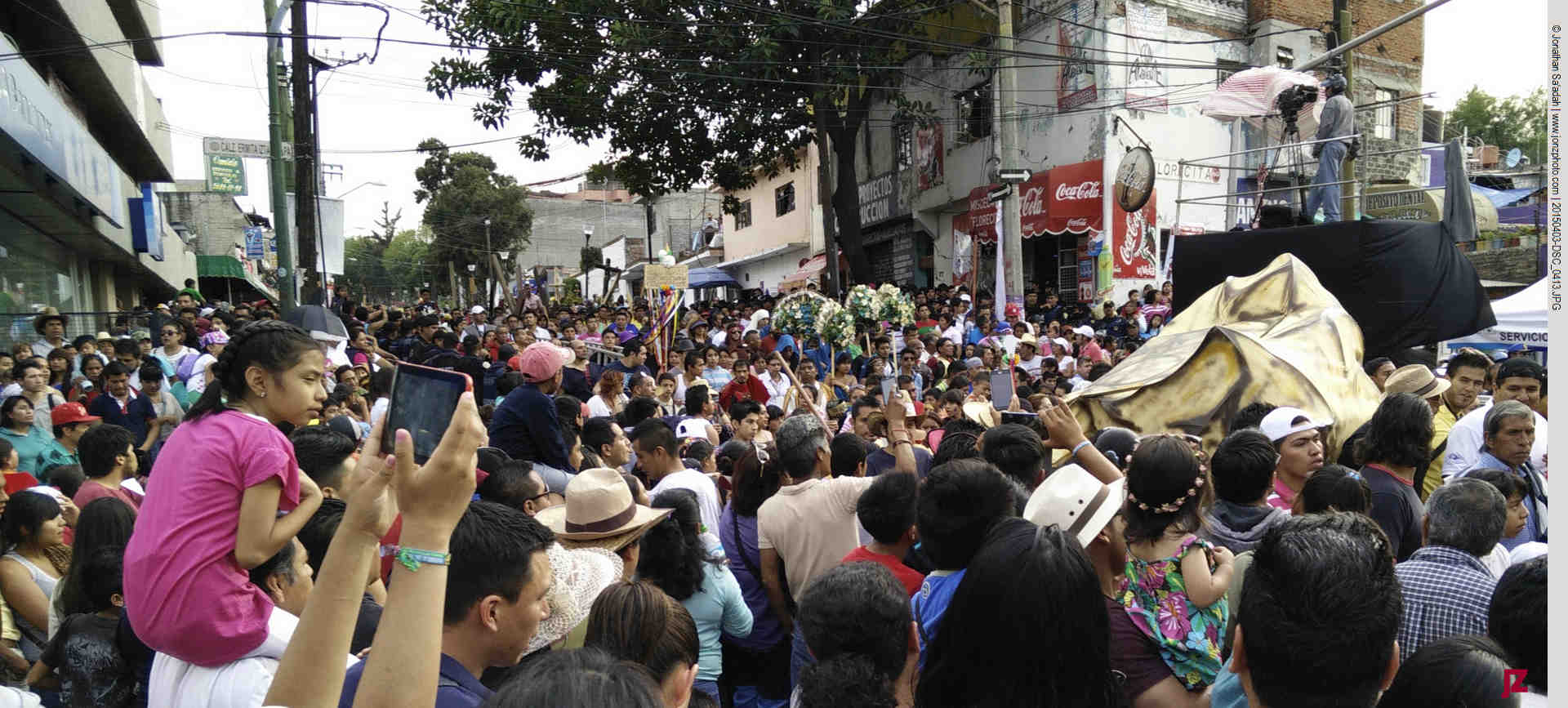
    Iztapalapa is one of the poorest and most densely populated areas of the Mexico City, with high levels of marginalization and crime but also intense community organization. I felt that the borough was off limits to me except for one exception: during Holy Week. I guessed that then I would probably be safe visiting because I would be a guest. So I decided to go to the borough on the eastern side of Mexico City for the 2015 Iztapalapa Passion Play. I wanted to see for myself what this part of Mexico City was like. With the Good Friday parade I knew I was stepping into something big, but I didn’t yet grasp how far back the story went. I arrived by metro, carried along by the crowd, as if the entire east side of Mexico City were flowing uphill toward Cerro de la Estrella. I didn’t know it at the time, but somewhere under the loudspeakers, plastic stools, and street food a promise that was made almost two centuries ago was being fulfilled.

    Back in 1833, Iztapalapa wasn’t a massive borough of Mexico City, just a town on the edge of the capital facing a terrifying cholera epidemic. People were dying in huge numbers, and children were left without parents. In the middle of that fear, the community turned to a local image of Christ known as the Señor de la Cuevita, kept in a small sanctuary near a cave, and made a vow: if they were spared, they would honor him every year with a special act of devotion. When the epidemic finally subsided, they kept their word. A simple thanksgiving procession took shape, the seed of the Passion Play I walked into many years later.

    From Procession to Drama

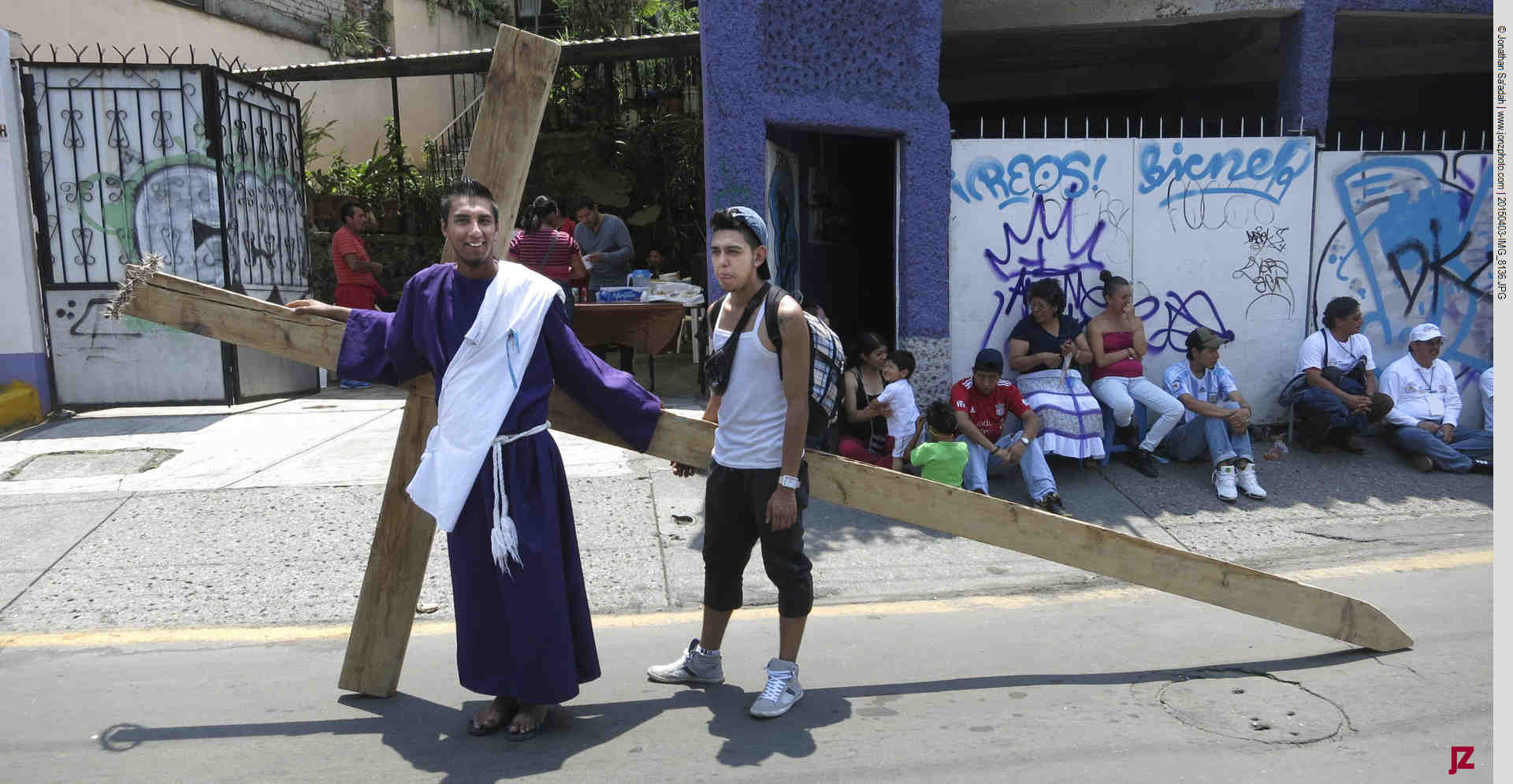
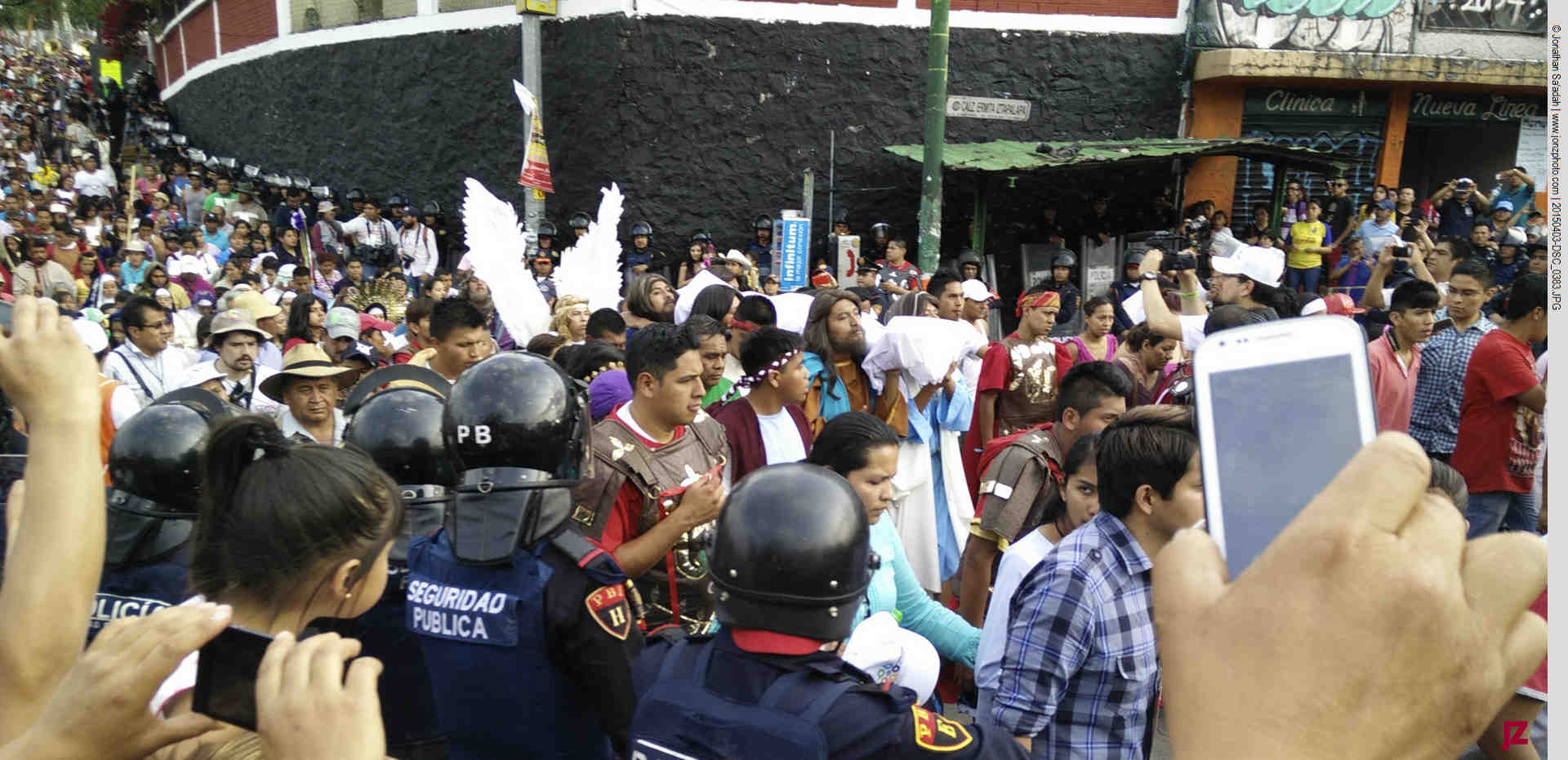
    Standing in the crowd in 2015, squeezed between families, food vendors, police lines, and steel fences, I watched the actor playing Jesus ride into “Jerusalem” on a donkey. It was easy to imagine the play had always looked like this. In reality, the enactment has changed a lot, while keeping the borough’s vow to the Señor de la Cuevita.

    Early in its history the procession began to absorb scenes from the Gospel story. Mexico already had a long tradition of religious dramas used to teach the faith, and Iztapalapa slowly made that tradition its own. By the mid‑1800s, locals were no longer just walking; they were acting out the Passion. At first the focus was Good Friday and the crucifixion, but the script expanded: Palm Sunday, the Last Supper, the trial, the Via Crucis. By the time I watched the Good Friday climb in 2015, the result was a fully formed Passion narrative spread across days and locations.

    The Eight Barrios Behind the Scenes

    One of the things that struck me that year was how deeply the local neighborhoods own this tradition. Iztapalapa’s eight original barrios still form the backbone of the organization. Committees choose the actors, coordinate rehearsals, handle logistics, and even resolve disputes. The people on stage are not professionals parachuted in for Holy Week; they’re neighbors, and I could feel it.

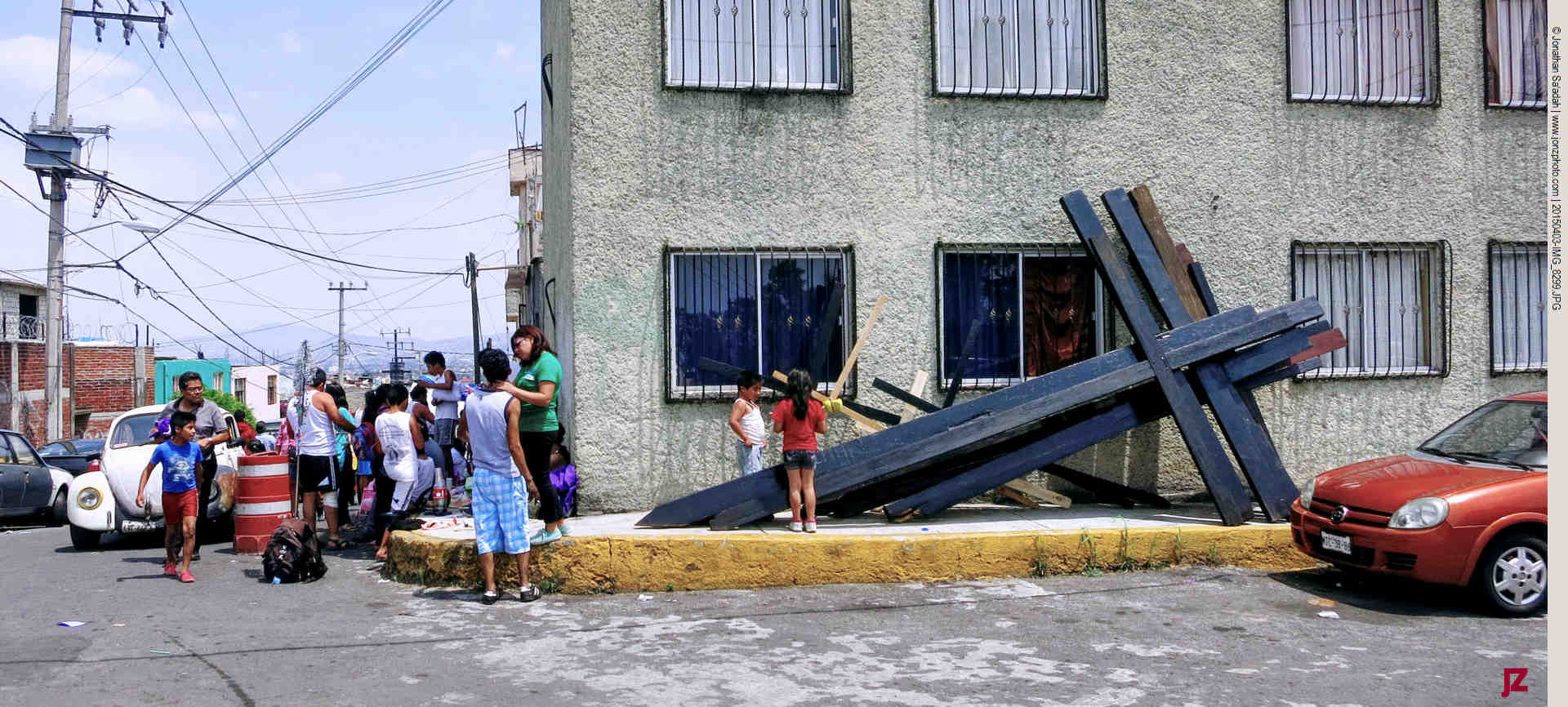
    The role of Jesus goes to a young man who meets strict requirements of moral conduct, physical endurance, and community involvement. Months before Holy Week, he and the rest of the cast are already rehearsing in parish courtyards and streets, while families cut fabric and paint props in their homes. By the time the first scenes play out, the borough has effectively turned itself into a giant backstage. Watching in 2015, I realized the real performance wasn’t just on the hill. It was in every alley where someone had spent evenings sewing a tunic or reinforcing a cross.

    From Cuevita to Cerro de la Estrella

    The geography of the Passion Play has shifted over the years, even as the underlying commitment remains the same. Originally, the focus was the sanctuary of the Señor de la Cuevita and its immediate surroundings. Flooding and difficult conditions eventually pushed organizers to move the climactic scenes to the slopes of nearby Cerro de la Estrella in the early 20th century.

    That hill wasn’t chosen at random. Long before Christianity arrived, Cerro de la Estrella was a sacred site, famous as the place where the Aztec New Fire ceremony was held every 52 years. Today’s Passion Play climbs the same hill. As I followed the Via Crucis up the hill in 2015, dusty and sweating alongside thousands of others, I felt those layers under my feet: pre‑Hispanic rites, colonial processions, and nearly two centuries of Passion Plays.

    You can hear that layered history in the sounds of the day. Drums, flutes, and other sounds blend indigenous traditions with Catholic imagery. The result isn’t a museum piece; it’s a living example of how older traditions don’t disappear but get woven into newer ones.

    A Local Vow on a Global Stage

    By the time I showed up with my camera, the Iztapalapa Passion Play was already one of the largest Holy Week events on the planet. Loudspeakers hung from poles. Big screens helped people in distant streets follow the action. Television crews, helicopters, and rudimentary news drones turned the Via Crucis into a national broadcast. What began as a small-town show had grown into a massive urban ritual that could draw millions over Holy Week.

    Yet, amid the scale and the cables, some principles have remained non‑negotiable. The cast is still drawn from local residents. The event is coordinated by neighborhood committees, not a commercial production company. The story remains anchored in the same episodes of the Passion that have been staged here for generations. Even as the city and the media landscape changed around it, Iztapalapa held on to the idea that this is a community promise, not a show for hire.

    Remembering 2015 With New Eyes

    Looking back on my visit now, I see more than the scenes I watched and photographed. I see the shadow of the 1833 epidemic that gave birth to the vow, the gradual evolution from simple procession to full Passion Play, and the eight barrios that have carried the story forward. I see Cerro de la Estrella both as a pre‑Hispanic altar and a modern stage, and every cross carried up its slopes as part of an unbroken chain.

    The Iztapalapa Passion Play reenacts the last days of Christ, but it also reenacts Iztapalapa’s own history: its fears, its faith, and its determination to keep a promise made in the face of death. Every Holy Week I think of being there and of the people renewing their vow. Would I go back? I’m not sure, but probably not. I felt too much like a privileged gringo with a camera, even though my intentions were benign. But what I remember besides the spectacle are the small acts of kindness: the family that shared their umbrella with me in the scalding sun, and the man who gave me a bottle of water. On a person-to-person level, people were friendly. It was more me, and how I felt. I felt out of place even though I was correct that I had protection as a guest. It just didn’t feel right, but still I did it.

  • Skylines and Saints: Mexico City

    Skylines and Saints: Mexico City

    A colorful rendition of Mexico City.

  • Returning to an Old Friend: Al-Andalus

    Returning to an Old Friend: Al-Andalus

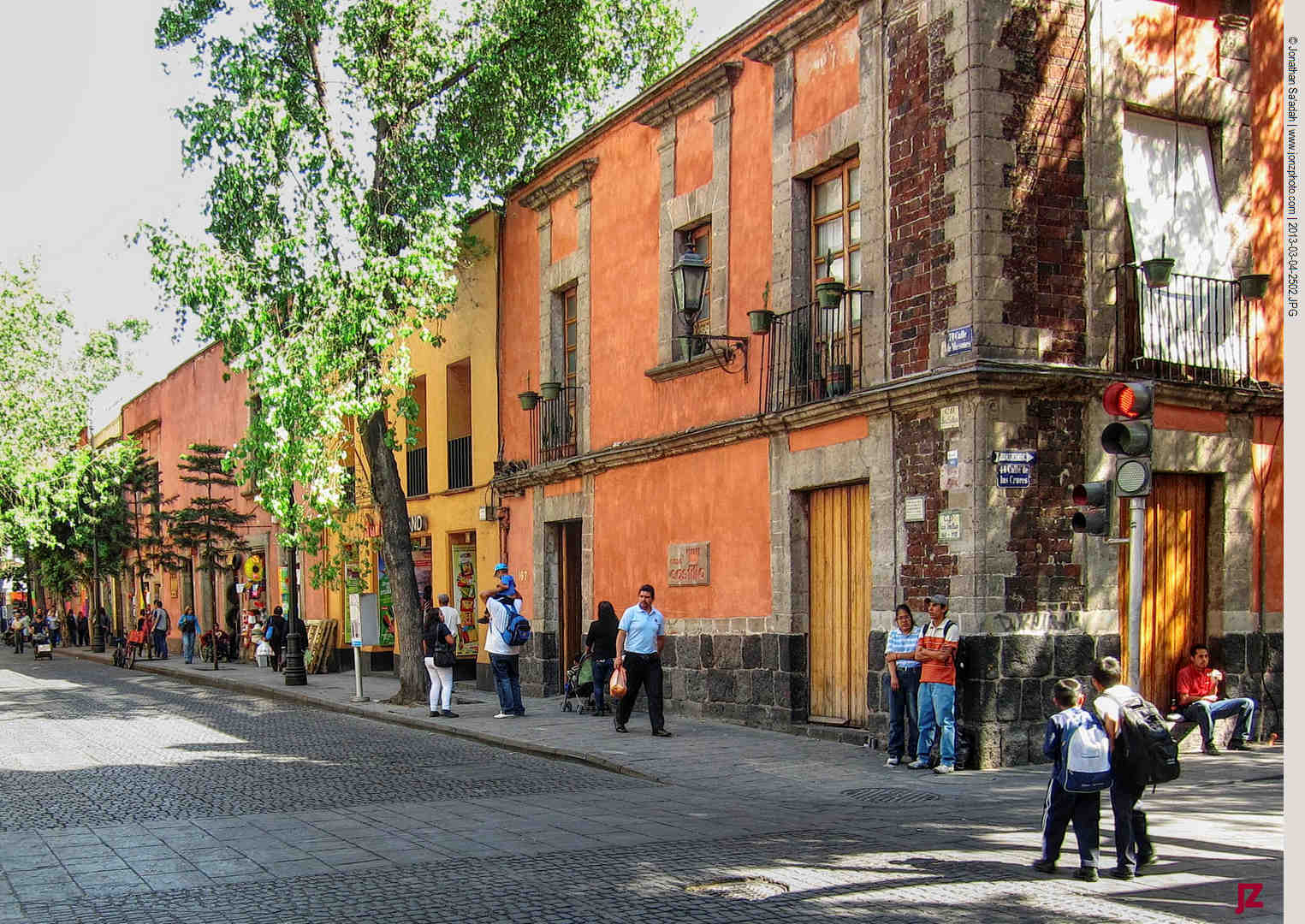
    We first ate at al-Andalus in 2013, on our first visit to Mexico City. A Mexican friend who had moved to Montreal told us it was her favorite restaurant in the city. We took that as a high recommendation and went. We have gone back almost every time since. But with the pandemic there was a big gap, and we skipped it on last year’s trip, so it had been nearly seven years since we’d entered its quiet courtyard and climbed up the worn stone stairs to the dining rooms. In that time al-Andalus has expanded to other locations and become a well-known brand in CDMX. The original, though, is still at Mesones 171, in a seventeenth-century colonial building in the Centro Histórico – a building that was, by local lore, the city’s first officially licensed brothel. To me it’s like a pilgrimage.

    The open entrance in the center of the photo is where you enter al-Andalus.

    That the restaurant sits on Calle Mesones is no accident. The street’s eastern stretch, running toward the old La Merced market district, has been the center of Arab commercial life in Mexico City for well over a century. Lebanese immigrants began arriving in the second half of the nineteenth century, and many of them set up shop here and on the surrounding streets – Correo Mayor, Jesús María, República del Salvador, Venustiano Carranza – selling textiles, haberdashery, foodstuffs, and dry goods. The Maronite Cathedral of Our Lady of Valvanera, just a few blocks away on República de Uruguay, became the spiritual anchor of the community and remains the seat of the Maronite Catholic Eparchy in Mexico. Its statue of Saint Charbel, draped in colored ribbons bought at the mercerías on the same street, is venerated by Lebanese and Mexican faithful alike, and you can still hear blessings spoken in Aramaic inside (though I haven’t).

    The Maronites who came to Mexico were mostly young – more than half were between sixteen and thirty – and they arrived carrying Ottoman passports that marked them simply as Turks. Lebanon did not yet exist as a nation. They were fleeing the same conditions that influenced my family’s history and that I wrote about here. They entered through the Gulf ports of Veracruz, Tampico, and Progreso, and many who had intended to continue to the United States found opportunity enough in Mexico to stay. As was the pattern in other countries, the Lebanese immigrants started as ambulant peddlers, loading a wooden box with tinned goods and walking from town to town. From that box, dynasties were built. Julián Slim ran a dry-goods store on Calle Jesús María, a few steps from the Plaza de Loreto; his son Carlos became the richest man in the world. Antonio Domit started a shoe workshop in the 1920s in La Merced that grew into a national brand. Neguib Simón, a Yucatecan of Lebanese origin, created the Plaza de Toros México and pioneered the shopping arcade.

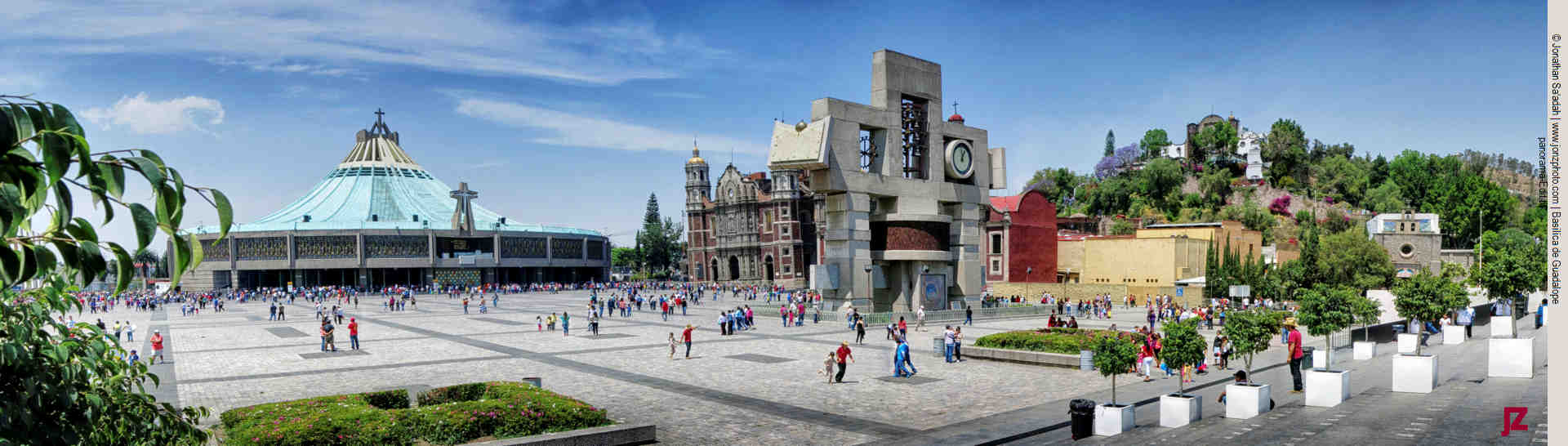
    Carlos Slim, the second generation immigrant from Lebanon, has had a huge impact on Mexico City. He donated this plaza next to the Basilica of Our Lady of Guadalupe, built the Museo Soumaya and filled it with artwork, and owns dozens of buildings in the Centro Histórico of the city where he is a key player. Through his construction company he was the main promoter for a new airport that was opposed and canceled by the Morena government.

    That the Maronites integrated as deeply as they did owes something to religion. They were already Christians – Eastern-rite Catholics – and in a country where Catholicism was the social fabric, that mattered enormously. They married locally, hispanicized their names, learned Spanish quickly, and sent their children into Mexican schools and churches. But they also kept their own institutions. Although Lebanese immigrants made up less than five percent of Mexico’s foreign-born population in the 1930s, they accounted for roughly half of all immigrant economic activity. Today there are an estimated 400,000 to 600,000 Mexicans of Lebanese descent.

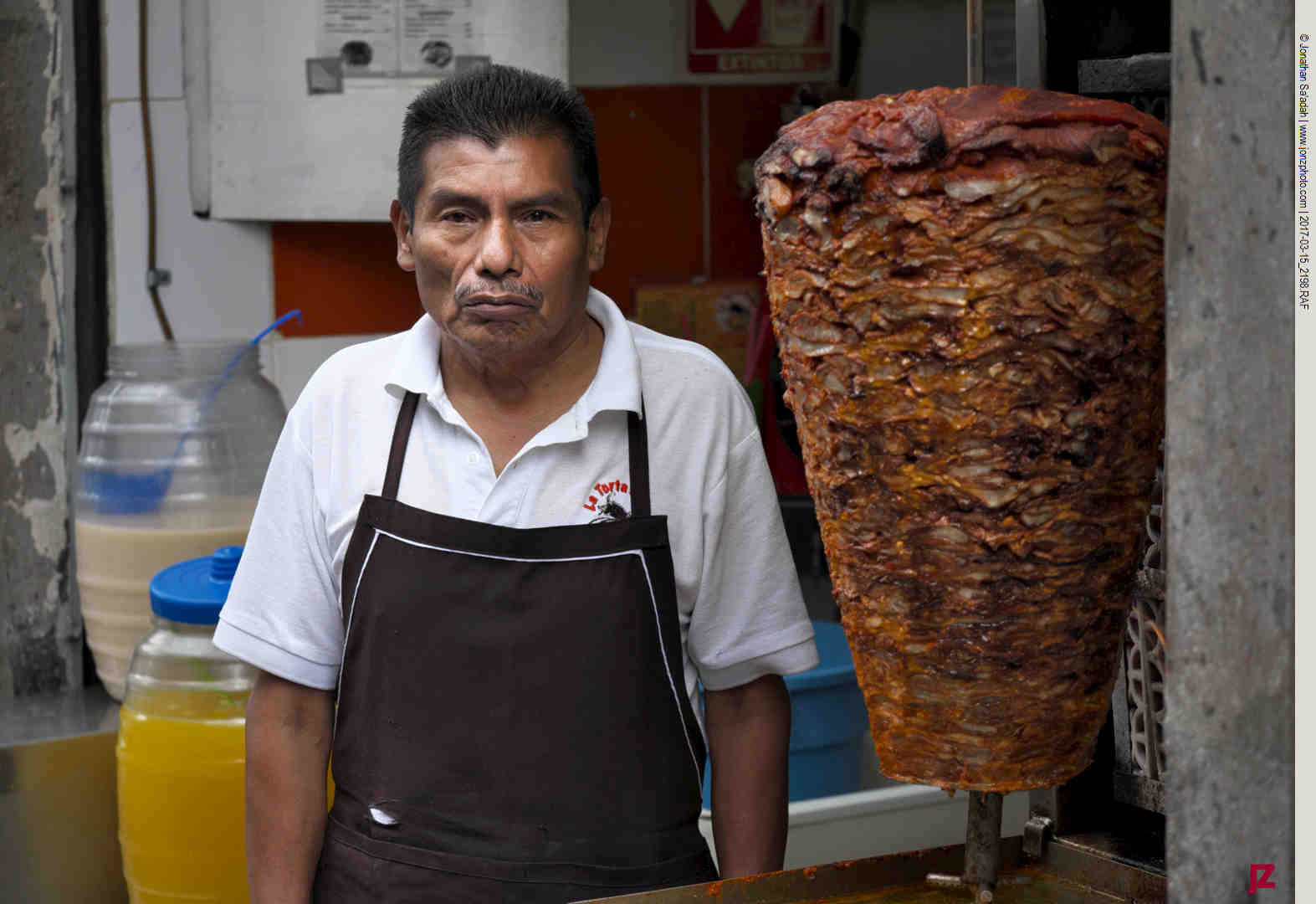
    And it runs, unmistakably, through the food. The Lebanese brought shawarma; Puebla turned it into tacos árabes on pan árabe, and Mexico City turned those into tacos al pastor on corn tortillas with pineapple and salsa. It is arguably the most eaten street food in the country, and it began with a vertical spit and a Lebanese cook.

    A CDMX street vendor selling shawarma, not connected to al-Andalus.

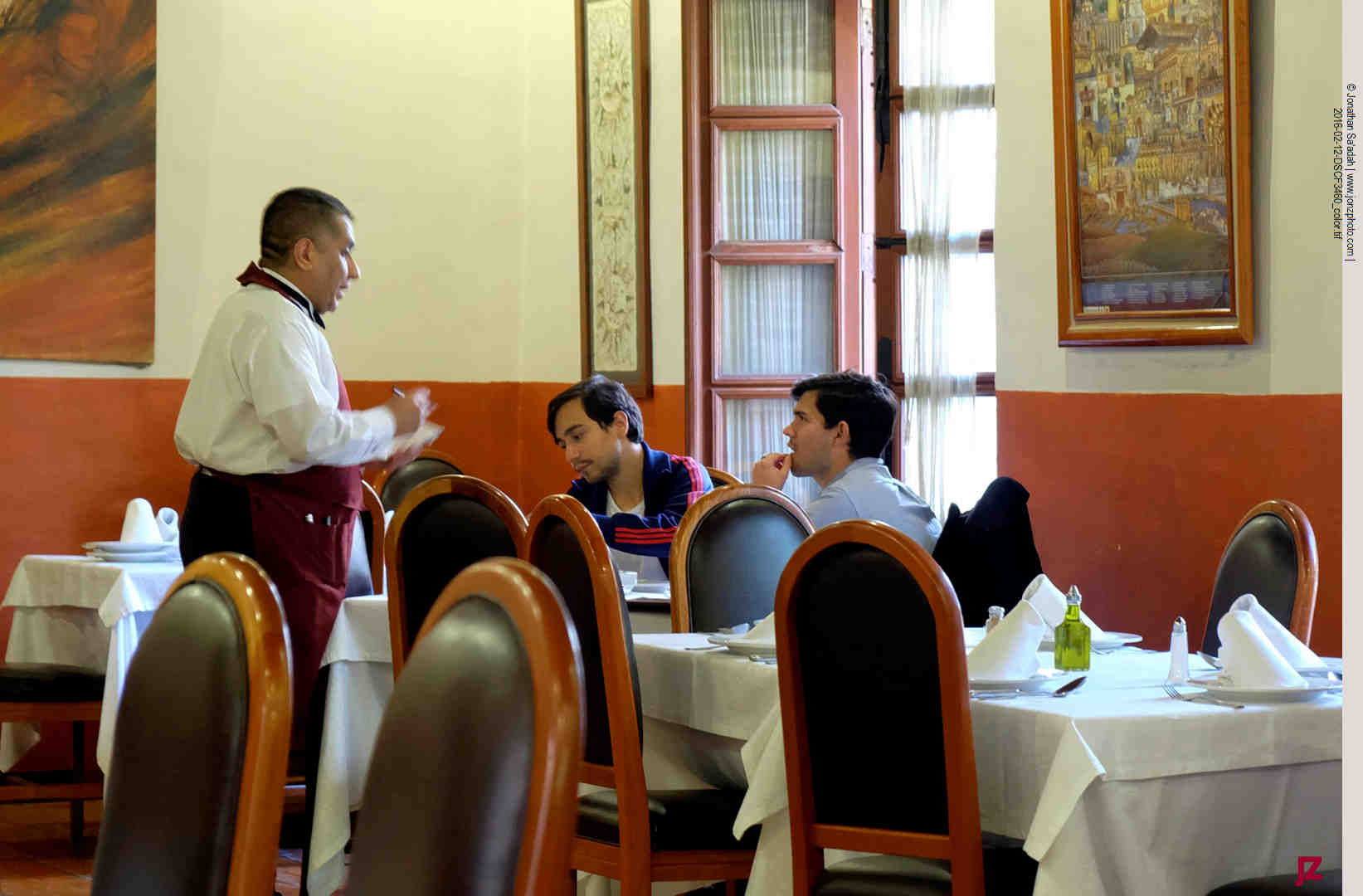
    Al-Andalus was opened in 1994 by chef Mohamed Mazeh, who had arrived in Mexico in 1990 and started by selling tacos árabes. The original Mesones location – thick stone walls, high ceilings, white tablecloths, not much decoration – feels more like a family home than a restaurant. It has since expanded to branches in Nápoles, San Ángel, Santa Fe, and inside Palacio de Hierro. But the Mesones original remains the place where I want to eat and feel at home.

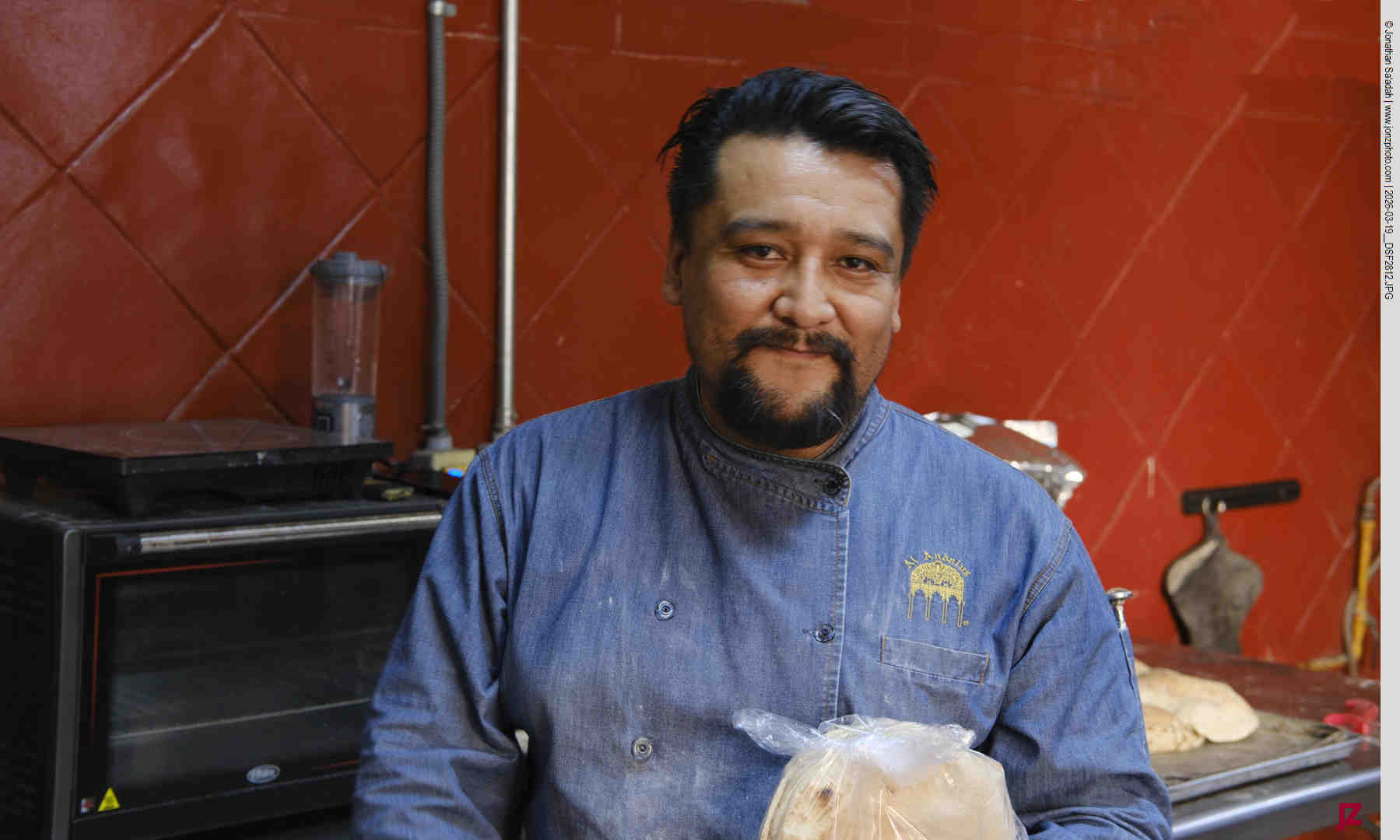
    Today we went back. Fresh lemonade. Tabbouleh made primarily with tomatoes and flat-leaf parsley – unlike my mother’s recipe, which was heavy on curly parsley and mint. Hot pita, baked fresh in the massive stone oven, brought to the table still puffing with steam; I photographed the baker afterwards spinning the pita onto the oven floor like frisbees. Roasted lamb chops served sizzling on a cast-iron plate. Yoghurt with cucumbers. Kibbeh in a wedge, delicate as anything, with more tabbouleh on the side. And to finish, small, crispy Lebanese baklava.

    Seven years away, and it was exactly as we wanted, our favorite place to eat in the city, by far.

    Baking pita at al-Andalus.