Tag: French Cinema

  • Untold Stories Behind Joseph Losey’s M Klein: When Art Meets History

    This is the lead post for a detailed series exploring the making of Joseph Losey’s M Klein. Each post reveals new layers of this remarkable collaborative achievement – from the personal journeys of its creators to the technical innovations that brought their vision to life, from the political courage required to tell unpopular truths to the artistic strategies that made those truths unforgettable. Jump to Table of Contents
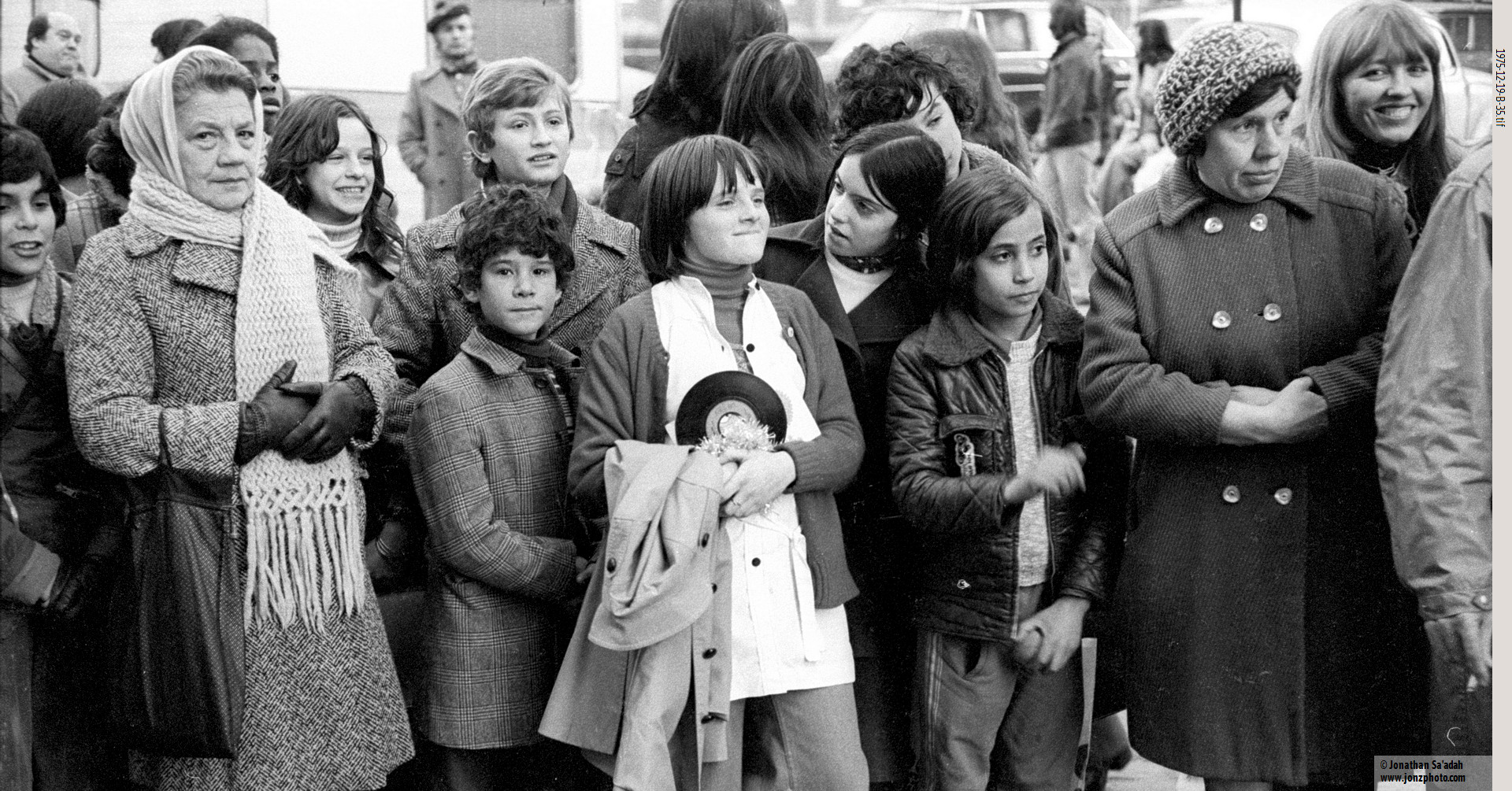
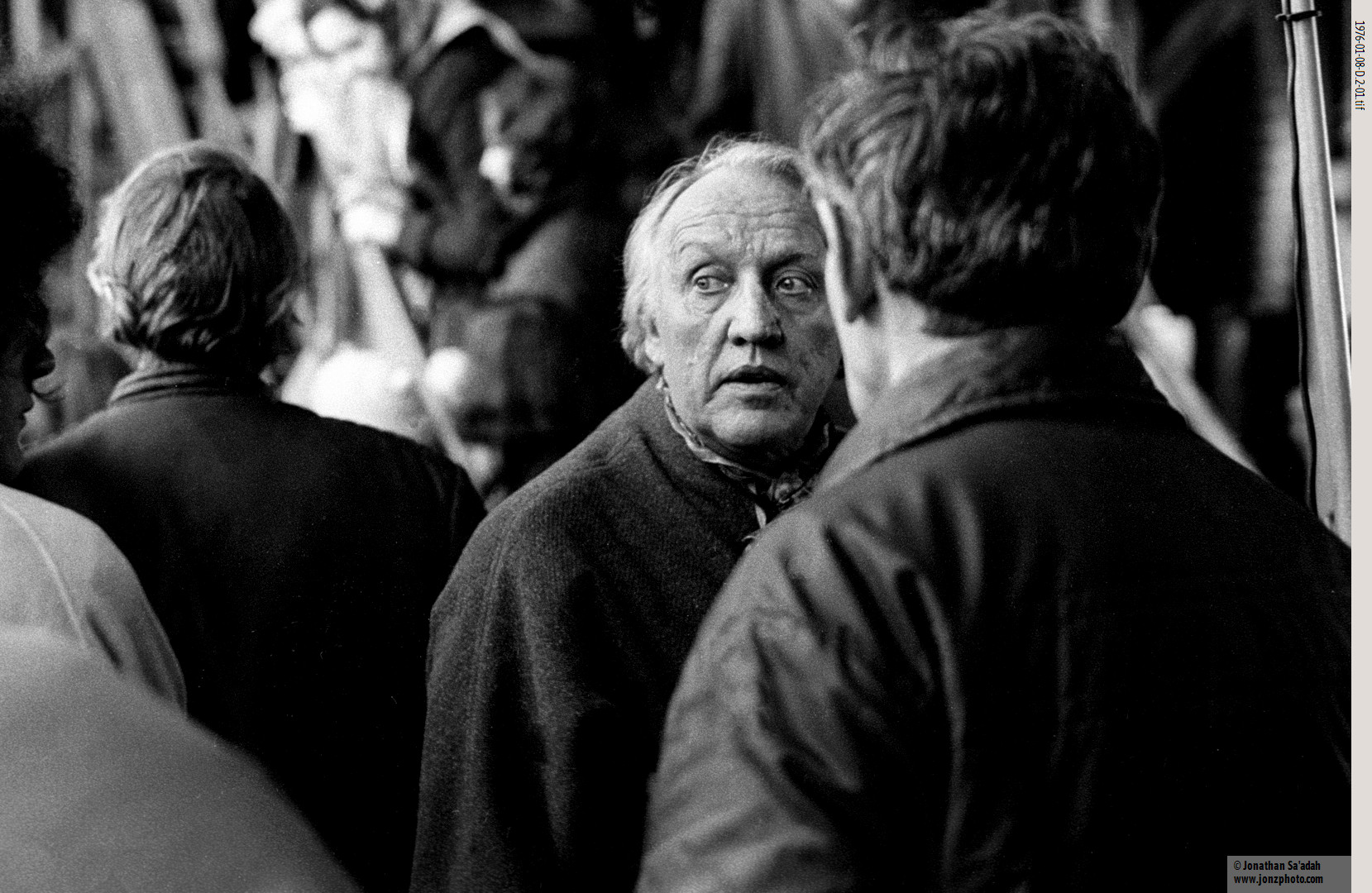
    Hoping to catch a glimpse of a star Crowds often gathered hoping to see Alain Delon. Here they were lucky – his driver parked across the street and so he could briefly be seen entering a building.

    When Joseph Losey set out to make M Klein in 1975, he wasn’t just directing another film about wartime France – he was orchestrating a deeply personal project that brought together artists and professionals who had lived through the very persecution they were depicting on screen. The behind-the-scenes story of this masterpiece reveals how committed professionals transformed their own trauma into cinematic truth, creating one of cinema’s most powerful explorations of identity and complicity.

    When the Persecuted Make Films About Persecution

    The most remarkable aspect of M Klein‘s production wasn’t its star power or budget – it was the extraordinary convergence of people whose lives had been shaped by the events they were recreating. Margot Capelier, the Casting Director, was born into a Jewish family in Paris and had lived through the Nazi occupation, losing family members in the Holocaust. Alexandre Trauner, the Art Director, was a Hungarian Jew living in Paris who had fled to southern France to escape the occupation, working clandestinely in the underground resistance. Lucie Lichtig, the Continuity Director, was Jewish and active in the Alliance branch of the Resistance. Finally, Claude Lyon, the head of the film lab (LTC) used by Losey, lost his mother.
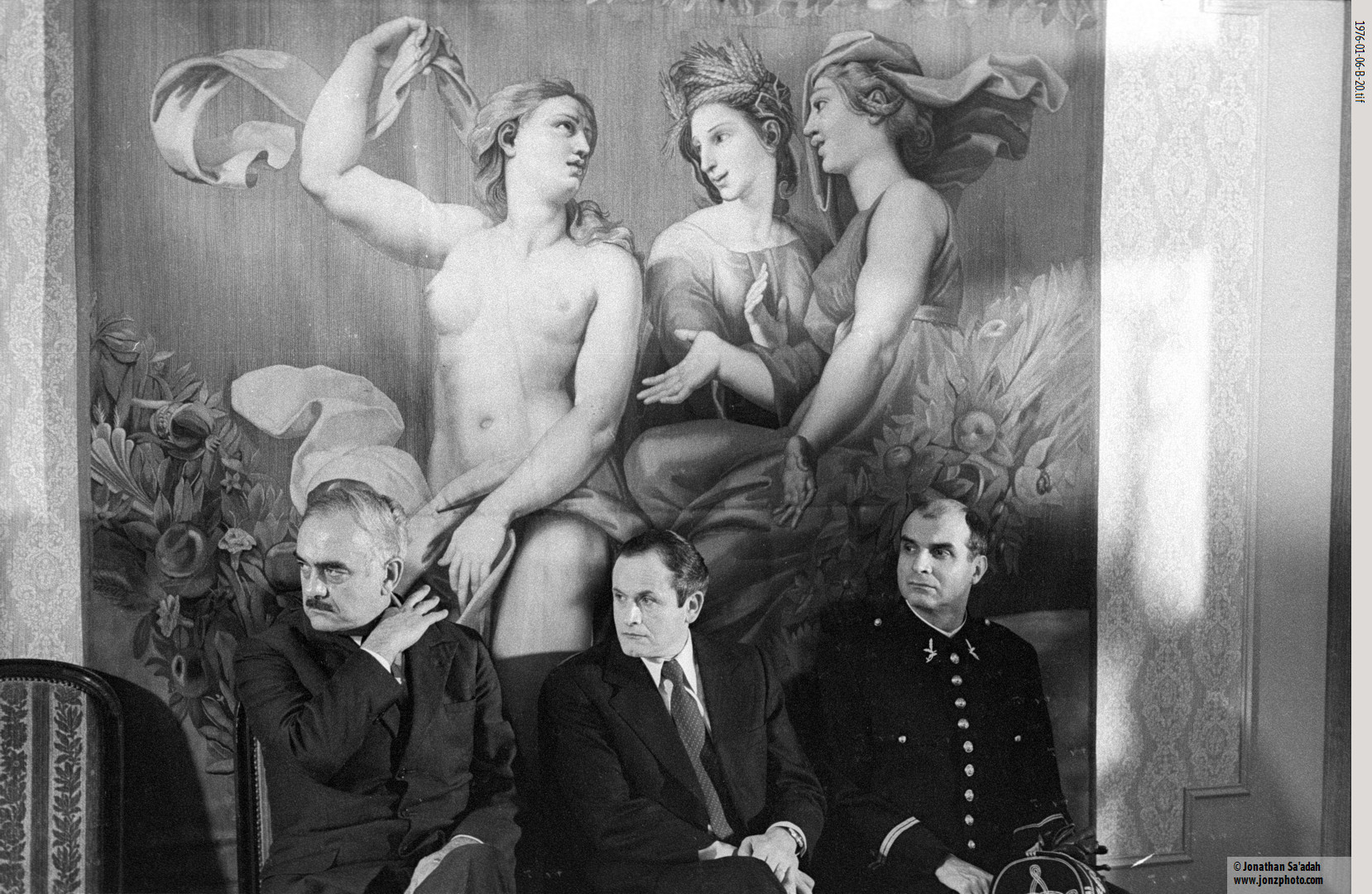
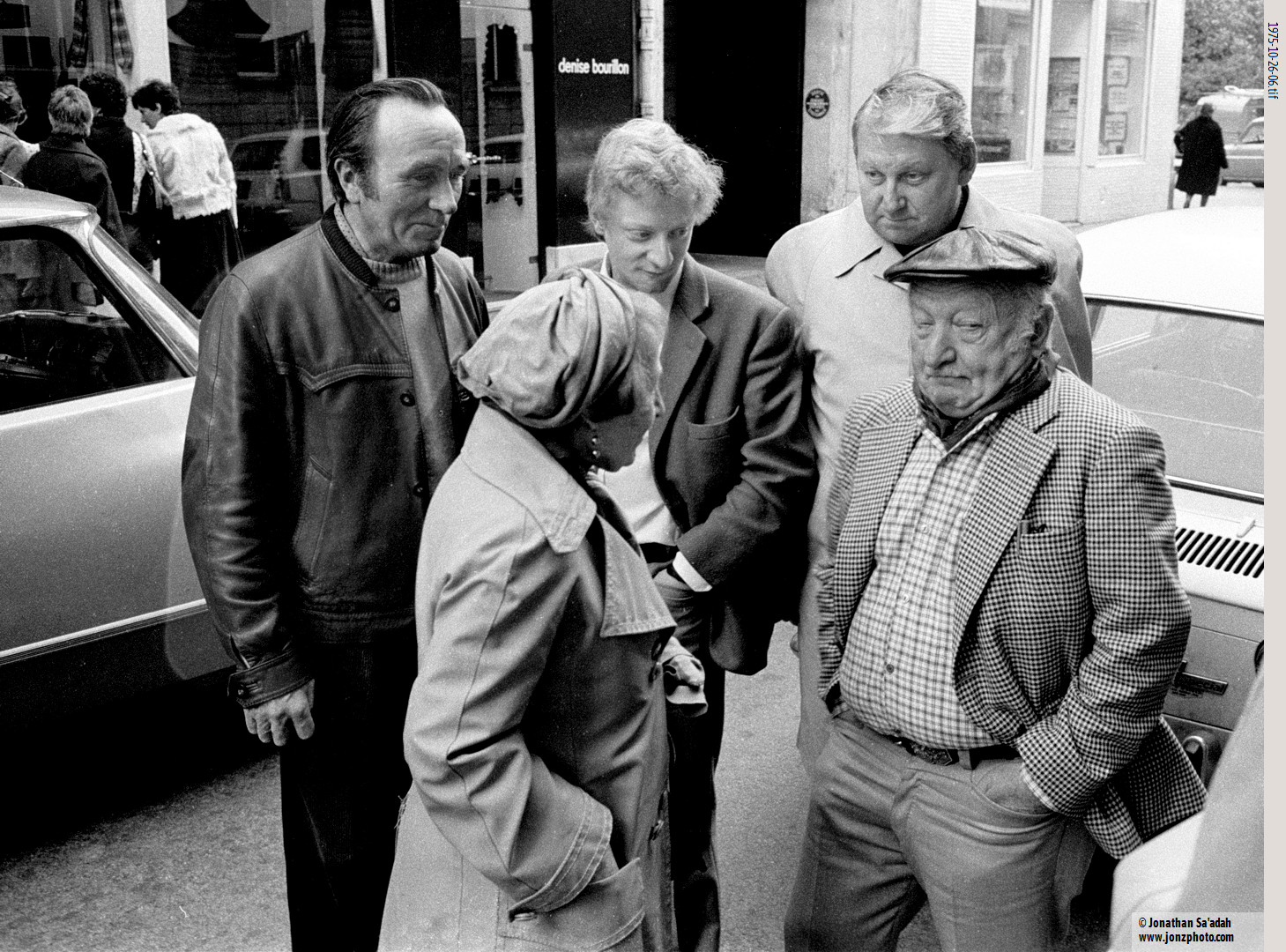
    ▲ Three Vichy fonctionnaires prepared and waiting for a city-wide police planning session for the roundup of Jews. The wall-art often came from personal collections; this mural was only briefly visible in the scene.

    Even Joseph Losey himself brought personal understanding of persecution, having been blacklisted from Hollywood during the McCarthy era and forced into European exile. This wasn’t just professional film-making – it was a gathering of survivors using their craft to ensure these stories would never be forgotten.

    The Challenges That Created Cinema Magic

    M Klein was notorious for its production challenges, but these obstacles also created camaraderie and a feeling of accomplishment. Some of the film’s most memorable moments came out of pure chaos. When rare snow began falling in Paris – the entire crew had to scramble to protect the equipment and the day had to be rescheduled, turning what should have been a routine day into a logistical nightmare. The awful, insect and rodent infested building on 42 rue des Panoyaux, where Klein searches for his Jewish double, was so unstable that the city required engineering work just to make it safe to enter – not that anyone wanted to. Still, getting the work done at that location was another credit to everyone, and contributed to the film.

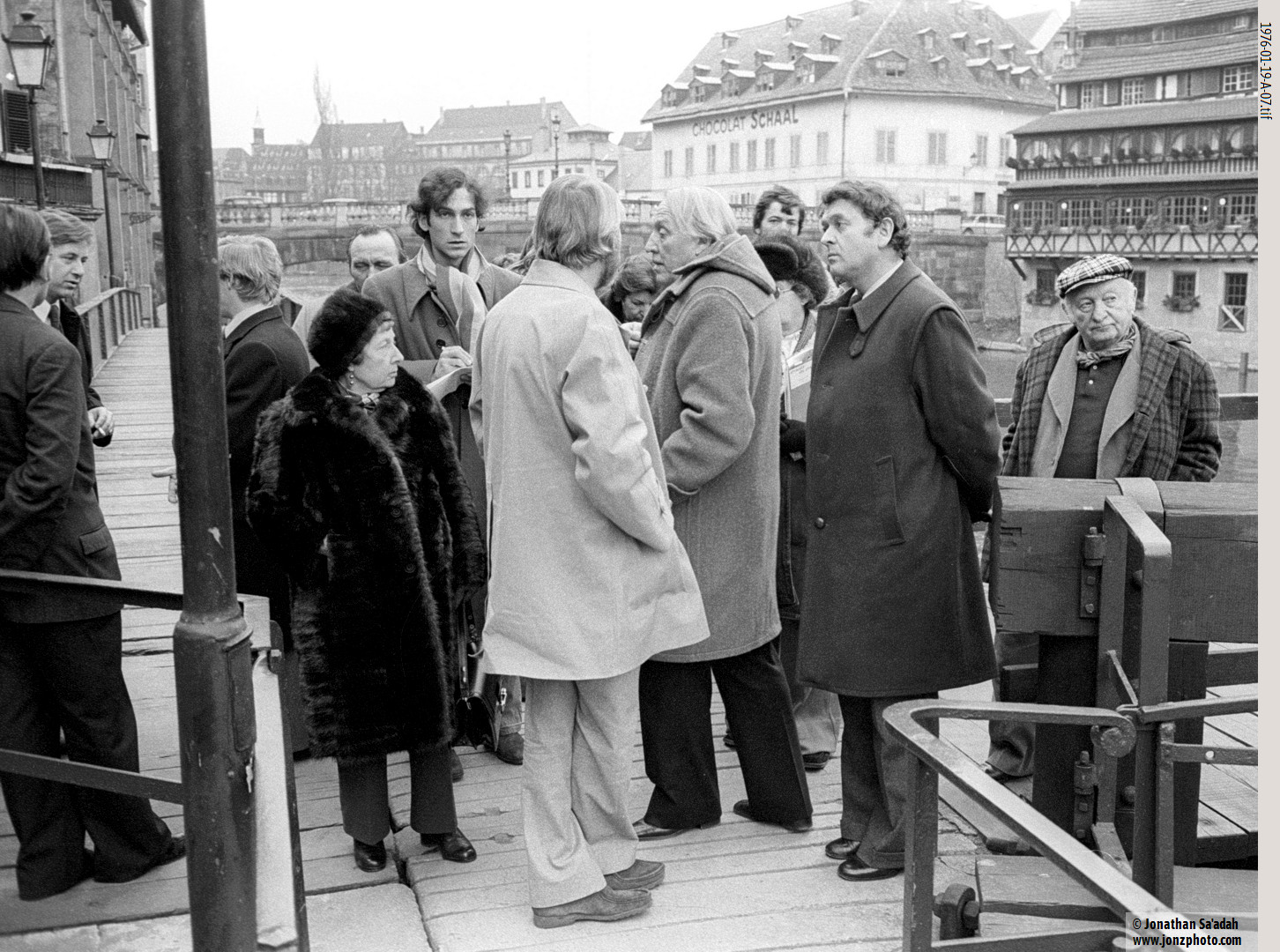
    In Strasbourg, the canal location that had been carefully scouted proved impossible for the planned tracking shots due to rough cobblestone surfaces, forcing the crew to hastily “modify” a Citroën Deux Chevaux with a camera mounted through its sunroof. These weren’t just production problems – they were challenges that the team reacted to – and they elevated the production by requiring creative teamwork to find solutions.
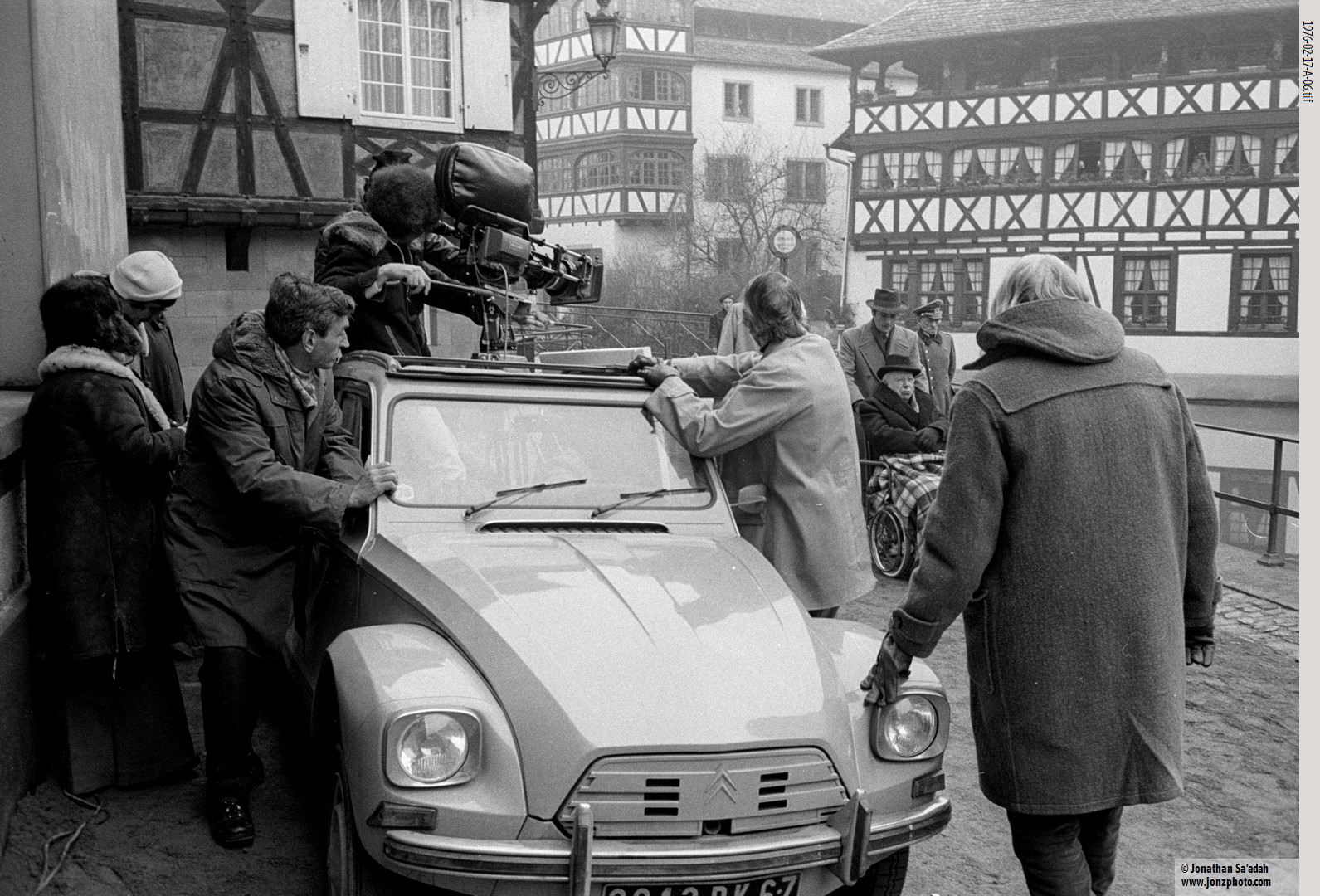
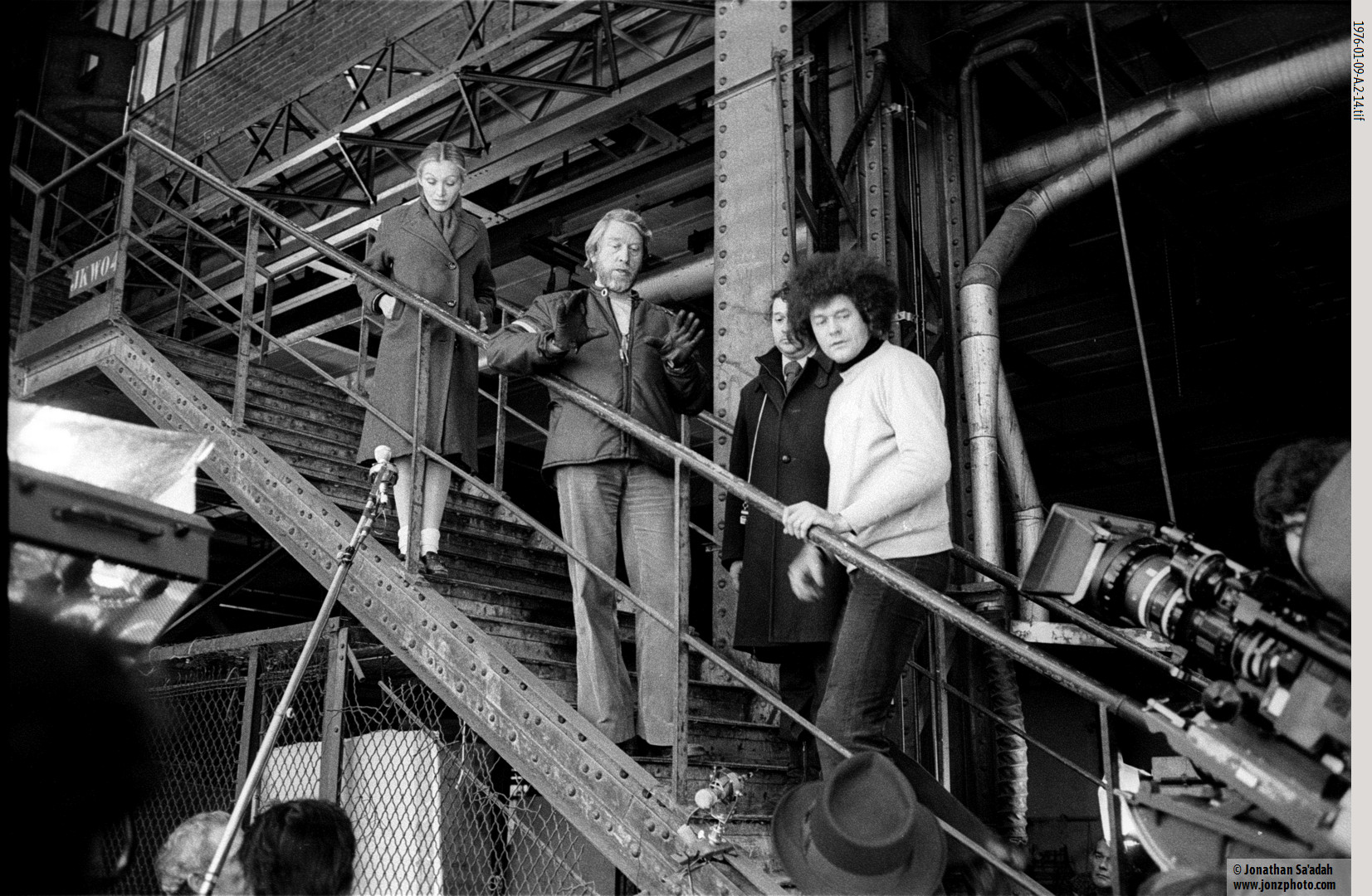
    Challenges The camera is mounted on a Citroën Deux Chevaux to compensate for the uneven surface of the cobblestones which have been hastily covered with sand. Losey, back to the camera, has the best angle to see the action, as the cameraman films from his precarious position, wedged in the sunroof of the car.

    The Invisible Artisans Who Helped Shape a Masterpiece

    Behind every great film are the craftspeople whose contributions often go unrecognized. Reginald Beck, who had edited eighteen of Losey’s films, couldn’t even receive proper screen credit for M Klein due to British union regulations, despite being the actual editor of the film. Gerry Fisher, the cinematographer on his sixth collaboration with Losey, had developed such an intuitive understanding with the director that they barely needed to speak during setups.

    Frantz Salieri, the multi-discipline artist who created the film’s pivotal cabaret scene, brought his own radical theatrical background to ensure the anti-Semitic content would be read as critique rather than endorsement – using male actors in female roles to prevent actual racists from finding the performances appealing.
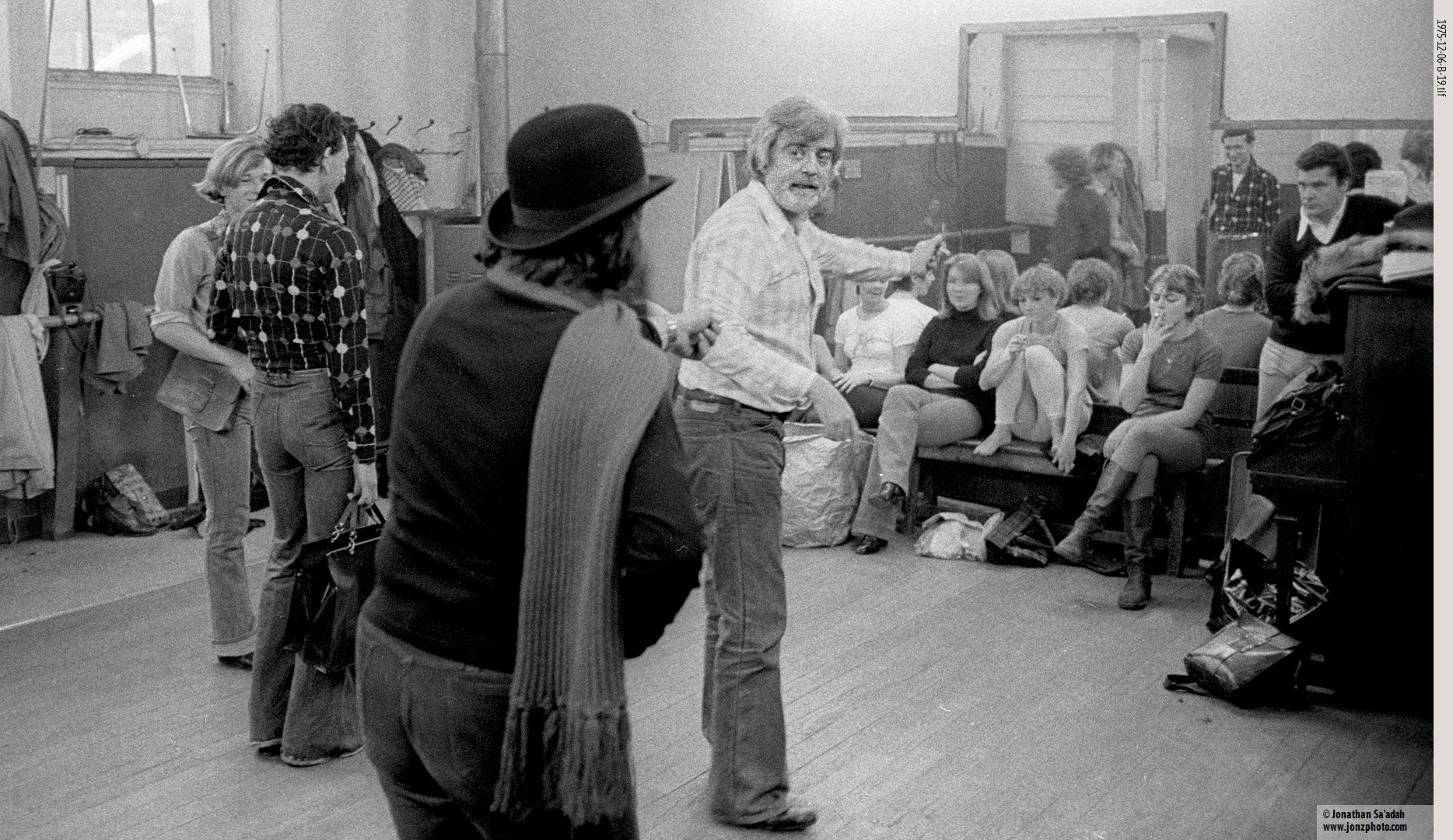
    ▲ Frantz Salieri in rehearsal. The man in the bowler hat played the awful clown, and members of the “chorus line” are seated on the bench. Salieri worked with members of his own troupe, professional dancers, and actors from the cast to create the cabaret show.

    The Art of Turning Constraint into Creativity

    The most fascinating aspect of M Klein‘s production was how limitations became opportunities. When star Alain Delon walked off the set in anger on January 20, 1976, threatening the film’s completion, Losey’s professional integrity and honest communication brought him back. When the cramped quarters of La Nouvelle Eve cabaret made filming nearly impossible, the tight spaces actually enhanced the claustrophobic atmosphere the scene required.

    The decision to use thirty-two locations throughout Paris, despite production company resistance about costs and complexity, gave the film a level of authenticity that studio work could never achieve. Each challenge became part of the film’s DNA, contributing to its lasting power and relevance. They were intangibles that were created through Losey’s intransigence, and they made a big difference.
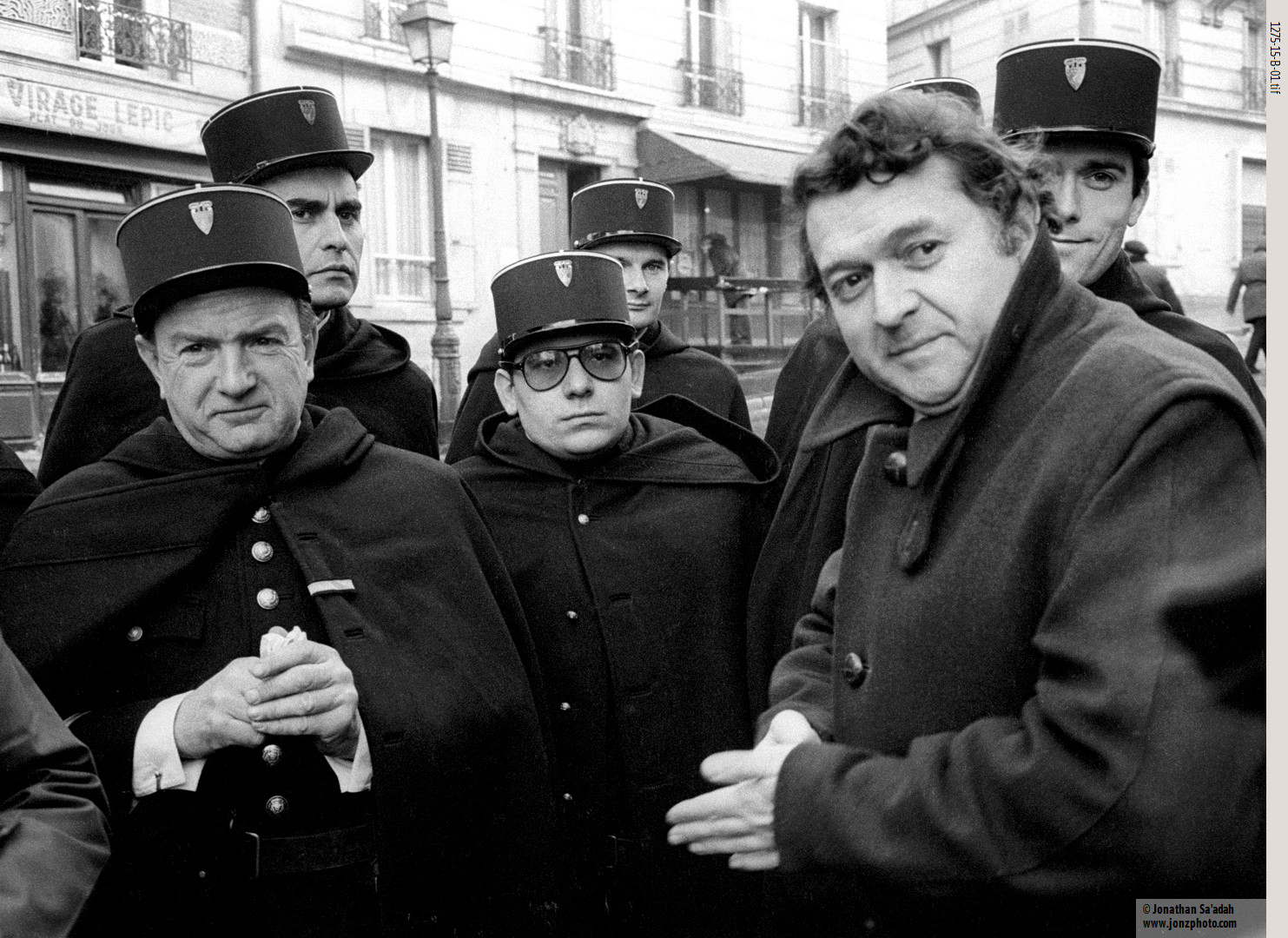
    ▲ First Assistant Director Philippe Monnier coaching French “gendarmes” in an early-morning recreation Vel’ d’Hive Roundup, which happened in the middle of July, 1942. The scene also involved many cars and police wagons from the period. The Roundup was ordered by the German Nazis, but carried out by the French.

    Why These Stories Matter

    The making of M Klein reveals something profound about the relationship between art and history. This wasn’t just a film about the Holocaust – it was created by people who had lived through persecution, who understood from experience what it meant to be suddenly classified as “other,” to have your identity questioned, to become a stranger in your own country.

    Every aspect of the production – from Margot Capelier’s casting choices informed by her own survival, to Alexandre Trauner’s intimate knowledge of wartime Paris, to Losey’s understanding of what it meant to be politically exiled – was shaped by lived experience of the themes the film explored.

    The complete story of M Klein‘s creation offers a masterclass in how artists can transform personal trauma into universal truth, how technical challenges can become creative opportunities, and how the most powerful cinema often emerges from the most difficult circumstances.

    Links to all the posts in this series
    1. Joseph Losey: The Blacklisted American Director Who Found Redemption in European Cinema
    2. Alexandre Trauner and Joseph Losey: Crafting the World of M Klein
    3. Reginald Beck: Invisible Artisan of Cinema
    4. The Artful Eye: Gerry Fisher’s Cinematographic Journey
    5. Laughter in the shadows: The chilling cabaret scene of M Klein
    6. Homage to Margot Capelier, Casting Director for M Klein
    7. Exploring location shooting in Joseph Losey’s M Klein
    8. Joseph Losey’s film M Klein: A behind-the-scenes look
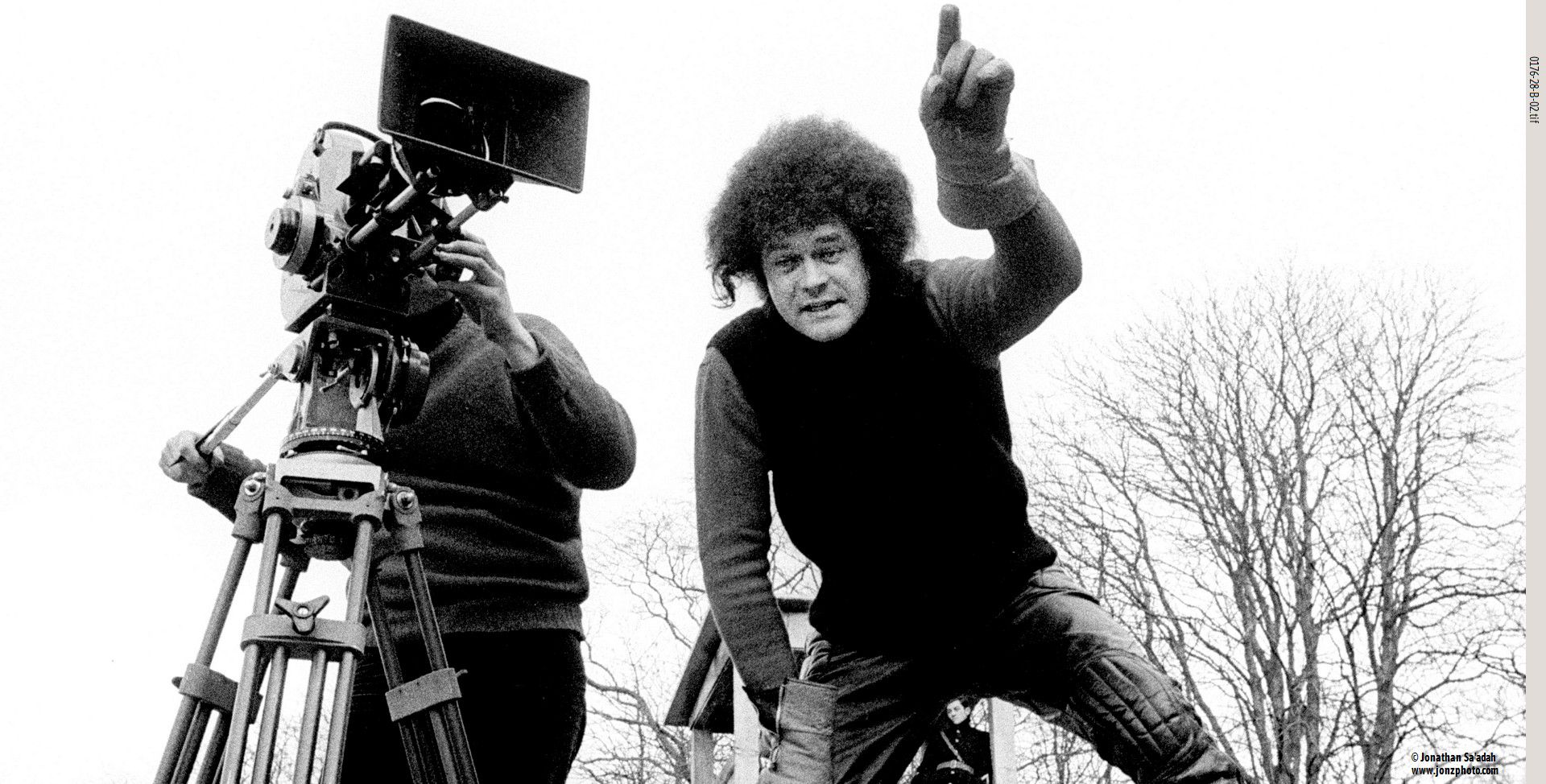
    ▲ Pierre-William Glenn, the strong, athletic camera operator was the person actually behind the camera, directed by Gerry Fisher, the cinematographer.

    Some other sources about Joseph Losey

    Barthel, Joan. “I’m an American, for God’s Sake!” New York Times  (1923-), March 26, 1967. ProQuest Historical Newspapers: The New York Times.

    Caute, David. Joseph Losey: A Revenge on Life. New York: Oxford University Press, 1994.

    Film Director Joseph Losey and Playwright Harold Pinter Discuss “Accident”, 1967, 2024. https://www.youtube.com/watch?v=hhQQ-wBSQkI.

    Joseph Losey : Je n’irai Pas En Angleterre, 2012. https://www.youtube.com/watch?v=gTLxYCVUfSU.

    Joseph Losey Tribute, 2018. https://www.youtube.com/watch?v=IMNxtkGpWtc.

    Losey, Joseph. Conversations with Losey. Edited by Michel Ciment. London ; New York: Methuen, 1985.
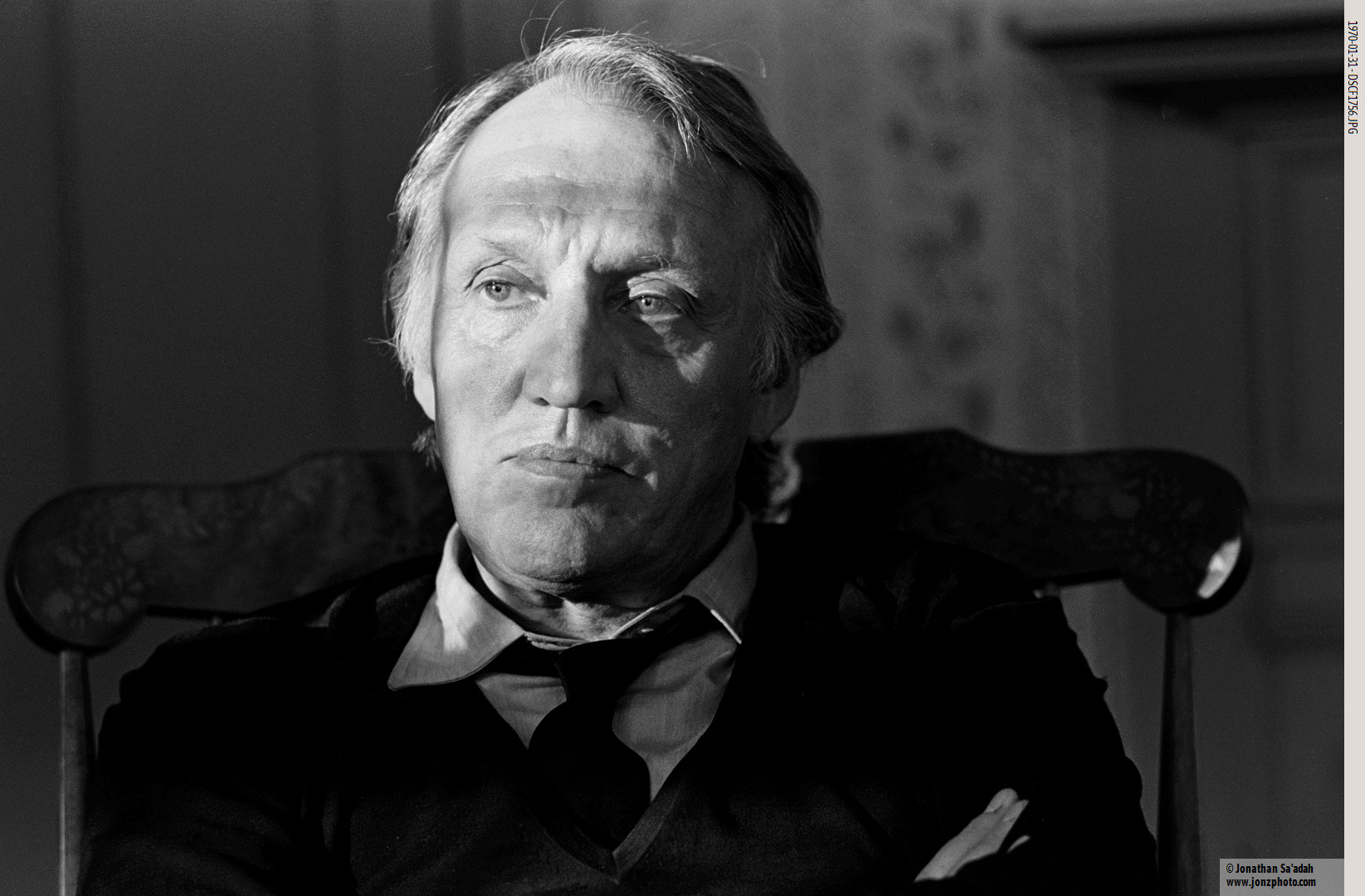
  • Joseph Losey: The Blacklisted American Director Who Found Redemption in European Cinema

    Hollywood exile Joseph Losey transformed from a promising American filmmaker into one of Europe’s most celebrated auteurs after fleeing McCarthyism in the 1950s. His journey from blacklisted director to celebrated European master of psychological cinema reveals both the destructive power of political persecution and the resilience of artistic vision.

    Decades after his death, critical studies continue to emerge about Joseph Losey’s work and life. In an industry where few directors achieve lasting recognition, Losey’s enduring influence stems from his unique position as an American artist who found his voice in European exile, creating films that bridged continental sensibilities with Hollywood craftsmanship.

    ▲ Joseph Losey as guest professor at Dartmouth College, 1970, in his first trip back to the United States after his forced departure due to blacklisting. He was given an honorary doctorate by the college three years later.

    From Privilege to Exile: The Making of an Artist

    Born into a family with a history of wealth and privilege, Losey’s immediate circumstances were more modest. His grandfather had not bequeathed his fortune to Losey’s father, Joseph Losey II, who worked as a claim agent for the Burlington Railroad after failing to complete college. Despite reduced circumstances, Losey grew up surrounded by culture and arts through his aunt’s connections in La Crosse, Wisconsin. Her home was a large estate where renowned musicians like Sergei Rachmaninoff and Jascha Heifetz would stay (and rehearse) when they visited the city for performances.

    This early exposure to high culture shaped Losey’s artistic sensibilities. He pursued undergraduate studies at Dartmouth and graduate work at Harvard, later traveling to Russia to study film. Upon returning to the United States, he was hired by Hallie Flanagan, National Director of the Federal Theater Project, to work on the groundbreaking Living Newspaper project in New York. The work, already controversial with right-wing critics, would later contribute to his political troubles.

    Losey’s career trajectory seemed destined for success when Dore Schary, head of production at RKO, offered him his first directorial position in 1948. However, his fortunes changed dramatically when Howard Hughes acquired controlling interest in RKO. Hughes offered Losey a “poison chalice” – directing I Married a Communist – which Losey categorically refused. This decision effectively ended his relationship with RKO. A year later, and after much trouble, he was released from his contract and allowed to work for Paramont, but by then J. Edgar Hoover’s FBI had flagged him as a communist sympathizer.

    The European Renaissance

    Rather than testify before Joseph McCarthy’s committee and implicate fellow leftists, Losey chose exile. His departure from the United States was hurried and unplanned, arriving in Europe without work and with tenuous legal status. His passport renewals were always uncertain, often valid for only two years, and work permits presented constant challenges.

    The early European years were marked by financial hardship and professional humiliation. Losey directed low-budget genre films under pseudonyms to protect his collaborators from blacklisting. Yet these difficult circumstances proved transformative. The European film industry, particularly French critics, proved more receptive to his evolving style as he developed the complex themes of alienation, outsider status, and social critique that would define his mature work.

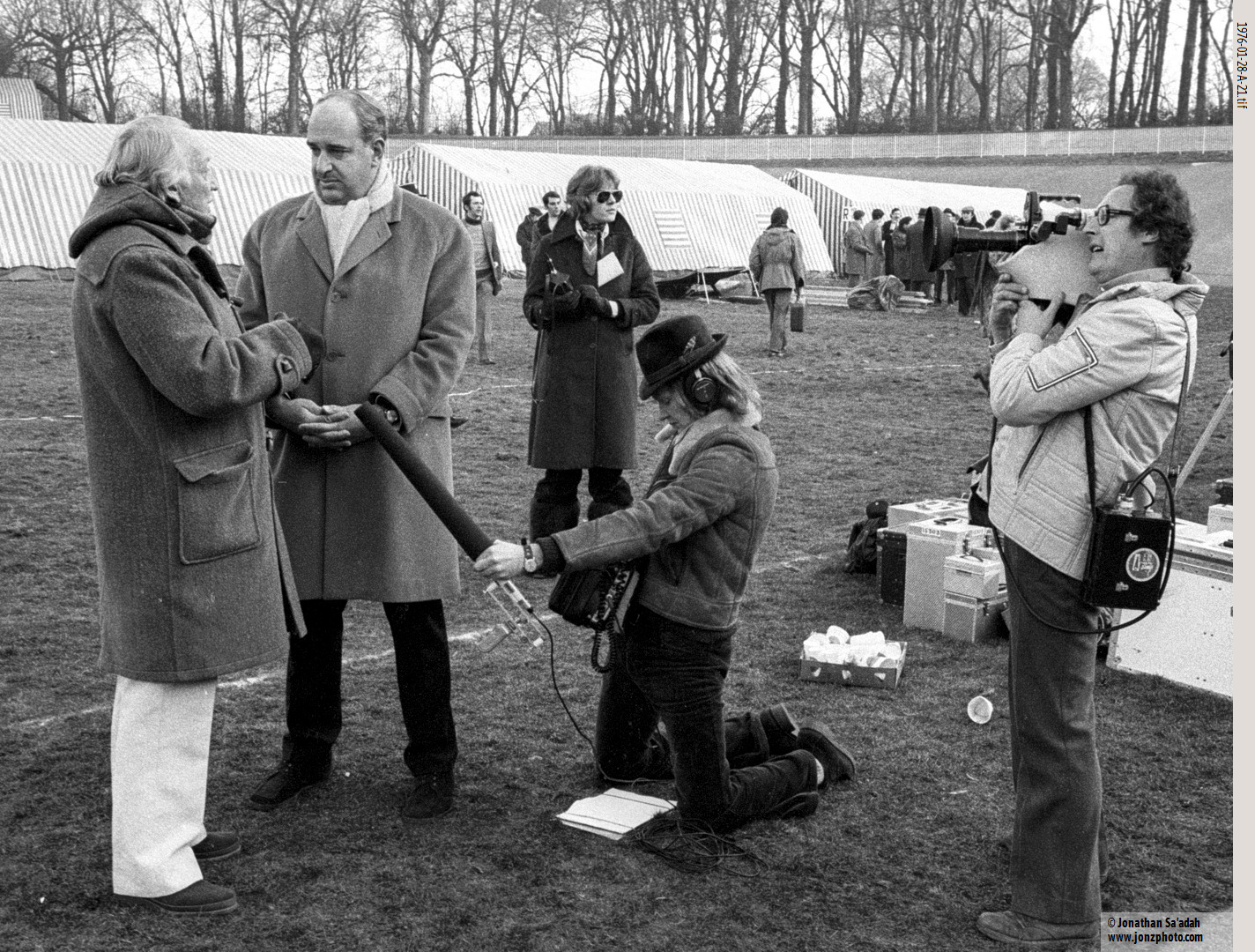
    ▲ Losey being interviewed for French TV in 1976. The striped tents in the background were used for dressing and makeup of the over 2,000 extras who were used in the stade scene filmed at the Vélodrome Municipal de Vincennes in the eastern part of Paris.

    Despite the constraints, Losey repeatedly found projects that resonated with his moral and political beliefs. He later acknowledged that being blacklisted had been a blessing, removing him from Hollywood’s commercial temptations and allowing him to develop as a serious filmmaker. His European period saw acclaimed collaborations with screenwriter Harold Pinter on The Servant, Accident, and The Go-Between.

    ▲ Losey at Usine Citroën. The scene filmed here, when Klein is searching for his double’s girlfriend, was one of the few places in the film where Losey allowed a sympathetic view of humanity to show through the female workers in the wartime factory.

    The M Klein Production: A Career Pinnacle

    By 1975, when Losey began work on M Klein in France, he had established himself as a major auteur in European cinema. The project came to him through actor Alain Delon, who owned the rights to the screenplay. Losey heard that Greek director Costa-Gavras had declined directing the film, and he contacted Delon. Delon was eager to work with a recognized auteur to enhance his serious acting credentials. Having previously collaborated successfully with Losey on The Assassination of Trotsky, the project went forward.

    Losey’s personal history of political persecution and exile deeply informed his approach to M Klein, a film exploring themes of identity, persecution, and moral complicity in wartime France. Before production began, he worked with screenwriter Franco Solinas in the Italian coastal town of Fregene, with his wife Patricia serving as translator. Losey significantly revised the script, cutting an hour of material to create greater intensity and developing characters more fully, particularly the female roles.

    The production process revealed Losey’s meticulous approach to film-making. His days began at 6:30 AM and extended past 7:00 PM with dailies, followed by planning for upcoming filming, business negotiations, and correspondence. The demanding schedule reflected his total commitment to the craft, a work ethic that impressed cast and crew alike.

    The Director’s Burden and Vision

    Losey’s approach to directing embodied the complex demands of the role – balancing financing, writing, casting, and countless daily decisions while maintaining artistic vision under commercial pressure. His reputation for integrity and refusal to compromise attracted top professionals who knew he would “stick to his guns.”

    The production of M Klein exemplified these qualities. From the first day of shooting at Cachan, where actress Isabelle Sadoyan performed a brutal nude scene under carefully controlled conditions, Losey established a tone of mutual respect and professionalism. The international crew, including professionals from England, France, and Italy, responded to his leadership with enthusiasm and dedication.

    ▲ Preparing to film at Cachan, south of Paris. Actress Isabelle Sadoyan is on the left in the robe, and far right Patricia Losey is just visible. This was the first day of filming and set the tone for the entire eight-week shooting schedule.

    Not every aspect of production went smoothly. On January 20, 1976, Alain Delon left the production in anger, threatening the film’s completion. Yet through Losey’s consistent honesty and professional integrity Delon was brought back in. Losey built sufficient trust among his collaborators to overcome such crises. He neither pulled punches nor compromised the truth, qualities that sustained his reputation throughout his career.

    Legacy of an Artist in Exile

    Joseph Losey’s career represents a unique trajectory in cinema history – an American artist who found his authentic voice only after being forced from his homeland. His story illustrates both the destructive power of political persecution and the possibility of artistic redemption through exile. The films he created in Europe, particularly his collaborations with Harold Pinter and works like M Klein, demonstrate how personal adversity can fuel artistic achievement.

    Losey’s enduring influence lies not just in his films but in his embodiment of the artist as exile – someone who transformed displacement into creative advantage. His work continues to resonate with contemporary audiences because it addresses universal themes of alienation, identity, and moral choice while maintaining the technical excellence and narrative sophistication that mark great cinema.

    The blacklisted director who fled McCarthyism ultimately created a body of work that stands as testament to artistic integrity. In losing his American career, Joseph Losey found his authentic voice as a filmmaker, proving that sometimes the greatest creative breakthroughs emerge from the most challenging circumstances.


    Joseph Losey’s films

    Date of releaseFilmCountry
    1948The Boy with Green HairUnited States
    1950The LawlessUnited States
    1951MUnited States
    1951The ProwlerUnited States
    1951The Big NightUnited States
    1952Stranger on the ProwlItaly
    1954The Sleeping TigerUnited Kingdom
    1956The Intimate StrangerUnited Kingdom
    1957Time Without PityUnited Kingdom
    1958The Gypsy and the GentlemanUnited Kingdom
    1959Blind DateUnited Kingdom
    1960The CriminalUnited Kingdom
    1962EvaItaly/France
    1963The DamnedUnited Kingdom
    1963The ServantUnited Kingdom
    1964King & CountryUnited Kingdom
    1966Modesty BlaiseUnited Kingdom
    1967AccidentUnited Kingdom
    1968Boom!United Kingdom
    1968Secret CeremonyUnited Kingdom
    1970Figures in a LandscapeUnited Kingdom
    1971The Go-BetweenUnited Kingdom
    1972The Assassination of TrotskyItaly/France/United Kingdom
    1973A Doll’s HouseUnited Kingdom
    1975The Romantic EnglishwomanUnited Kingdom
    1975GalileoUnited Kingdom
    1976Monsieur KleinFrance
    1978Roads to the SouthFrance
    1979Don GiovanniItaly/France
    1982La TruiteFrance
    1985SteamingUnited Kingdom

    More about Joseph Losey

    Archer, Eugene. “Expatriate Retraces His Steps: Joseph Losey Changes Direction with His British ‘Servant.’” New York Times (1923-), March 15, 1964. 115707295. ProQuest Historical Newspapers: The New York Times.

    Barthel, Joan. “I’m an American, for God’s Sake!” New York Times (1923-), March 26, 1967. ProQuest Historical Newspapers: The New York Times.

    “BFI Screenonline: Losey, Joseph (1909-1984) Biography.” Accessed January 23, 2024. http://www.screenonline.org.uk/people/id/451136/index.html.

    Canby, Vincent. “Cool, Elegant ‘Mr. Klein’ Is a Metaphorical Movie.” New York Times (1923-), 1977, 44.

    Caute, David. Joseph Losey: A Revenge on Life. New York: Oxford University Press, 1994.

    Ciment, Michel. Michel Ciment Interview Losey in Paris, 1976.

    Film Director Joseph Losey and Playwright Harold Pinter Discuss “Accident”, 1967, 2024. https://www.youtube.com/watch?v=hhQQ-wBSQkI.

    Galileo Protal. “Life of Galileo with Bertolt Brecht.” Museum, 2010. https://portalegalileo.museogalileo.it/egjr.asp?c=36300.

    Gardner, Colin. “Joseph Losey.” In Joseph Losey, 1st ed. Manchester Film Studies. Manchester, UK: Manchester University Press, 2019.

    Gavrik Losey, Son of Elizabeth Hawes, Oral History Interview, 2016 September 12, 2016. https://www.youtube.com/watch?v=yZkZTxWgMO8.

    Goldberg, Eva. “Politics in American Popular Culture.” American Popular Culture. Accessed July 2, 2025. https://americanpopularculture.com/archive/politics/galileo.htm.

    Goodman, Ezra. “Meet Pete-Roleum.” Sight and Sound, London: British Film Institute, Summer 1939. 1305505140. ProQuest One Literature.

    Houston, Beverle, and Marsha Kinder. “The Losey-Pinter Collaboration.” Film Quarterly 32, no. 1 (1978): 17–30. https://doi.org/10.2307/1211896.

    Houston, Penelope, and John Gillett. “Conversations with Nicholas Ray and Joseph Losey.” Sight and Sound, London: British Film Institute, Fall 1961. 1305505087. ProQuest One Literature.

    Joseph Losey : Je n’irai Pas En Angleterre, 2012. https://www.youtube.com/watch?v=gTLxYCVUfSU.

    Joseph Losey Tribute, 2018. https://www.youtube.com/watch?v=IMNxtkGpWtc.

    Losey, Gavrik. Gavrik Losey Interview. The British Entertainment History Project, 2019. https://historyproject.org.uk/interview/gavrik-losey.

    Losey, Joseph. Conversations with Losey. Edited by Michel Ciment. London ; New York: Methuen, 1985.
    Palmer, James. The Films of Joseph Losey. Cambridge Film Classics. Cambridge: University Press, 1993.

    Prime, Rebecca. “‘The Old Bogey’: The Hollywood Blacklist in Europe.” Film History: An International Journal, Indiana University Press, 2008.

    Sarris, Andrew. . . . “. . . And the Man Who Made It: Joseph Losey.” New York Times (1923-), November 17, 1968. 118367559. ProQuest Historical Newspapers: The New York Times.

    Weiss, Jason. “Screenwriters, Critics and Ambiguity: An Interview with Joseph Losey.” Cineaste Publishers, Inc., 1983.

  • Alexandre Trauner and Joseph Losey: Crafting the World of M Klein

    When Joseph Losey set out to make M Klein in 1976, he turned to one of Europe’s most celebrated art directors, Alexandre Trauner, to help bring wartime Paris to life. Their collaboration on this film was not just a meeting of two accomplished professionals, but a convergence of personal histories and artistic philosophies that shaped the film’s haunting atmosphere and visual authenticity.

    The Art Director’s Legacy

    Alexandre Trauner was already a legend in the world of film design by the time he joined M Klein. Trained as a painter in Hungary, Trauner had built a career in France, working with some of the greatest directors of his era. His credits included an Oscar for Billy Wilder’s The Apartment and a reputation as the “dean of European art directors.” But for Trauner, M Klein was more than another prestigious project – it was deeply personal. Born Sándor Trau, he was a Hungarian Jew who had fled anti-Semitism in Hungary, only to face it again in Nazi-occupied France, where he went underground to survive.

    Trademark Trauner Alexandre Trauner had nothing to prove at this point in his career. As a Jewish young man in Hungary he fled the right-wing authoritarian regime of Miklós Horthy, only to face the same situation in Paris when the Nazis captured the city.

    Building the World of M Klein

    Losey’s vision for M Klein demanded a level of realism and atmosphere that only a master like Trauner could deliver. The film was shot both in the controlled environment of Studios de Boulogne and on locations throughout Paris. While Losey preferred the unpredictability and grit of real locations, he grudgingly acknowledged the advantages of studio work: flexibility, control over lighting, and the ability to reconfigure sets as needed. Trauner’s skill lay in making these studio sets feel as authentic and lived-in as the city streets outside.

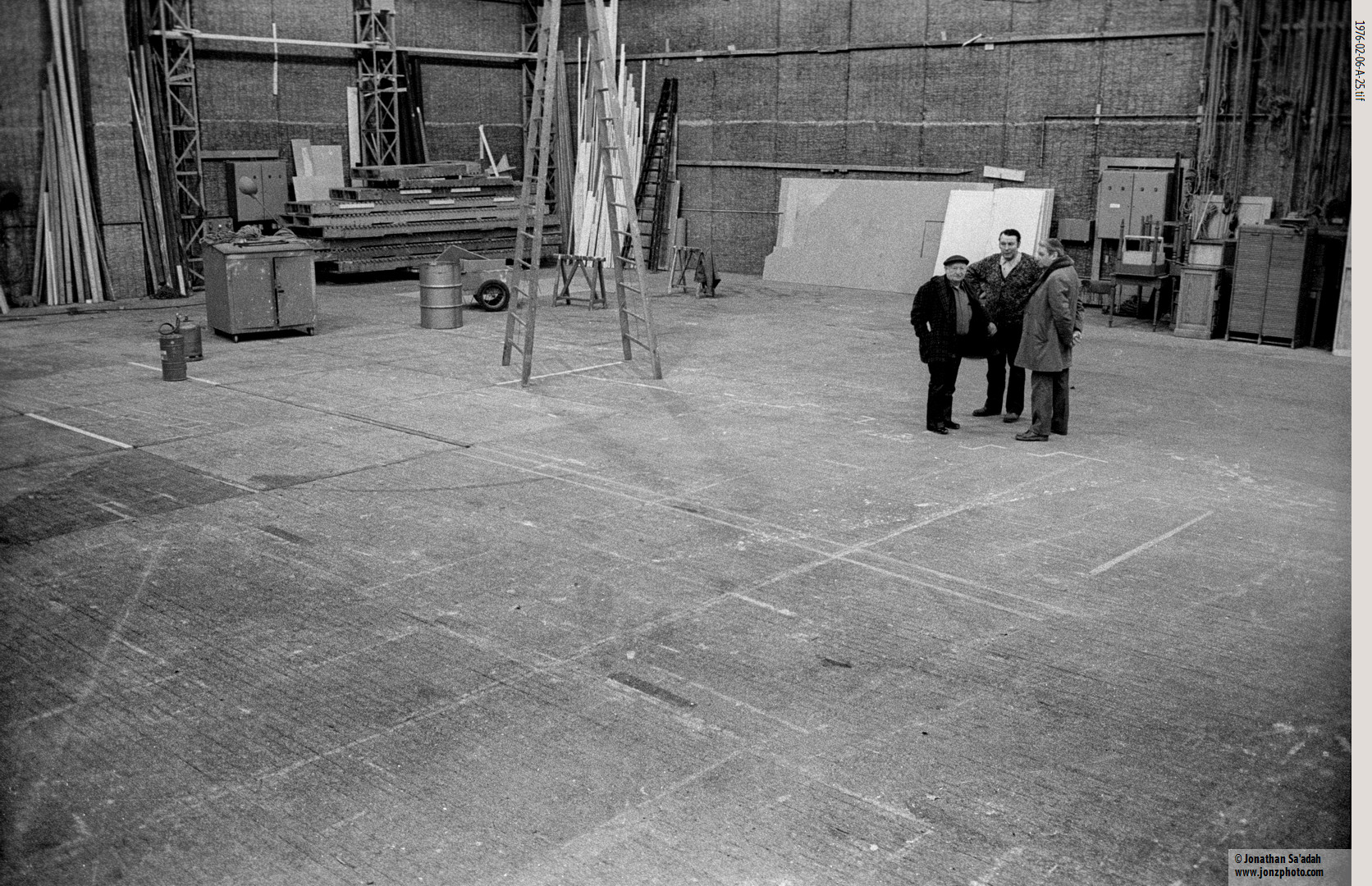
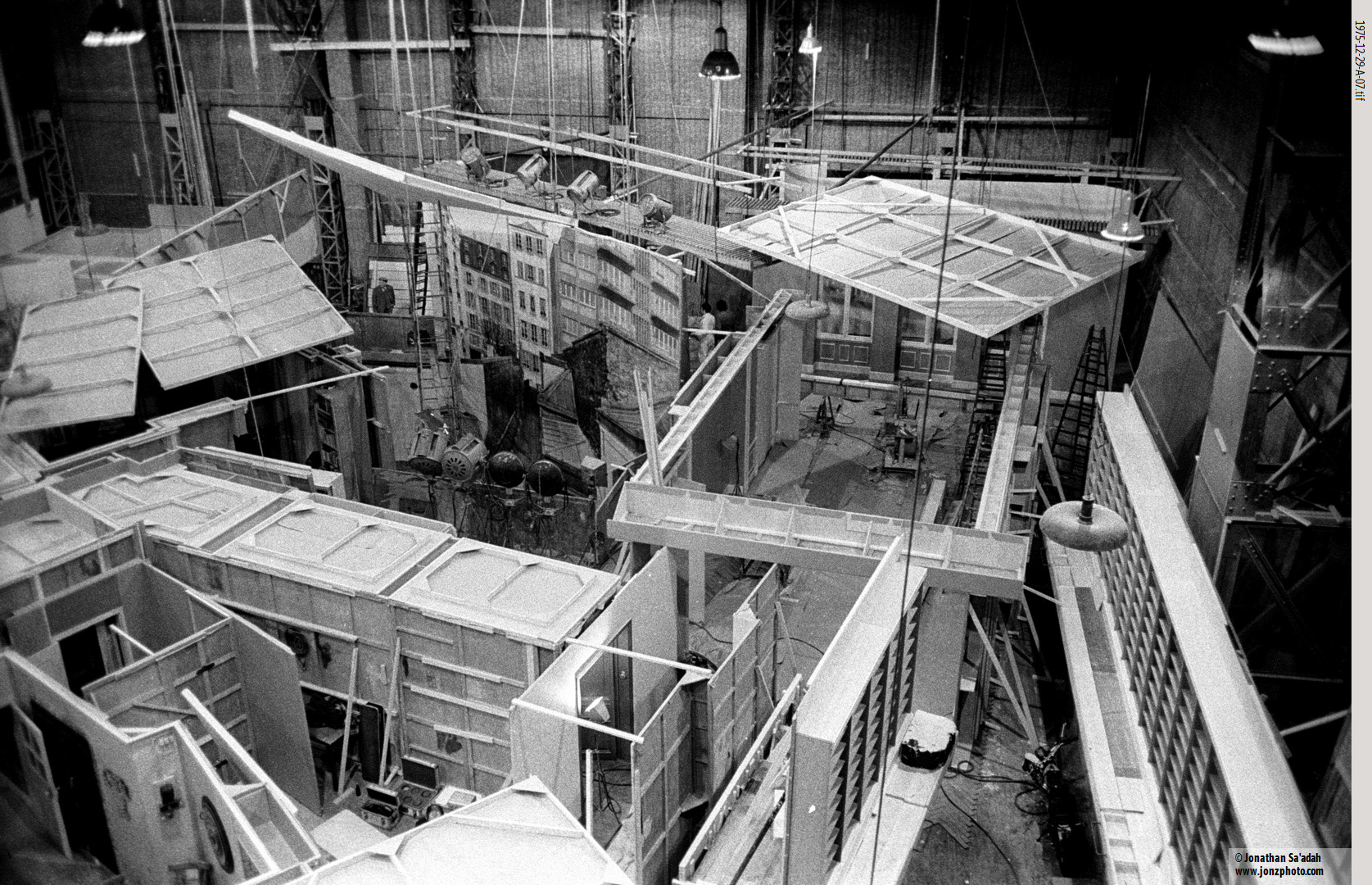
    ▲ Trauner with assistants surveying part of Stage A at Studios de Boulogne. In 1976 this was the leading French film studio, hosting many French and American productions.
    • Studio Mastery: Trauner and his team transformed the cavernous Stage A at Boulogne into convincing interiors, using movable walls and ceilings to create dynamic spaces for the camera and actors.
    • Location Expertise: Trauner’s intimate knowledge of Paris allowed him to identify and secure locations that captured the city’s wartime character, from rundown tenements to grand public buildings.
    • Visual Storytelling: Trauner’s approach was less about literal storyboarding and more about mood, color, and the “dressing” of the set. With Losey’s input he translated the screenplay’s emotional cues into physical spaces that reflected the film’s themes of identity, suspicion, and moral ambiguity.
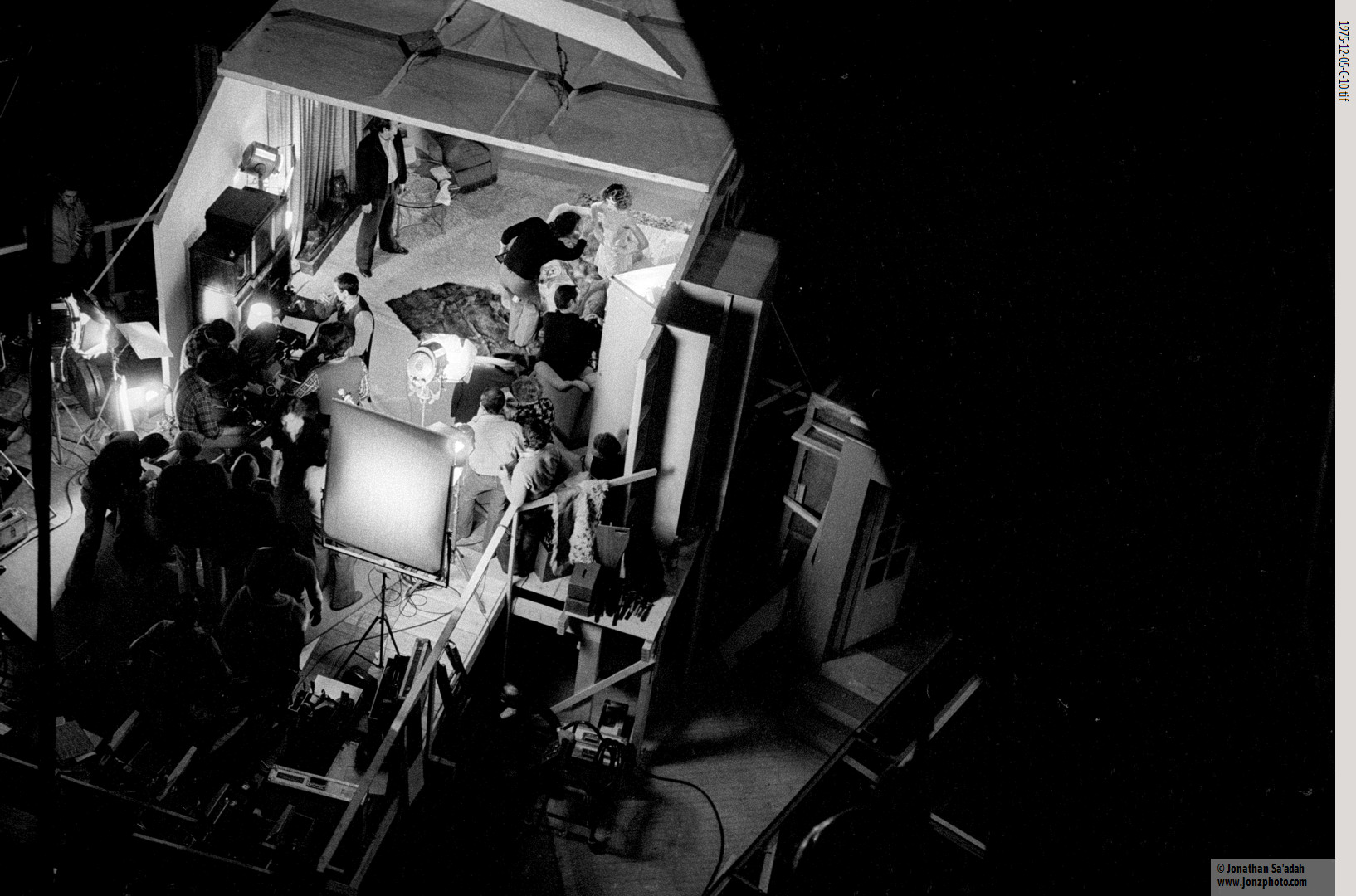
    ▲ With the walls and part of the ceiling removed, Klein’s bedroom has been transformed into a set for the scene where Jeanine reads from Moby Dick. Klein (Delon) sits at the desk, with the camera positioned right beside him. This photo, taken from a catwalk above, demonstrates the benefits of filming in a studio rather than on location: the space functions as a small stage set, offering flexibility and easy access for the crew.

    A Partnership of Trust and Professionalism

    Losey’s previous long-term collaboration with art director Richard Macdonald had ended before M Klein, making his partnership with Trauner especially significant. Trauner brought a different energy: more structured, less chaotic, but equally committed to artistic excellence. Losey praised Trauner’s professionalism and his ability to immediately grasp and adapt to the director’s needs, saying, “There’s a kind of professionalism about Trauner and a kind of immediate recognition of what I want. Also, if I say to Trauner that something that he’s doing is wrong for me, whatever it may be…he understands and can change this immediately”.

    ▲ A wider shot of Klein’s “apartment” from above. Note the large painted flats that formed “views” out windows. The small figure in the top left is Trauner.

    Personal History Meets Artistic Vision

    What made Trauner’s contribution to M Klein so powerful was the way his personal history resonated with the film’s subject. Like Margot Capelier, the casting director, Trauner had lived through the Nazi occupation and the persecution of Jews in France. This experience gave him a unique sensitivity to the film’s themes and a determination to render them truthfully on screen. His bond with Capelier – her husband, Auguste Capelier, often collaborated with Trauner after the war – further deepened the sense of shared purpose among the creative team.

    The Lasting Impact

    The world that Trauner built for M Klein is more than a backdrop; it is a character in its own right, shaping the film’s mood and immersing viewers in the paranoia and uncertainty of occupied Paris. His work stands as a testament to the power of art direction in cinema and to the importance of personal history in shaping artistic achievement.

    Through his collaboration with Joseph Losey, Alexandre Trauner helped make M Klein not just a film about history, but a living, breathing evocation of a world on the edge – crafted by someone who had survived its darkest days.


    Alexandre Trauner’s Film Credits

    YearFilmDirectorCreditAwards
    1932À nous la libertéRené ClairAssistant Set Designer
    1935La Kermesse héroïqueJacques FeyderAssistant Set Designer
    1937Drôle de drameMarcel CarnéSet Designer
    1938Port of Shadows (Quai des brumes)Marcel CarnéSet Designer
    1938Hôtel du NordMarcel CarnéSet Designer
    1939Le jour se lèveMarcel CarnéSet Designer
    1942Les Visiteurs du soirMarcel CarnéSet Designer
    1943Lumière d’étéJean GrémillonSet Designer
    1945Children of Paradise (Les Enfants du paradis)Marcel CarnéSet Designer
    1946Les Portes de la nuitMarcel CarnéSet Designer
    1948-1950OthelloOrson WellesProduction Designer
    1954Du rififi chez les hommesJules DassinProduction Designer
    1955Land of the PharaohsHoward HawksArt Director
    1956Love in the AfternoonBilly WilderArt Director
    1957Witness for the ProsecutionBilly WilderArt Director
    1959The Nun’s StoryFred ZinnemannArt Director
    1960The ApartmentBilly WilderArt DirectorAcademy Award for Best Art Direction (1961)
    1961One, Two, ThreeBilly WilderArt Director
    1961Paris BluesMartin RittArt Director
    1961Goodbye AgainAnatole LitvakArt Director
    1962Five Miles to MidnightAnatole LitvakArt Director
    1964Behold a Pale HorseFred ZinnemannProduction Designer
    1966How to Steal a MillionWilliam WylerProduction Designer
    1967The Night of the GeneralsAnatole LitvakProduction Designer
    1970The Private Life of Sherlock HolmesBilly WilderProduction Designer
    1974The Man Who Would Be KingJohn HustonProduction Designer
    1976Mr. KleinJoseph LoseyProduction DesignerCésar Award for Best Production Design (1977)
    1977FedoraBilly WilderProduction Designer
    1978Don GiovanniJoseph LoseyProduction DesignerCésar Award for Best Production Design (1979)
    1981Coup de torchonBertrand TavernierProduction Designer
    1982La TruiteJoseph LoseyProduction DesignerCésar Award for Best Production Design (1983)
    1983Tchao PantinClaude BerriProduction Designer
    1985SubwayLuc BessonProduction DesignerCésar Award for Best Production Design (1986)
    1985HaremArthur JofféProduction Designer
    1986Round MidnightBertrand TavernierProduction Designer
    1989ReunionJerry SchatzbergProduction Designer
    1990The Rainbow ThiefAlejandro JodorowskyProduction Designer

    More about Alexandre Trauner

    “Alexandre Trauner.” In Wikipedia, March 18, 2023. https://en.wikipedia.org/w/index.php?title=Alexandre_Trauner&oldid=1145366800.

    “Alexandre Trauner | Film Art, Production Design & Cinematography | Britannica.” Accessed July 7, 2025. https://www.britannica.com/biography/Alexandre-Trauner.

    Europe of Cultures. “Europe of Cultures – Alexandre Trauner, Decorator of Film Sets. – Ina.Fr.” http://fresques.ina.fr/europe-des-cultures-en/fiche-media/Europe00130/alexandre-trauner-decorator-of-film-sets.html.

    Forbes, Jill. “Alexandre Trauner.” Sight and Sound, London: British Film Institute, Fall 1986. 1305511273. ProQuest One Literature.

    Giquello, Binoche et. Alexandre Trauner – Jacques Prévert: Correspondances, Dessins, Maquettes, Carnets, Photographies, Collages, 1932-1976. Binoche et Giquello, 2012.

    Imdb. “Alexandre Trauner | Production Designer, Art Director, Set Decorator.” https://www.imdb.com/name/nm0871202/.

    McCann, Ben. “What Trauner Did next: The Continuation of a French Design Aesthetic in an American Context.” French Cultural Studies 20, no. 1 (February 1, 2009): 65–81. https://doi.org/10.1177/0957155808099344.

    McCann, Benjamin Edward. “Set Design, Spatial Configurations and the Architectonics of 1930s French Poetic Realist Cinema,” n.d.

    Mubi. “Images of the Day. From Sketch to the Screen: ‘Hôtel Du Nord’ (1938),” October 9, 2010. https://mubi.com/notebook/posts/images-of-the-day-from-sketch-to-the-screen-hotel-du-nord-1938.

    Webformance. “Trauner, Sándor (Alexandre Trauner) (1906 – 1993) – Famous Hungarian Painter, Graphic.” Kieselbach. https://www.kieselbach.hu/artist/trauner_-sandor-_alexandre-trauner__1948.

  • Reginald Beck: Invisible Artisan of Cinema

    Reginald Beck (1902-1992) edited eighteen films of Losey’s, beginning in 1958 and stretching to Losey’s last, in 1985. It was a multi-decade professional partnership based on mutual respect. Beck was a small man, of modest manner and somewhat taciturn yet insightful in his opinions and generous in training younger editors. He and cinematographer Gerry Fisher formed the core team that supported Losey’s second career as an European director.
    Beck’s demeanor deceitfully feigned that of a small bland Englishman, but inside burned a brightly shining personality with an unusual background. His career, spanning from the early days of British cinema through the European auteur movement, illustrates a complex mix of artistic vision, political conviction, and professional self-determination.

    Reginald Beck editing
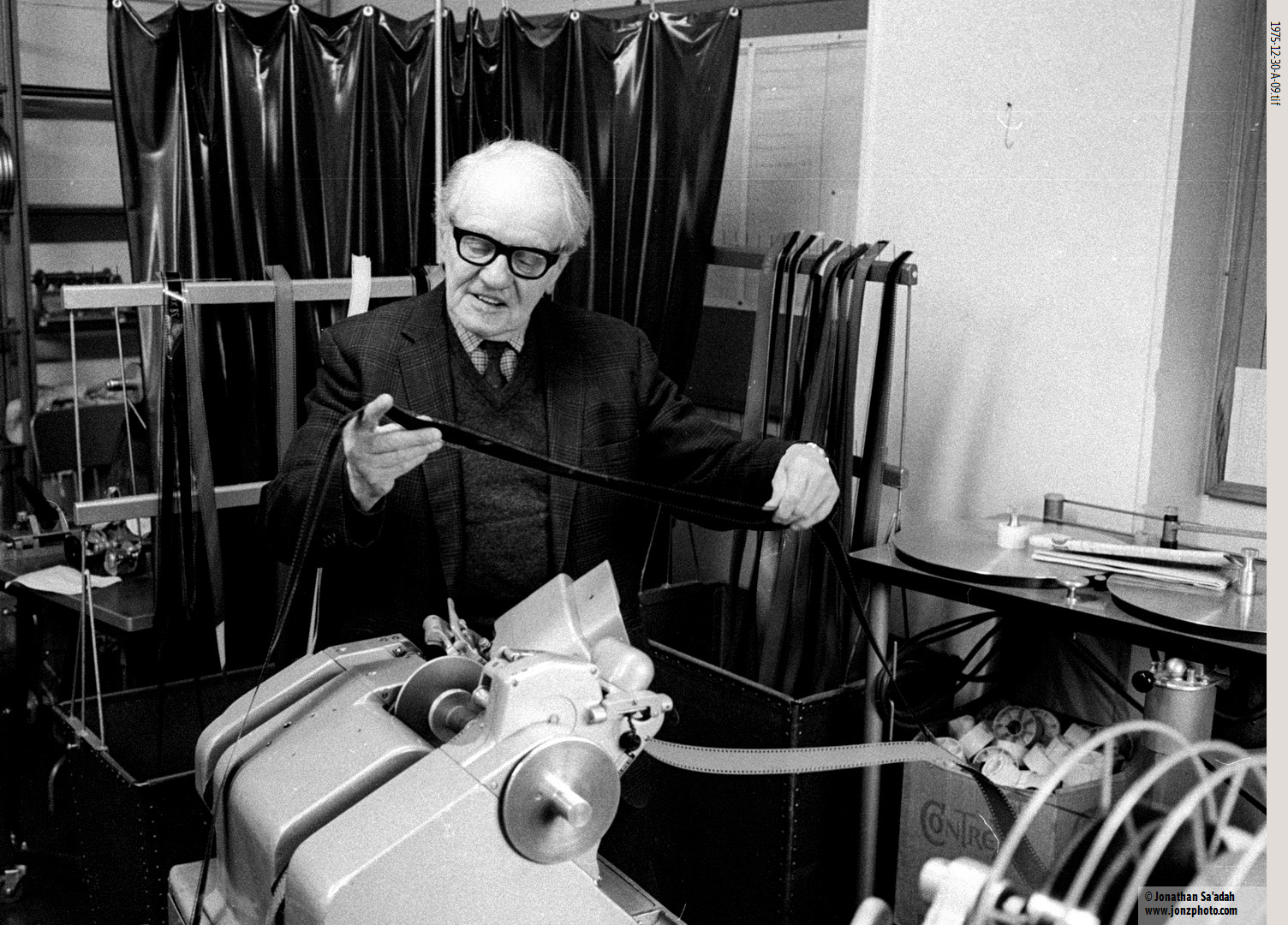
    ▲ Beck using a Moviola machine in the cutting room. The Moviola defined film editing from the 1920’s through the mid-Seventies, neatly overlaying Beck’s career. Beck’s familiarity and skill in using it made the complex task of cutting the film seem relaxed and easy – something it was anything but.

    The M Klein Credit Controversy: Union Rules and Artistic Recognition

    The case of M Klein exemplifies the bureaucratic obstacles that could overshadow artistic collaboration in the film industry. Despite Beck’s editing M Klein, he was unable to receive proper screen credit due to British film union regulations. The film’s credits instead list Henri Lanoë, Marie Castro-Vasquez, and Michèle Neny as editors. Beck gets credit but as a “Adviser to Joseph Losey”. Indeed!

    British film union rules, particularly those enforced by the Association of Cinematograph, Television and Allied Technicians (ACTT), strictly governed credit allocation during the 1970s. These regulations often prevented editors from receiving recognition for work performed outside their home territories or under specific contractual arrangements. The ACTT, founded in 1933 and representing over 20,000 members by 1982, maintained rigid protocols about screen credits that sometimes conflicted with the realities of international film-making. The solution in the case of this film was to employ a French editor who was credited for Beck’s work. This arrangement, though unfair to Beck, preserved the artistic continuity of the Losey-Beck collaboration while accommodating the logistical requirements of filming in France. It was the only time Beck didn’t receive credit for his work through his entire collaboration with Losey.

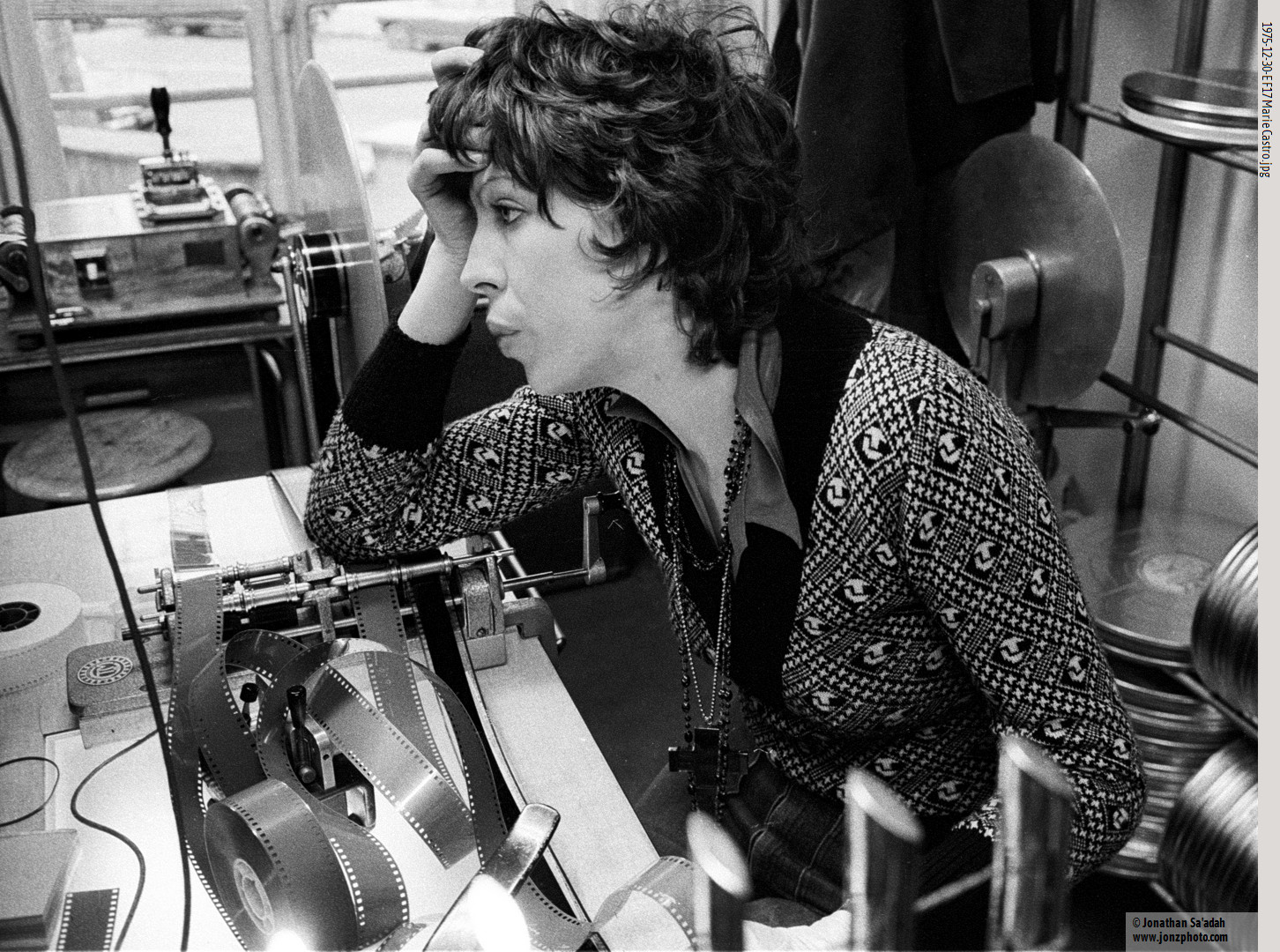
    ▲ In truth there was always pressure to get things done. Marie Castro-Vasquez was the first assistant to Beck in M Klein. Following her work with him she had a career as an editor of feature films and tv series in the French market.

    Artistic Freedom: The Freelance Editor’s Independence

    Beck’s career was unusual because he was able to make (and stick to) a deliberate choice to work as a freelance editor rather than being tied to any particular studio. This independence, which he was proud of, allowed him artistic freedom but also created difficulties in an industry that was increasingly dominated by corporate structures. His freelance status enabled him to work with diverse directors across different production systems, from the quota quickies of the 1930s to the art films of the 1970s.

    Working outside the studio system affected Beck’s approach to editing. Unlike editors employed by major studios who were often constrained by house styles and executive interference, Beck could develop distinctive collaborative relationships with individual directors. This freedom was particularly evident in his work with Losey. Beck pursued skillful editing techniques that supported Losey’s complex thematic concerns without outside pressure to conform to commercial formulas.

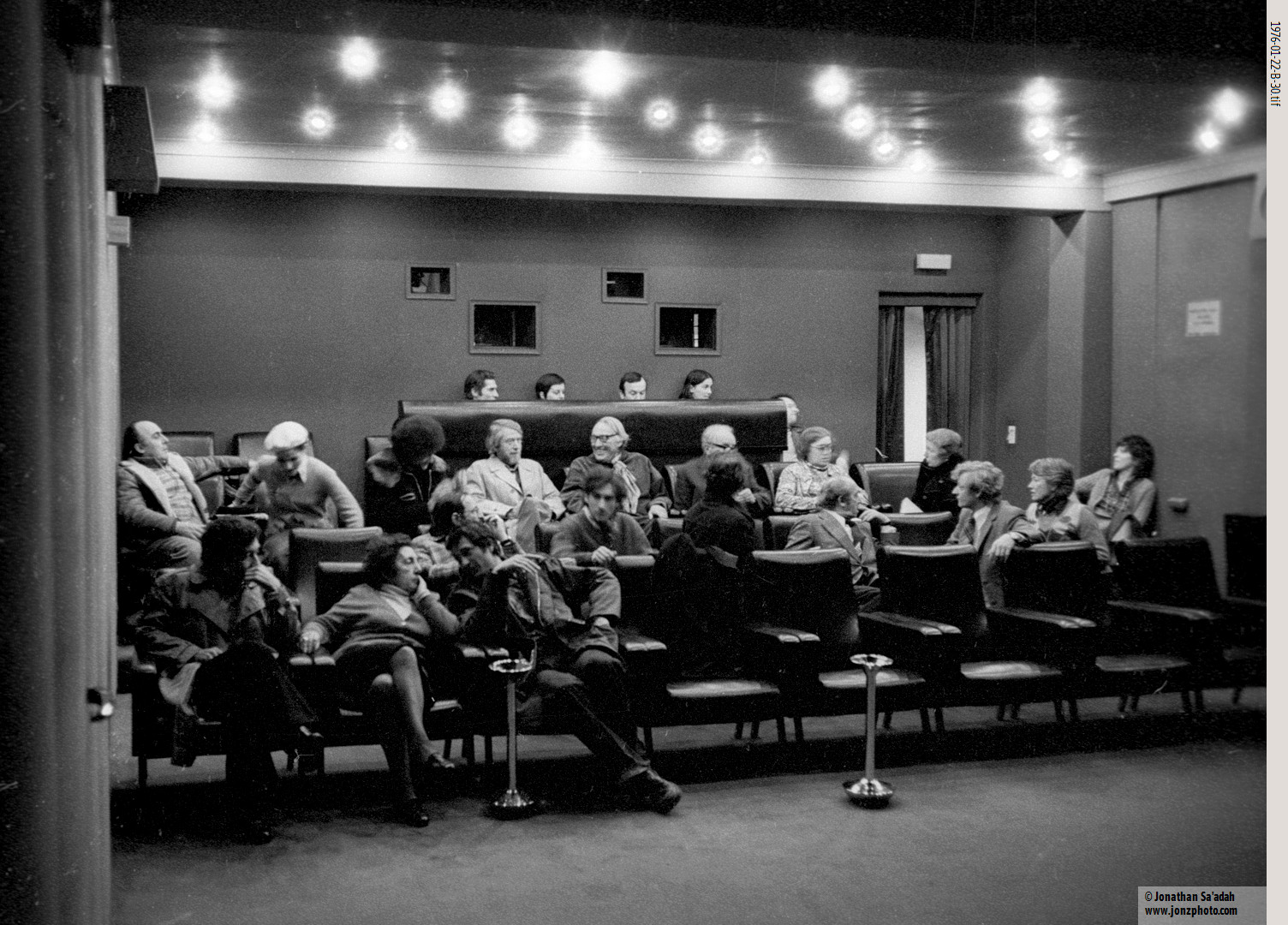
    ▲ A clear hierarchy is visible through the screening room seating arrangement as people wait to watch film rushes. Losey is center with Beck on his left and cinematographer Gerry Fisher on his right. The assistant directors sit in front of Losey. Margo Capelier, casting director, is in the front row. Marie Castro-Vasquez is far right, and Henri Lanoë’s head is just visible in the back.

    Beck’s independent status also meant he could select projects based on artistic merit rather than contractual obligations. His filmography reflects this selective approach, spanning from Laurence Olivier’s Henry V (1944) to works by international auteurs, illustrating his commitment to cinematic excellence over financial security. Importantly, the freelance model allowed Beck to maintain creative autonomy while building long-term partnerships with directors who valued his unique skills. Like Fisher’s camerawork, Beck’s editing was central in supporting Losey’s complex themes and visual identity.

    Political Beliefs: Russian Origins and Radical Sympathies

    Beck’s political world-view was fundamentally shaped by his early experiences as a Russian-born émigré. Born in St. Petersburg in 1902 to a British father and Finnish mother, Beck’s family emigrated to Britain when he was thirteen (1915). Beck’s childhood exposure to revolutionary Russia and his family’s subsequent displacement instilled in him an understanding of political persecution and the arbitrary nature of state power. These experiences resonated with the themes explored in many of his later collaborations, particularly Losey’s films that examined outsiders, persecution, and the abuse of authority.

    The intersection of Beck’s political beliefs with Losey’s anti-establishment stance created a powerful creative partnership. Beck’s Russian origins and immigrant experience gave him a unique perspective on British class society that proved invaluable in interpreting Losey’s critiques of social hierarchies. His editing choices consistently supported narratives that exposed the violence and corruption underlying respectable facades, reflecting a political sensibility forged in revolutionary upheaval. What Losey found in Beck was an editor who intuitively understood the psychology of displacement and persecution. Their collaboration on films like Accident (1967) and The Go-Between (1971) explored themes of class oppression and social hypocrisy that reflected both men’s critical views of established power structures.

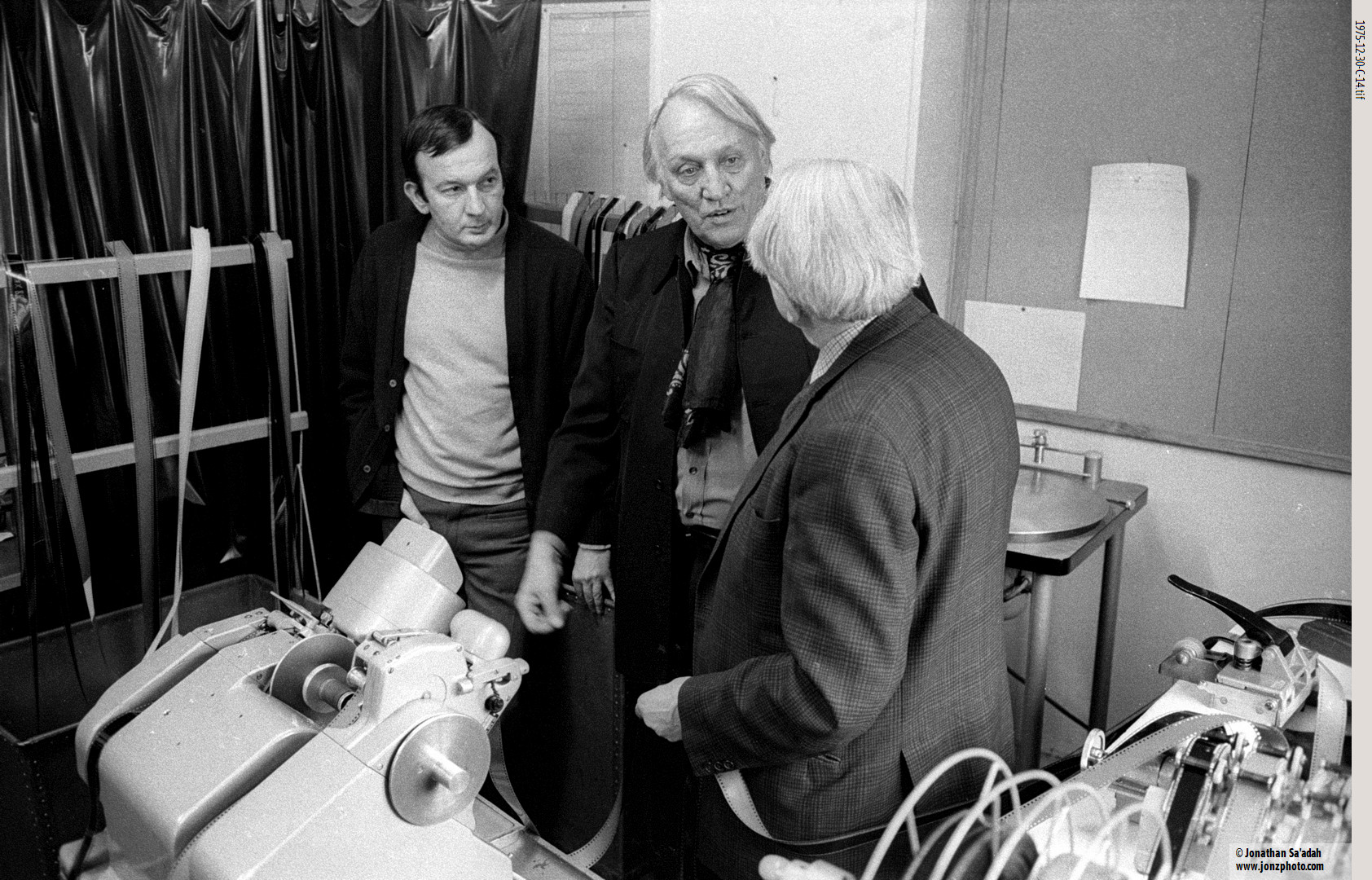
    ▲ Losey speaking with Beck as Henri Lanoë, the credited editor, listens.

    Style as an Editor: Invisible Craft and Sustained Tension

    Beck’s editing style was rooted in the theories of Vsevolod Pudovkin which held that the assembly of shots served as bricks in creating narrative. His approach emphasized psychological complexity over flashy technique (contrasting with the theories of Sergei Eisenstein).

    In M Klein, Beck’s editing supported the film’s Kafkaesque atmosphere of paranoia and identity confusion. The film’s exploration of a French Catholic being mistaken for a Jewish namesake required editing that could sustain psychological tension while maintaining narrative clarity. Beck’s work created a labyrinthine with life-or-death consequences through careful pacing and strategic withholding of information. A mark of his work with Losey was lengthy shots that built tension through duration rather than cutting. This technique demonstrated Beck’s understanding that editing’s power often lay in restraint rather than flashiness, and in M Klein this approach supported the film’s meditation on identity and persecution by allowing scenes to develop psychological complexity through sustained observation.

    Relationship with Losey: Mutual Respect and Creative Partnership

    The professional relationship between Beck and Losey represented one of cinema’s most productive editor-director partnerships, spanning eighteen films from The Gypsy and the Gentleman (1958) through Steaming (1985). Losey considered Beck one of the two best editors he ever worked with, the other being his first editor, Reginald Mills. Beck’s collaboration with Losey began after the director’s public falling-out with Mills over The Servant (1963). Beck then edited all of Losey’s subsequent films, establishing a working relationship characterized by shared political sensibilities and complementary artistic approaches. Their partnership proved particularly fruitful in films that explored themes of persecution, identity, and social hypocrisy.

    What is ironic about the contribution that Reginald Beck made to M Klein, and Joseph Losey’s films in general, was that they were two people who worked on the margins of established systems, both dealing with issues of political exile and artistic displacement, and together they transformed these restraints of blacklisting and emigration into innovative film-making that challenged social norms as well as cinematic conventions. In some ways this wasn’t a surprising outcome for two such talented people, but it certainly represented a struggle and an opposition to forces and obstacles quite similar to those that many artists face today.


    If you would like further information:

    ‘Association of cinematograph, television and allied technicians’ (2025) Wikipedia. Available at: https://en.wikipedia.org/w/index.php?title=Association_of_Cinematograph,_Television_and_Allied_Technicians&oldid=1278926362 (Accessed: 29 June 2025).
    BFI Screenonline: Beck, Reginald (1902-1992) Biography (no date). Available at: http://www.screenonline.org.uk/people/id/1299434/index.html (Accessed: 13 March 2023).
    BFI screenonline: beck, reginald (1902-1992) biography (no date). Available at: http://www.screenonline.org.uk/people/id/1299434/index.html (Accessed: 28 June 2025).
    Burman, J. (no date) An Age of Transition and Turmoil: Editors Guild History 1965-75 -, CineMontage Journal of the Motion Pictures Editors Guild. Available at: https://cinemontage.org/an-age-of-transition-and-turmoil-editors-guild-history-1965-75/ (Accessed: 28 June 2025).
    ‘Reginald Beck’ (2022) Wikipedia. Available at: https://en.wikipedia.org/w/index.php?title=Reginald_Beck&oldid=1108833609 (Accessed: 9 April 2023).
    Ryder, W. and Lawson, A. (1987) Reginald Beck Interview. (The British Entertainment History Project). Available at: https://historyproject.org.uk/interview/reginald-reggie-beck (Accessed: 13 March 2023).
    Sloman, T. (1992) Obituary: Reginald Beck, The Independent. Available at: https://www.independent.co.uk/news/people/obituary-reginald-beck-1536223.html (Accessed: 29 March 2023).

    Films Beck Edited (List adapted from “Reginald Beck.” In Wikipedia, September 6, 2022. https://en.wikipedia.org/w/index.php?title=Reginald_Beck&oldid=1108833609)

    YearFilm NameDirector(s)
    1932The Return of RafflesMansfield Markham
    1933Death at Broadcasting HouseReginald Denham
    1935Late ExtraAlbert Parker
    1935Blue SmokeEdwin L. Ince
    1936Wedding GroupAlex Bryce & Campbell Gullan
    1936Find the LadyRoland Grillette
    1937Calling All Ma’sRedd Davis
    1937Variety HourRedd Davis
    1938Father O’NineMaclean Rogers (aka Oswald Mitchell)
    1938This Man Is NewsDavid MacDonald
    1939This Man in ParisDavid MacDonald
    1939The Stars Look DownCarol Reed
    1940The Stars Look DownCarol Reed
    1941Freedom RadioAnthony Asquith
    1941Quiet WeddingAnthony Asquith
    1942In Which We ServeNoël Coward & David Lean
    1942Unpublished StoryHarold French
    1943The Lamp Still BurnsMaurice Elvey
    1944Henry VLaurence Olivier
    1945Journey TogetherJohn Boulting (supervising editor)
    1947They Made Me a FugitiveAlberto Cavalcanti (supervising editor)
    1947I Became a CriminalAlberto Cavalcanti (editorial supervisor)
    1948HamletLaurence Olivier (associate producer)
    1950The Angel with the TrumpetAnthony Bushell (supervising editor)
    1951The Long Dark HallReginald Beck & Anthony Bushell
    1952The Wonder KidKarl Hartl
    1953The Beggar’s OperaPeter Brook
    1953Laughing AnneHerbert Wilcox (supervising editor)
    1953The Big FrameDavid MacDonald
    1954Trouble in the GlenHerbert Wilcox (supervising editor)
    1954Let’s Make UpDenis Kavanagh (supervising editor)
    1955King’s RhapsodyHerbert Wilcox (supervising editor)
    1957Island in the SunRobert Rossen
    1958Harry Black and the TigerHugo Fregonese
    1958The Gypsy and the GentlemanJoseph Losey
    1959Serious ChargeTerence Young
    1962EvaJoseph Losey
    1963The Leather BoysSidney J. Furie
    1965The Leather BoysSidney J. Furie
    1966Modesty BlaiseJoseph Losey
    1967AccidentJoseph Losey
    1967RobberyPeter Yates
    1968Boom!Joseph Losey
    1968Secret CeremonyJoseph Losey
    1971The Go-BetweenJoseph Losey
    1971Figures in a LandscapeJoseph Losey
    1971Something to HideAlastair Reid
    1972The Assassination of TrotskyJoseph Losey
    1973A Doll’s HouseJoseph Losey
    1973GalileoJoseph Losey
    1975The Romantic EnglishwomanJoseph Losey
    1977Un amour de sableChristian Lara
    1978DespairRainer Werner Fassbinder
    1978Roads to the SouthJoseph Losey
    1979Don GiovanniJoseph Losey
    1985SteamingJoseph Losey
  • The Artful Eye: Gerry Fisher’s Cinematographic Journey

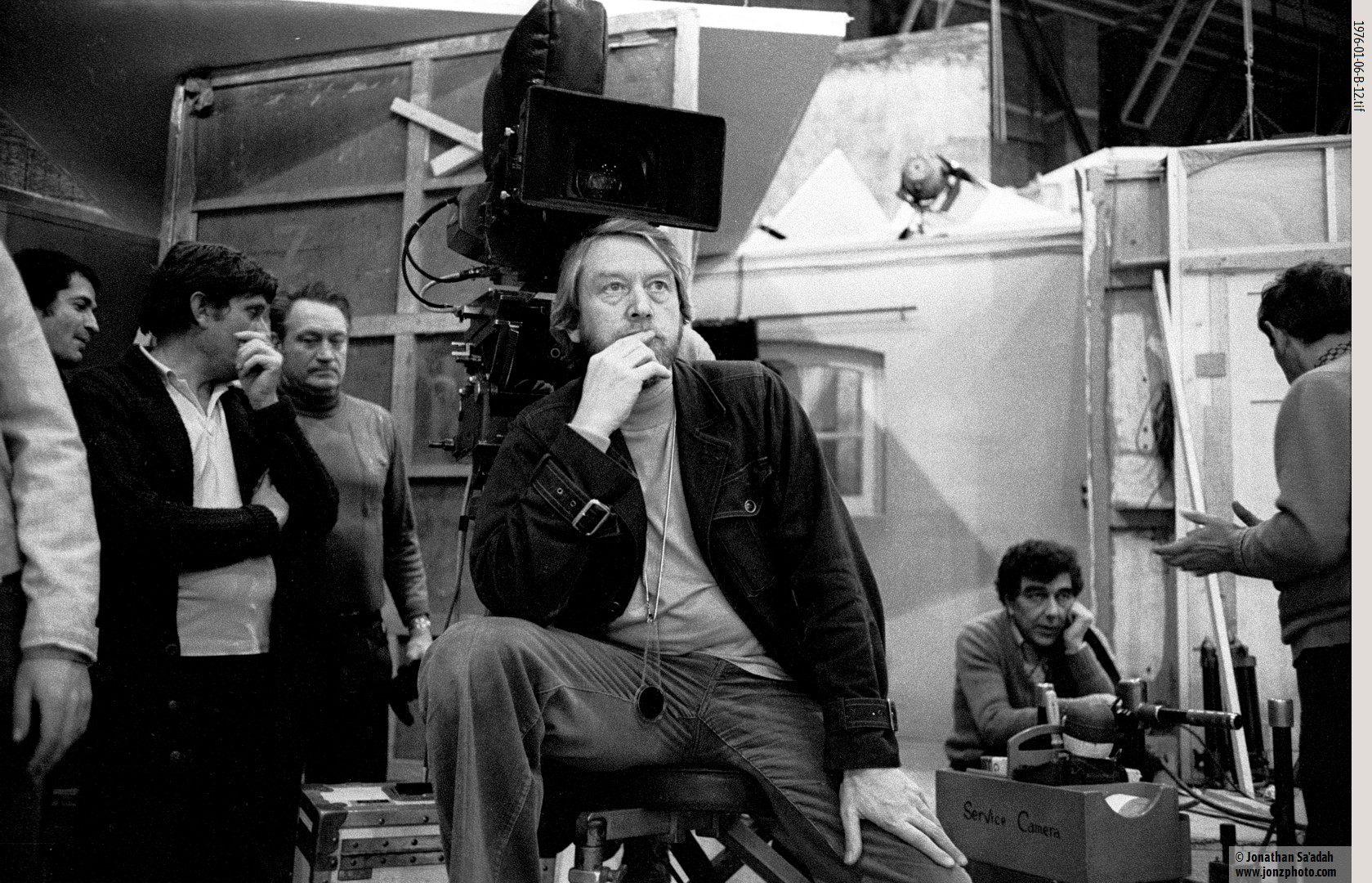
    ▲ Though a creature of the studio system, Fisher still chafed at waiting for his union crew to catch up. Losey liked that about him. Here he is quietly eyeing a studio setup while two electricians stand behind him. The man squatting on the right is Victor Rodrigue, the stills photographer for the film.

    The Established Collaborator

    By 1976, when Gerry Fisher began work on M Klein, he had already accumulated twenty seven film credits as Director of Photography, with this project marking his sixth collaboration with director Joseph Losey. Their professional relationship had evolved into a well-oiled machine, characterized by mutual understanding and respect that transcended the need for excessive verbal communication.

    Fisher approached cinematography as storytelling through visuals, preferring his work to enhance rather than overshadow the narrative. His unassuming personality and steady temperament, combined with meticulous precision and clear vision, made him particularly well-suited for the high-pressure environment of film-making. For M Klein, Fisher chose a visual style that balanced documentary-like authenticity with Losey’s signature visual richness, creating tension through sparsely lit scenes that subtly highlighted the film’s moral complexities.

    Morning Meetings and Declined Spirits

    Fisher’s workdays (when shooting on location) typically began with an early morning planning session in Losey’s trailer, where the director would with good-natured persistence (born of friendship) offer Fisher some Stoli with pomplemousse. While not abstaining from alcohol entirely, Fisher wisely maintained his professional composure on set—a prudent choice given the demands of his role.

    Despite feeling free to disagree with Losey in private, Fisher maintained the line that “the director always had the final say” in public – the correct stance to take since Losey never reacted well when challenged in public. Their relationship, however, was founded on mutual respect and friendship, with Fisher feeling particular loyalty to Losey for giving him his first opportunity as Director of Photography in 1967 – a significant milestone in his career and the most difficult step for a cameraman to take.

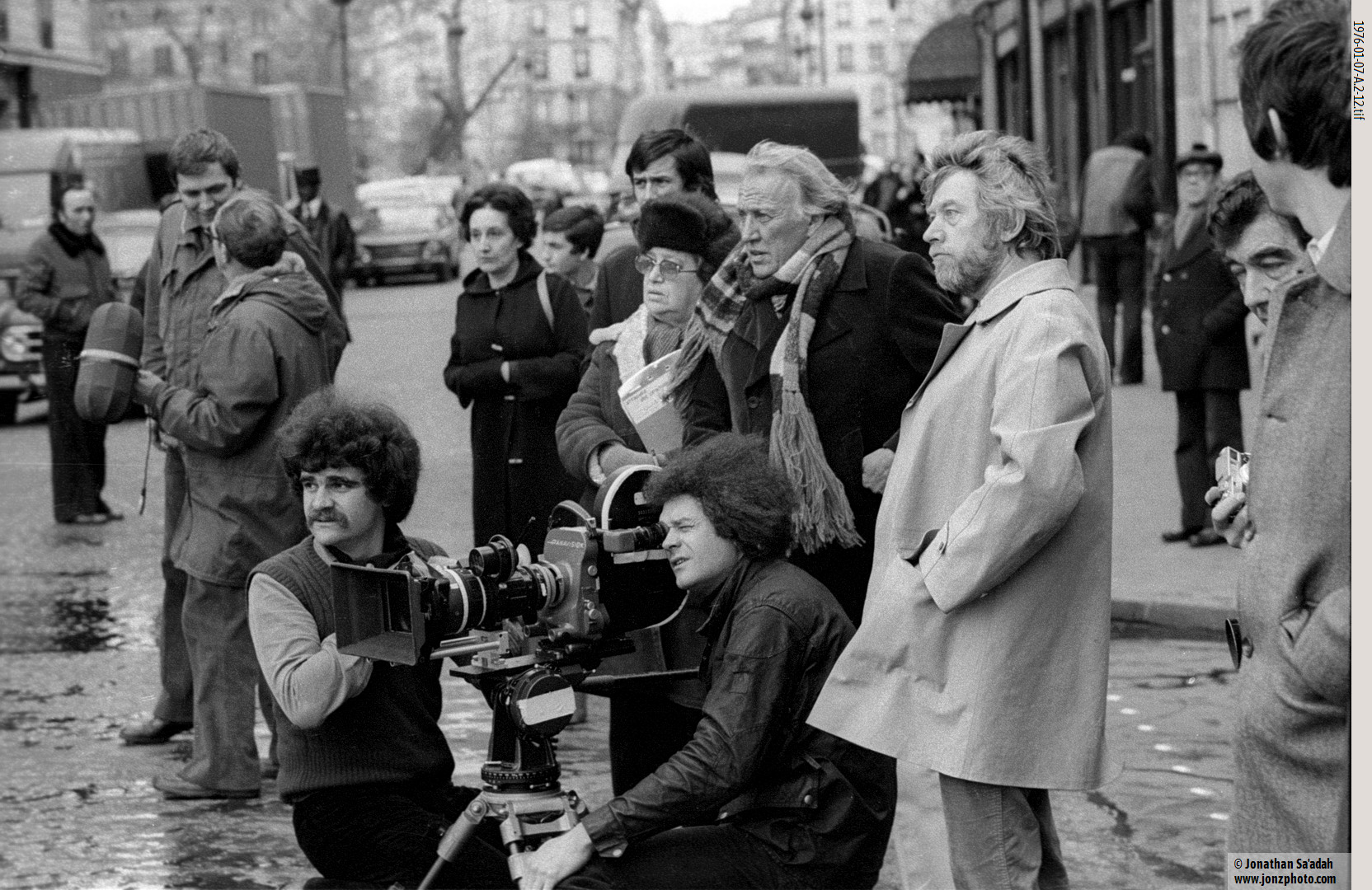
    ▲ Losey sights over the camera at a boulevard scene near Pont St-Louis. Fisher, in the light coat, flanks him and on the other side is Lucie Lichtig, the accomplished Continuity Director who started her 50 year career in 1933 working for Max Ophuls. Sighting through the camera is Pierre-William Glenn, first Camera Operator.

    The Silent Partnership of Filmmaking

    Perhaps the most remarkable aspect of the Losey-Fisher partnership was how little they needed to speak to each other. During setups, Fisher would quietly survey the set from various angles, giving concise instructions to electricians about lighting adjustments and discussing camera positioning with his crew. His efficiency stemmed from clarity of vision—knowing precisely what he wanted and how to achieve it without unnecessary elaboration.

    Fisher’s innovative approach to actor movement involved creating “zones” rather than specific marks, allowing performers greater freedom and naturalism in their movements. This method facilitated more spontaneous performances while maintaining visual coherence. Losey, confident in Fisher’s abilities, could focus his attention on directing actors, knowing the visual elements were in capable hands.

    From Darkroom to Director of Photography

    Born into a working-class London family, Fisher showed an early passion for photography, purchasing a film camera and constructing a darkroom in his parents’ home as a young boy. During the early years of World War II, too young to enlist, he contributed to the war effort by helping manufacture large-format reconnaissance cameras for the Royal Air Force. Later, when old enough to serve, he joined the Royal Navy as an electrician repairing landing craft.

    Fisher’s career followed the traditional studio system path in England, beginning with entry-level positions loading film magazines and working as a clapper boy before gradually advancing to camera operator and beyond. Each step of his professional journey reinforced the discipline and technical precision that would later distinguish his work as a cinematographer.

    ▲ The film used the Citroën factory (recently closed) at Quai de Javel in Paris for one of the scenes in which Klein is searching for “Kathy”, his double’s girlfriend. Fisher had an easy time here – there was a lot of space and beautiful natural light coming through huge panels of windows. He is explaining the framing to his camera operator.

    Bridging Cultural Divides

    M Klein presented Fisher with the challenge of working in a French cultural and linguistic context while maintaining the sophisticated visual style associated with Losey’s films. His collaboration with bilingual cameraman Pierre-William Glenn proved invaluable, providing a crucial communication link with the predominantly French-speaking crew. Despite not speaking French himself, Fisher’s work in France eventually earned him the prestigious title of Chevalier de l’Ordre des Arts et des Lettres in 1997, recognizing his significant contributions to French cinema.

    The Orchestrator of Light and Movement

    As Director of Photography, Fisher coordinated three distinct groups: the camera crew handling complex equipment, electricians managing lighting, and grips responsible for camera support and movement. His lighting philosophy for M Klein favored strategic placement over abundance, creating textured illumination rather than flat, even lighting.

    The pressures of film-making—described as “a bit like fighting a war, with less drastic results”—required quick, confident decision-making in view of avoiding significant financial costs. This was particularly challenging when shooting on location, where equipment had to be adapted to confined spaces. Through it all, Fisher maintained his resolute attitude: “we are not giving up”.

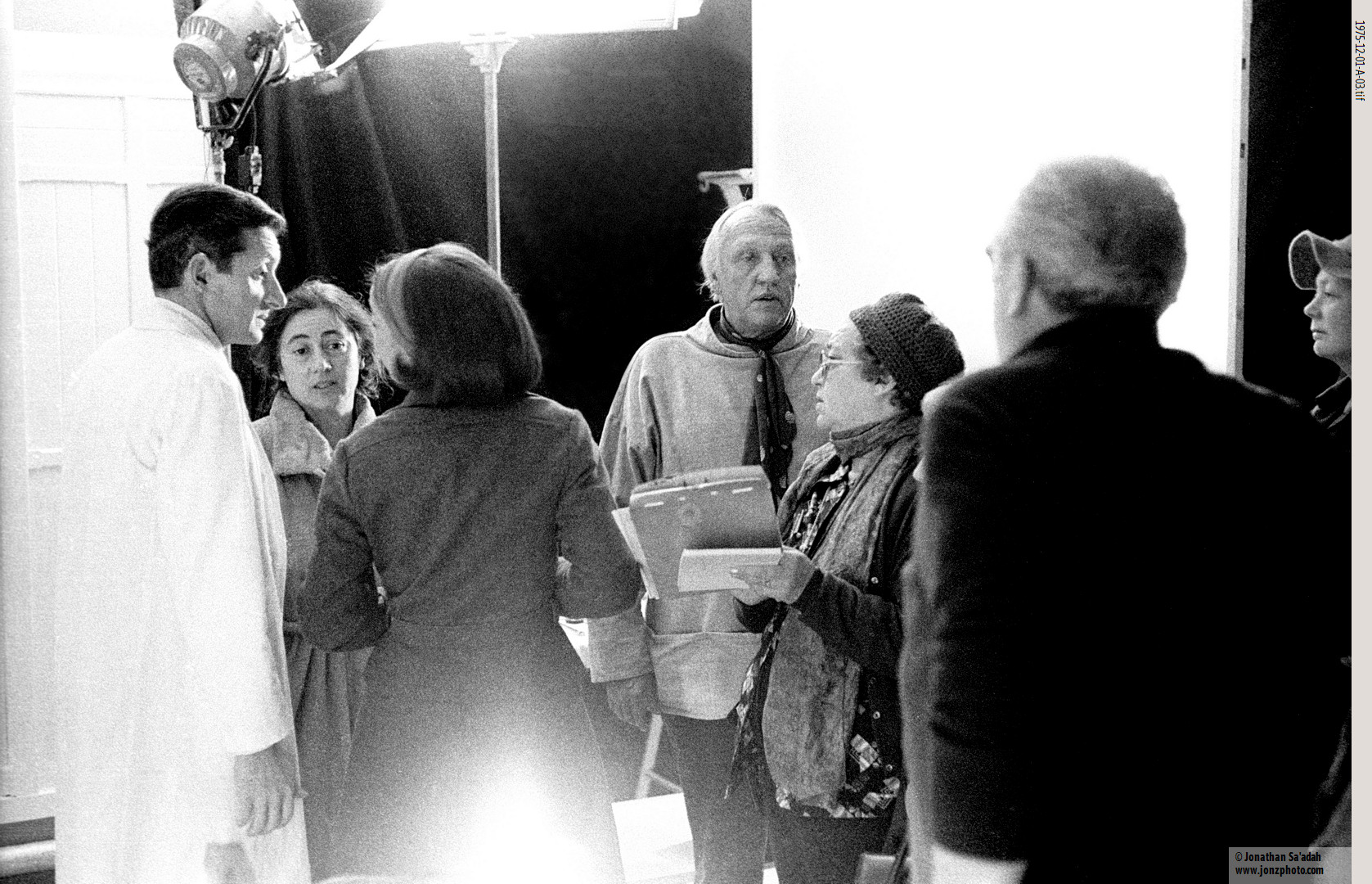
    ▲ Losey is livid, Fisher steps in as the peacemaker. The entire production has been transported to Strasbough and Losey has just been told the location won’t work the way it is. The person with responsibility, Alexandre Trauner, is on the right considering his options. Fisher, in his signature raincoat, has his back to the camera and on the left is Ludmilla Goulian, the production manager. Also listening in are Phillippe Monnier and Rémy Duchemin, 1st and 2nd assistant directors, and partially hidden (with Russian hat) is Lucie Lichtig.

    Innovation and Recognition

    Throughout his career, Fisher demonstrated technical innovation and willingness to experiment with new approaches. For M Klein, he selected a special film stock better suited to capture the predominant greens and browns of the film’s color palette. His commitment to pushing technical boundaries while serving the emotional and psychological themes of the screenplay earned him both a César nomination for M Klein and his later appointment as Chevalier de l’Ordre des Arts et des Lettres. These honors placed him among the most respected cinematographers of his generation, recognized for both technical excellence and artistic achievement.

    A List of Fisher’s Films as Cinematographer (adapted from Wikipedia):

    YearFilmDirector
    1967AccidentJoseph Losey
    The MikadoStuart Burge
    1968SebastianDavid Greene
    InterludeKevin Billington
    Amsterdam AffairGerry O’Hara
    Secret CeremonyJoseph Losey
    The Sea GullSidney Lumet
    1969HamletTony Richardson
    1970Ned KellyTony Richardson
    Macho CallahanBernard L. Kowalski
    All the Right NoisesGerry O’Hara
    1971The Go-BetweenJoseph Losey
    See No EvilRichard Fleischer
    Man in the WildernessRichard C. Sarafian
    MalpertuisHarry Kumel
    1972The Amazing Mr. BlundenLionel Jeffries
    1973The OffenceSidney Lumet
    Bequest to the NationJames Cellan Jones
    A Doll’s HouseJoseph Losey
    1974ButleyHarold Pinter
    S*p*Y*SIrvin Kershner
    JuggernautRichard Lester
    1975BranniganDouglas Hickox
    Dogpound ShuffleJeffrey Bloom
    The Romantic EnglishwomanJoseph Losey
    The Adventure of Sherlock Holmes’ Smarter BrotherGene Wilder
    1976Aces HighJack Gold
    Monsieur KleinJoseph Losey
    1977The Island of Dr. MoreauDon Taylor
    The Last Remake of Beau GesteMarty Feldman
    1978Roads to the SouthJoseph Losey
    FedoraBilly Wilder
    1979Wise BloodJohn Huston
    Don GiovanniJoseph Losey
    1980The Ninth ConfigurationWilliam Peter Blatty
    1981Rends-moi la delGerard Pires
    Escape to VictoryJohn Huston
    WolfenMichael Wadleigh
    1982Un matin rougeJean-Jacques Aublanc
    LovesickMarshall Brickman
    1983YellowbeardMel Damski
    Les mots pour le direJose Pinheiro
    1985The Holcroft CovenantJohn Frankenheimer
    1986HighlanderRussell Mulcahy
    1987Man on FireElie Chouraqui
    OrnFred de Fooko
    1988Running on EmptySidney Lumet
    1989Dead BangJohn Frankenheimer
    Black RainbowMike Hodges
    1990The Fourth WarJohn Frankenheimer
    The Exorcist IIIWilliam Peter Blatty
    1991Company BusinessNicholas Meyer
    1992DiggstownMichael Ritchie
    1994Cops and RobbersonsMichael Ritchie
    1996When Saturday ComesMaria Giese
    1997KAlexandre Arcady
    1999FuriaAlexandre Aja