Tag: Architecture

  • The Long, Uneven Life of Mexico City’s Palacio de Bellas Artes

    The Long, Uneven Life of Mexico City’s Palacio de Bellas Artes

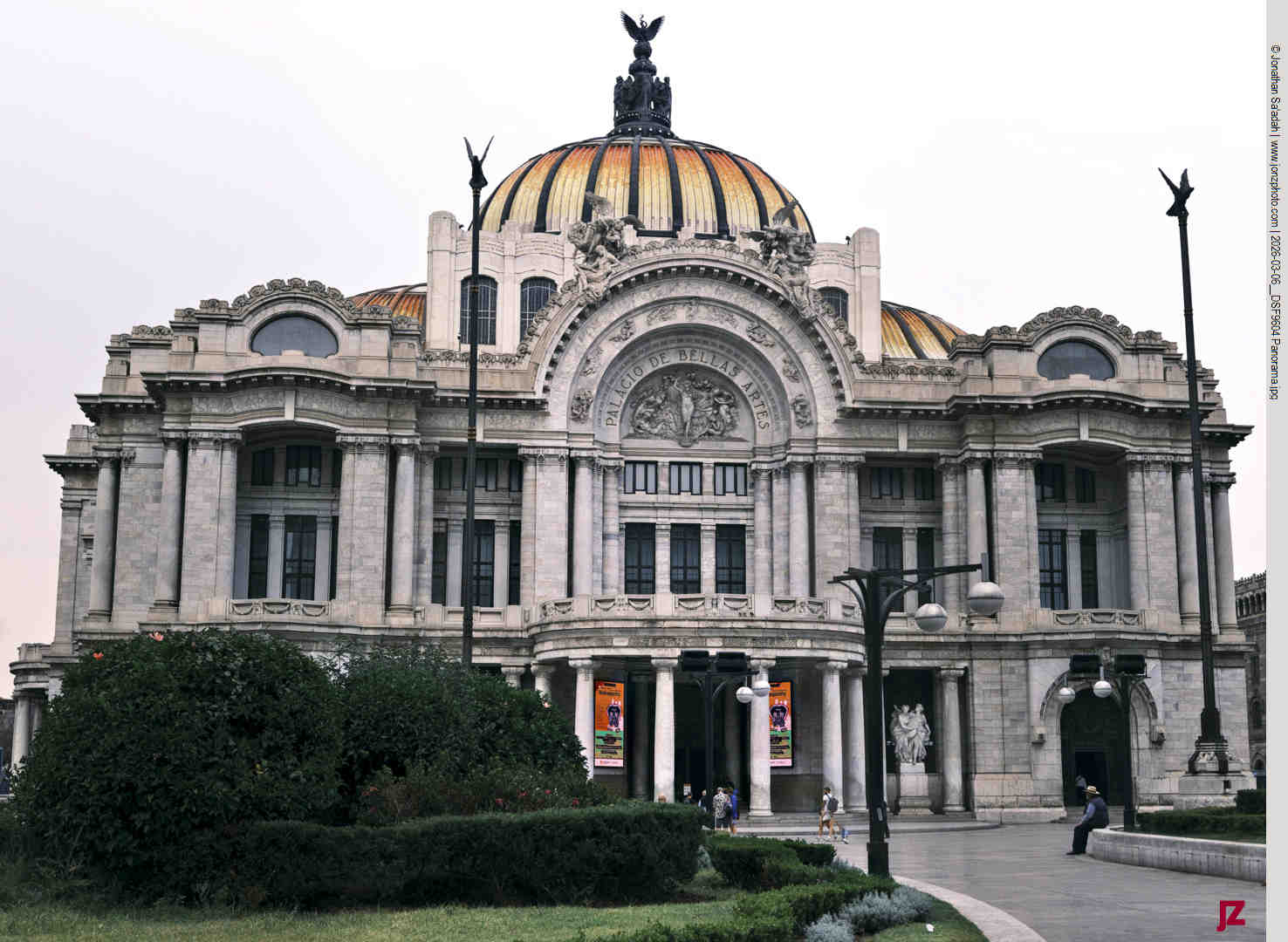
    The Palacio de Bellas Artes looks, at first glance, like the kind of building that surely must have arrived in the world fully resolved: a white-marble monument, ceremonious and self-assured, facing Avenida Juárez in the center of Mexico City. Its actual history is the opposite. The building was conceived as a florid last gasp of the Porfirian regime, stalled by bad ground and political upheaval, and completed only after the revolution had transformed the country that it was meant to represent. What stands today is not a pure work from one era but a layered object, half dream of the old Mexican order and half invention of the new Mexico.
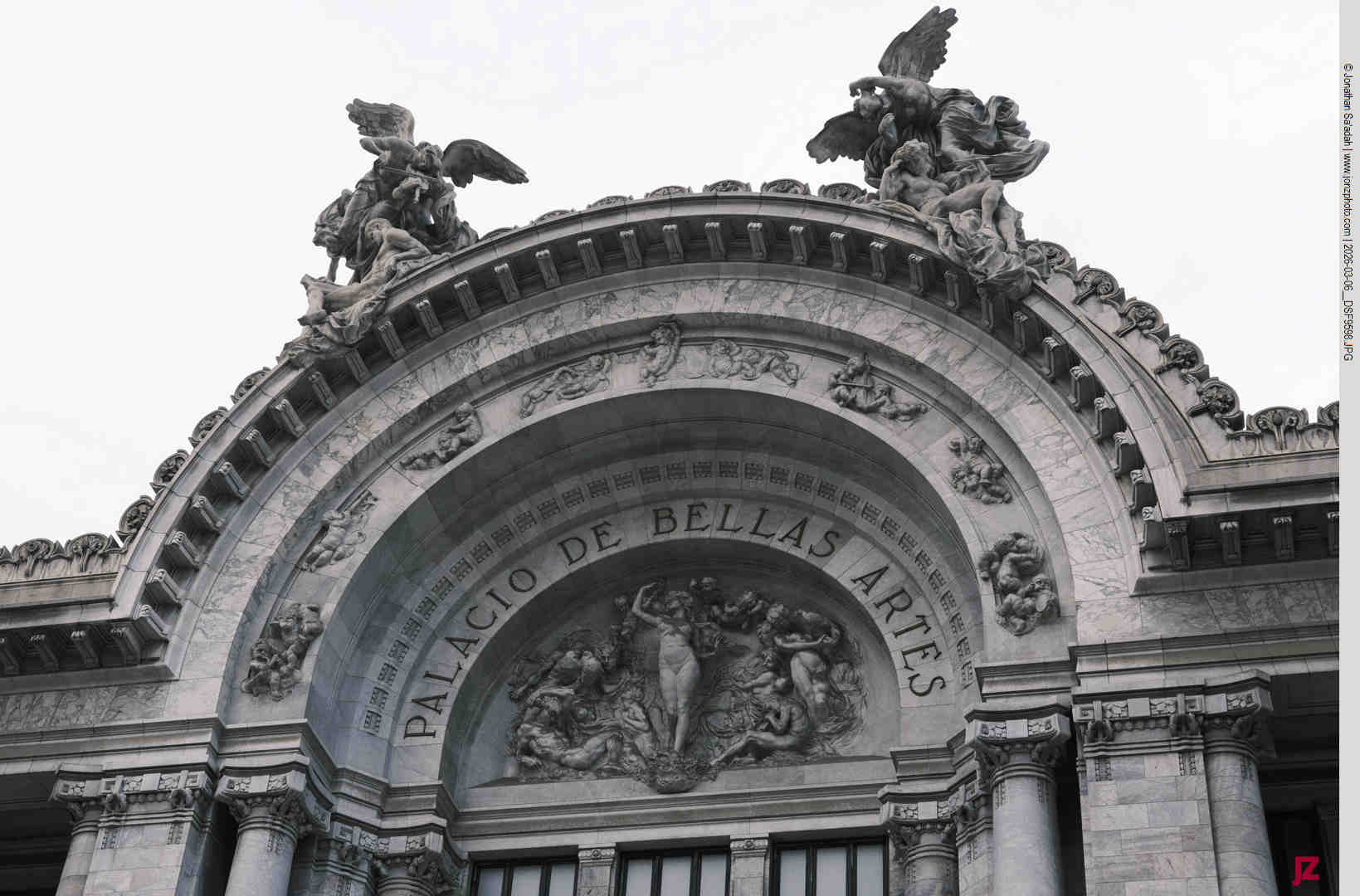
    The sculptural relief above the entry doors was created by Italian sculptor Leonardo Bistolfi depicting “La Armonía” (Harmony). The central figure is a nude woman representing Harmony, surrounded by allegorical figures depicting emotions such as “Pain,” “Rage,” “Happiness,” “Peace,” and “Love”.

    The Porfirian Dream

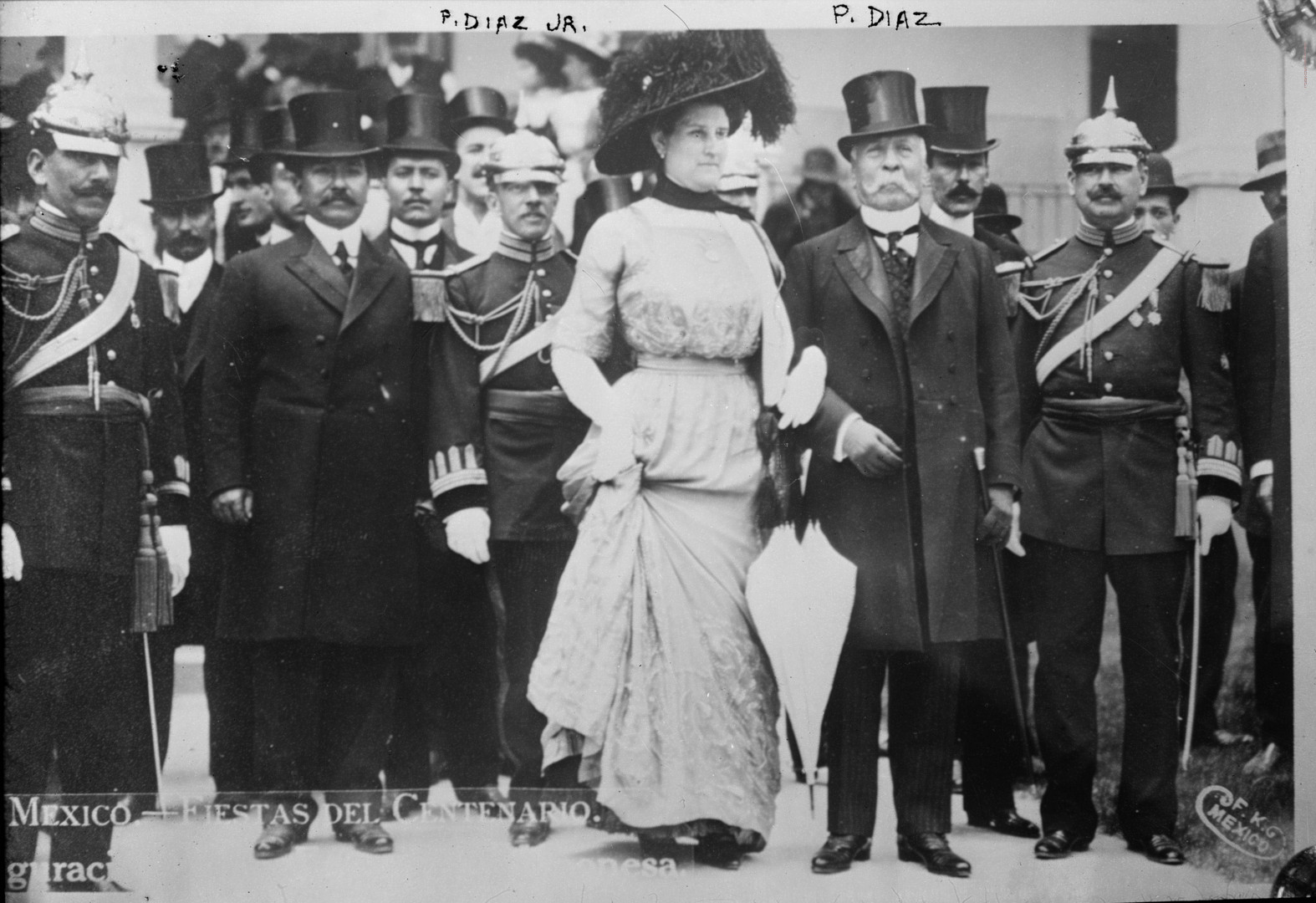
    After Porfirio Díaz’s first wife died, he married Carmen Romero Rubio who was just 17 years old while Díaz was 51. The couple met at a reception at the American embassy in Mexico City, where the her family were frequent guests. Carmen agreed to teach Díaz English, and their relationship developed from there. Source: American Library of Congress.

    That tension begins with the president who wanted it: President Porfirio Díaz. Díaz governed Mexico for decades, directly and effectively, during the long period known as the Porfiriato, and his rule was marked by centralization, order, technocratic ambition, and an intense desire to present Mexico as a modern nation equal to the great capitals of Europe. Bellas Artes was part of that national self-staging. It was planned as a grand new opera house to replace the old National Theater and to help commemorate the centennial of Mexican independence happening in 1910. Díaz wanted to frame the date with monuments, boulevards, and public architecture that could display progress and shine a positive light on his legacy.
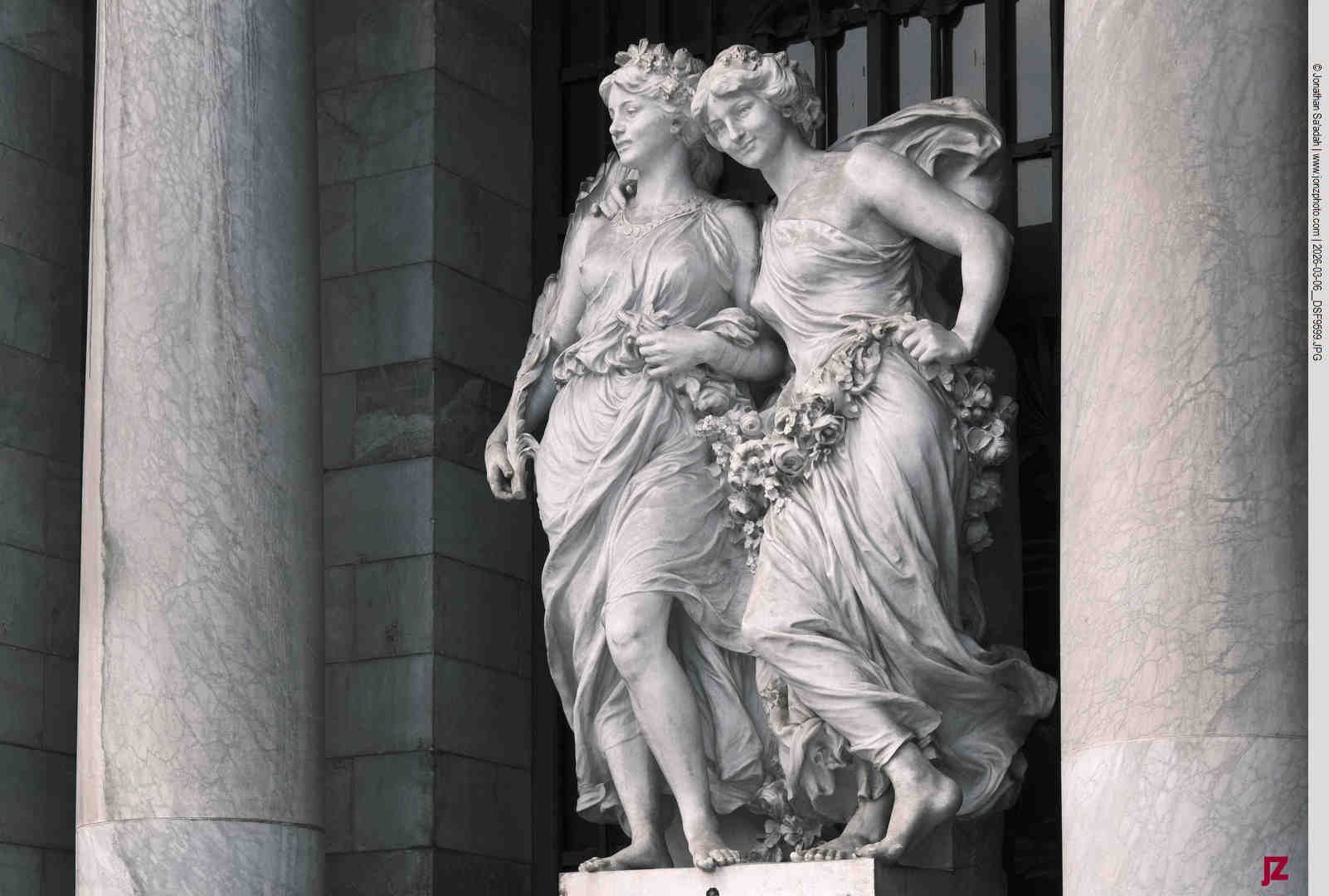
    Ìt’s not difficult to see how the man – President Porfirio Díaz – would choose this sculpture to adorn a public building. It’s also not difficult to see the conflict of his views and those of the muralists inside the building.

    Díaz’s political style helps explain why the project was so grand. He was an authoritarian modernizer: admired by supporters for stability and infrastructure, criticized by opponents for repression, inequality, and the concentration of power. The Palacio fits that mixture of confidence and contradiction. It was meant to signal refinement, control, and cosmopolitan prestige, and Díaz awarded the commission to the Italian architect Adamo Boari, whose European training suited the regime’s cultural aspirations. In that sense the building was never just a building, it was propaganda in the dignified form of architecture.
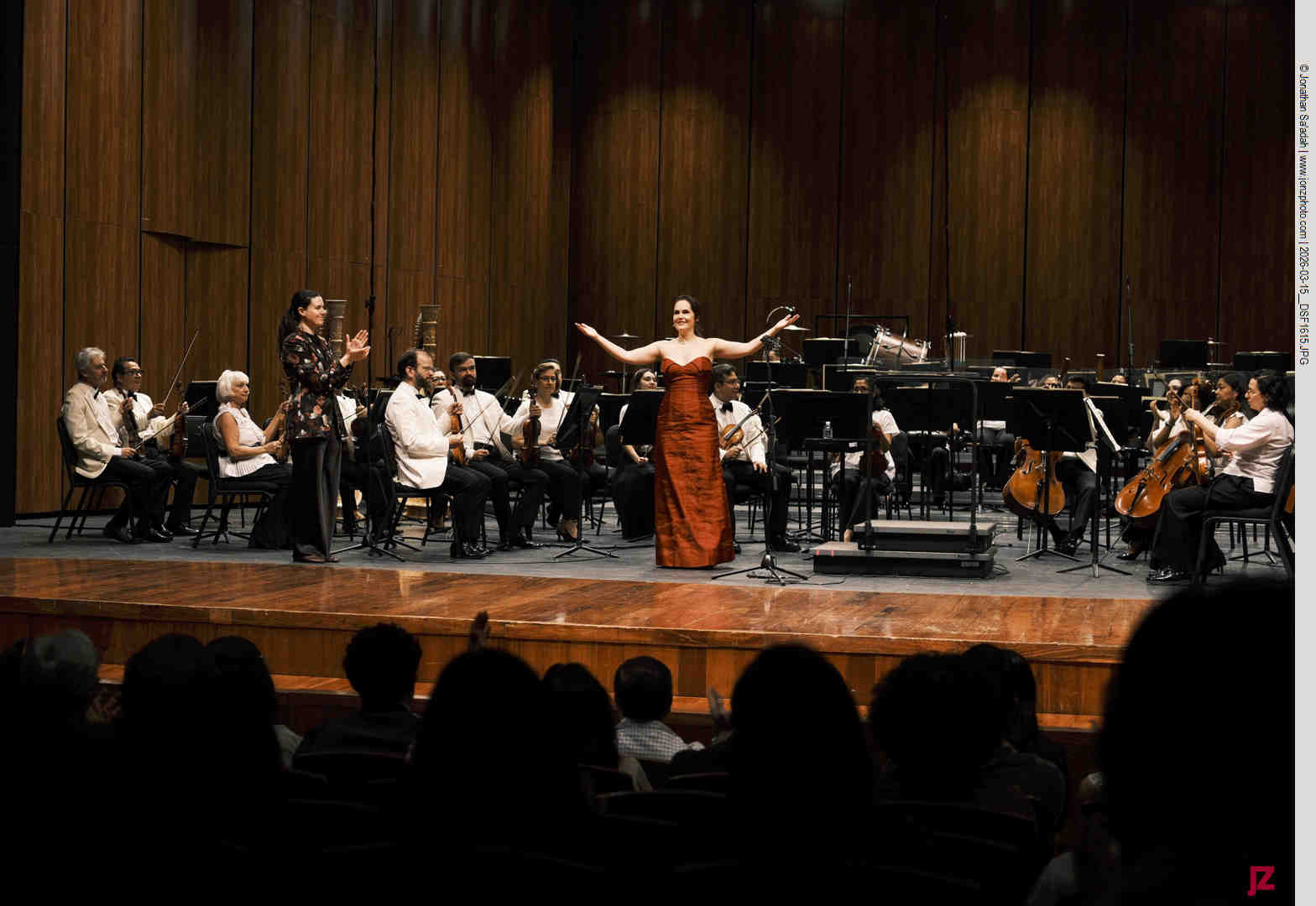
    Soprano Anabel de la Mora taking a bow on the Bellas Artes stage after performing three Mozart arias in March, 2026. The conductor was Shira Samuels-Shragg, making her Mexican debut.

    Boari began work in 1904 on the site of the former National Theater, itself part of a changing district along the Alameda. His design used white Carrara marble and combined neoclassical grandeur with the curving ornament of Art Nouveau. The exterior sculpture was international in character as well, with contributions by European artists, and the whole composition played into the Porfirian taste for imported prestige. The palace was expected to open in time for the 1910 centennial celebrations, but almost immediately the site threw up roadblocks to that timetable.

    Reality Interferes

    The problem was the ground beneath it. Mexico City rests on the old lakebed of Tenochtitlan, and the heavy marble structure began to sink into the soft subsoil even as construction advanced. This was not a cosmetic inconvenience but a structural and logistical problem that slowed the project and complicated its engineering. Then, to make matters more complicated, history intervened violently. The Mexican Revolution, beginning in 1910, disrupted public works, shattered the world that had sponsored the palace, and eventually drove Boari from the country. By 1916 the exterior was essentially finished and the domes were rising, but for years afterward the project lingered in suspension, stranded between regimes and between meanings.

    That interruption explains the building’s architectural disjointedness. The exterior belongs to one political and aesthetic moment, while the interior belongs to another. When work resumed in 1930 under the Mexican architect Federico Mariscal, he did not simply complete Boari’s original vision. Instead, he finished the interior largely in Art Deco, incorporating more geometric forms and motifs that reflected both international modern design and a stronger post-revolutionary interest in Mexico’s own ancient past. The result is one of the palace’s great oddities: an outside skin shaped by late Porfirian European elegance and an inside world shaped by the 1930s, by modernism, and by a different national ideology.
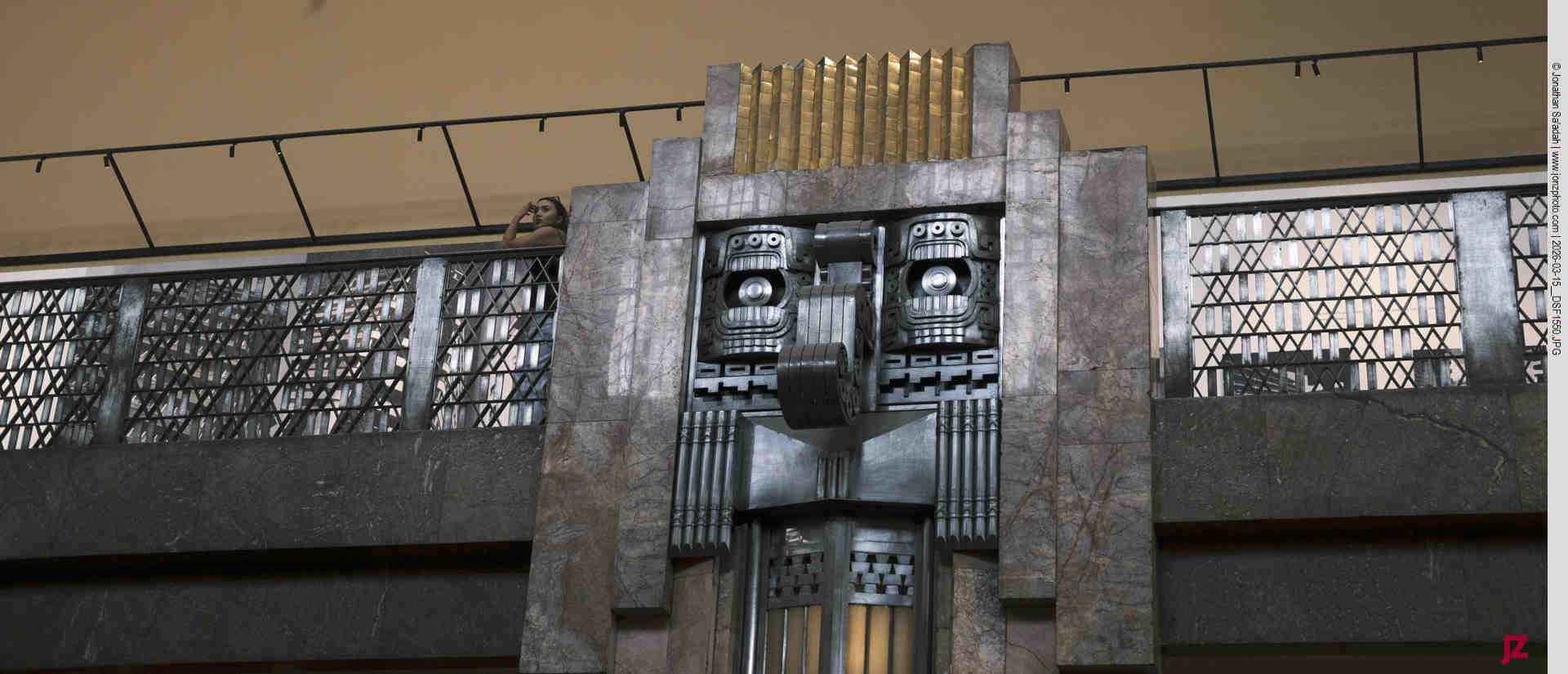
    The vertical Art Deco columns are headed by pre‑Hispanic motifs. The materials are rich, with colored marbles and bronze or dark metal. The marble-clad piers dissolve into bronze, mask-like reliefs with stepped geometric bands.

    Yet the building is not disjointed only in style. It is disjointed in historical mood. Bellas Artes is a palace born from elite aspiration that later became a public temple of national culture. A project first imagined as a grand opera house for an authoritarian regime opened in 1934 as a cultural center for a post-revolutionary state more interested in social identity, civic education, and the arts as national narrative. That transformation gives the building much of its emotional force. It represents the tension between the Porfiriato and the cultural programs of revolutionary Mexico.

    Bellas Artes as a Living Home to the Arts

    What made Bellas Artes unique was its mixing of conflicting aspirations. Its excessiveness feels like a collaboration among architecture, decorative arts, engineering, and stagecraft on a nearly operatic scale.

    The murals came later, and their presence changed the meaning of the building again. After the revolution, muralism became one of the state’s most powerful cultural languages: public, didactic, monumental, and intensely concerned with history, labor, indigeneity, class, and modern Mexico. These paintings did not merely decorate the palace. They turned it into a walk-through argument about Mexican identity, replacing the courtly atmosphere of the original theater conception with a much more contested and democratic visual program.

    That is why walking through Bellas Artes can feel so startling. The building’s marble, staircases, and ceremonial spaces suggest European grandeur, yet on the walls appear revolutionary images, anti-capitalist allegories, indigenous references – the modern Mexican mythmaking. Rivera’s remade Man, Controller of the Universe is the best-known example of this collision of worlds, but the broader mural ensemble is just as important because it places the palace within the central story of twentieth-century Mexican art. Bellas Artes became not simply a venue where art was shown but a monumental frame for the state-sponsored visual imagination of modern Mexico.
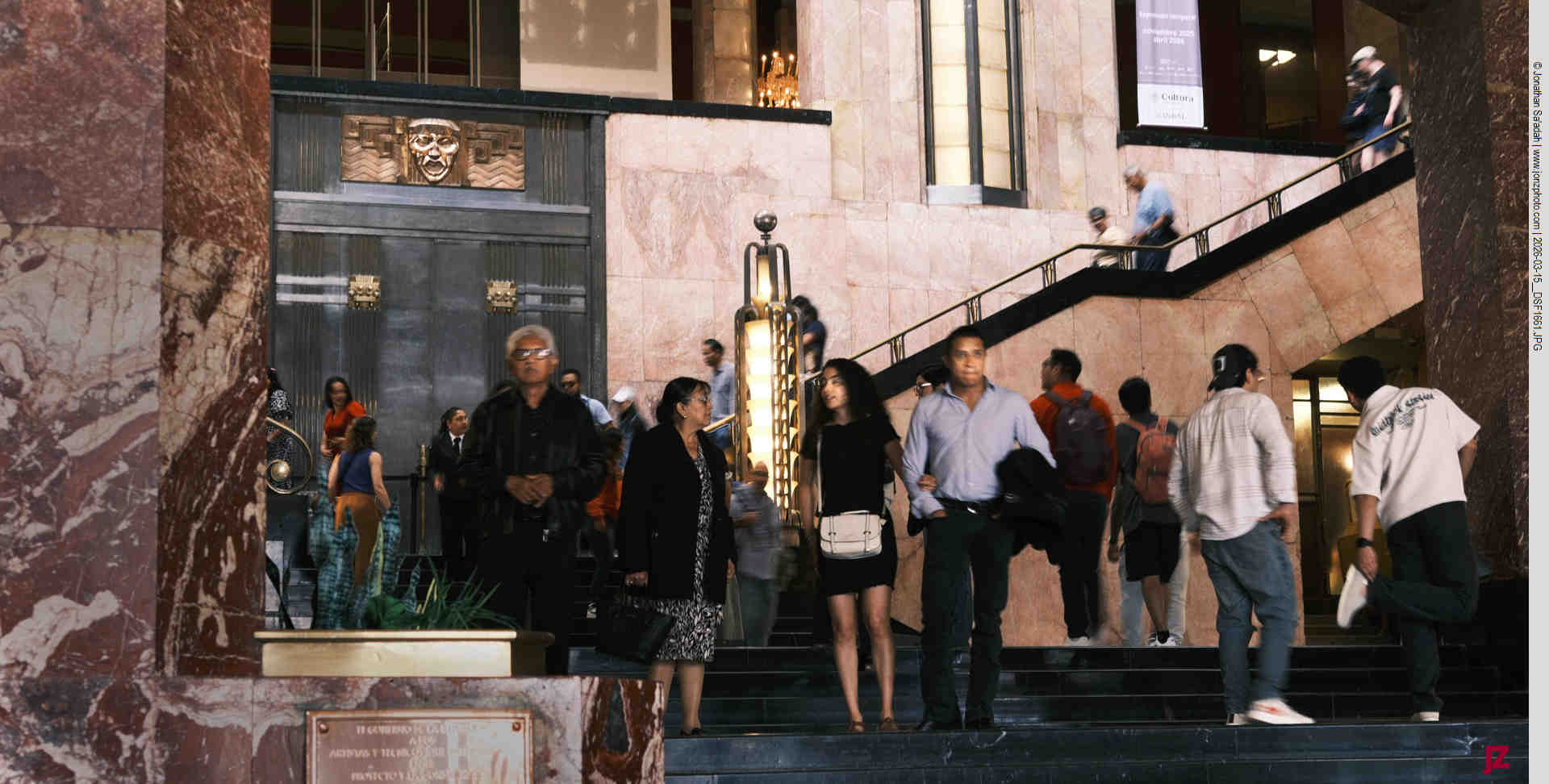
    An average of ten thousand people a day visit Bellas Artes, or about a half million people a year.

    The building has also remained a place for temporary exhibitions, which is one reason visits there can feel personal as well as historical. In 2015 we were lucky to see a remarkable show when the museum presented a Henri Cartier-Bresson exhibition called La mirada del siglo XX (“The View of the 20th Century”), bringing the French photographer back into a building that already had an earlier connection to him. Cartier-Bresson had in fact exhibited work at the Palacio de Bellas Artes as early as March 1935, alongside Manuel Álvarez Bravo, during his first important Mexican period. Bellas Artes is often thought of chiefly as a mural and performance space, but exhibitions like the 2015 Cartier-Bresson show demonstrate how the building also functions as a site where international modernism, photography, and Mexico’s own visual culture meet inside the same institution (LINK in French and Spanish to video about Cartier-Bresson show).
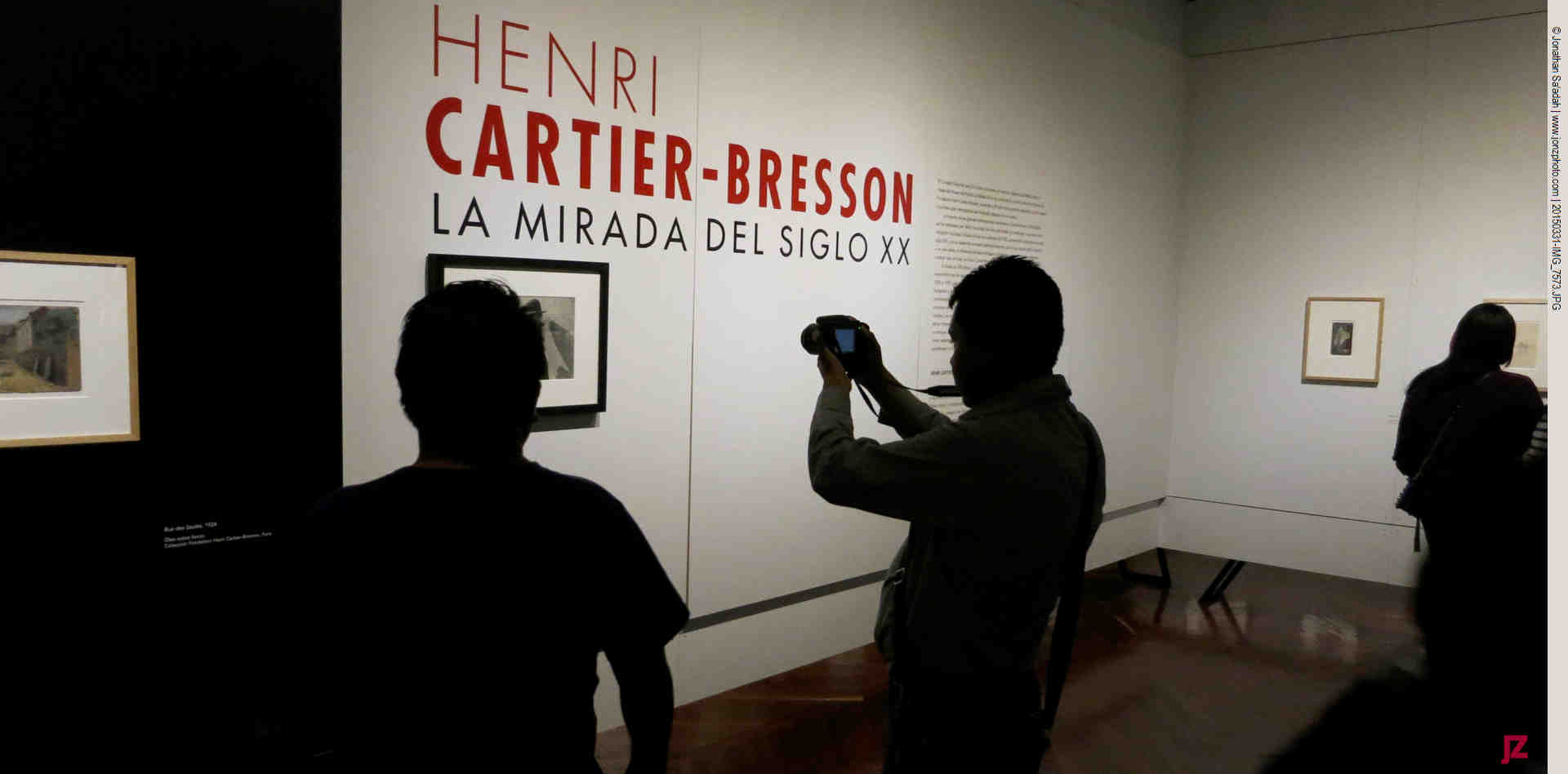
    Henri Cartier-Bresson is a photographer close to my heart, so the 2015 show of his work at Bellas Artes was especially meaningful to me. It honored him both as an artist and as someone previously personally connected to the city. He spent nine months in Mexico City in 1934-35, during which time he exhibited in Bellas Artes with Manuel Álvarez Bravo.

    The performance spaces remain central to its identity. Bellas Artes is home to major national companies and institutions, including the National Theater Company, the National Dance Company, the National Symphony Orchestra, the National Opera Company, the Ballet Folklórico de México, and the Fine Arts Chamber Orchestra. Its main hall seats about 1,700 people, and the building also contains recital spaces named for Adamo Boari and Manuel M. Ponce. In practical terms, that means the palace is not a frozen monument but a working cultural machine, used for opera, orchestral concerts, dance, theater, touring performances, state ceremonies, and the Ballet Folklórico presentations that many visitors first associate with it.

    Bellas Artes survives not because it is merely old or photogenic, but because it still performs the civic role that architecture of its scale always hopes to achieve. Audiences enter for a symphony or dance program; museum visitors come for murals, architecture, or exhibitions; students and tourists cross paths in the same stair halls and galleries. The building’s mixed life mirrors its mixed design.

    To me the palace’s architectural inconsistency is less a flaw than a record. Its Art Nouveau shell, Art Deco interior, revolutionary murals, and Tiffany curtain do not resolve into one tidy style because Mexico itself did not pass tidily from the Porfiriato into the twentieth century. Bellas Artes preserves that break in political identity in material form. It tells various stories: a ruler who wanted grandeur, a capital built on unstable ground, a revolution that interrupted Días’s dream, and a later nation that reused the same palace to tell a strikingly different narrative about itself. That is why the building still feels alive: not despite its contradictions, but because of them. It’s also what keeps us coming back to it.
  • Damascus Unveiled: Why These Photographs Will Change How You See Syria – and Ourselves

    This is the fourth and final post in a series introducing my new photo book “Return to Damascus: A Personal Journey.” The book’s text is mainly about Christian immigration through my family’s experiences, examining how that history resonates from two perspectives: mine as a descendant and my father’s as an immigrant. But to me the photographs show more than that, revealing an other story concerning issues in urban society. The book is available at this link and will ship in the first week of November.

    Exploring Syria through Photography

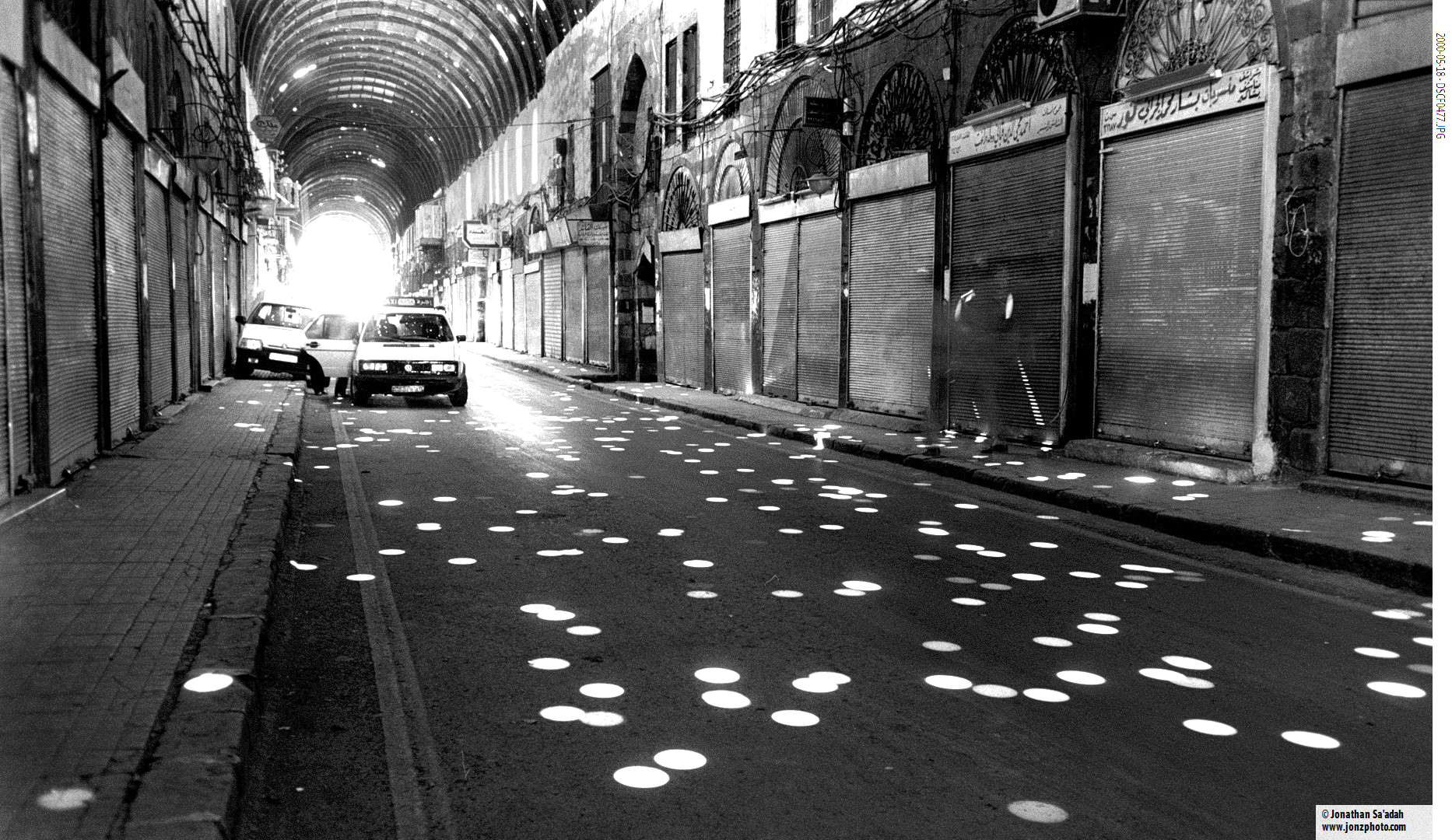
    There’s one photograph in this collection that stops people in their tracks. It captures the main hallway of the Al-Hamidiya Souq, Damascus’s legendary covered market, where late afternoon light filters through corrugated metal roofing installed decades ago to protect the ancient stone walkways below. The light creates cathedral-like beams that illuminate an empty souk, stalls closed and people gone for Friday prayers.

    This photograph tells a story Western media has never bothered to share. It shows a place deeply embedded in community life – a place that is as normal to Damascenes as it is foreign to us as we rush through florescent lit grocery aisles. The textures leap from the frame weathered by decades of Damascus use, Arabic calligraphy painted directly onto shop front signs by local artisans, stone curbs and sidewalks worn smooth by millions of footsteps.

    This is Syria in 2000 – not the Syria of headlines, but the Syria of heartbeats. We are seeing Syria in the last moments of an era and to me it holds lessons that most of us in the West are only beginning to think about. These 88 photographs capture a view that most Western media has never invited its audience to witness: a complex, ancient civilization that had figured out some of what we’re still searching for.

    What Damascus Looked Like Under Unbiased Observation

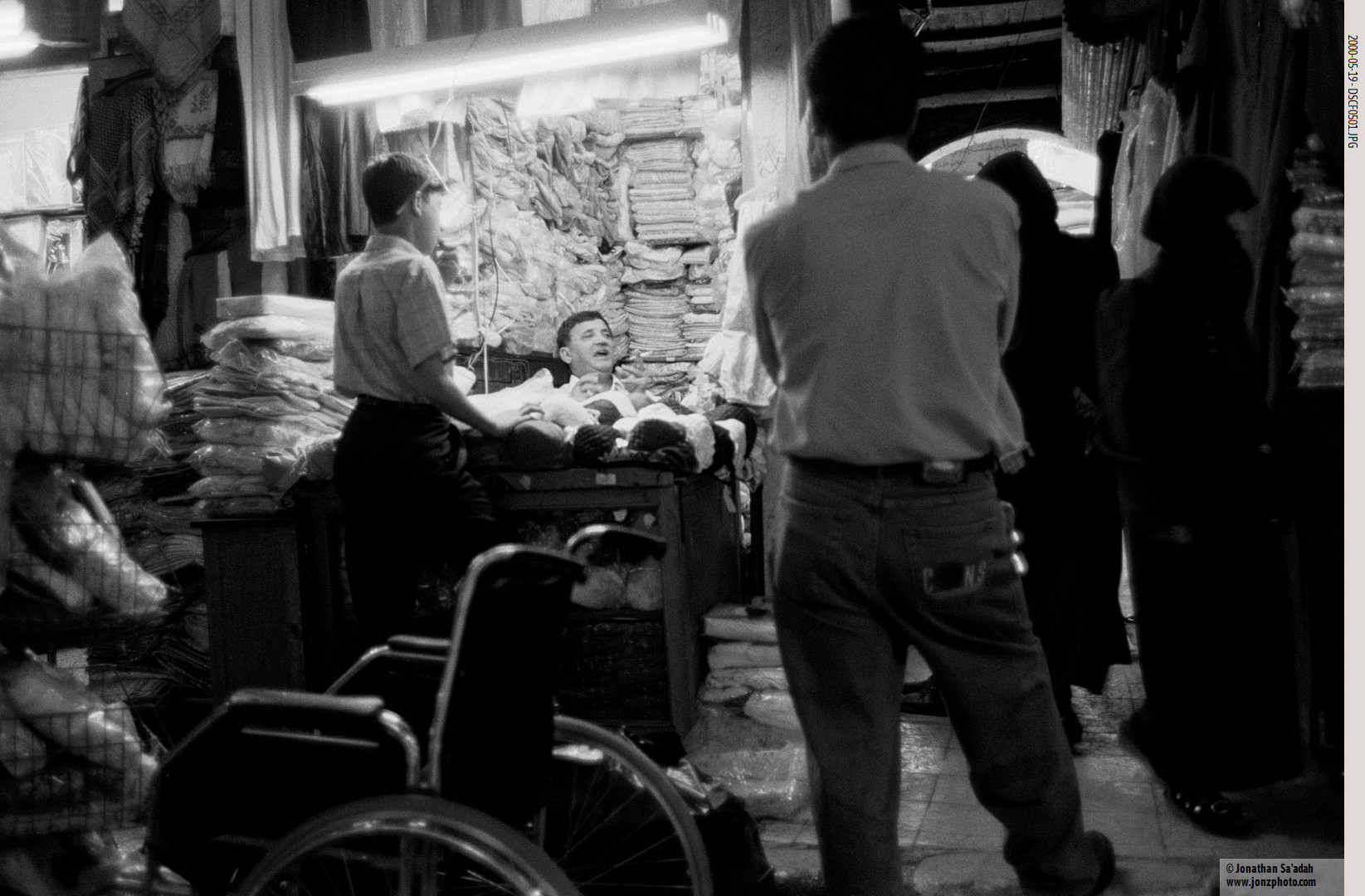
    Step into the photographs in this collection and you’ll find yourself questioning what you thought you knew about Syria. Look past the obvious lack of material wealth. Here are bustling markets where vendors remember their customers’ names and children’s ages. Local businesses passed down through generations, their hand-painted signs faded but proud. Young people playing soccer in narrow streets between buildings that have sheltered families for centuries. Ethnic and religious diversity woven into daily life.

    The architectural layers tell Damascus’s story in stone and mortar: Roman foundations supporting Ottoman courtyards where contemporary Damascenes conduct their daily business, drink tea, and solve neighborhood problems. These aren’t museum pieces and often it’s messy and decrepit – but yet they’re living, breathing spaces where community life unfolds with a sophistication that puts many Western urban planning efforts to shame. Street photography in Damascus reveals something we’ve largely lost in North America: spontaneous community interaction as the default mode of urban existence.

    Look closely at these images and you’ll see the sophisticated values of a four millennium city in action. Shopkeepers who close during prayer times not out of religious obligation, but because the community rhythm expects it. Neighbors who share meals across religious and economic lines. Children who play freely in streets because everyone knows everyone, and community safety emerges naturally from social connection rather than surveillance systems.

    While we’ve known the stories of a dictator-ruled nation, which were true, these images show a people who never stopped building, creating, and trying to find a better future, even under difficult conditions. The Syria captured in these photographs challenges us in what we think about the Middle East, revealing a society that preserved what we’ve spent decades trying to rebuild: authentic community life.

    Community Architecture: What We in the West Lost That Damascus Kept

    The most striking contrast in these photographs isn’t between wealth and poverty – it’s between connection and isolation. Damascus in 2000 maintained urban design principles that Western cities abandoned in pursuit of efficiency and individual privacy. Together the images tell a story of community architecture: spaces designed for human relationship.

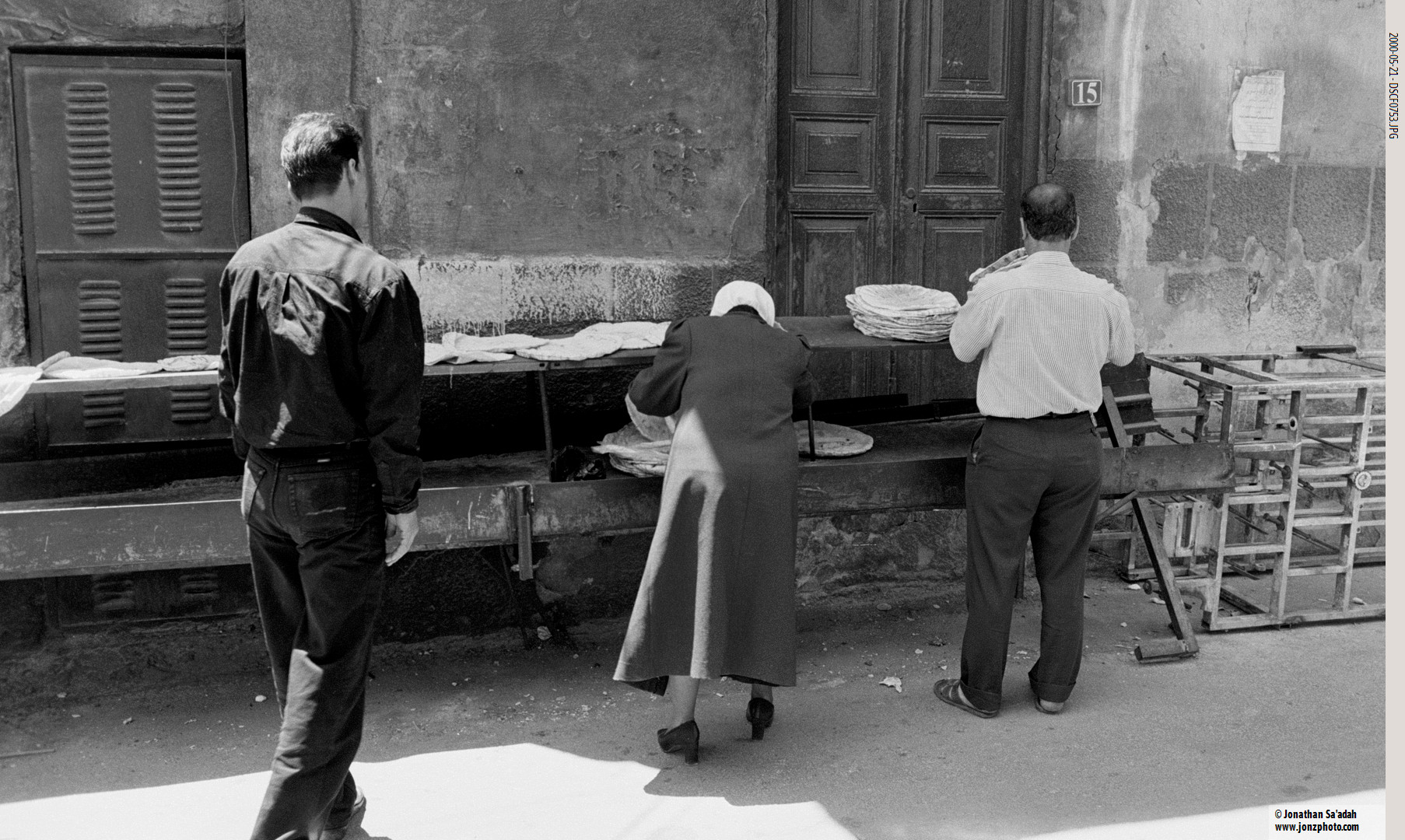
    Consider the Damascus public spaces, people gather for business and social reasons. Vendors, even bakeries, have little or no interior retail space, instead they face out towards the public space. The difference isn’t just aesthetic; it’s philosophical. Damascus is built to encourage social interaction; our spaces are built for independence.

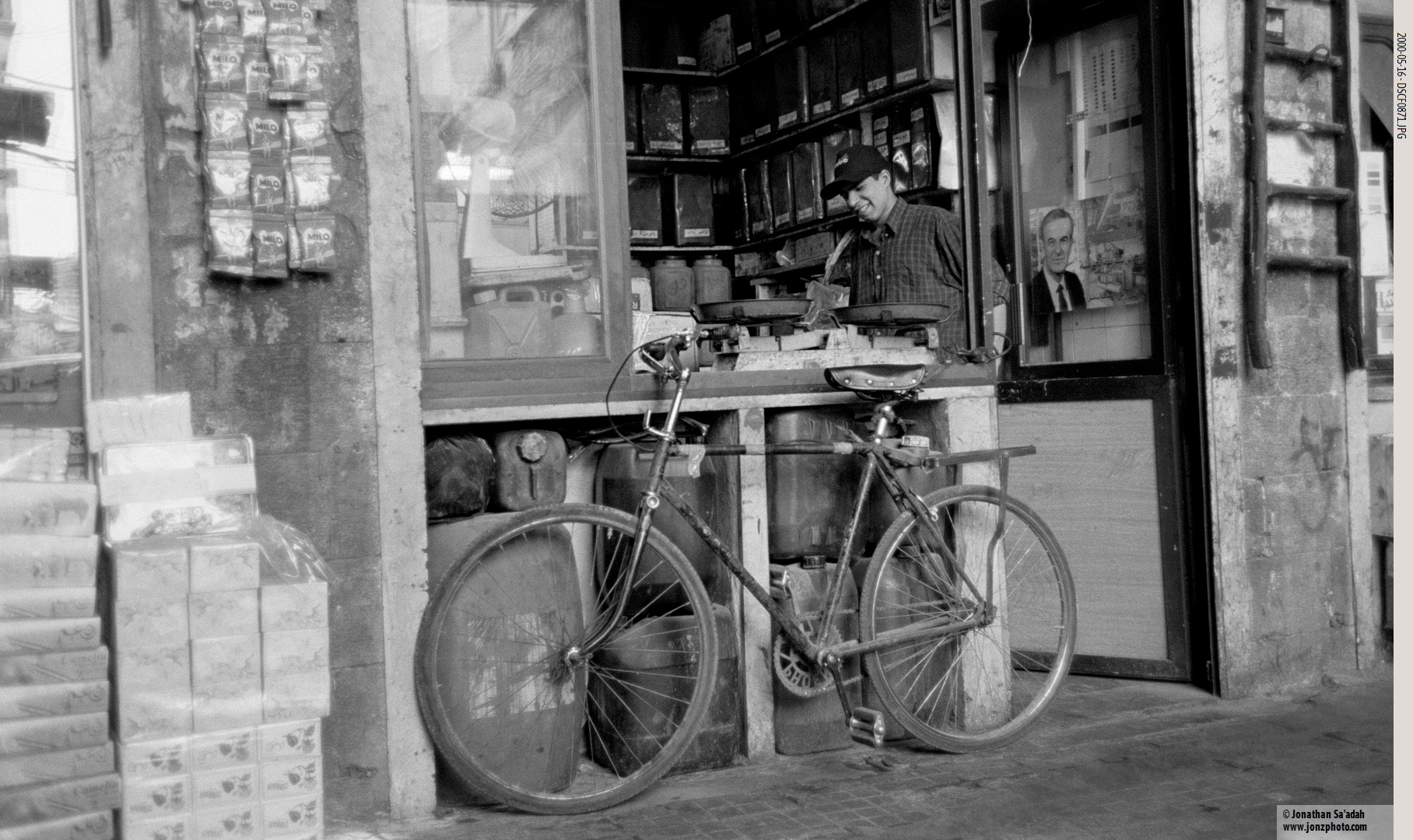
    Street life in these photographs reveals vendor relationships that span decades. The baker knows not just what each family prefers, but whose daughter is getting married, whose son needs work, whose grandmother prefers a certain cookie. These aren’t transactions – they’re social connections that happen to include commerce. Contrast this with our anonymous grocery chains where self-checkout machines are replacing even minimal human interaction.

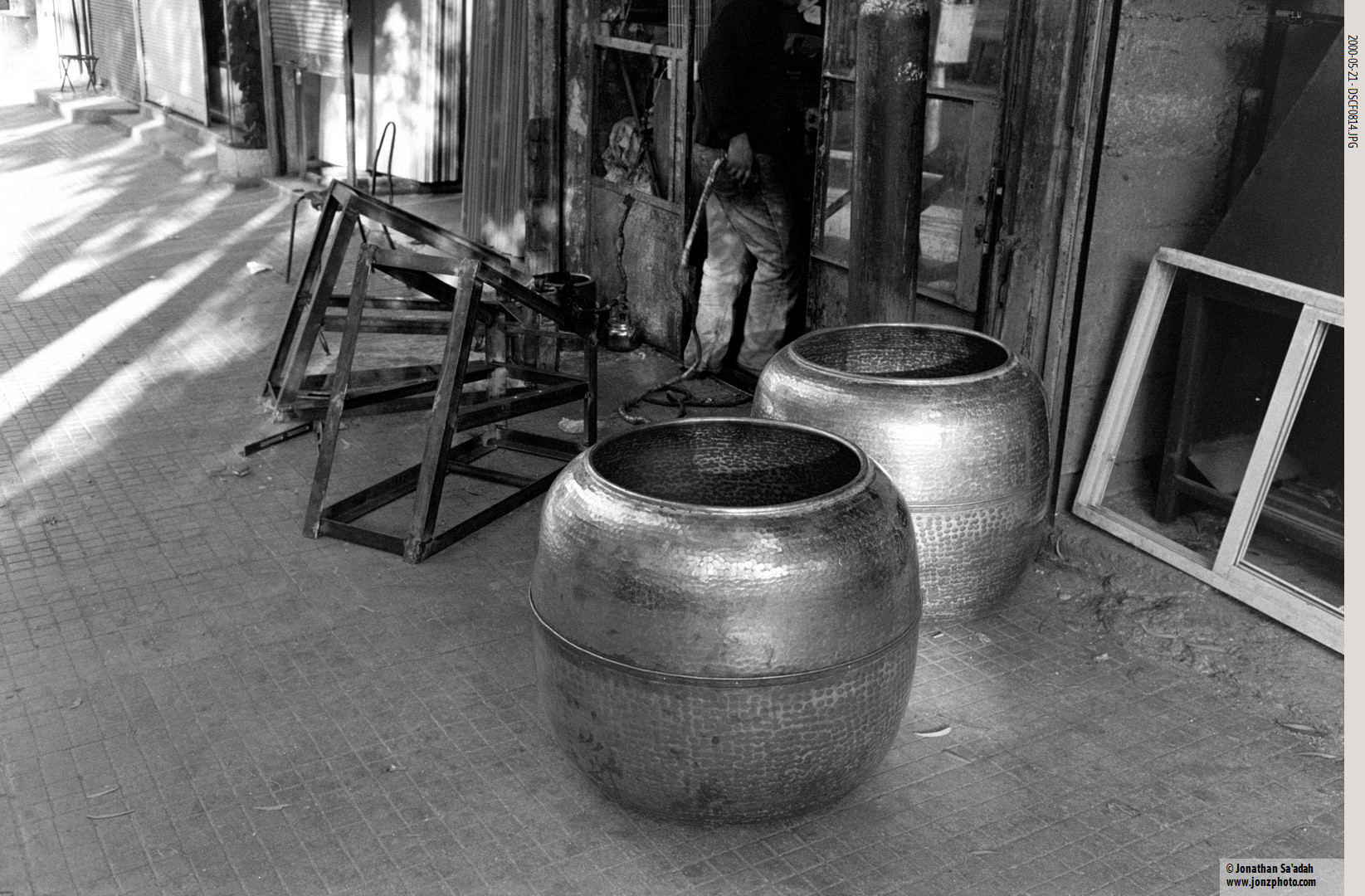
    The visual textures in these images tell stories of sustained craftsmanship: stones polished by generations of feet creating organic pathways through neighborhoods, hand-painted shop signs in Arabic calligraphy that announce not just businesses but family legacies, faces that show curiosity about strangers rather than the urban wariness we’ve normalized. In Damascus markets, haggling isn’t about getting the best price – it’s relationship-building, a dance of mutual respect that creates ongoing social bonds.

    Look at the light filtering through ancient souq ceilings, creating natural gathering spaces where people linger, children play, and business happens at human speed. These aren’t accident architectural features – they’re designed for community life. The intricate geometric patterns in everyday objects, from mosque balconies to door hardware, represent a design philosophy that values beauty in daily life over mass-produced efficiency. Most of the people are poor and struggling, but there is still awareness of community and looking beyond simple economic survival.

    The University of Damascus Streets

    The photographs in this collection underline community resilience in the face of adversity. These images capture neighborhoods that maintained social cohesion through economic challenges, political pressures, and cultural changes – lessons particularly relevant as Western communities struggle with atomization, mental health crises, and civic disengagement.

    Community Resilience While Western communities fracture under much lesser stresses – think of how rarely we know our neighbors’ names – Damascus neighborhoods in 2000 demonstrated social structures that automatically activated during difficulties. Extended families, religious communities, and neighborhood networks created overlapping safety nets that no government program could replicate.

    Cultural Preservation emerges in photographs of traditional crafts continuing alongside modern life. The optician whose family has served the neighborhood for generations, using techniques perfected over decades while adapting to modern lens technology. Traditional techniques surviving modernization not through museum preservation, but through continued relevance to community life.

    Western cities losing their cultural identities to globalization could learn from Damascus’s integration of old and new knowledge.

    Sustainable Living appears throughout these images: repair culture over disposal culture, walking cities over car dependence, local production over global supply chains. Damascus in 2000 was necessarily resource-conscious, but the visual evidence shows this creating stronger communities, not deprivation. Cobbler shops, tailors, mechanics – all embedded in neighborhood life, all contributing to local economic circulation.

    Damascus is an example of cultural evolution without cultural abandonment.

    Your Invitation to See Differently

    These 88 photographs aren’t asking you to visit Damascus – they’re asking you to question what you think you know about resilience, community, and cultural continuity. They’re asking you to see our own Western cities with fresh eyes: What did we lose in our pursuit of efficiency? What did we abandon in our quest for individual freedom? What can Damascus teach us about building communities that survive?

    This collection challenges comfortable assumptions about progress and development. Damascus in 2000 wasn’t primitive or backward – it was sophisticated in ways we’re only beginning to understand. While we’ve been perfecting individual liberty, they were perfecting community sustainability. While we’ve been optimizing economic efficiency, they were optimizing social connection.

    The lessons here aren’t nostalgic – they’re practical. Urban planners struggling with social isolation, community organizers trying to build civic engagement, anyone wondering why Western cities feel increasingly lonely despite unprecedented connectivity will find answers in these images. Damascus demonstrates that community life isn’t about returning to the past; it’s about integrating human-scale values with contemporary possibilities.

    This book should appeal to anyone interested in urban planning and community design that prioritizes human flourishing over economic optimization. For cultural preservation and revival strategies that keep traditions alive through relevance, not museums. For understanding the Middle East beyond headlines and finding hope and practical wisdom for Western urban challenges.

    This is Syria in 2000 – not the Syria you see typically portrayed, but the Syria that has lessons for us all.

  • The Irresistible Pull of Gritty Cities

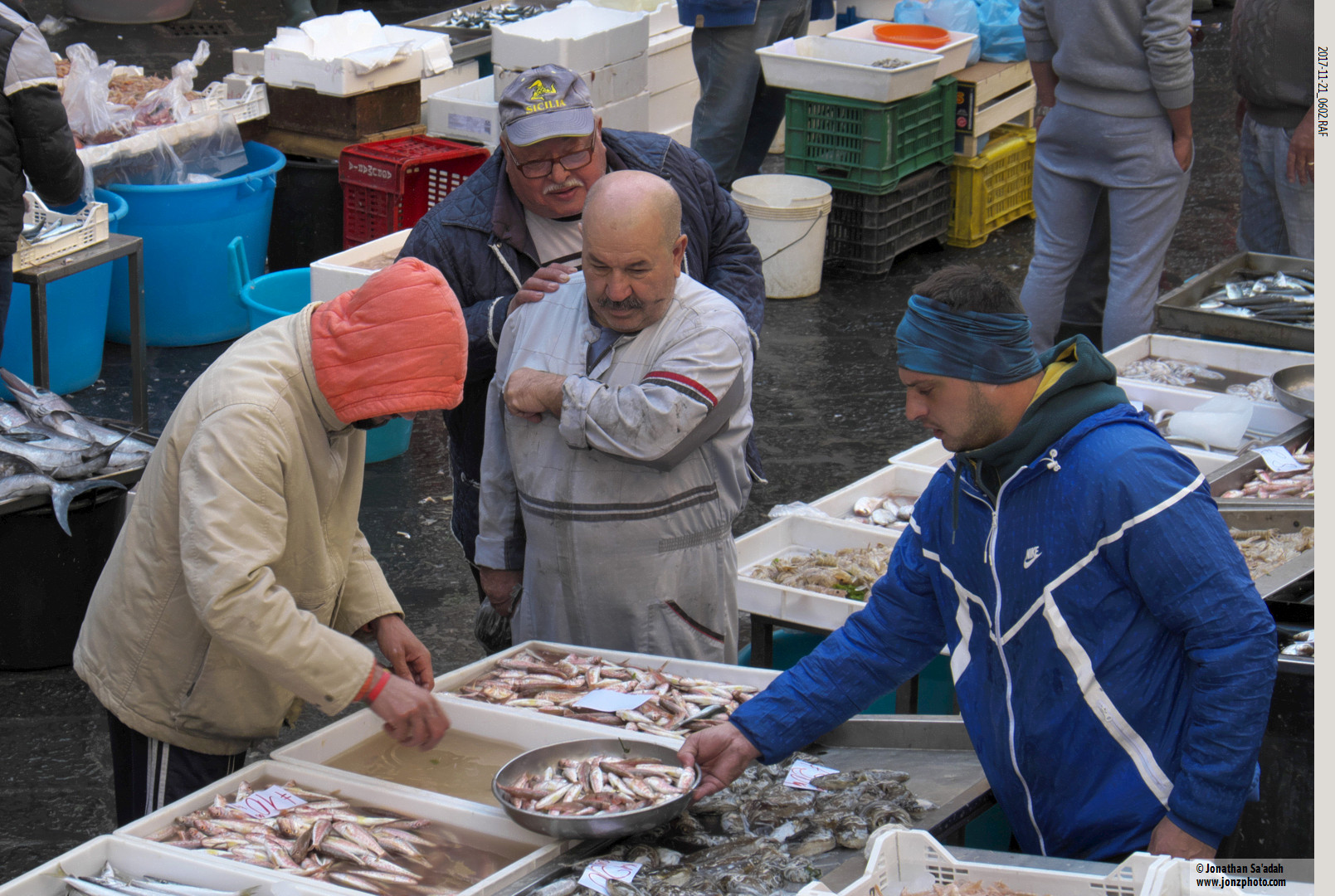
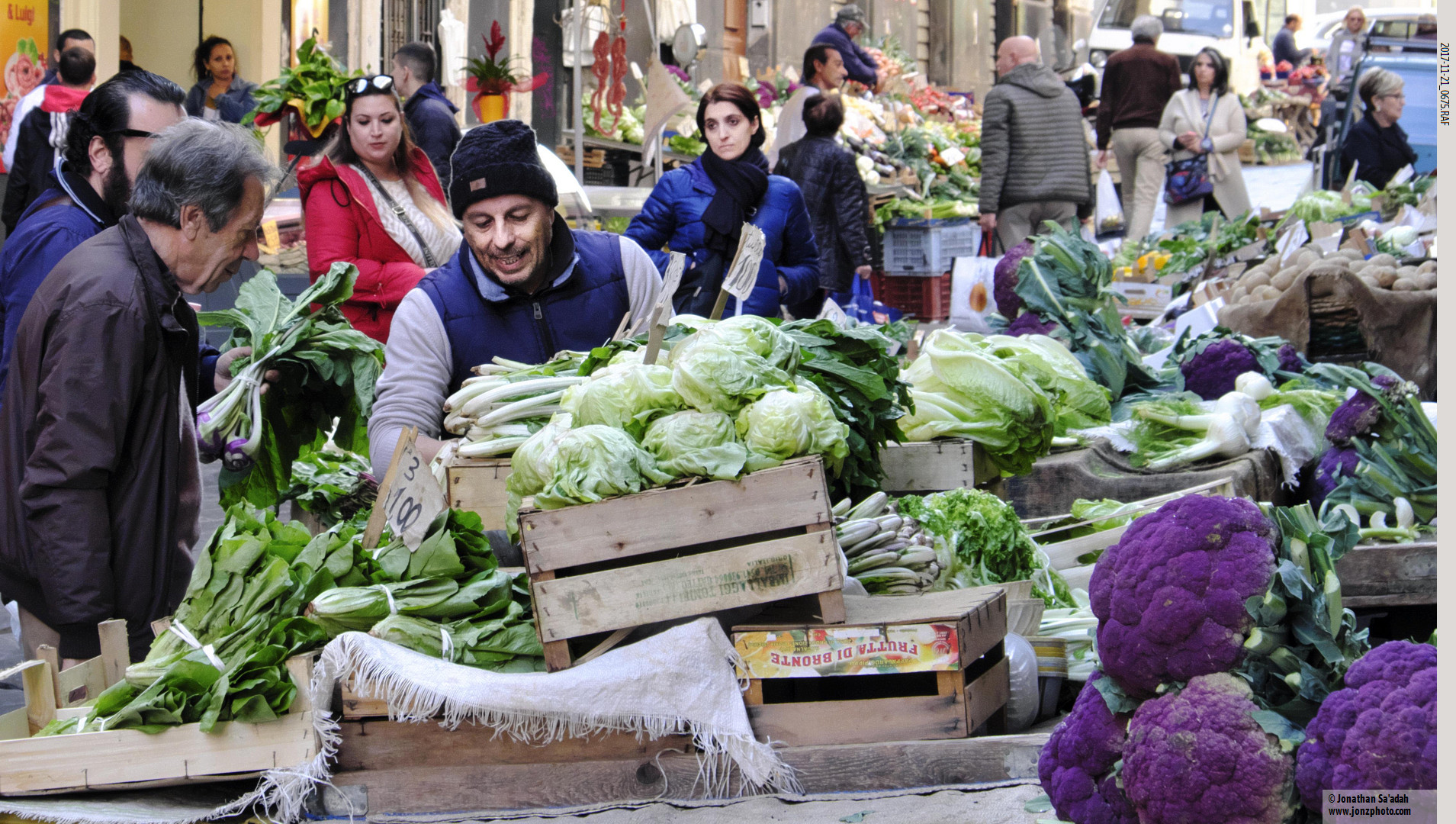
    Catania Fish Market The star of this market is the swordfish, but even the sardines are unusual. It’s true that plastic crates and digital scales abound, but still there’s a feeling of the market being enmeshed in long-running traditions, which gets reflected in the city’s approach to urban planning as well.

    The Irresistible Pull of Gritty Cities: Understanding Why We Love What We’re Missing
    Part II

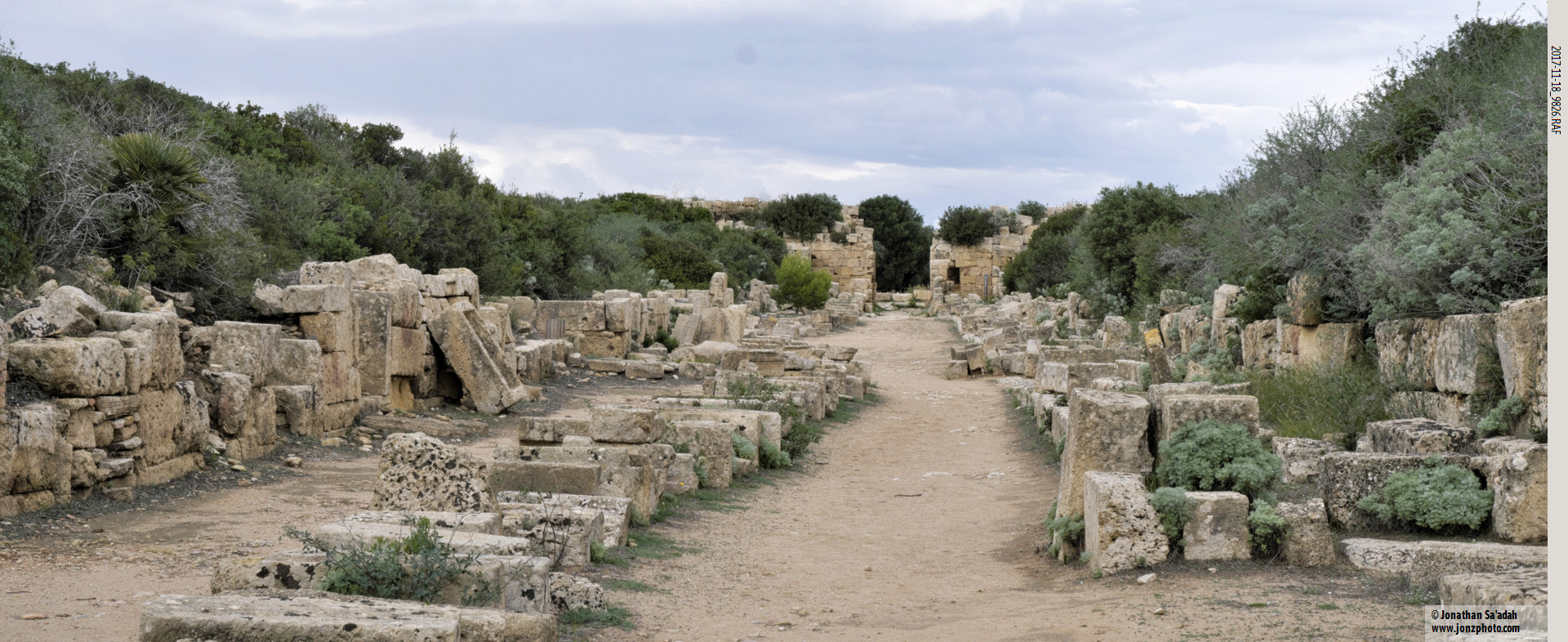
    No problem with gentrification here This street was founded by Greek colonists in Agrigento, on the southern coast of Sicily, probably around 580 BCE. I would surmise that the Greeks used slaves to haul the blocks used in the construction.

    This mixing isn’t just socially beneficial – to me it’s economically essential for urban vitality. It’s what helps create a local economy with non-chain, locally owned businesses. Diverse housing types create diverse local economies, supporting the small-scale entrepreneurship that makes a neighbourhood interesting and economically resilient.

    The housing diversity in these cities also reflects their adaptability over time. Buildings that were constructed as grand single-family homes can be subdivided into apartments when economic conditions deteriorate, or combined back into larger units when gentrification pressures increase. We’re often critical of this, but it ‘s a flexibility built into the architectural DNA of older cities that allows them to respond to changing demographics and economic conditions without wholesale demolition and reconstruction.

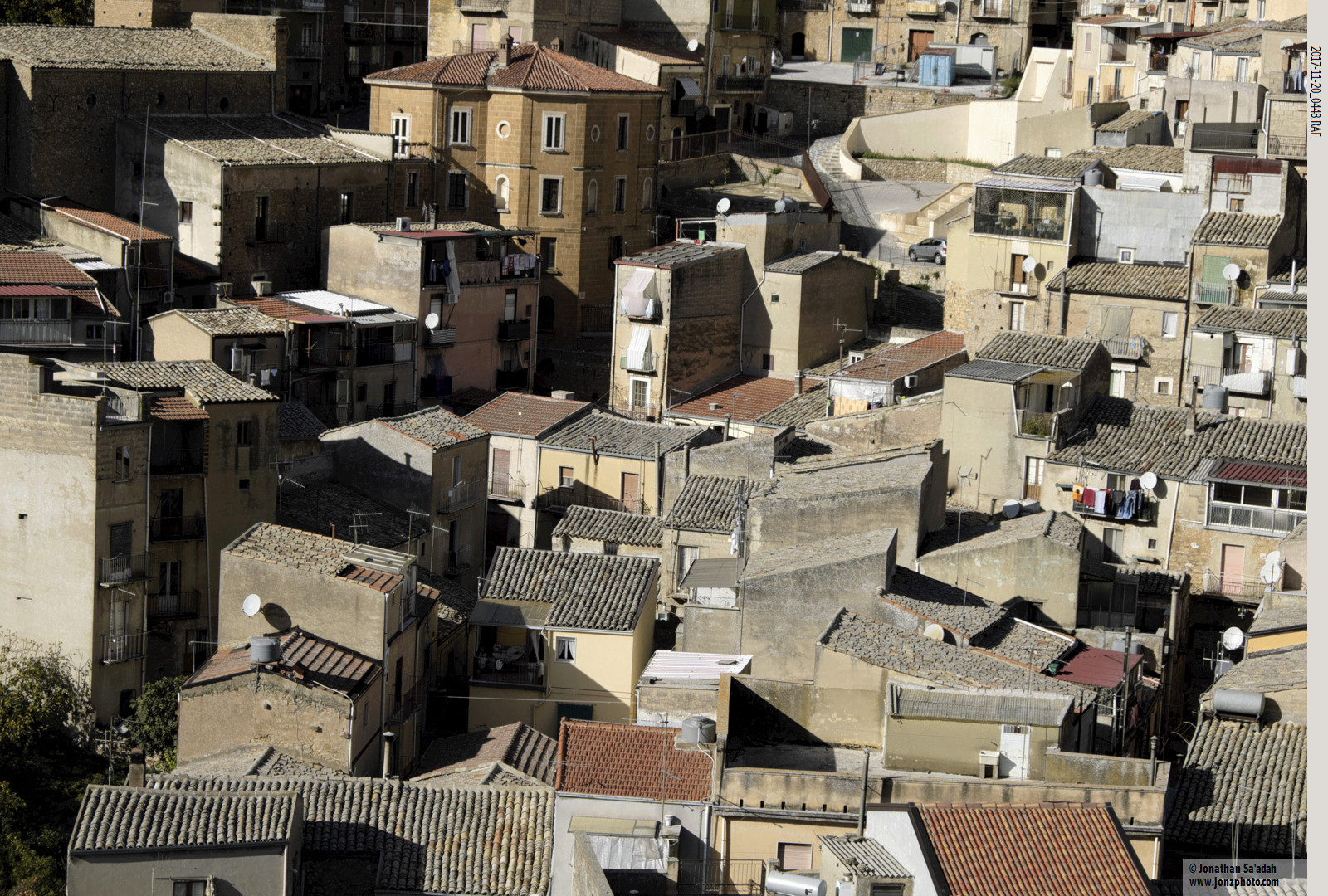
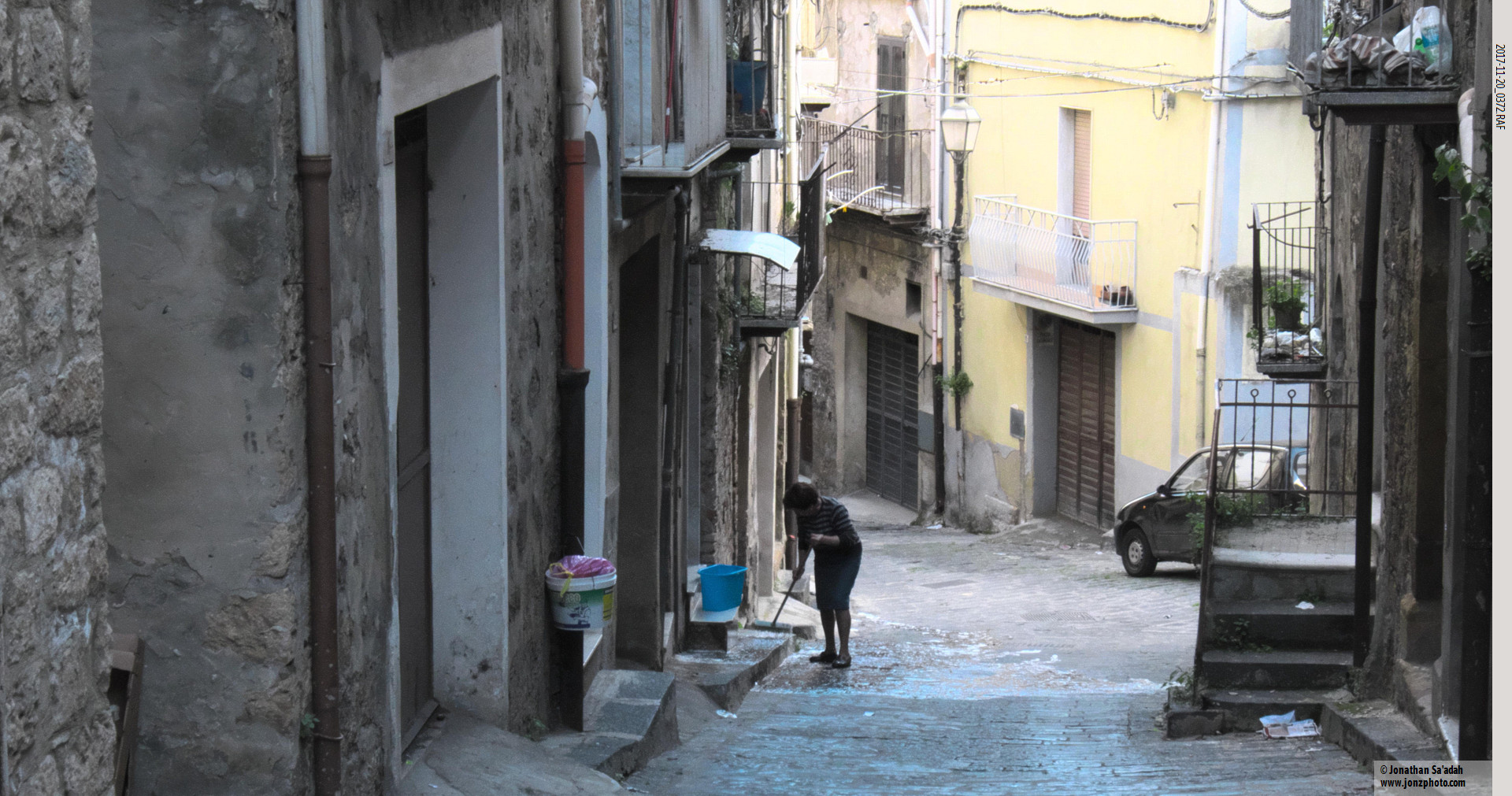
    Even in ancient neighbourhoods like this one in the Sicilian hill town of Piazza Armerina you can differentiate the renovated houses by window style and roofing.

    The Art of Adaptation and Resilience

    Perhaps the most remarkable quality of these beloved gritty cities is their capacity to adapt and evolve while maintaining their essential character. They’ve survived empires, wars, economic collapses, and social upheavals not by standing still, but by continuously adapting their built environment to new needs while preserving the underlying urban logic that makes them work.

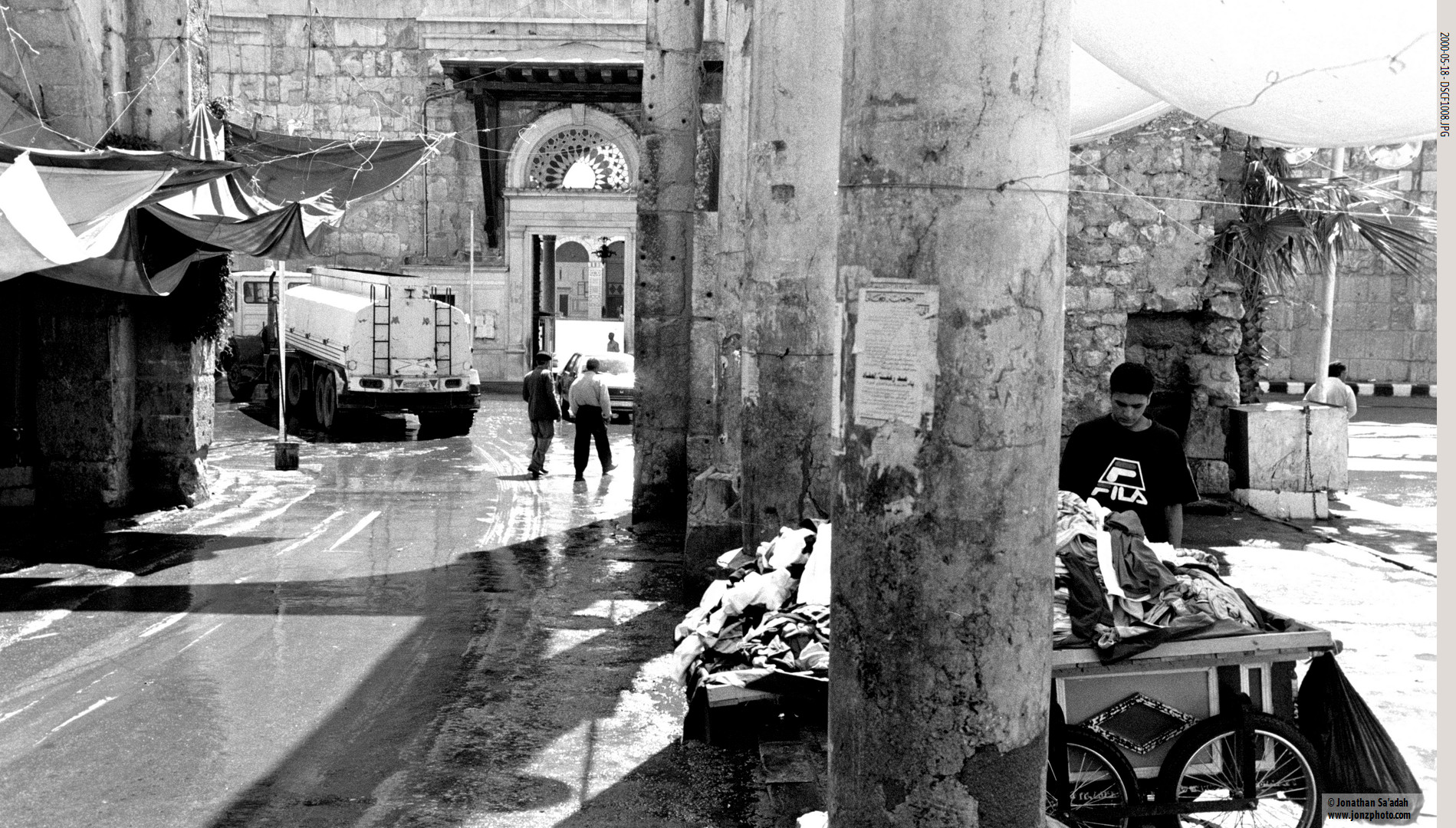
    Damascus offers perhaps the most dramatic example of this adaptability. The old city has continuously evolved over millennia, with Roman columns supporting Islamic arches, Byzantine churches converted to mosques, Ottoman palaces repurposed as museums, and traditional courtyard houses transformed into restaurants and cultural centres. Each layer of history adds to rather than erases the previous ones, creating the rich texture that makes the city so compelling.

    ▲ Damascus is probably the best example of a living city, with Roman, Ottoman, and “contemporary” structures all sharing space in this photo.

    The Integration That Creates Magic

    What makes these cities truly special isn’t any single characteristic but how all these elements work together to create something greater than the sum of their parts. The human scale enables walkability, which supports diverse public spaces, which creates markets for diverse housing types, which generates the economic activity that supports adaptation and renewal. It’s a virtuous cycle that has been refined over centuries of urban living.

    What We’re Missing at Home

    Standing in my ordered, well-regulated neighbourhood in Montreal, I often think about what we’ve traded away in our pursuit of efficient, predictable urban environments. Our streets are wider and cleaner, our building codes more rigorous, our public spaces more carefully maintained. These aren’t bad things – they reflect genuine improvements in public health, safety, and accessibility.

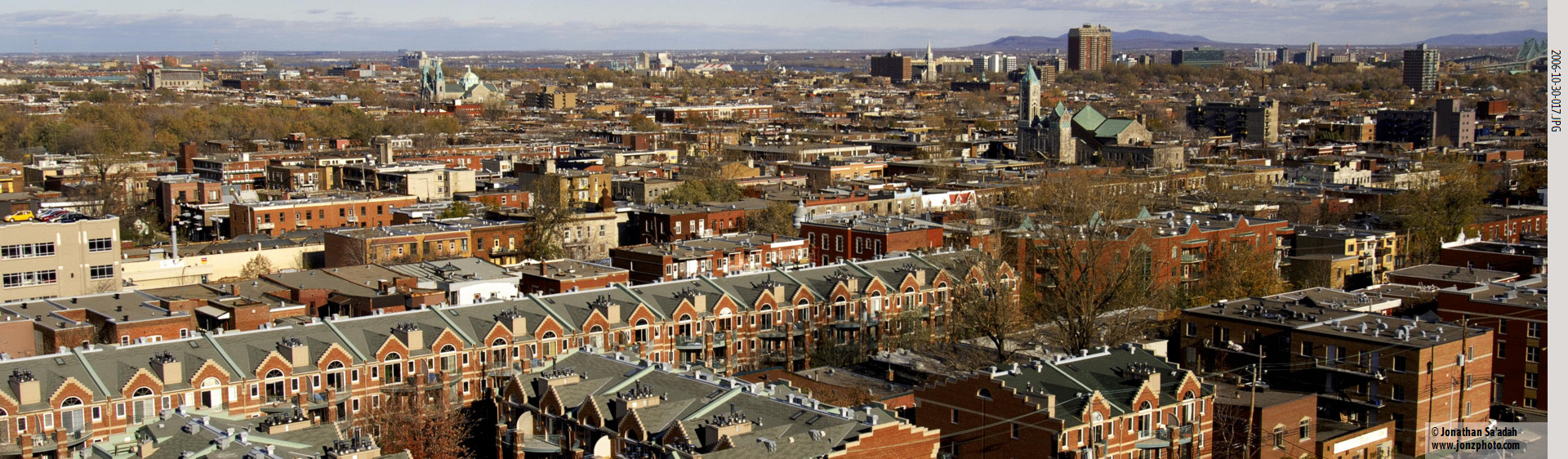
    ▲ The Montreal Plateau is relatively flat as its name implies, with spikes of church spires and an occasional out-of-place apartment tower. The visually boring cookie-cutter buildings in the foreground enforce a visual style, but their predictability saps vitality.

    But in our effort to eliminate the inefficiencies and unpredictabilities of older urban forms, we may have eliminated some of their essential vitality as well. Our zoning codes separate uses that these older cities mix naturally. Our building standards favor large-scale development over the small-scale, incremental growth that creates diverse, affordable neighbourhoods. Our traffic engineering prioritizes movement over lingering, getting through rather than being in.

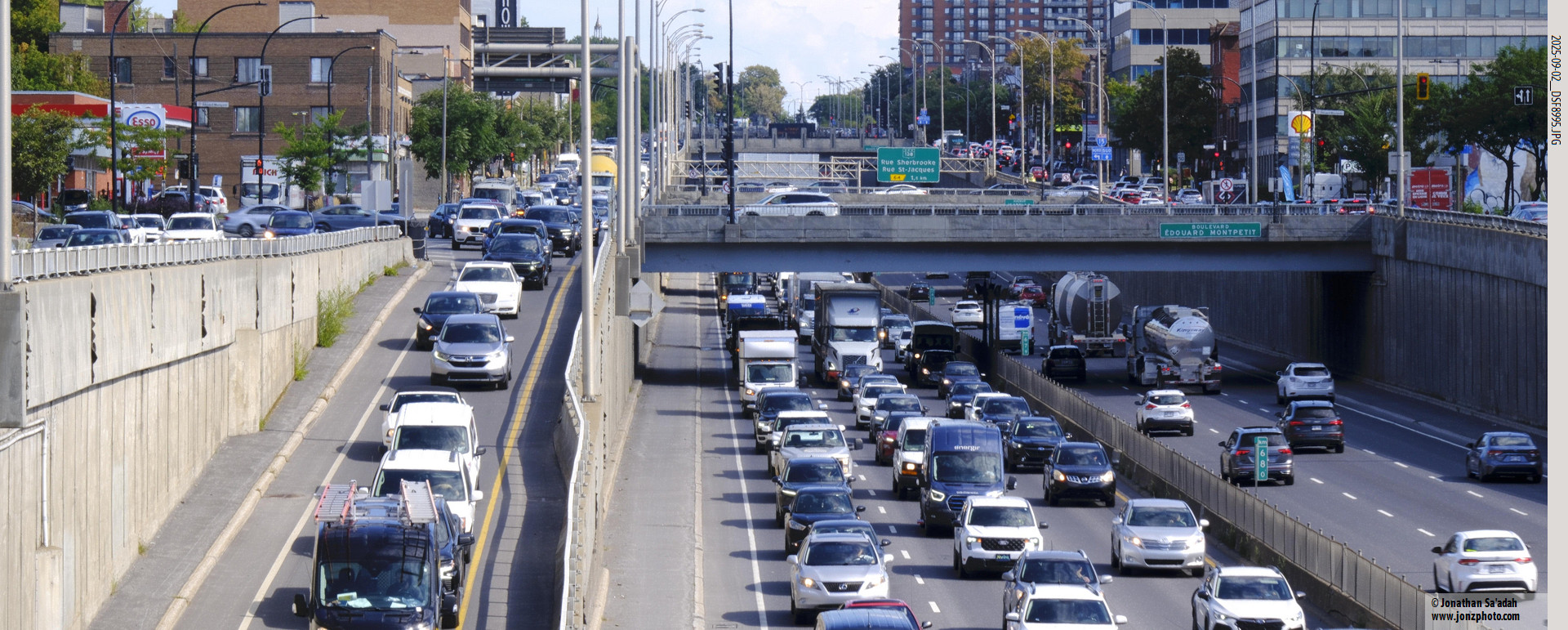
    Exceding all predictions The Décarie autoroute as it was designed in the early 1960’s was supposed to max out at 90,000 cars per day. It now handles an average of almost double that.

    The question isn’t whether we should abandon our standards and return to some romanticized past, but whether we can learn from what these older cities do well while maintaining the genuine improvements of contemporary urban planning. Montreal offers some lessons in this direction. The city’s pedestrianization of portions of Ste-Catherine Street shows how even established cities can evolve toward more human-centred design.

    Living in the Tension

    Perhaps what I’m really drawn to in these places isn’t their grittiness per se, but their willingness to live in productive tension between competing values. They’re not trying to optimize for a single goal but rather to balance multiple, sometimes contradictory objectives: old and new, local and global, efficient and experiential, ordered and spontaneous.

    The cities I love aren’t perfect, and I certainly wouldn’t want to eliminate building codes or return to pre-modern public health standards. But they offer something that our more regulated urban environments often lack: they feel like places where humans have lived, adapted, and created something together over time. They feel like home not because they’re comfortable or convenient, but because they’re complex and alive.

    The narrow streets of Damascus, the piazzas of Palermo, the pedestrian rhythms of Thessaloniki – these aren’t just tourist attractions or nostalgic throwbacks. They’re working examples of urban principles that we ignore at our peril. As cities around the world grapple with climate change, housing affordability, and social isolation, these older urban forms offer tested strategies for creating places that are not just efficient but truly livable. The question is whether we’re wise enough to learn from them.

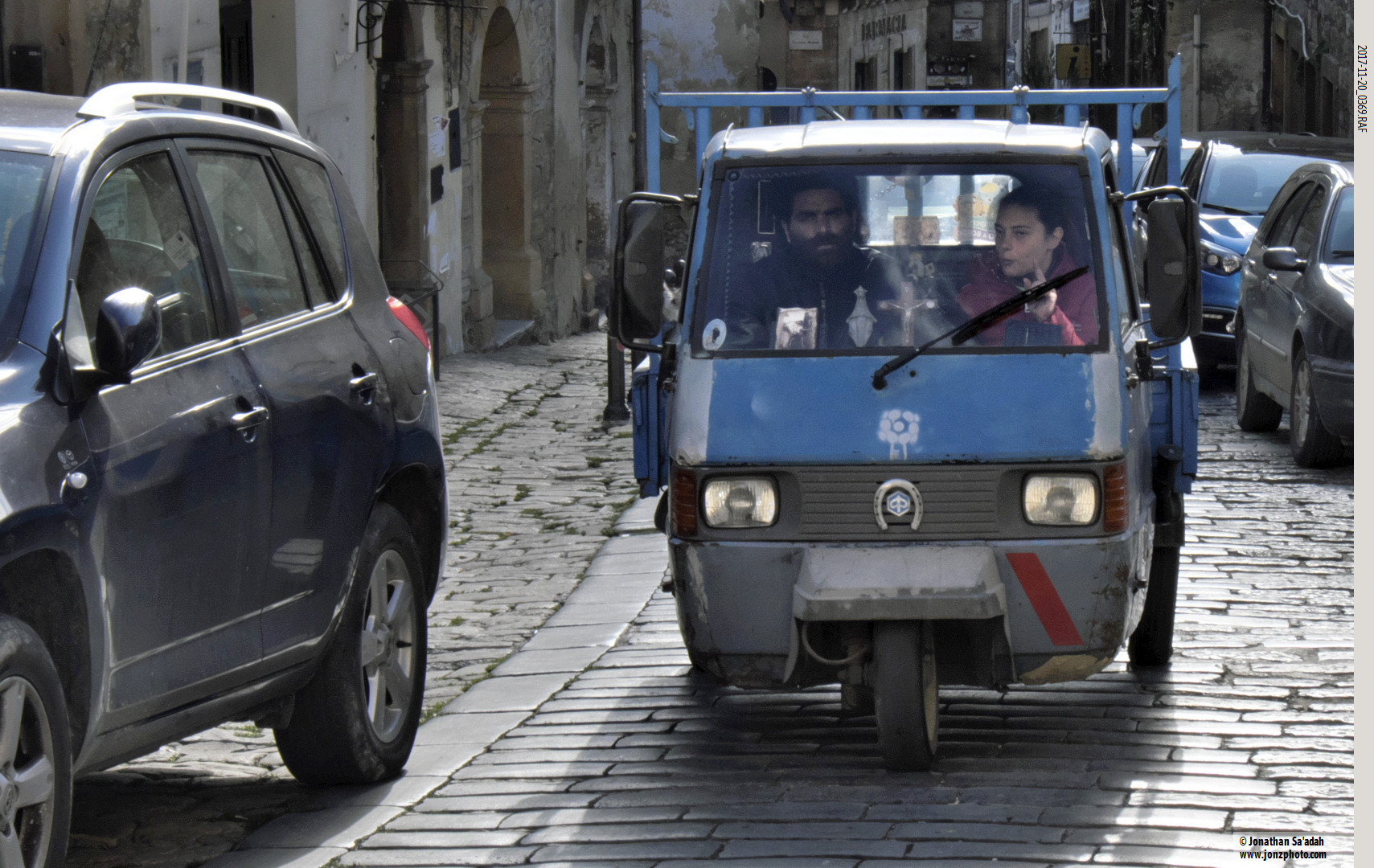
    ▲ A couple in a Piaggio Ape, a vehicle nimble enough to navigate easily through town, and displaying the icons of their traditions. Piazza Armerina, Sicily.

    The Damascus photograph in this post is taken from a book I’m just finishing (Return to Damascus: A Personal Journey) on the experience I had in returning to where my father had been born.

  • The Irresistible Pull of Gritty Cities | Part 1 of 2

    Catania Open Market I envy the Sicilians and their abundant produce, even at the end of November. Their markets are noisy and colorful. The produce feels close to the farm, which it is.

    The Irresistible Pull of Gritty Cities: Understanding Why We Love What We’re Missing

    I’ve always found myself drawn to certain cities with an almost magnetic pull – places that feel lived-in, weathered, and wonderfully imperfect. From the narrow stone alleys of Damascus to the chaotic vitality of Mexico City, from Palermo’s winding streets to the crumbling decadence of Thessaloniki, these are cities that seem to embrace their contradictions. They’re places where modernity coexists awkwardly but beautifully with centuries of accumulated history, where every street corner tells multiple stories, and where the urban fabric feels genuinely human in scale.

    Thessaloniki Old City We drove our car through these streets and it was definitely a social experience, since traffic was both directions and each encounter was a negotiation. The stairs on the right definitely would not satisfy Montreal’s setback regulations.

    As someone who calls Montreal home – a city that sits comfortably between order and character – I often wonder what it is about these grittier places that captivates me so deeply. Is it simply the allure of the tourist’s gaze, romanticizing what locals might find frustrating? Or is there something more fundamental about how these cities are designed and how they’ve evolved that creates genuinely superior urban experiences?

    I believe it’s the latter. These cities embody qualities that many of our more regulated, sanitized urban environments have systematically designed out – and in doing so, we’ve lost something essential about what makes a city truly livable.

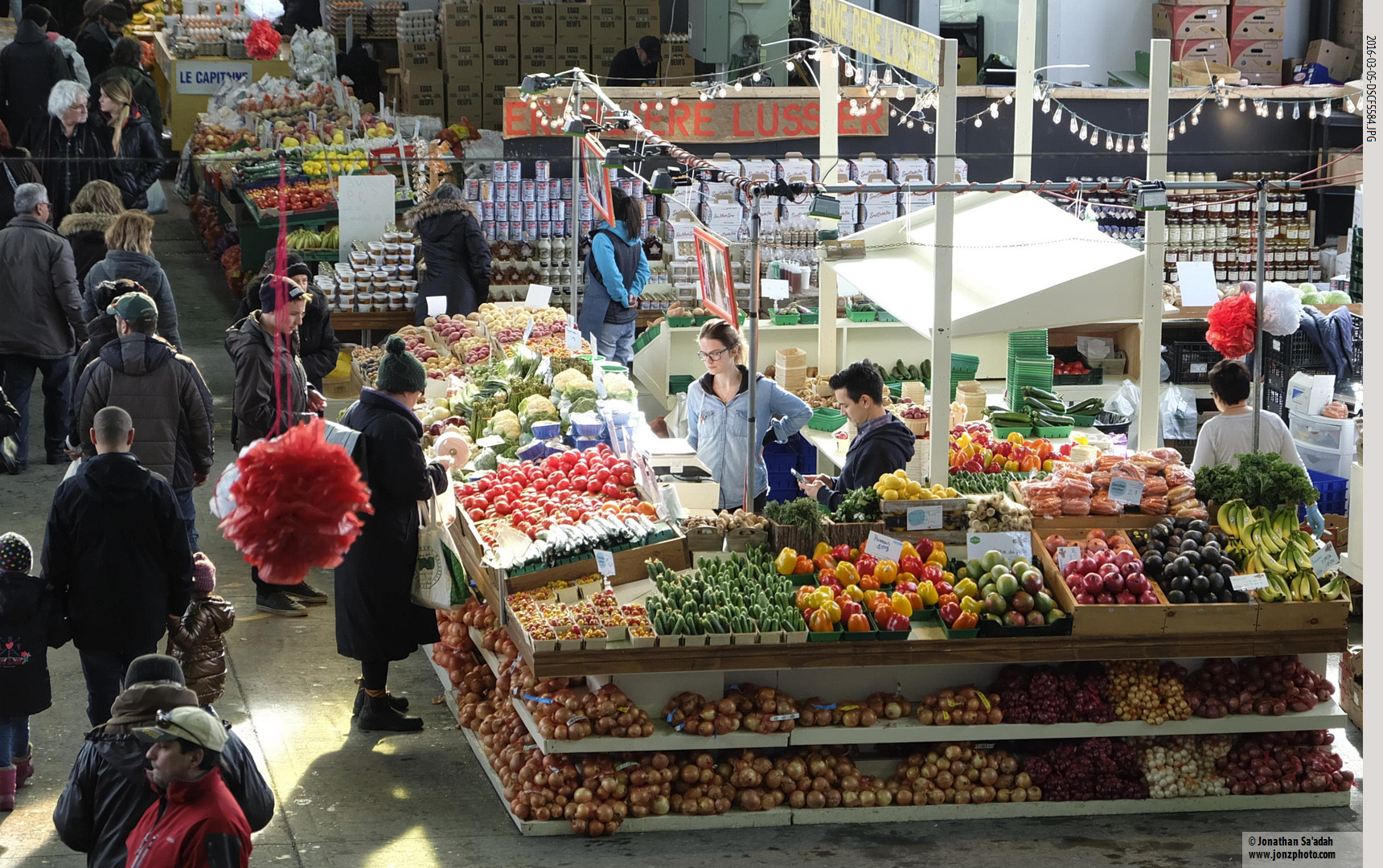
    Jean-Talon Market Montreal Our winter markets are abundant but everything is quite orderly, and (sadly!) imported from afar, especially when compared to Catania.

    The Human Scale That We’ve Forgotten

    Walk through the old quarters of Damascus or wander the residential streets of Palermo, and you’re immediately struck by how perfectly sized everything feels for human beings. Buildings rise to four or five stories – tall enough to create urban passageways but low enough that you can still make eye contact with someone leaning out a third-floor window. Streets are narrow enough that neighbours can converse across them but wide enough for the essential choreography of urban life: children playing, vendors selling, neighbours meeting, deliveries being made, life happening.

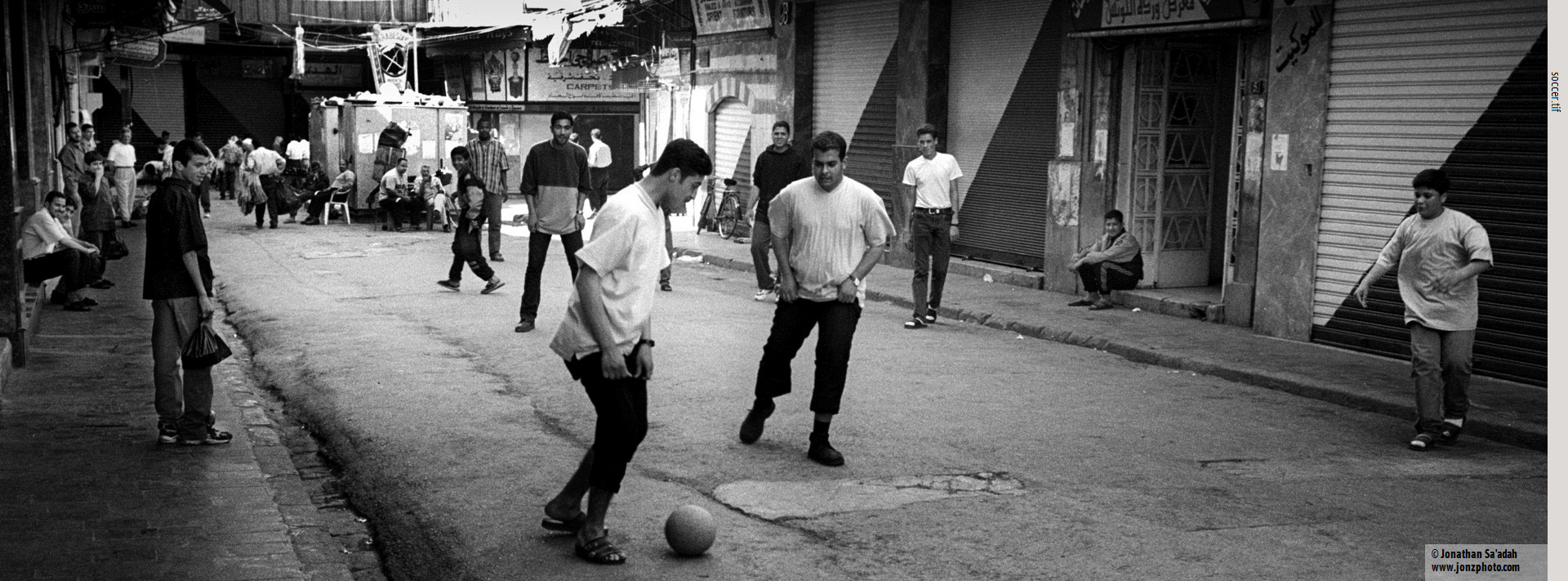
    Damascus Street Football Other than there not being any women in this photograph, a lot is happening on the street. This was in the Old City.

    This isn’t accidental. It’s the result of centuries of organic development where buildings were constructed at the pace and scale that individual families and small communities could manage. In Thessaloniki, the traditional urban fabric prioritizes pedestrian comfort over vehicular efficiency. The narrow streets that might frustrate a traffic planner become perfect corridors for social interaction, where the pace naturally slows and encounters become inevitable.

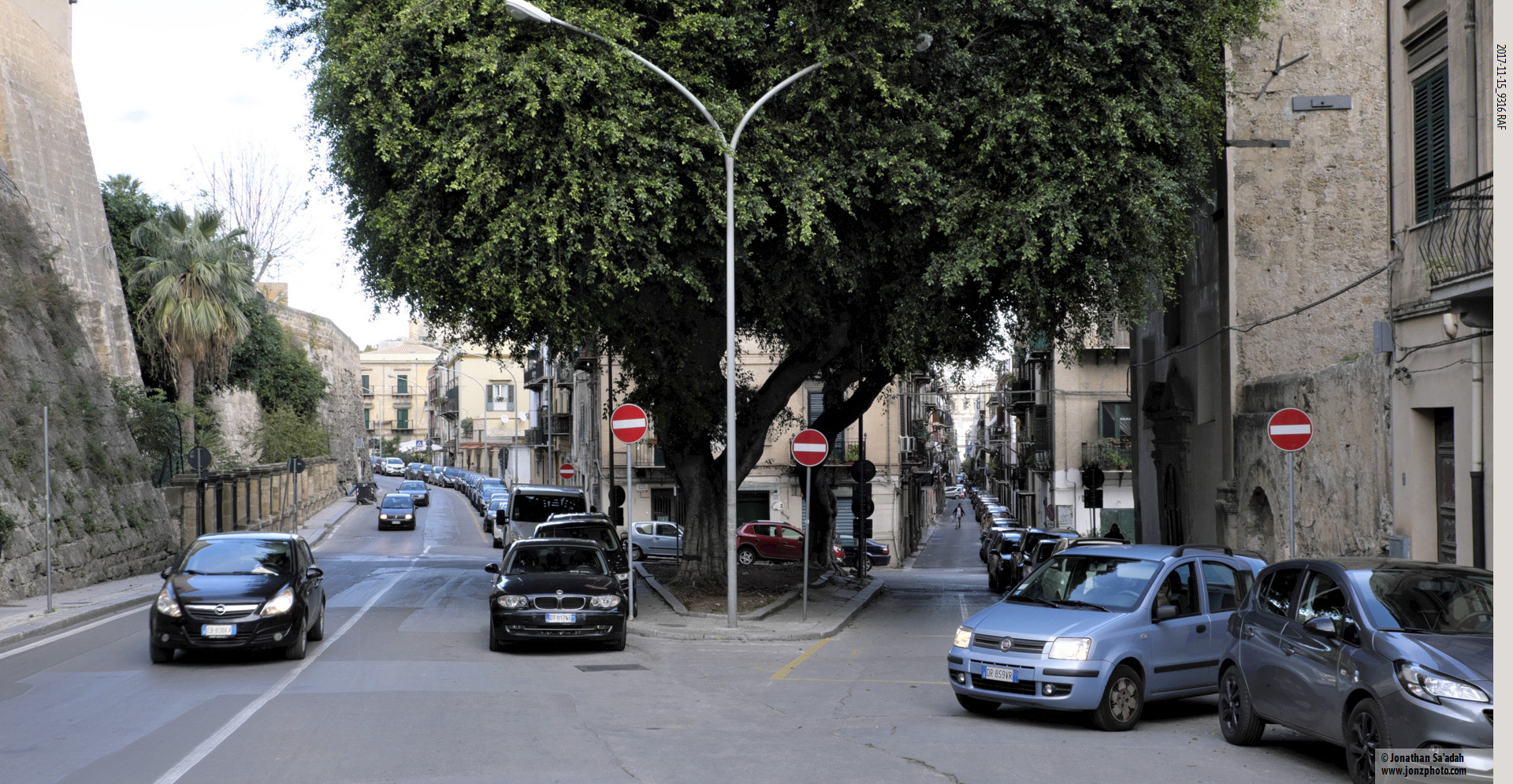
    Palermo’s streets pick up on the city’s ancient layout, with automobiles present but taking a backseat.

    Contrast this with our modern approach to urban development, where efficiency and standardization trump human experience. Even in Montreal, our newer developments tend towards what we define as modern experience – wider streets, taller buildings, larger blocks that prioritize movement over lingering. We’ve optimized for cars and commerce rather than for the casual encounters and spontaneous connections that actually make urban life rich.

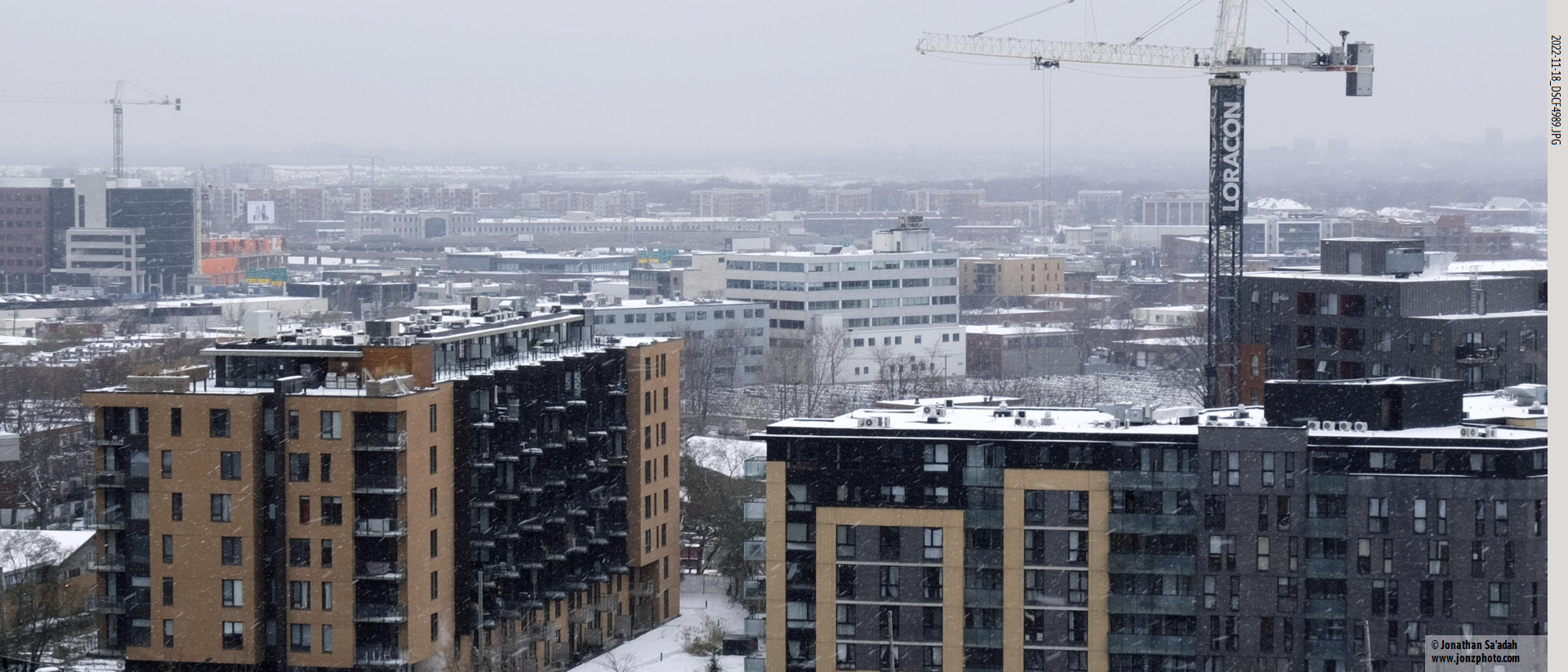
    Looking north in Montreal from Côte-des-neiges at residential and commercial buildings in one of the fastest expanding parts of the city.

    The smaller scale of these older cities creates what seems to me the conditions necessary for urban vitality. Even though they may look to be museum pieces, they aren’t. They are living examples of urban design that puts human experience first.

    Public Spaces as the City’s Living Rooms

    Perhaps nothing distinguishes these gritty, beloved cities more than the quality and accessibility of their public spaces. Not just parks or grand plazas, but the everyday spaces where public life unfolds: the stepped streets of Damascus that become impromptu gathering places, the piazzas of Palermo that serve as outdoor living rooms for entire neighbourhoods, the casual sidewalk life of Mexico City where sidewalks and public spaces encourage people to meet and relax”.

    These cities understand something fundamental: public space isn’t just about recreation, it’s about democracy. It’s where different social classes, ages, and backgrounds encounter each other naturally. When public space works well, it becomes the foundation for social cohesion and civic engagement.

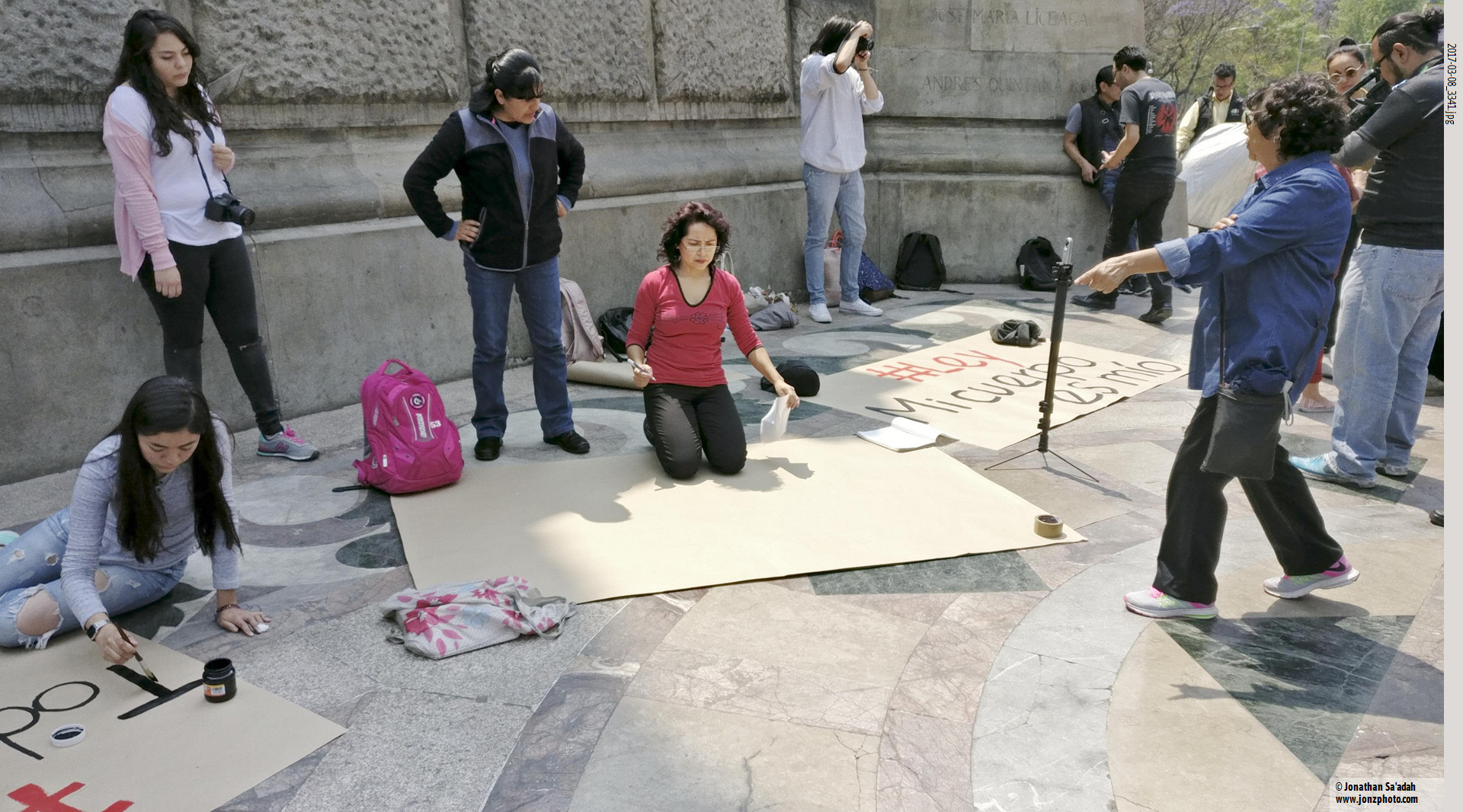
    Preparation for Women’s Day March International Women’s Day has been commemorated in Mexico City since the 1930s, but the massive street mobilizations began gaining momentum in more recent decades as a response to Mexico’s epidemic of gender-based violence.

    Mexico City is often dismissed as sprawling and car-dependent, but alongside that reality I see a lot more going on. The city’s downtown areas have spacious parks and sidewalks, accommodating an unending ballet of commuters, tourists, and street vendors. On Sundays, major arteries like Paseo de la Reforma are closed to cars and opened to pedestrians and cyclists, temporarily transforming the large parts of the city into one enormous public space.

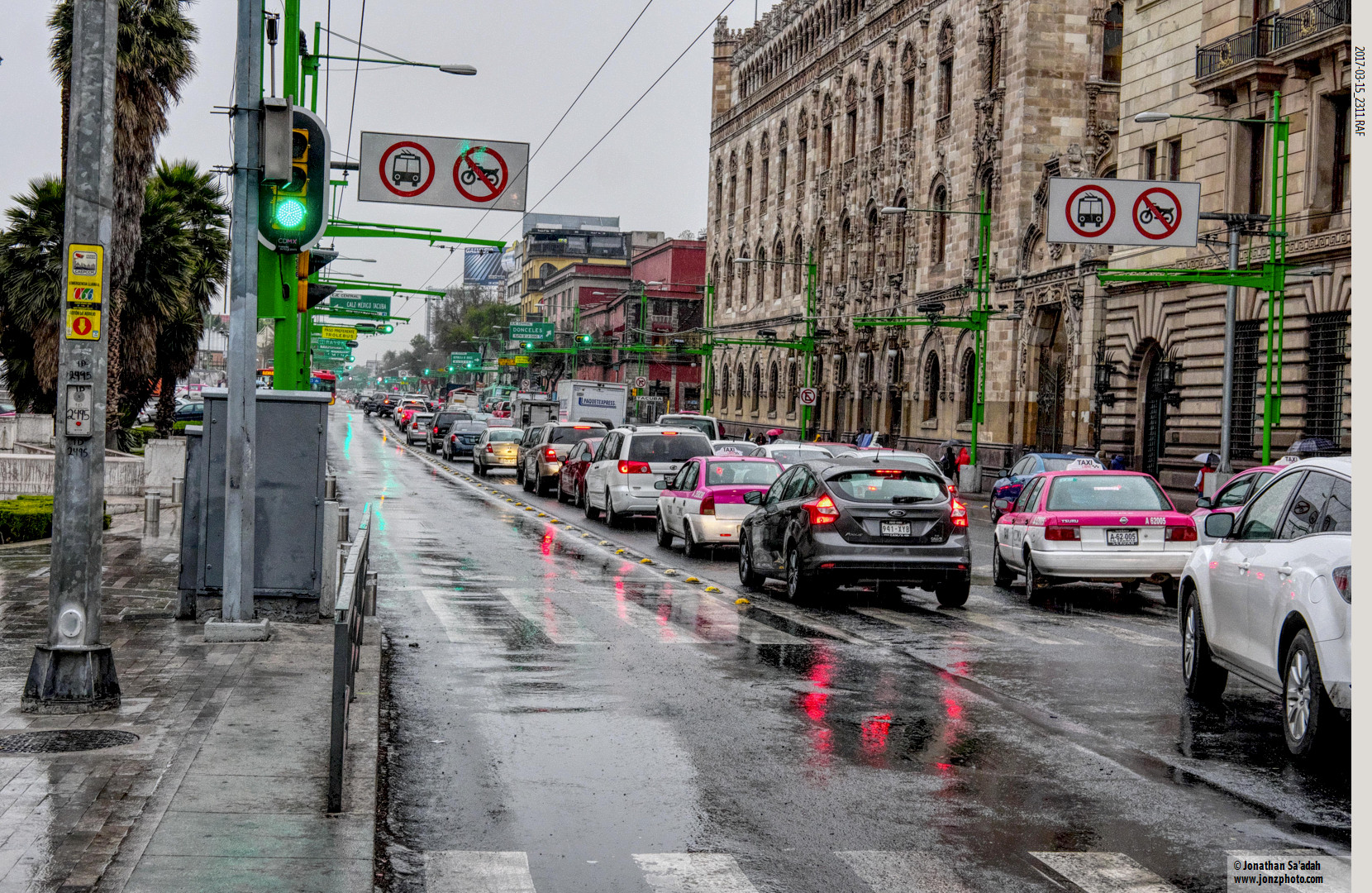
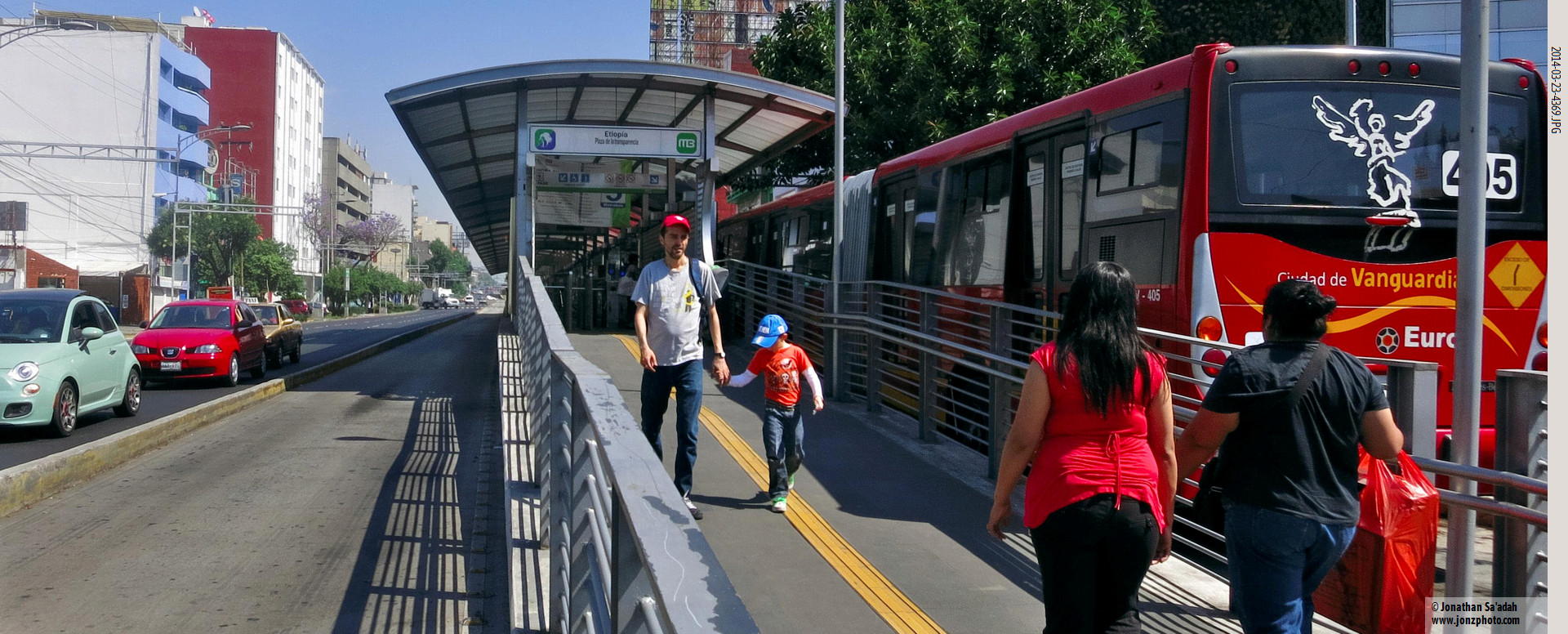
    Mexico City’s less romantic side The city government has tried different approaches at reducing car traffic, all with little success. Nevertheless, there is an inexpensive and well-used public transport system used by 14 million people a day. The open lane is a reverse direction lane for buses.

    What these cities understand is that public space isn’t a luxury – it’s infrastructure. Just as essential as water pipes or electrical grids, public space is the network that allows urban society to function, providing the venues for the informal encounters and casual sociability that bind communities together.

    Walkability as a Way of Life

    In these cities, walking isn’t exercise or a lifestyle choice – it’s simply how you get around. This creates a fundamentally different relationship between residents and their urban environment. When you walk regularly, you notice things: the quality of surfaces, the presence or absence of shade, the rhythm of street life, the small businesses tucked into ground floors.

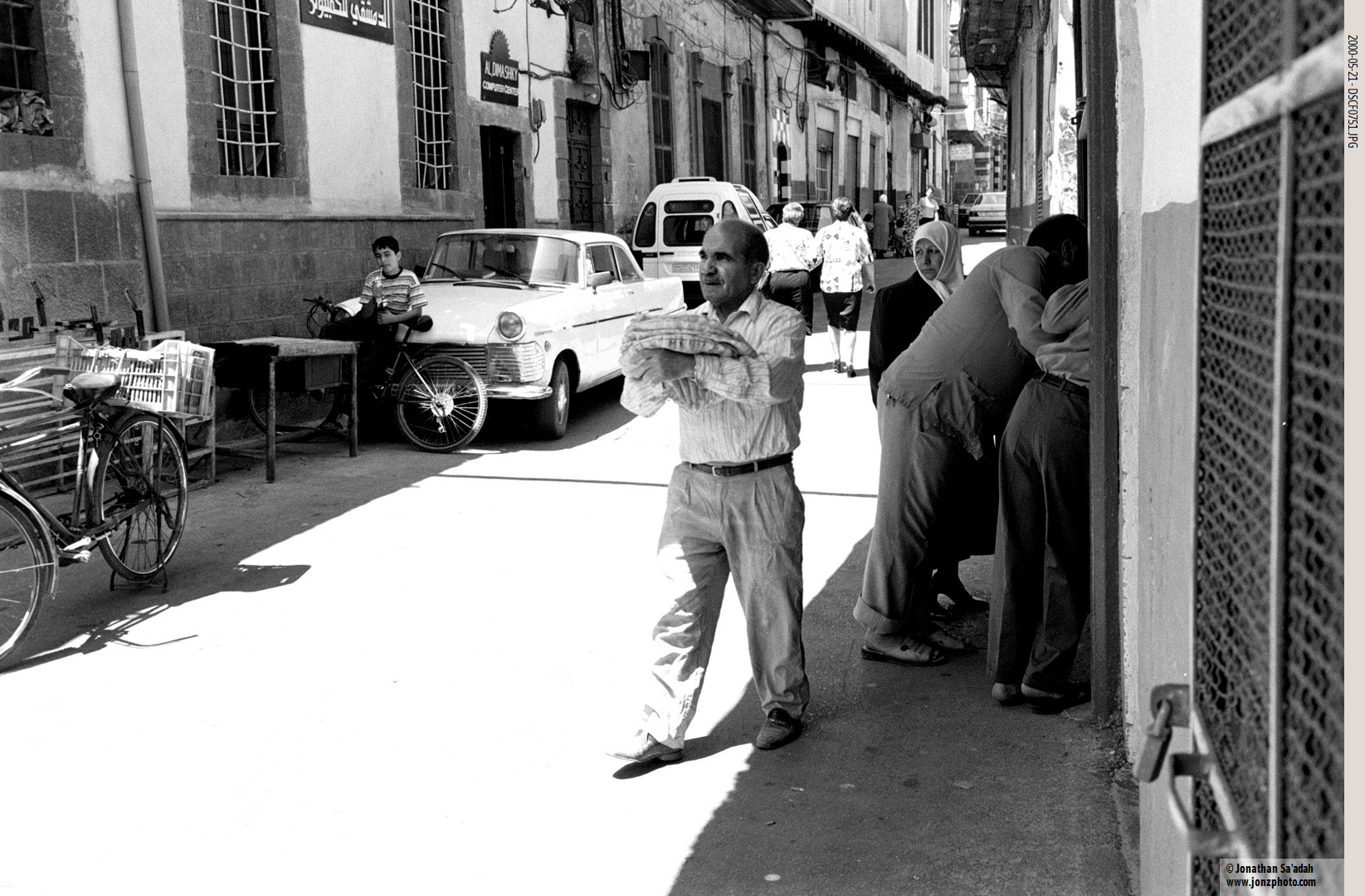
    Damascus Old City Bakery Man carries away hot bread purchased from a small bakery.

    Thessaloniki, despite its challenges with broken pavements and sidewalks, illegally parked cars and motorcycles, kiosks and coffee tables, has a vibrant street culture. I look forward to going back soon to see how the city has adapted to its newly-opened metro system, which hopefully will reduce the perpetual gridlock many of its streets experience during the day. Hopefully the ongoing integration of walking and public transit has created an even more layered urban experience.

    Mexico City exemplifies this integration beautifully. Despite its size and complexity, the city maintains an impressive pedestrian culture. Under the leadership of mayor Claudia Sheinbaum (who has a background in environmental engineering) the city dramatically expanded its network of public transit, bolstering its generous public spaces with wide sidewalks and creative public squares.

    Mexico City’s Metrobus System provides rapid transit with a two dedicated lane system. Multi-unit buses (some all electric) load in stations much like a metro line. Claudi Sheinbaum was instrumental in launching the system as Secretary of the Environment (2000-2006) under then-mayor Andrés Manuel López Obrador, who went on to be President, as she has too.

    Next week: Housing.
    The Damascus photographs in this post are taken from a book I’m just finishing on an experience I had with my father, returning to where he was born.

  • Watching the Aldred | Montreal Unfiltered

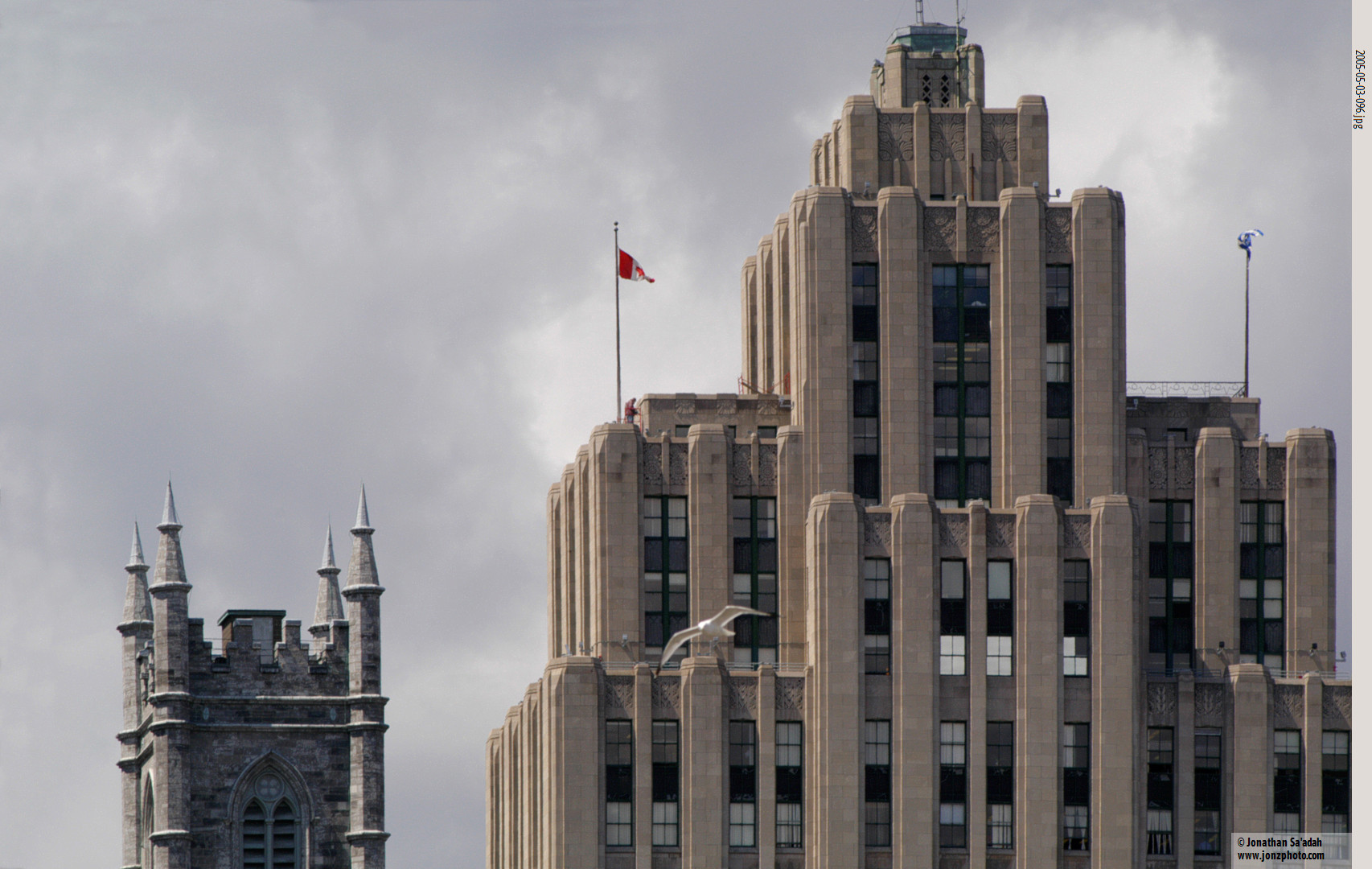
    The Art Deco Aldred building is a 94 year-old office tower on Place d’Armes’. It’s Montreal’s own “little Empire State”, completed in the same year as the New York building (1931) but of considerably smaller stature. Ironically, though, it’s the one that hasn’t been dwarfed by surrounding buildings and still stands proudly. That’s not to say that it doesn’t have problems. It’s suffering from the same disease many downtown office towers have contracted since the pandemic – a lot of empty space and the listing by brokers who represent owners eager to get out of the market.

    A Living Landmark

    It wasn’t always that way. When it was built it was a proud, if misplaced, statement of financial-district confidence. Architect Ernest Isbell Barott masterminded the setbacks that characterize its stepped shape in order to take advantage of an 1929 Montreal by-law allowing extra height if sunlight reached the square. The move allowed the building enough height to express its modern ambition. From street level you see limestone that mirrors older façades. The building’s massing feels almost ecclesiastical, yet it projects a kind confidence that was probably in short supply during the Depression.

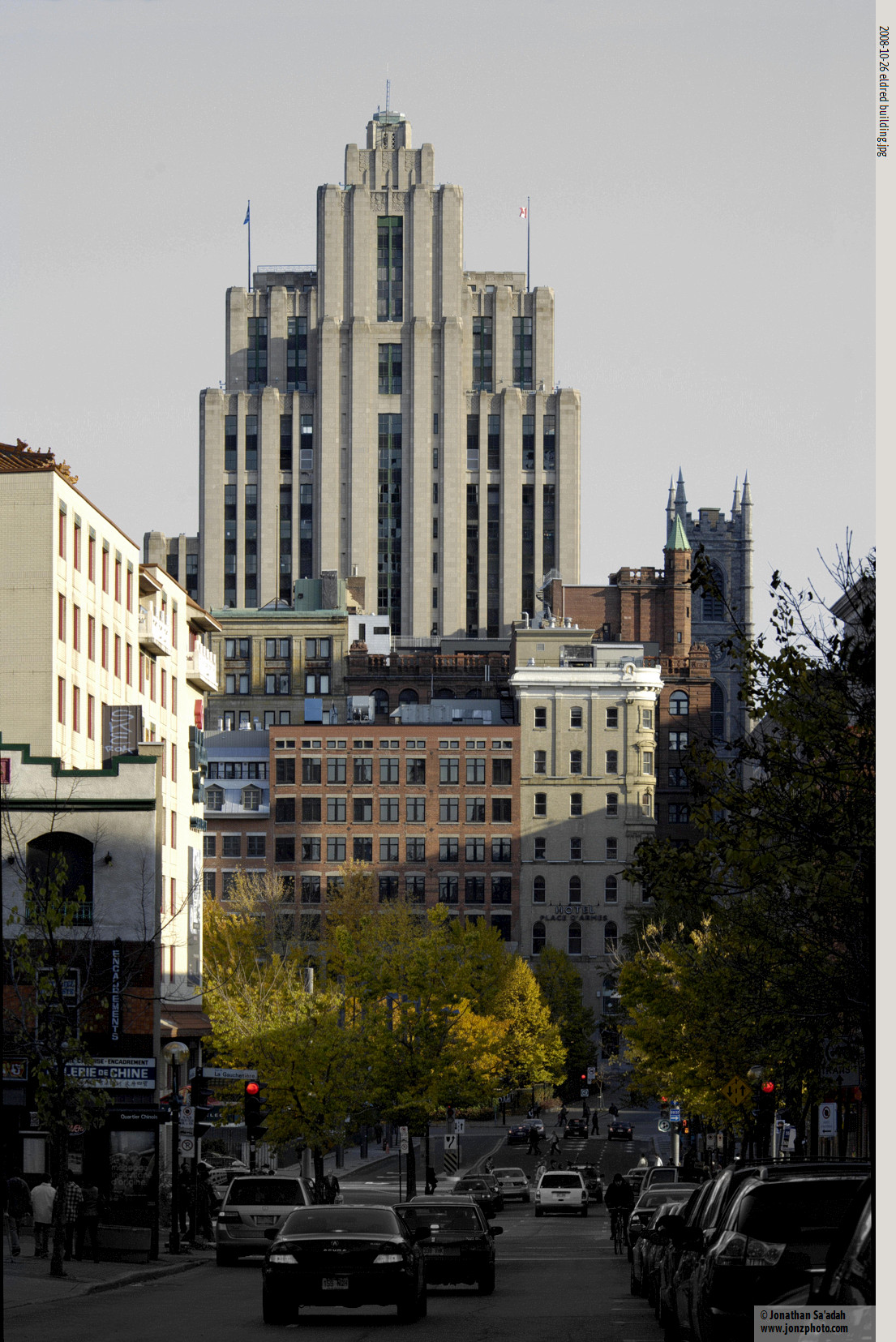
    ▲ The view looking south on St-Urbain.

    Stitching Into Montreal’s Economic Fabric

    When the tower opened in the teeth of the Great Depression, its $2.85-million price tag signaled bullish faith in Montreal as Canada’s financial hub. Aldred & Company, a New York finance firm, anchored the top floors; local banks soon clustered nearby. Even today, in its diminished state, real-estate brokers list the address as commanding premium leases. Yet vacancy hovers near 30 percent and it’s touted as an opportunity for residential or boutique-hotel conversion.

    That tension mirrors Montreal’s broader economy as the city navigates a post-pandemic recovery. Tourist visits were up 7 percent in 2024 and projected higher for 2025 – but older offices struggle to meet post-pandemic hybrid demands. The Aldred thus sits at the crossroads of heritage preservation and economic reinvention, with no clear plan of where it will go.

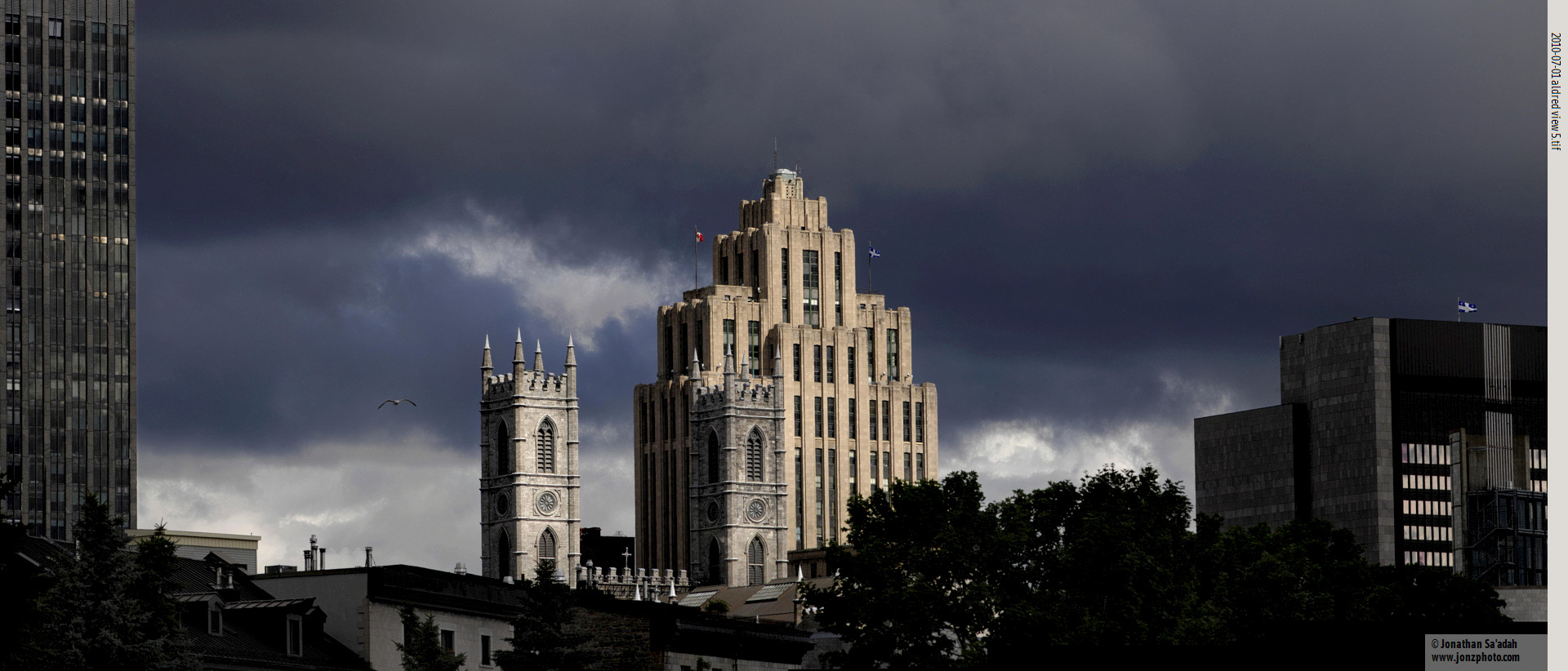
    ▲ Notre-Dame Basilica doesn’t quite match its height. The architect was able to take advantage of a by-law allowing stepped buildings extra height.

    Past and Future in the Same Gaze

    There’s never a lack of discussion about what to do. Preservationists argue for light-touch retrofits, citing UNESCO principles that balance cultural value with economic use. Urbanists argue for adaptive reuse to keep the historic city core alive. But in any case, the building seems perfectly at ease with being photographed and appreciated.

    An Unmistakable Part of Montreal

    For me, I’m lucky – I don’t have to worry about its elevator systems or quirky partitions, or any of the many other worries that haunt building owners. For me The Aldred is a 96-metre miniature gem we can honor in its Art Deco glory while still debating office-to-housing policy. I appreciate its confident limestone ribs and see it as being an unmistakable part of Montreal.