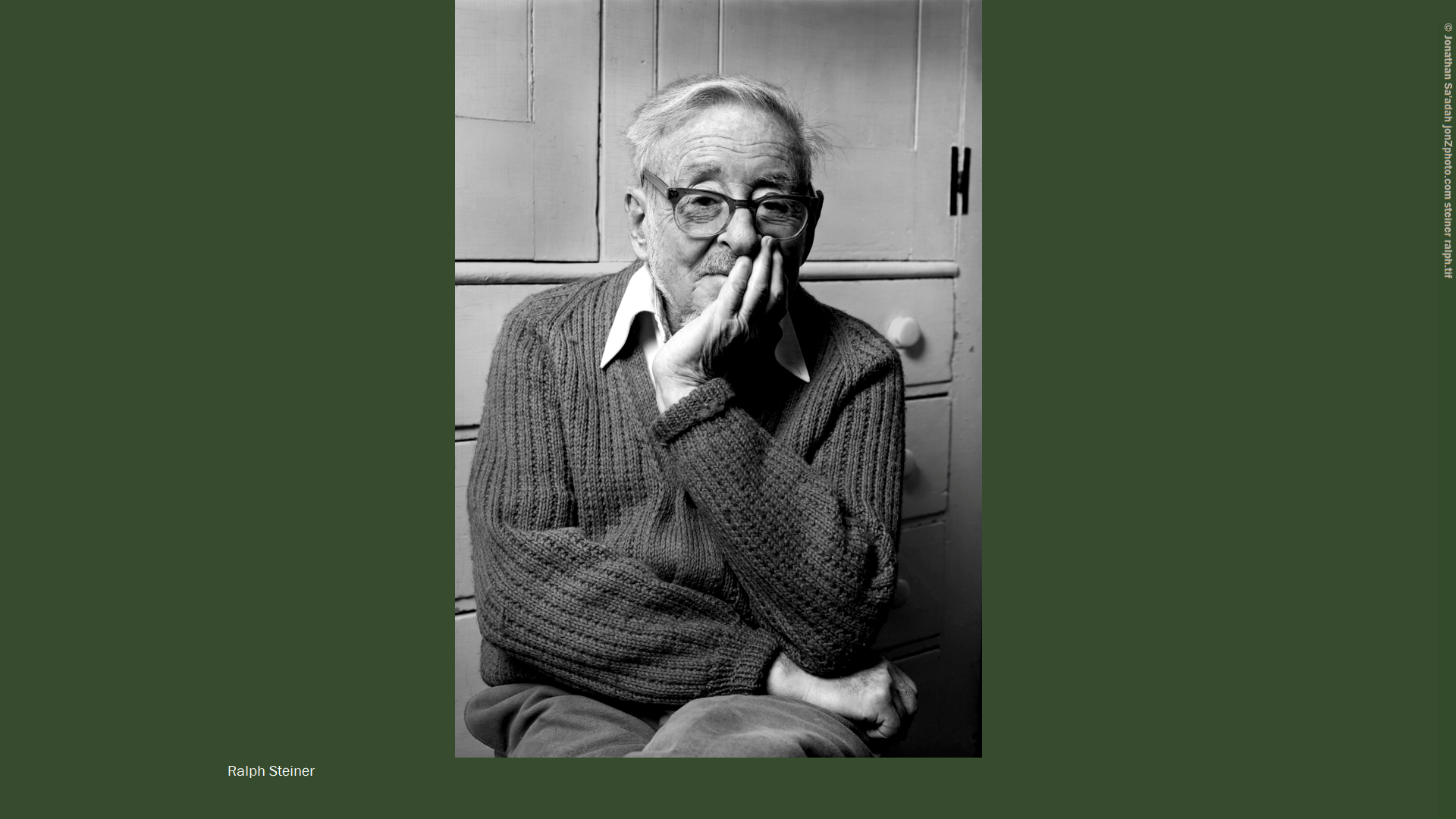
Looking over these portraits I realize just how passionate each of these people is about their work, and that’s undoubtedly what draws me to photographing them. There’s an exception in Neneh Cherry, who is shown as a child, but even then she was madly creative. There’s a lot of creativity in this group!
This gallery is not published.Category: Portraits
-
The Memory of Presence: Portraiture
Almost as soon as I picked up a camera, I began photographing people. For a naturally shy boy, it became an easy and natural way to start a conversation – one that didn’t rely entirely on words. The camera offered a kind of permission: to look, to observe, and to engage with others in a way that felt both purposeful and safe. I photographed friends, family, and those closest to me – mostly people who were part of my everyday life. At the time, I may not have fully understood why, but there was already a sense that these moments, and these faces, mattered.
Sometimes I wonder how much that instinct has really changed. The circle of people I photograph has grown over the years, extending beyond the familiar into wider and more varied encounters. Yet at its core, the process remains the same. Portraiture, for me, is still grounded in a kind of exchange – a quiet conversation between the photographer and the person in front of the camera. It is in that exchange, however brief or subtle, that a photograph begins to take shape. When it works, the result feels shared, as though both people have contributed something to its creation.
That said, the outcome is not always immediately welcomed. Not every photograph is liked, even by those closest to me. Friends and family have sometimes reacted with hesitation or discomfort when seeing themselves in an image, particularly when the photograph reveals details they would rather ignore – wrinkles, blemishes, or features they feel self-conscious about. These reactions are familiar and deeply human. We are often our own harshest critics, especially in the present moment, where self-awareness can feel magnified.
And yet, time has a way of reshaping that relationship. Photographs that once felt unflattering or difficult often soften in meaning as the years pass. Distance allows us to see ourselves with more generosity, or at least with less immediacy. The details that once seemed like flaws become part of a larger whole – evidence of a moment, a phase, a version of ourselves that no longer exists in quite the same way. In this sense, photography benefits from time just as much as it records it.
Time, of course, does not simply pass – it accumulates loss as well as memory. Many of the people I have photographed are no longer alive, and the images that remain have taken on a weight I could not have anticipated when I first made them. What may have once felt casual or routine becomes irreplaceable. A photograph transforms into a trace of presence, something that endures beyond the physical world. This enduring quality has always been one of photography’s most powerful attributes: its ability to hold onto what cannot be held otherwise.
Because of this, portraiture carries a quiet responsibility. There is always a challenge in taking a living, breathing human presence and rendering it into a still image that retains some emotional truth. A photograph inevitably simplifies, but when it succeeds, it does not feel reductive. Instead, it feels concentrated – like something essential has been distilled and preserved.
When that happens, the image becomes more than a likeness. It becomes a memory, not only for those who knew the person, but potentially for anyone who encounters the photograph. Even without context, a strong portrait can resonate, suggesting something universally recognizable in a specific individual. In that way, what begins as a personal act – photographing someone you know – can extend outward, becoming something shared, something lasting, and something quietly meaningful.
This gallery is not published. -
Who said you have to smile for photos?
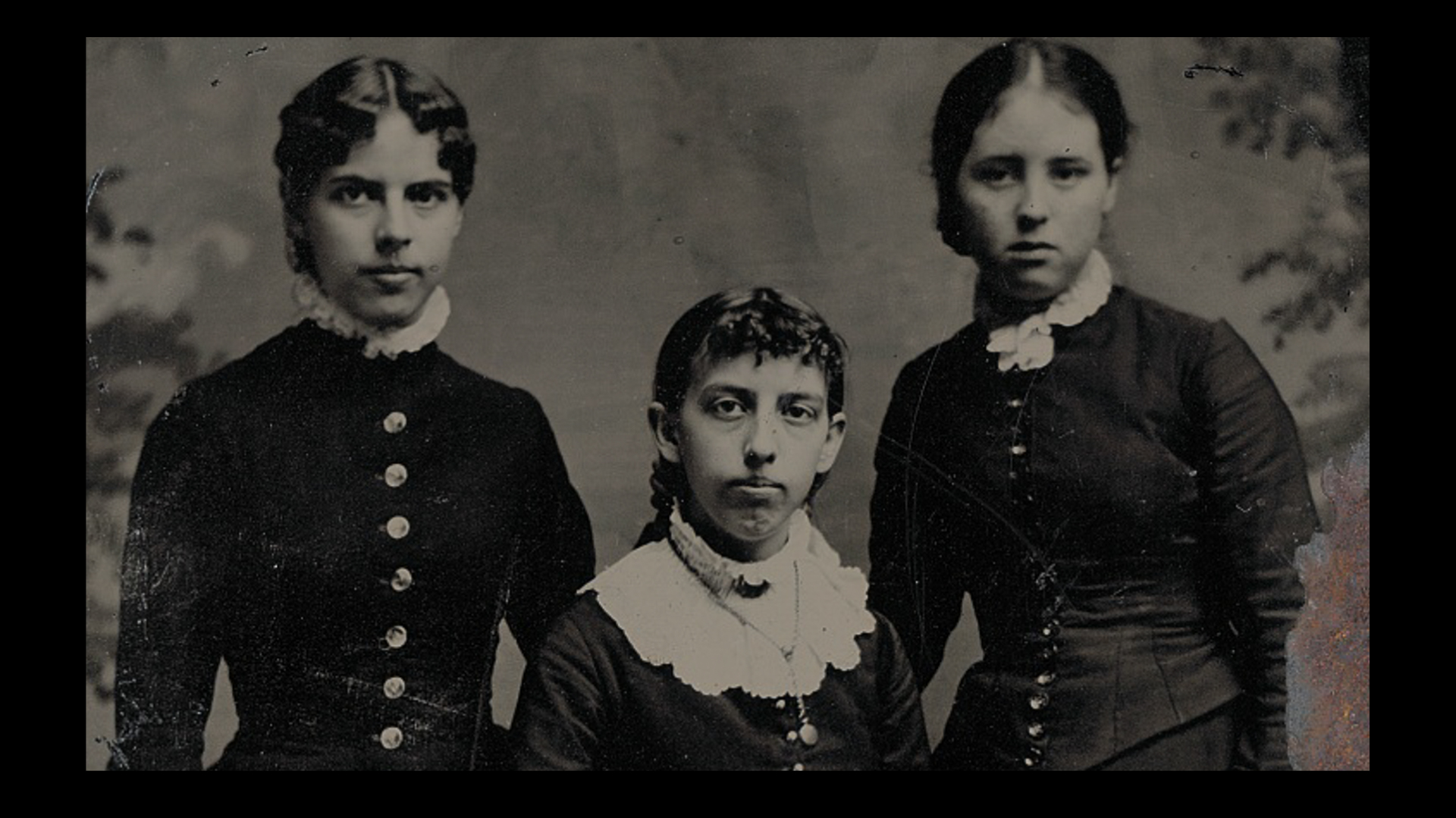
Not a smile to be seen anywhere Three sisters, about 1885. Cropped tintype from US Library of Congress. Lena Dunham (of the TV show Girls fame) has been having a public spat with a Spanish magazine, accusing the publishers of using Photoshop to improve her thigh. Usually, being “improved” is something people like. Objecting is a twist. Dunham says her problem is the result of a recent change that leaves her against the retouching of photos – even to her benefit. Never one to miss good dialogue, she put it crisply: “I want to be able to pick my own thigh out of a lineup.”
From a personal point of view, I smell a publicity stunt – she’s a master of that sort of thing. But a large part of me hopes that she’s actually being honest.
I’ve photographed people a lot and I know that everyone has some part of their body that they’d rather be without – or at least not reminded of. For me it’s the back of my head. For others their nose, their chin.
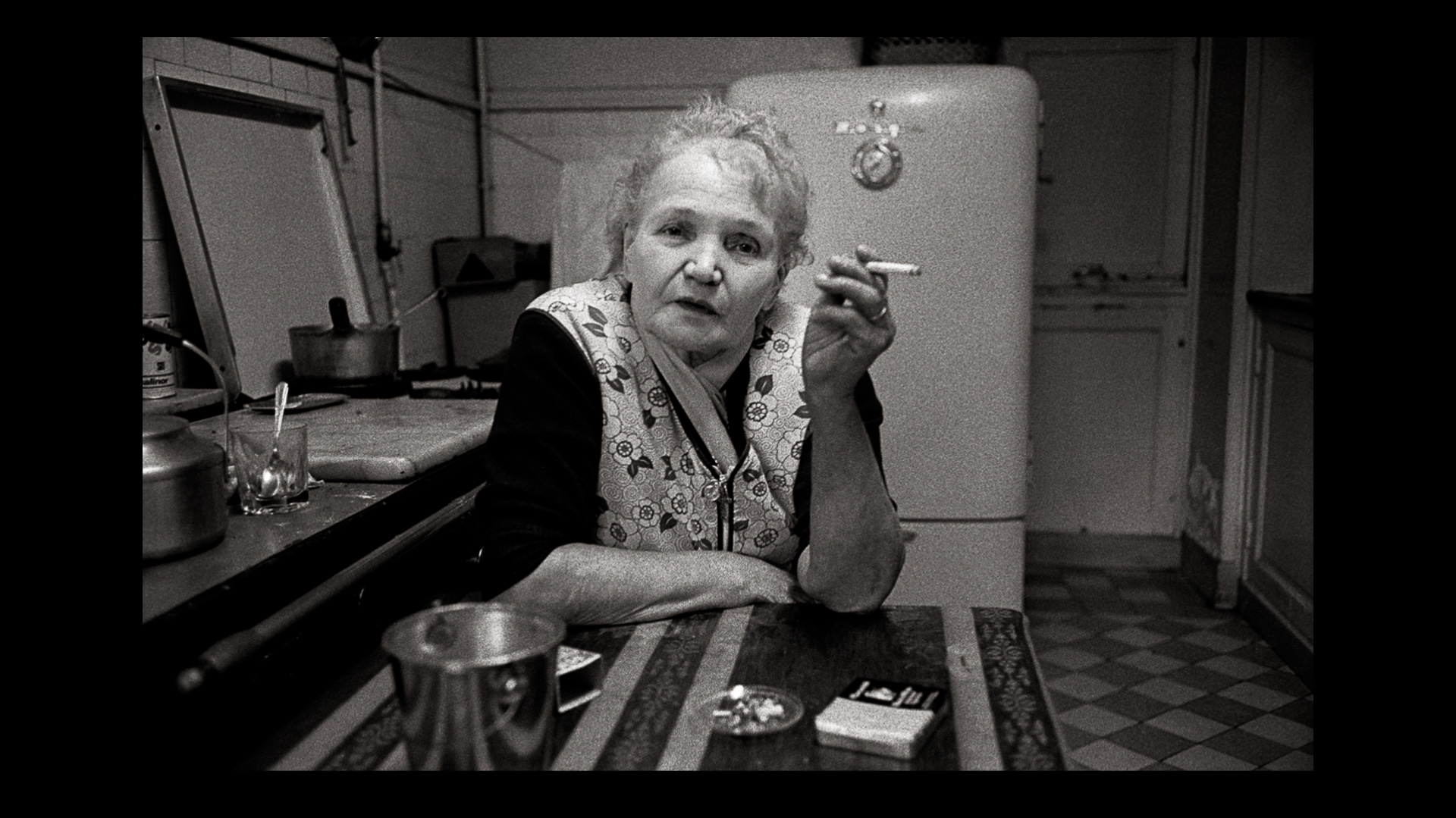
Catherine Natoli, rue Gruze, Paris, 1976. The way this insecurity often manifests itself is in heavy breathing that ensues after a photo portrait. I’m not surprised about it, it seems normal. The common refrain goes like this: “It isn’t that the photos are bad, I just can’t stand the way my [fill in the blank] looks.”
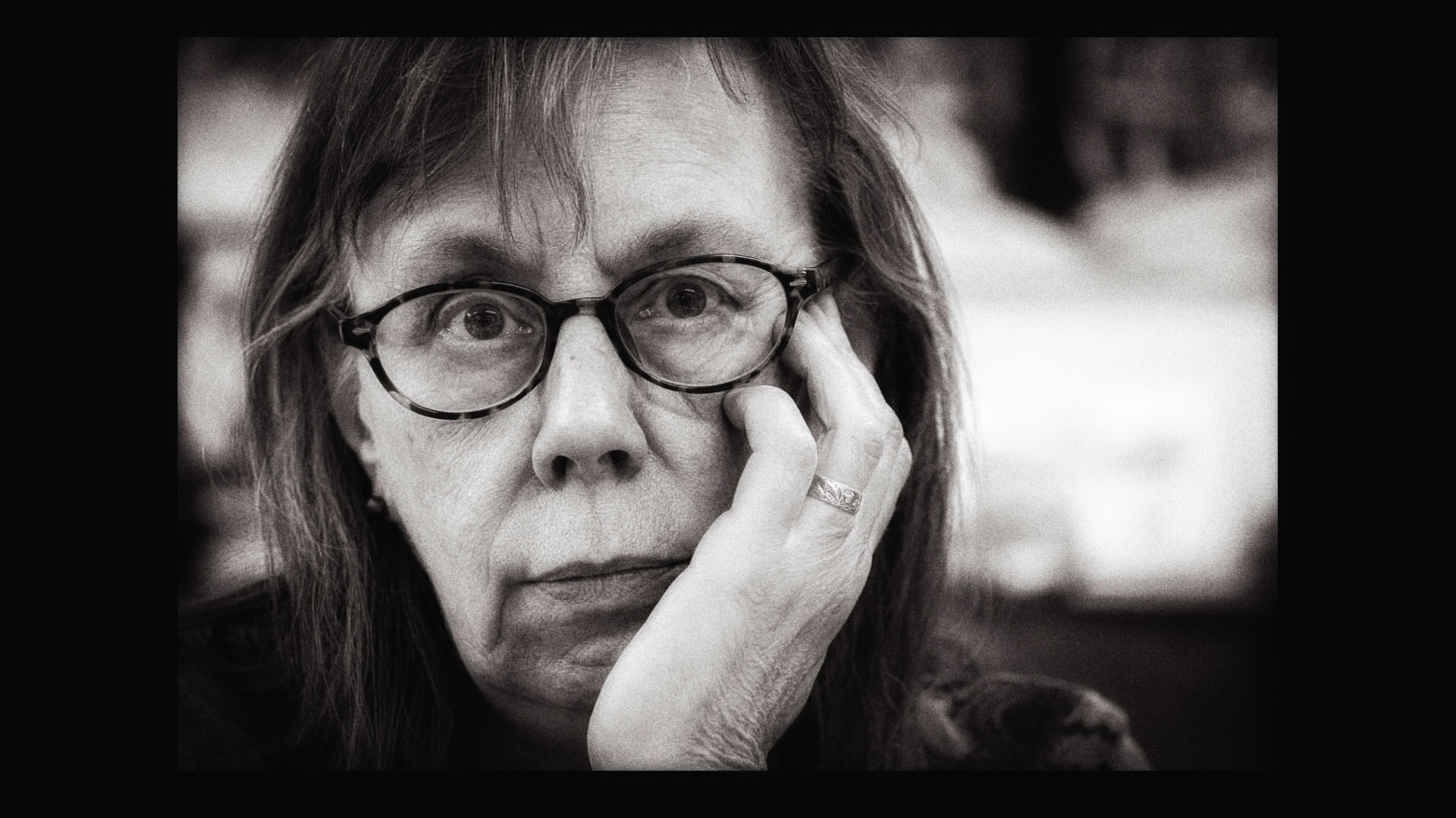
Beth Adams, Montreal, 2016. This insecurity seems almost an universal attribute, at least in our culture. Probably, as a photographer, the kindest approach would be to sit down and interview each person about to be photographed. Usually there’s an unstated tension around portraiture, and it would be easier (and kinder) to have it out in the open. But it’s not like I haven’t experimented. I have one close friend who’s always complained about the way she looked in my photos. Finally, out of some frustration, I let her determine all the variables. What she wanted was a Vogue-style experience, complete with fancy makeup and hair, rim lighting, and styled clothes. I did it. She liked it – I didn’t.
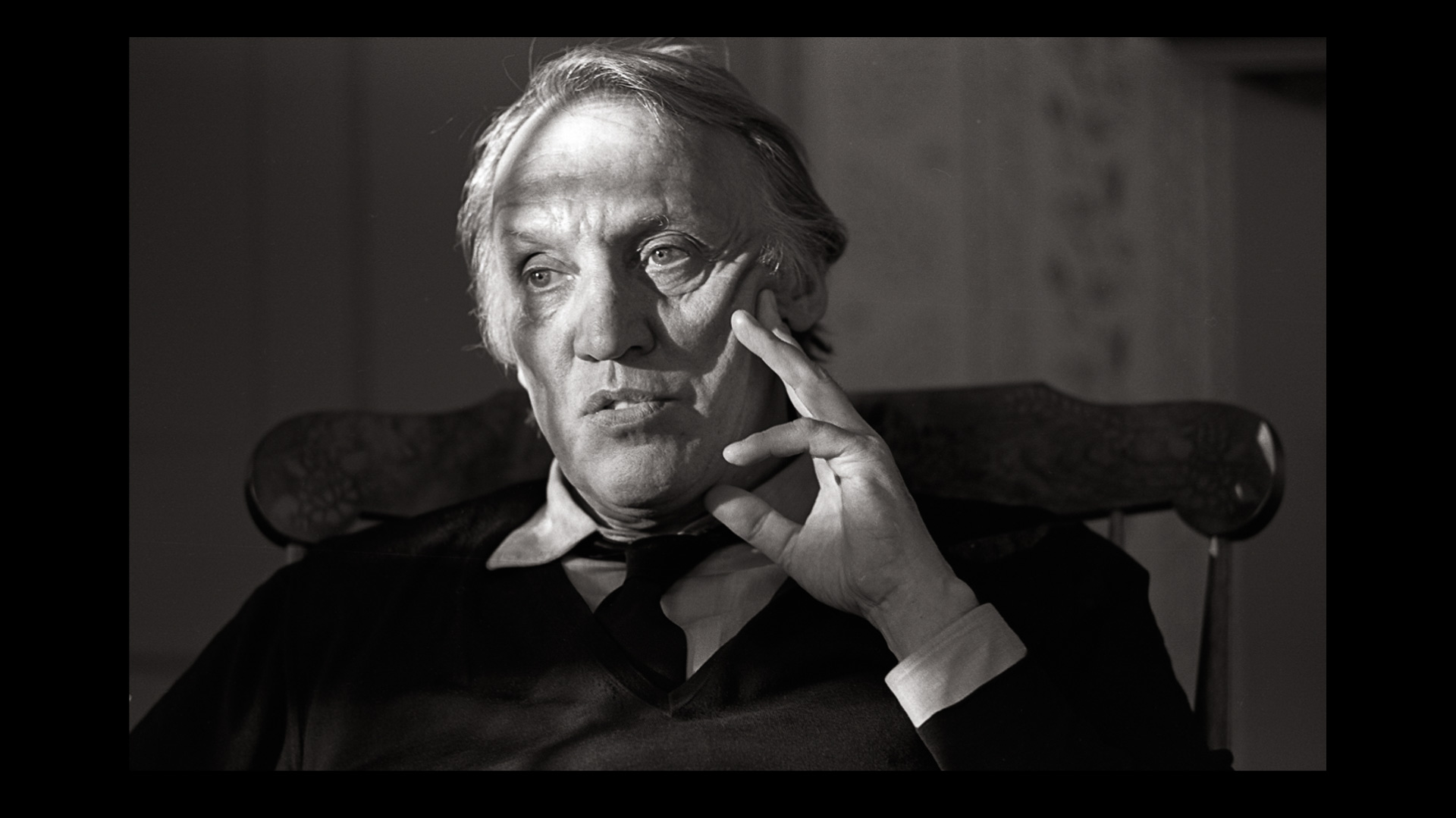
Joseph Losey, Hanover, New Hampshire, 1971. I’ve always been attracted to portraits that say something about the person. It can be a relatively unadorned physical representation of that person – how they looked in a specific period of time in their lives – or it can dig deeper down. I like both. It’s not that I want to make people look bad, and I hope I don’t do that. That’s not my intention, of course, it’s just that I think being human means a lot besides a smiley face.
So I do want to applaud Lena Dunham. She’s a good enough artist and show-person that I’m sure she’ll be in the public eye for a long time, and it will be interesting to see if she adheres to her current position. But for now, she seems on the right track. I will be following her and hope her new-found conversion will include pictures with more than a pretty smile.