Category: Paris

  • Untold Stories Behind Joseph Losey’s M Klein: When Art Meets History

    This is the lead post for a detailed series exploring the making of Joseph Losey’s M Klein. Each post reveals new layers of this remarkable collaborative achievement – from the personal journeys of its creators to the technical innovations that brought their vision to life, from the political courage required to tell unpopular truths to the artistic strategies that made those truths unforgettable. Jump to Table of Contents
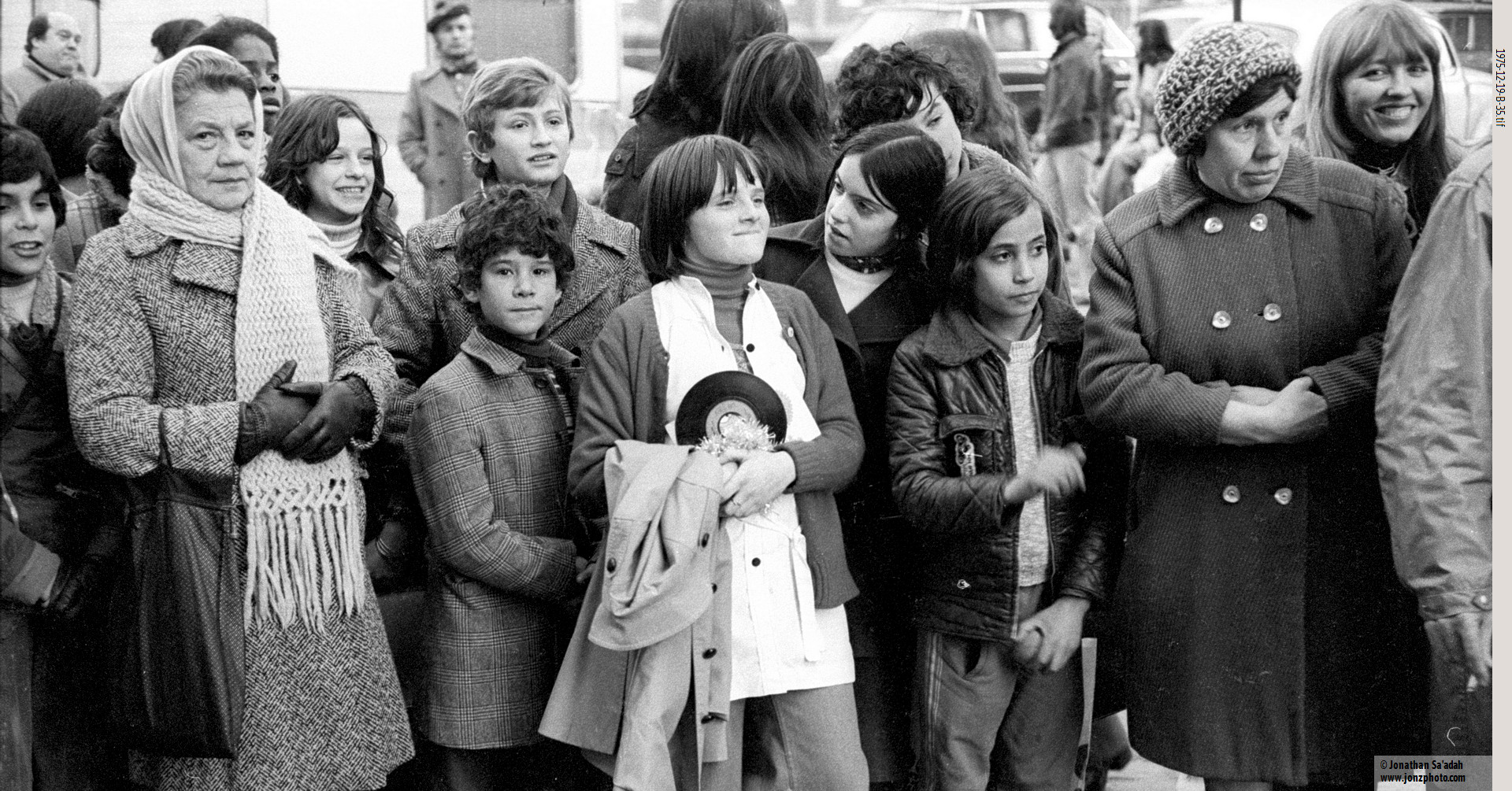
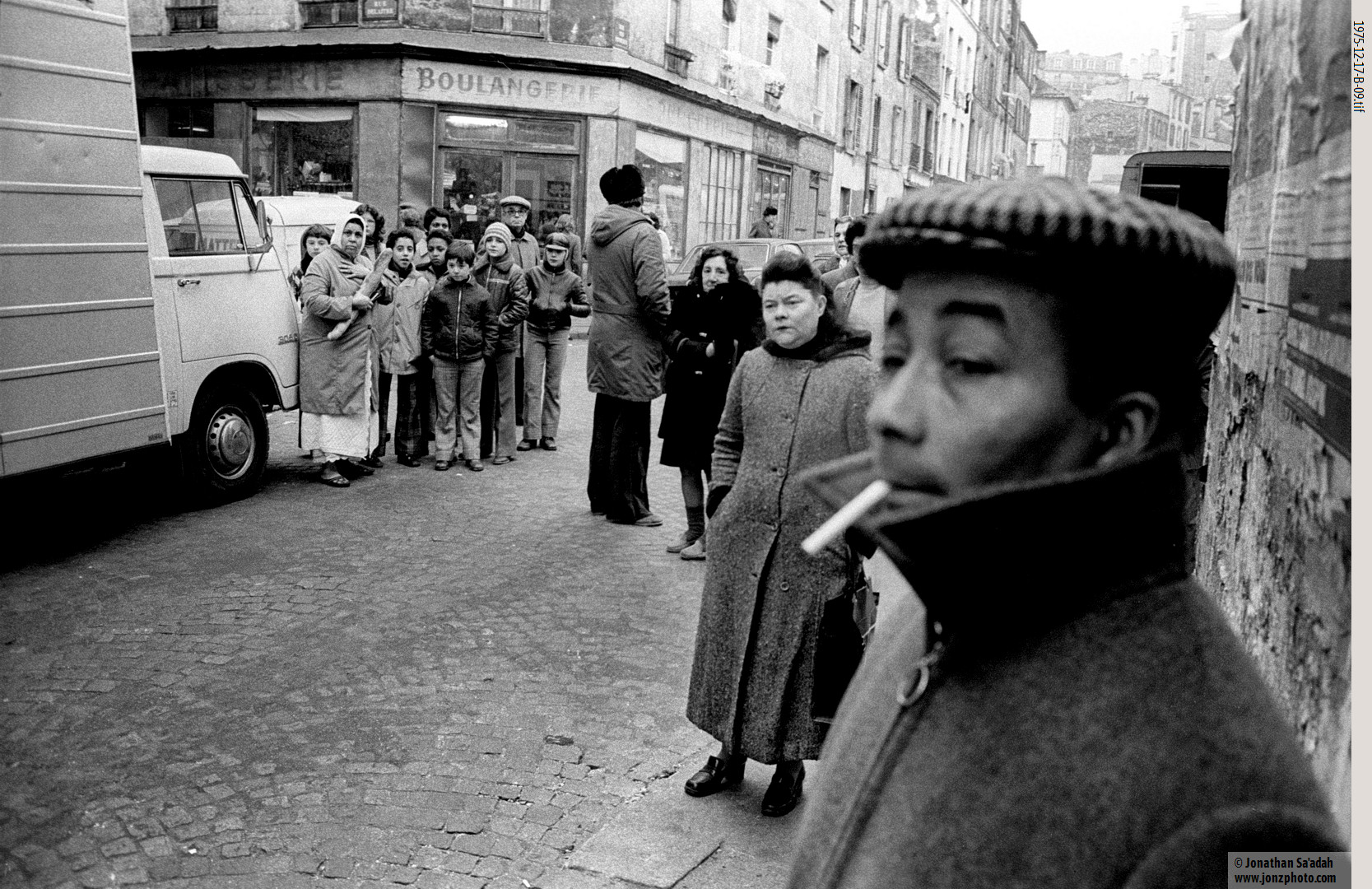
    Hoping to catch a glimpse of a star Crowds often gathered hoping to see Alain Delon. Here they were lucky – his driver parked across the street and so he could briefly be seen entering a building.

    When Joseph Losey set out to make M Klein in 1975, he wasn’t just directing another film about wartime France – he was orchestrating a deeply personal project that brought together artists and professionals who had lived through the very persecution they were depicting on screen. The behind-the-scenes story of this masterpiece reveals how committed professionals transformed their own trauma into cinematic truth, creating one of cinema’s most powerful explorations of identity and complicity.

    When the Persecuted Make Films About Persecution

    The most remarkable aspect of M Klein‘s production wasn’t its star power or budget – it was the extraordinary convergence of people whose lives had been shaped by the events they were recreating. Margot Capelier, the Casting Director, was born into a Jewish family in Paris and had lived through the Nazi occupation, losing family members in the Holocaust. Alexandre Trauner, the Art Director, was a Hungarian Jew living in Paris who had fled to southern France to escape the occupation, working clandestinely in the underground resistance. Lucie Lichtig, the Continuity Director, was Jewish and active in the Alliance branch of the Resistance. Finally, Claude Lyon, the head of the film lab (LTC) used by Losey, lost his mother.
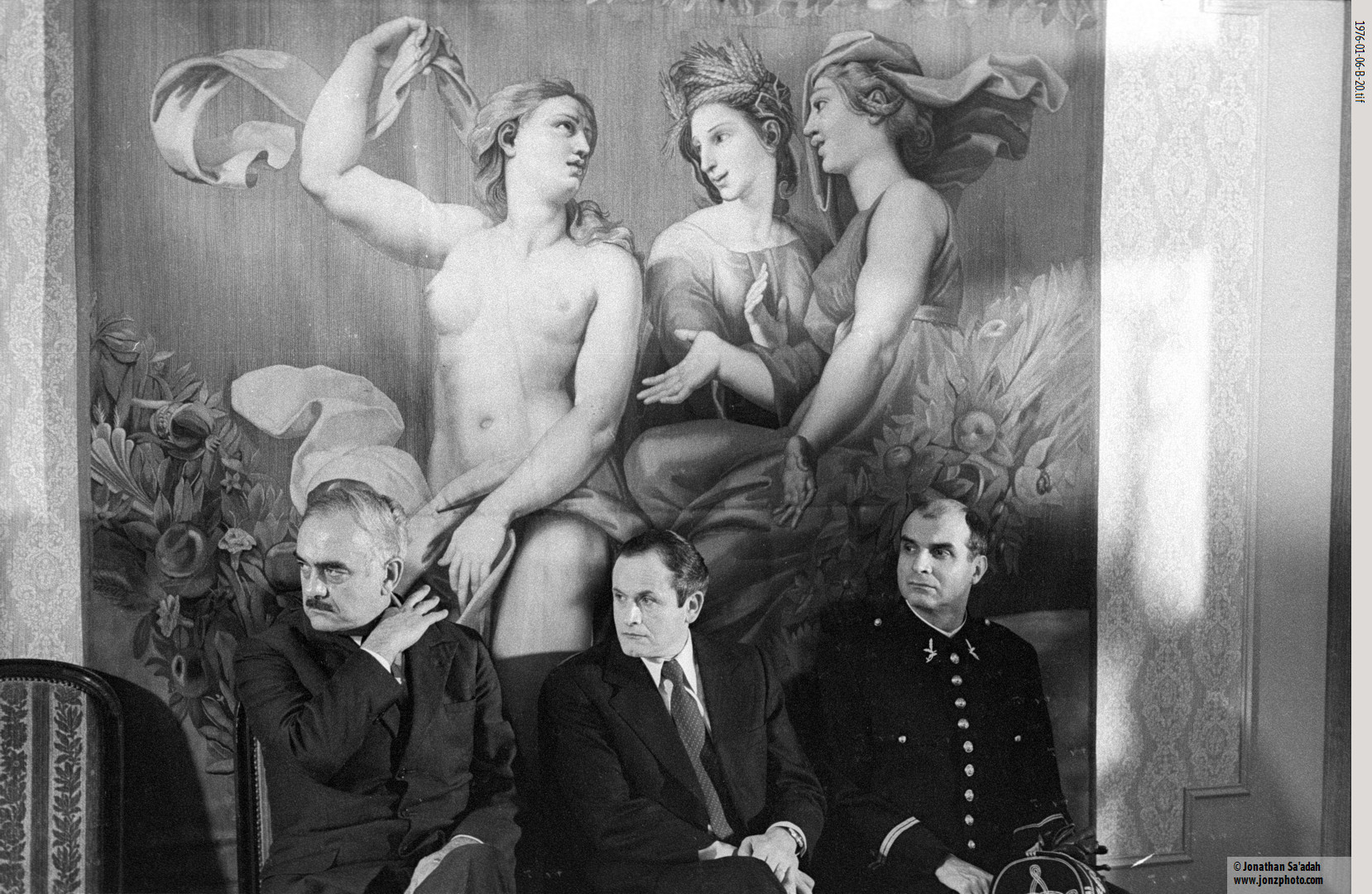
    ▲ Three Vichy fonctionnaires prepared and waiting for a city-wide police planning session for the roundup of Jews. The wall-art often came from personal collections; this mural was only briefly visible in the scene.

    Even Joseph Losey himself brought personal understanding of persecution, having been blacklisted from Hollywood during the McCarthy era and forced into European exile. This wasn’t just professional film-making – it was a gathering of survivors using their craft to ensure these stories would never be forgotten.

    The Challenges That Created Cinema Magic

    M Klein was notorious for its production challenges, but these obstacles also created camaraderie and a feeling of accomplishment. Some of the film’s most memorable moments came out of pure chaos. When rare snow began falling in Paris – the entire crew had to scramble to protect the equipment and the day had to be rescheduled, turning what should have been a routine day into a logistical nightmare. The awful, insect and rodent infested building on 42 rue des Panoyaux, where Klein searches for his Jewish double, was so unstable that the city required engineering work just to make it safe to enter – not that anyone wanted to. Still, getting the work done at that location was another credit to everyone, and contributed to the film.

    In Strasbourg, the canal location that had been carefully scouted proved impossible for the planned tracking shots due to rough cobblestone surfaces, forcing the crew to hastily “modify” a Citroën Deux Chevaux with a camera mounted through its sunroof. These weren’t just production problems – they were challenges that the team reacted to – and they elevated the production by requiring creative teamwork to find solutions.
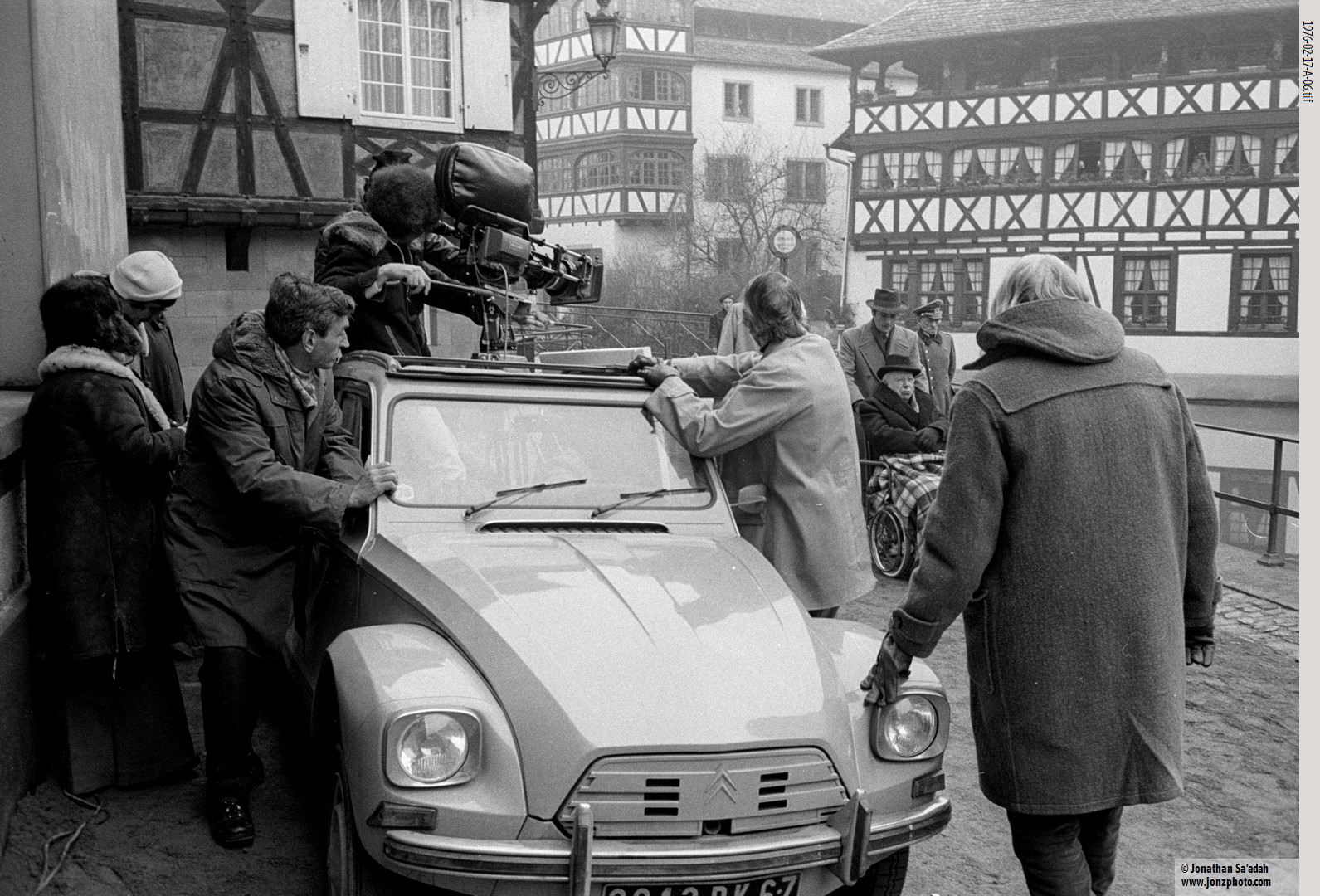
    Challenges The camera is mounted on a Citroën Deux Chevaux to compensate for the uneven surface of the cobblestones which have been hastily covered with sand. Losey, back to the camera, has the best angle to see the action, as the cameraman films from his precarious position, wedged in the sunroof of the car.

    The Invisible Artisans Who Helped Shape a Masterpiece

    Behind every great film are the craftspeople whose contributions often go unrecognized. Reginald Beck, who had edited eighteen of Losey’s films, couldn’t even receive proper screen credit for M Klein due to British union regulations, despite being the actual editor of the film. Gerry Fisher, the cinematographer on his sixth collaboration with Losey, had developed such an intuitive understanding with the director that they barely needed to speak during setups.

    Frantz Salieri, the multi-discipline artist who created the film’s pivotal cabaret scene, brought his own radical theatrical background to ensure the anti-Semitic content would be read as critique rather than endorsement – using male actors in female roles to prevent actual racists from finding the performances appealing.
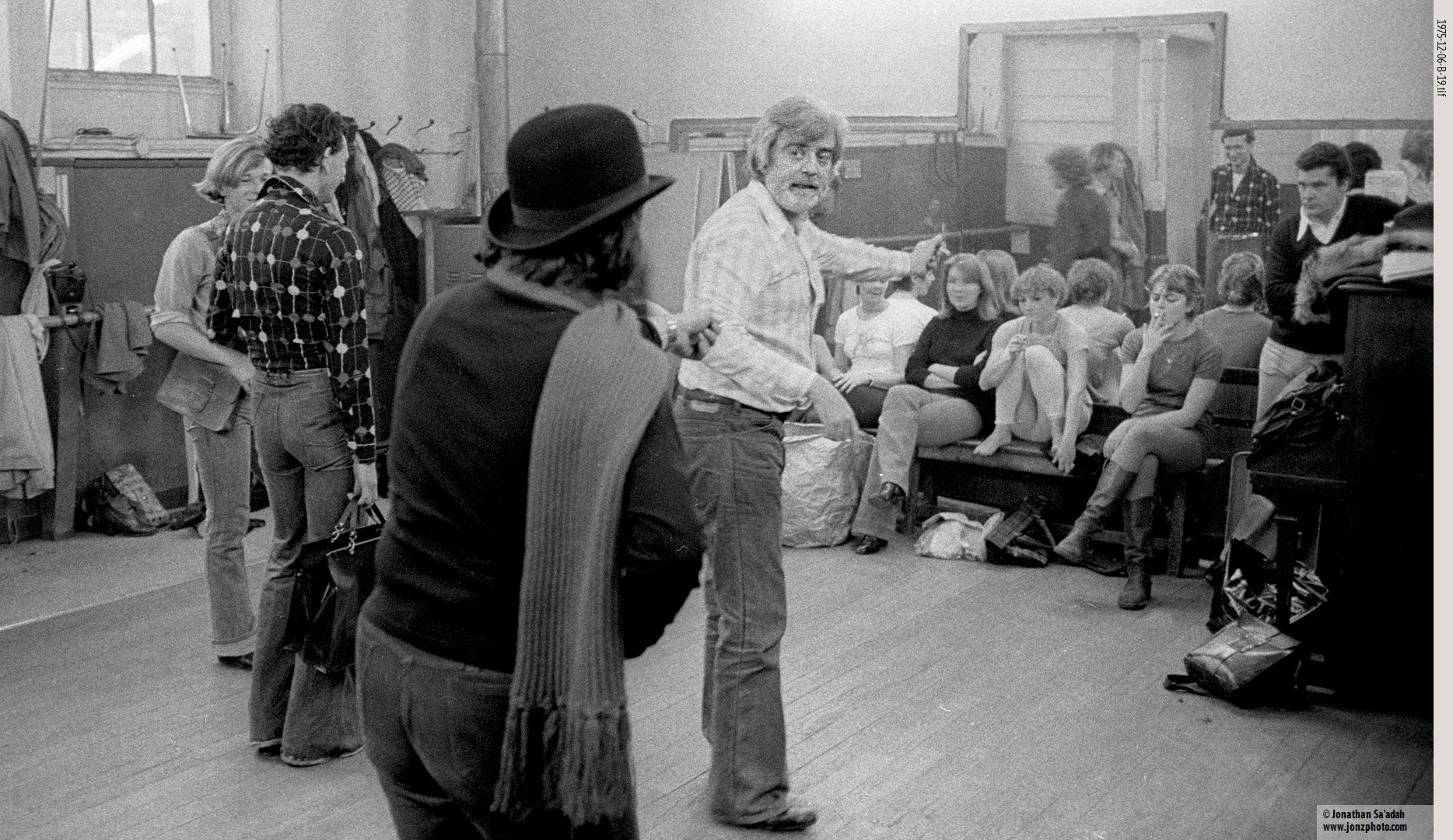
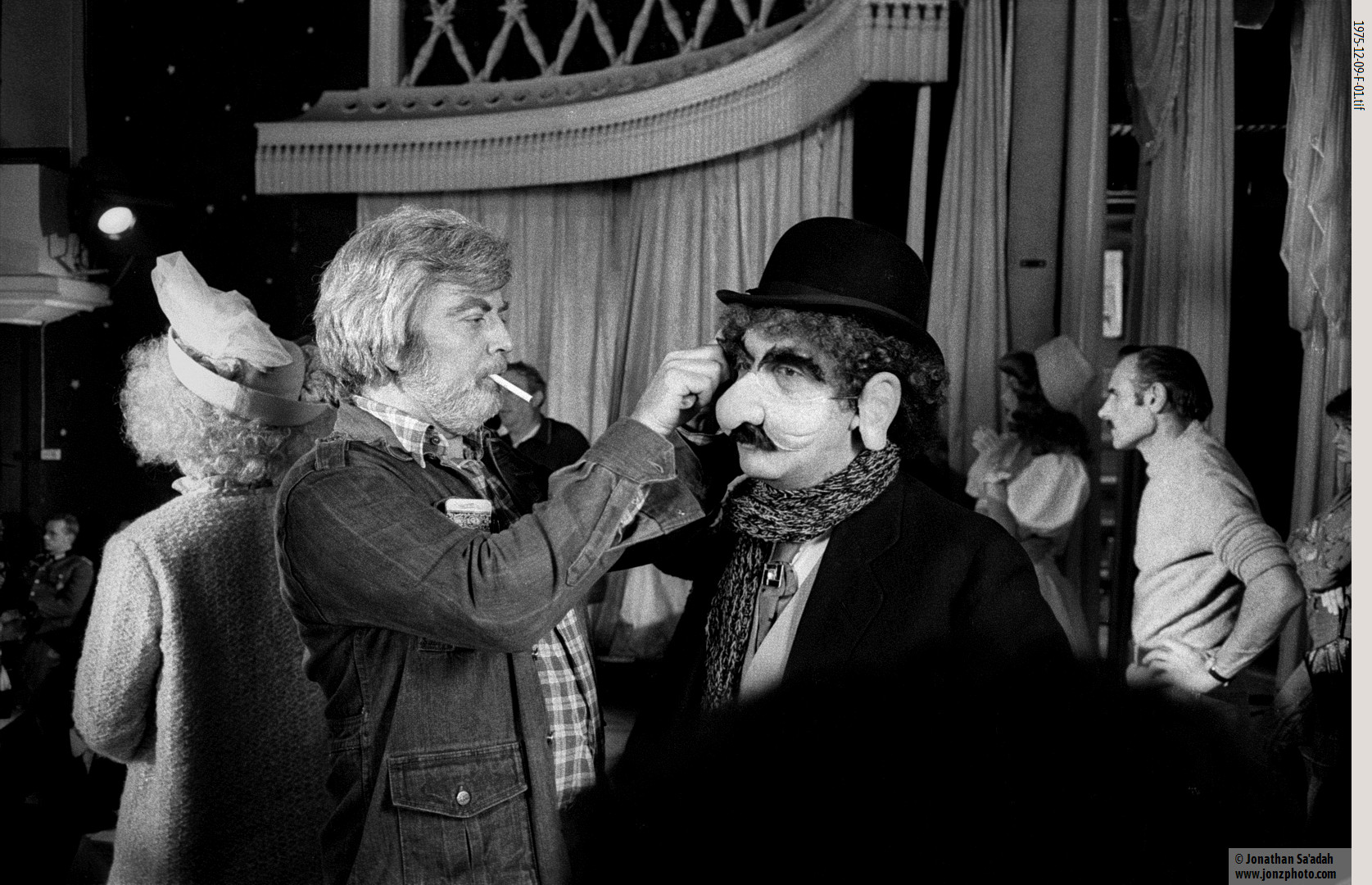
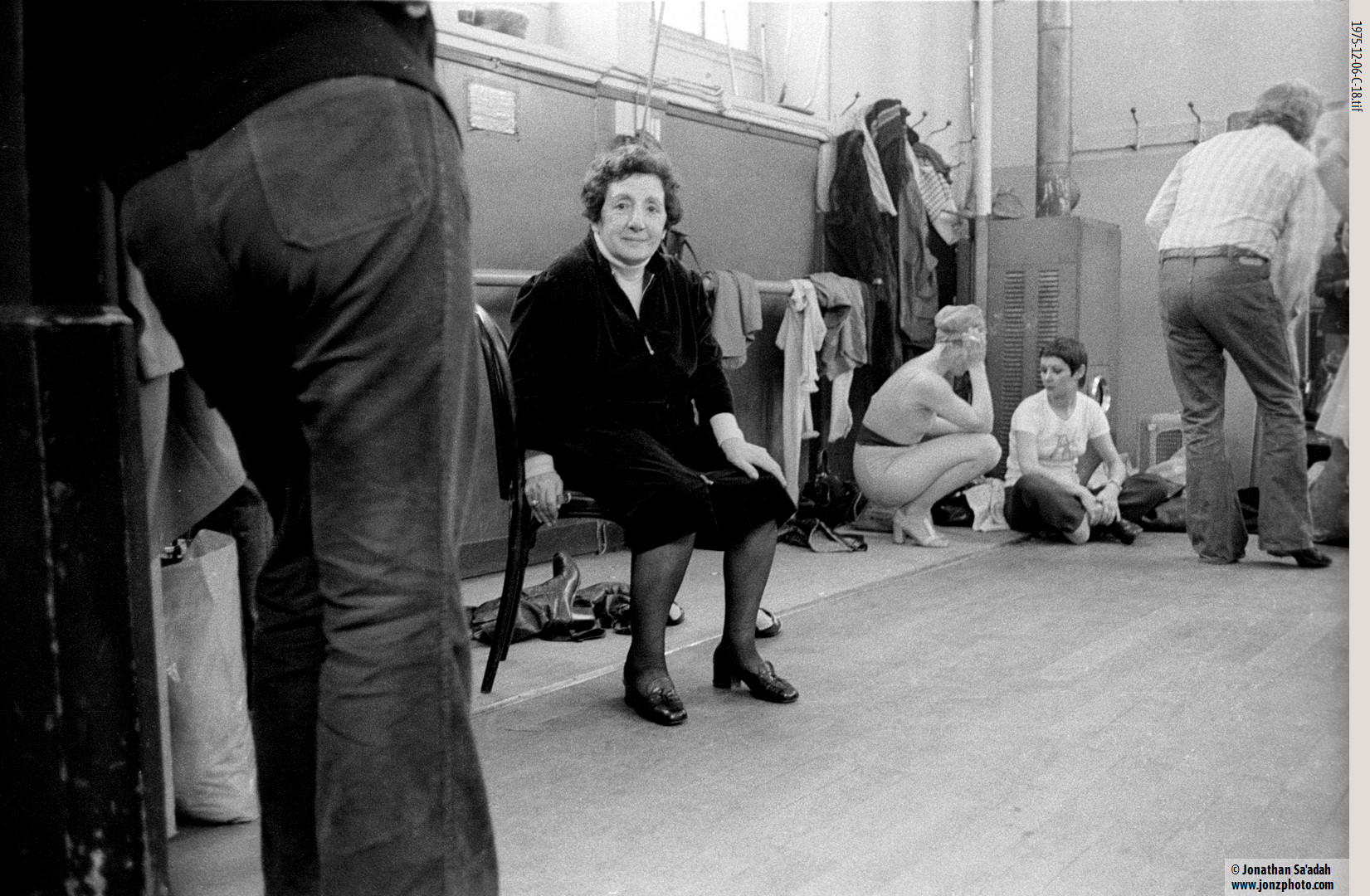
    ▲ Frantz Salieri in rehearsal. The man in the bowler hat played the awful clown, and members of the “chorus line” are seated on the bench. Salieri worked with members of his own troupe, professional dancers, and actors from the cast to create the cabaret show.

    The Art of Turning Constraint into Creativity

    The most fascinating aspect of M Klein‘s production was how limitations became opportunities. When star Alain Delon walked off the set in anger on January 20, 1976, threatening the film’s completion, Losey’s professional integrity and honest communication brought him back. When the cramped quarters of La Nouvelle Eve cabaret made filming nearly impossible, the tight spaces actually enhanced the claustrophobic atmosphere the scene required.

    The decision to use thirty-two locations throughout Paris, despite production company resistance about costs and complexity, gave the film a level of authenticity that studio work could never achieve. Each challenge became part of the film’s DNA, contributing to its lasting power and relevance. They were intangibles that were created through Losey’s intransigence, and they made a big difference.
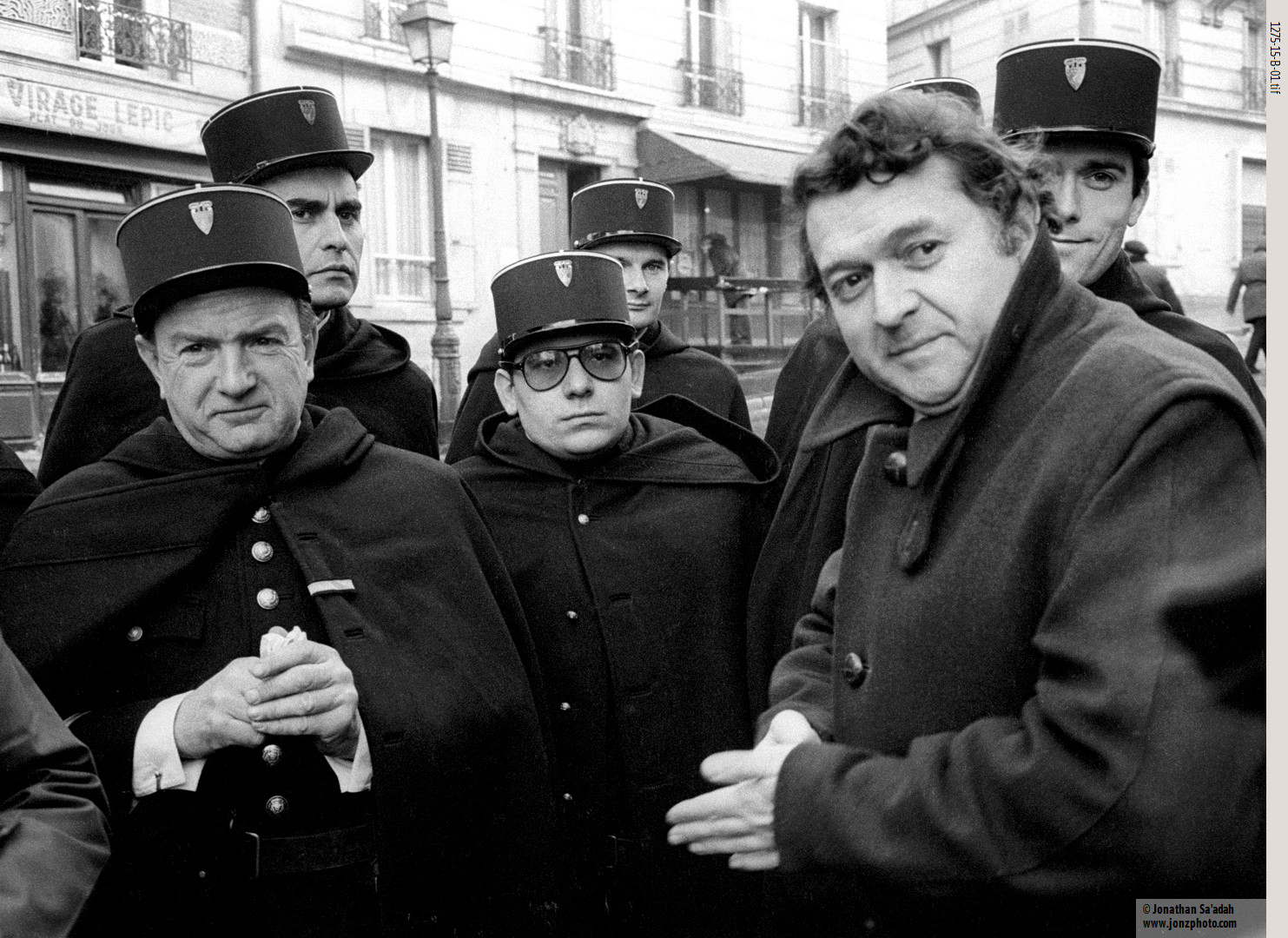
    ▲ First Assistant Director Philippe Monnier coaching French “gendarmes” in an early-morning recreation Vel’ d’Hive Roundup, which happened in the middle of July, 1942. The scene also involved many cars and police wagons from the period. The Roundup was ordered by the German Nazis, but carried out by the French.

    Why These Stories Matter

    The making of M Klein reveals something profound about the relationship between art and history. This wasn’t just a film about the Holocaust – it was created by people who had lived through persecution, who understood from experience what it meant to be suddenly classified as “other,” to have your identity questioned, to become a stranger in your own country.

    Every aspect of the production – from Margot Capelier’s casting choices informed by her own survival, to Alexandre Trauner’s intimate knowledge of wartime Paris, to Losey’s understanding of what it meant to be politically exiled – was shaped by lived experience of the themes the film explored.

    The complete story of M Klein‘s creation offers a masterclass in how artists can transform personal trauma into universal truth, how technical challenges can become creative opportunities, and how the most powerful cinema often emerges from the most difficult circumstances.

    Links to all the posts in this series
    1. Joseph Losey: The Blacklisted American Director Who Found Redemption in European Cinema
    2. Alexandre Trauner and Joseph Losey: Crafting the World of M Klein
    3. Reginald Beck: Invisible Artisan of Cinema
    4. The Artful Eye: Gerry Fisher’s Cinematographic Journey
    5. Laughter in the shadows: The chilling cabaret scene of M Klein
    6. Homage to Margot Capelier, Casting Director for M Klein
    7. Exploring location shooting in Joseph Losey’s M Klein
    8. Joseph Losey’s film M Klein: A behind-the-scenes look
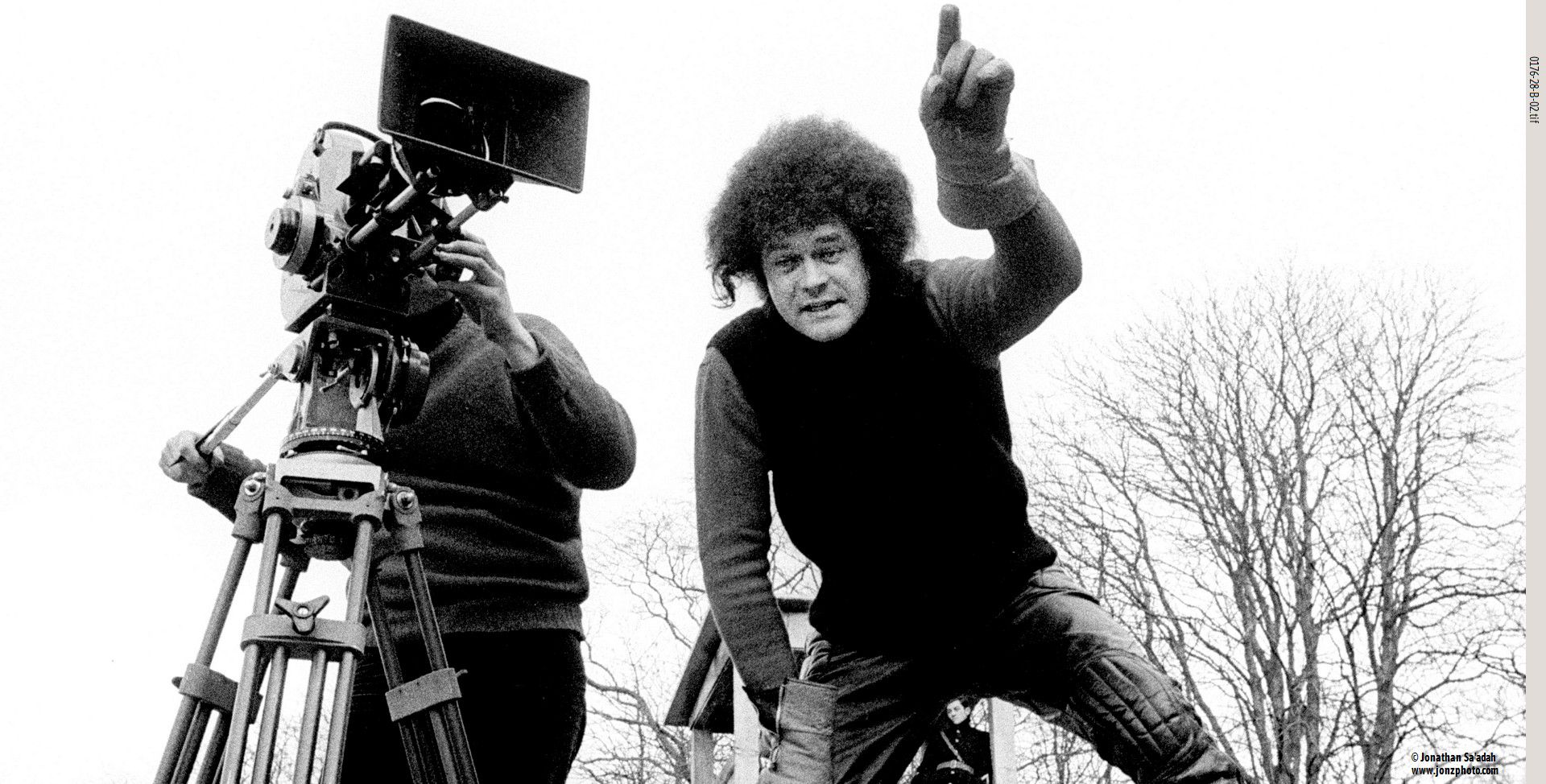
    ▲ Pierre-William Glenn, the strong, athletic camera operator was the person actually behind the camera, directed by Gerry Fisher, the cinematographer.

    Some other sources about Joseph Losey

    Barthel, Joan. “I’m an American, for God’s Sake!” New York Times  (1923-), March 26, 1967. ProQuest Historical Newspapers: The New York Times.

    Caute, David. Joseph Losey: A Revenge on Life. New York: Oxford University Press, 1994.

    Film Director Joseph Losey and Playwright Harold Pinter Discuss “Accident”, 1967, 2024. https://www.youtube.com/watch?v=hhQQ-wBSQkI.

    Joseph Losey : Je n’irai Pas En Angleterre, 2012. https://www.youtube.com/watch?v=gTLxYCVUfSU.

    Joseph Losey Tribute, 2018. https://www.youtube.com/watch?v=IMNxtkGpWtc.

    Losey, Joseph. Conversations with Losey. Edited by Michel Ciment. London ; New York: Methuen, 1985.
  • Alexandre Trauner and Joseph Losey: Crafting the World of M Klein

    When Joseph Losey set out to make M Klein in 1976, he turned to one of Europe’s most celebrated art directors, Alexandre Trauner, to help bring wartime Paris to life. Their collaboration on this film was not just a meeting of two accomplished professionals, but a convergence of personal histories and artistic philosophies that shaped the film’s haunting atmosphere and visual authenticity.

    The Art Director’s Legacy

    Alexandre Trauner was already a legend in the world of film design by the time he joined M Klein. Trained as a painter in Hungary, Trauner had built a career in France, working with some of the greatest directors of his era. His credits included an Oscar for Billy Wilder’s The Apartment and a reputation as the “dean of European art directors.” But for Trauner, M Klein was more than another prestigious project – it was deeply personal. Born Sándor Trau, he was a Hungarian Jew who had fled anti-Semitism in Hungary, only to face it again in Nazi-occupied France, where he went underground to survive.

    Trademark Trauner Alexandre Trauner had nothing to prove at this point in his career. As a Jewish young man in Hungary he fled the right-wing authoritarian regime of Miklós Horthy, only to face the same situation in Paris when the Nazis captured the city.

    Building the World of M Klein

    Losey’s vision for M Klein demanded a level of realism and atmosphere that only a master like Trauner could deliver. The film was shot both in the controlled environment of Studios de Boulogne and on locations throughout Paris. While Losey preferred the unpredictability and grit of real locations, he grudgingly acknowledged the advantages of studio work: flexibility, control over lighting, and the ability to reconfigure sets as needed. Trauner’s skill lay in making these studio sets feel as authentic and lived-in as the city streets outside.

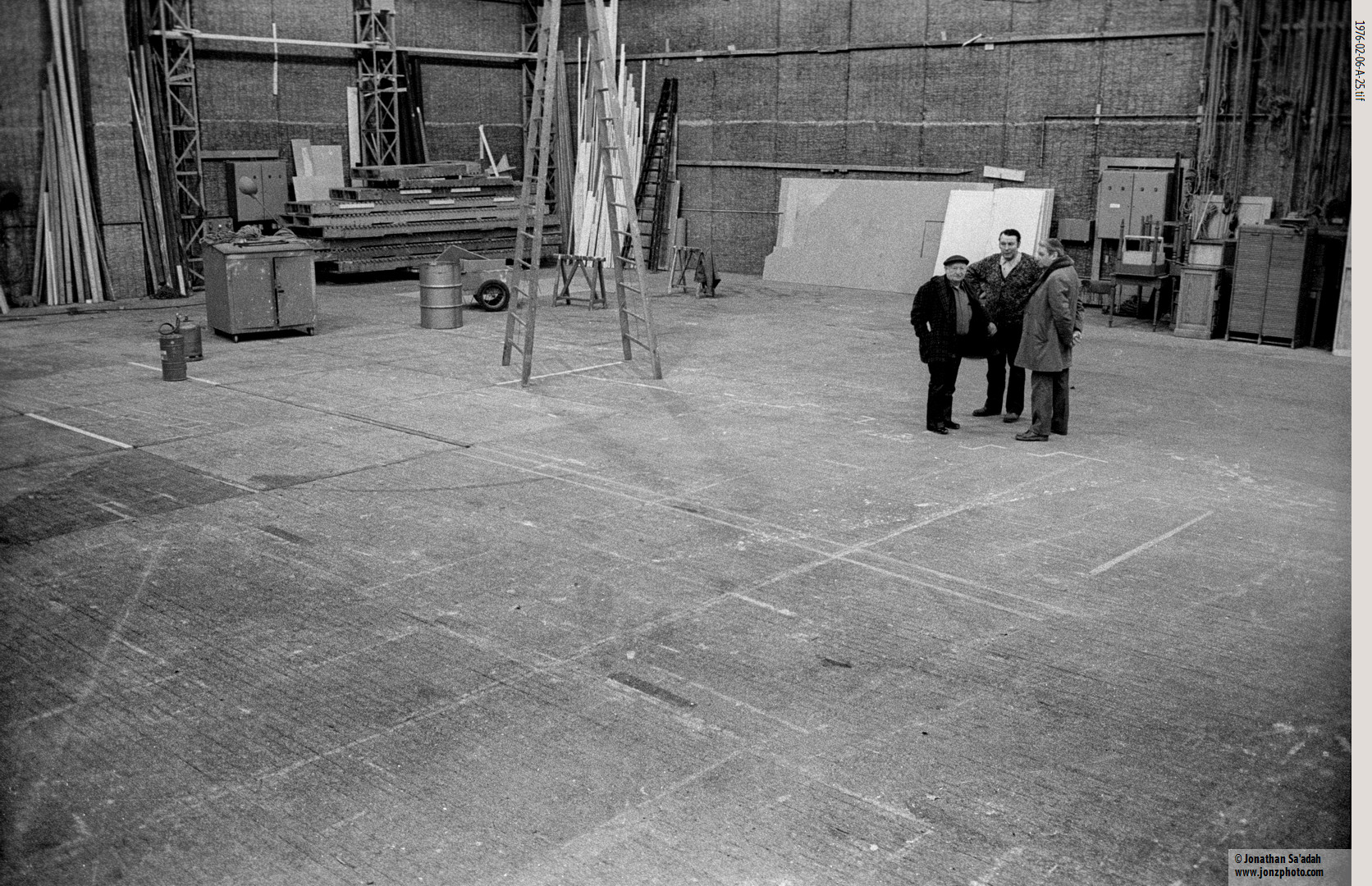
    ▲ Trauner with assistants surveying part of Stage A at Studios de Boulogne. In 1976 this was the leading French film studio, hosting many French and American productions.
    • Studio Mastery: Trauner and his team transformed the cavernous Stage A at Boulogne into convincing interiors, using movable walls and ceilings to create dynamic spaces for the camera and actors.
    • Location Expertise: Trauner’s intimate knowledge of Paris allowed him to identify and secure locations that captured the city’s wartime character, from rundown tenements to grand public buildings.
    • Visual Storytelling: Trauner’s approach was less about literal storyboarding and more about mood, color, and the “dressing” of the set. With Losey’s input he translated the screenplay’s emotional cues into physical spaces that reflected the film’s themes of identity, suspicion, and moral ambiguity.
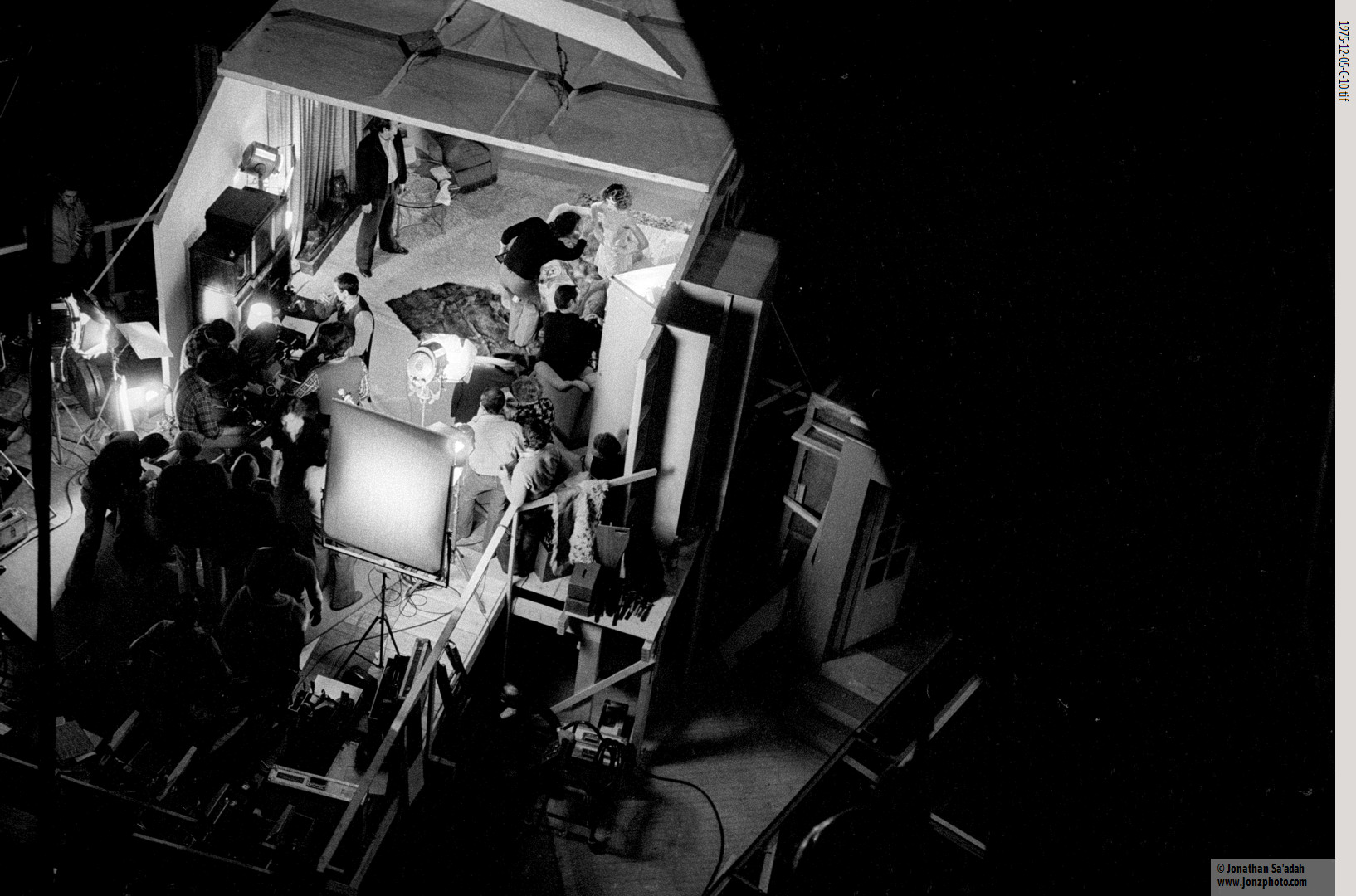
    ▲ With the walls and part of the ceiling removed, Klein’s bedroom has been transformed into a set for the scene where Jeanine reads from Moby Dick. Klein (Delon) sits at the desk, with the camera positioned right beside him. This photo, taken from a catwalk above, demonstrates the benefits of filming in a studio rather than on location: the space functions as a small stage set, offering flexibility and easy access for the crew.

    A Partnership of Trust and Professionalism

    Losey’s previous long-term collaboration with art director Richard Macdonald had ended before M Klein, making his partnership with Trauner especially significant. Trauner brought a different energy: more structured, less chaotic, but equally committed to artistic excellence. Losey praised Trauner’s professionalism and his ability to immediately grasp and adapt to the director’s needs, saying, “There’s a kind of professionalism about Trauner and a kind of immediate recognition of what I want. Also, if I say to Trauner that something that he’s doing is wrong for me, whatever it may be…he understands and can change this immediately”.

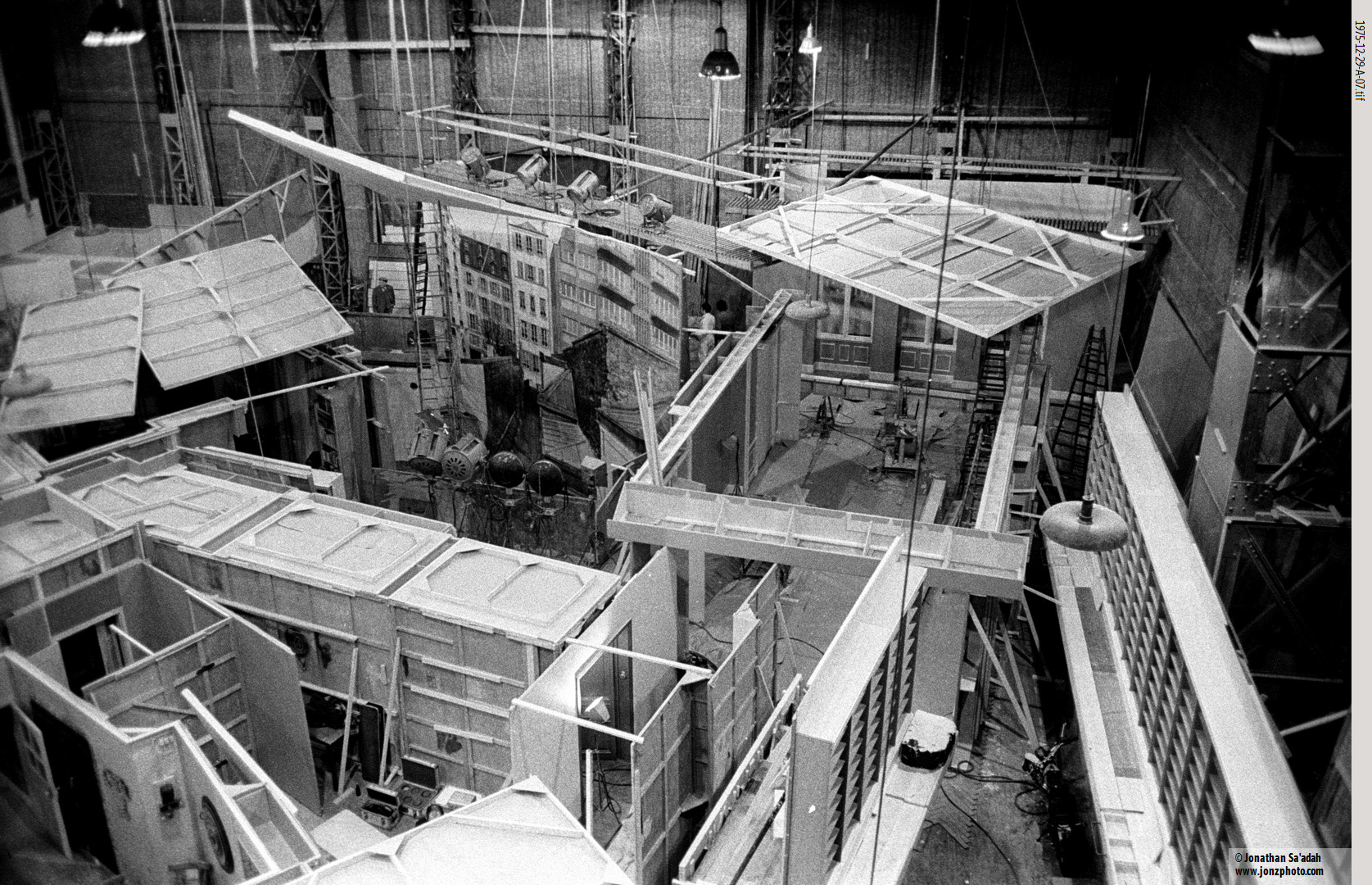
    ▲ A wider shot of Klein’s “apartment” from above. Note the large painted flats that formed “views” out windows. The small figure in the top left is Trauner.

    Personal History Meets Artistic Vision

    What made Trauner’s contribution to M Klein so powerful was the way his personal history resonated with the film’s subject. Like Margot Capelier, the casting director, Trauner had lived through the Nazi occupation and the persecution of Jews in France. This experience gave him a unique sensitivity to the film’s themes and a determination to render them truthfully on screen. His bond with Capelier – her husband, Auguste Capelier, often collaborated with Trauner after the war – further deepened the sense of shared purpose among the creative team.

    The Lasting Impact

    The world that Trauner built for M Klein is more than a backdrop; it is a character in its own right, shaping the film’s mood and immersing viewers in the paranoia and uncertainty of occupied Paris. His work stands as a testament to the power of art direction in cinema and to the importance of personal history in shaping artistic achievement.

    Through his collaboration with Joseph Losey, Alexandre Trauner helped make M Klein not just a film about history, but a living, breathing evocation of a world on the edge – crafted by someone who had survived its darkest days.


    Alexandre Trauner’s Film Credits

    YearFilmDirectorCreditAwards
    1932À nous la libertéRené ClairAssistant Set Designer
    1935La Kermesse héroïqueJacques FeyderAssistant Set Designer
    1937Drôle de drameMarcel CarnéSet Designer
    1938Port of Shadows (Quai des brumes)Marcel CarnéSet Designer
    1938Hôtel du NordMarcel CarnéSet Designer
    1939Le jour se lèveMarcel CarnéSet Designer
    1942Les Visiteurs du soirMarcel CarnéSet Designer
    1943Lumière d’étéJean GrémillonSet Designer
    1945Children of Paradise (Les Enfants du paradis)Marcel CarnéSet Designer
    1946Les Portes de la nuitMarcel CarnéSet Designer
    1948-1950OthelloOrson WellesProduction Designer
    1954Du rififi chez les hommesJules DassinProduction Designer
    1955Land of the PharaohsHoward HawksArt Director
    1956Love in the AfternoonBilly WilderArt Director
    1957Witness for the ProsecutionBilly WilderArt Director
    1959The Nun’s StoryFred ZinnemannArt Director
    1960The ApartmentBilly WilderArt DirectorAcademy Award for Best Art Direction (1961)
    1961One, Two, ThreeBilly WilderArt Director
    1961Paris BluesMartin RittArt Director
    1961Goodbye AgainAnatole LitvakArt Director
    1962Five Miles to MidnightAnatole LitvakArt Director
    1964Behold a Pale HorseFred ZinnemannProduction Designer
    1966How to Steal a MillionWilliam WylerProduction Designer
    1967The Night of the GeneralsAnatole LitvakProduction Designer
    1970The Private Life of Sherlock HolmesBilly WilderProduction Designer
    1974The Man Who Would Be KingJohn HustonProduction Designer
    1976Mr. KleinJoseph LoseyProduction DesignerCésar Award for Best Production Design (1977)
    1977FedoraBilly WilderProduction Designer
    1978Don GiovanniJoseph LoseyProduction DesignerCésar Award for Best Production Design (1979)
    1981Coup de torchonBertrand TavernierProduction Designer
    1982La TruiteJoseph LoseyProduction DesignerCésar Award for Best Production Design (1983)
    1983Tchao PantinClaude BerriProduction Designer
    1985SubwayLuc BessonProduction DesignerCésar Award for Best Production Design (1986)
    1985HaremArthur JofféProduction Designer
    1986Round MidnightBertrand TavernierProduction Designer
    1989ReunionJerry SchatzbergProduction Designer
    1990The Rainbow ThiefAlejandro JodorowskyProduction Designer

    More about Alexandre Trauner

    “Alexandre Trauner.” In Wikipedia, March 18, 2023. https://en.wikipedia.org/w/index.php?title=Alexandre_Trauner&oldid=1145366800.

    “Alexandre Trauner | Film Art, Production Design & Cinematography | Britannica.” Accessed July 7, 2025. https://www.britannica.com/biography/Alexandre-Trauner.

    Europe of Cultures. “Europe of Cultures – Alexandre Trauner, Decorator of Film Sets. – Ina.Fr.” http://fresques.ina.fr/europe-des-cultures-en/fiche-media/Europe00130/alexandre-trauner-decorator-of-film-sets.html.

    Forbes, Jill. “Alexandre Trauner.” Sight and Sound, London: British Film Institute, Fall 1986. 1305511273. ProQuest One Literature.

    Giquello, Binoche et. Alexandre Trauner – Jacques Prévert: Correspondances, Dessins, Maquettes, Carnets, Photographies, Collages, 1932-1976. Binoche et Giquello, 2012.

    Imdb. “Alexandre Trauner | Production Designer, Art Director, Set Decorator.” https://www.imdb.com/name/nm0871202/.

    McCann, Ben. “What Trauner Did next: The Continuation of a French Design Aesthetic in an American Context.” French Cultural Studies 20, no. 1 (February 1, 2009): 65–81. https://doi.org/10.1177/0957155808099344.

    McCann, Benjamin Edward. “Set Design, Spatial Configurations and the Architectonics of 1930s French Poetic Realist Cinema,” n.d.

    Mubi. “Images of the Day. From Sketch to the Screen: ‘Hôtel Du Nord’ (1938),” October 9, 2010. https://mubi.com/notebook/posts/images-of-the-day-from-sketch-to-the-screen-hotel-du-nord-1938.

    Webformance. “Trauner, Sándor (Alexandre Trauner) (1906 – 1993) – Famous Hungarian Painter, Graphic.” Kieselbach. https://www.kieselbach.hu/artist/trauner_-sandor-_alexandre-trauner__1948.

  • Reginald Beck: Invisible Artisan of Cinema

    Reginald Beck (1902-1992) edited eighteen films of Losey’s, beginning in 1958 and stretching to Losey’s last, in 1985. It was a multi-decade professional partnership based on mutual respect. Beck was a small man, of modest manner and somewhat taciturn yet insightful in his opinions and generous in training younger editors. He and cinematographer Gerry Fisher formed the core team that supported Losey’s second career as an European director.
    Beck’s demeanor deceitfully feigned that of a small bland Englishman, but inside burned a brightly shining personality with an unusual background. His career, spanning from the early days of British cinema through the European auteur movement, illustrates a complex mix of artistic vision, political conviction, and professional self-determination.

    Reginald Beck editing
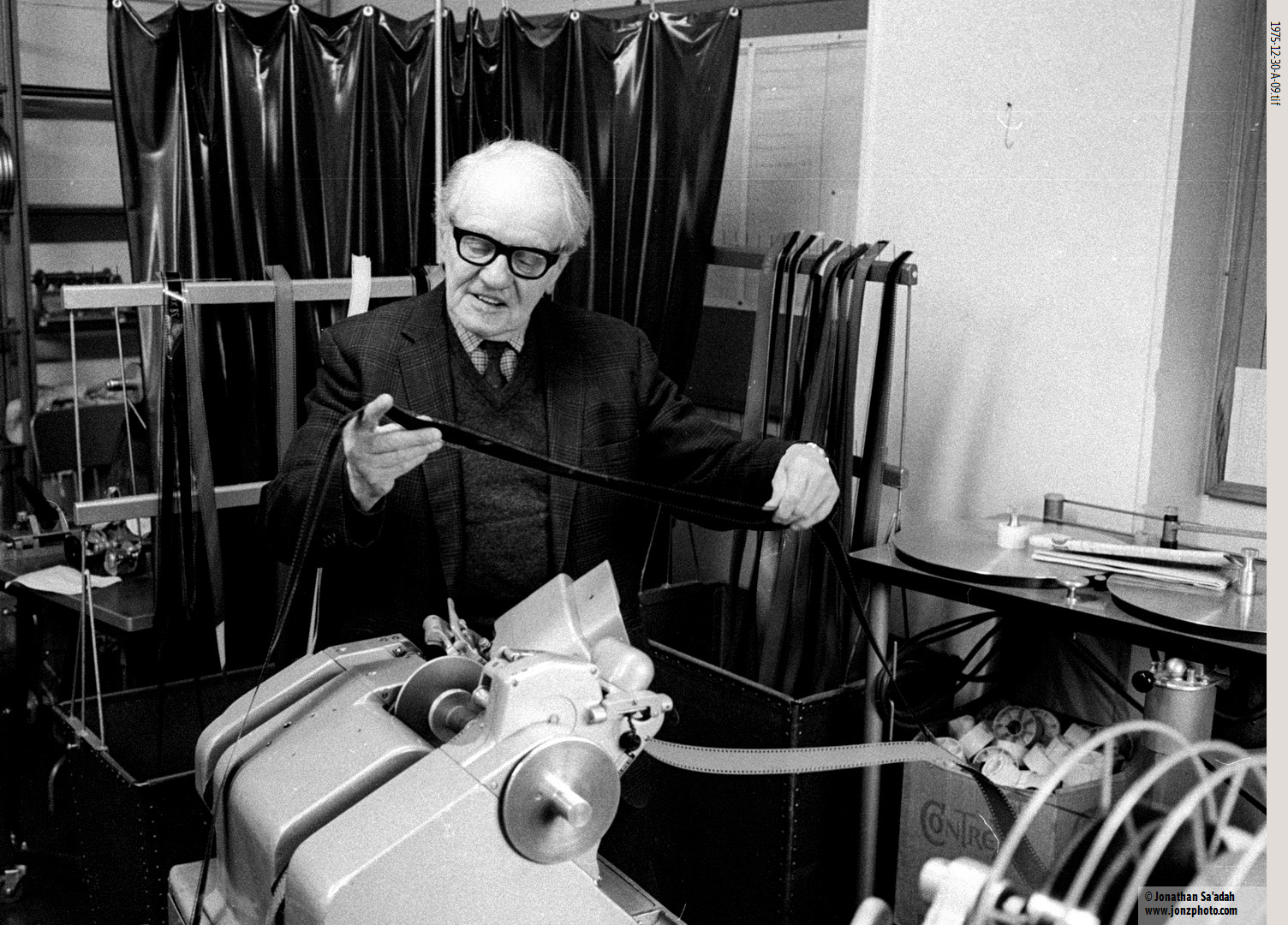
    ▲ Beck using a Moviola machine in the cutting room. The Moviola defined film editing from the 1920’s through the mid-Seventies, neatly overlaying Beck’s career. Beck’s familiarity and skill in using it made the complex task of cutting the film seem relaxed and easy – something it was anything but.

    The M Klein Credit Controversy: Union Rules and Artistic Recognition

    The case of M Klein exemplifies the bureaucratic obstacles that could overshadow artistic collaboration in the film industry. Despite Beck’s editing M Klein, he was unable to receive proper screen credit due to British film union regulations. The film’s credits instead list Henri Lanoë, Marie Castro-Vasquez, and Michèle Neny as editors. Beck gets credit but as a “Adviser to Joseph Losey”. Indeed!

    British film union rules, particularly those enforced by the Association of Cinematograph, Television and Allied Technicians (ACTT), strictly governed credit allocation during the 1970s. These regulations often prevented editors from receiving recognition for work performed outside their home territories or under specific contractual arrangements. The ACTT, founded in 1933 and representing over 20,000 members by 1982, maintained rigid protocols about screen credits that sometimes conflicted with the realities of international film-making. The solution in the case of this film was to employ a French editor who was credited for Beck’s work. This arrangement, though unfair to Beck, preserved the artistic continuity of the Losey-Beck collaboration while accommodating the logistical requirements of filming in France. It was the only time Beck didn’t receive credit for his work through his entire collaboration with Losey.

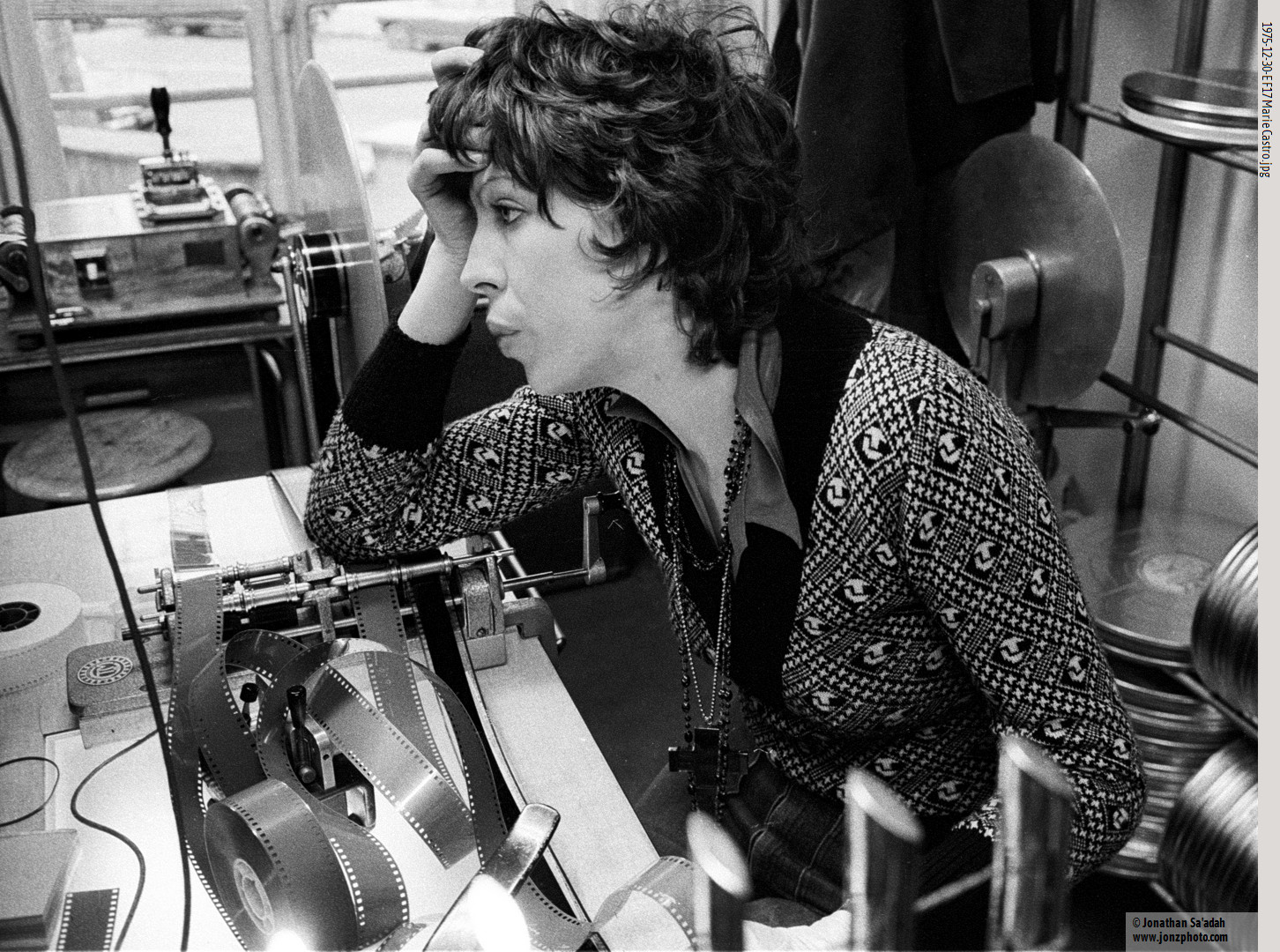
    ▲ In truth there was always pressure to get things done. Marie Castro-Vasquez was the first assistant to Beck in M Klein. Following her work with him she had a career as an editor of feature films and tv series in the French market.

    Artistic Freedom: The Freelance Editor’s Independence

    Beck’s career was unusual because he was able to make (and stick to) a deliberate choice to work as a freelance editor rather than being tied to any particular studio. This independence, which he was proud of, allowed him artistic freedom but also created difficulties in an industry that was increasingly dominated by corporate structures. His freelance status enabled him to work with diverse directors across different production systems, from the quota quickies of the 1930s to the art films of the 1970s.

    Working outside the studio system affected Beck’s approach to editing. Unlike editors employed by major studios who were often constrained by house styles and executive interference, Beck could develop distinctive collaborative relationships with individual directors. This freedom was particularly evident in his work with Losey. Beck pursued skillful editing techniques that supported Losey’s complex thematic concerns without outside pressure to conform to commercial formulas.

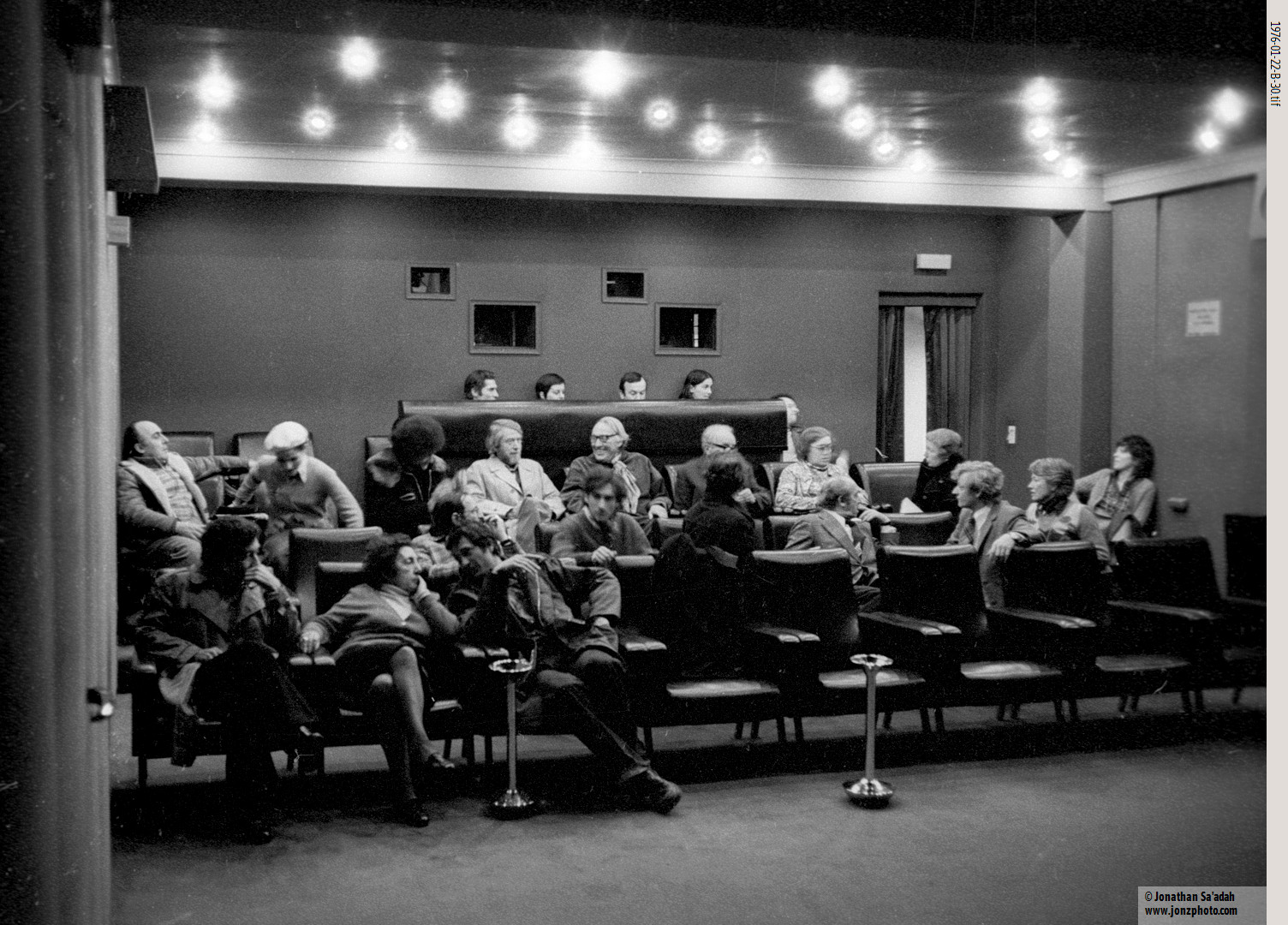
    ▲ A clear hierarchy is visible through the screening room seating arrangement as people wait to watch film rushes. Losey is center with Beck on his left and cinematographer Gerry Fisher on his right. The assistant directors sit in front of Losey. Margo Capelier, casting director, is in the front row. Marie Castro-Vasquez is far right, and Henri Lanoë’s head is just visible in the back.

    Beck’s independent status also meant he could select projects based on artistic merit rather than contractual obligations. His filmography reflects this selective approach, spanning from Laurence Olivier’s Henry V (1944) to works by international auteurs, illustrating his commitment to cinematic excellence over financial security. Importantly, the freelance model allowed Beck to maintain creative autonomy while building long-term partnerships with directors who valued his unique skills. Like Fisher’s camerawork, Beck’s editing was central in supporting Losey’s complex themes and visual identity.

    Political Beliefs: Russian Origins and Radical Sympathies

    Beck’s political world-view was fundamentally shaped by his early experiences as a Russian-born émigré. Born in St. Petersburg in 1902 to a British father and Finnish mother, Beck’s family emigrated to Britain when he was thirteen (1915). Beck’s childhood exposure to revolutionary Russia and his family’s subsequent displacement instilled in him an understanding of political persecution and the arbitrary nature of state power. These experiences resonated with the themes explored in many of his later collaborations, particularly Losey’s films that examined outsiders, persecution, and the abuse of authority.

    The intersection of Beck’s political beliefs with Losey’s anti-establishment stance created a powerful creative partnership. Beck’s Russian origins and immigrant experience gave him a unique perspective on British class society that proved invaluable in interpreting Losey’s critiques of social hierarchies. His editing choices consistently supported narratives that exposed the violence and corruption underlying respectable facades, reflecting a political sensibility forged in revolutionary upheaval. What Losey found in Beck was an editor who intuitively understood the psychology of displacement and persecution. Their collaboration on films like Accident (1967) and The Go-Between (1971) explored themes of class oppression and social hypocrisy that reflected both men’s critical views of established power structures.

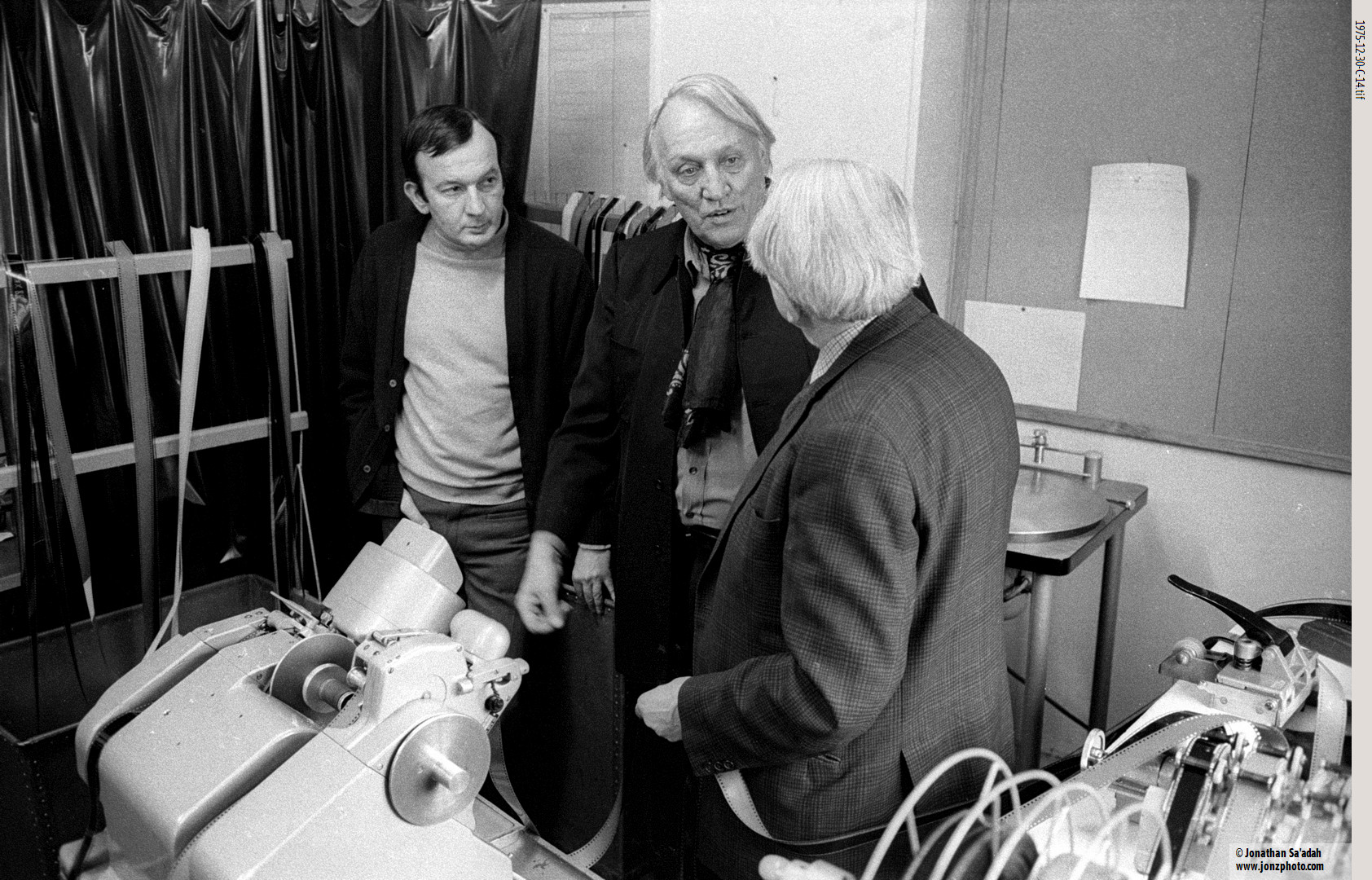
    ▲ Losey speaking with Beck as Henri Lanoë, the credited editor, listens.

    Style as an Editor: Invisible Craft and Sustained Tension

    Beck’s editing style was rooted in the theories of Vsevolod Pudovkin which held that the assembly of shots served as bricks in creating narrative. His approach emphasized psychological complexity over flashy technique (contrasting with the theories of Sergei Eisenstein).

    In M Klein, Beck’s editing supported the film’s Kafkaesque atmosphere of paranoia and identity confusion. The film’s exploration of a French Catholic being mistaken for a Jewish namesake required editing that could sustain psychological tension while maintaining narrative clarity. Beck’s work created a labyrinthine with life-or-death consequences through careful pacing and strategic withholding of information. A mark of his work with Losey was lengthy shots that built tension through duration rather than cutting. This technique demonstrated Beck’s understanding that editing’s power often lay in restraint rather than flashiness, and in M Klein this approach supported the film’s meditation on identity and persecution by allowing scenes to develop psychological complexity through sustained observation.

    Relationship with Losey: Mutual Respect and Creative Partnership

    The professional relationship between Beck and Losey represented one of cinema’s most productive editor-director partnerships, spanning eighteen films from The Gypsy and the Gentleman (1958) through Steaming (1985). Losey considered Beck one of the two best editors he ever worked with, the other being his first editor, Reginald Mills. Beck’s collaboration with Losey began after the director’s public falling-out with Mills over The Servant (1963). Beck then edited all of Losey’s subsequent films, establishing a working relationship characterized by shared political sensibilities and complementary artistic approaches. Their partnership proved particularly fruitful in films that explored themes of persecution, identity, and social hypocrisy.

    What is ironic about the contribution that Reginald Beck made to M Klein, and Joseph Losey’s films in general, was that they were two people who worked on the margins of established systems, both dealing with issues of political exile and artistic displacement, and together they transformed these restraints of blacklisting and emigration into innovative film-making that challenged social norms as well as cinematic conventions. In some ways this wasn’t a surprising outcome for two such talented people, but it certainly represented a struggle and an opposition to forces and obstacles quite similar to those that many artists face today.


    If you would like further information:

    ‘Association of cinematograph, television and allied technicians’ (2025) Wikipedia. Available at: https://en.wikipedia.org/w/index.php?title=Association_of_Cinematograph,_Television_and_Allied_Technicians&oldid=1278926362 (Accessed: 29 June 2025).
    BFI Screenonline: Beck, Reginald (1902-1992) Biography (no date). Available at: http://www.screenonline.org.uk/people/id/1299434/index.html (Accessed: 13 March 2023).
    BFI screenonline: beck, reginald (1902-1992) biography (no date). Available at: http://www.screenonline.org.uk/people/id/1299434/index.html (Accessed: 28 June 2025).
    Burman, J. (no date) An Age of Transition and Turmoil: Editors Guild History 1965-75 -, CineMontage Journal of the Motion Pictures Editors Guild. Available at: https://cinemontage.org/an-age-of-transition-and-turmoil-editors-guild-history-1965-75/ (Accessed: 28 June 2025).
    ‘Reginald Beck’ (2022) Wikipedia. Available at: https://en.wikipedia.org/w/index.php?title=Reginald_Beck&oldid=1108833609 (Accessed: 9 April 2023).
    Ryder, W. and Lawson, A. (1987) Reginald Beck Interview. (The British Entertainment History Project). Available at: https://historyproject.org.uk/interview/reginald-reggie-beck (Accessed: 13 March 2023).
    Sloman, T. (1992) Obituary: Reginald Beck, The Independent. Available at: https://www.independent.co.uk/news/people/obituary-reginald-beck-1536223.html (Accessed: 29 March 2023).

    Films Beck Edited (List adapted from “Reginald Beck.” In Wikipedia, September 6, 2022. https://en.wikipedia.org/w/index.php?title=Reginald_Beck&oldid=1108833609)

    YearFilm NameDirector(s)
    1932The Return of RafflesMansfield Markham
    1933Death at Broadcasting HouseReginald Denham
    1935Late ExtraAlbert Parker
    1935Blue SmokeEdwin L. Ince
    1936Wedding GroupAlex Bryce & Campbell Gullan
    1936Find the LadyRoland Grillette
    1937Calling All Ma’sRedd Davis
    1937Variety HourRedd Davis
    1938Father O’NineMaclean Rogers (aka Oswald Mitchell)
    1938This Man Is NewsDavid MacDonald
    1939This Man in ParisDavid MacDonald
    1939The Stars Look DownCarol Reed
    1940The Stars Look DownCarol Reed
    1941Freedom RadioAnthony Asquith
    1941Quiet WeddingAnthony Asquith
    1942In Which We ServeNoël Coward & David Lean
    1942Unpublished StoryHarold French
    1943The Lamp Still BurnsMaurice Elvey
    1944Henry VLaurence Olivier
    1945Journey TogetherJohn Boulting (supervising editor)
    1947They Made Me a FugitiveAlberto Cavalcanti (supervising editor)
    1947I Became a CriminalAlberto Cavalcanti (editorial supervisor)
    1948HamletLaurence Olivier (associate producer)
    1950The Angel with the TrumpetAnthony Bushell (supervising editor)
    1951The Long Dark HallReginald Beck & Anthony Bushell
    1952The Wonder KidKarl Hartl
    1953The Beggar’s OperaPeter Brook
    1953Laughing AnneHerbert Wilcox (supervising editor)
    1953The Big FrameDavid MacDonald
    1954Trouble in the GlenHerbert Wilcox (supervising editor)
    1954Let’s Make UpDenis Kavanagh (supervising editor)
    1955King’s RhapsodyHerbert Wilcox (supervising editor)
    1957Island in the SunRobert Rossen
    1958Harry Black and the TigerHugo Fregonese
    1958The Gypsy and the GentlemanJoseph Losey
    1959Serious ChargeTerence Young
    1962EvaJoseph Losey
    1963The Leather BoysSidney J. Furie
    1965The Leather BoysSidney J. Furie
    1966Modesty BlaiseJoseph Losey
    1967AccidentJoseph Losey
    1967RobberyPeter Yates
    1968Boom!Joseph Losey
    1968Secret CeremonyJoseph Losey
    1971The Go-BetweenJoseph Losey
    1971Figures in a LandscapeJoseph Losey
    1971Something to HideAlastair Reid
    1972The Assassination of TrotskyJoseph Losey
    1973A Doll’s HouseJoseph Losey
    1973GalileoJoseph Losey
    1975The Romantic EnglishwomanJoseph Losey
    1977Un amour de sableChristian Lara
    1978DespairRainer Werner Fassbinder
    1978Roads to the SouthJoseph Losey
    1979Don GiovanniJoseph Losey
    1985SteamingJoseph Losey
  • Laughter in the shadows: The chilling cabaret scene of M Klein

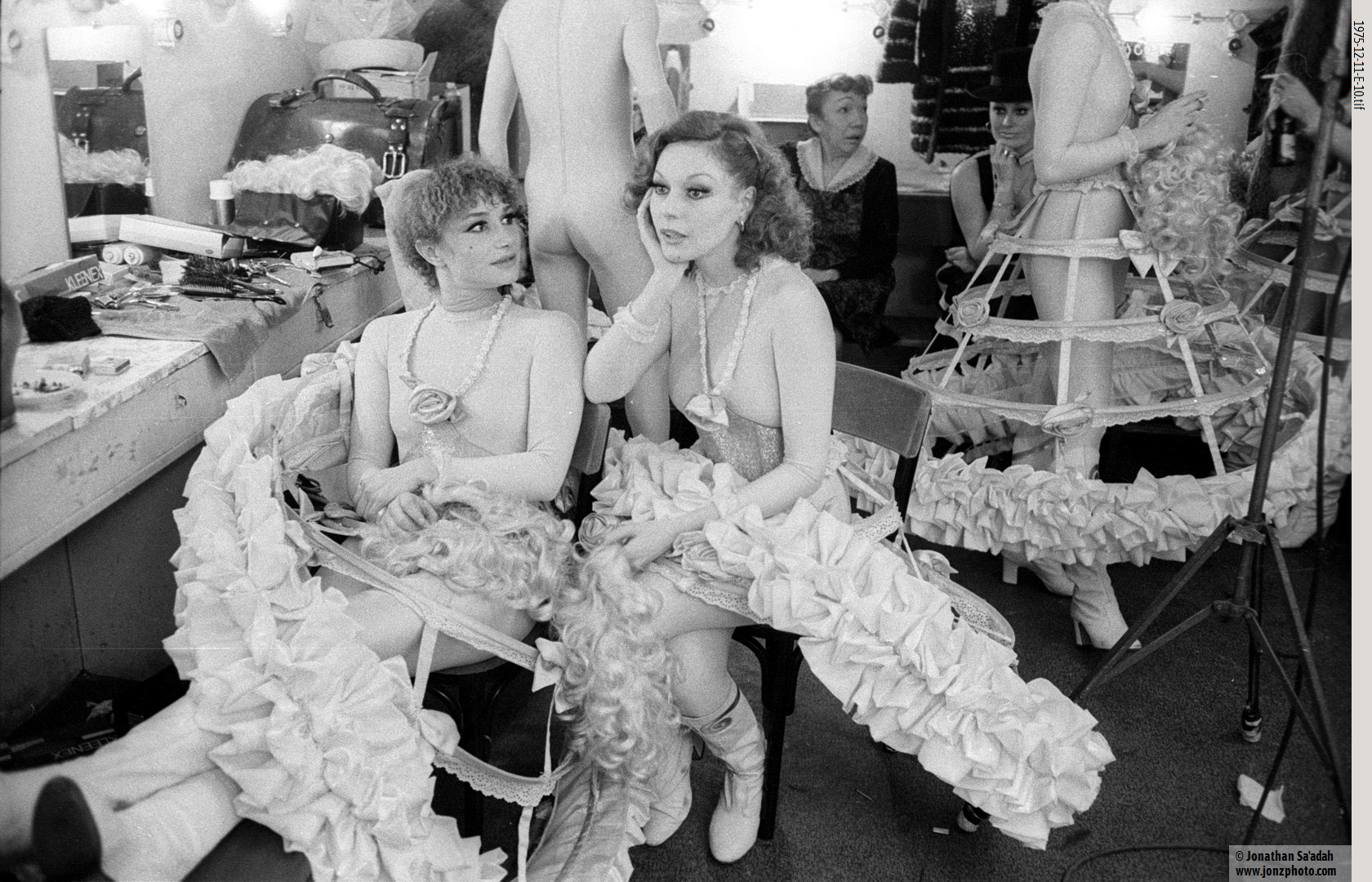
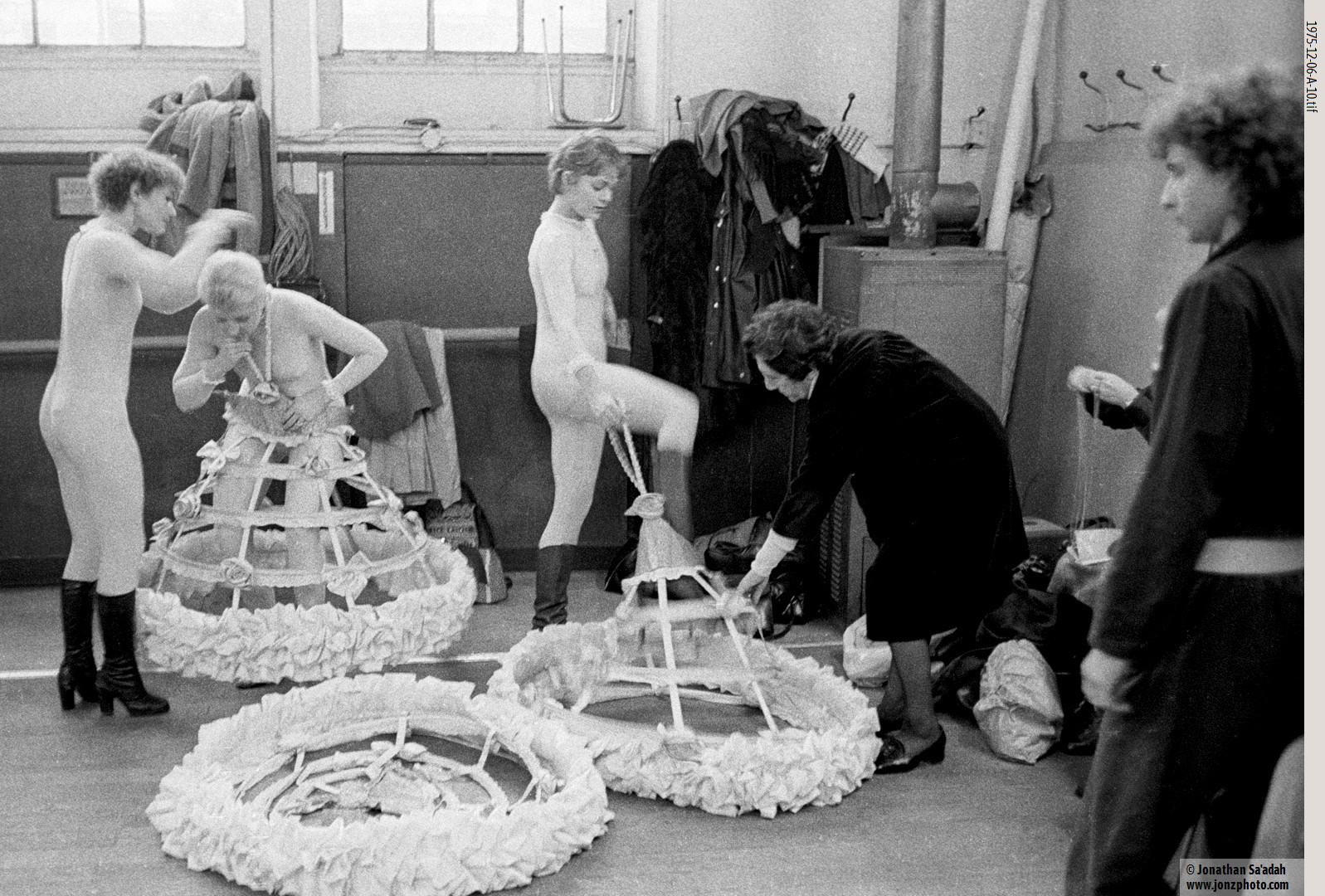
    ▲ In the final shot of the cabaret scene, a chorus line of dancing girls in hoop skirts kick their way out onto the stage. These women were practicing dancing with the hoops, which was an acquired skill.

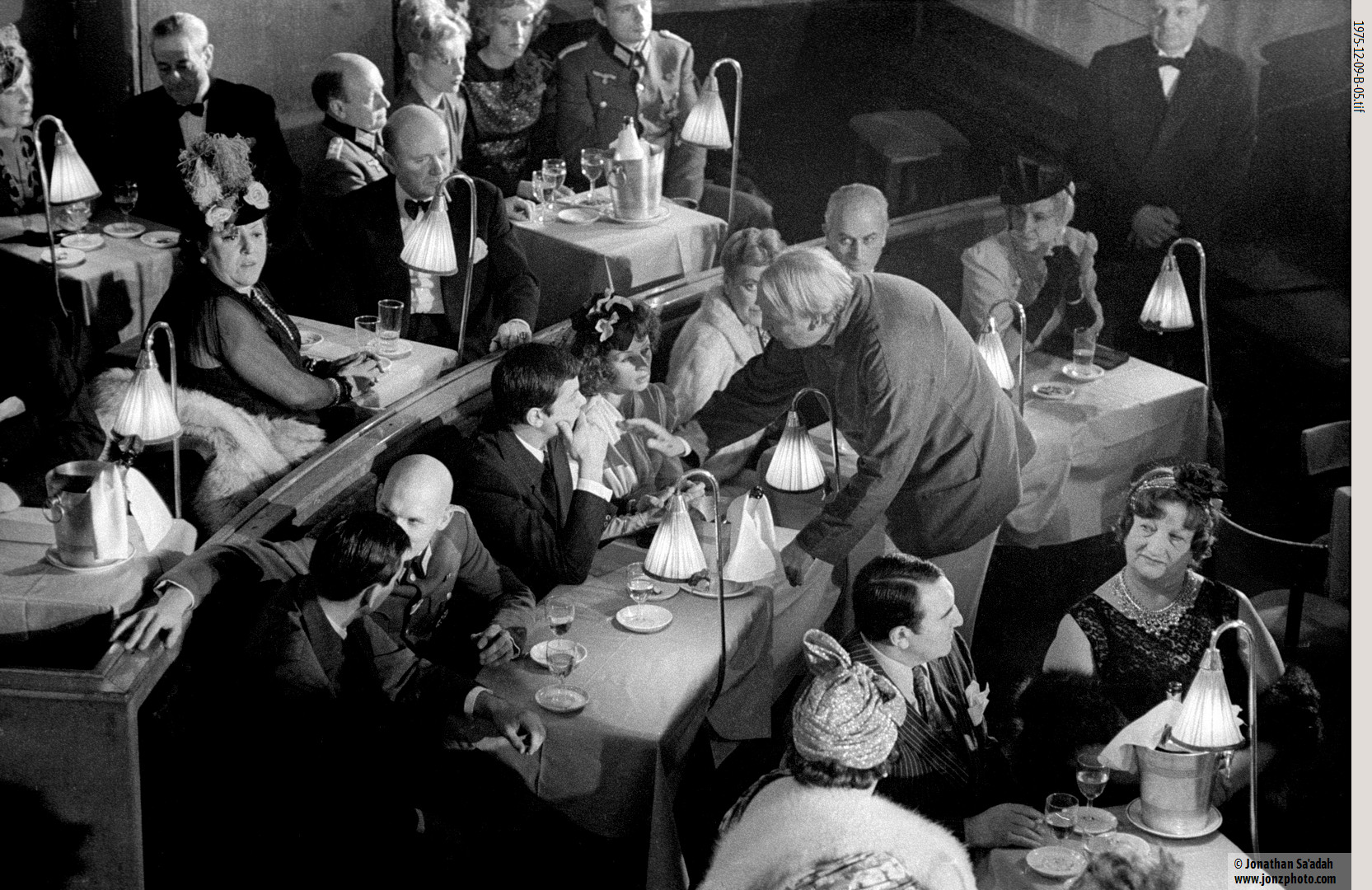
    The cabaret scene in Joseph Losey’s M Klein, which occupies a full five minutes in the film, is the pivotal scene in the movie – when Klein first wakes up (with some prodding from his girlfriend) and realizes that the racist skit that he and others are mindlessly applauding in a WWII Paris cabaret is actually insulting, repulsive and sinister. The scene was drawn out as a sketch in the original screenplay but was developed in detail as Losey worked with the cabaret artist Frantz Salieri to bring into focus the violent hatred that underpins the action in this scene and the film overall. Losey created an audience of predatory scavengers to applaud and dine while watching the anti-Semitic stage show.

    Joseph Losey directing actors

    Losey Salieri collaboration
    Frantz Salieri was given the role by Joseph Losey of creating the stage show component in the film’s cabaret scene. Salieri, a multi-discipline artist working under a variety of names (Francis Savel as a painter, Dietrich de Velsa as film director), later collaborated with Losey on the film Don Giovanni. As a painter (Francis Savel) he had been the subject of an 18 minute documentary portrait (“Le Journal d’un Combat, Guy Gilles, 1964) which captured his painting process and, interestingly enough, was narrated by Alain Delon. A later work under the Dietrich de Velsa identity was his 1980 film, Équation à un inconnu (Equation to an Unknown), which was an erotic rendering of queer culture in France in the period preceding AIDS and was distinguished by his directorial vision.

    Several years prior to the filming of M Klein Salieri created a Parisian transvestite cabaret show called “La Grande Eugène”, which performed on rue de Marignan in the 8th arrondissement in Paris and was known for its flamboyance and innovative theatrical staging. Salieri created a show that represented a radical departure from what was offered in the traditional Parisian entertainment venues, featuring transformiste performances with elaborate drag shows and sophisticated theatrical presentations. The show was the subject of a David Bailey photo essay published in London Sunday Times in 1973. The cast of “La Grande Eugène” was used as the mainstay for the cabaret show in M Klein. It’s likely that Losey had learned of Salieri’s work from the 1973 run of “La Grande Eugène” in London, and that’s what led to the connection and his collaboration in this film.[1] Losey, throughout his life, was always on the lookout for talented artists whose work he perhaps could incorporate in his film projects. Examples I knew of personally were Salieri, who he used, and also Pilobolus,[2] and jazz musician Don Cherry, both of whom he never collaborated with but followed closely.

    Losey’s concerns and background in theatrical production
    In approaching the scene Losey concern was in creating content that might be attractive to racists. This concern arose because of a previous incident at La Cinémathèque française in Paris where a film festival screening wartime films had to be closed down because the anti-Semitic content attracted an audience looking for and cheering along what was shown. His goal was to find a way to stage the cabaret show in a manner that wouldn’t appeal to racists, and by using male actors to play the female roles, he was brilliantly successful in turning off racist interest.[3]

    In the script Klein tries to track down the other Klein, and in the course of this search goes looking for “Isabelle”, who he thinks is the second Klein’s girlfriend. This leads him first to the cabaret show being staged in the Parisian cabaret “La Nouvelle Eve”, and then to the stage entrance where he bribes the concierge to let him question one of the dancers. After questioning the dancer (Lola) she says that “Isabelle” is really “Cathy” and and that she doesn’t work at the Cabaret any more, but rather in a munitions factory near Metro Ballard.

    Losey was adept at actual theatrical stage managing, with many credits during his American career. He was, for example, the stage managing the 1946 Academy Awards, so he knew how to create dynamic flow and excitement. He was good at timing pieces to come together and create energy, and he worked with Salieri to that end.

    But there were challenges to the shooting at La Nouvelle Eve.

    Issues in working on location
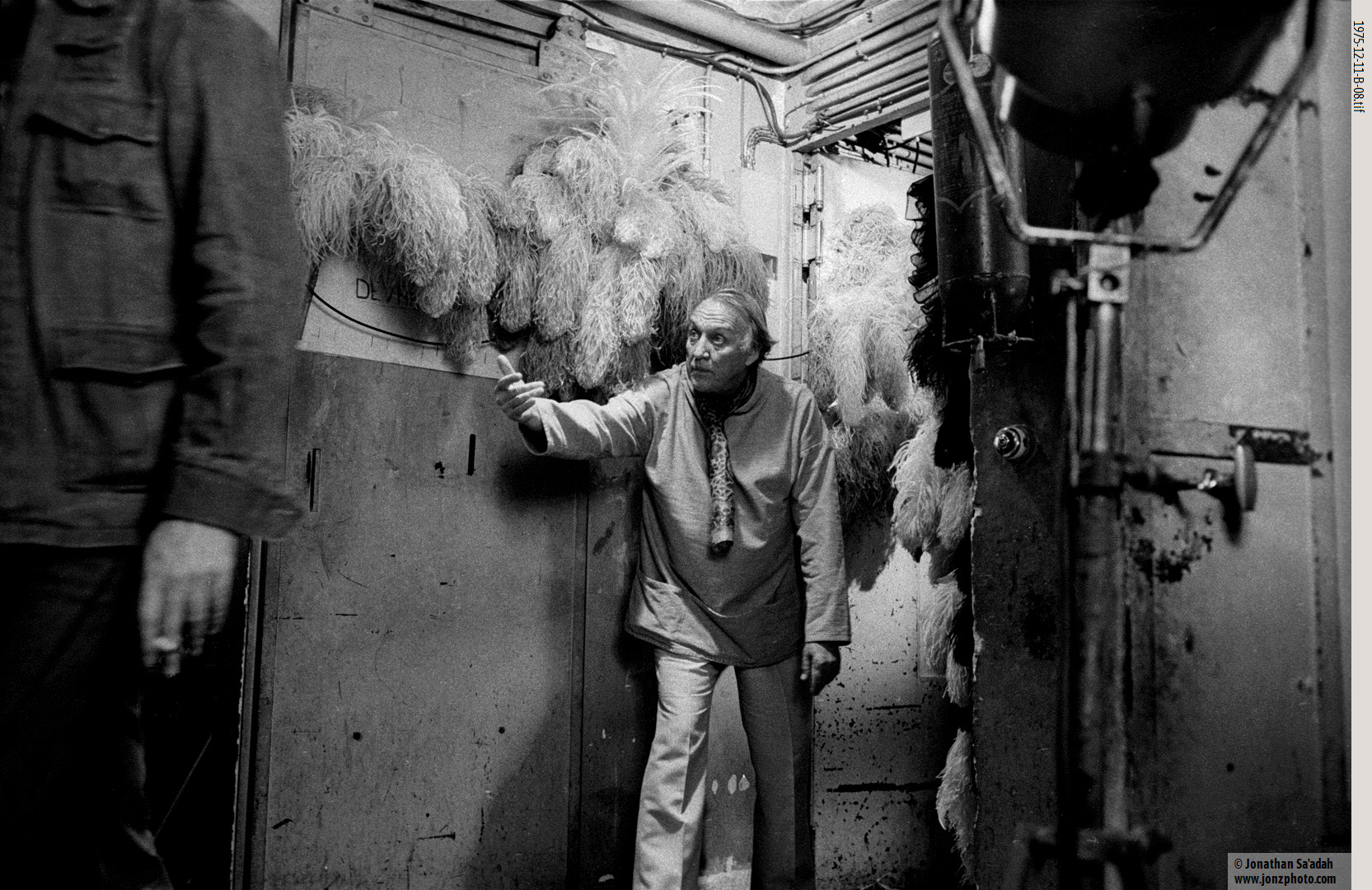
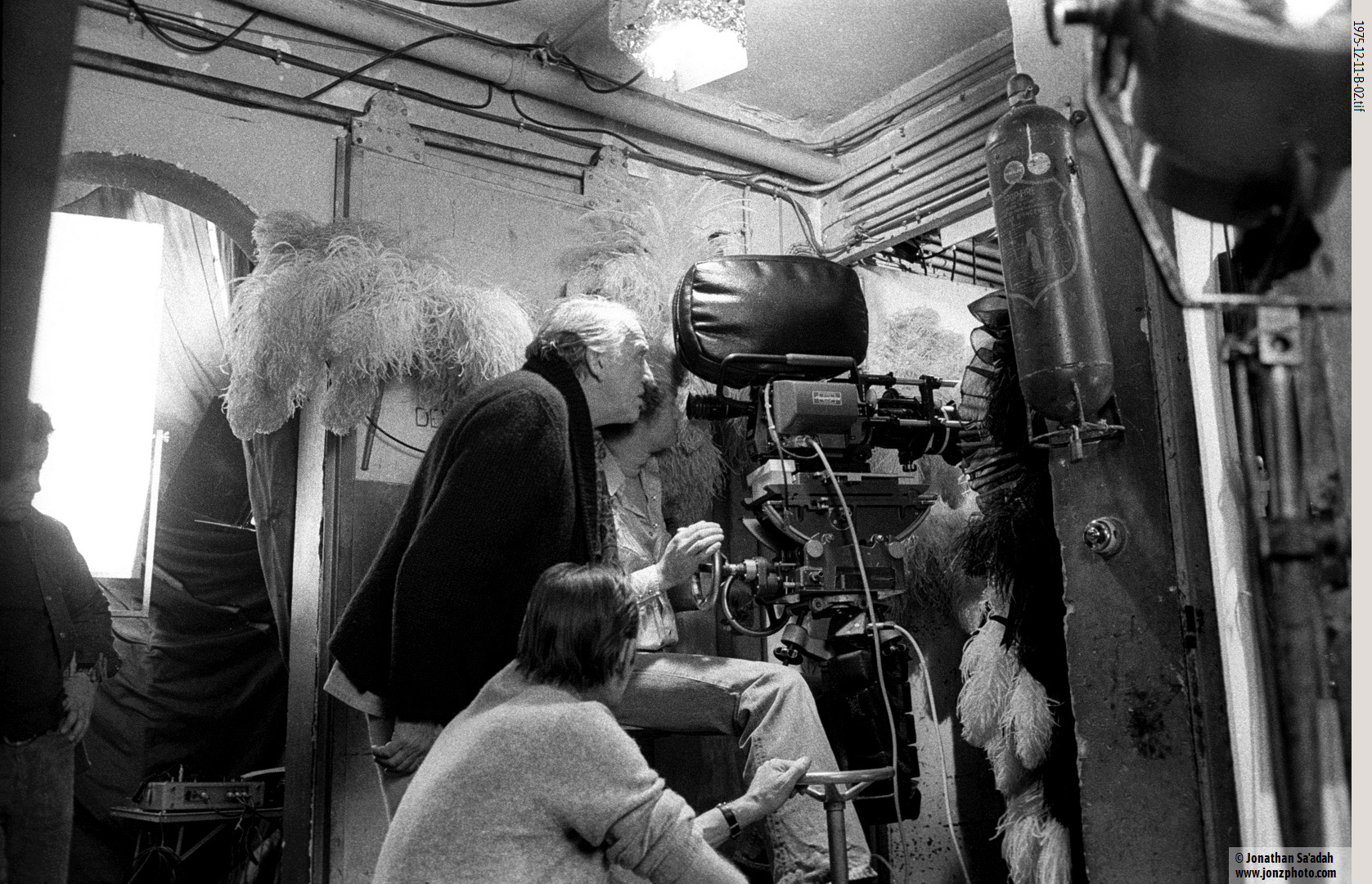
    It was technically difficult to work in the cramped, narrow corridors of the location. As a result cinematographer used the 35 mm camera both shoulder-held and on a crab dolly, both of which were difficult and took a lot of skill and strength under these conditions. Klein is first seen questioning the concierge. The camera is on a hydraulic stand (shown in the photographs) for that shot, but then is shoulder-held in the stairwell, and all the shots flowed together seamlessly. Gerry Fisher, the Cinematographer, had set up the lighting to work with almost no space.

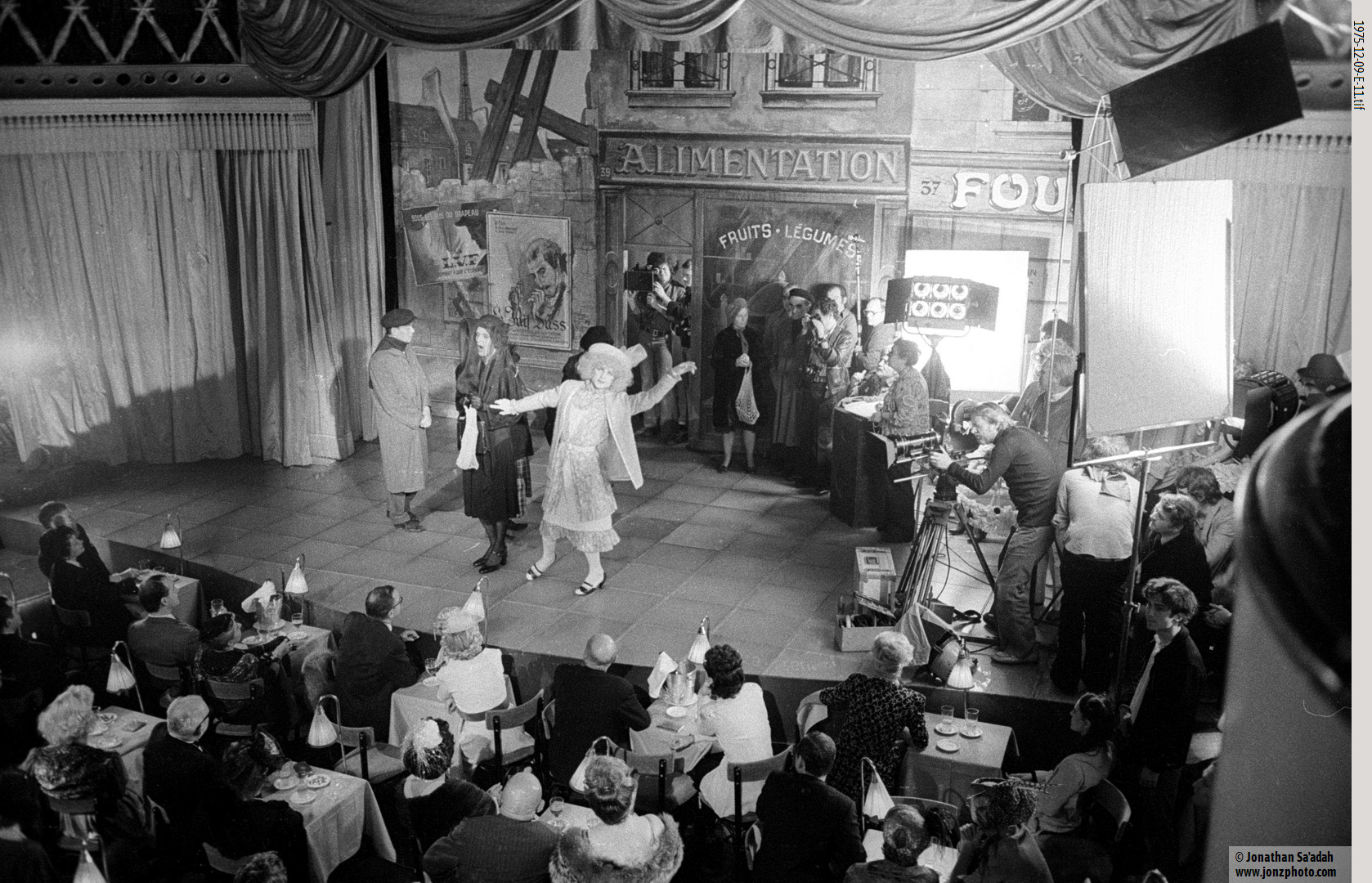
    The two sequences that make up the cabaret scene were shot first for the stage show in the cabaret La Nouvelle Eve on December 9th and 10th, and then the stage entrance scene was filmed at the same location on December 11th.

    The results of the Salieri-Losey collaboration show camera and actor movement tied together skillfully. The result was the creation of the two memorable central scenes in the movie.

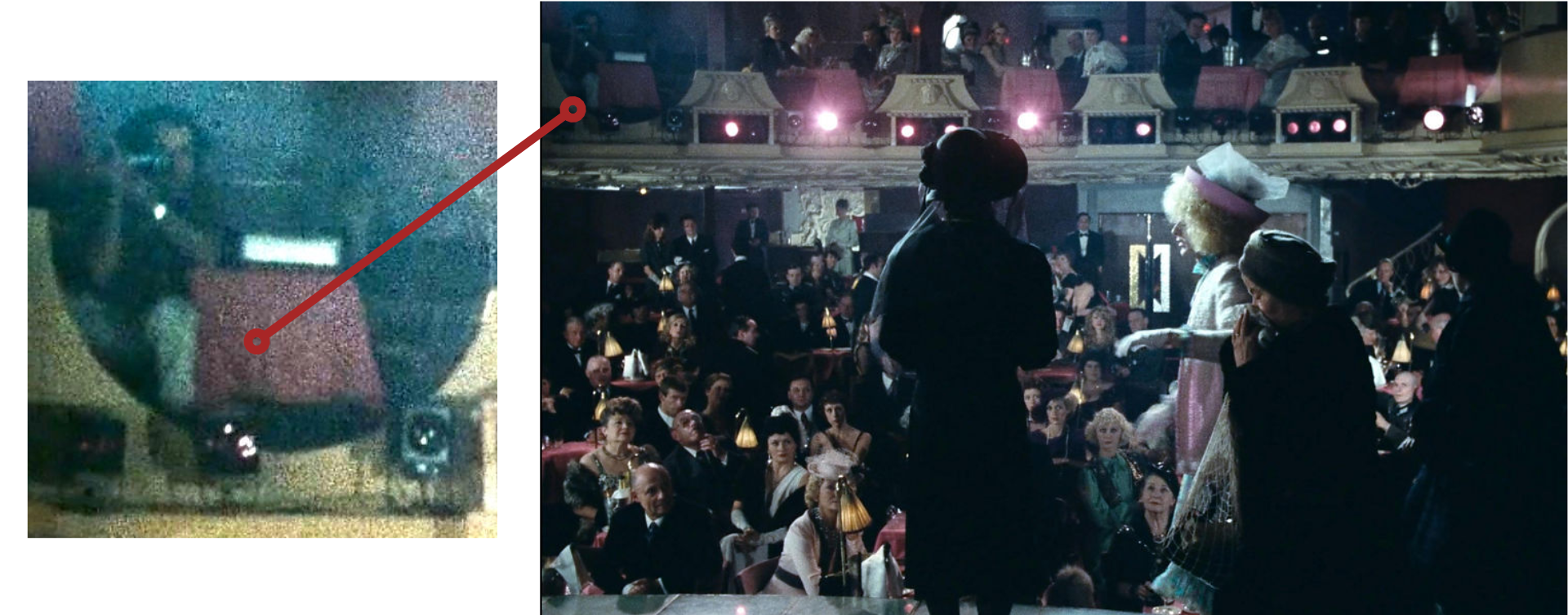
    It’s also my only ever appearance in a feature movie. I was actually at my perch taking the photo above and got through editing unnoticed. It’s the third shot of the cabaret performance sequence (2:03:27).

    Frame © Lira Films – Nova Films

    Other related posts:
    Joseph Losey’s film M Klein: A behind-the-scenes look
    Exploring location shooting in Joseph Losey’s M Klein
    Homage to Margot Capelier, Casting Director
    Sign up to get future posts on M Klein and other subjects …

    [1] Le Monde. 1986. Frantz Salieri, May 3, 1986.

    [2] Salieri’s conceptions and imaginative costume design were more radically stylized but recalled for me the costumes Pilobolus used (for instance, the “Tall Ladies” in the dance “Untitled”) in the same period.

    [3] Losey, Joseph, and Michel Ciment. 1985. Conversations with Losey. London ; New York: Methuen. Pages 347-348.

  • Homage to Margot Capelier, Casting Director for M Klein

    One in a series of posts describing the making of the film M Klein, by Joseph Losey.
    Previous related post: Introduction to the film and Shooting on location

    Margot Capelier died in 2007 after a long career as a casting director in the French film industry. She was known and admired by many in French cinema for her dedication to actors. A deep humanity pervaded her professionalism. She loved actors and understood them, while maintaining an overview of the business, combining the professional and creative sides of film.

    Despite her talents, she wasn’t rewarded with a glamorous lifestyle or widespread recognition. She is an example of someone who put her heart into her profession, helping many recognized individuals while herself remaining comparatively in the shadows.

    Margot Capelier blvd de Clichy
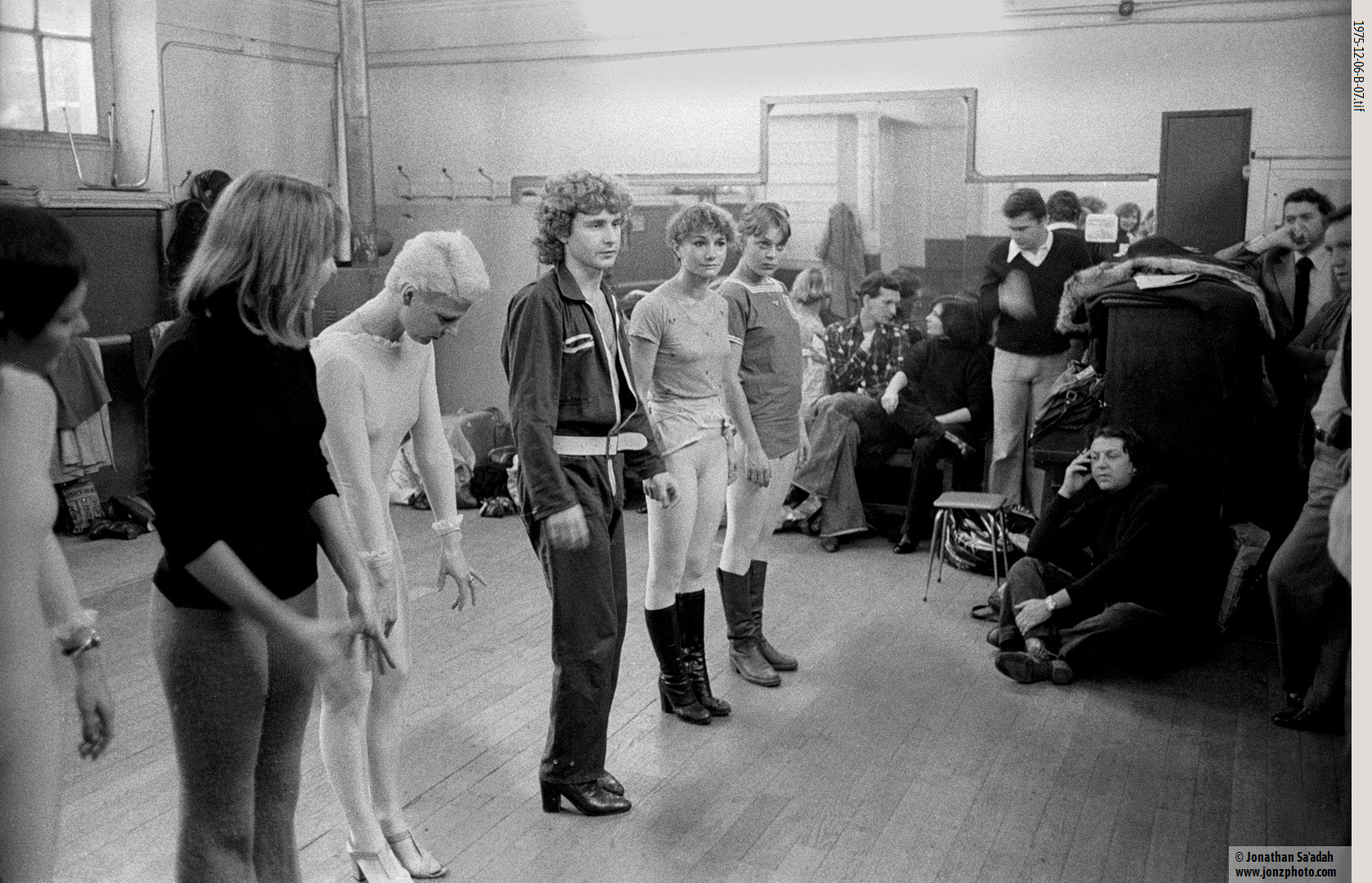
    ▲ Margot Capelier at the first-day rehearsal for the film’s cabaret scene in which professional actors performed alongside professional dancers. This was typical Capelier: there to help and encourage. The rehearsals went smoothly with a sense of cooperation and air of excitement.

    My friendship with Capelier was limited to the time M Klein was in production. I was never in her home and she never told me her story in great detail. On the other hand, she was one of two or three top people on the production side of the film who from the beginning accepted me as I was – a young still photographer brought into a tightly-knit world of successful professionals because of a connection with Losey – and she didn’t make a big deal out of it. Probably she was treating me the same way she would treat a young actor under her watch, and she has always kept a place in my memory as a person who stood out in the group surrounding Losey.

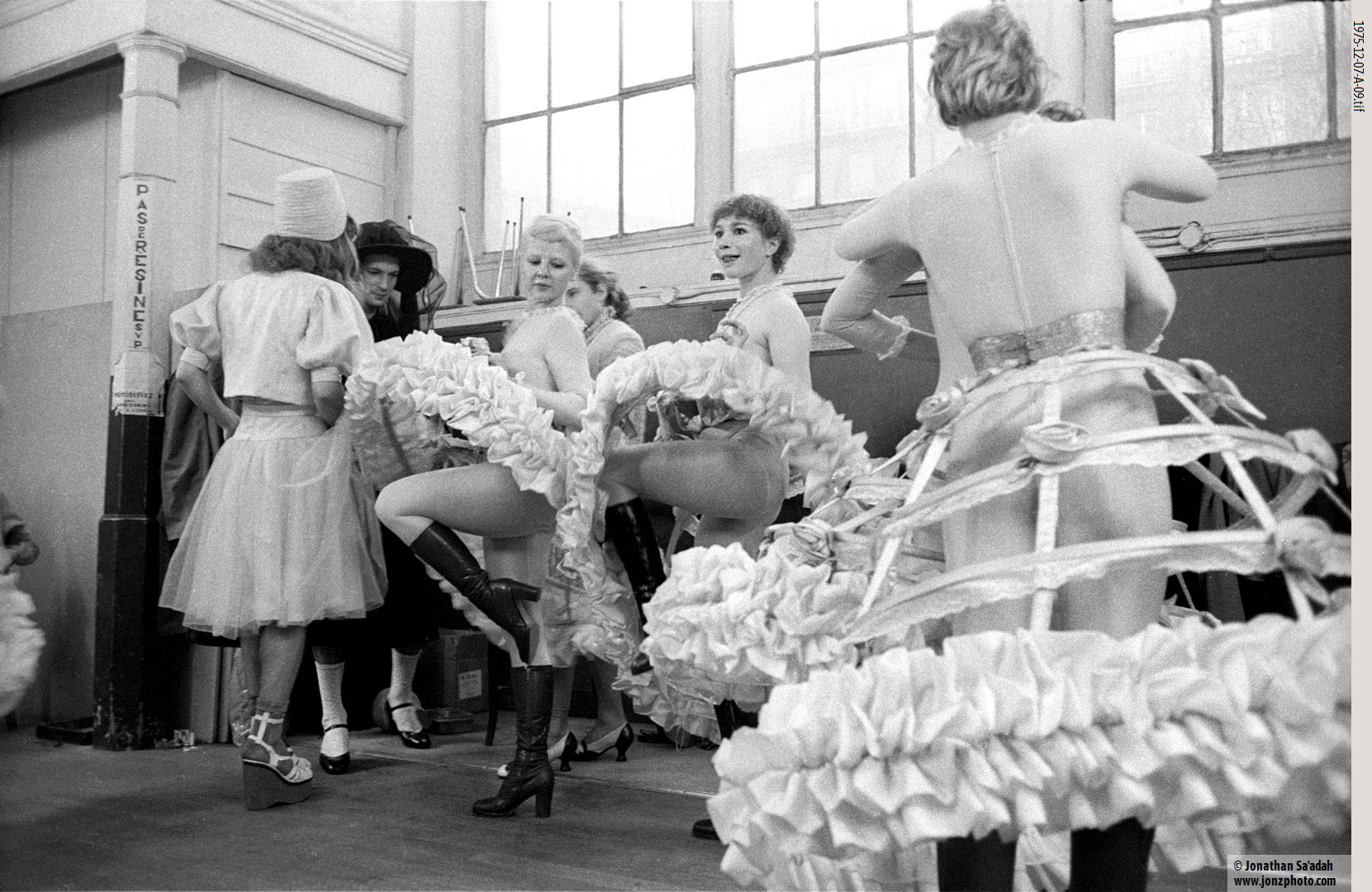
    ▲ The hoop dresses were actual cabaret garb and it was hard to learn how to swing them around still looking graceful. Capelier helped. She had the official capacity as Casting Director but was more: knowing the actresses and wanting to make sure everything worked out.

    This account is drawn from what I knew of her personally, a few interviews, the radio interview linked below, and news articles that appeared during her life and at the time of her death (see the end of the post). I also acknowledge an excellent book by Corrine Bacharach (Reine du casting, published in 2022).

    I’ve always wanted to contribute to her memory, first of all because she deserved it, but also because of the strength of her spirit. She battled adversity while seeing the world through a lens of compassion and understanding. To me, she was inspirational while being straightforward, a rare combination.

    Margot Capelier Paris
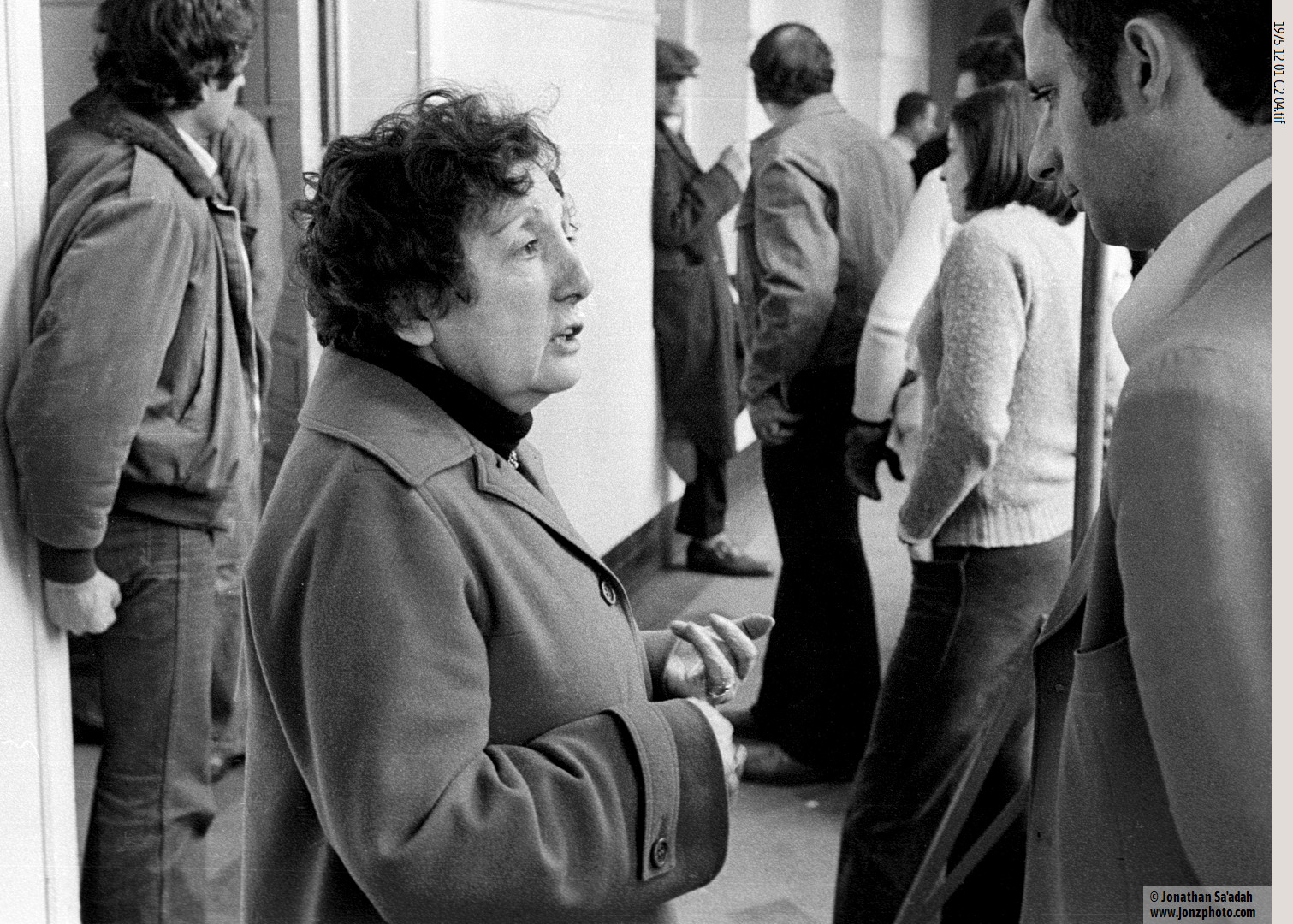
    ▲ Capelier speaking with an assistant as actors and production people mill around outside the location being used to stage the first scene in the film. It shows a French doctor coldly doing physical measurements on a naked woman, identifying her as “more or less Judaic” – essentially a death sentence. The doctor was based on George Montandon, an “ethno-racial expert” who collaborated. It was his decision where the imaginary boundary lay between being “Jewish” and “non-Jewish”.

    Capelier was born Margot Leibowitch in Paris in 1910, the middle child of Jewish immigrants originally from Odessa. She grew up in a small apartment on the north edge of the Marais, the Jewish ghetto in Paris, living with an older sister, a younger brother, parents, and her grandmother.

    It wasn’t a happy childhood. “I think I’m afraid of myself, I’m afraid of others. I think it’s because I was unloved when I was a child. Well, I thought I was unloved, and then I was as soft as a rag…” This was her reflection in a 1990 interview broadcast by Radio France.

    Her parents made her feel ugly and intellectually inferior to her siblings. In school, she faced ridicule from teachers for being Jewish. Instead of caving in, she learned early to fight back, becoming fiercely combative, a trait I occasionally observed.

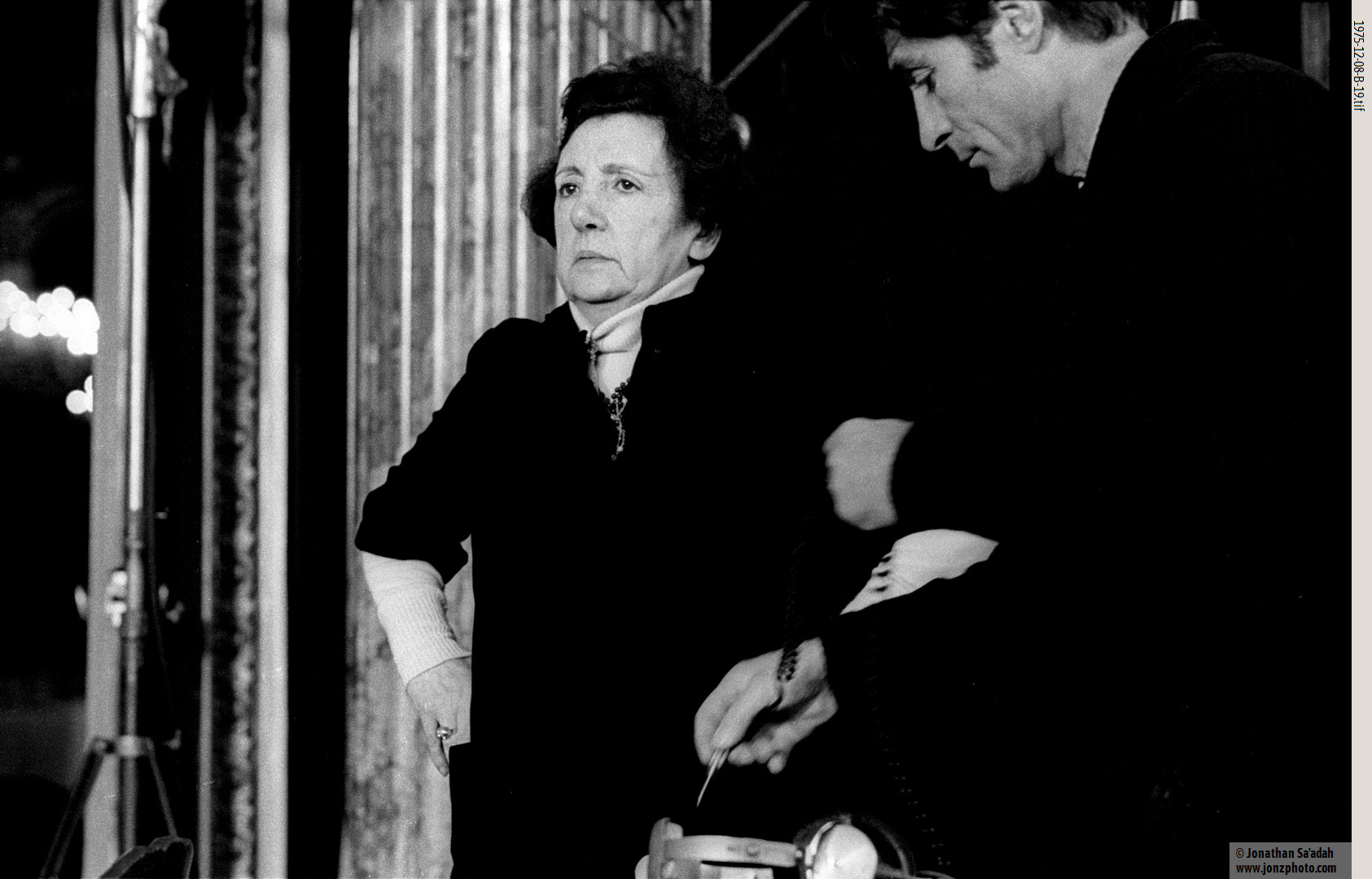
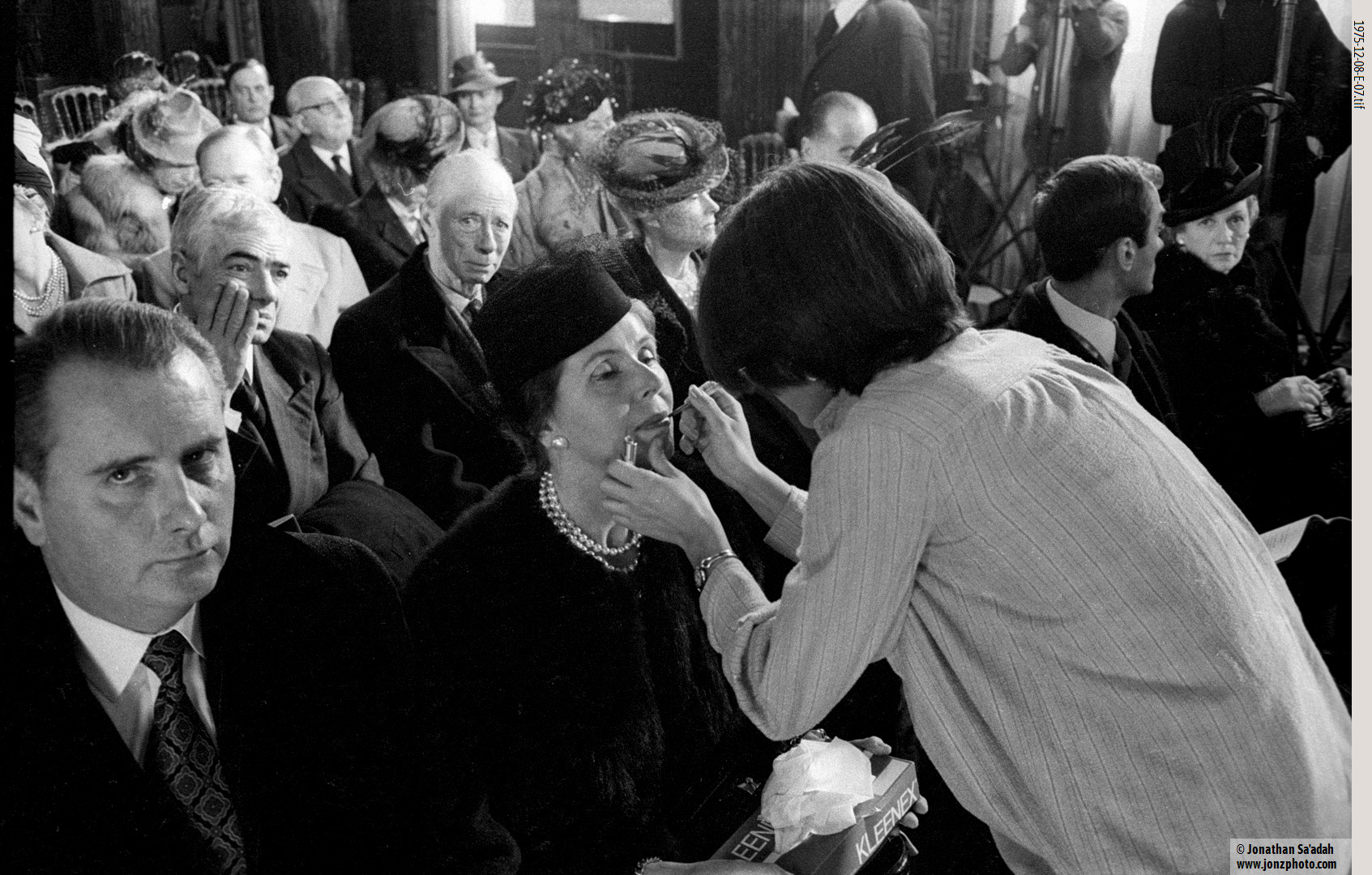
    ▲ Capelier during an art auction scene using many extras. She is watching closely as the audience is assembled (see below) on location at the Paris Hotel Intercontinental. The sound man, Jean Labussière, is setting up his Nagra sound recorder in front of her.
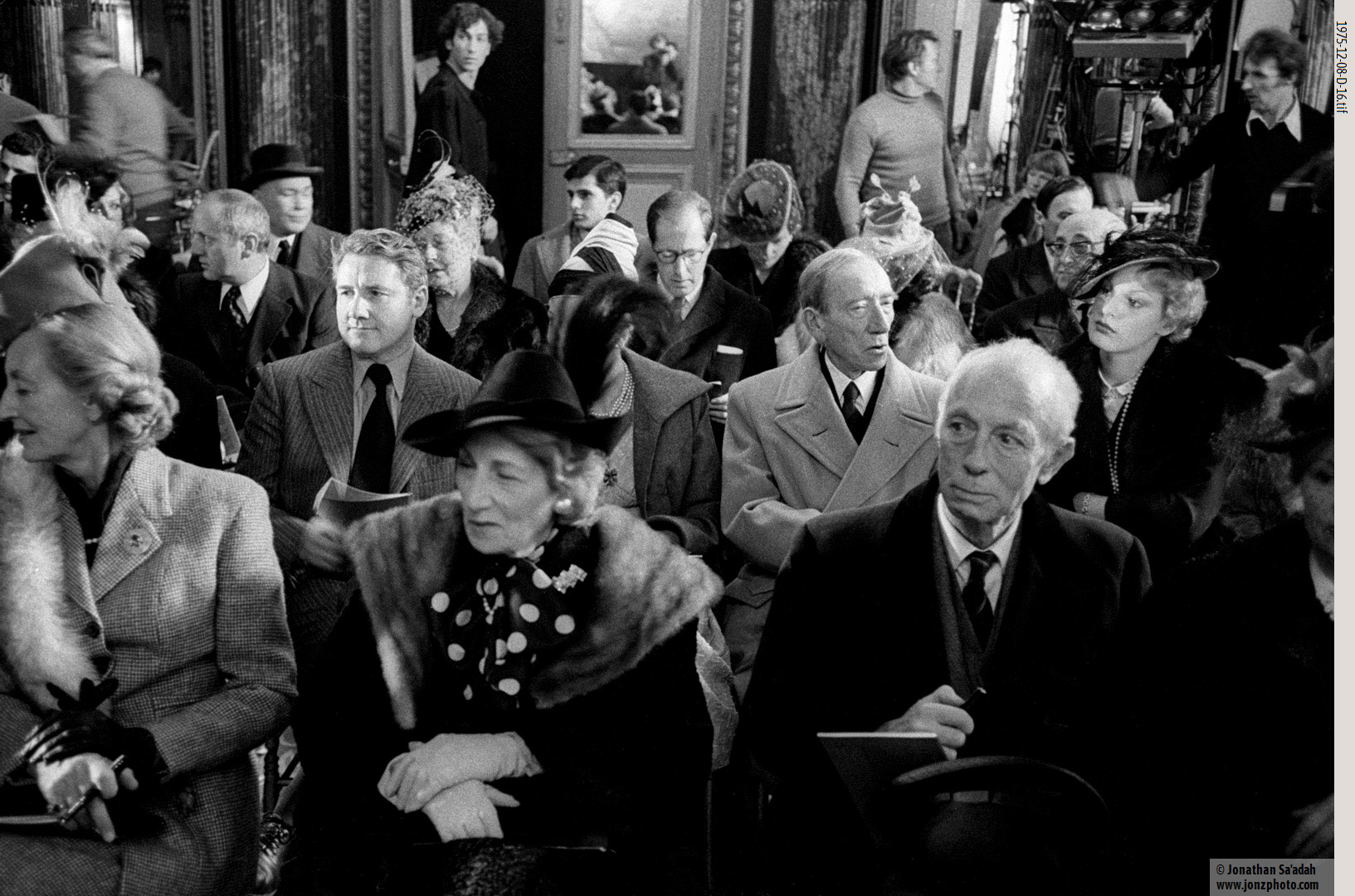
    ▲ These people are all extras, except for the man on the left with the herringbone coat and dark tie (a stand-in for Alain Delon). The people nervously moving in the back are assistant directors and crew people.
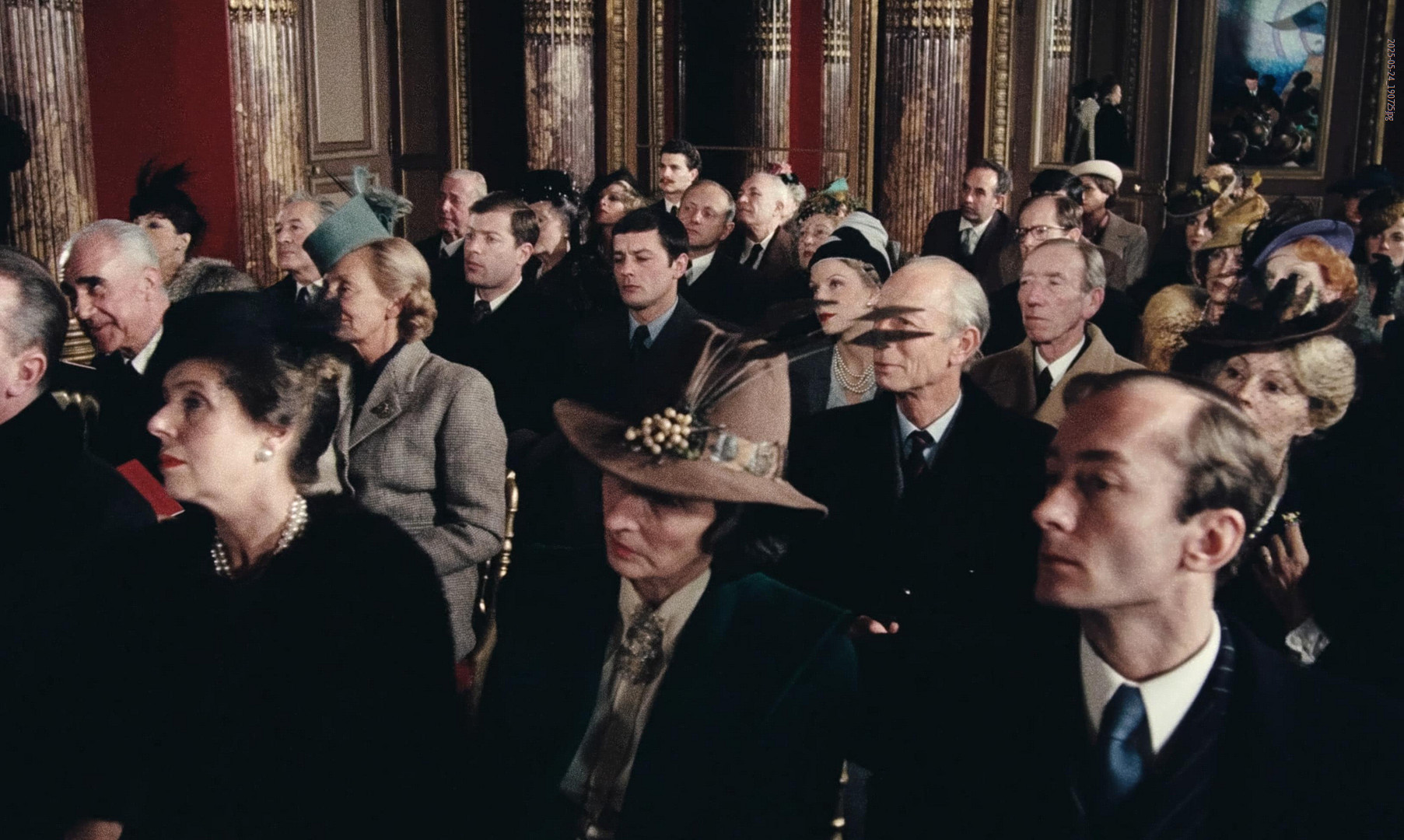
    ▲ With their finely detailed clothing and upper-class demeanor the extras formed a perfect audience for a wartime art auction.
    ▲ The same actors in a frame from the film. Robert Klein is in the centre of the frame. (Ⓒ Lira Films – Nova Films)

    Margot Capelier brought to M Klein qualities based on fierce professional competence, strong ethical and political beliefs based on 1930s leftist ideology (shared with Losey), and deep roots in the French acting community gained through her personal life-long involvement. She could accurately gauge whether an actor would fit Losey’s personality and directing style, and that’s a good part of what made her so valuable to him.

    Her familiarity with actors was inherited from her father, who loved theater, and took Margot to stage performances from an early age. He supported the family by selling hand-painted signs from a stall called “Michel” at the corner of rue Montmartre and Étienne-Marcel just north of Les Halles. Her mother was a reader, favoring Russian literature, while her grandmother could neither read nor write. The family were secular Jews trying to fit in to French society and culture while still maintaining an ethnic identity.

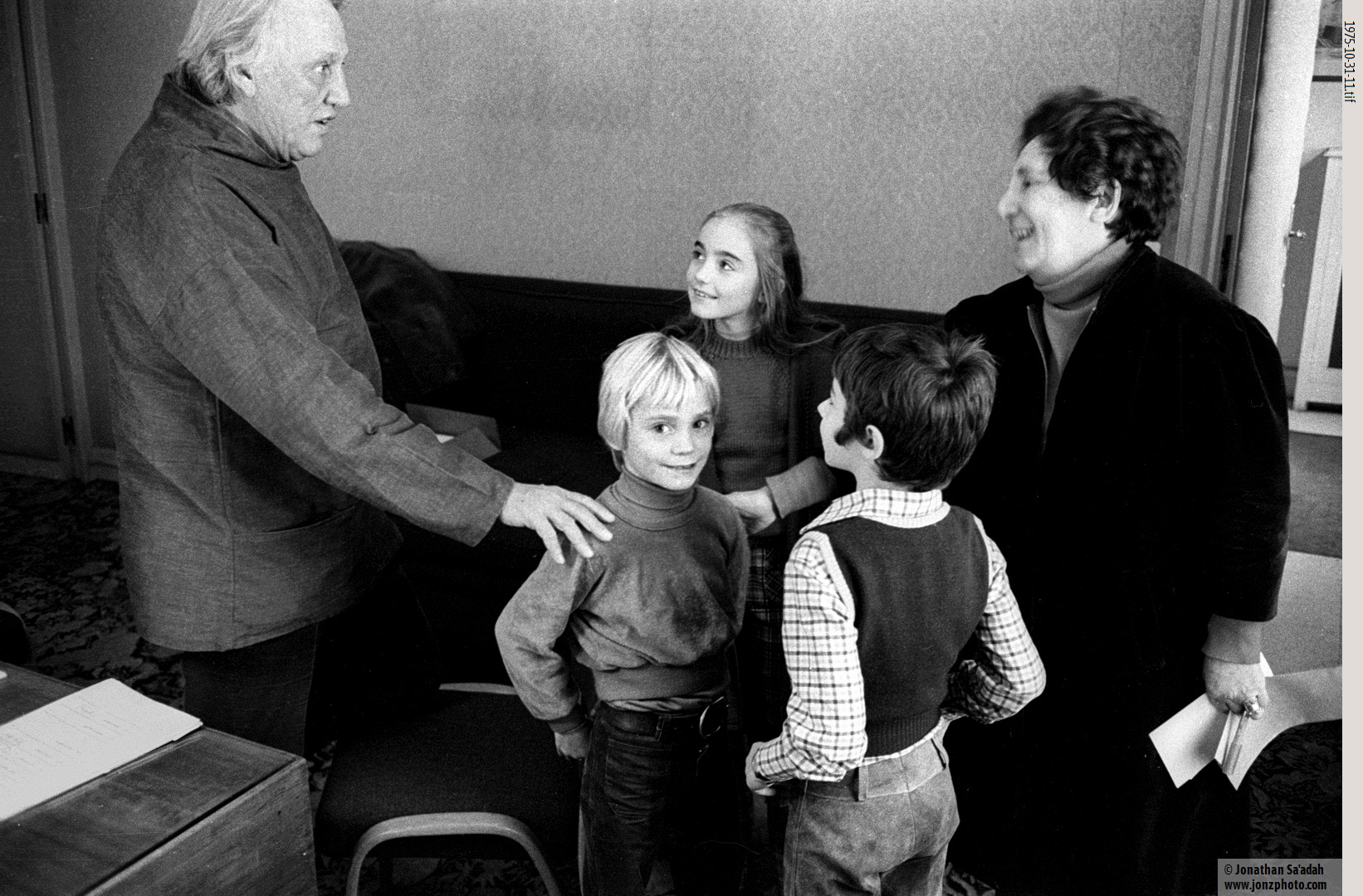
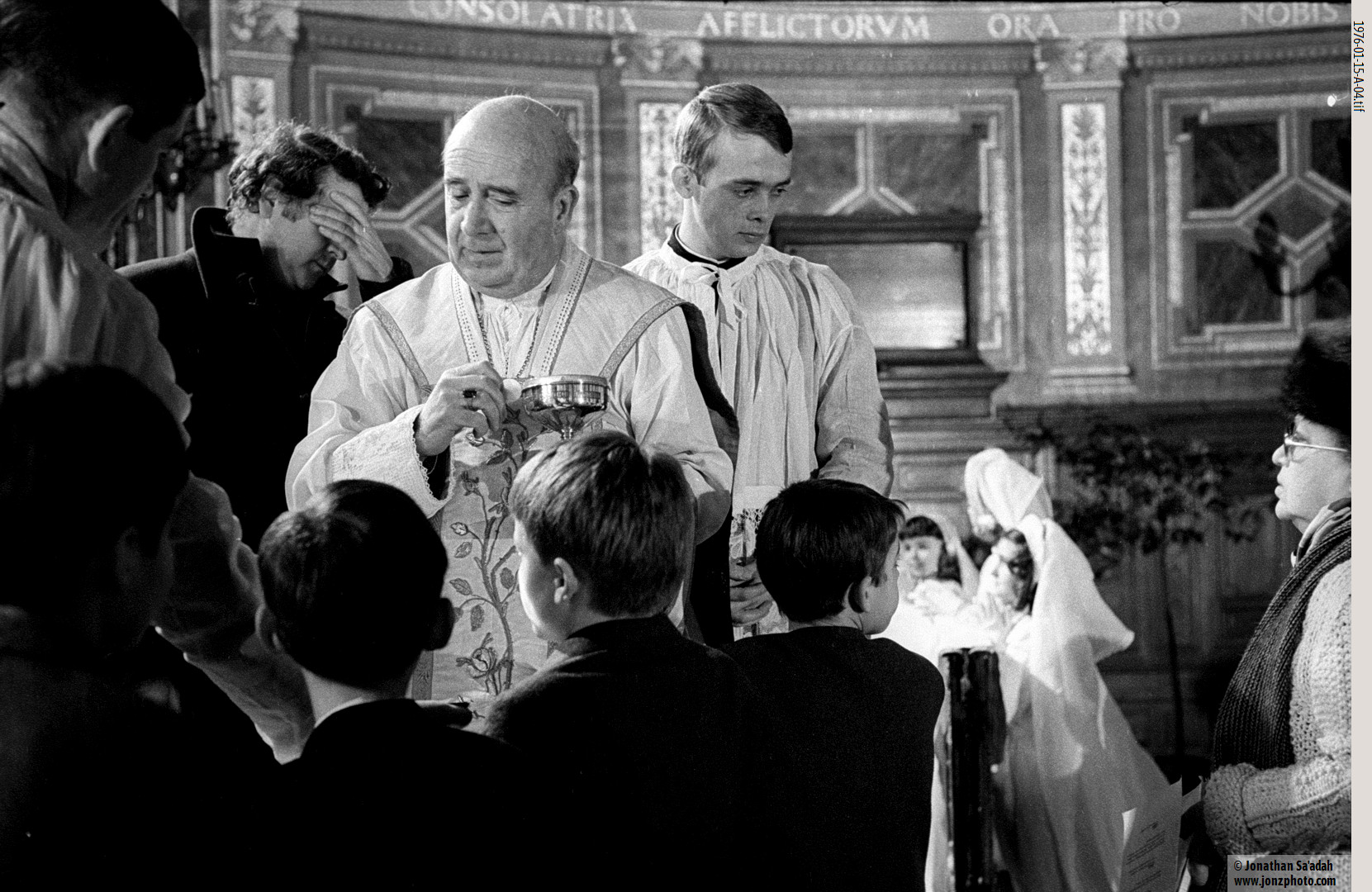
    ▲ The casting of these children worked out well, but not all did. These children …
    ▲ …. who were hired to be angelic at the altar rail turned out to be little monsters, giving Assistant Director Phillipe Monnier a headache.

    In 1926 her parents gave up on schooling their sixteen-year-old daughter, and sent her to spend nine months with a family in England. There she gained proficiency in English, which later would be of great value to her professionally.

    On returning to France, she initially worked for her father, but couldn’t tolerate his angry and abusive personality. “He was very violent, very, very nervous…so it was a bit difficult.” At twenty-four she decided to search for a path that aligned more closely with who she was.

    Through her brother, she was introduced to the radical-experimental theater (Le Groupe Octobre) of Jacques Prévert. Prévert’s popular productions played to working-class audiences, similar to the Agitprop style that Losey was exploring in New York during the same period. Both Prévert and Losey were influenced by Russian theater and communist ideals.

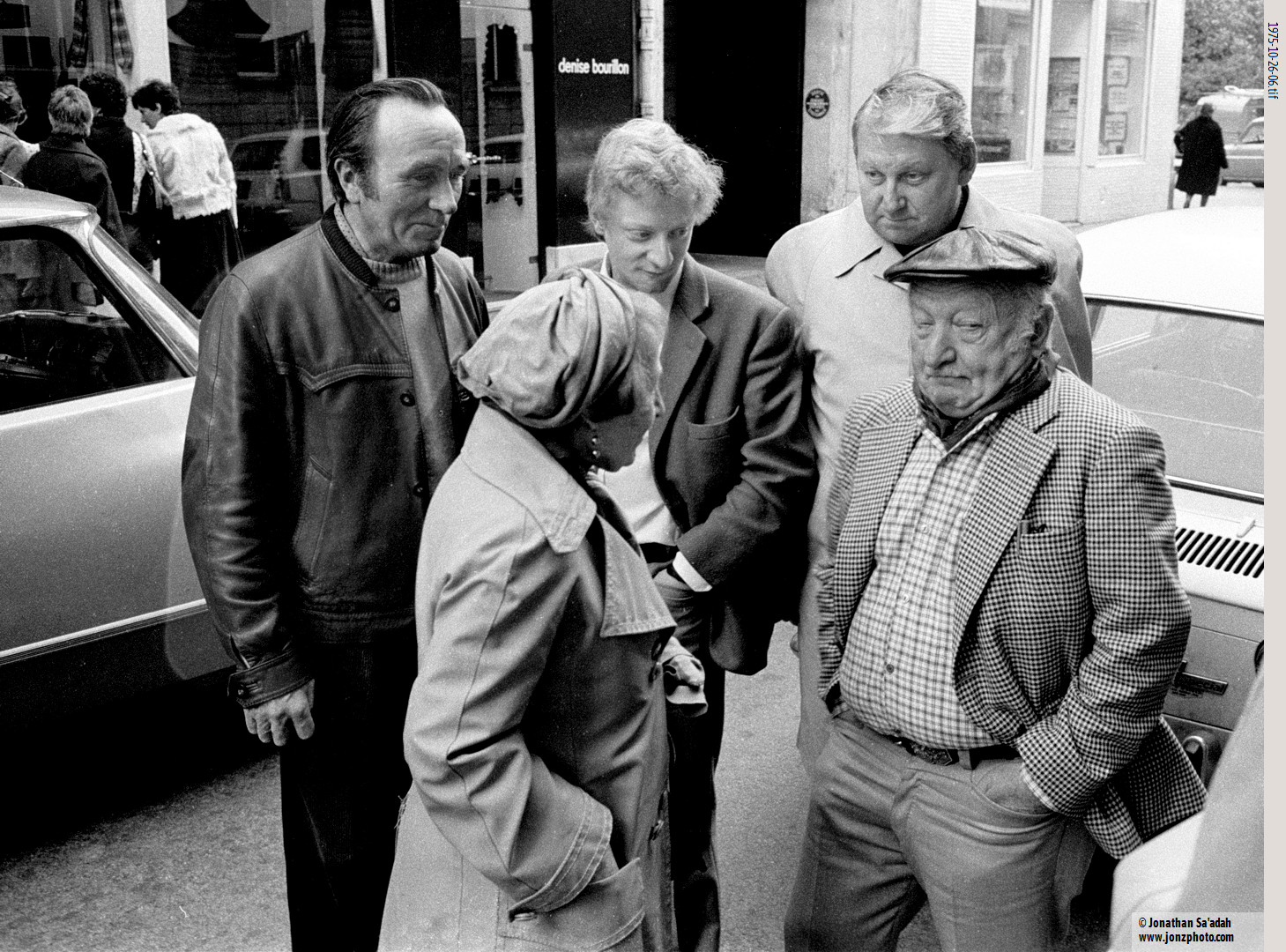
    ▲ Capelier (center of photo) trying to keep warm in her dark coat watches as others around her are hoping to get a glimpse of Alain Delon. The filming this day was happening in a nearby tenement building, where Klein was heatedly grilling a concierge, trying to track down his double. Rue des Panoyaux, Paris 20.

    “I used to go to the theater, I’d cry and sob in the back row of the Comédie Française. I always told myself that when I had money, I’d go to the front row.” She did more than that; she made up her mind to join Prévert’s troupe despite having no acting experience. In April 1934, she was interviewed and accepted into Prévert’s talented group.

    Initially, she was given small roles and gradually migrated to more production-oriented tasks.

    In theater she knew that she had found the freedom that she sought. Working in the exciting and chaotic orbit of Prévert gave her experience and confidence to move forward. After her time with Prévert she played a few parts in films, and worked on many films as a production manager, but her true vocation was to, in the early 1960s, become France’s first Casting Director. It was a position that had originated in American film but migrated to Europe as more American directors came to France to work.

    She married Auguste Capelier (1905-1977) during the Second World War while they were both hiding and in the Resistance in southern France, and together they had a child. Auguste Capelier was himself an accomplished French art director. Later in his career he worked for Losey’s French Art Director (Alexandre Trauner). Of course it was helpful to Losey that she had lived through the Nazi occupation and the Jewish roundups in Paris.

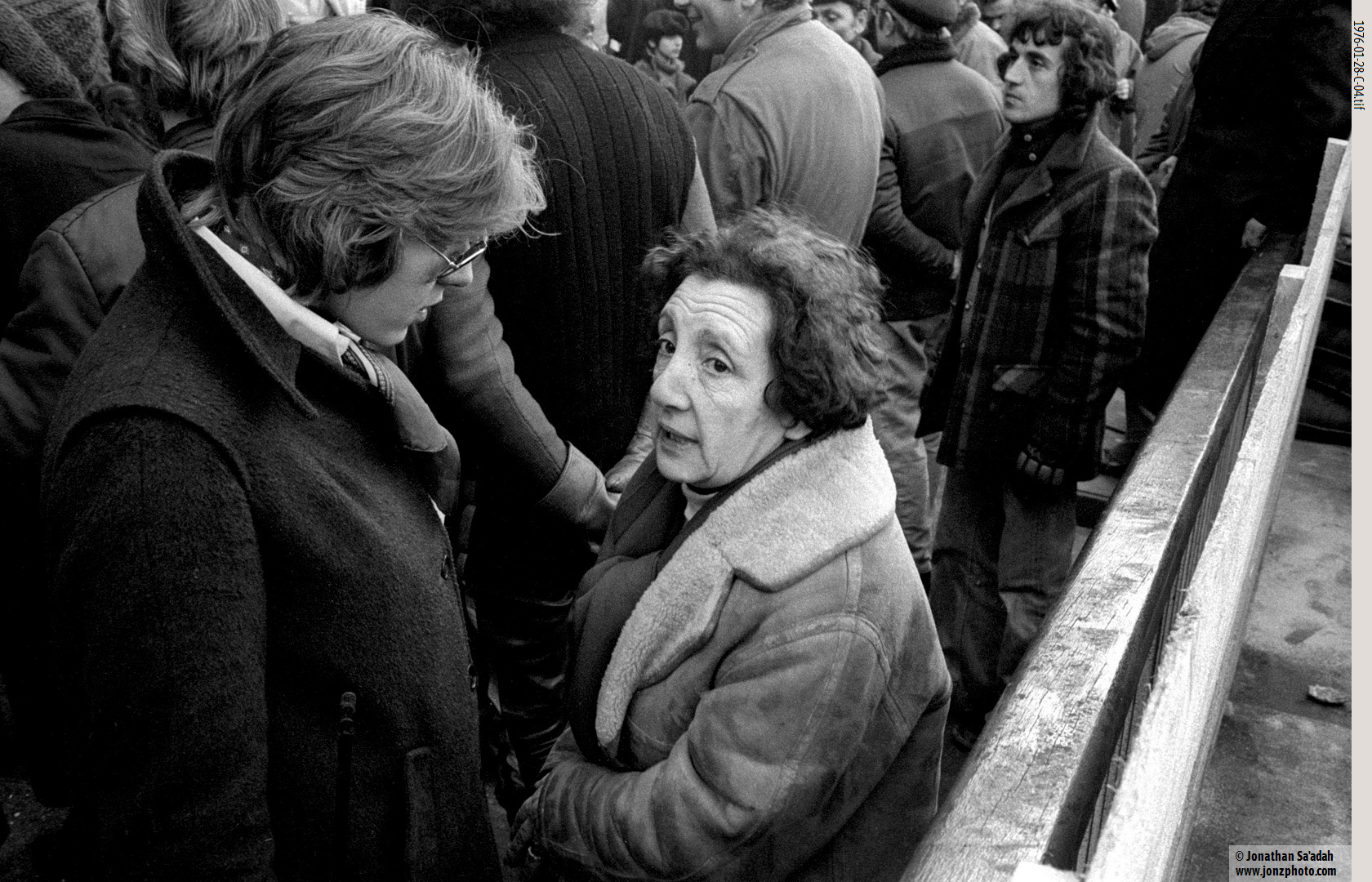
    ▲ The emotions show on Capelier’s face. This scene in the movie mirrored July 16-17, 1942 (the “Grande Rafle”), when Nazi-directed mass arrests took away many Parisian Jews. Capelier wasn’t in the city at the time but lost members of her family. This scene called for over 2,000 extras and an expanded production staff, taking place in a Paris stadium.

    Capelier’s role in M Klein drew on her personal familiarity with French actors. She used that knowledge to suggest good candidates for each role. The candidate actor or actress would be interviewed jointly with Losey, and after that a decision would be made. In most cases the interviews were primarily in English.

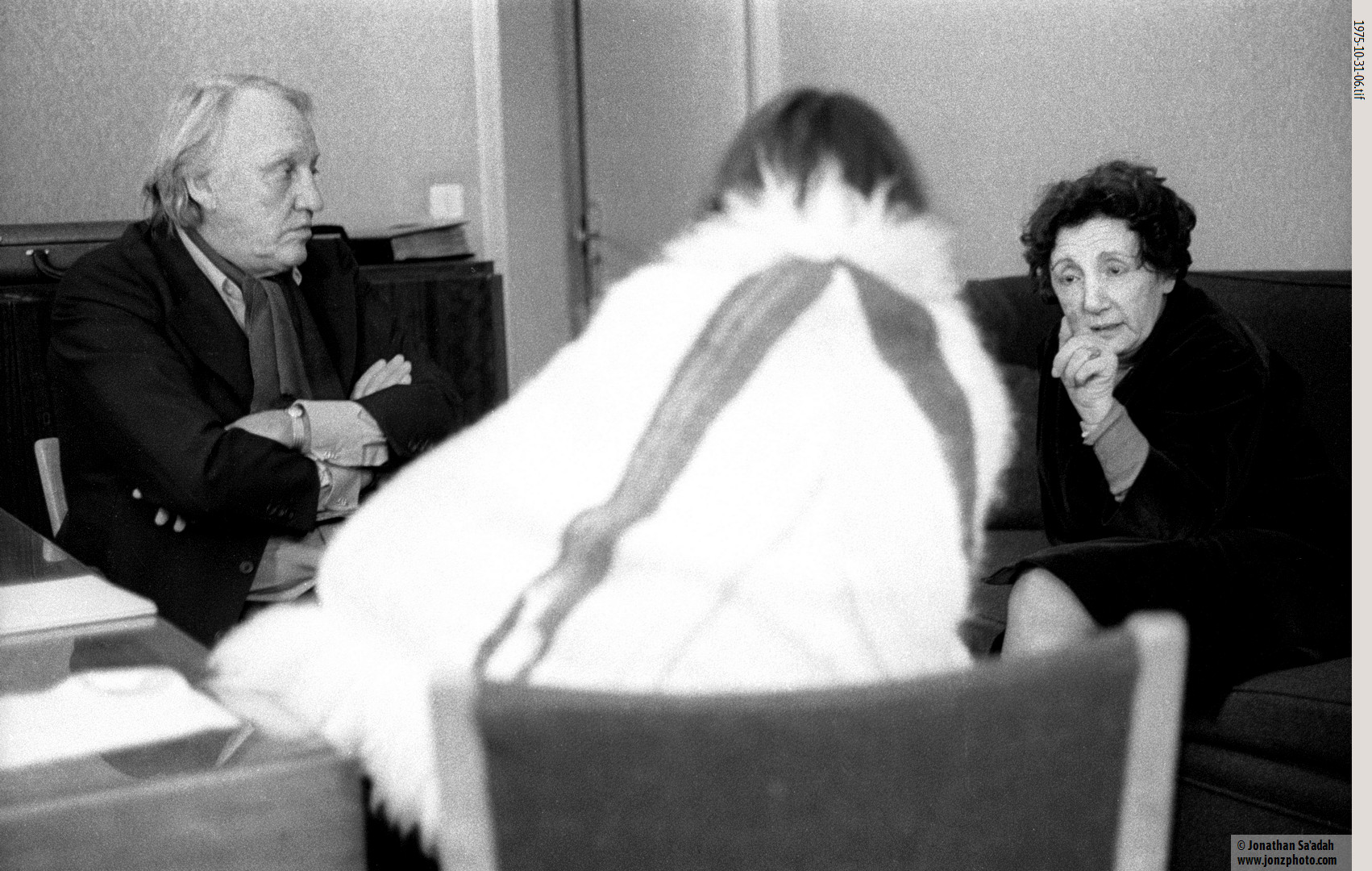
    Casting interview Capelier questions an actress as Losey watches. Losey was gauging the actor’s understanding of the screenplay and whether they would need coaching. He preferred professionals who had strong opinions and weren’t shy in stating them. In Losey’s office, Studios de Boulogne, October 1975.

    Losey’s questions to actors focused mostly on their interpretation of the screenplay and trying to get a feel for the person. What he was looking for were professionals who would hit the ground running, and be sure-footed, intelligent, and self-confident in playing their role. In presenting each actor Capelier was making a prediction of what their chemistry with Losey might be and whether it would work. She was often right in her assessments, which of course made the casting process much easier.

    One of the secrets behind the strength of Capelier’s position in French cinema stemmed from her early passion for following actors through her love of their craft. She continued to live within the theaters of Paris, watching actors develop and encouraging their careers.

    She encouraged many but also provided brutally honest feedback if she thought an actor was on the wrong path. Ironically, she brought together her father’s business acumen with a sensitivity to people she gained from her childhood traumas.

    Notes:
    Bacharach, Corinne. Margot Capelier, Reine Du Casting (1910-2007): De Jacques Prévert à Patrice Chéreau. Arles : Lyon: Actes Sud ; Institut Lumière, 2022.
    Hamsy, Cécile. Mémoires Du Siècle – Margot Capelier, Directrice de Casting, 1990.
    Berthomé, Jean-Pierre. “Margot Capelier 1911-2007,” Paris, France: Positif Editions, 2007.

    Cast of M Klein

    ActorRole
    Alain DelonRobert Klein
    Jeanne MoreauFlorence
    Francine BergéNicole
    Juliet BertoJeanine
    Jean BouiseLe vendeur
    Suzanne FlonLa concierge
    Massimo GirottiCharles
    Michael LonsdalePierre
    Michel AumontLe fonctionnaire de la préfecture
    Roland BertinL’administrateur du journal
    Jean ChampionLe gardien de la morgue
    Etienne ChicotUn policier
    Magali ClémentLola
    Gérard JugnotLe photographe
    Hermine KaragheuzLa jeune ouvrière
    Elisabeth KazaYvette (Château d’Esclimont)
    Dany KoganMichelle
    Carole LangeLa Caissiere (La Coupole)
    Lucienne Le MarchandPlace Lucien Herr, Petite Place
    Jacques MauryLe professeur Montandon
    Fred PersonneLe commissaire
    Francine RacetteFrançoise / Cathy
    Rosine RochetteLa dame aux encheres (Hotel Intercontinental)
    Isabelle SadoyanLa femme à la consultation
    Louis SeignerLe père de Robert Klein
    Maurice VallierL’homme (Cabinet du Prof Montandon)
    Pierre VernierUn policier
    François ViaurLe concierge theatre
    Brigitte ArielUsine Citroën
    Marius BalbinotLe Garcon (Bistrot telephone)
    Maurice BaquetUn musicien (Château d’Esclimont)
    Philippe BrizardLe facteur collabo (Appartement Robert Klein)
    Jenny ClèveL’infirmière-secrétaire (Le professeur Montandon)
    Raymond Danon(uncredited)
    Thierry de Brem(uncredited)
    Christian de TillièreLe commissaire-priseur
    Michel DelahayeAccompagnateur Pere Klein
    Bernard-Pierre DonnadieuExtra
    Pierre FragLe marchand de journaux
    Mireille FranchinoLa femme bus
    David GabisonLe groom
    Maurice JanyLe chauffeur à Ivry-Bataille
    Joseph LoseyUn homme au Vel d’Hiv
    Stephane QuatrehommeLe fils de Pierre
    Nathalie RigauxUne petite fille au Vel d’Hiv
    Jean TopartLa voix du speaker (voice)
    Danielle VerneUne déportée