Category: Montreal

  • Michael Pitts

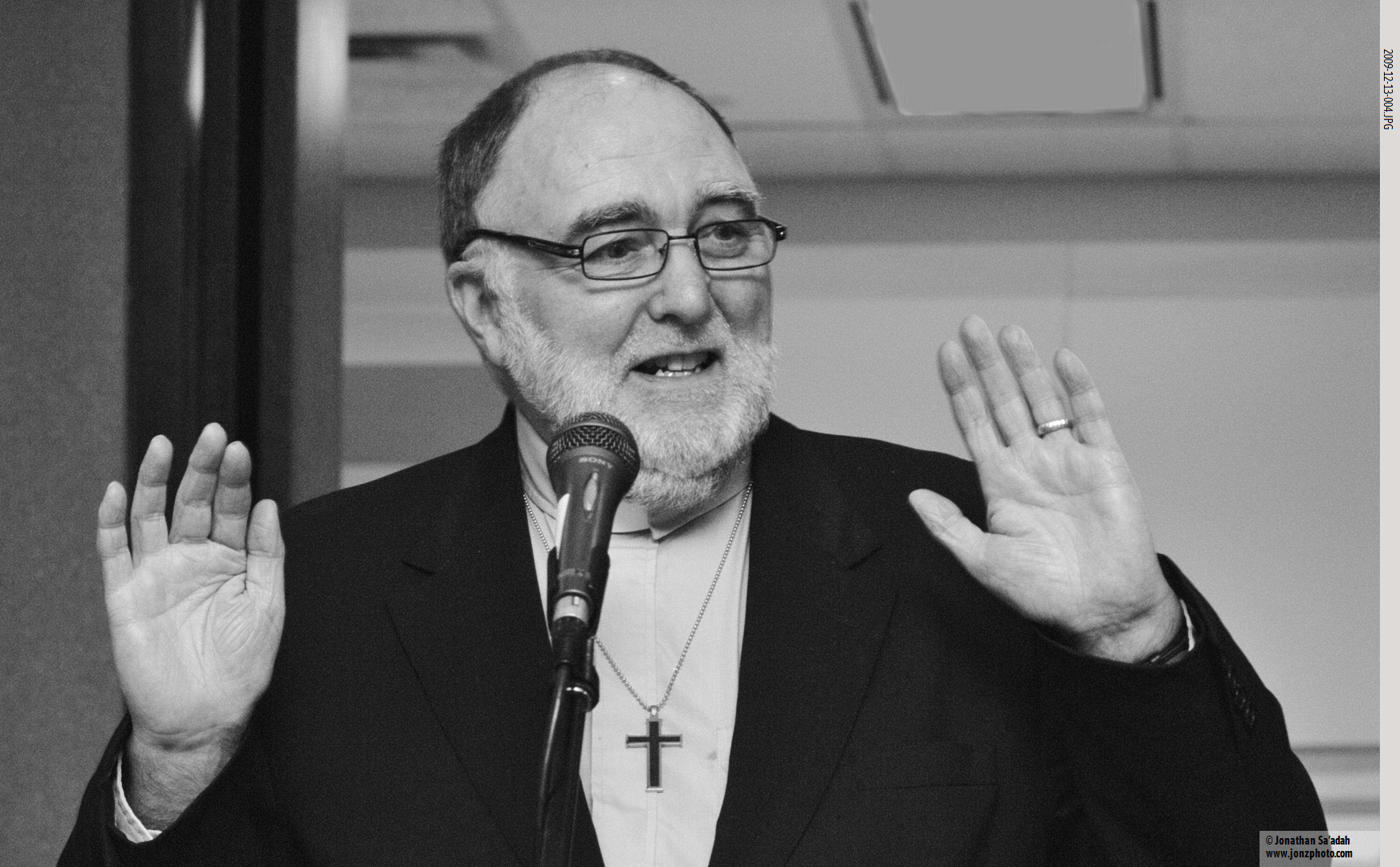
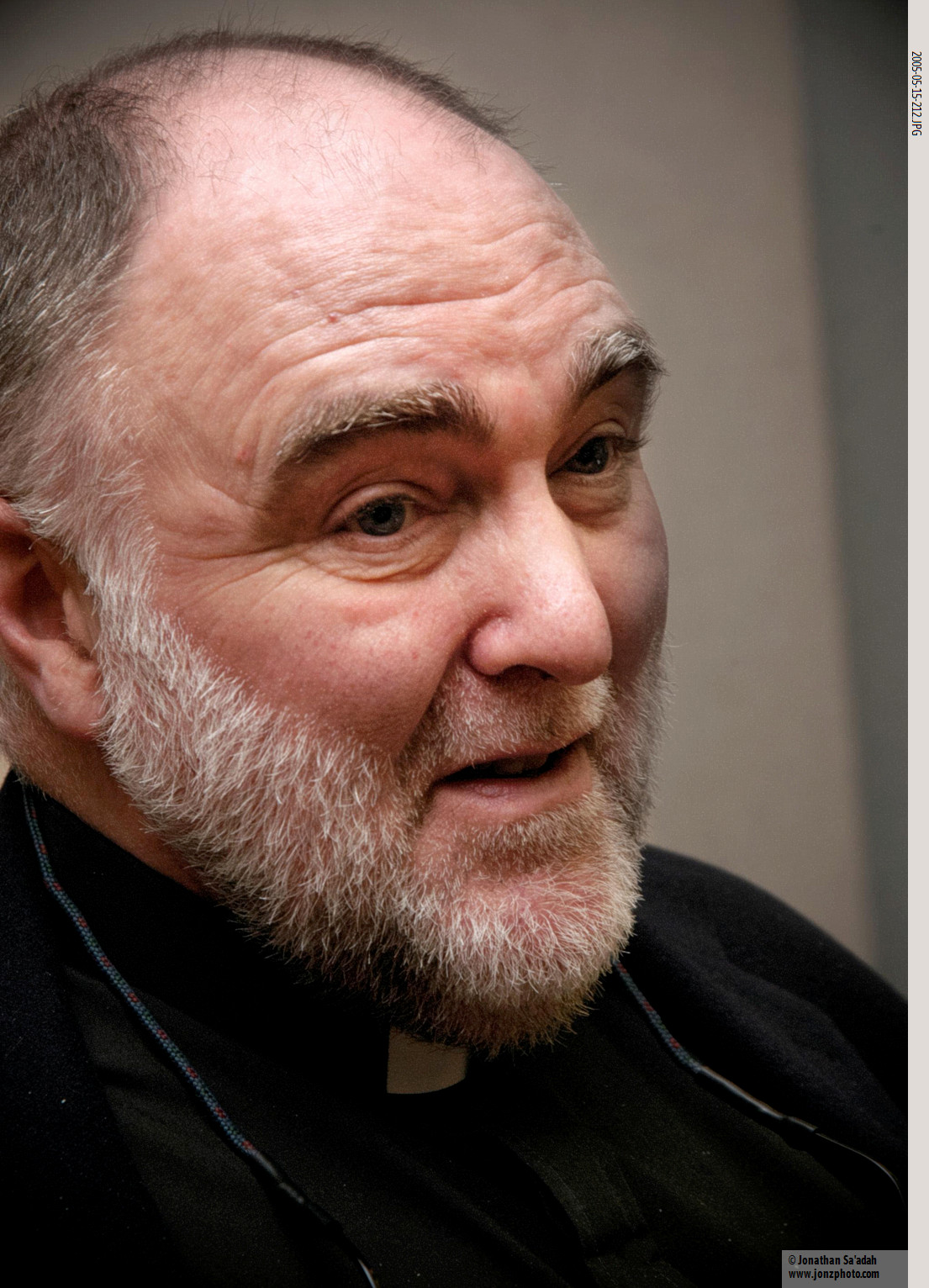
    Michael Pitts Dean of Christ Church Cathedral, Montreal, 1991-2009.

    A Dean Who Changed Our Lives: Remembering Michael Pitts

    On Sunday morning as I sit in the familiar wooden pew of Christ Church Cathedral during the Sunday mass, listening to the announcement of his death, I can’t help but think of the man who shaped this sacred space for so many of us over eighteen transformative years. The Very Reverend Michael J. Pitts served as our Dean from 1991 to 2009, but to simply list those dates feels inadequate – almost insulting – to capture what this remarkable man meant to our cathedral community.

    When Michael first arrived in Montreal from England in 1988, eventually taking on the deanship in 1991, Christ Church Cathedral was at something of a crossroads. The Anglican Church was grappling with questions of identity, relevance, and inclusion that would define the next several decades. We needed more than just a competent administrator or a polished preacher – we needed a visionary, a pastor, and a bridge-builder. In Michael Pitts, we found all three.
    The Preacher and Teacher

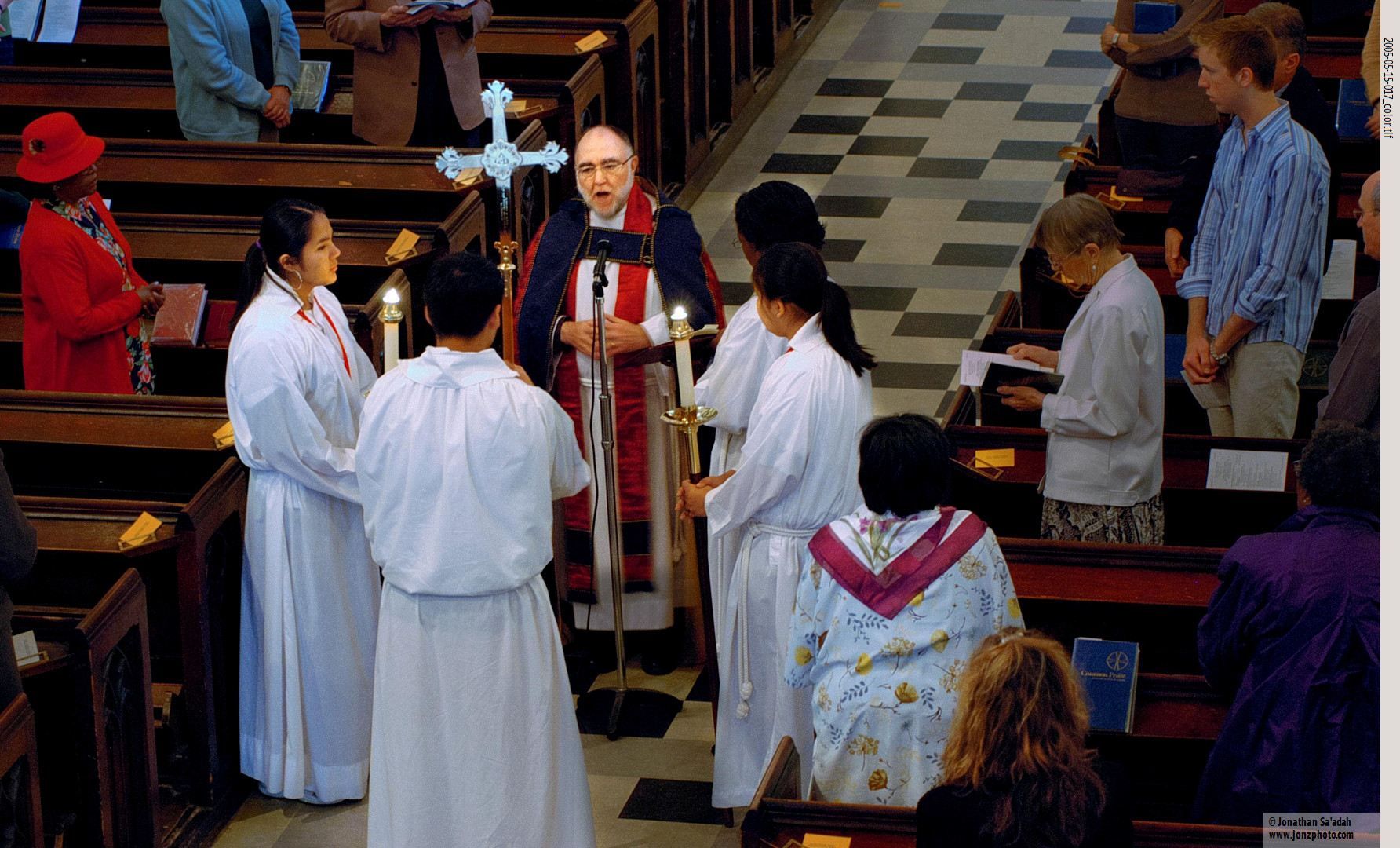
    Michael’s sermons were legendary among our congregation, and for good reason. Here was a man who had studied classics and ancient history at Oxford, trained at Queen’s College Birmingham, yet possessed the rare gift of making complex theological concepts accessible to everyone struggling with faith questions. His intellectual rigor never overshadowed his pastoral heart. Whether he was exploring the intersection of science and faith – a particular passion of his – or unpacking a difficult biblical passage, Michael had this remarkable ability to make you feel both challenged and comforted.
    A Champion of Justice

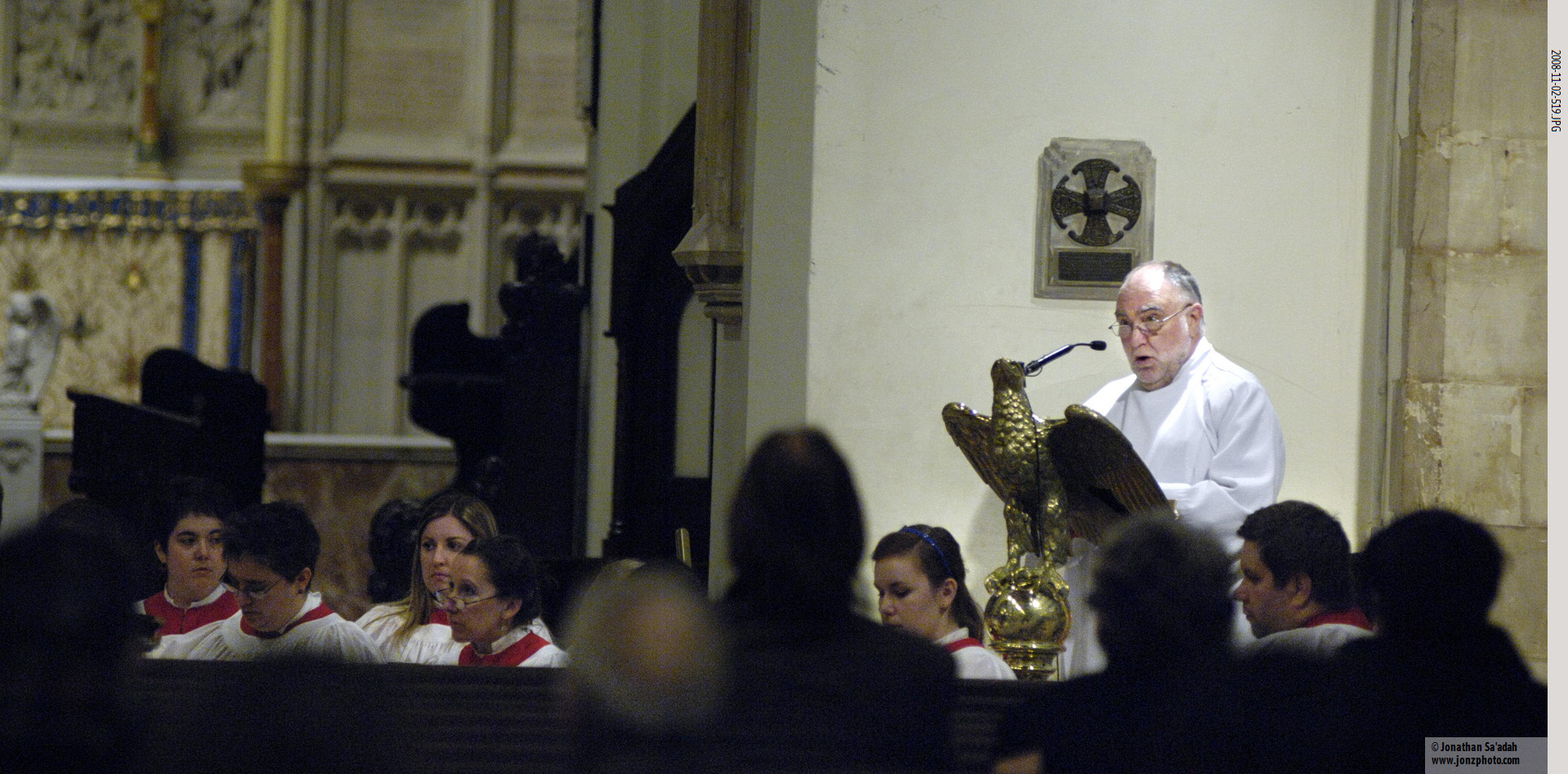
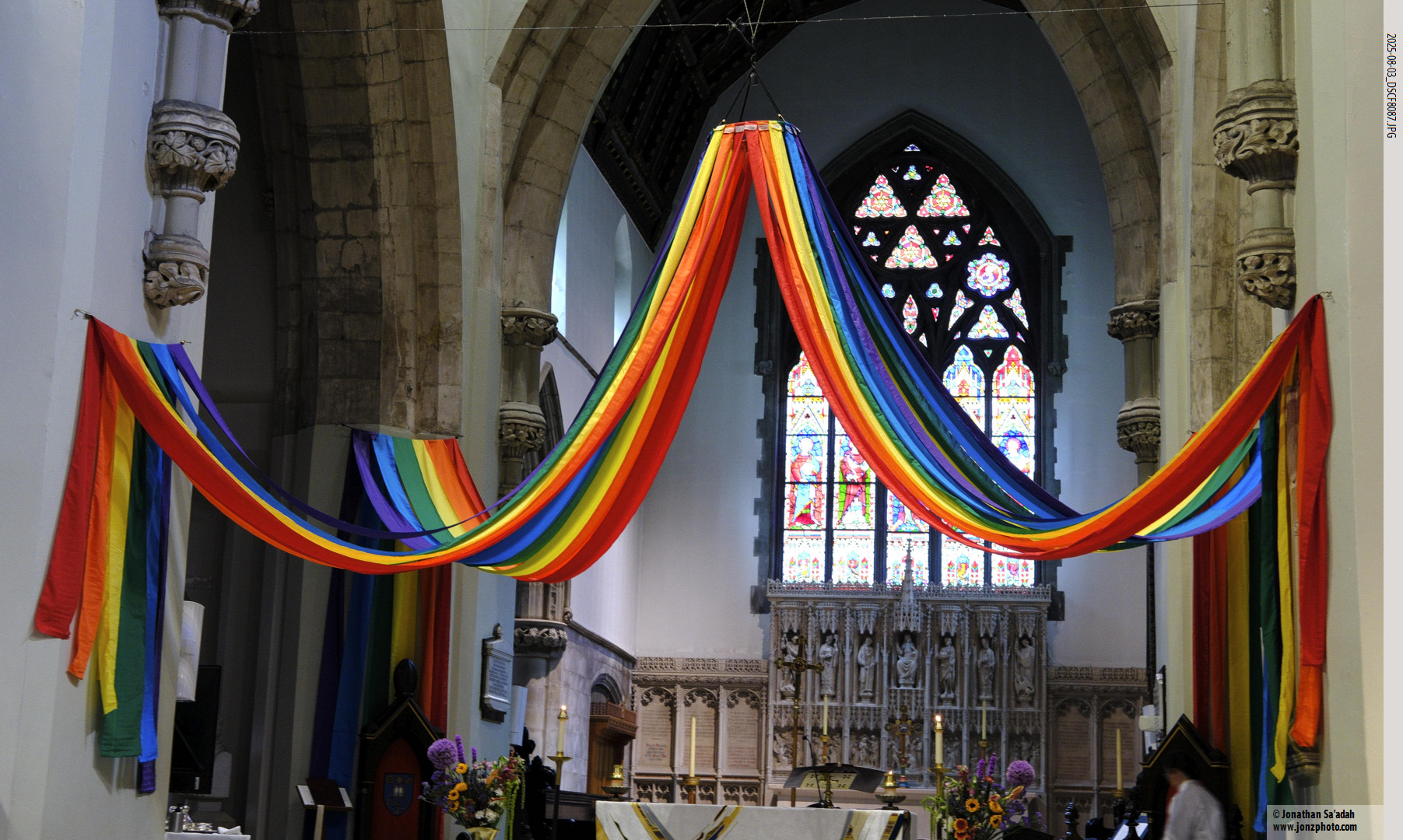
    Perhaps what I admired most about Michael was his courage in championing causes that weren’t always popular, even within our own Anglican community. His advocacy for the full inclusion of LGBTQ2S persons in church life and ministry wasn’t just a theological position for him – it was a moral imperative rooted in his understanding of the Gospel. This wasn’t easy in the 1990s and early 2000s, when these conversations were tearing apart Anglican communities worldwide.
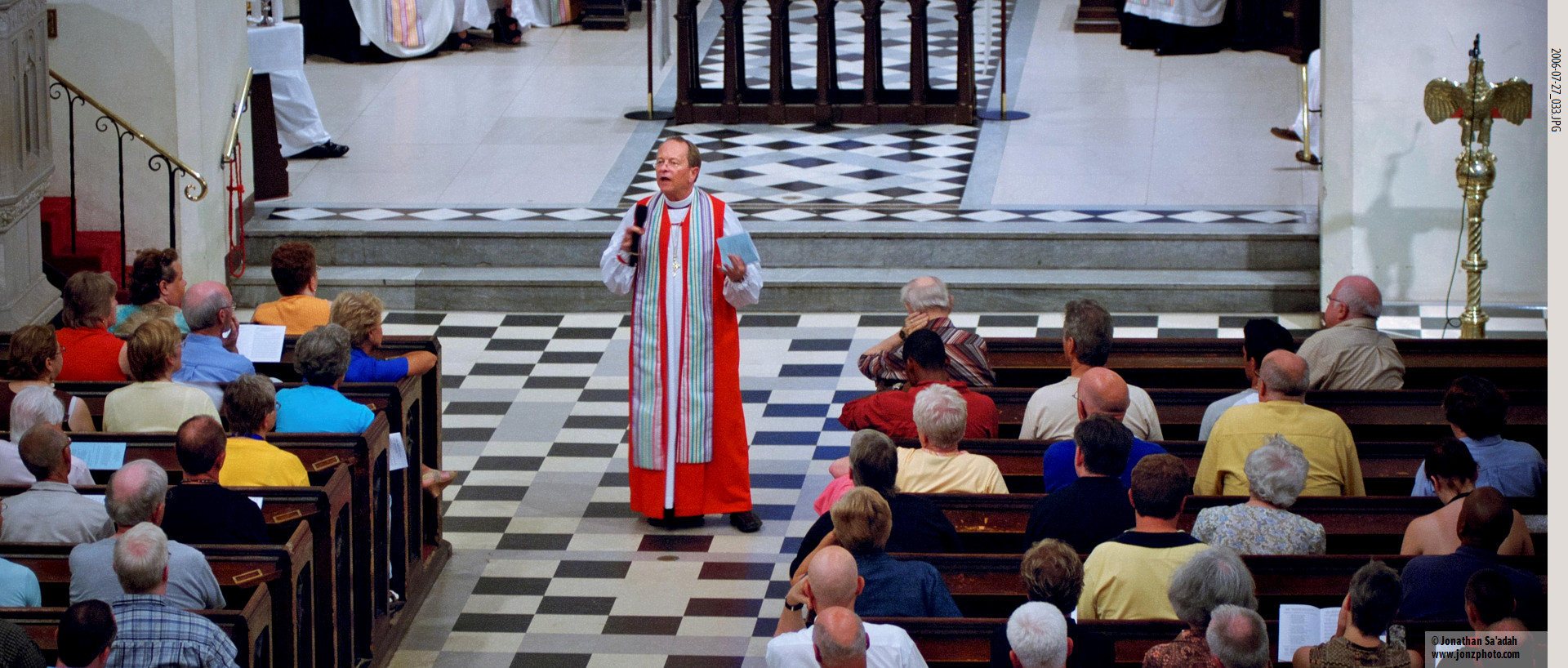
    In Dean Pitt’s tenure huge strides were made as the Cathedral contributed to leading the diocese on LGBTQ2S issues. In July, 2006 Bishop Gene Robinson, the first openly gay bishop in the Anglican church, gives the sermon during a special mass at the Cathedral.

    Michael navigated these turbulent waters with remarkable grace. He never compromised his convictions, but he also never demonized those who disagreed with him. Instead, he created space for dialogue, for questions, for gradual understanding. Our cathedral became a place where gay and lesbian couples felt welcomed long before it was officially sanctioned, where transgender individuals found acceptance, where families wrestling with these issues could find support rather than judgment.
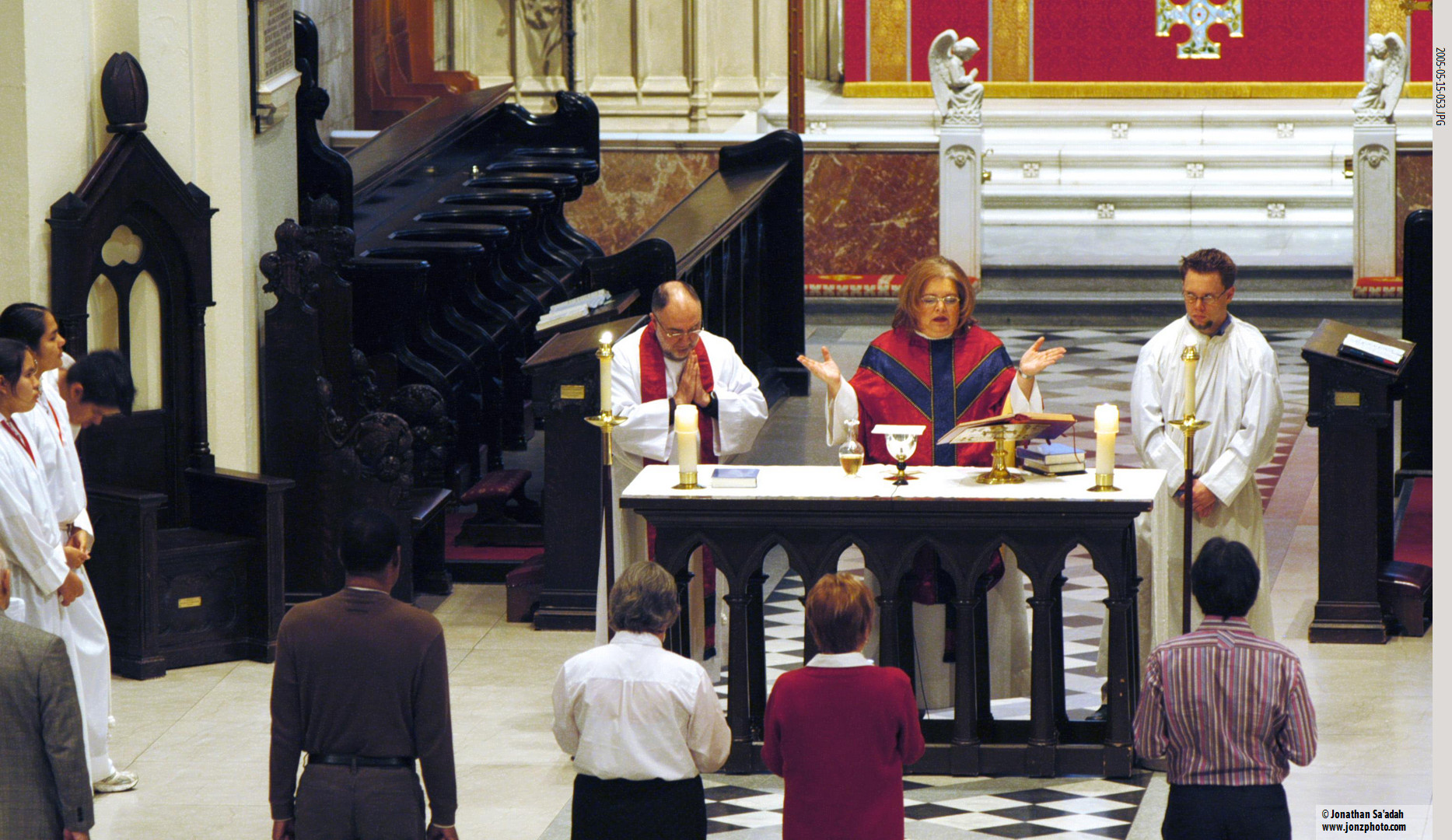
    Dean Pitts with Assistant Priest Joyce Sanchez. With Canon Sanchez and Dean Pitts the cathedral had a leadership team that helped ordain the first openly gay priest in the diocese (2012).

    Michael understood that justice work wasn’t separate from pastoral care – it was pastoral care. When he stood up for the marginalized, he was doing exactly what he’d been called to do as our Dean.
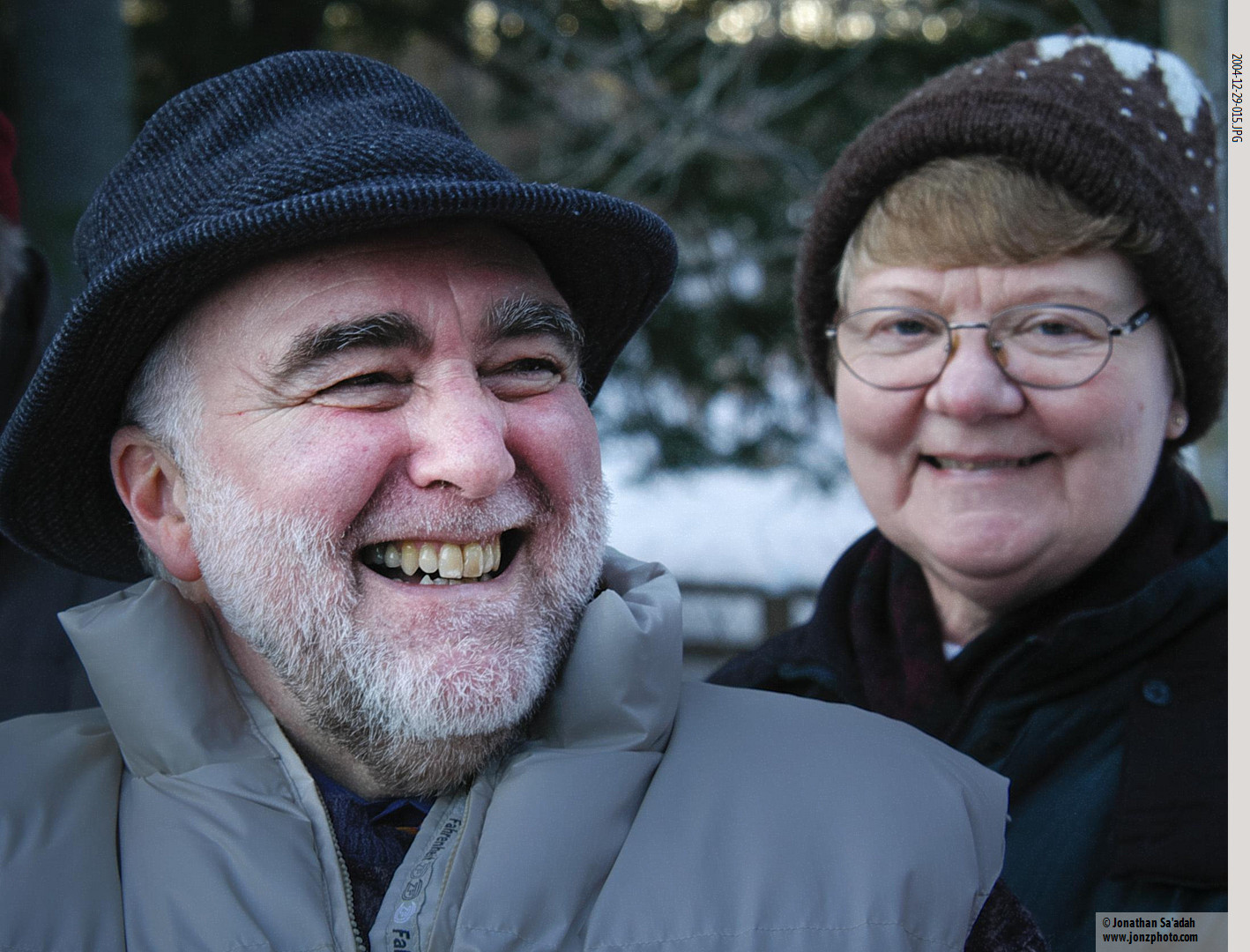
    ▲ With Kylliki near their home in Rawdon. December, 2004.

    A Family Man in Our Cathedral Family

    Michael’s wife, Kyllikki, herself a Lutheran pastor and theologian, brought her own wisdom and warmth to our community. In her quiet way she was a strong presence alongside him, and together they formed a strong union from which we were all touched by their love.

    Michael never pretended to have it all figured out. Throughout his life, as well as his time with us, he was refreshingly honest about the challenges of ministry, the struggles of faith, the difficulty of maintaining work-life balance. This vulnerability made him more effective as a leader, not less. We trusted him precisely because he didn’t present himself as superhuman.

    Beyond the Cathedral Walls

    Michael’s ministry extended far beyond our cathedral walls. His work with seafarers, factory workers, and the urban homeless before coming to Montreal shaped his understanding that the Gospel was meant for everyone, especially those on society’s margins. During his time as Dean, he maintained connections with Montreal’s broader community, participating in interfaith dialogue, social justice initiatives, and community building efforts that reflected well on all of us.
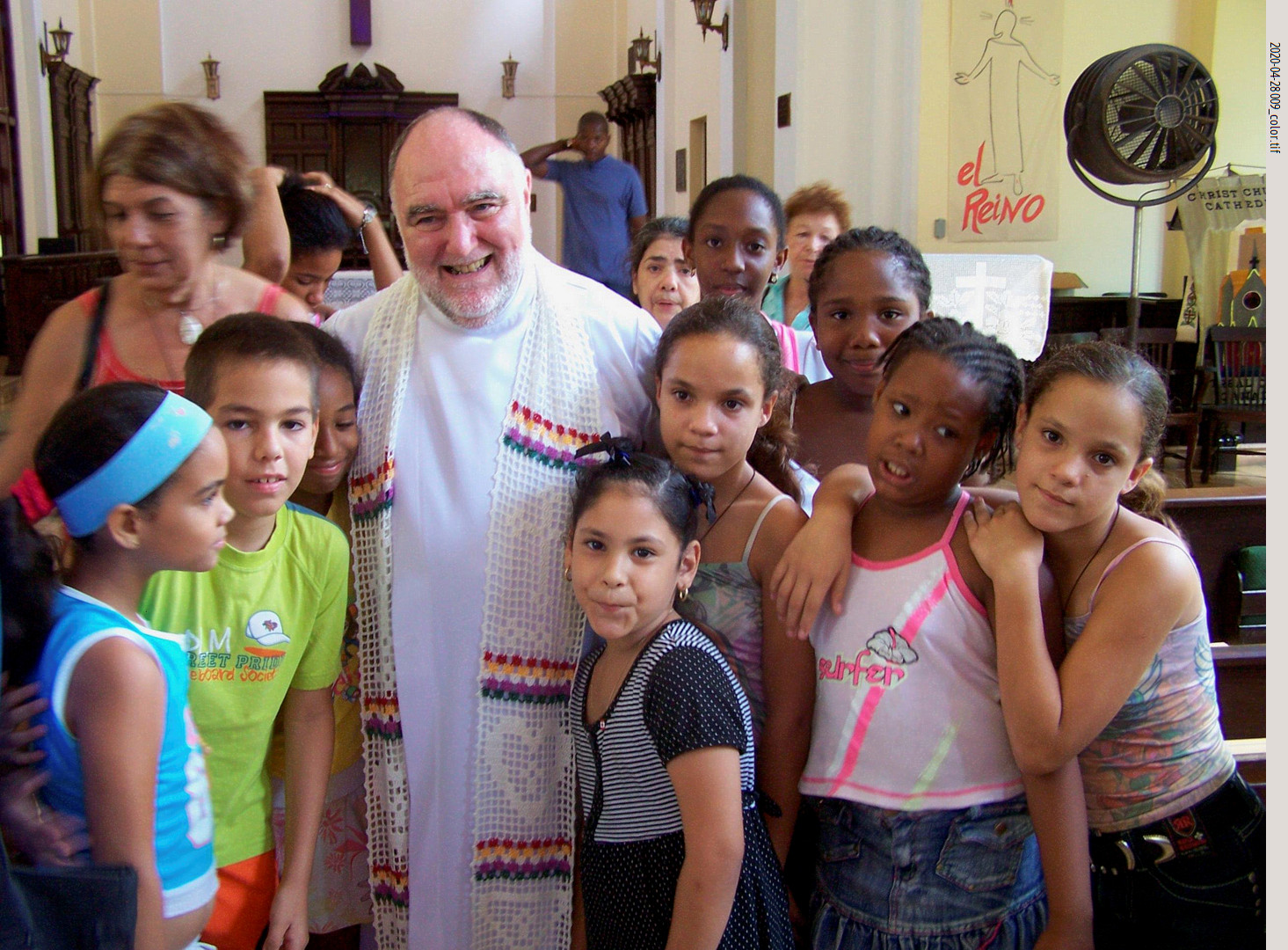
    ▲ Dean Pitts with Cuban children in our then-partner Anglican cathedral in Havana. The relationship with the Havana community was established through the work of Canon Sanchez. Dean Pitts made two trips to Cuba, where found a vibrant congregation participating both in their faith and as members of the communist state. (Photo credit: unknown)

    After his retirement from the deanship in 2009, Michael’s commitment to ministry only deepened. His work in the Diocese of Quebec, travelling by air, water, and land to serve isolated fishing villages along the north shore, demonstrated that his calling to serve had nothing to do with prestige or comfort. Here was a man in his seventies, still willing to endure difficult travel conditions to bring communion to people others might have forgotten.
    A Lasting Legacy

    As I look around our cathedral today, I see Michael’s fingerprints everywhere. Not in any physical renovations but in the spirit of the place. We’re still the inclusive, intellectually honest, socially conscious community he helped shape. New members often comment on the warmth they feel here, the sense that questions are welcomed rather than discouraged, that faith is understood as a journey rather than a destination.

    Michael taught us that being Anglican didn’t mean being wishy-washy or uncommitted. Instead, he showed us that our tradition’s emphasis on reason, scripture, and tradition working together could produce a faith that was both deeply rooted and dynamically responsive to the needs of each new generation.

    The Very Reverend Michael J. Pitts wasn’t perfect – he’d be the first to tell you that. But he was exactly the Dean we needed when we needed him. He challenged us to grow, and showed us what it looked like to live out the Gospel with both conviction and compassion. For those of us privileged to call him our Dean for eighteen years, the gratitude we feel is matched only by the responsibility we carry to continue the work he began among us.
  • Two City Parks | Montreal Unfiltered

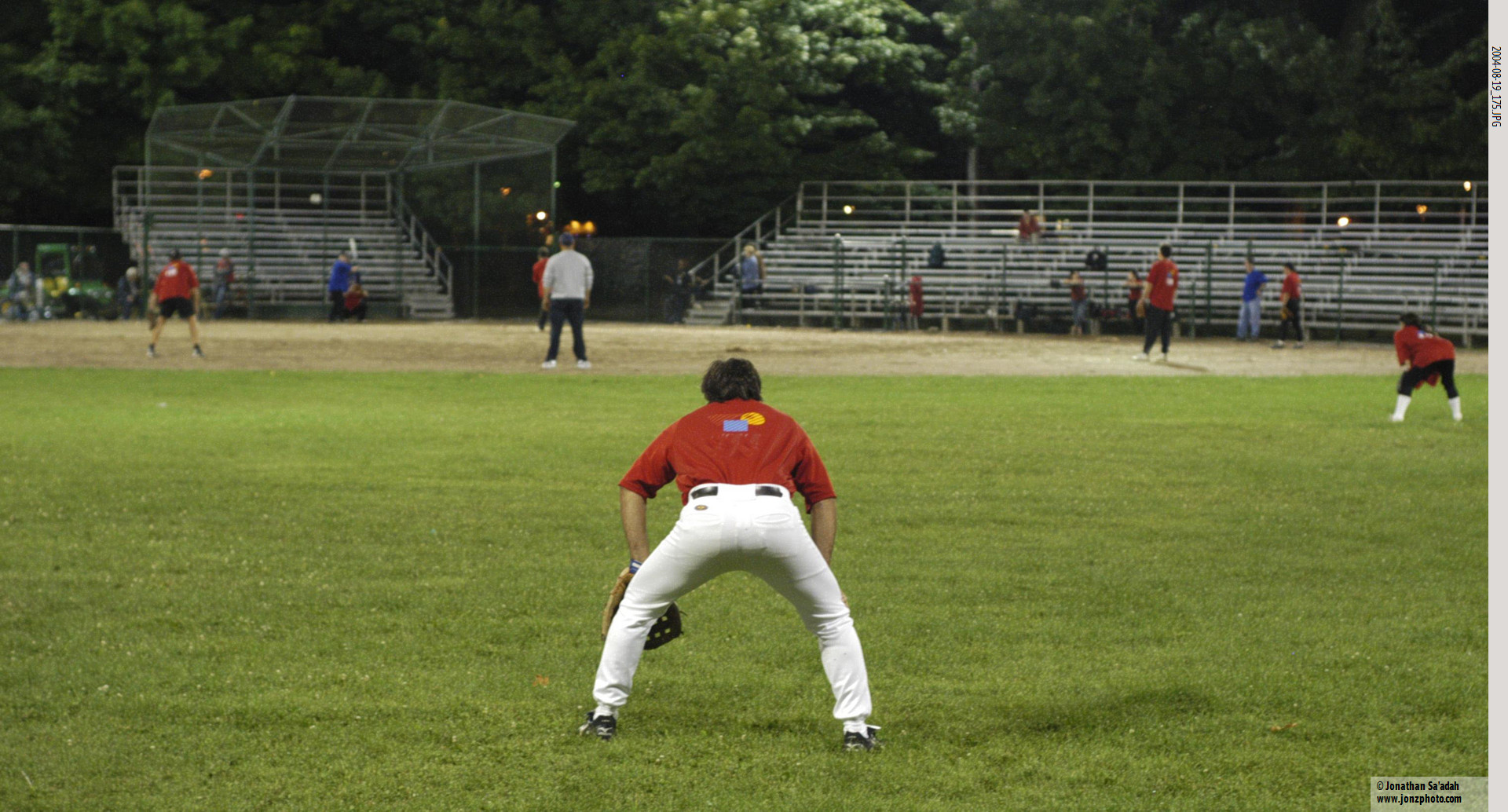
    Summer evening softball in Parc Lafontaine

    I’ve lived on the edge of two parks in Montreal. The first was an established historic park known for its beauty (Parc Lafontaine), and the second a recently constructed city park (Parc Saidye-Bronfman) where we live now in an “up and coming” neighborhood, the “Triangle” section of Côte-des-neiges. Soon after we moved in we invited a friend from our first neighborhood over and looking out she exhaled “¿That’s a park?!?!!??”.

    She’s actually a very kind person, it was just a momentary slip.

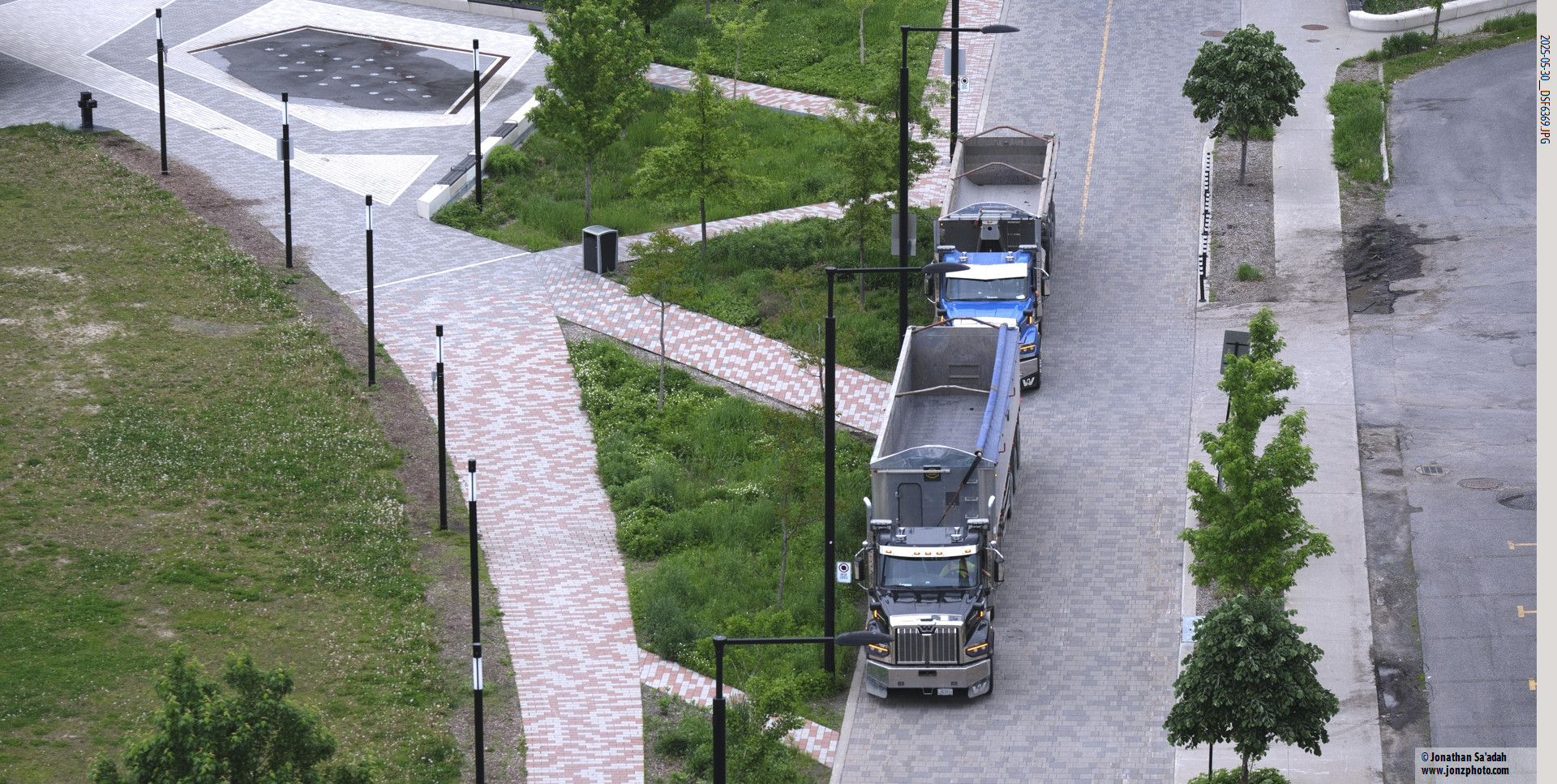
    Trucks waiting to be loaded with fill from excavation of a new apartment building. Part of Parc Saidye-Bronfman is visible on the left.

    She had a point. It’s not much of a park right now, and it may never be. There’s a difference between a park that inhabits a large parcel of land and evolves over decades, weaving its way into people’s lives, and one that’s a relatively soulless small pocket park, put in because developers are required to tick a box called “green spaces”. The whole thing comes off as if no one really has their heart in it.

    Parc Saidye-Bronfman

    The history of our present park runs something like this: it was envisioned as being twice its current size (which would still have been small), but somewhere along the way its boundaries got whittled down. It was also planned to showcase the use of indigenous plants, but that too is falling short as the messy natives are uprooted and replaced by fabric cloth and the standard city plantings. It’s a bit like after the check-box we’re moving on.

    Beth, who blogs occasionaly about the city with an invariably philosophical and generous eye, goes down when she spots the city gardeners. They hem and haw, in the end sighing and saying they’re just doing what they are ordered to do (and “could she write a letter….”) But I wonder what the real story is, and what it is we will probably never know.

    What I do know is that humans need places where they can exhale a little, and it’s in parks where the air tastes a little greener and the asphalt recedes enough that you can hear your own heartbeat. I do miss Parc Lafontaine where I used to go out for an early morning and walk on damp paths, hearing children chattering on their way to school. It’s too bad that in these new neighborhoods the city more often than not bows to developer’s wishes rather than taking a long step back and acting with a vision that’s more than a future of promised bike paths and trolleys and two-lane roads, which won’t work. Parks matter because cities are not built of steel and ambition alone. We need the quiet space true parks give. We need green sanctuaries where the earth remembers itself, and invites us to remember it too, even if it is a bit messy.

  • Watching the Aldred | Montreal Unfiltered

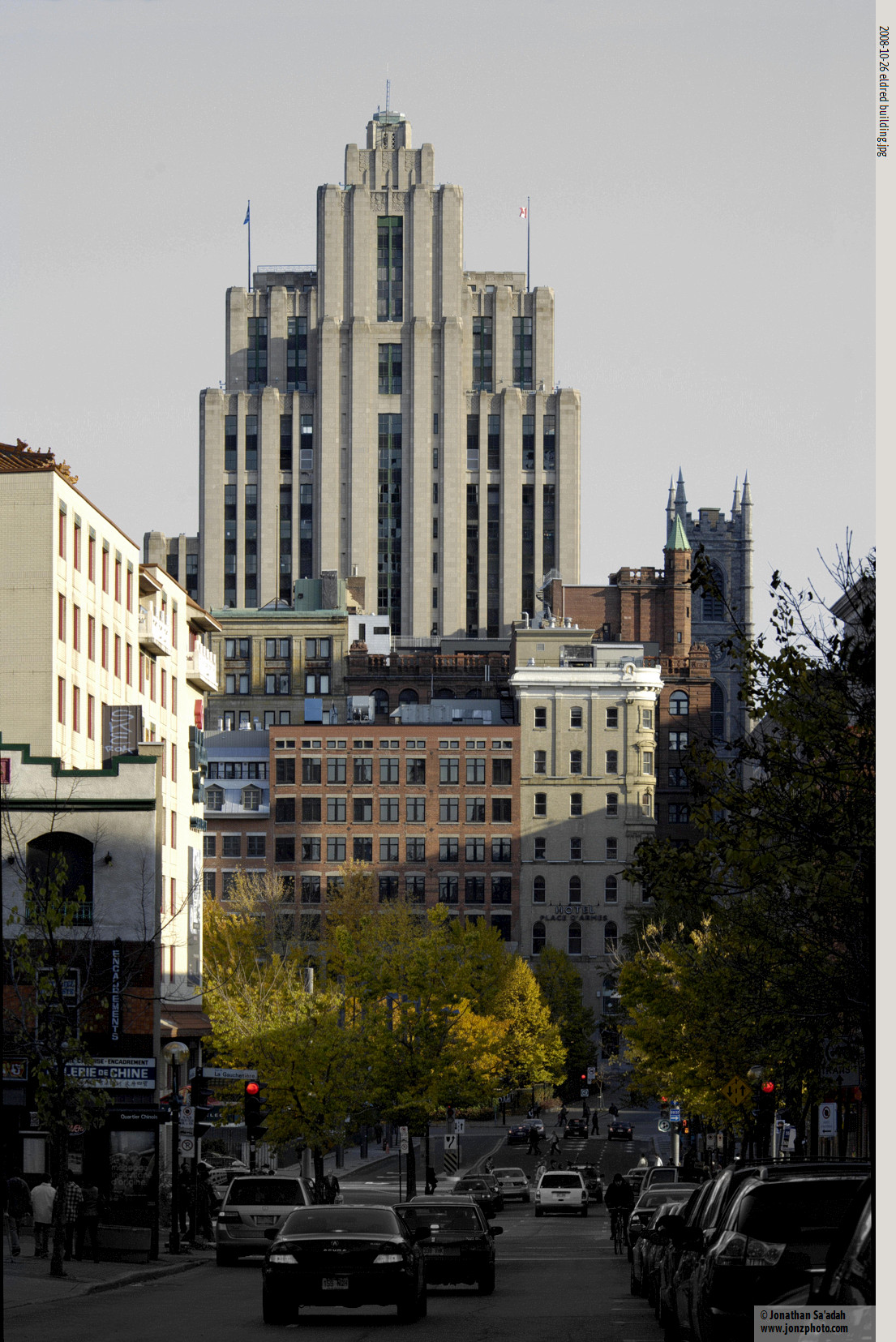
    The Art Deco Aldred building is a 94 year-old office tower on Place d’Armes’. It’s Montreal’s own “little Empire State”, completed in the same year as the New York building (1931) but of considerably smaller stature. Ironically, though, it’s the one that hasn’t been dwarfed by surrounding buildings and still stands proudly. That’s not to say that it doesn’t have problems. It’s suffering from the same disease many downtown office towers have contracted since the pandemic – a lot of empty space and the listing by brokers who represent owners eager to get out of the market.

    A Living Landmark

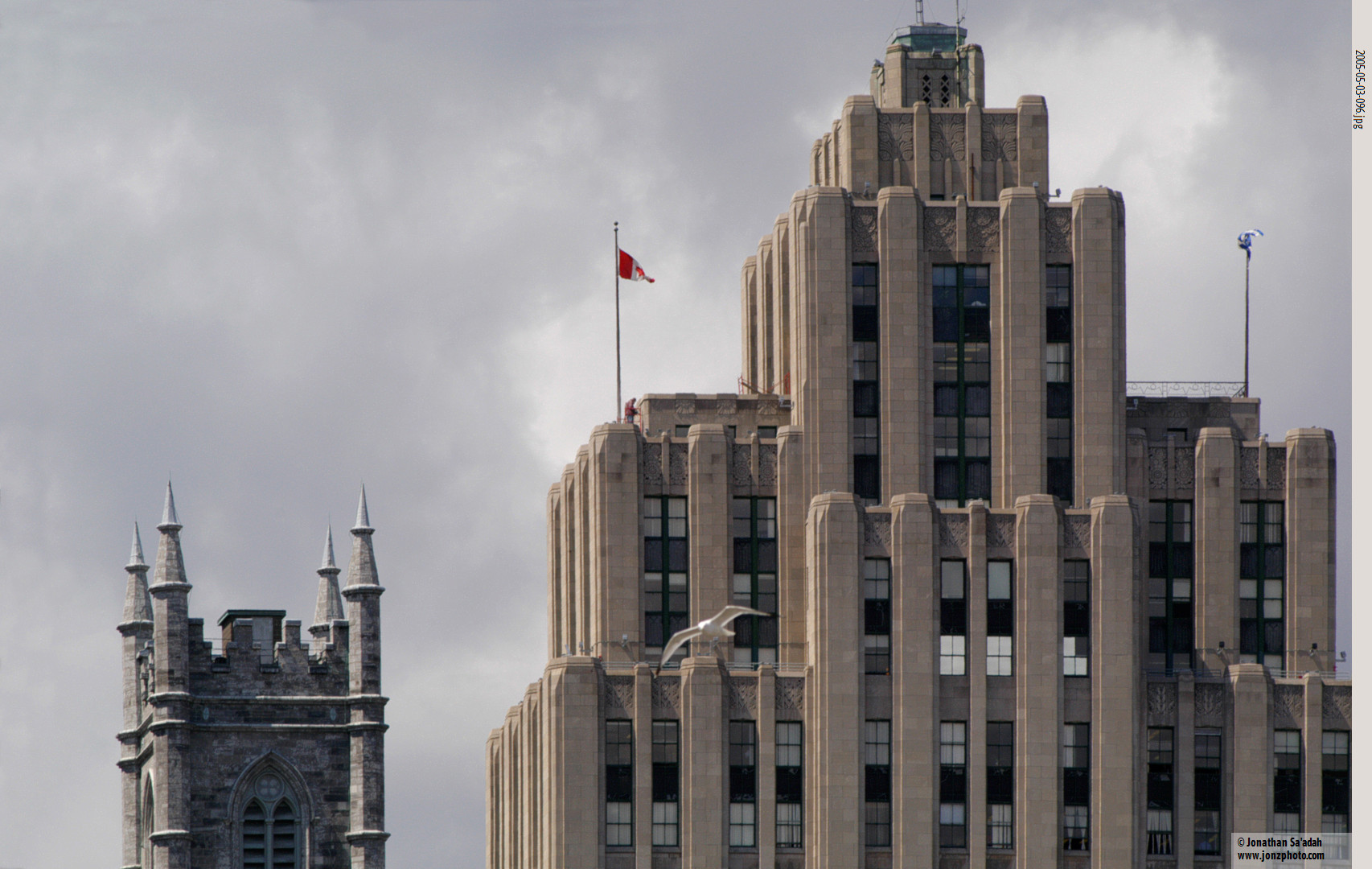
    It wasn’t always that way. When it was built it was a proud, if misplaced, statement of financial-district confidence. Architect Ernest Isbell Barott masterminded the setbacks that characterize its stepped shape in order to take advantage of an 1929 Montreal by-law allowing extra height if sunlight reached the square. The move allowed the building enough height to express its modern ambition. From street level you see limestone that mirrors older façades. The building’s massing feels almost ecclesiastical, yet it projects a kind confidence that was probably in short supply during the Depression.

    ▲ The view looking south on St-Urbain.

    Stitching Into Montreal’s Economic Fabric

    When the tower opened in the teeth of the Great Depression, its $2.85-million price tag signaled bullish faith in Montreal as Canada’s financial hub. Aldred & Company, a New York finance firm, anchored the top floors; local banks soon clustered nearby. Even today, in its diminished state, real-estate brokers list the address as commanding premium leases. Yet vacancy hovers near 30 percent and it’s touted as an opportunity for residential or boutique-hotel conversion.

    That tension mirrors Montreal’s broader economy as the city navigates a post-pandemic recovery. Tourist visits were up 7 percent in 2024 and projected higher for 2025 – but older offices struggle to meet post-pandemic hybrid demands. The Aldred thus sits at the crossroads of heritage preservation and economic reinvention, with no clear plan of where it will go.

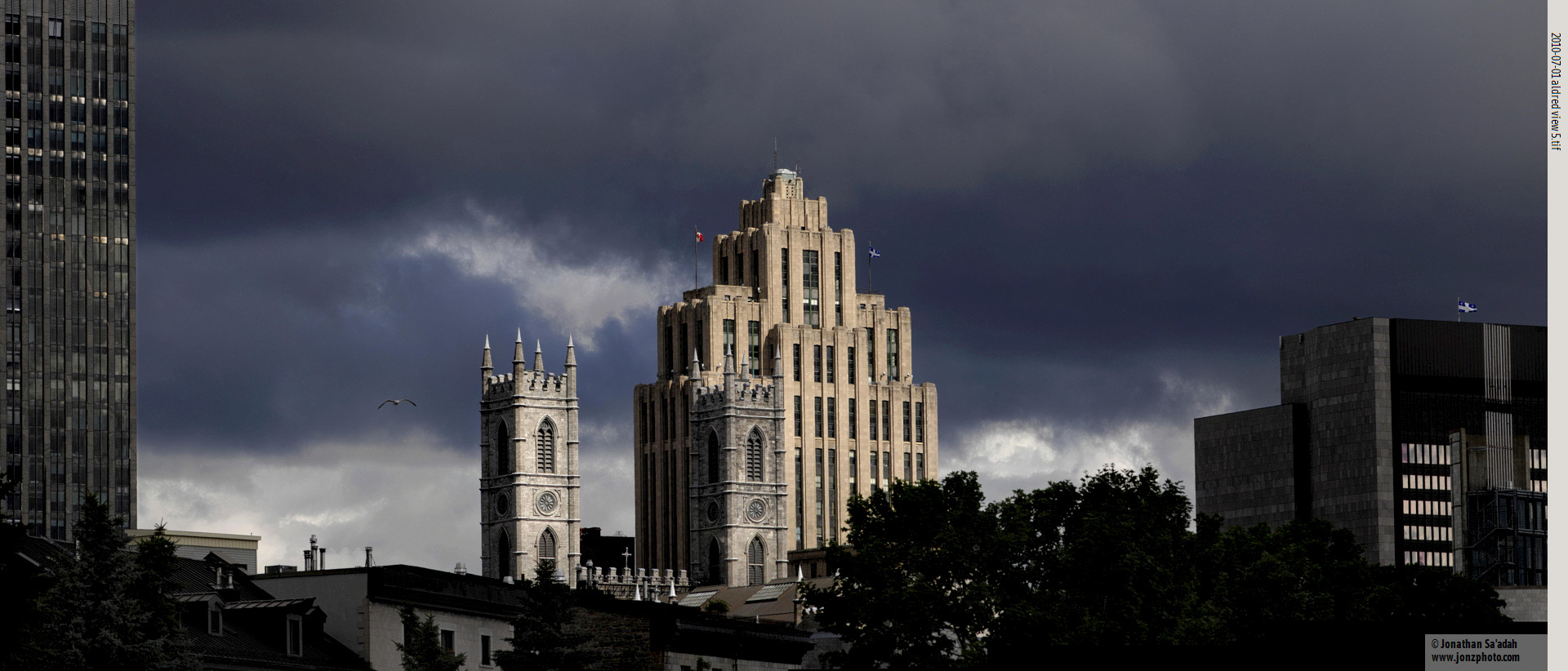
    ▲ Notre-Dame Basilica doesn’t quite match its height. The architect was able to take advantage of a by-law allowing stepped buildings extra height.

    Past and Future in the Same Gaze

    There’s never a lack of discussion about what to do. Preservationists argue for light-touch retrofits, citing UNESCO principles that balance cultural value with economic use. Urbanists argue for adaptive reuse to keep the historic city core alive. But in any case, the building seems perfectly at ease with being photographed and appreciated.

    An Unmistakable Part of Montreal

    For me, I’m lucky – I don’t have to worry about its elevator systems or quirky partitions, or any of the many other worries that haunt building owners. For me The Aldred is a 96-metre miniature gem we can honor in its Art Deco glory while still debating office-to-housing policy. I appreciate its confident limestone ribs and see it as being an unmistakable part of Montreal.

  • The Driver’s Dilemma: My Racing Dreams in a City of Bike Paths

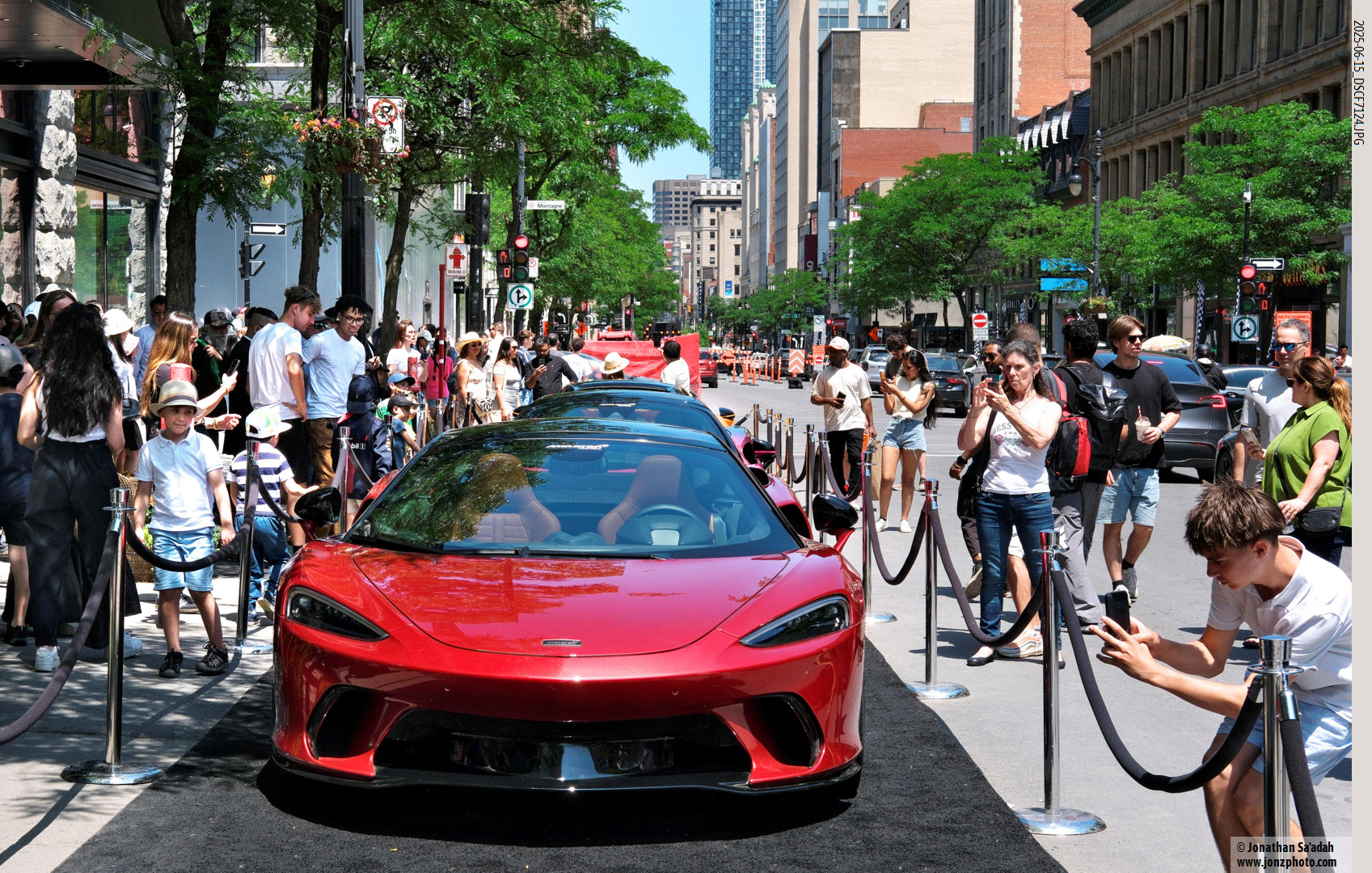
    ▲ Formula 1 weekend, Montreal, 2025.

    There’s something beautifully absurd about dreaming of Formula One glory while religiously using the metro and my bike in the city. It’s like being a vegetarian who fantasizes about winning hot dog eating contests – technically possible, but requiring some serious mental gymnastics to reconcile the contradiction.

    The Making of a 36-Horsepower Speed Demon

    My personal journey to Formula One dreams began in the most modest way possible: behind the wheel of my parent’s 1958 Volkswagen Beetle. While other kids were playing touch football or watching TV, I was sitting in our family’s parked Beetle, gripping the steering wheel with white knuckles, shifting through imaginary gears with the precision of someone who was still more than ten years away from having a driver’s license.

    It was an ironic situation even then. Here I was, fantasizing about joining the ranks of Stirling Moss – while my automotive reality consisted of a parked car that even when running took roughly the same time to reach highway speed as it takes to get from Lionel-Groux to Snowdon (stops on our metro).

    Those BBC radio reports crackling through our family’s shortwave radio painted vivid pictures of Monaco’s glamour, but they somehow missed mentioning the modern issues of environmental rape and pillage tied to petro use. They certainly didn’t prepare me for the cognitive dissonance I’d experience many decades later as a Montreal resident torn between childhood racing fantasies and an adult commitment to sustainable transportation.

    Montreal’s Great Transportation Transformation

    Moving to Montreal in 2003 was like stepping into a city caught between two realities. The Montreal public transit system was already one of North America’s most heavily used systems. Yet Montreal remained (and remains) a city where cars dominate the landscape. There’s a dream of urban sustainability but even in me there’s a conflict with secret Formula One fantasies.

    The Annual Montreal Contradiction

    Every June, when Formula One descends upon Circuit Gilles Villeneuve, Montreal experiences a total ethical meltdown. The small island in the Saint Lawrence that hosts our Grand Prix was originally created for Expo 67, then re-purposed into a racing circuit that celebrates everything Montreal’s current transportation policies are trying to discourage.

    The race circuit itself embodies this paradox perfectly. The city lavishly hosts a sport that burns fossil fuels at obscene rates while promoting electric vehicles and public transit.

    The Netflix Effect and Modern Racing Culture

    The popularity of Netflix’s “Drive to Survive” has created a new generation of Formula One fans who, like me, experience the sport primarily through screens rather than exhaust fumes. It’s not exactly socially acceptable to be interested in a sport that represents everything we’re supposed to be moving away from, but secretly I am.

    When my wife mentioned to a very close friend that we’d watched all seven seasons, the look of bewilderment that crossed her face was eloquent. Even if it was brief before she masked it. It was the expression of someone trying to reconcile how two people who take public transit everywhere and enthusiastically support biking could simultaneously be enthralled by the world’s most environmentally questionable sport.

    Living with the Paradox

    Montreal’s approach to transportation politics reflects a city that deals in nuance. We promote walkability through indices that measure access to employment and amenities while simultaneously maintaining one of Formula One’s most visible venues. Somehow, both realities coexist in the same metropolitan area without the universe completely collapsing from the contradiction.

    Embracing the Contradiction

    Perhaps the real wisdom lies in accepting that humans are complicated creatures capable of holding multiple truths simultaneously. I can genuinely believe that Montreal’s future depends on reducing car dependency while still hoping Lewis Hamilton will win as I hear the obnoxious bellowing of Formula One engines echoing across the St. Lawrence River.

    There’s no doubt though that Montreal’s approach to transportation doesn’t adhere to ideological purity. The city that gives us extensive bike networks also gives us a yearly walk on the dark side. It’s an approach that acknowledges that progress is perhaps served by not abandoning everything from our past in our quest for purity.

    After all, even as a committed environmentalist I can still appreciate the engineering marvel of a Formula One car, just as I hope the most dedicated tourist racing fan can get on our fancy new metro trains and wish they had them in their city. Montreal has figured out how to celebrate both, and maybe that’s the a sophisticated approach for where we are now.

  • Montreal living: Triangle vs the Plateau

    Living in Montreal is a moving target and this is even more apparent when one compares life in the Plateau with with what it’s like to live in the new “Le Triangle” district. We lived in the Plateau for 16 years and now we’re in the 3rd year of calling the Triangle home. The two experiences are quite different, so comparing them is a bit like vintage vinyl vs a Bluetooth speaker, but I’m going to try anyway. Both play music but the similarities end there. I hope to be even-handed since I’ve enjoyed living in both places.

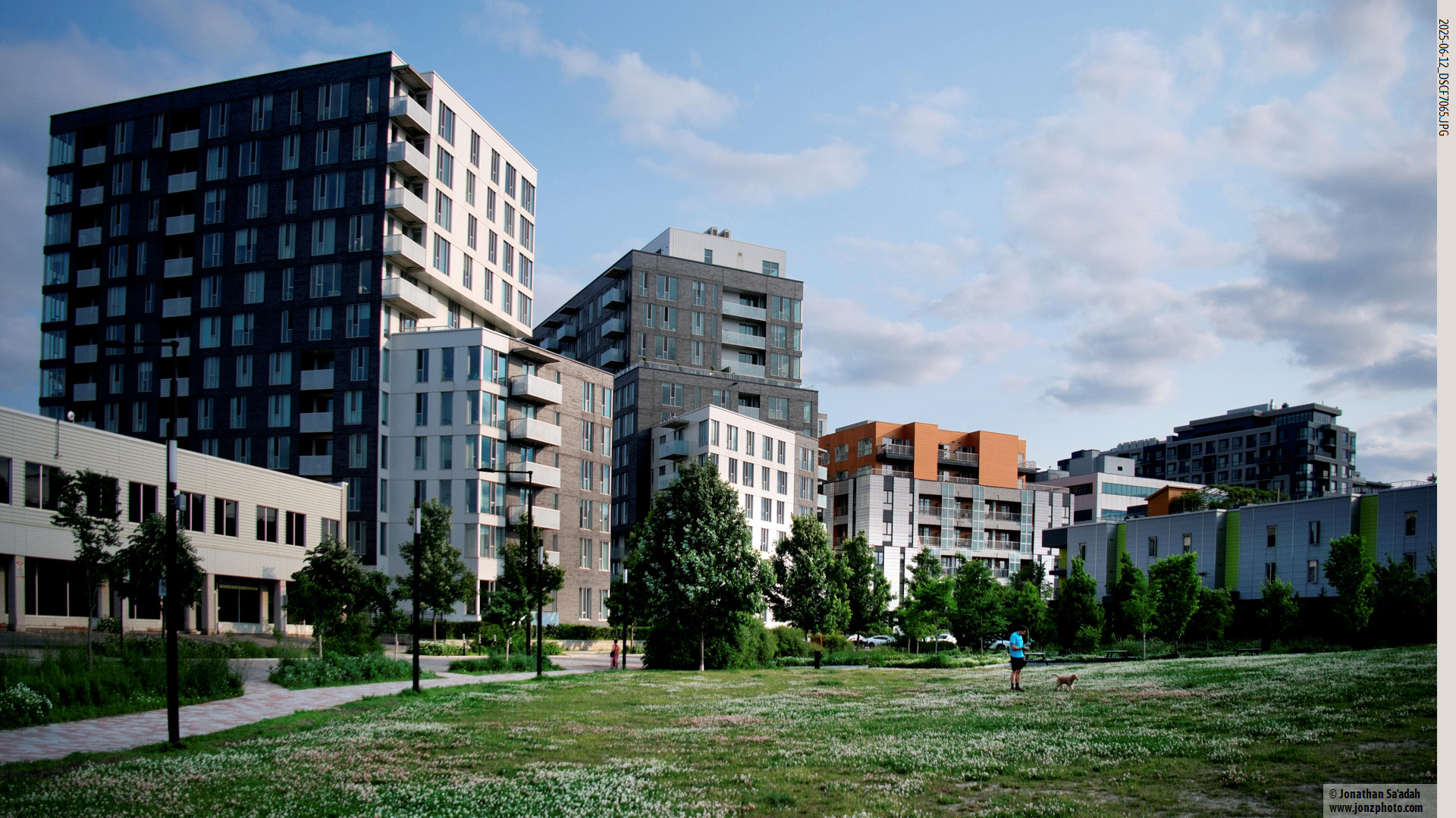
    ▲ The current south-east corner of the Triangle. The newer buildings are the taller ones. The city has set a goal of 3,200 new units in this area. Currently about 2,500 have been built.

    Le Triangle: Shiny new kid on the block

    Le Triangle represents Montreal’s latest attempt at creating a “smart neighborhood” – which is Montreal real estate speak for “we bulldozed some old car dealerships and built a lot of new condos”. In a neighborhood historically known for low income housing, shady enterprises, and car dealers, having multiple developers show up with their “sustainable development” mandates obviously causes a lot of tension. And that’s definitely been the case here.
    On the other hand, most of the social housing in the Triangle remains intact, located on Mountain Sights Avenue. I don’t see that there are any plans to replace it, and all people benefit from the improvements being made to the area. Those improvements have been to develop two parks, build two handsome community buildings, create a protected pedestrian walkway, a bike-path, and improved sidewalks to soften up the area, as well as creatively dampening street traffic through pavers and bump-outs. However, there’s still no school nearby, difficult on-street parking, and limited small businesses.

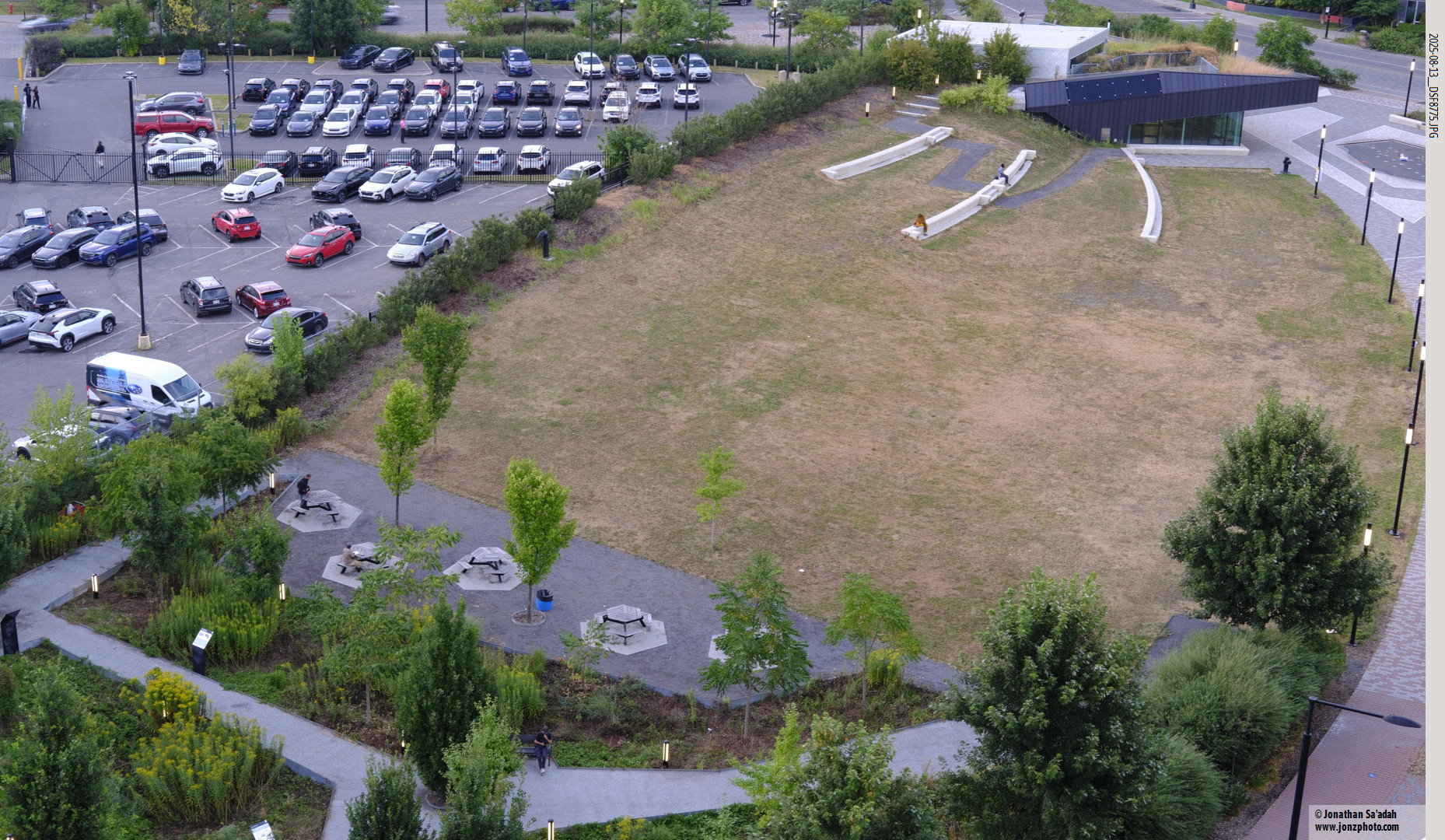
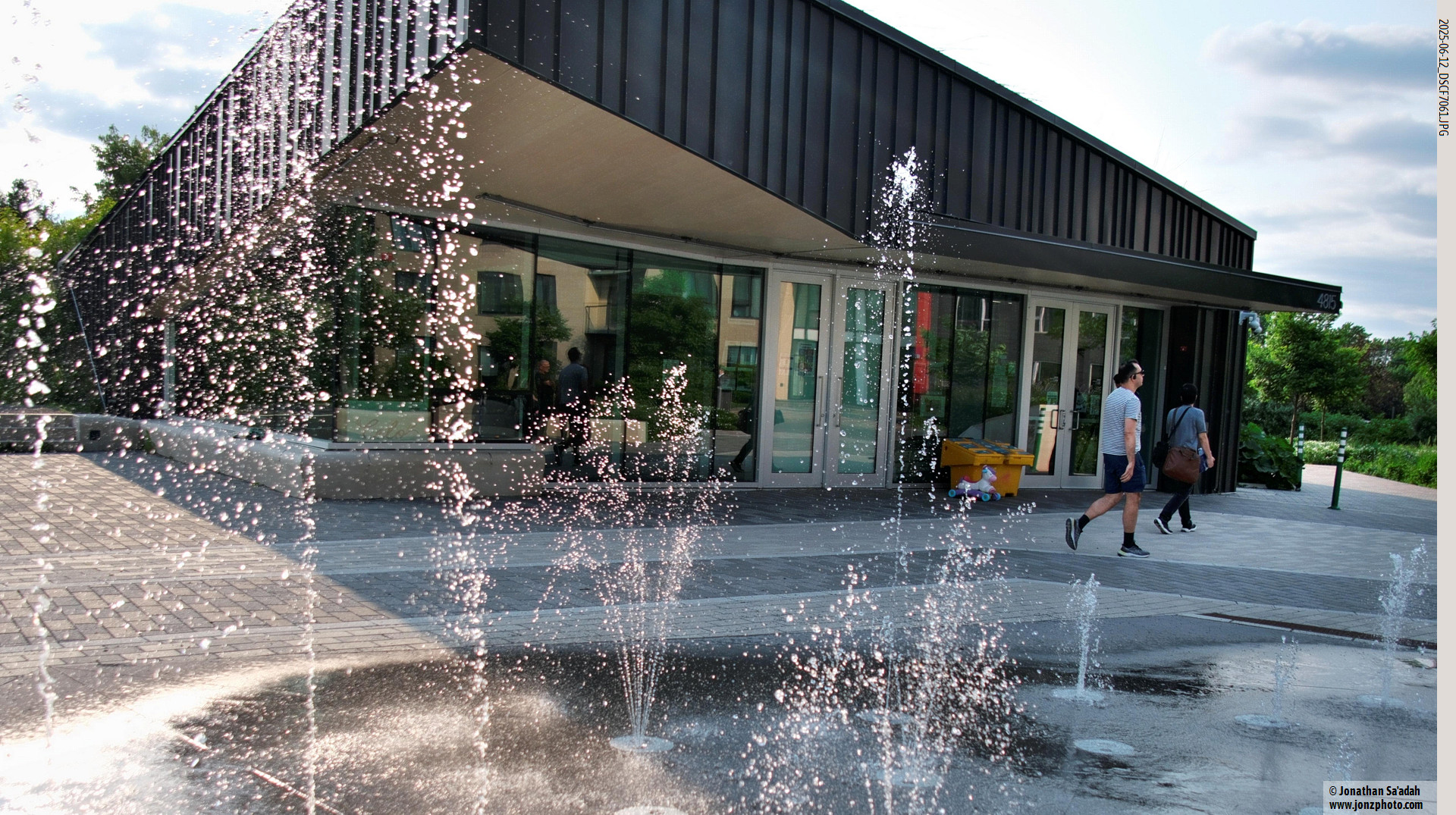
    ▲ Bordering the park this innovative building (which has a sod roof and solar panels) was designed to be a community centre. It’s sparsely used since program money is a problem.

    The fight over housing policy seems to have moved over now to the large plot of land nearby, where the city claims to have future plans for balanced development but where, for many reasons, nothing ever really happens. The 43 hectre (103 acre) “Hippodrome” (an old race track) was purchased by the province in 1995 for an undisclosed price and in 2017, after much drama, ownership was transferred to the city. Just to the west a fight over a connector road has been raging for close to eight decades, so it’s probably not healthy to hold your breath concerning any plans for the Hippodrome. Comparatively the work in the Triangle looks like a high-speed sprint.

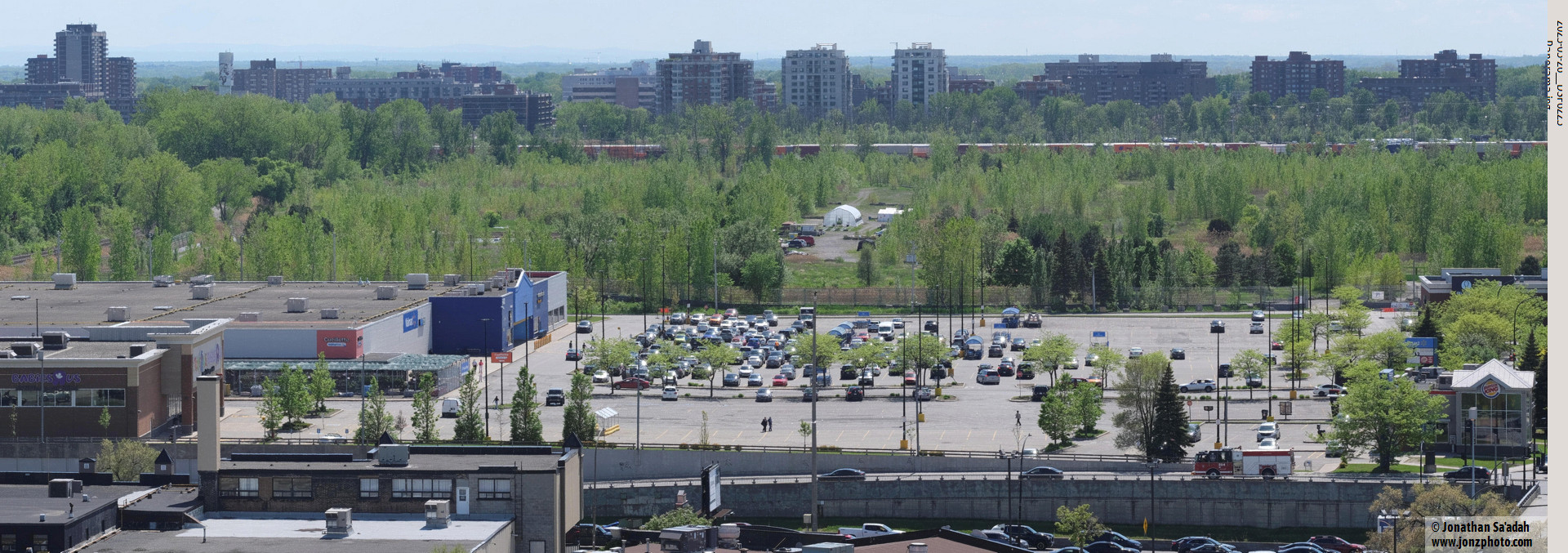
    ▲ Without a doubt the most exciting thing that’s happened in the old Hippodrome site since horse racing closed in 2009 was a 2011 U2 concert. Otherwise its only use appears to be as a city gardening space. This is a partial view of the site, there’s a bit more to the right. The back boundary abuts a railroad, the horizontal line in the back being railroad cars.

    From the point of view of a city resident, Le Triangle is a good example of what happens when city planners get excited about Transit-Oriented-Development (TOD) and decide to create a neighborhood. It’s now fifteen years after the project was announced, and the area is still being talked about as the poster child for modern urban living. It’s filling up with 10-story condo buildings, all promising variations on “life at another level”, which from a practical point of view, means a small swimming pool, a fitness center, indoor parking (extra), and shared working spaces. The pretty drawings fade away and reality cuts in as the condo developers expand their buildings out to the edges of their lots and the green spaces that were supposed to surround them either disappear or are created without conviction. The mandate to include a lot of open space too often seems to be interpreted by the developers as “we’ll plant a few trees and then flatten them a bit later with front loaders.”

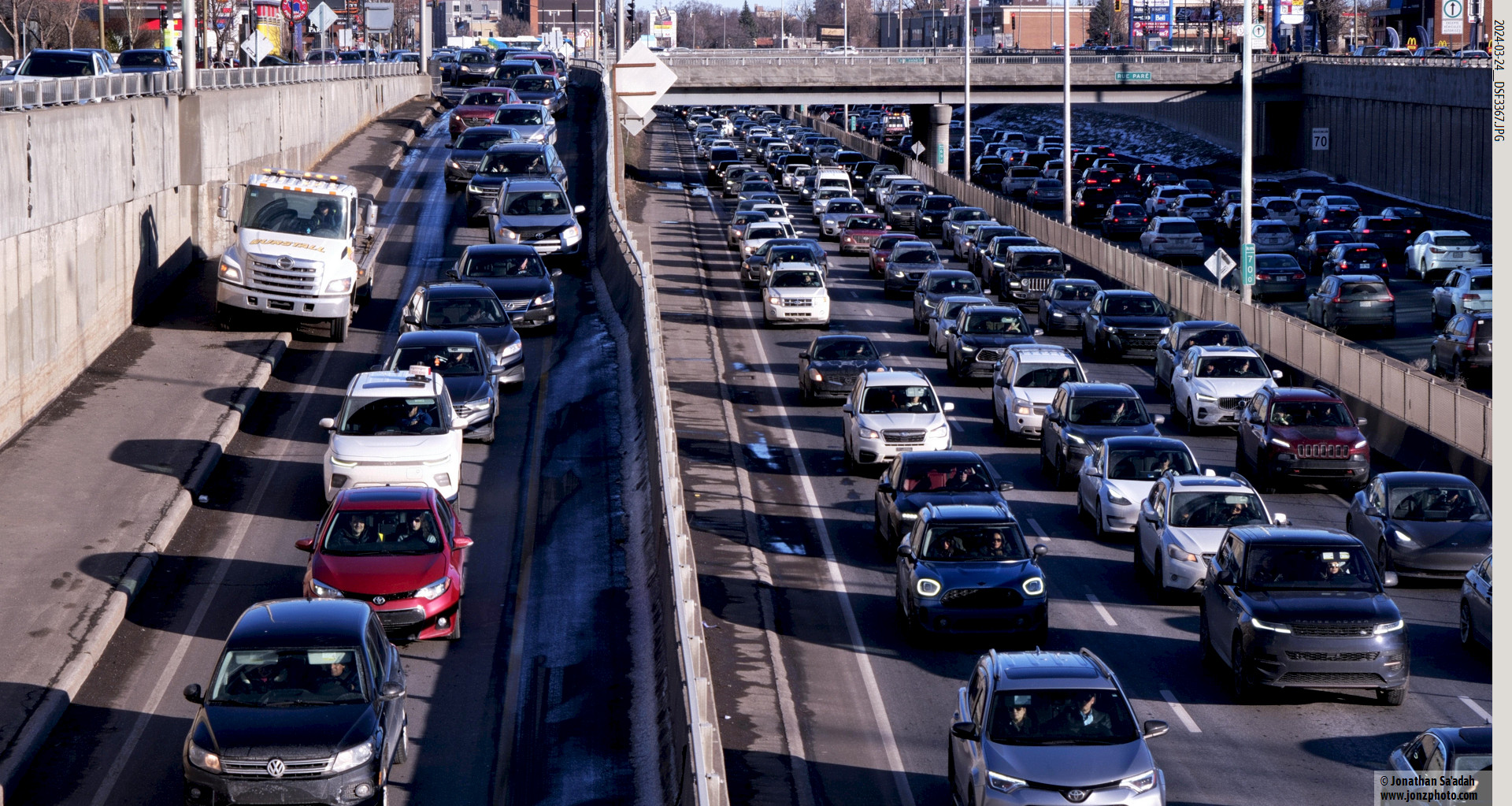
    ▲ The Décarie is often overburdened with traffic. In theory it is an asset, but in practice it’s a problem. The nearby Metro stations are the best option.

    Le Triangle as a daily experience

    In Le Triangle the day starts with indoor parking – which is a concept so foreign to the Plateau that it might be mistaken for a new art installation. You then get into your car and head out into the thicket of traffic-blocked streets, driving past construction sites that promise to become “vibrant urban living environments”. You head on to the Décarie, where emergency vehicles claw their way down side shoulders past cars inhabited with trance-eyed motorists.
    As an alternate approach you can try the Namur metro, where the STM (the agency that runs the Montreal metro) seems set on preventing a complete set of the escalators functioning at any one time as you drop down 24.1 meters to the platform.
    What you gain from living in the Triangle is primarily the quality of your personal residence and the resources provided by communal living. Large, professionally-managed buildings can have problems but no sane person would argue that they approach the nightmares guaranteed when living in century-old duplexes or triplexes in the Plateau.
    As the city likes to point out, proximity to the metro system is a big advantage too. There’s nothing like having a blizzard raging outdoors and being able to drop down into the metro for a safe ride to your destination. Especially if you don’t need to even consider digging your car out.
    Socially the newness of everything means that no one has a corner on being “born in the neighborhood” and there are a lot of people, often with interesting backgrounds, who are looking to make friends. Multiculturalism is in full bloom in this part of the city, and it’s usually fun to meet the people and navigate the different behaviors and traditions. As a fall-back position, anonymity is possible too in this style of living.

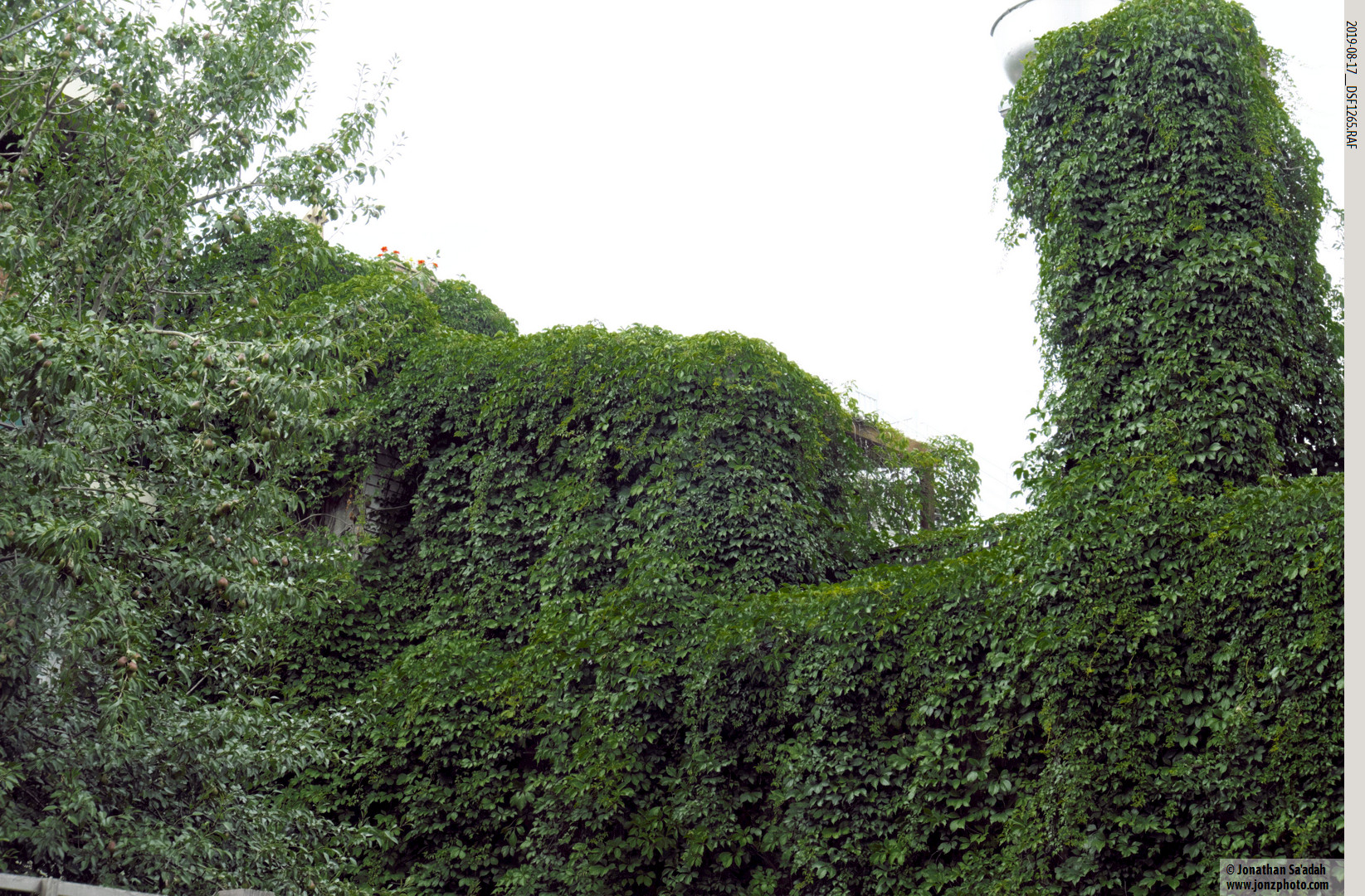
    ▲ An old Plateau triplex overrun with vines. Pretty but a problem. You would hardly know that the Triangle and its environs existed in the same city. While this is a funny picture, the vines do no favors to their host.

    The Plateau as a daily experience

    In the Plateau a day starts with the spiral staircase, where during wintertime you can clip on with technical ropes to rappel down through the ice. Following that, and for all four seasons, you get to dodge the cyclists who come at you from all directions, while trying at the same time to calculate in your head the most likely construction-free path to the metro. The city is repeatedly digging up the streets to fine tune its vision of multi-modal transport while strong-arming property owners to replace private parking spaces with groves of trees. There’s lots of traffic and lots of congestion. It’s a mature neighborhood and that means that human behavior is highly developed and stylized. Unlike the condo living of the Triangle, anonymity is not an option in the Plateau. You have neighbors and they are part of your life (especially if you are in a shared-ownership building).
    What you gain in the Plateau goes under quality-of-life. You don’t fake the patina of life that’s gained from old neighborhoods. Everything is small. You can walk a block and purchase your food from someone who recognizes you. Your neighbors have outside street gardens and you can sit on the front steps and talk with them about life and its problems.

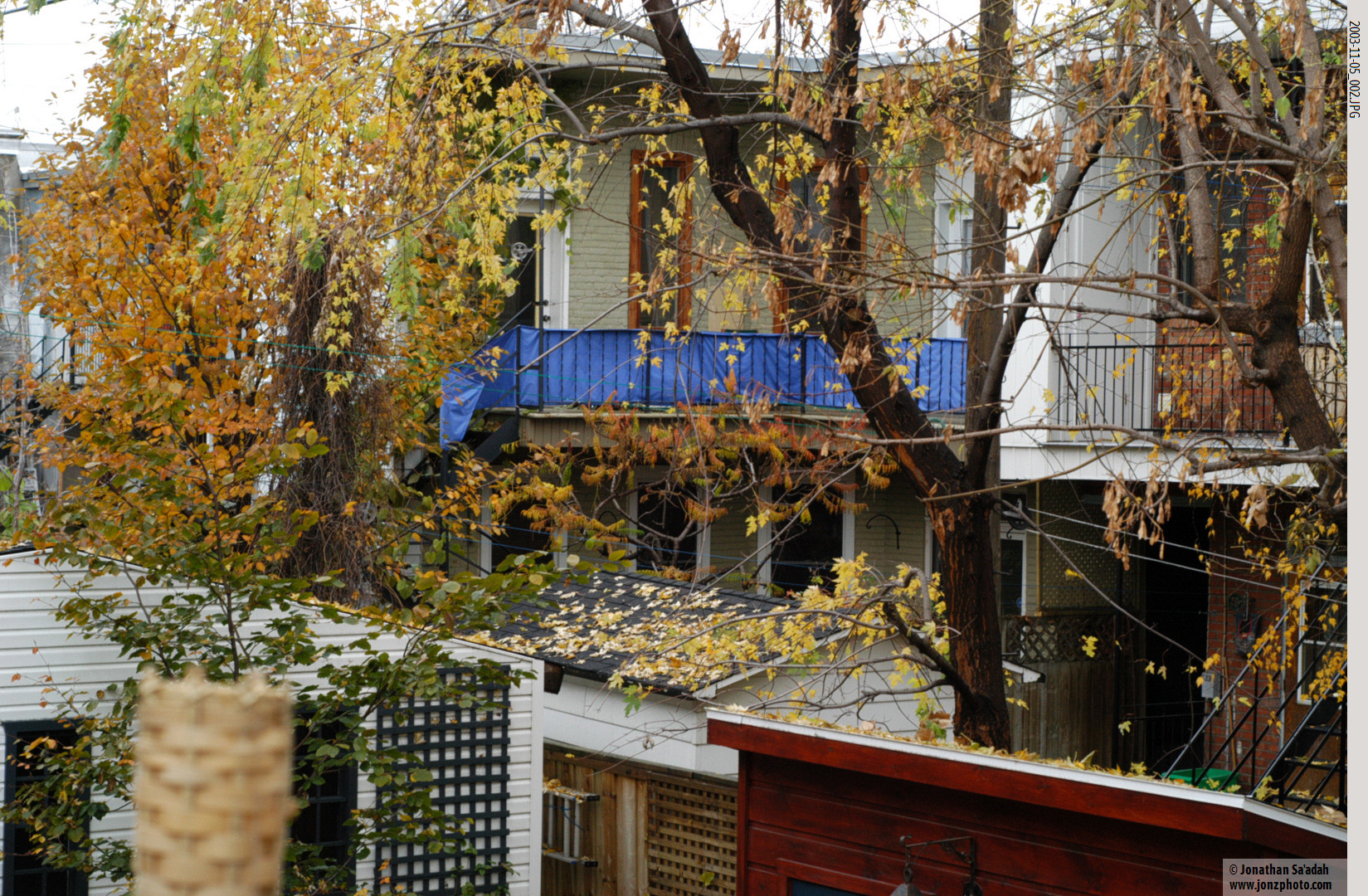
    ▲ Back yards in one of the older sections of the Plateau. A few months after this picture was taken in 2013 these same buildings were purchased and, for a large sum, converted into a private compound.

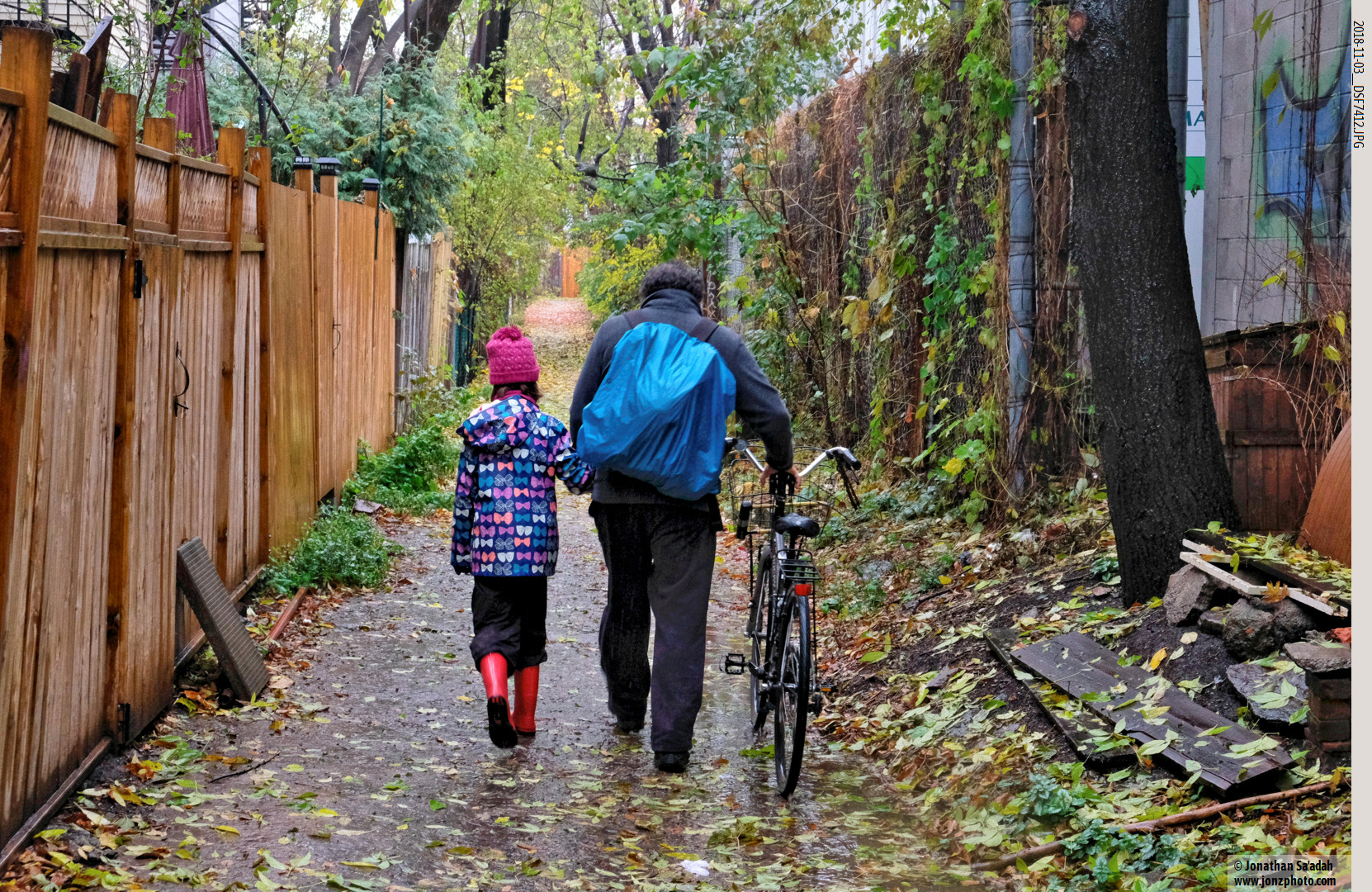
    There’s shade, and quiet ruelles, and people who often are considerate of each other. It’s a good feeling. Truthfully, we would have stayed in the Plateau but we didn’t have the option. Living spaces are small and expensive, and upkeep often involves major expenditures. We had reached a point where we had to close a separate artist studio space where we had worked for years and which had added to our living space, and we needed a home with enough space to continue our work. It would have taken too much money to have what we needed in the Plateau, and the Triangle was a workable option. We’ve missed our old neighborhood there and our friends, but having a place to continue our work and at the same time having a reasonable lifestyle was the responsible decision. It’s what made sense for us.

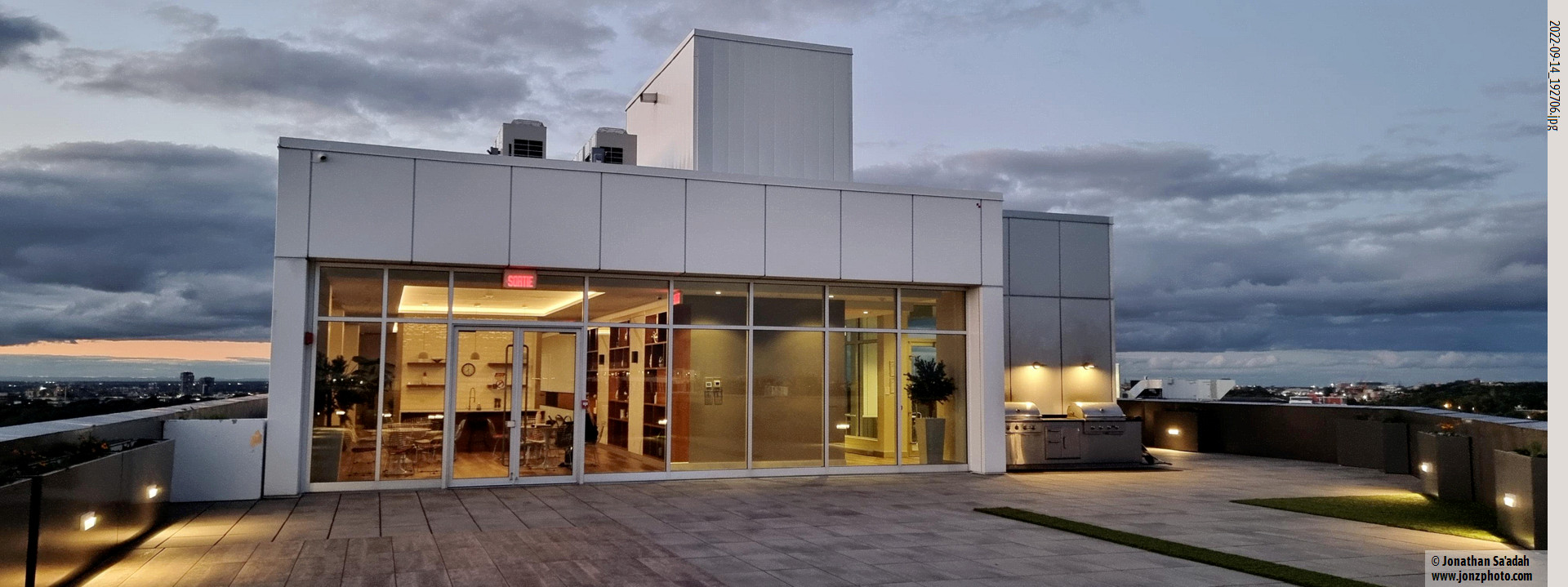
    ▲ Rooftop common space meant to be used as a back yard in a condo project. In a practical sense it’s used by family and friend groups and not as a community space.

    On the other hand, I look at families and younger people (of which there are many) who are living and bringing up their children in this new and modern environment, and I wonder about it. I recognize it’s not possible to make a new neighborhood mature and multi-textured instantly, and I don’t at all dismiss that the Triangle represents a valid approach to living in a different and more outwardly-looking way. But one environment hands it to you on a plate, and the other leaves it to individual responsibility and initiative.
    If you’ve had experiences living or working in these environments please leave a comment. I don’t pretend to have all or even most of the answers and I’m curious what others think.

    I do personally feel that as a society it’s in our interests to creatively address what these newly-built environments represent. It’s not just the Triangle, but other similar neighborhoods in this city and others too. Embedded schools should not be built as an afterthought, but as a priority. Cultural and educational events/programs should be integrated into the planning of new neighborhoods from the start – it’s not enough to build attractive community buildings and then not fund them, leaving them locked and dark most of the time. Urban planning should be open and transparent. And it’s not giving the right message to disregard upkeep in neighborhoods through differing levels of public services. I know there are many people who have been working to improve things in these areas, but we have to do better.

    So in the end choosing between the Plateau and Le Triangle is like choosing between a vintage leather jacket and a new technical ski parka. One has character and the other has more pockets. Both neighborhoods offer their own unique version of Montreal. Either way you’re still in Montreal, so you get to spend 50% of your time complaining about the construction while still actually loving being here. Living in the Plateau vs. The Triangle? It’s a big contrast – but for me there isn’t a simple answer…