Category: Joseph Losey

  • Laughter in the shadows: The chilling cabaret scene of M Klein

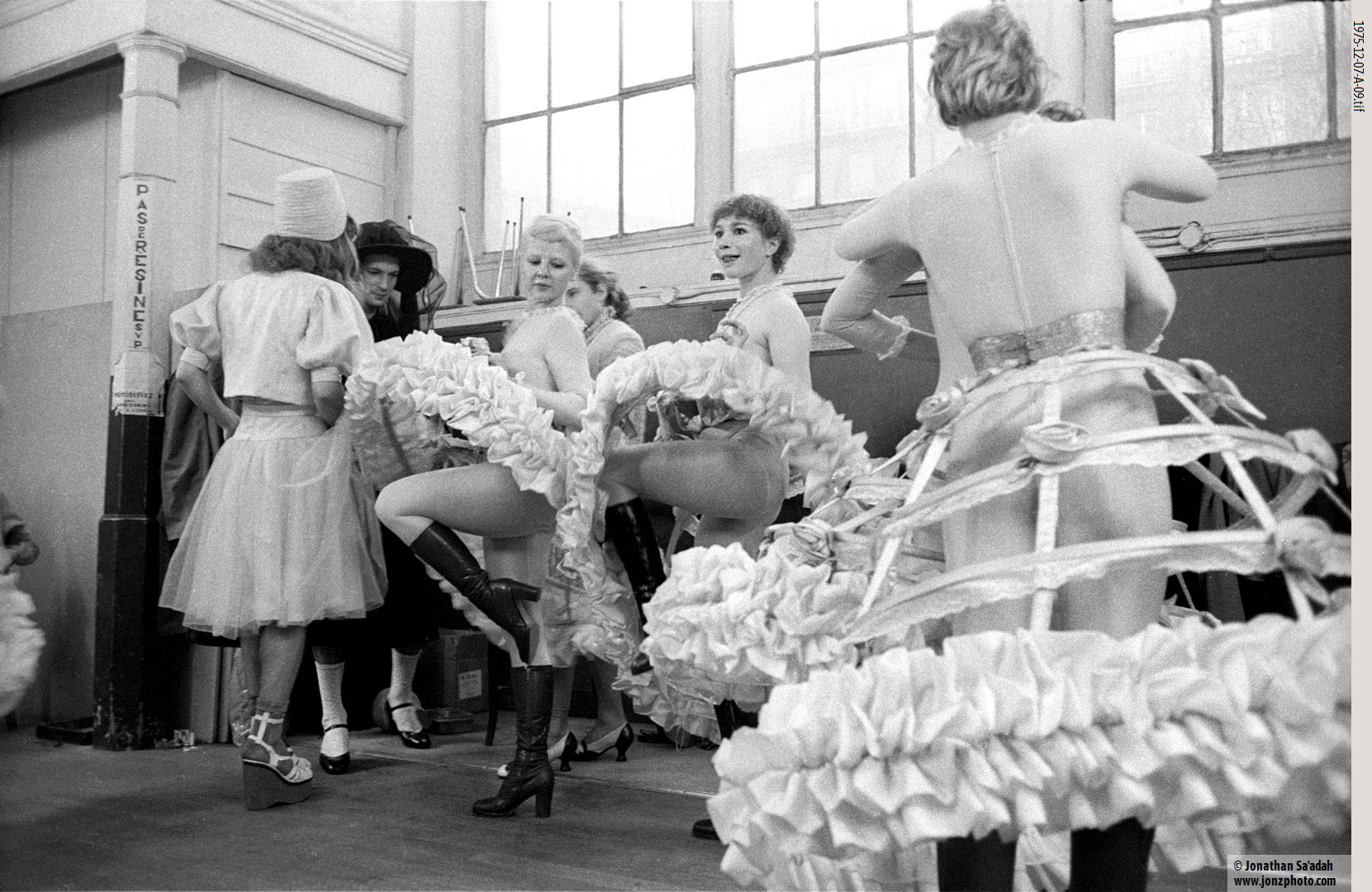
    ▲ In the final shot of the cabaret scene, a chorus line of dancing girls in hoop skirts kick their way out onto the stage. These women were practicing dancing with the hoops, which was an acquired skill.

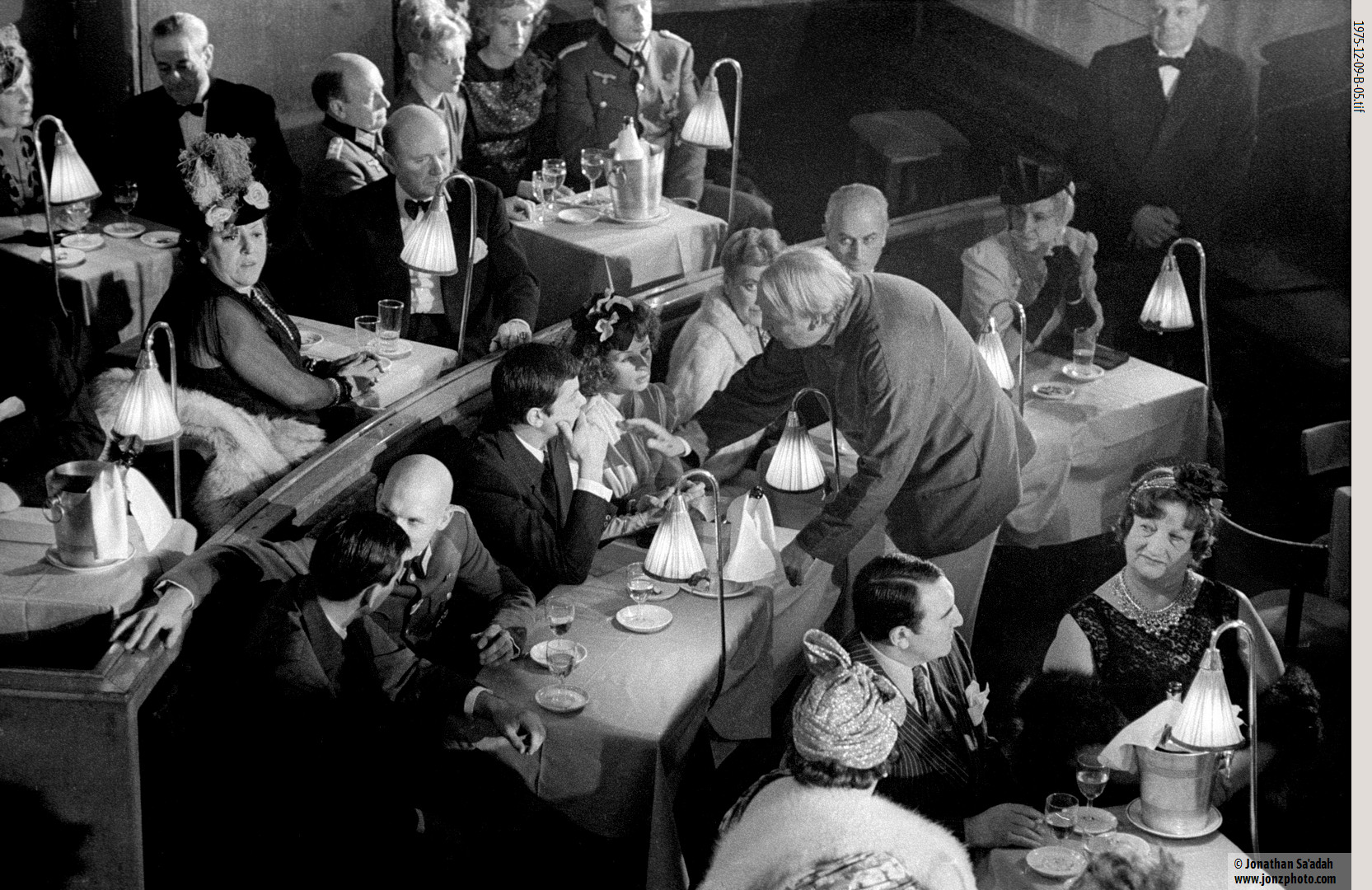
    The cabaret scene in Joseph Losey’s M Klein, which occupies a full five minutes in the film, is the pivotal scene in the movie – when Klein first wakes up (with some prodding from his girlfriend) and realizes that the racist skit that he and others are mindlessly applauding in a WWII Paris cabaret is actually insulting, repulsive and sinister. The scene was drawn out as a sketch in the original screenplay but was developed in detail as Losey worked with the cabaret artist Frantz Salieri to bring into focus the violent hatred that underpins the action in this scene and the film overall. Losey created an audience of predatory scavengers to applaud and dine while watching the anti-Semitic stage show.
    Joseph Losey directing actors

    Losey Salieri collaboration
    Frantz Salieri was given the role by Joseph Losey of creating the stage show component in the film’s cabaret scene. Salieri, a multi-discipline artist working under a variety of names (Francis Savel as a painter, Dietrich de Velsa as film director), later collaborated with Losey on the film Don Giovanni. As a painter (Francis Savel) he had been the subject of an 18 minute documentary portrait (“Le Journal d’un Combat, Guy Gilles, 1964) which captured his painting process and, interestingly enough, was narrated by Alain Delon. A later work under the Dietrich de Velsa identity was his 1980 film, Équation à un inconnu (Equation to an Unknown), which was an erotic rendering of queer culture in France in the period preceding AIDS and was distinguished by his directorial vision.
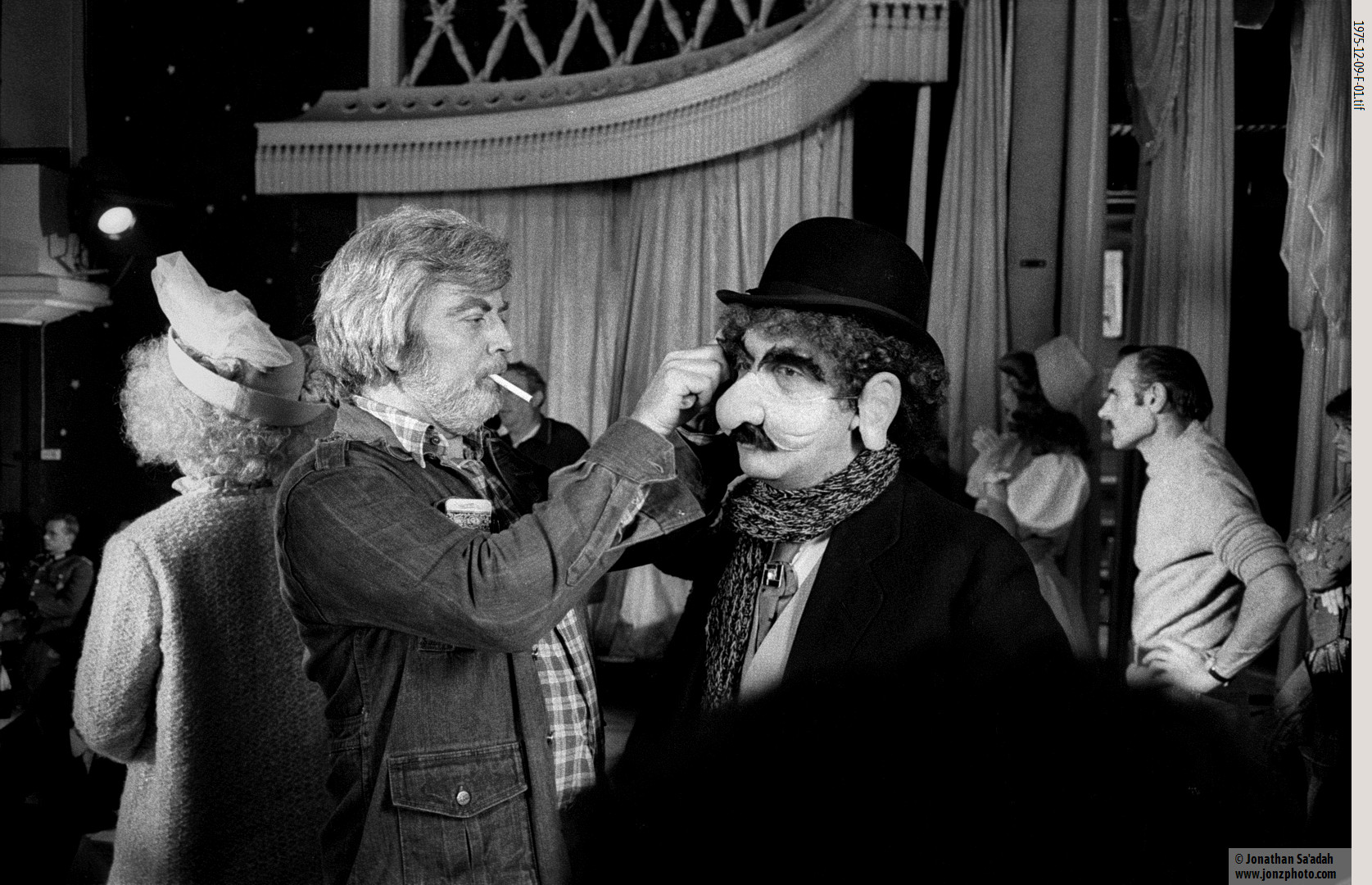
    Several years prior to the filming of M Klein Salieri created a Parisian transvestite cabaret show called “La Grande Eugène”, which performed on rue de Marignan in the 8th arrondissement in Paris and was known for its flamboyance and innovative theatrical staging. Salieri created a show that represented a radical departure from what was offered in the traditional Parisian entertainment venues, featuring transformiste performances with elaborate drag shows and sophisticated theatrical presentations. The show was the subject of a David Bailey photo essay published in London Sunday Times in 1973. The cast of “La Grande Eugène” was used as the mainstay for the cabaret show in M Klein. It’s likely that Losey had learned of Salieri’s work from the 1973 run of “La Grande Eugène” in London, and that’s what led to the connection and his collaboration in this film.[1] Losey, throughout his life, was always on the lookout for talented artists whose work he perhaps could incorporate in his film projects. Examples I knew of personally were Salieri, who he used, and also Pilobolus,[2] and jazz musician Don Cherry, both of whom he never collaborated with but followed closely.
    Losey’s concerns and background in theatrical production
    In approaching the scene Losey concern was in creating content that might be attractive to racists. This concern arose because of a previous incident at La Cinémathèque française in Paris where a film festival screening wartime films had to be closed down because the anti-Semitic content attracted an audience looking for and cheering along what was shown. His goal was to find a way to stage the cabaret show in a manner that wouldn’t appeal to racists, and by using male actors to play the female roles, he was brilliantly successful in turning off racist interest.[3]
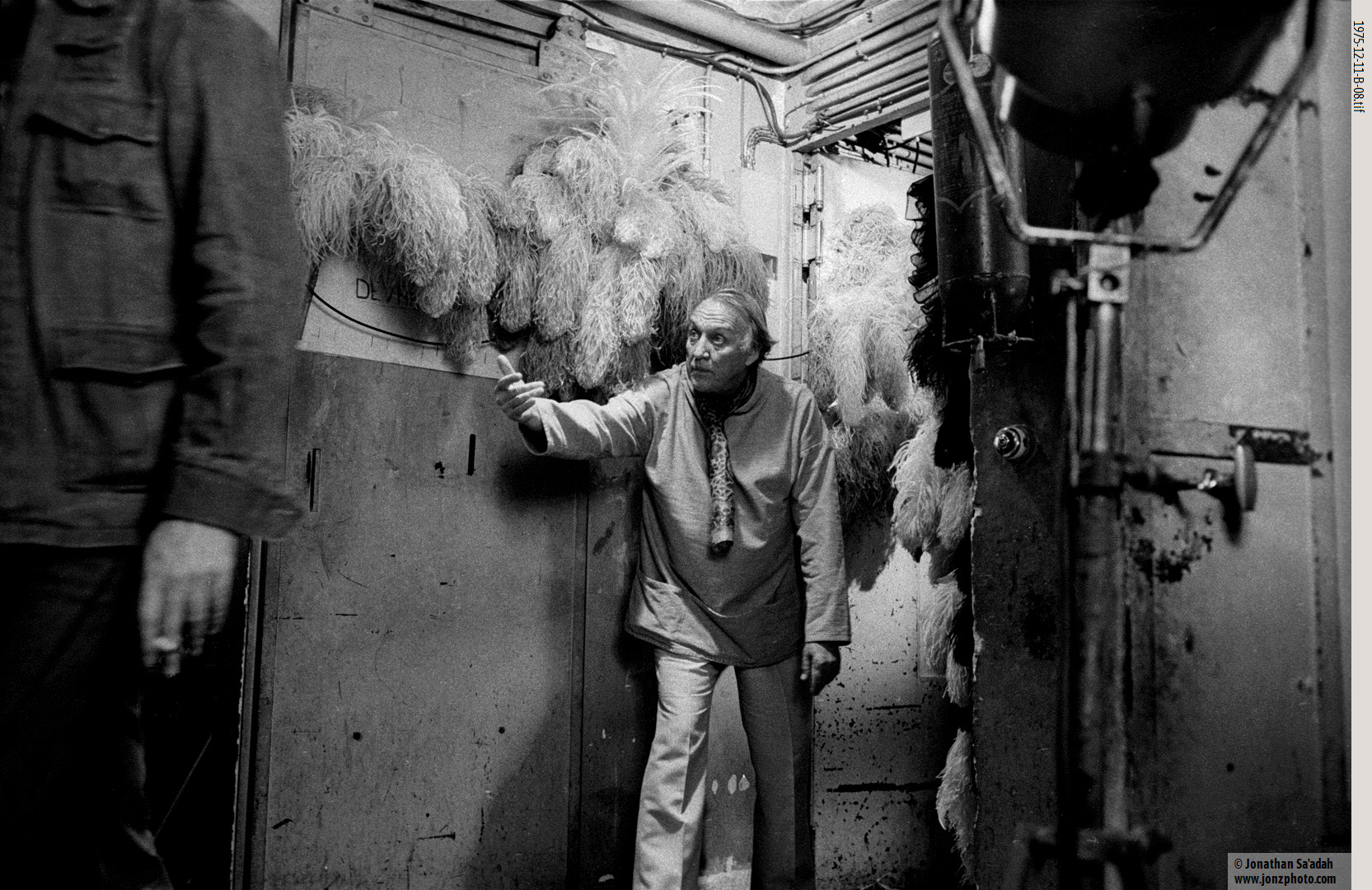
    In the script Klein tries to track down the other Klein, and in the course of this search goes looking for “Isabelle”, who he thinks is the second Klein’s girlfriend. This leads him first to the cabaret show being staged in the Parisian cabaret “La Nouvelle Eve”, and then to the stage entrance where he bribes the concierge to let him question one of the dancers. After questioning the dancer (Lola) she says that “Isabelle” is really “Cathy” and and that she doesn’t work at the Cabaret any more, but rather in a munitions factory near Metro Ballard.
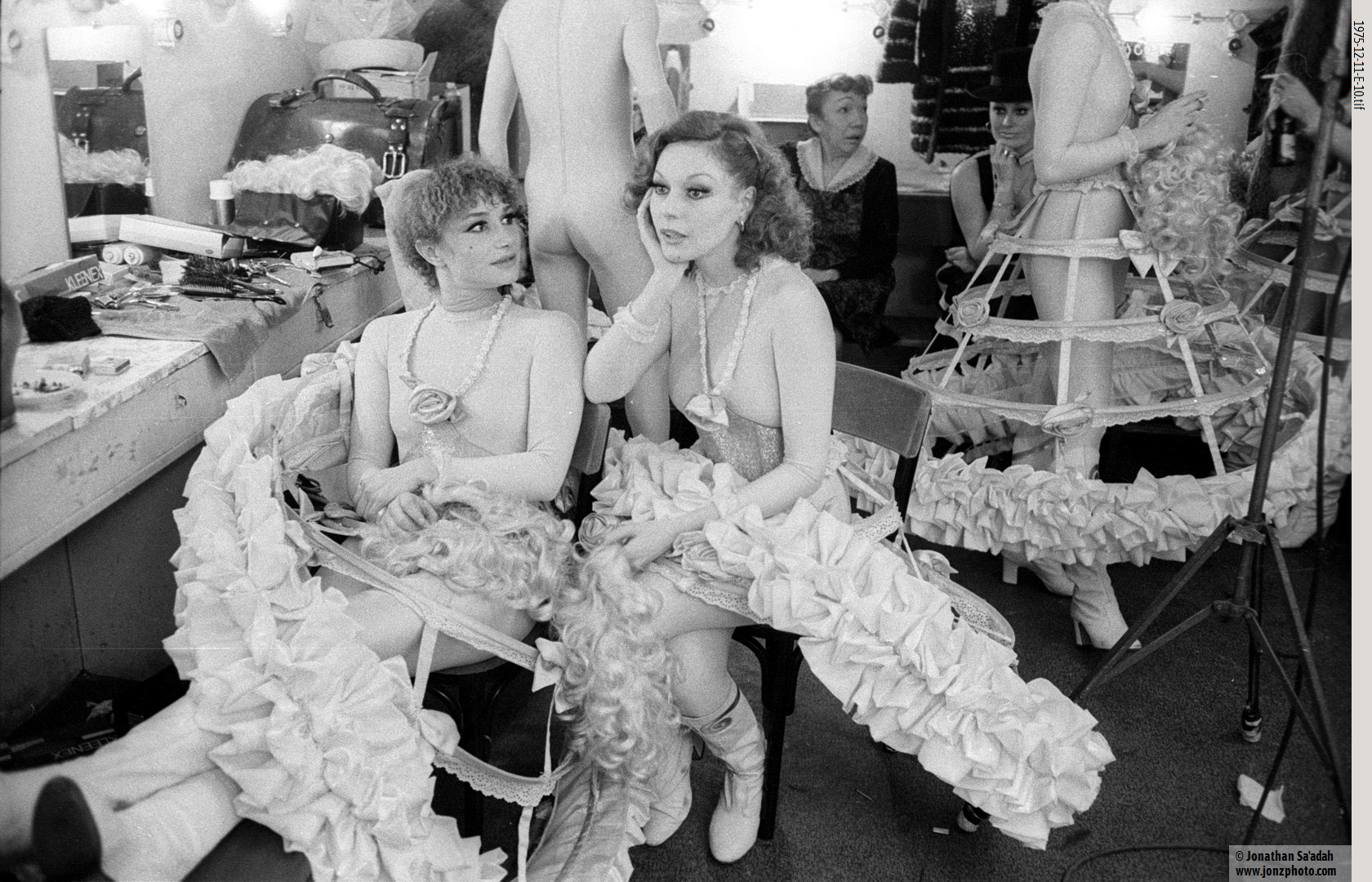
    Losey was adept at actual theatrical stage managing, with many credits during his American career. He was, for example, the stage managing the 1946 Academy Awards, so he knew how to create dynamic flow and excitement. He was good at timing pieces to come together and create energy, and he worked with Salieri to that end.

    But there were challenges to the shooting at La Nouvelle Eve.

    Issues in working on location
    It was technically difficult to work in the cramped, narrow corridors of the location. As a result cinematographer used the 35 mm camera both shoulder-held and on a crab dolly, both of which were difficult and took a lot of skill and strength under these conditions. Klein is first seen questioning the concierge. The camera is on a hydraulic stand (shown in the photographs) for that shot, but then is shoulder-held in the stairwell, and all the shots flowed together seamlessly. Gerry Fisher, the Cinematographer, had set up the lighting to work with almost no space.
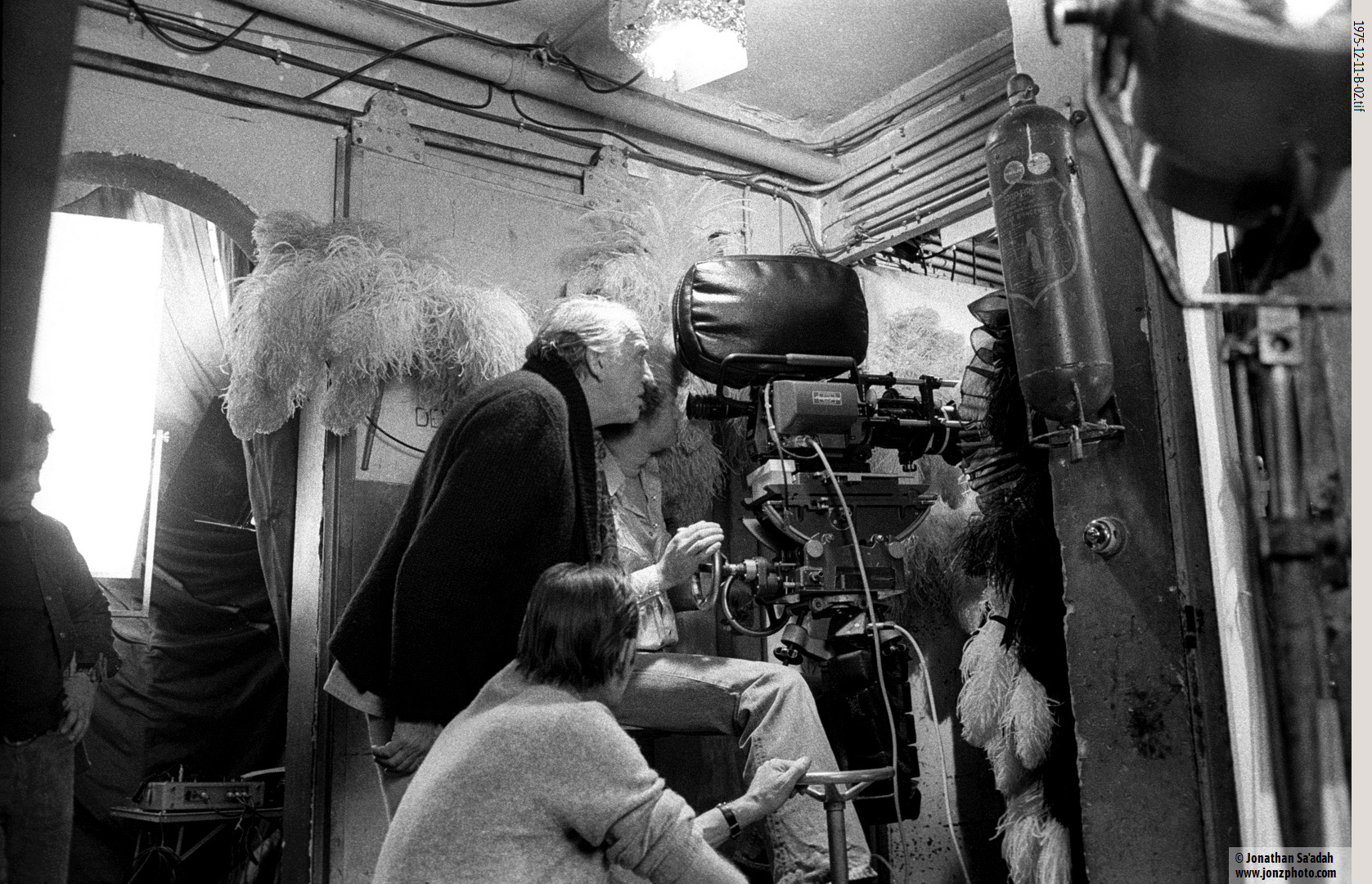
    The two sequences that make up the cabaret scene were shot first for the stage show in the cabaret La Nouvelle Eve on December 9th and 10th, and then the stage entrance scene was filmed at the same location on December 11th.
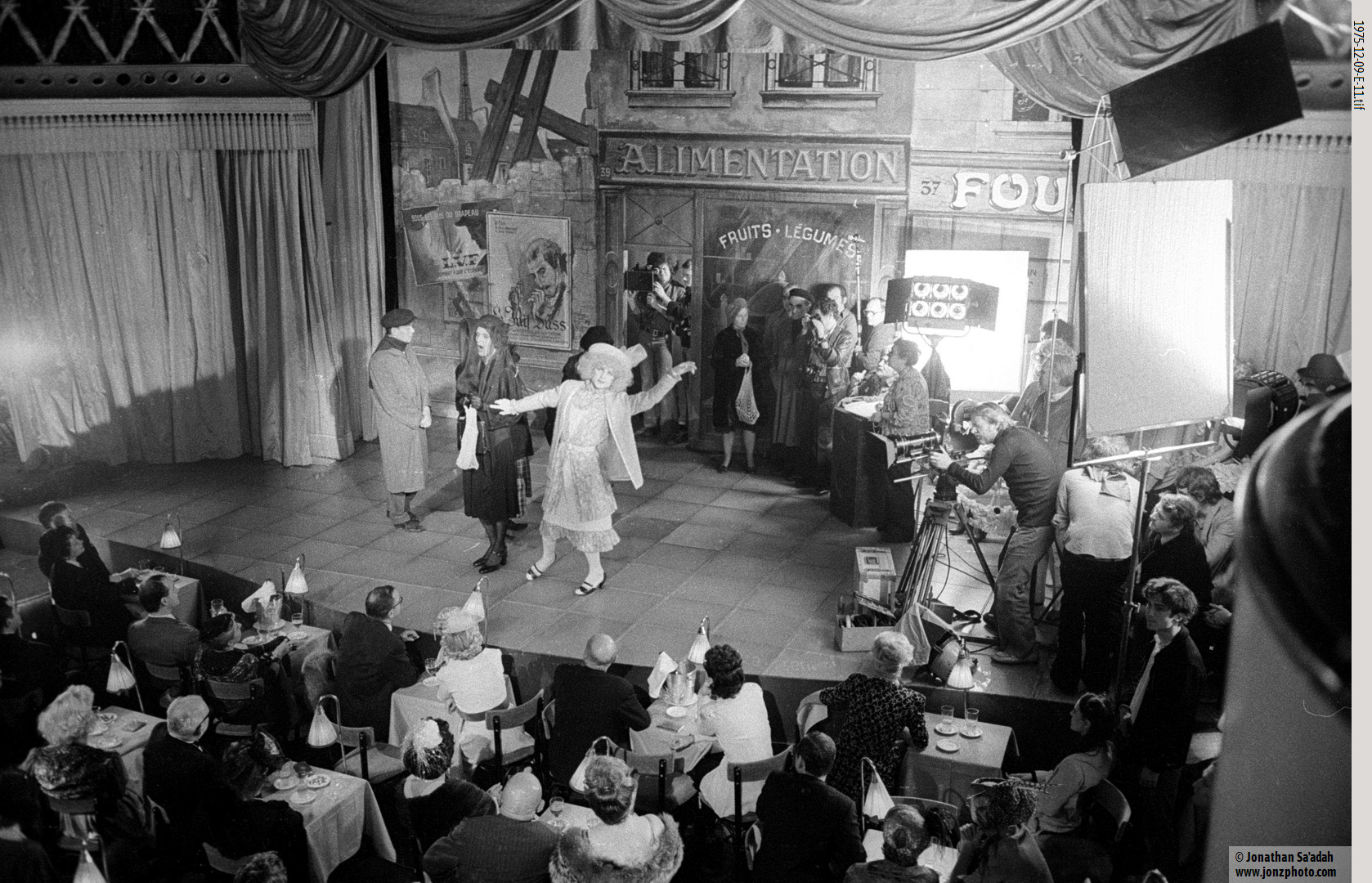
    The results of the Salieri-Losey collaboration show camera and actor movement tied together skillfully. The result was the creation of the two memorable central scenes in the movie.

    It’s also my only ever appearance in a feature movie. I was actually at my perch taking the photo above and got through editing unnoticed. It’s the third shot of the cabaret performance sequence (2:03:27).
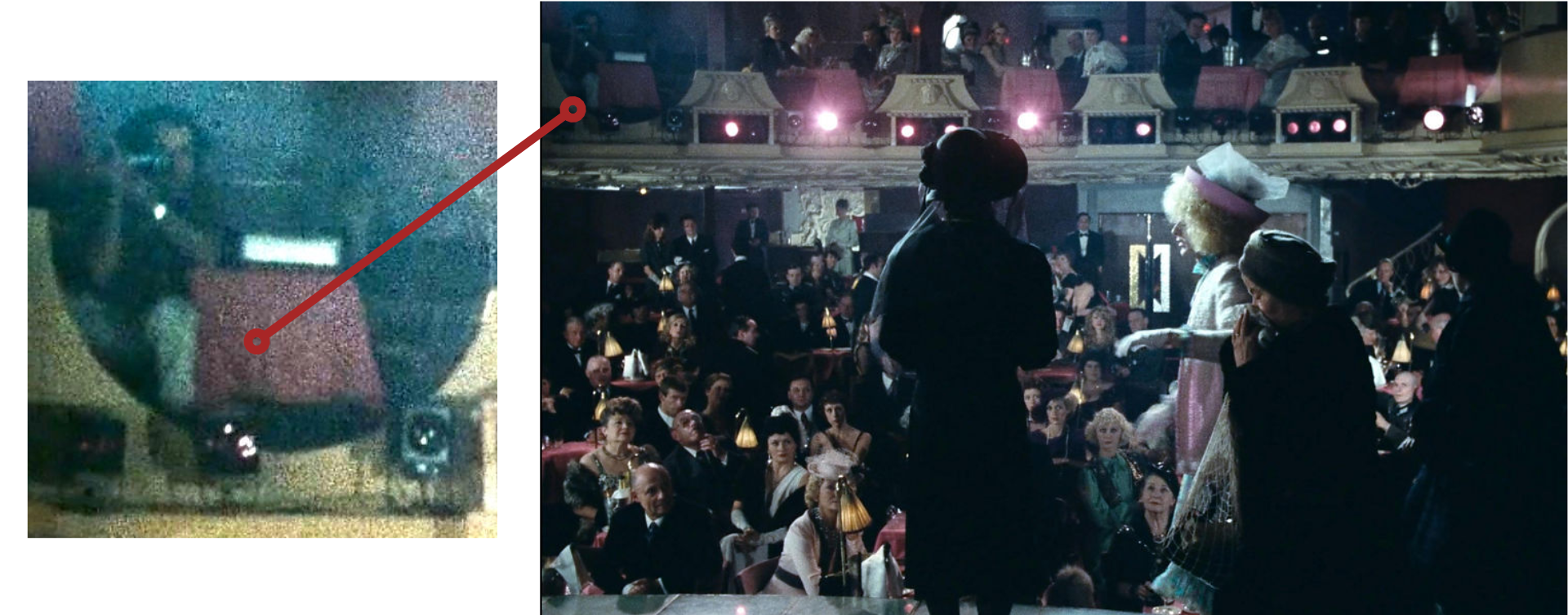
    Frame © Lira Films – Nova Films

    Other related posts:
    Joseph Losey’s film M Klein: A behind-the-scenes look
    Exploring location shooting in Joseph Losey’s M Klein
    Homage to Margot Capelier, Casting Director
    Sign up to get future posts on M Klein and other subjects …

    [1] Le Monde. 1986. Frantz Salieri, May 3, 1986.

    [2] Salieri’s conceptions and imaginative costume design were more radically stylized but recalled for me the costumes Pilobolus used (for instance, the “Tall Ladies” in the dance “Untitled”) in the same period.

    [3] Losey, Joseph, and Michel Ciment. 1985. Conversations with Losey. London ; New York: Methuen. Pages 347-348.
  • Homage to Margot Capelier, Casting Director for M Klein

    One in a series of posts describing the making of the film M Klein, by Joseph Losey.
    Previous related post: Introduction to the film and Shooting on location

    Margot Capelier died in 2007 after a long career as a casting director in the French film industry. She was known and admired by many in French cinema for her dedication to actors. A deep humanity pervaded her professionalism. She loved actors and understood them, while maintaining an overview of the business, combining the professional and creative sides of film.

    Despite her talents, she wasn’t rewarded with a glamorous lifestyle or widespread recognition. She is an example of someone who put her heart into her profession, helping many recognized individuals while herself remaining comparatively in the shadows.

    Margot Capelier blvd de Clichy
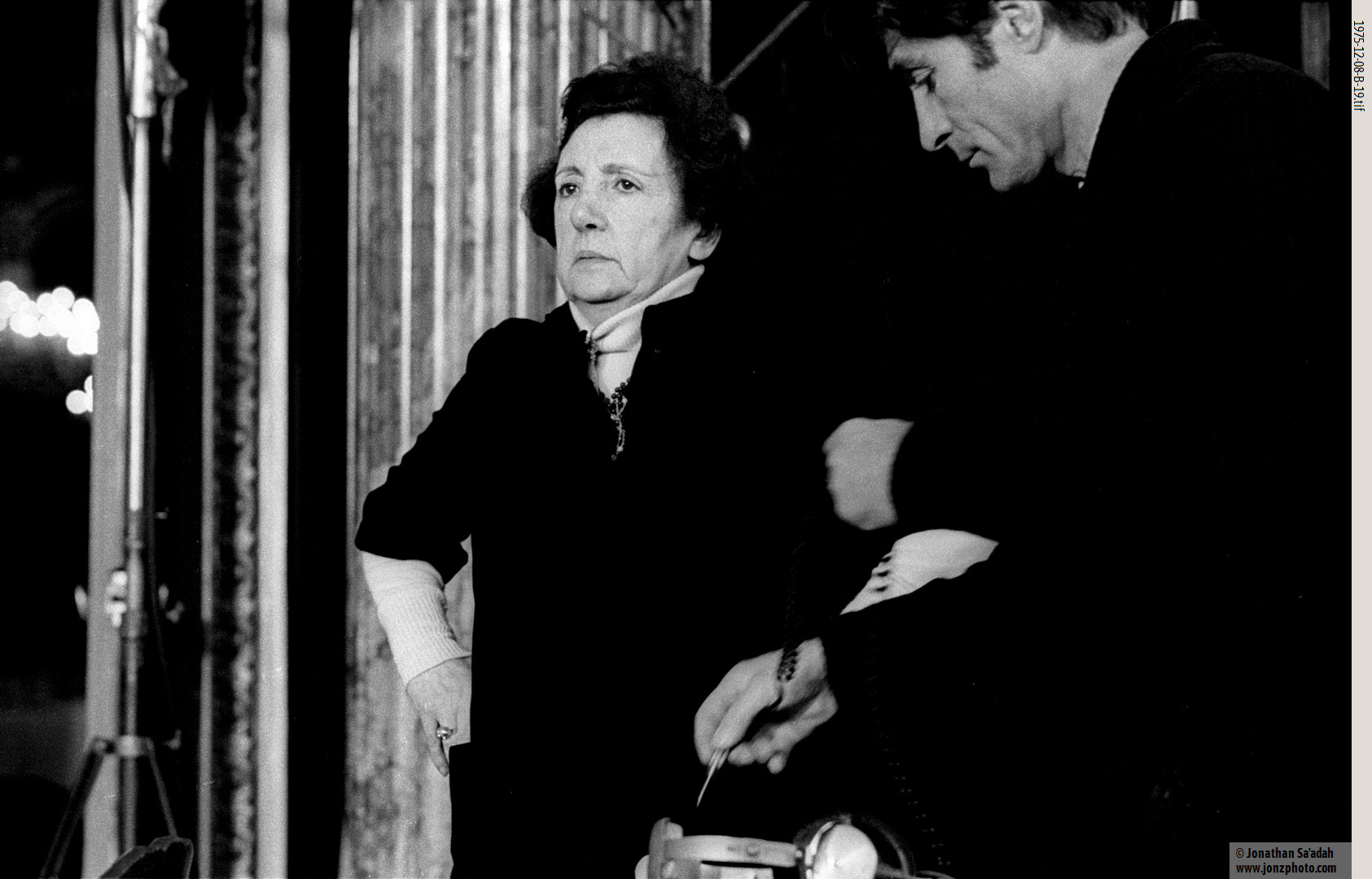
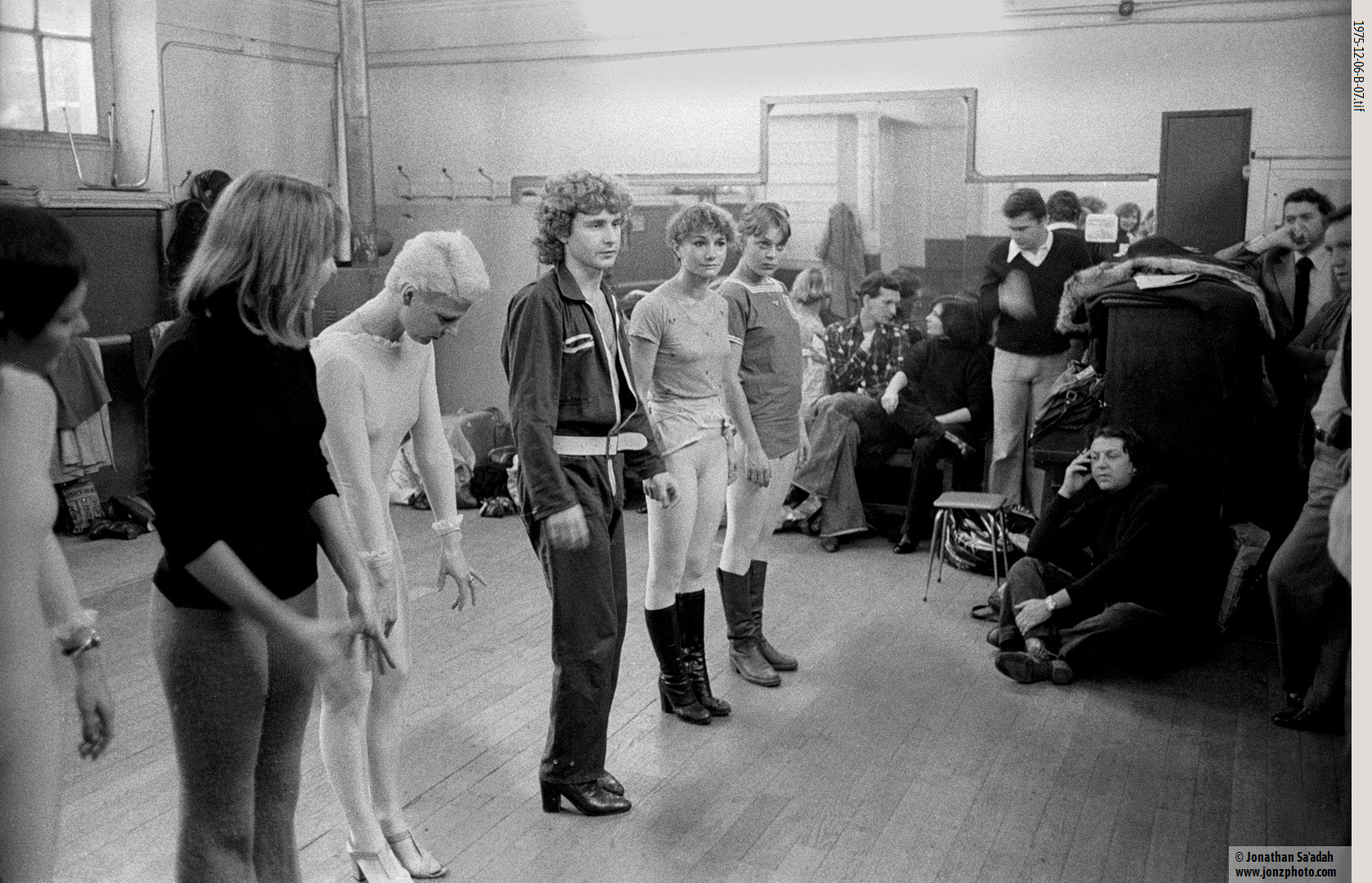
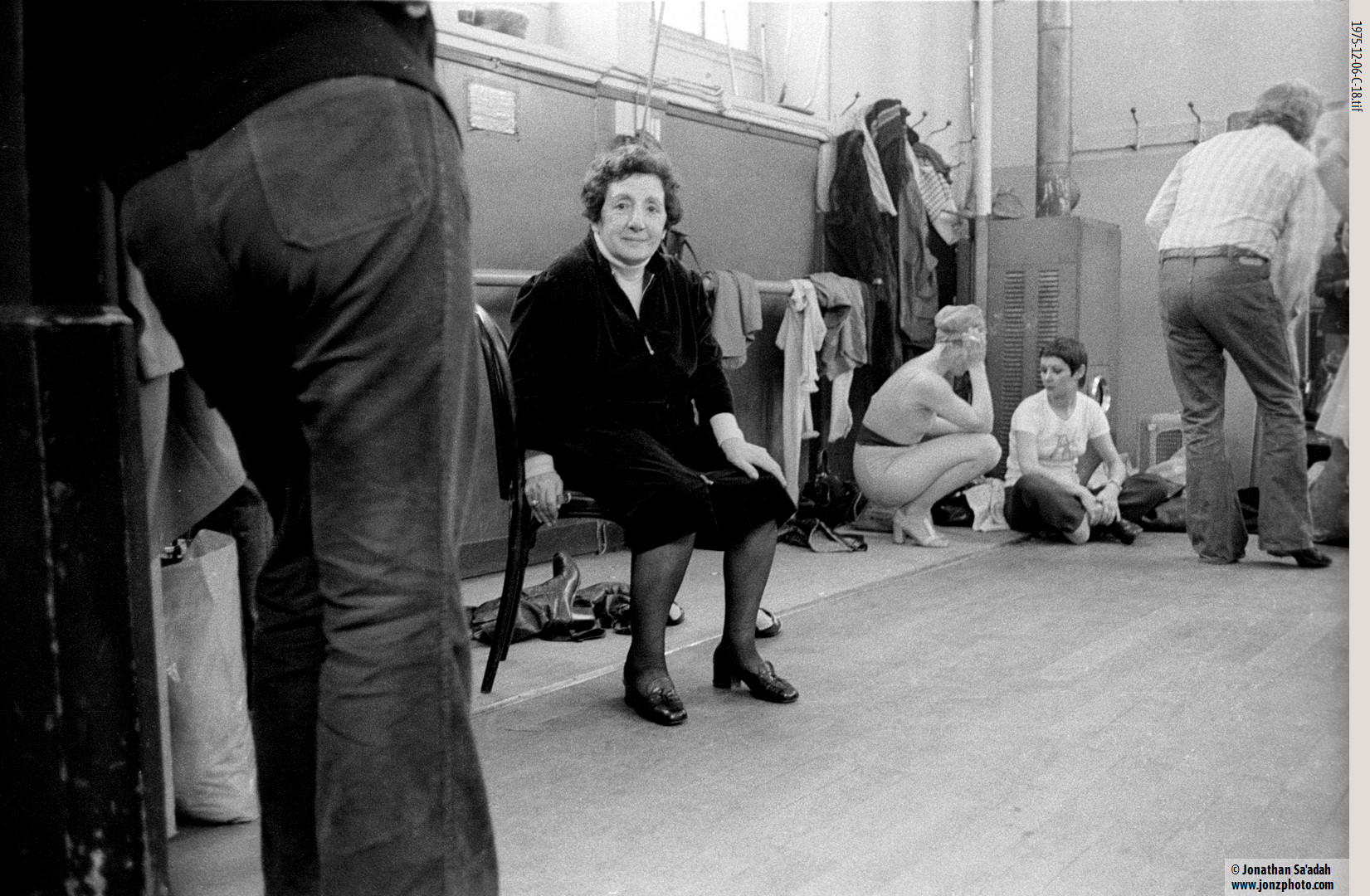
    ▲ Margot Capelier at the first-day rehearsal for the film’s cabaret scene in which professional actors performed alongside professional dancers. This was typical Capelier: there to help and encourage. The rehearsals went smoothly with a sense of cooperation and air of excitement.

    My friendship with Capelier was limited to the time M Klein was in production. I was never in her home and she never told me her story in great detail. On the other hand, she was one of two or three top people on the production side of the film who from the beginning accepted me as I was – a young still photographer brought into a tightly-knit world of successful professionals because of a connection with Losey – and she didn’t make a big deal out of it. Probably she was treating me the same way she would treat a young actor under her watch, and she has always kept a place in my memory as a person who stood out in the group surrounding Losey.

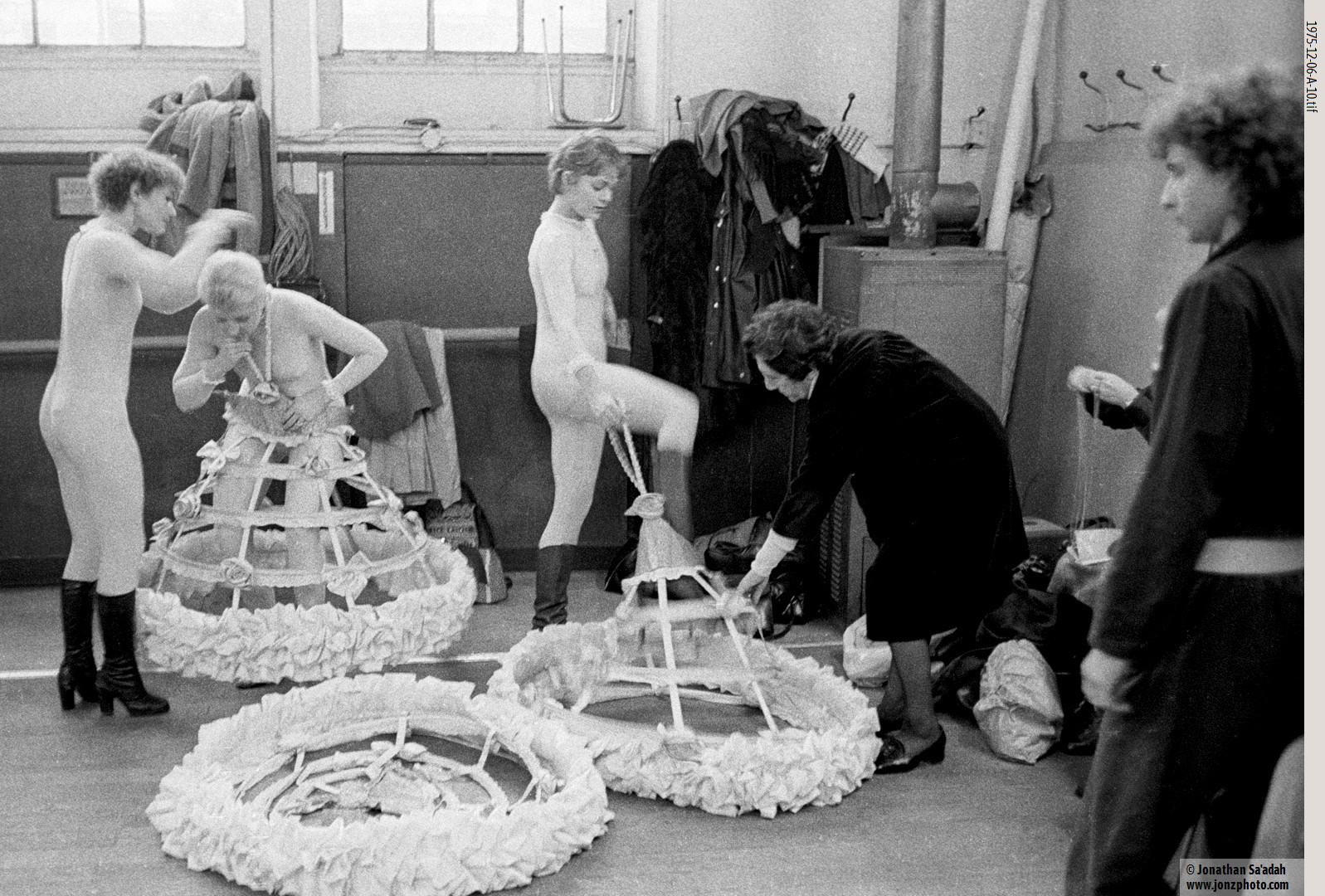
    ▲ The hoop dresses were actual cabaret garb and it was hard to learn how to swing them around still looking graceful. Capelier helped. She had the official capacity as Casting Director but was more: knowing the actresses and wanting to make sure everything worked out.

    This account is drawn from what I knew of her personally, a few interviews, the radio interview linked below, and news articles that appeared during her life and at the time of her death (see the end of the post). I also acknowledge an excellent book by Corrine Bacharach (Reine du casting, published in 2022).

    I’ve always wanted to contribute to her memory, first of all because she deserved it, but also because of the strength of her spirit. She battled adversity while seeing the world through a lens of compassion and understanding. To me, she was inspirational while being straightforward, a rare combination.

    Margot Capelier Paris
    ▲ Capelier speaking with an assistant as actors and production people mill around outside the location being used to stage the first scene in the film. It shows a French doctor coldly doing physical measurements on a naked woman, identifying her as “more or less Judaic” – essentially a death sentence. The doctor was based on George Montandon, an “ethno-racial expert” who collaborated. It was his decision where the imaginary boundary lay between being “Jewish” and “non-Jewish”.

    Capelier was born Margot Leibowitch in Paris in 1910, the middle child of Jewish immigrants originally from Odessa. She grew up in a small apartment on the north edge of the Marais, the Jewish ghetto in Paris, living with an older sister, a younger brother, parents, and her grandmother.

    It wasn’t a happy childhood. “I think I’m afraid of myself, I’m afraid of others. I think it’s because I was unloved when I was a child. Well, I thought I was unloved, and then I was as soft as a rag…” This was her reflection in a 1990 interview broadcast by Radio France.

    Her parents made her feel ugly and intellectually inferior to her siblings. In school, she faced ridicule from teachers for being Jewish. Instead of caving in, she learned early to fight back, becoming fiercely combative, a trait I occasionally observed.

    ▲ Capelier during an art auction scene using many extras. She is watching closely as the audience is assembled (see below) on location at the Paris Hotel Intercontinental. The sound man, Jean Labussière, is setting up his Nagra sound recorder in front of her.
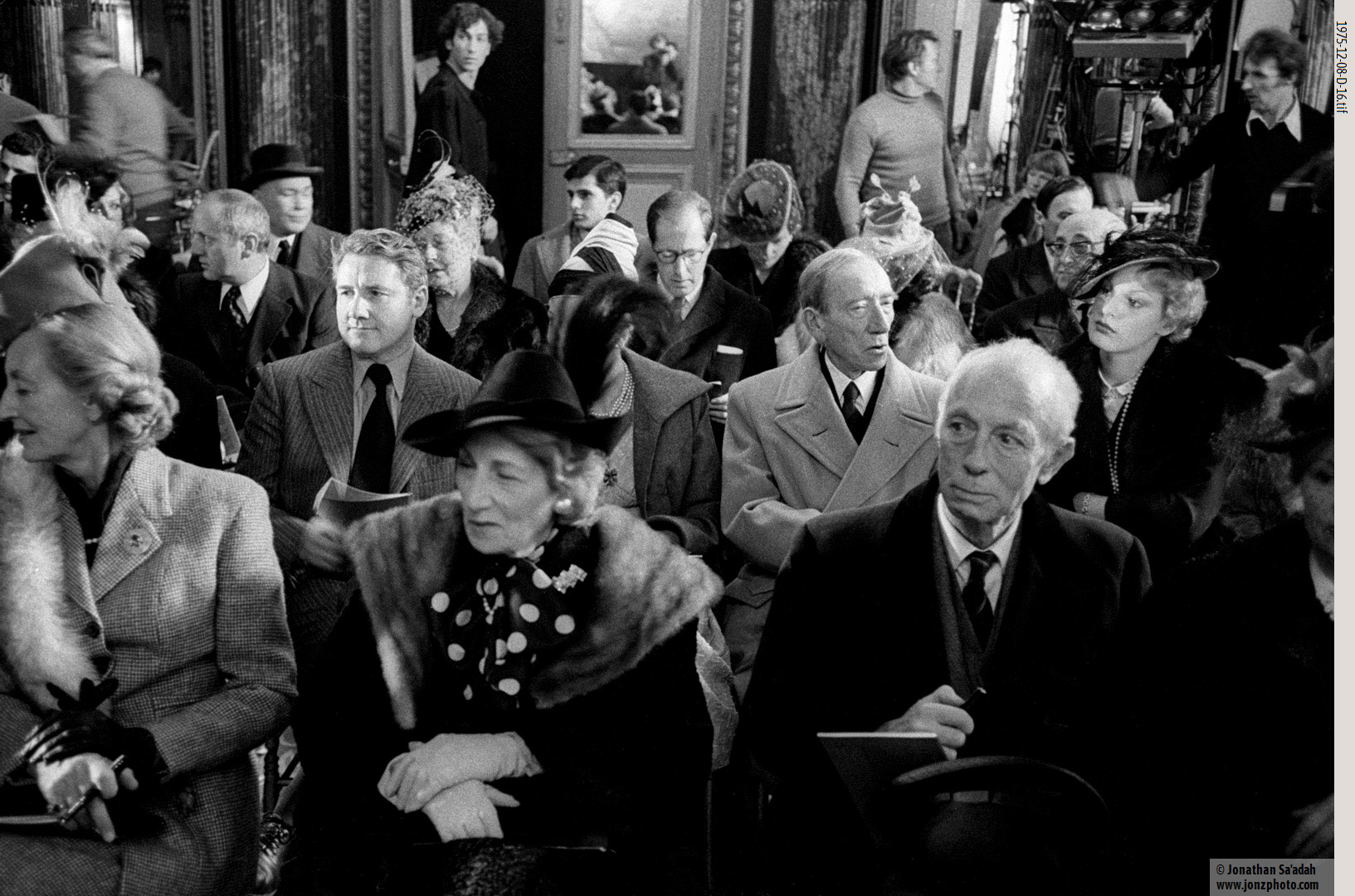
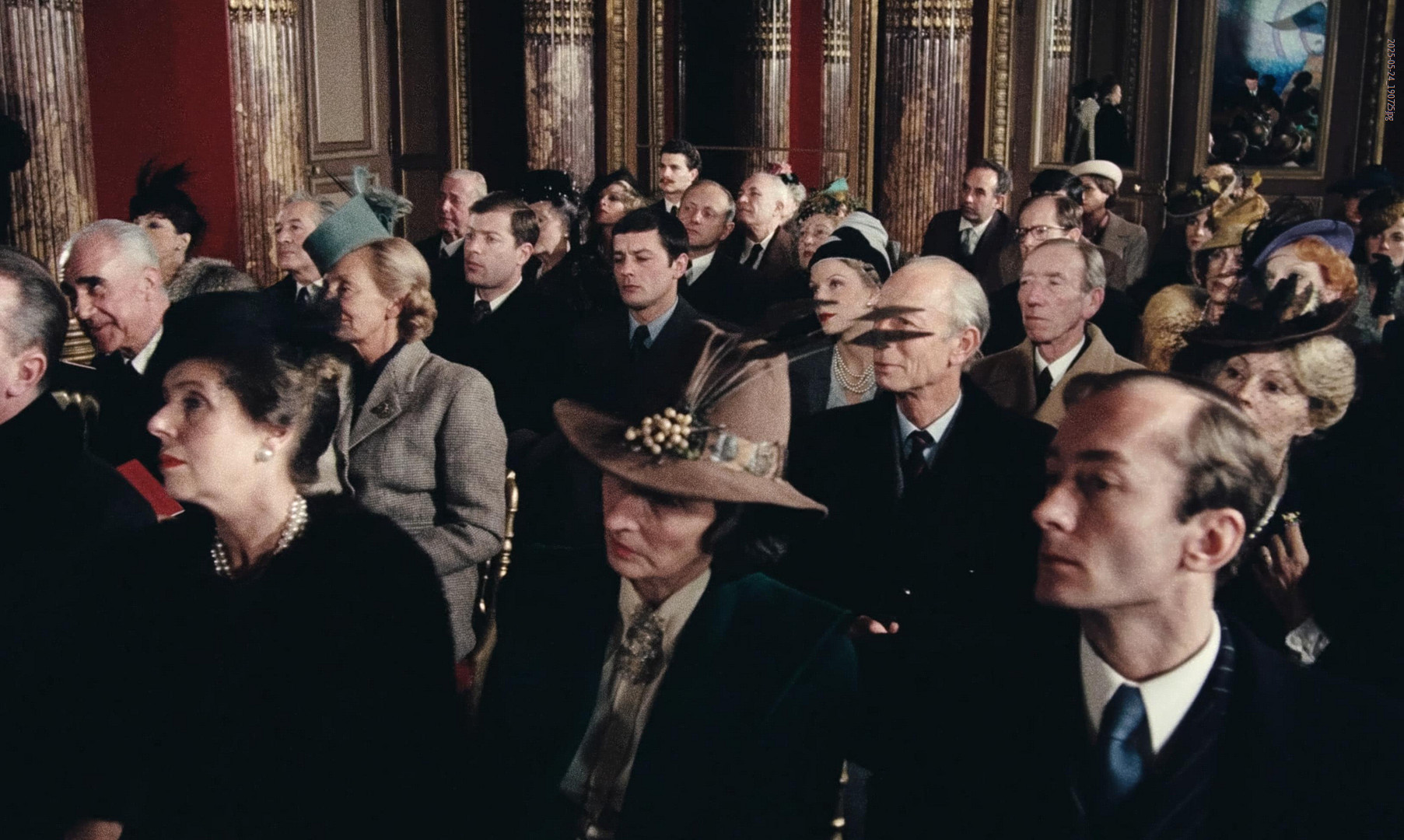
    ▲ These people are all extras, except for the man on the left with the herringbone coat and dark tie (a stand-in for Alain Delon). The people nervously moving in the back are assistant directors and crew people.
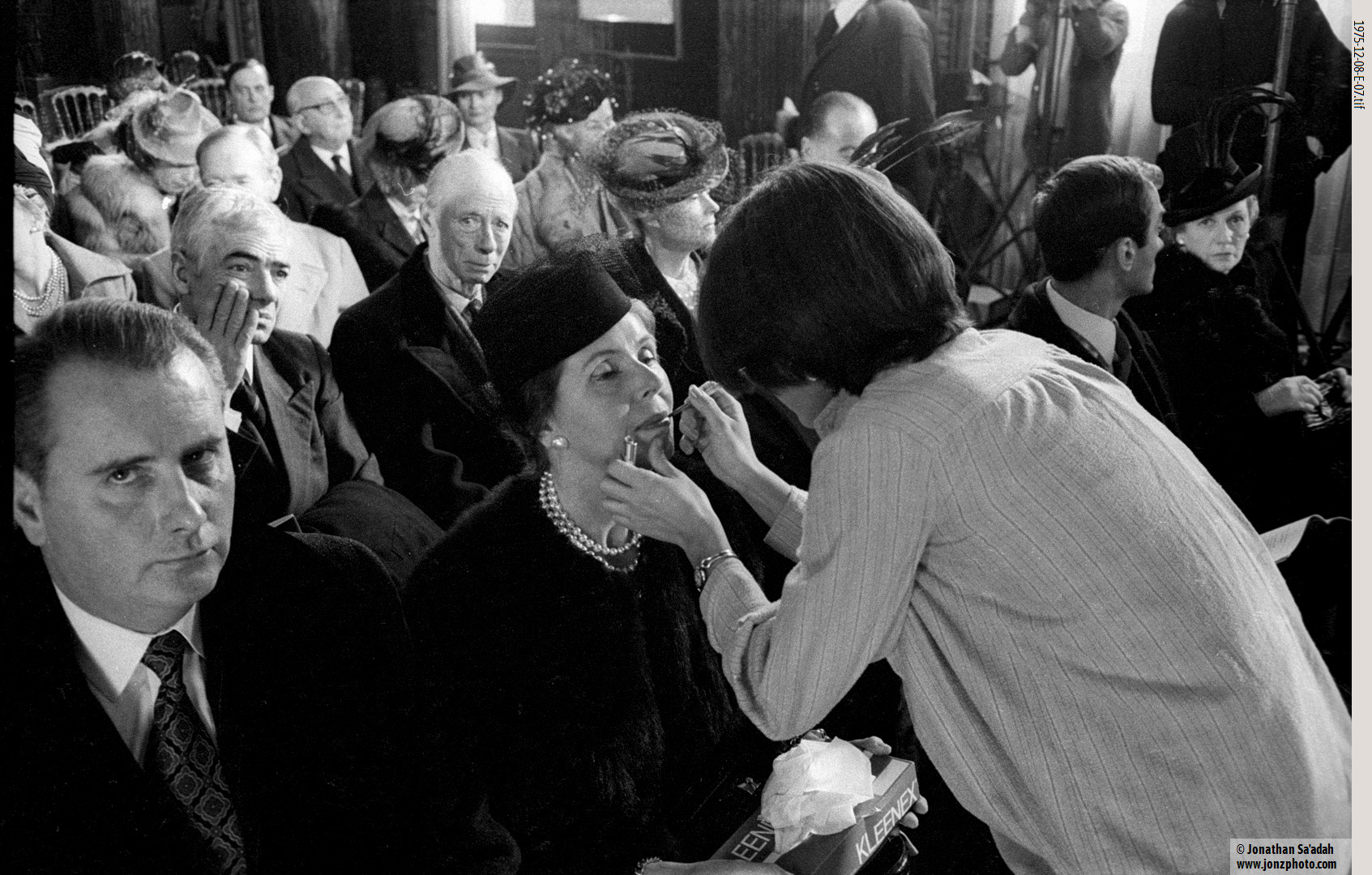
    ▲ With their finely detailed clothing and upper-class demeanor the extras formed a perfect audience for a wartime art auction.
    ▲ The same actors in a frame from the film. Robert Klein is in the centre of the frame. (Ⓒ Lira Films – Nova Films)

    Margot Capelier brought to M Klein qualities based on fierce professional competence, strong ethical and political beliefs based on 1930s leftist ideology (shared with Losey), and deep roots in the French acting community gained through her personal life-long involvement. She could accurately gauge whether an actor would fit Losey’s personality and directing style, and that’s a good part of what made her so valuable to him.

    Her familiarity with actors was inherited from her father, who loved theater, and took Margot to stage performances from an early age. He supported the family by selling hand-painted signs from a stall called “Michel” at the corner of rue Montmartre and Étienne-Marcel just north of Les Halles. Her mother was a reader, favoring Russian literature, while her grandmother could neither read nor write. The family were secular Jews trying to fit in to French society and culture while still maintaining an ethnic identity.

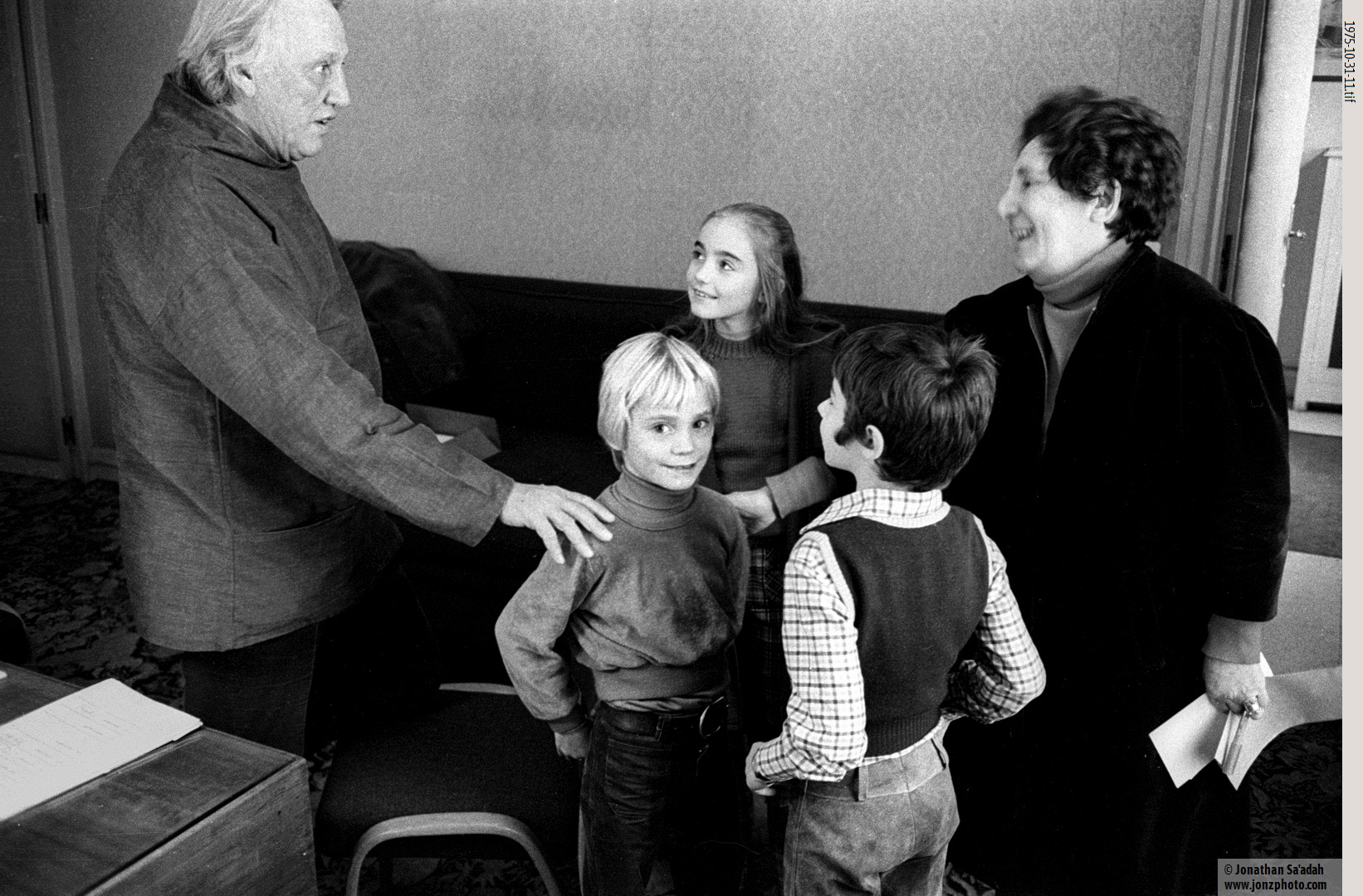
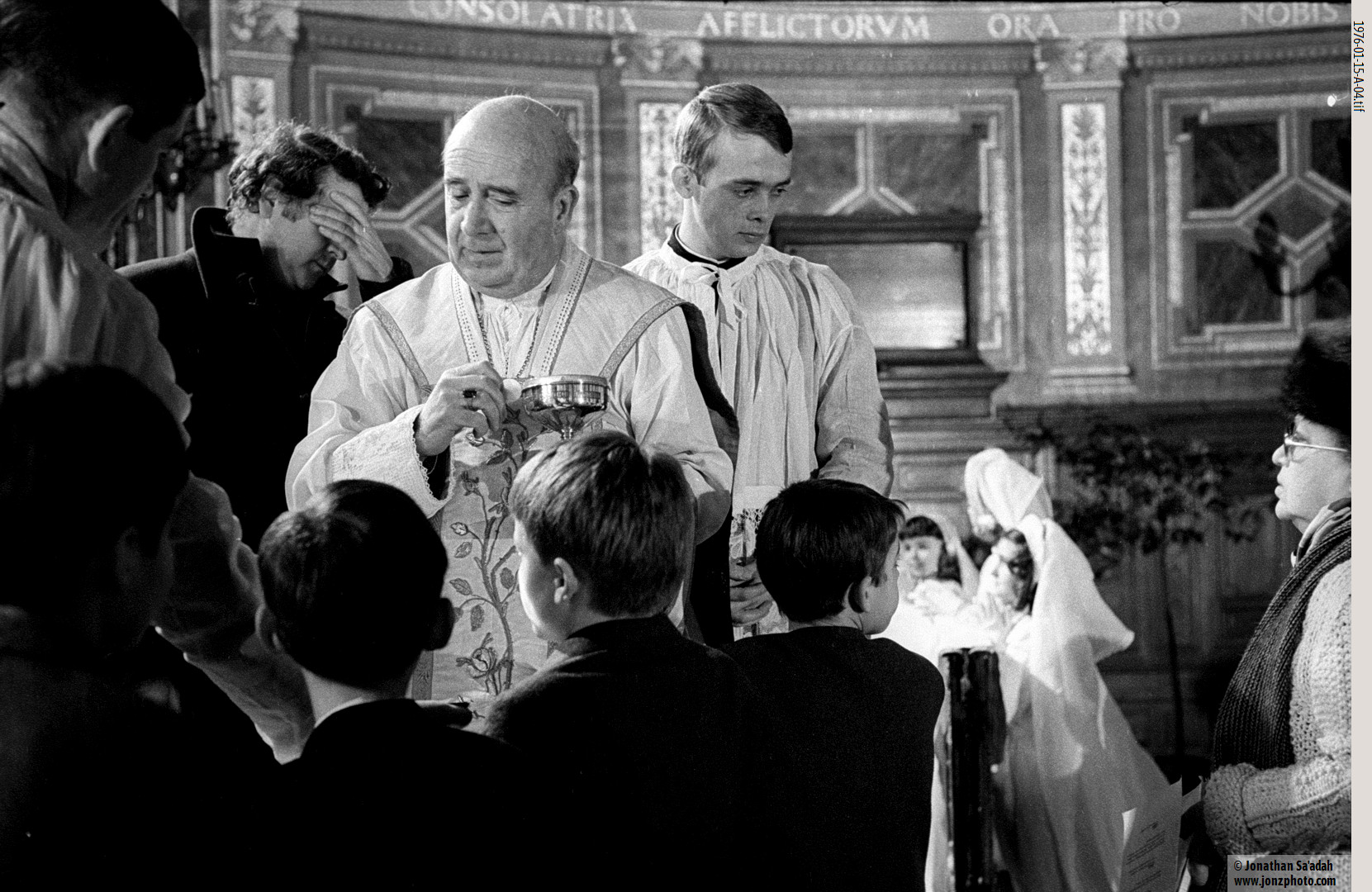
    ▲ The casting of these children worked out well, but not all did. These children …
    ▲ …. who were hired to be angelic at the altar rail turned out to be little monsters, giving Assistant Director Phillipe Monnier a headache.

    In 1926 her parents gave up on schooling their sixteen-year-old daughter, and sent her to spend nine months with a family in England. There she gained proficiency in English, which later would be of great value to her professionally.

    On returning to France, she initially worked for her father, but couldn’t tolerate his angry and abusive personality. “He was very violent, very, very nervous…so it was a bit difficult.” At twenty-four she decided to search for a path that aligned more closely with who she was.

    Through her brother, she was introduced to the radical-experimental theater (Le Groupe Octobre) of Jacques Prévert. Prévert’s popular productions played to working-class audiences, similar to the Agitprop style that Losey was exploring in New York during the same period. Both Prévert and Losey were influenced by Russian theater and communist ideals.

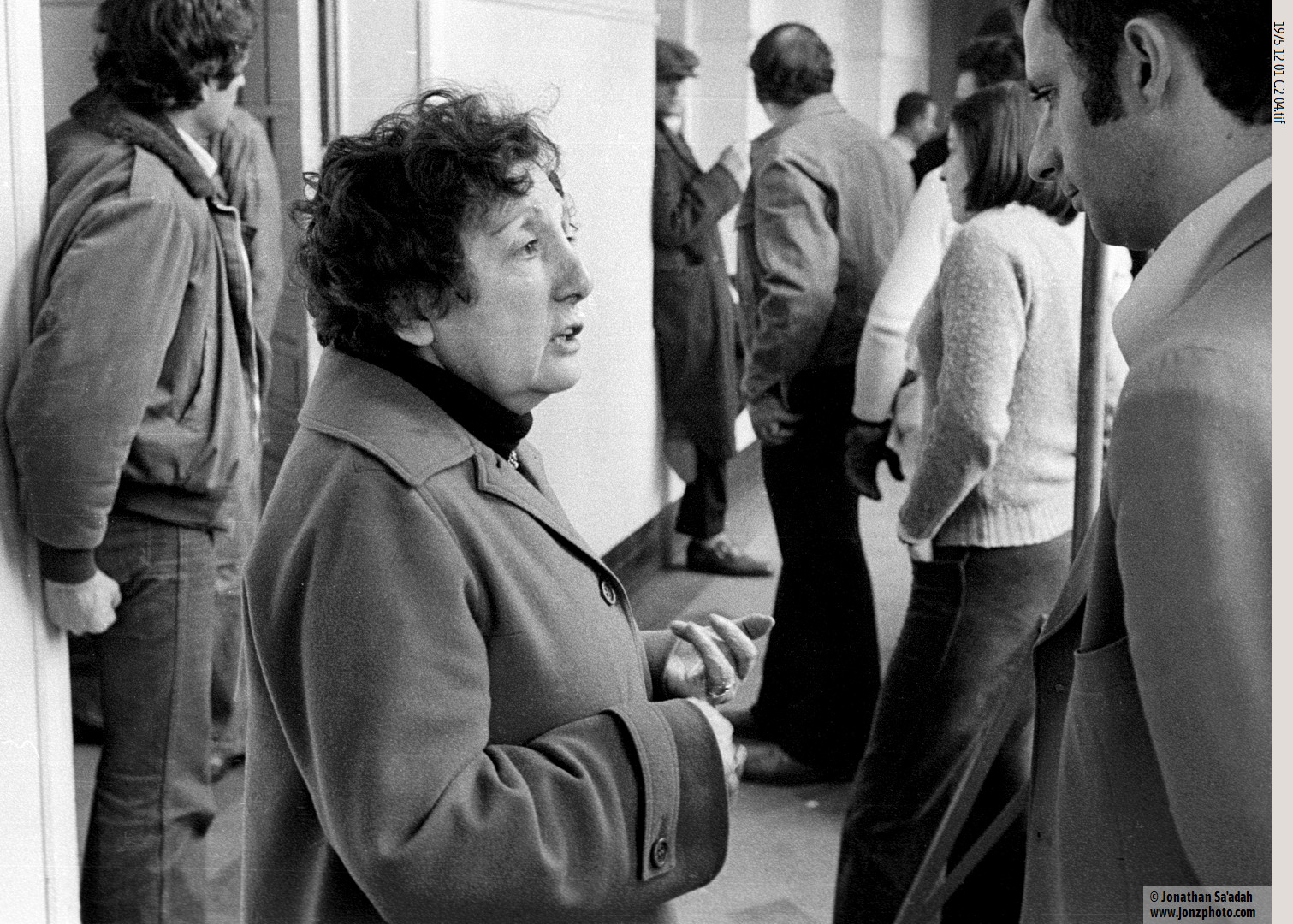
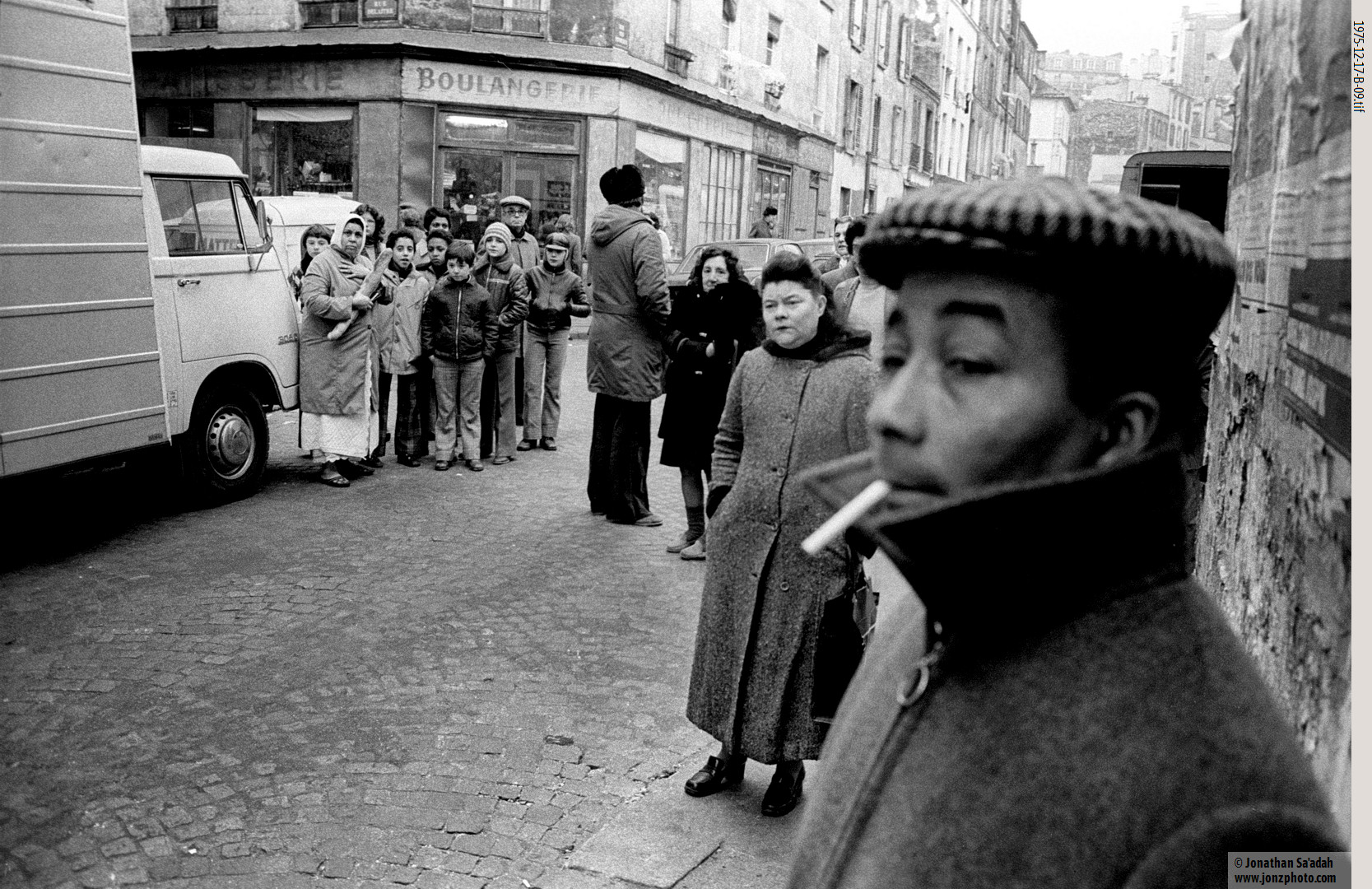
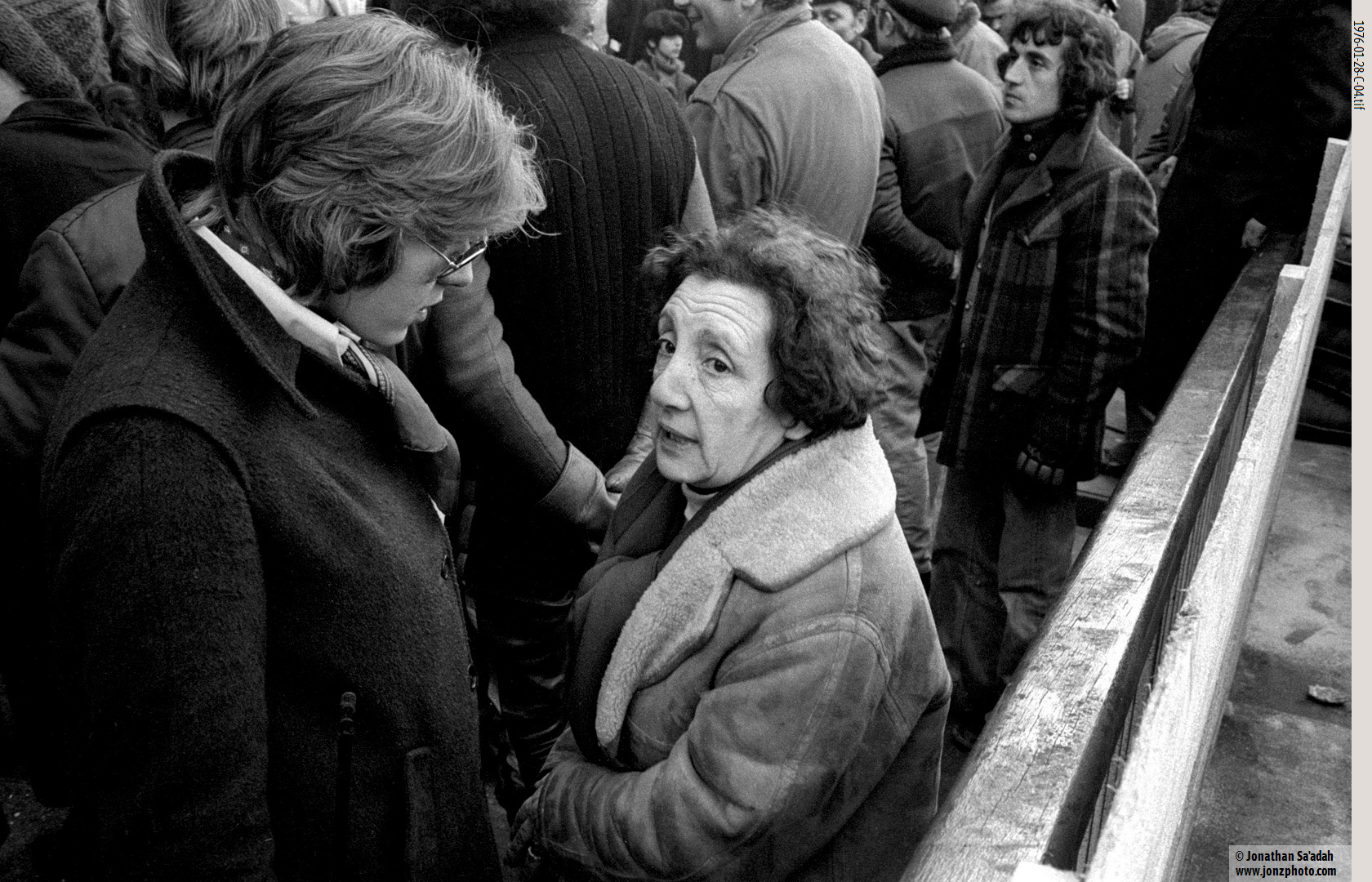
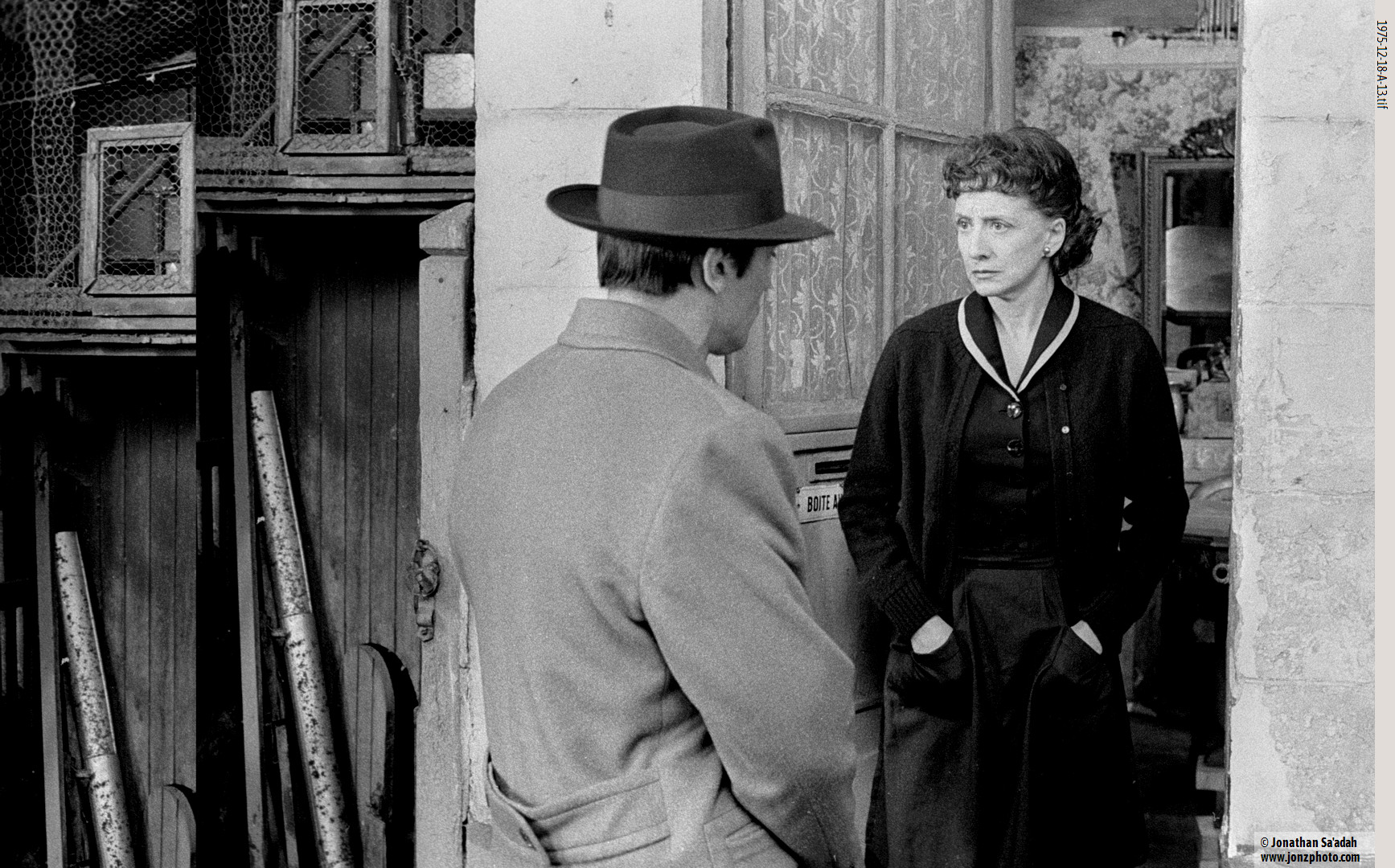
    ▲ Capelier (center of photo) trying to keep warm in her dark coat watches as others around her are hoping to get a glimpse of Alain Delon. The filming this day was happening in a nearby tenement building, where Klein was heatedly grilling a concierge, trying to track down his double. Rue des Panoyaux, Paris 20.

    “I used to go to the theater, I’d cry and sob in the back row of the Comédie Française. I always told myself that when I had money, I’d go to the front row.” She did more than that; she made up her mind to join Prévert’s troupe despite having no acting experience. In April 1934, she was interviewed and accepted into Prévert’s talented group.

    Initially, she was given small roles and gradually migrated to more production-oriented tasks.

    In theater she knew that she had found the freedom that she sought. Working in the exciting and chaotic orbit of Prévert gave her experience and confidence to move forward. After her time with Prévert she played a few parts in films, and worked on many films as a production manager, but her true vocation was to, in the early 1960s, become France’s first Casting Director. It was a position that had originated in American film but migrated to Europe as more American directors came to France to work.

    She married Auguste Capelier (1905-1977) during the Second World War while they were both hiding and in the Resistance in southern France, and together they had a child. Auguste Capelier was himself an accomplished French art director. Later in his career he worked for Losey’s French Art Director (Alexandre Trauner). Of course it was helpful to Losey that she had lived through the Nazi occupation and the Jewish roundups in Paris.

    ▲ The emotions show on Capelier’s face. This scene in the movie mirrored July 16-17, 1942 (the “Grande Rafle”), when Nazi-directed mass arrests took away many Parisian Jews. Capelier wasn’t in the city at the time but lost members of her family. This scene called for over 2,000 extras and an expanded production staff, taking place in a Paris stadium.

    Capelier’s role in M Klein drew on her personal familiarity with French actors. She used that knowledge to suggest good candidates for each role. The candidate actor or actress would be interviewed jointly with Losey, and after that a decision would be made. In most cases the interviews were primarily in English.

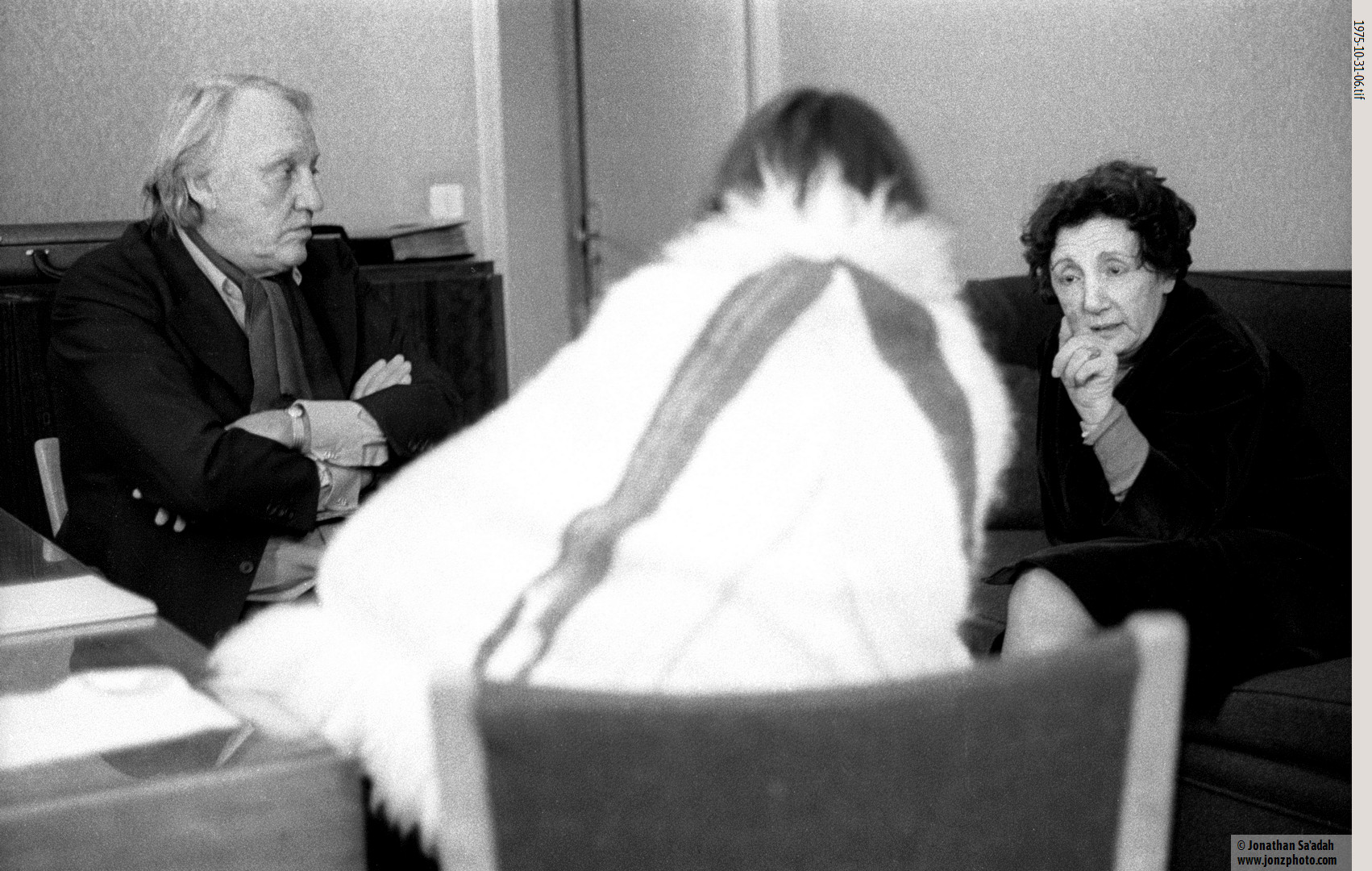
    Casting interview Capelier questions an actress as Losey watches. Losey was gauging the actor’s understanding of the screenplay and whether they would need coaching. He preferred professionals who had strong opinions and weren’t shy in stating them. In Losey’s office, Studios de Boulogne, October 1975.

    Losey’s questions to actors focused mostly on their interpretation of the screenplay and trying to get a feel for the person. What he was looking for were professionals who would hit the ground running, and be sure-footed, intelligent, and self-confident in playing their role. In presenting each actor Capelier was making a prediction of what their chemistry with Losey might be and whether it would work. She was often right in her assessments, which of course made the casting process much easier.

    One of the secrets behind the strength of Capelier’s position in French cinema stemmed from her early passion for following actors through her love of their craft. She continued to live within the theaters of Paris, watching actors develop and encouraging their careers.

    She encouraged many but also provided brutally honest feedback if she thought an actor was on the wrong path. Ironically, she brought together her father’s business acumen with a sensitivity to people she gained from her childhood traumas.

    Notes:
    Bacharach, Corinne. Margot Capelier, Reine Du Casting (1910-2007): De Jacques Prévert à Patrice Chéreau. Arles : Lyon: Actes Sud ; Institut Lumière, 2022.
    Hamsy, Cécile. Mémoires Du Siècle – Margot Capelier, Directrice de Casting, 1990.
    Berthomé, Jean-Pierre. “Margot Capelier 1911-2007,” Paris, France: Positif Editions, 2007.

    Cast of M Klein

    ActorRole
    Alain DelonRobert Klein
    Jeanne MoreauFlorence
    Francine BergéNicole
    Juliet BertoJeanine
    Jean BouiseLe vendeur
    Suzanne FlonLa concierge
    Massimo GirottiCharles
    Michael LonsdalePierre
    Michel AumontLe fonctionnaire de la préfecture
    Roland BertinL’administrateur du journal
    Jean ChampionLe gardien de la morgue
    Etienne ChicotUn policier
    Magali ClémentLola
    Gérard JugnotLe photographe
    Hermine KaragheuzLa jeune ouvrière
    Elisabeth KazaYvette (Château d’Esclimont)
    Dany KoganMichelle
    Carole LangeLa Caissiere (La Coupole)
    Lucienne Le MarchandPlace Lucien Herr, Petite Place
    Jacques MauryLe professeur Montandon
    Fred PersonneLe commissaire
    Francine RacetteFrançoise / Cathy
    Rosine RochetteLa dame aux encheres (Hotel Intercontinental)
    Isabelle SadoyanLa femme à la consultation
    Louis SeignerLe père de Robert Klein
    Maurice VallierL’homme (Cabinet du Prof Montandon)
    Pierre VernierUn policier
    François ViaurLe concierge theatre
    Brigitte ArielUsine Citroën
    Marius BalbinotLe Garcon (Bistrot telephone)
    Maurice BaquetUn musicien (Château d’Esclimont)
    Philippe BrizardLe facteur collabo (Appartement Robert Klein)
    Jenny ClèveL’infirmière-secrétaire (Le professeur Montandon)
    Raymond Danon(uncredited)
    Thierry de Brem(uncredited)
    Christian de TillièreLe commissaire-priseur
    Michel DelahayeAccompagnateur Pere Klein
    Bernard-Pierre DonnadieuExtra
    Pierre FragLe marchand de journaux
    Mireille FranchinoLa femme bus
    David GabisonLe groom
    Maurice JanyLe chauffeur à Ivry-Bataille
    Joseph LoseyUn homme au Vel d’Hiv
    Stephane QuatrehommeLe fils de Pierre
    Nathalie RigauxUne petite fille au Vel d’Hiv
    Jean TopartLa voix du speaker (voice)
    Danielle VerneUne déportée

  • Exploring location shooting in Joseph Losey’s M Klein

    Previous post about Joseph Losey and the film M Klein: A behind-the-scenes introduction to M Klein

    The use of Paris locations in the shooting of Joseph Losey’s M Klein

    Location shooting is always a hassle. Some locations, like the abandoned factory or iconic city park, are well known and repeatedly used by films. But often film locations hide under the surface of everyday life, requiring intimate knowledge of the city to pull them out. Joseph Losey never lived in Paris but was determined to use locations in the filming of M Klein, eschewing the safe confines of the film studio for the realism of the buildings and streets of Paris. Finding those locations rested on the shoulders of the Art Director, Alexandre Trauner. Trauner presented Losey with potential locations and if Losey approved the responsibility of permitting and other business arrangements were handled by the production company.

    Joseph Losey
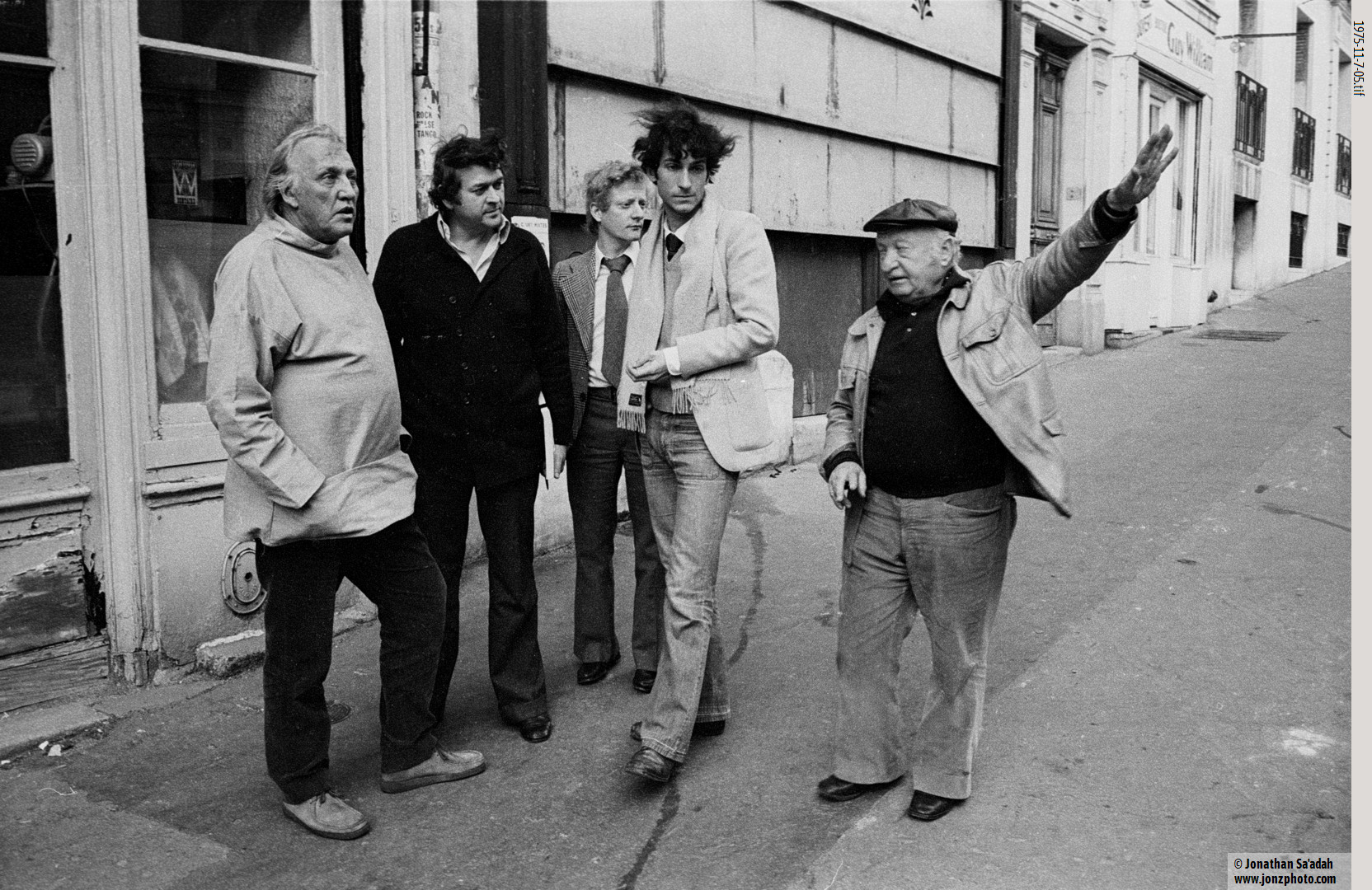
    ▲ Losey scouting a location which was later used on an early morning, with police wagons picking up Jews from their homes. In the middle are three assistant directors and the man on the right is Alexandre Trauner, the Art Director.

    Though he experienced push-back from the production company related to the increased cost and logistical complexity, Losey prevailed, using thirty two locations for the shooting in M Klein. These locations admittedly increased production headaches but added greater realism to the film. Location shooting also kept everyone sharp since each day would throw unpredictable challenges at the crew, most of whom were experienced professionals who liked rising to the challenge.

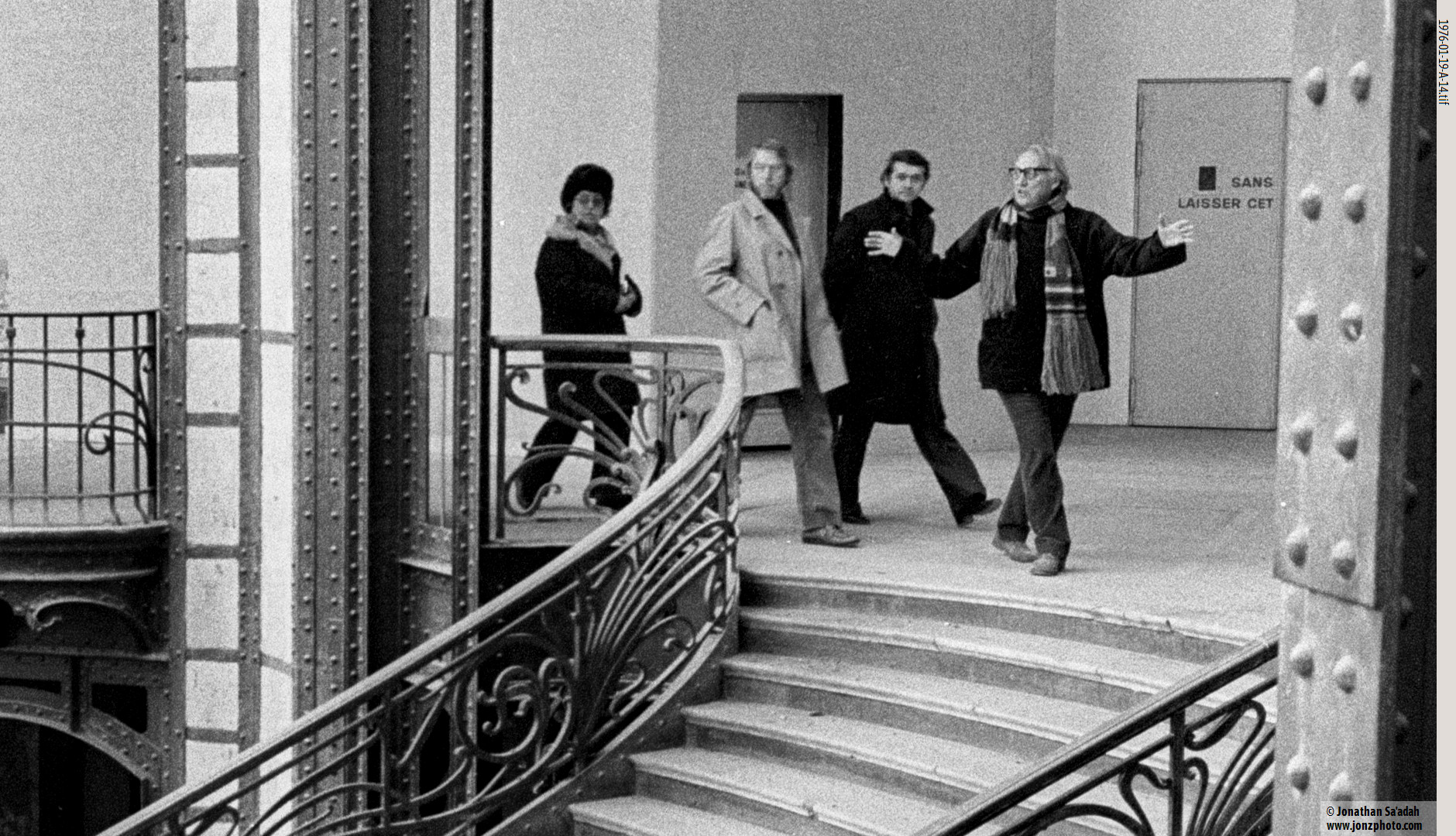
    ▲ The Grand Palais in Paris was used as one of the police collection points in the movie. Losey is explaining how he wants the framing to Gerry Fisher (in the light colored coat), Director of Photography.

    The second Klein’s apartment was a good example. The location was at 42 rue des Panoyaux and has long since been replaced by apartment buildings. The exterior courtyard was used for the scene (“Concierge loge”) where the French Klein is looking for his double and he questions the concierge. The same location is used immediately afterwards in the film for the interior shots where the concierge allows the French Klein to inspect the Jewish Klein’s abandoned apartment. There was something sublimely ironic about famous movie stars and a well-known director having to work in filthy spaces only the poorest people would know.

    ▲ Nobody dreams up this level of realism, and it’s why location shooting wins out over studios. The doorway is inside the courtyard at 42 rue des Panoyaux where the concierge is angrily resisting being grilled by Klein.

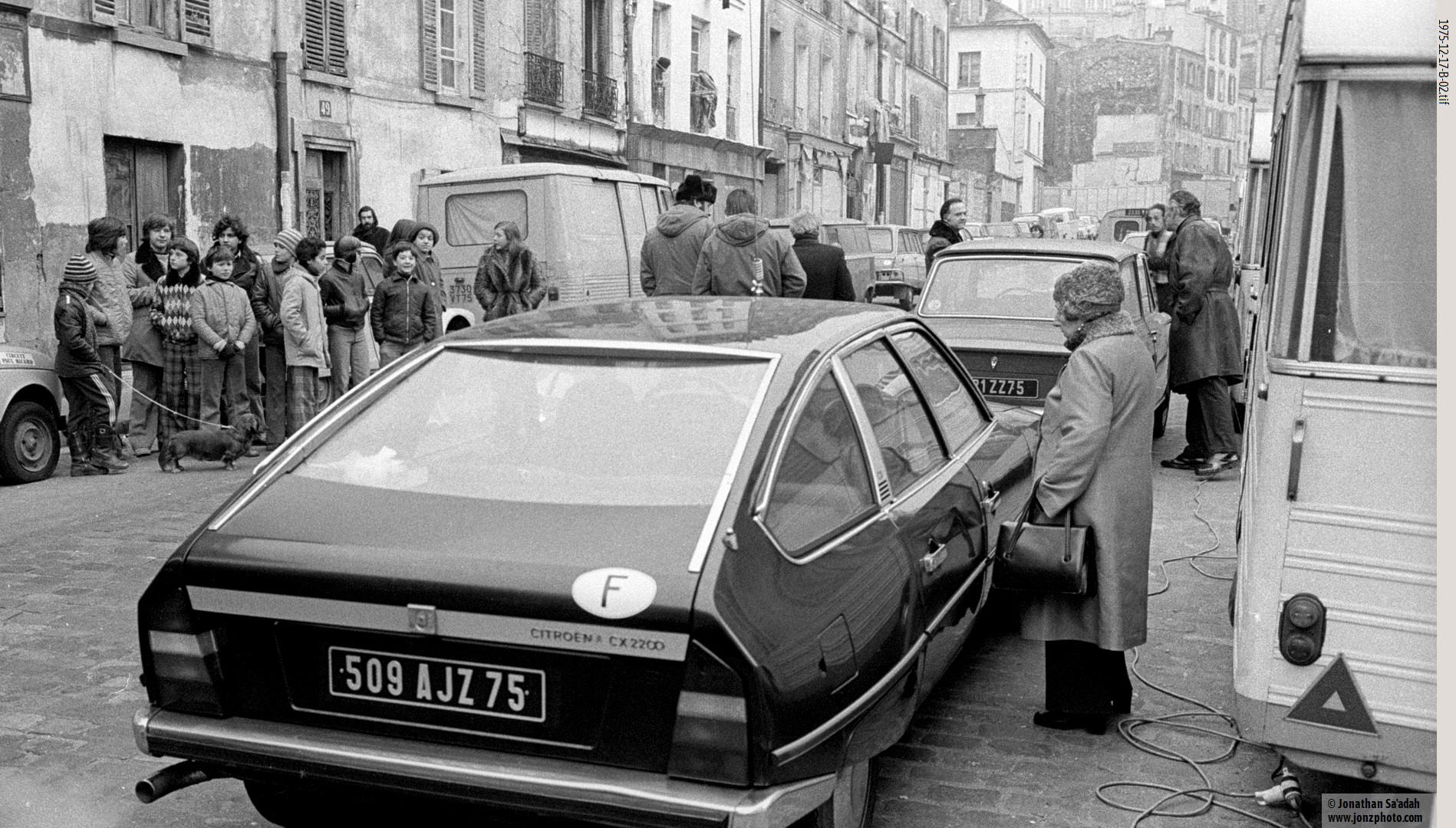
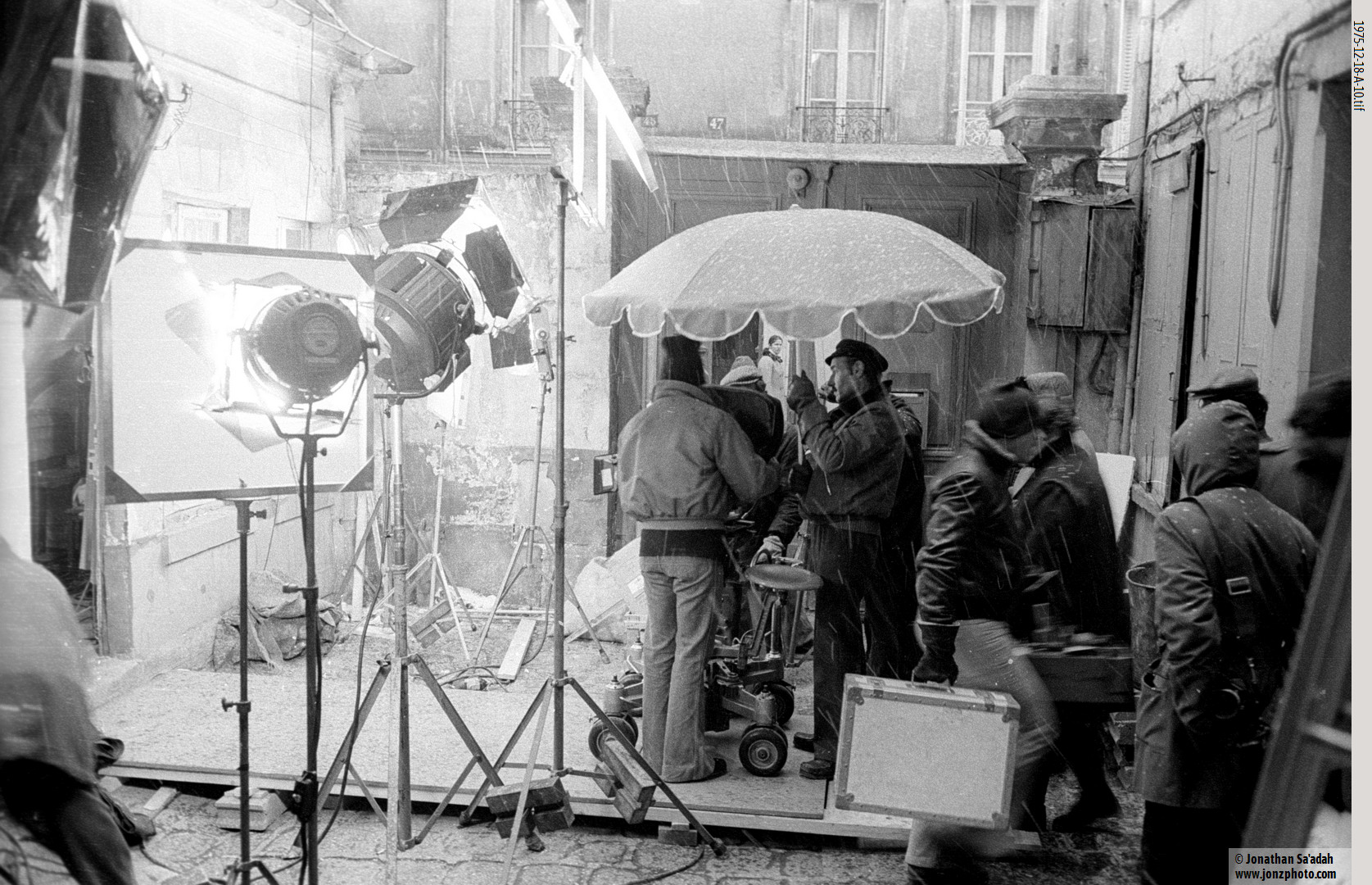
    As an illustration of location challenges, even arranging for the use of this building was complicated. The production company had to negotiate a shooting permit from the city government and a condition attached to the permit required extensive shoring of the building before the film crew would be let in, so there were significant costs in engineering and construction. Once everyone had jumped through the hoops, the actual filming required a complicated location setup. There was staff outside on the street managing the crowd of people who gathered hoping to catch a glimpse of Alain Delon, generator trucks with long cables supplying power, and intricate lighting setups because of cramped quarters. The camera crew didn’t have room to assemble their gear so that had to be done down the street at another address.

    ▲ Alain Delon’s sleek Citroën has just pulled up on the rundown street used for the second Klein apartment and Mme Ludmilla Goulian (Production Manager) is standing at his window. The group of locals are about to get a glimpse of their star. The three men with backs turned in the middle of the street are bodyguards for Delon.

    Then the snow started. It hardly ever snows in Paris, but nature chose that morning. There was nothing to do other than protect the equipment and reschedule.

    Problems of location shooting
    Vicissitudes of location shooting Work to set up for the shot had started at 6am. Actors were in their dressing trailers prepared to go. Everyone was ready to start shooting, and then the snow started …

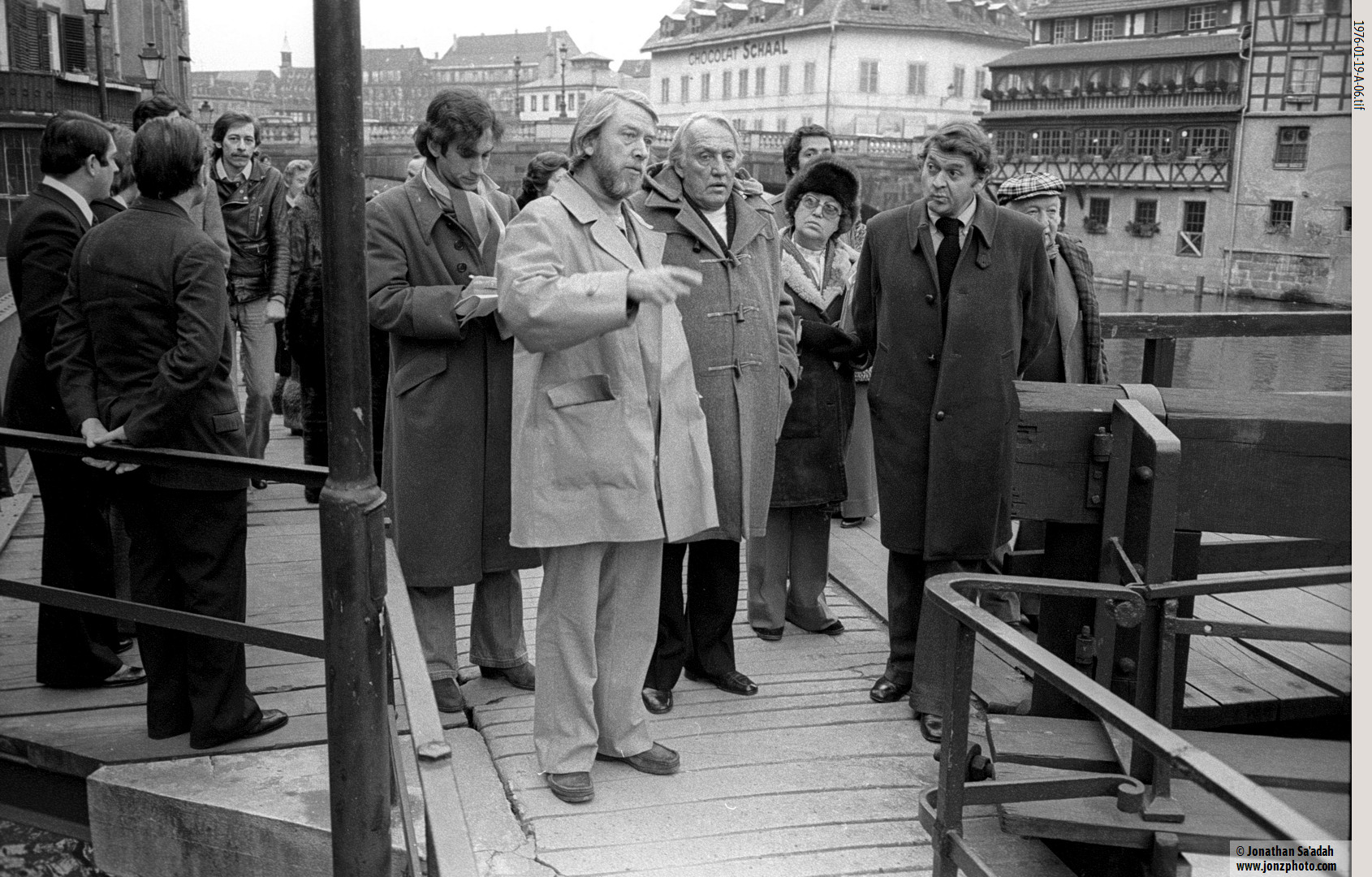
    Another location which, atypically, wasn’t in Paris but didn’t work out smoothly either was in Strasbourg and was used for the shots along the canal. On arrival in Strasbourg Losey had a serious asthma attack and was not well, adding to the stress.

    The location along the canal had been scouted in advance, but someone overlooked that tracking shots were called for. The underfoot surfaces were rough – brick cobblestones and a wooden walkway – making any movement of the camera a challenge, much less the fluid moves Losey expected.

    ▲ Losey arriving at the location in Strasbourg and being informed of major problems by Gerry Fisher, Director of Photography. The man reacting on the right next to Losey is his First Assistant Director, Phillipe Monnier and just behind him is Alexandre Trauner, who was probably the person who had signed off on the location. The man taking notes is an assistant director, and Lucie Lichtig (in the Russian hat, Continuity) is watching Losey to see gauge if he’ll explode. It was not a happy moment.
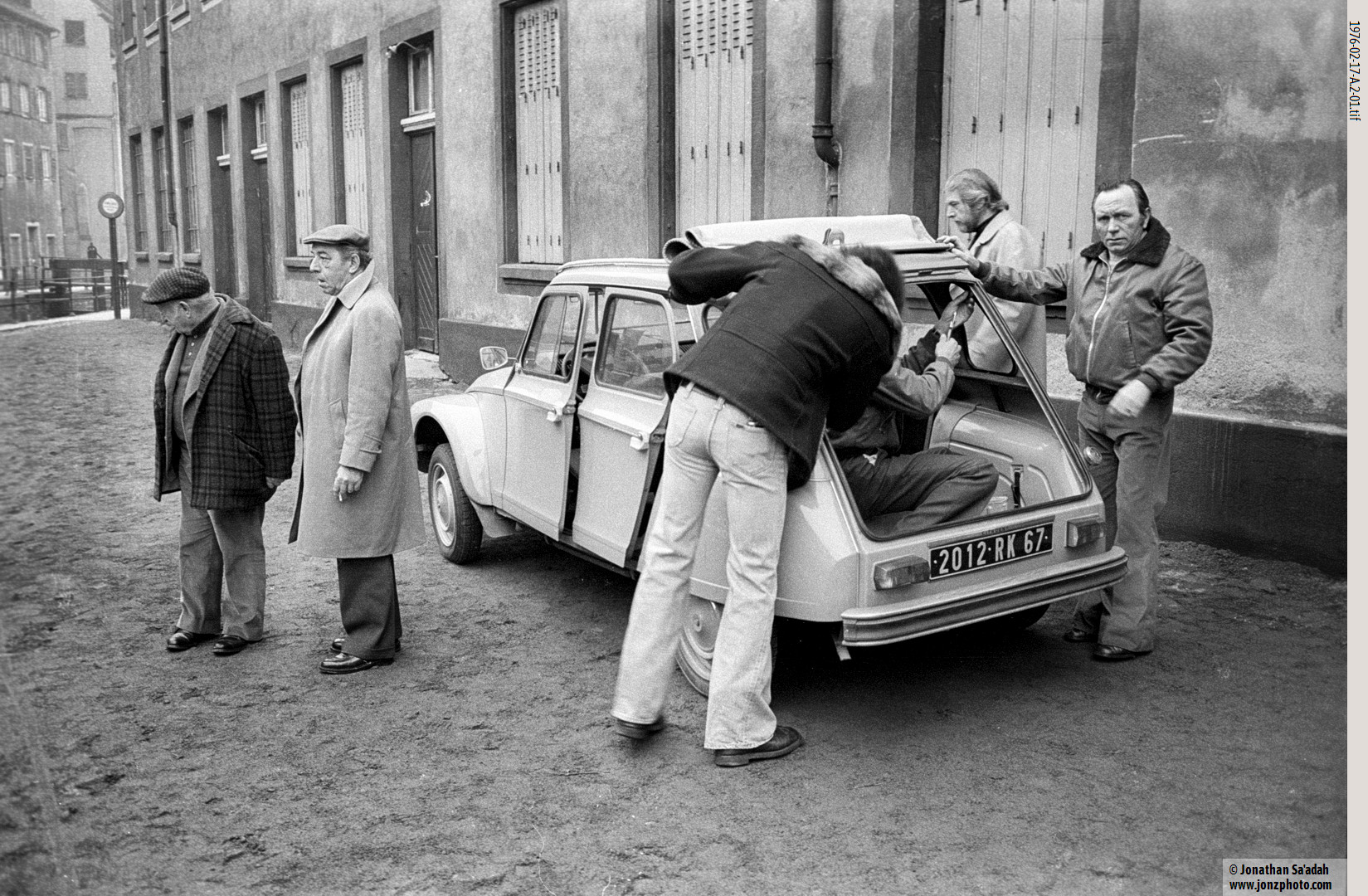
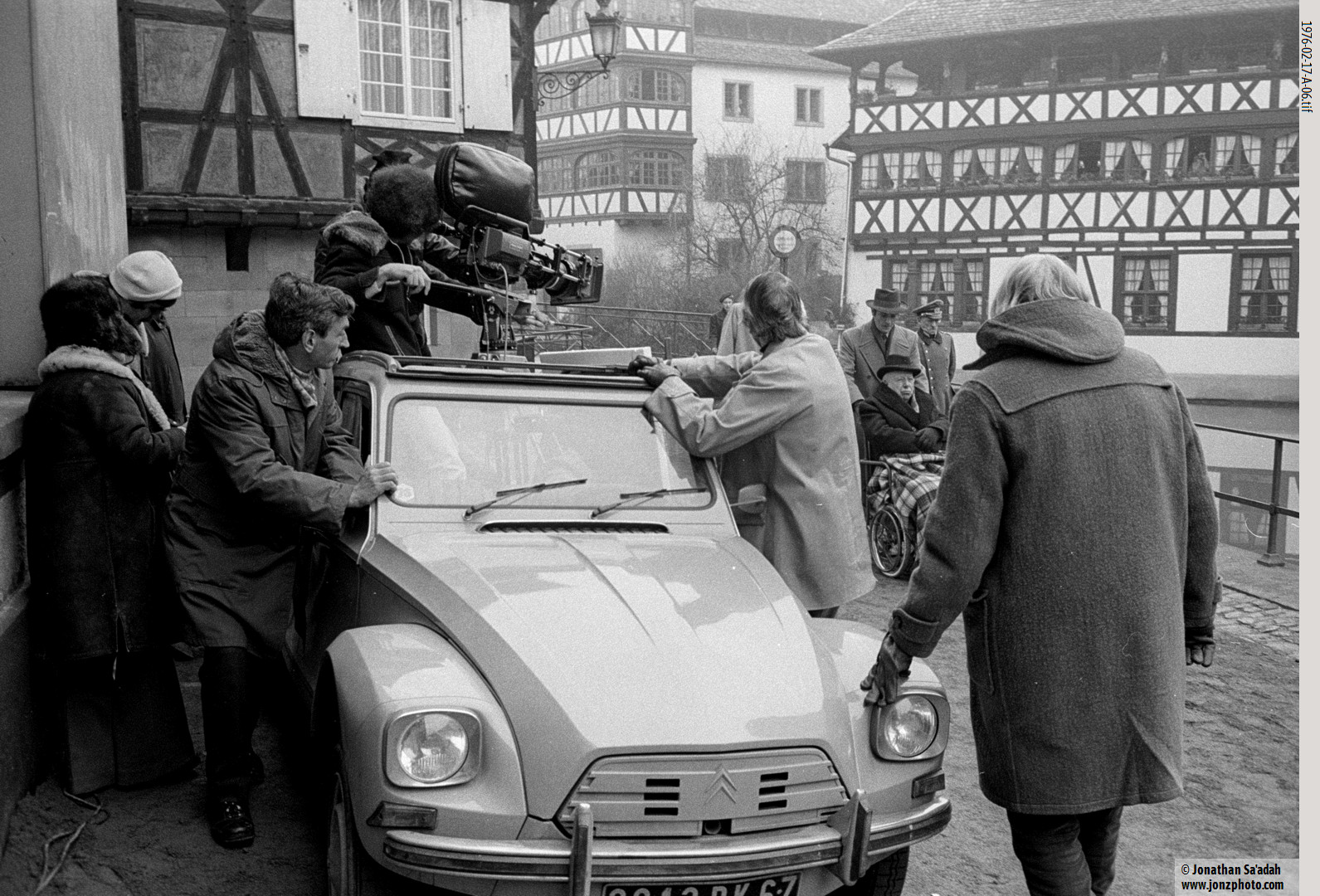
    ▲ Sand has been spread over the bumpy brick surface and a quickly-requisitioned Deux Chevaux is being hastily stripped so the camera can be mounted through the sunroof. Charles Lefèvre, the Chief Electrician, is glaring at me, registering his opinion that this level of disaster didn’t need to be photographed. Alexandre Trauner, the Art Director, on the left with his assistant, is hoping the newly spread sand will work to smooth out the surface and save the shot.

    This was a serious problem because the clock was ticking – it had already cost a lot to move the whole production to Strasbourg and the shots needed to go off according the schedule. Everyone was under the gun. The machinists rigged up a hastily modified soft-tired Citroën Deux Chevaux with the Panavision camera on a tripod, tightly lashed to its floor. This whole rig was pushed by human-power but only after the bricks were wiped with sand to smooth them out a bit (which introduced its own problems).

    ▲ The first sequence is being shot. The Panavision camera has been mounted on the Deux Chevaux which is being pushed by hand. Klein powers his father through the sand in the wheelchair while Losey (back to camera, right) watches the shot.

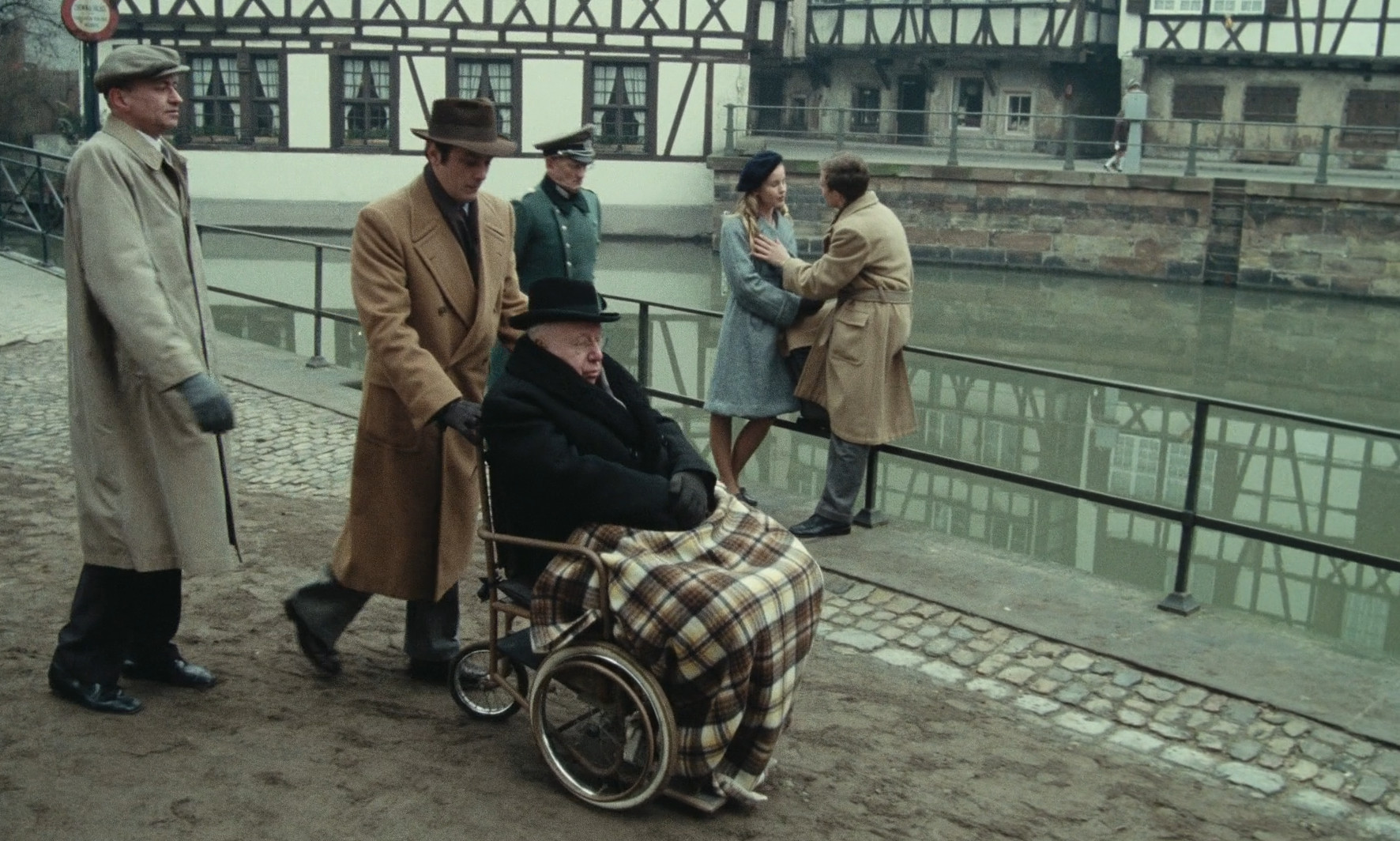
    It was also problematic that Klein’s father was in a wheelchair and at the beginning of the shot his caretaker had to push him while he spoke, with Robert Klein taking over partway through. In the resulting shot it’s obvious that sand has been spread around (it looks out of place) and there are a lot of wobbles in the movement of the wheelchair (and the car-mounted camera). Luckily, the actor playing the caretaker and then Delon, after he took over, were strong enough to get a marginally acceptable result.

    ▲ Klein taking over from his father’s caretaker (left) and pushing the wheelchair through the sand in a frame taken from the movie (Ⓒ Lira Films – Nova Films).

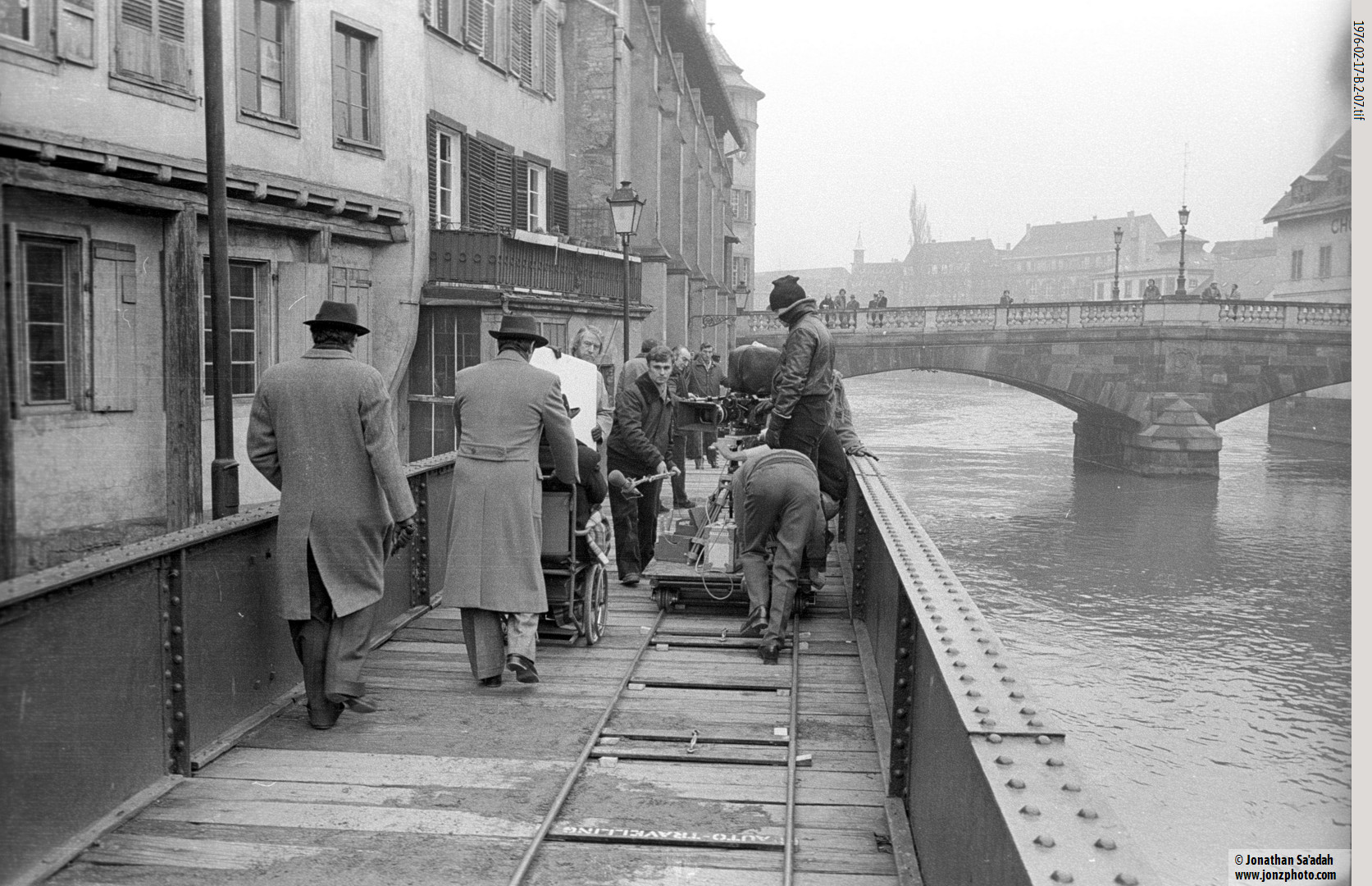
    In the next shot (on the problematic wooden walkway) the Deux Chevaux was used for the establishing shot with Klein’s body screening view of the sand that had been spread to even the walkway. The next shot, a side closeup, is a long tracking (rail) shot. Again, Delon had the challenge of pushing his father on slats that had been leveled as much as possible with sand, trying to power through and disguise the problem. A true professional, Delon was strong enough to concentrate on his role without appearing the least bit rattled.

    ▲ Track has been laid down for the camera, and sand on the boards to try and even things out when pushing the wheelchair. This setup worked better than the Deux Chevaux, and was more traditional as well.

    Each location had its problems, some less than others but some more too. The complicated and costly stadium scene at the end of the film was so difficult that the filming broke down towards the end of the day, and the editor had to work to salvage what he could. But overall the use of locations did a lot to make M Klein echo the time and events it was portraying, and to enhance and reinforce the reputation of the film.

    Other posts in this series about M Klein: Joseph Losey’s film M Klein: A behind-the-scenes look

    Locations arranged by date

    Name of sceneLocationAddressFilming date
    Titles
    Cabinet du professeur Montandon et Salle d’attente & couloirsHôpital Cousin de Mericourt & Besson15, av Cousin de Méricourt 242230 Cachan1-Dec-75
    Chambre/Salle de bainsStudios de Boulogne2, rue de Silly, Boulogne (Plateau A)3-Dec-75
    Appartement Robert KleinStudios de Boulogne2, rue de Silly, Boulogne (Plateau A)4-Dec-75
    Appartement Robert Klein – ChambreStudios de Boulogne2, rue de Silly, Boulogne (Plateau A)5-Dec-75
    Appartement Robert Klein – Rez-de-chausseeStudios de Boulogne2, rue de Silly, Boulogne (Plateau A)5-Dec-75
    Repetition du spectacle Frantz SalieriStudio Constant13, boulevard de Clichy6-Dec-75
    Repetition du spectacle Frantz SalieriStudio Constant13, boulevard de Clichy8-Dec-75
    Salle des ventesHotel Intercontinental3, rue de Castilglione8-Dec-75
    Boite de nuiteCabaret: “La Nouvelle Eve”25, rue Fontaine9-Dec-75
    Boite de nuiteCabaret: “La Nouvelle Eve”25, rue Fontaine10-Dec-75
    Coulisses theatreCoulisses Theatre25, rue Fontaine11-Dec-75
    Administration du journalImprimerie C.I.B.7, rue Darboy 7500112-Dec-75
    Rue de Paris, vers 2éme KleinRue de ParisRue Gasnier Guy12-Dec-75
    Rue de Paris minutageRue de ParisRue Lepic (à l’angle de la rue de Lorient)15-Dec-75
    Bistrot TelephoneCafé “Au Réveil Matin”23 rue Chanzy15-Dec-75
    Appartement Robert KleinStudios de Boulogne2, rue de Silly, Boulogne (Plateau A)16-Dec-75
    PhotographeStudios de Boulogne2, rue de Silly, Boulogne (Plateau A)16-Dec-75
    Façade maison 2ème KleinFaçade Maison 2ème Klein42 rue des Panoyaux17-Dec-75
    Loge ConciergeLoge Concierge42 rue des Panoyaux17-Dec-75
    Maison 2ème KleinMaison 2ème Klein42 rue des Panoyaux18-Dec-75
    Maison 2ème KleinMaison 2ème Klein42 rue des Panoyaux18-Dec-75
    Rue maison 2ème KleinMaison 2ème Klein42 rue des Panoyaux19-Dec-75
    Cour & loge maison 2ème KleinCour & loge maison 2ème Klein42 rue des Panoyaux19-Dec-75
    Appartement 2ème Robert KleinAppartement 2ème Klein42 rue des Panoyaux19-Dec-75
    Lycée Henri IV Lycée Henri IV23 rue Clovis22-Dec-75
    Rue immeuble 2ème KleinRue immeuble 2ème Klein42, rue des Panoyaux22-Dec-75
    Cour maison Robert KleinRue du Bac110 rue du Bac23-Dec-75
    Cour maison Robert KleinRue du Bac110 rue du Bac23-Dec-75
    Cour maison Robert KleinRue du Bac110 rue du Bac23-Dec-75
    Cour maison Robert KleinRue du Bac110 rue du Bac23-Dec-75
    Cour maison Robert KleinRue du Bac110 rue du Bac24-Dec-75
    Cour maison Robert KleinRue du Bac110 rue du Bac24-Dec-75
    Appartement Robert KleinStudios de Boulogne2, rue de Silly, Boulogne (Plateau A)29-Dec-75
    Appartement Robert KleinStudios de Boulogne2, rue de Silly, Boulogne (Plateau A)30-Dec-75
    Appartement Robert KleinStudios de Boulogne2, rue de Silly, Boulogne (Plateau A)30-Dec-75
    Appartement Robert KleinStudios de Boulogne2, rue de Silly, Boulogne (Plateau A)31-Dec-75
    Appartement Robert KleinStudios de Boulogne2, rue de Silly, Boulogne (Plateau A)31-Dec-75
    Appartement Robert KleinStudios de Boulogne2, rue de Silly, Boulogne (Plateau A)5-Jan-76
    Appartement Robert KleinStudios de Boulogne2, rue de Silly, Boulogne (Plateau A)5-Jan-76
    Appartement Robert KleinStudios de Boulogne2, rue de Silly, Boulogne (Plateau A)5-Jan-76
    Appartement Robert KleinStudios de Boulogne2, rue de Silly, Boulogne (Plateau A)5-Jan-76
    Appartement Robert KleinStudios de Boulogne2, rue de Silly, Boulogne (Plateau A)6-Jan-76
    Prefecture, salle de reunionStudios de Boulogne2, rue de Silly, Boulogne (Plateau A)6-Jan-76
    Bureau FonctionnaireStudios de Boulogne2, rue de Silly, Boulogne (Plateau A)6-Jan-76
    Répétition séquence Usine stage CStudios de Boulogne2, rue de Silly, Boulogne (Plateau A)7-Jan-76
    Boulevard Minutage (Exterieur)Pont St-LouisPont St-Louis, angle quai d’Orlean7-Jan-76
    Prefecture-Tri Stage AStudios de Boulogne2, rue de Silly, Boulogne (Plateau A)7-Jan-76
    UsineUsine CitroënAngle Quai André Citroën et rue Leblanc8-Jan-76
    DepotCaserne des pompiers1, Place Jules Renard9-Jan-76
    MetroMetro1, Place Balard9-Jan-76
    La CoupoleLa Coupole102, bld du Montparnasse12-Jan-76
    Appartement Robert KleinStudios de Boulogne2, rue de Silly, Boulogne (Plateau A)13-Jan-76
    Morgue Stage C Studios de Boulogne2, rue de Silly, Boulogne 13-Jan-76
    Retake “Tapisserie”Studios de Boulogne2, rue de Silly, Boulogne (Plateau A)13-Jan-76
    EgliseEglise Saint-EustacheAngle rue Montmartre et rue Coquillère14-Jan-75
    Journee de voyage Paris/Strasboug15-Jan-76
    Jardin PublicStrasbourgLe Bord de L’Ill (Place Benjamin Zix)16-Jan-76
    Gare Ivry la BatailleGare de Mortcerf 7722019-Jan-75
    Quai gareGare D’AusterlitzQuai gare20-Jan-76
    Train en marcheGare D’AusterlitzVoie 21 Gare D’Austerlitz21-Jan-76
    No call sheet, shooting cancelled22-Jan-76
    Police car depotGrand PalaisGrand Palais22-Jan-76
    Maison PierreRue St-Dominiquec/o M Netter, 11 bis, rue St-Dominique23-Jan-76
    KiosqueRue du Bac110 rue du Bac26-Jan-76
    Morgue Stage AStudios de Boulogne2, rue de Silly, Boulogne26-Jan-76
    Scouting Château d’EsclimontChâteau26-Jan-76
    Stade“La Cipale” (Vélodrome Municipal de Vincennes)Avenue de Gravelle Paris 1228-Jan-76
    Stade“La Cipale” (Vélodrome Municipal de Vincennes)Avenue de Gravelle Paris 1229-Jan-76
    MinutagePlace Lucien Herr 5ème30-Jan-76
    Int. autobus en marcheAutobus68, rue Coriolis (12ème)30-Jan-76
    Eventuellement, décor: Retakes tapisserieStudios de Boulogne2, rue de Silly, Boulogne (Plateau A)30-Jan-76
    Wagons fin de filmGabriel Lamé1 rue Gabriel Lamé31-Jan-76
  • Joseph Losey’s film M Klein: A behind-the-scenes look


    Joseph Losey
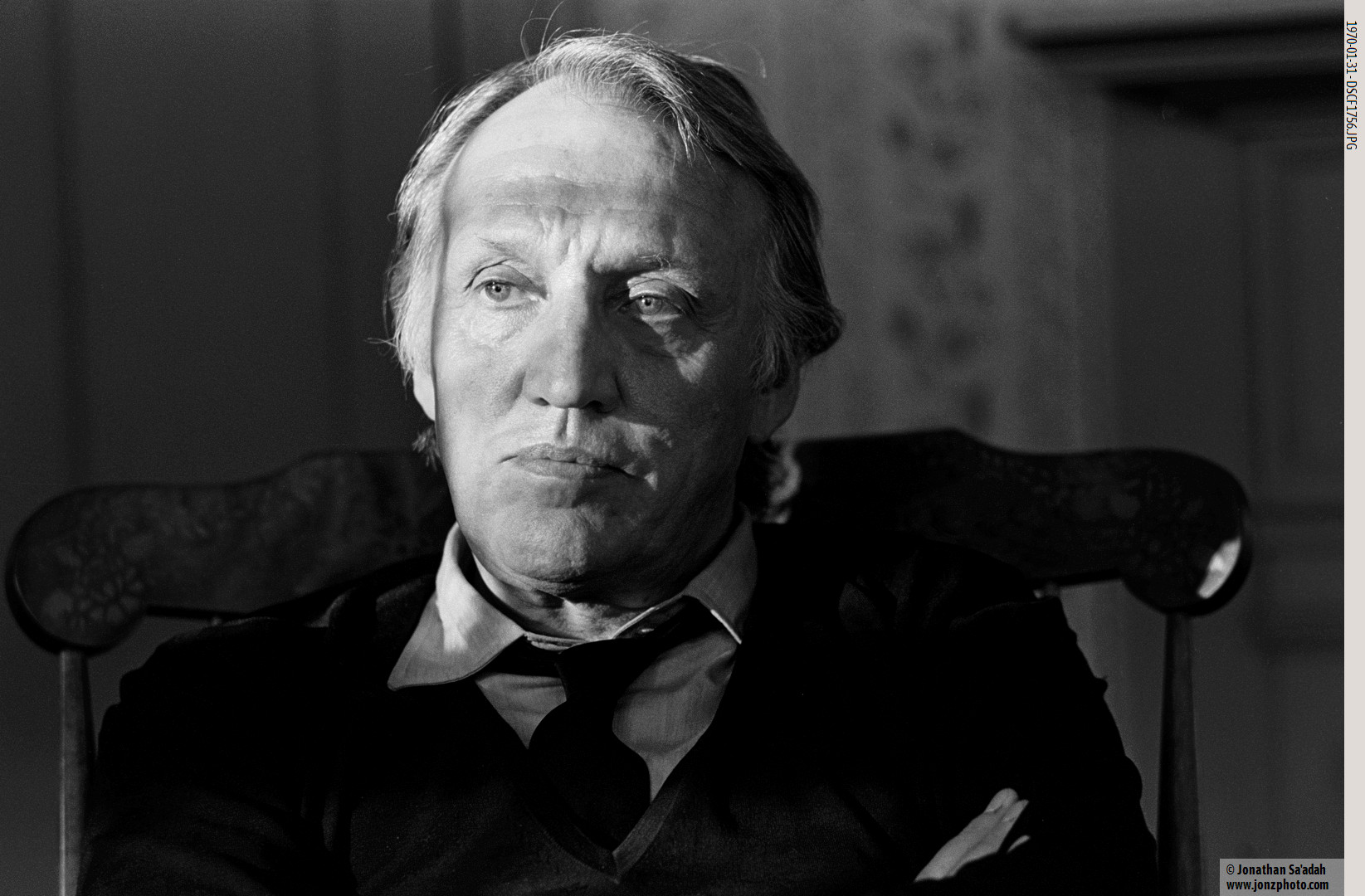
    ▲ Joseph Losey 1970

    Part of a series on the making of the Losey film, M Klein (available on the Criterion Channel)


    Joseph Losey in Hollywood

    People often don’t fit into neat boxes. Joseph Losey defied easy classification. In the 1930s and 40s he was a young, breathtakingly handsome Hollywood director with an expanding stage and film reputation, known for his leftist politics and creative directing. He drove a pink Jaguar around town and had a highly public persona decorated with female movie stars and expensive tastes. He could be gracious in one moment and furious in the next, when his quizzical grin would turn hard steel. He could also be almost simultaneously thoughtful and thoughtless, the later often fueled by large amounts of alcohol.

    Losey in forced exile and how this project started

    Losey and many other people found their match in the vitriolic storm of McCarthyism that swept into United States in the late 1940s, because of which he was forced into personal and professional exile in England.

    I met him on his first trip back to the United States in 1970. He had been hired as a “Visiting Professor” at Dartmouth College, where he picked me out of a class as a creative photographer. He returned to England after that term but we stayed in touch by letter. Five years later I received a fellowship to spend a year taking pictures in Beirut, and in late summer 1975, faced with the beginning of the Lebanese civil war, I was searching for another project to focus on. Losey suggested that I meet him in Paris where he’d give me access to photograph the making of his next film, to be shot both in a studio and on locations around the city. He wrote a convincing letter to the fellowship committee about how I should be allowed to change from low-cost Beirut to expensive Paris, and in due course I started taking pictures of him making the film M Klein in early October of 1975.

    M Klein and French attitudes towards the Jews during WWII

    I was lucky in that this film ended up being one of Losey’s enduring works. It was a disappointing failure commercially but it ranks as one of his most respected films. It also had the added dimension of bringing to light an unpopular topic in postwar French society: French racism and complicity in the Nazi extermination of the Jews and other ethnic minorities.

    Losey wasn’t the first to deal with this subject. Marcel Ophul’s 1969 documentary The Sorrow and the Pity pre-dated M Klein by six years, and Louis Malle’s Lacombe, Lucien was released in the same period as Losey’s film, but Losey’s film was also high visibility and went into distribution in France, helped along by the popularity of the lead (Alain Delon). Even though the film wasn’t popular it increased the pressure and helped penetrate the French wall of resistance to even talking about what had happened during the war.

    On the production side, both the Casting Director, Margot Capelier, and the Art Director, Alexandre Trauner, were Jews living in Paris at the start of the war (Capelier born there, and Trauner an immigrant) who had been forced to flee to southern France to escape the Nazi occupation, and the centrality of the Jewish persecution in the screenplay attracted them to the project. Capelier had lost members of her family. The film was typical of Losey’s best films: embracing large themes and weaving them into a cautionary tale with present-day relevance.

    What made M Klein unusual

    M Klein was the twenty-eighth feature length film directed by Losey, but his first in French. It tells the story of Robert Klein, a privileged but shady French art dealer who, through wartime suspicion and his own subsequent actions, becomes trapped in a web of bureaucratic confusion, ultimately coming face to face with the persecution of Jews during the WWII Nazi occupation of France.

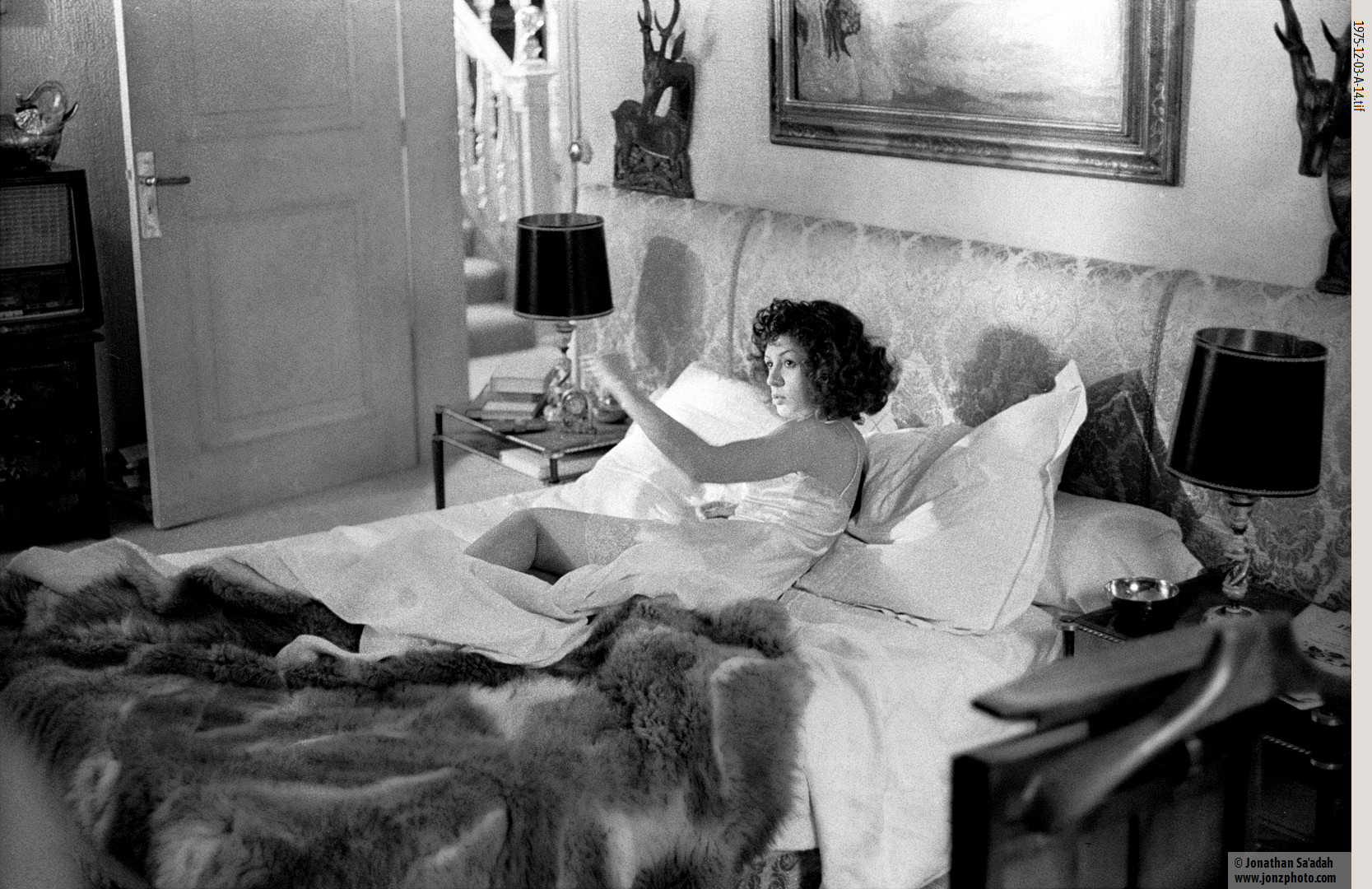
    Robert Klein’s girlfriend Jeanine (Actress Juliet Berto) resplendent in his bedroom. She felt doomed to a life in bed, and Berto played her character as bored and petulant.

    There are, in fact, two M Kleins: Robert, who believes he is “French and Catholic since Louis XIV” and another who is a Jew fighting for the Resistance. The Catholic Klein, smoothly played by Alain Delon, is drawn like a moth to the Jewish Klein. Delon is joined by a standout cast including a caustically dour Jeanne Moreau, a two-faced French lawyer played by Michael Lonsdale, Suzanne Flon who gives a nuanced portrayal of the Jewish Klein’s concierge, and a laconically skillful performance by an elderly Louis Seigner in one of his final roles, as Klein’s father.

    Most films contain a disclaimer that they are fictional. M Klein flips convention around, stating right at the beginning that what is shown is based on a composite of true stories from 1942 France.

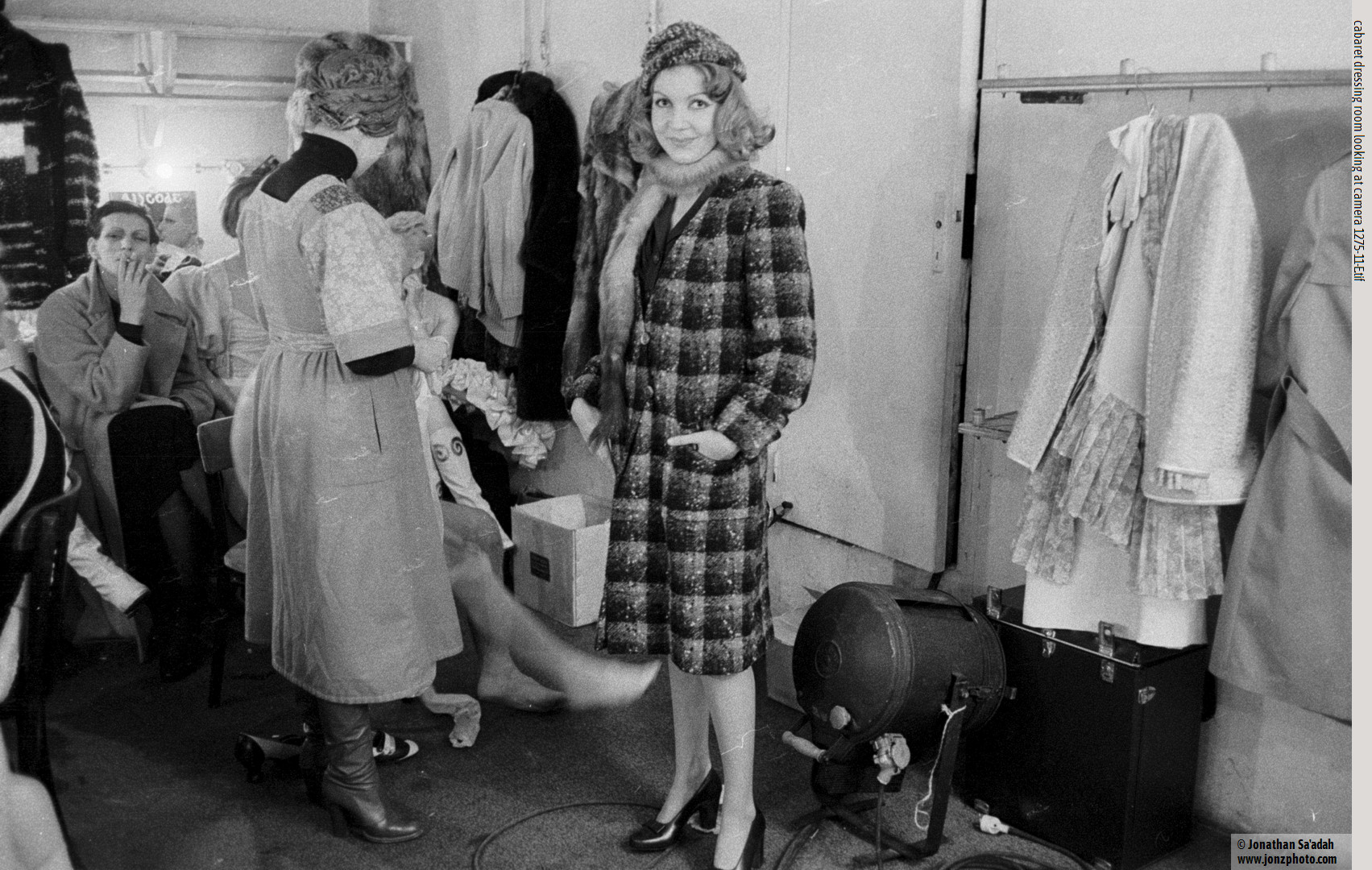
    Costume fitting Transvestite performers being fitted with costumes for a wartime cabaret scene.

    In filming this story, Losey has several themes, and all of them center around questioning racism. One is that he highlights the transient nature of human identity. Who are we, how do we define ourselves, and how do others define us? Robert Klein is a comfortable, refined French Catholic minding his own business during the war period. However, when he is mistakenly identified as a Jew, his world is turned upside down. In delving into his past he is forced to confront the fact that his identity is not as fixed as he was brought up to believe – that there are shades of grey that are easy to exploit in a fascist environment.

    The film also deals with the question of societal and personal guilt in racism. Robert Klein is not a Nazi sympathizer, but on the other hand he doesn’t much care (or think) about what is happening. He is a man who, like many others, is content to go about his business and ignore the suffering of others. The end of the film makes it so he has to confront his own complicity in the racism that he had ignored before.

    Finally, there are themes of memory and history in constructing narratives of racism. As Robert Klein delves deeper into the mystery of his mistaken identity, he begins to uncover a web of lies and deception that have been woven around him since childhood by his family. He realizes that the past is not always what it seems, and that truth can be elusive, and again can easily be used against a person.

    M Klein is a thought-provoking film that explores some of the most complex and difficult themes of the 20th century. It is a film that challenges us as viewers to confront our own beliefs and assumptions about identity, guilt, and history. It’s not by accident that these themes attracted major actors and film professionals who were, like Joseph Losey, committed to social justice and truth, nor is it at all surprising that in view of its unpopular themes the film failed to find a favorable reception in France. What made the M Klein unusual was to have committed people working together on a theme that they knew would be unpopular, but still wanted to make it and advance the discussion of racism during the war.