Category: Pizza

  • Exploring Neopolitan Pizza – Starita

    Exploring Neopolitan Pizza – Starita

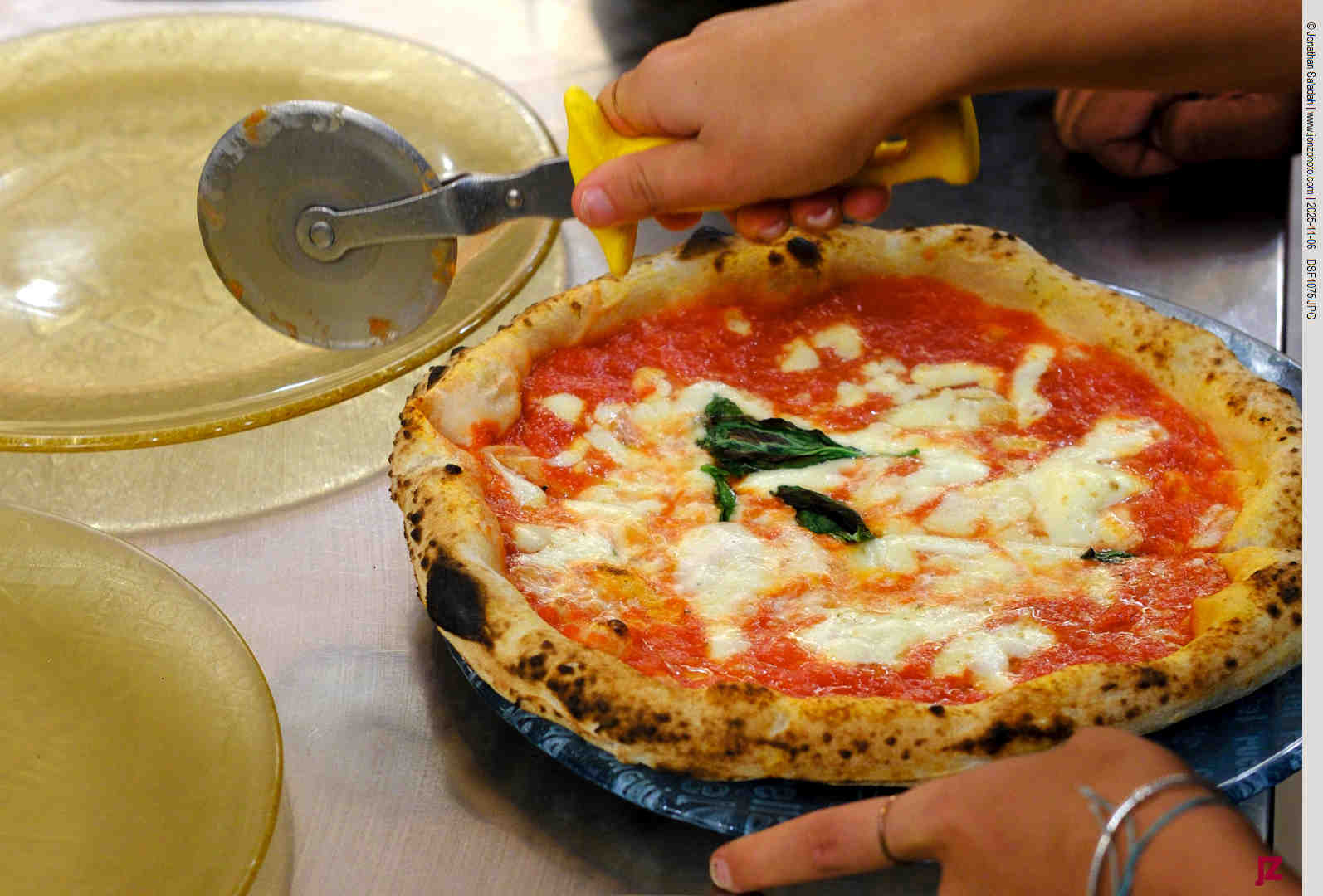
    A Neopolitan pizza, just out of the oven, and ready to serve. What could be better? Normally it’s brought to the table unsliced, still inflated and soft from the intense heat.

    One of the reasons, maybe even the main reason – I wanted to go to Naples, was to eat Neopolitan pizza on its home turf. I was surprised how my priority faded away as I jumped into this truly rich and alive city. I was also surprised at how, instead of me leading the pizza eating, it was Beth clamouring for more. Some days we’d eat pizza twice – considerably up from the tolerance level at home. Part of the difference, of course, has something to do with my pizza not being on the level of Napoli pizza. Napoli pizzas are so light as to be almost ethereal. It feels and tastes like a divine combination of melted hot mozzarella, tomato and warm soft dough dancing in a steam cloud. At home Beth will usually leave the edges of my pizzas on the plate. In Naples I had to protect my own slices from my ravenous partner.

    Even with our enthusiastic approach we weren’t able to come close to covering the list of pizzerias I wanted to visit. But three places stood out. It’s almost not fair to highlight them because even the worst pizza we had in Naples still approached a work of art. That’s how good Naples pizza was, so it certainly didn’t disappoint either one of us. This essay is about Starita, one of those places.
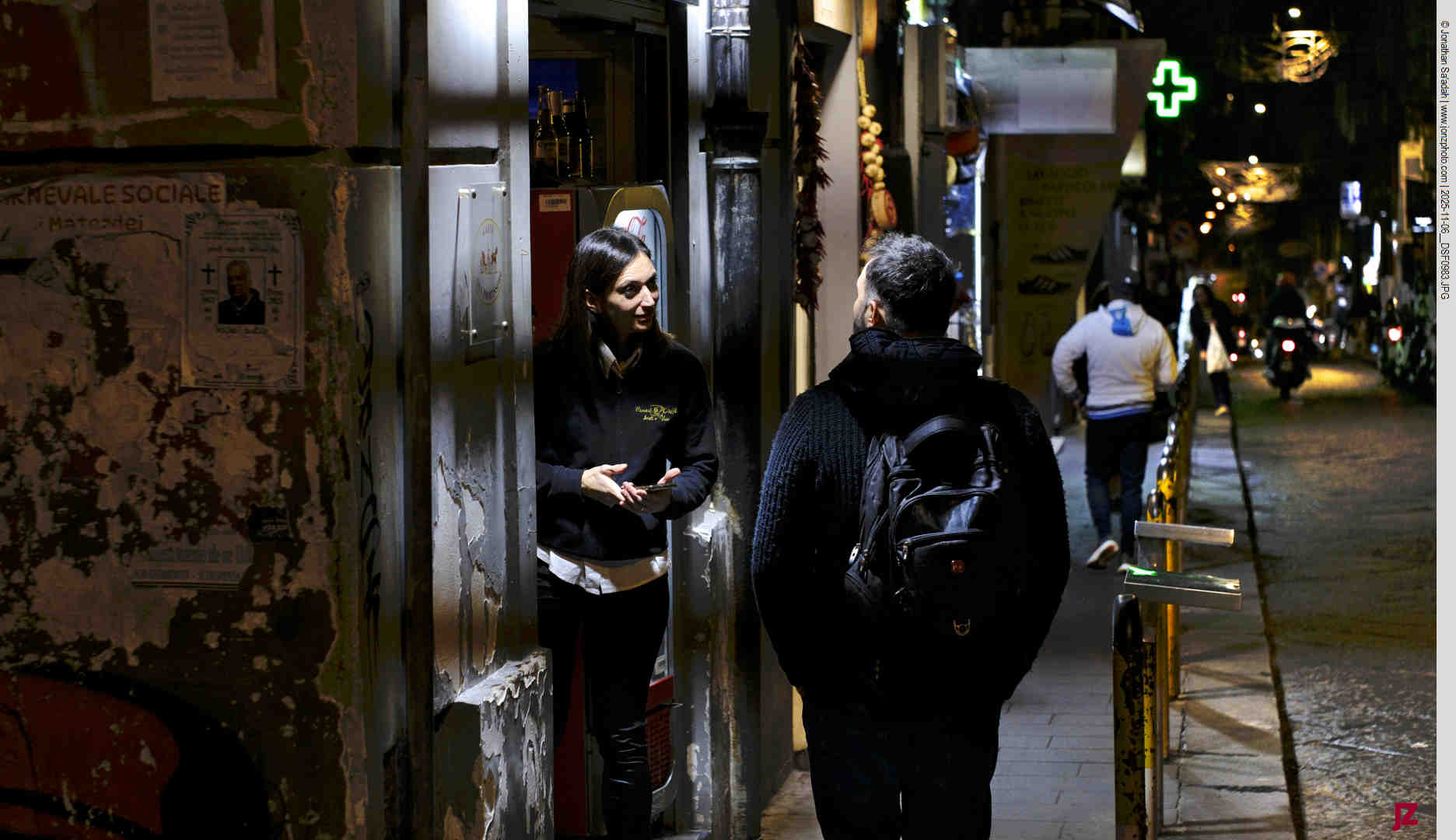
    Via Materdei near Starita Pizza

    I did get the impression that pizza has become big business in Naples. A lot of people – tourists from all nations (including Italy) – come to Naples expecting to eat pizza and serving them in large numbers generates good cash. So many of the pizzerias have expanded their seating capacity, either by renovating their existing premises, buying adjacent properties and serving there too, or opening up other pizzerias at other locations under their name. Pizza in Naples isn’t expensive – it costs about half of what we pay in Montreal – but a successful pizzeria can be a lucrative enterprise.
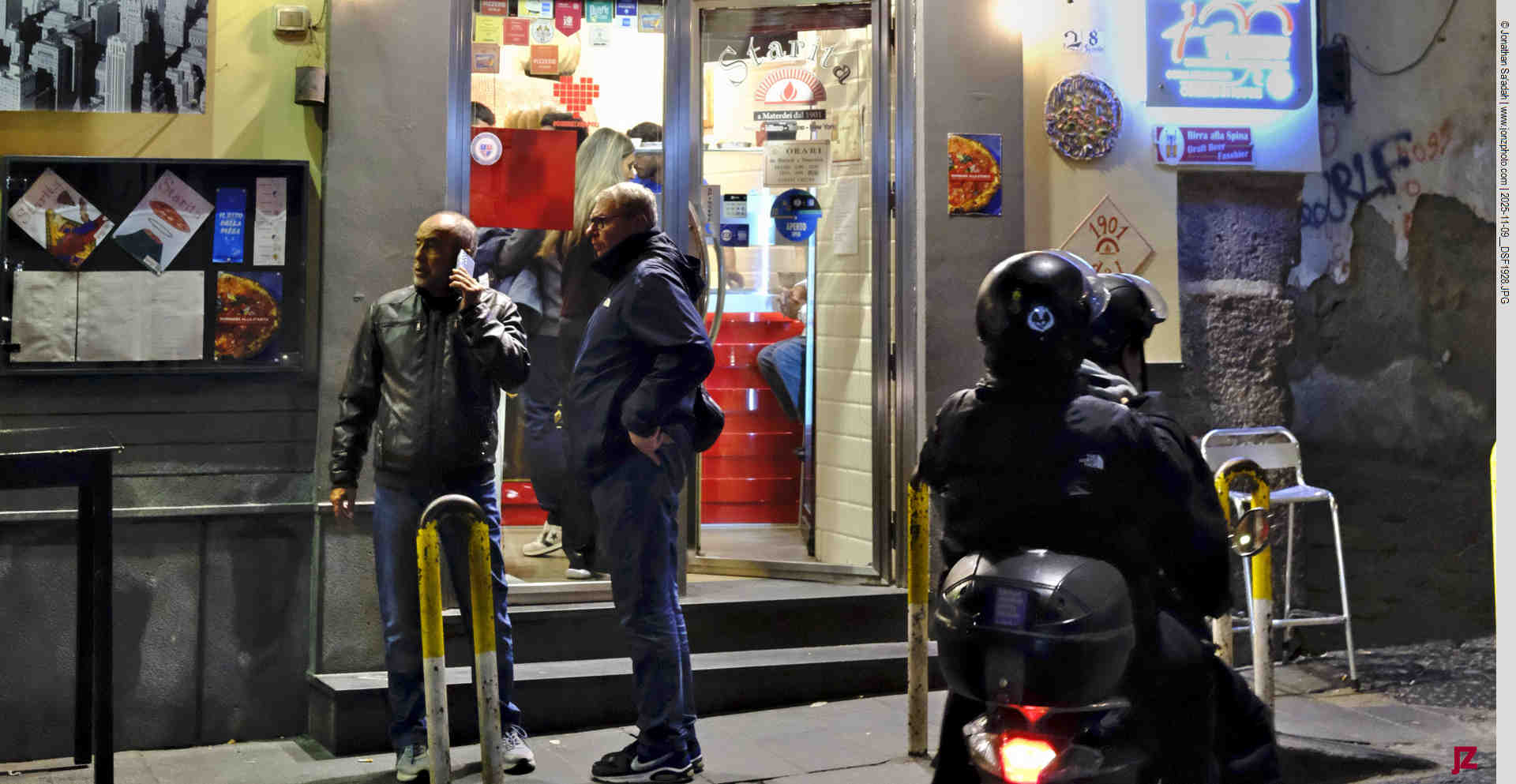
    Starita’s entrance
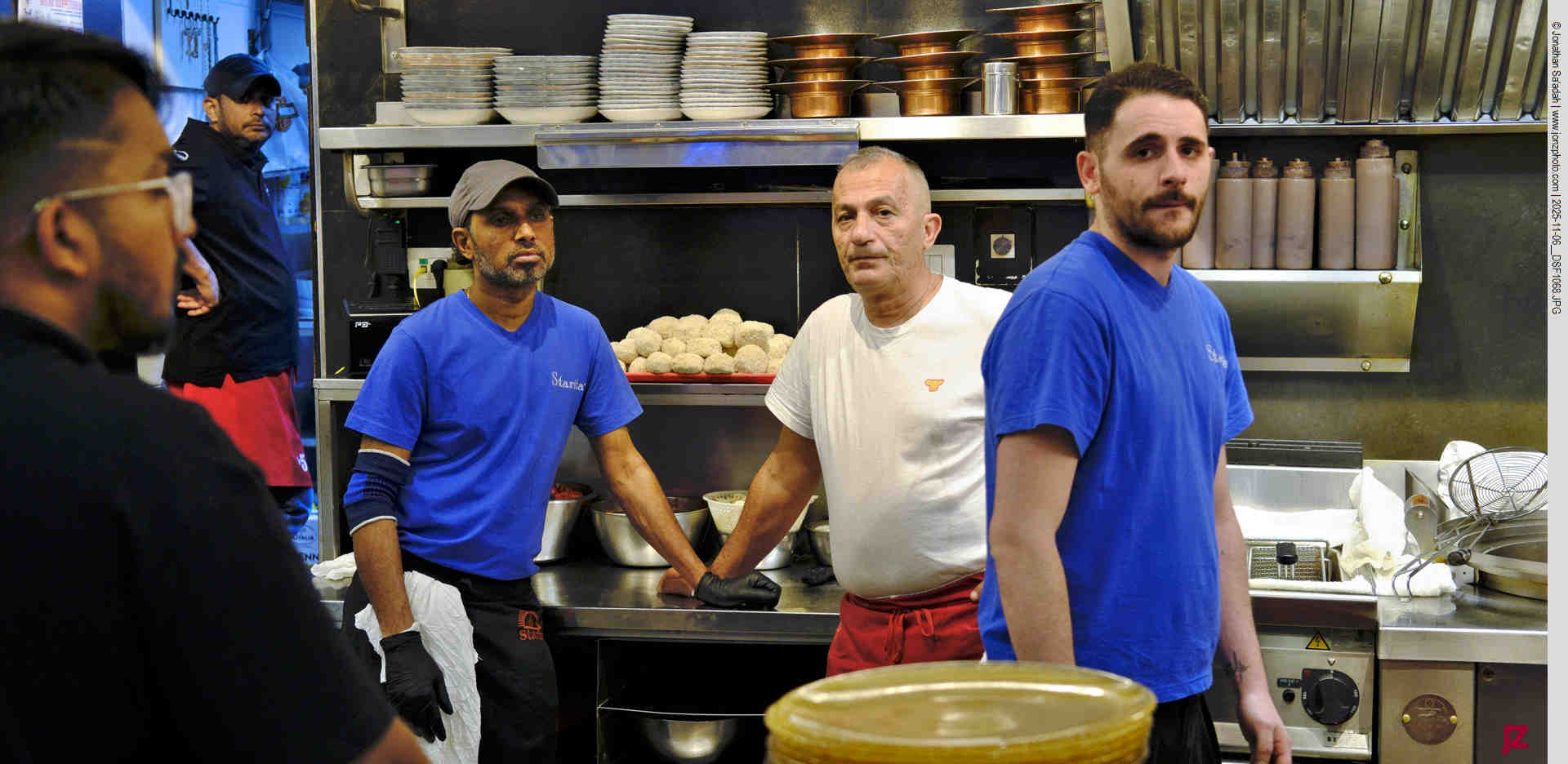
    Kitchen staff at Starita giving me the one-over.

    Starita is up a narrow stony lane in a working-class neighbourhood. The street it’s on – Via Materdei – climbs up out of Naples’ historic center. Starita began life in 1901 as a cantina, serving local wines. The original founder – Alfonso Starita – stuck to the simple formula serving wine to working-class residents of the neighborhood. It was one of his children who in 1933 expanded the operation, serving utilitarian Neapolitan dishes – bean soup, fried anchovies, fried baccalà, tripe, and fried pizzas. It wasn’t until 1948 that Starita became a pizzeria friggitoria – a fried food shop and pizzeria. A few years later its fame was sealed by a bodacious Sophia Loren, who in the 1954 film L’Oro di Napoli, played a sexy, beautiful and adulterous pizza seller. Starita was used in the film as a hole-in-the-wall shop selling fried street food. Instantly, the film put Starita on the map. The connection between Starita and Sophia Loren has become inseparable from the pizzeria’s identity. But the depiction in the film of pizza being the food of the poor, with pizza being sold on credit, was real and was drawn from the economic conditions of postwar Naples, experiences that the Starita family had lived through firsthand.
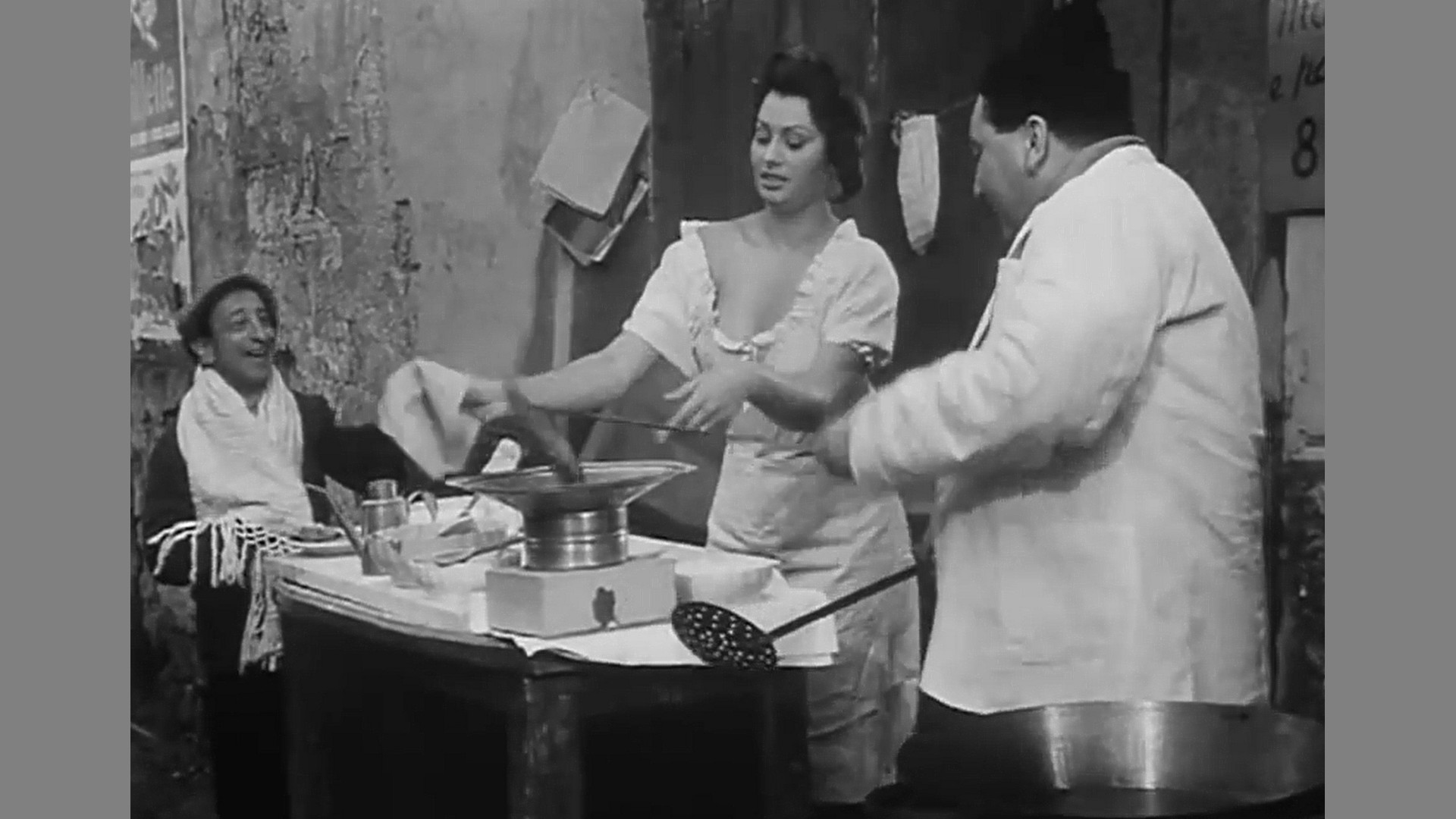
    Starita in 1954 Vittorio De Sica’s film L’Oro di Napoli with Sophia Loren and Giacomo Furia using Starita as a location. This film instantly made the pizzeria a popular destination! Photo credit: Screengrab from YouTube
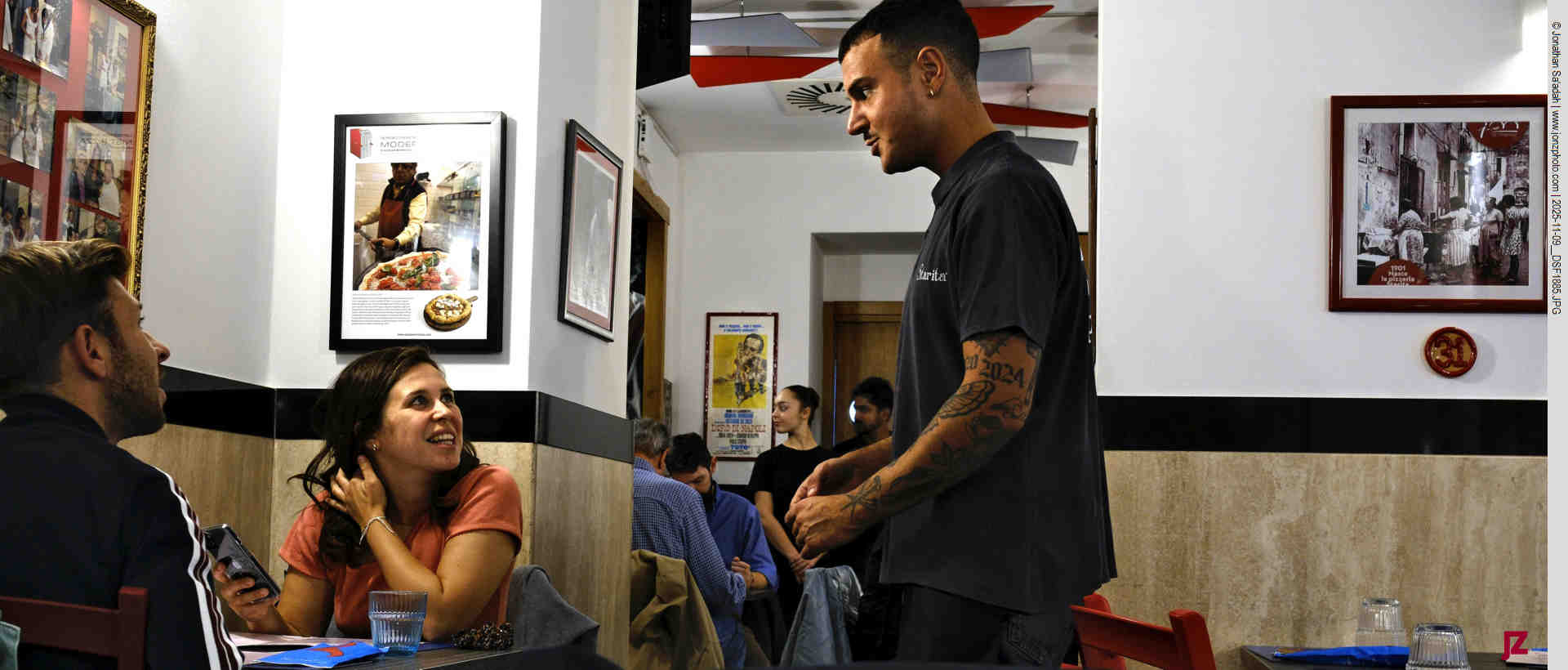
    Starita today An original poster for the Sophia Loren film is on the back wall.

    I wasn’t prepared for how friendly it would be to eat there. We probably didn’t appear to be anything more than English-speaking tourists, albeit both with a pizza-based enthusiasm (probably not rare either), but we were treated well. The experience is that your order is placed and a couple of minutes later the pizza is before you – it’s literally that fast. There’s an immediacy to eating that makes it quite satisfying! As well, none of the pizzerias in Naples are shy about having pictures taken – they invite it – and some even have carefully thought out angles they try and encourage you to show. Starita doesn’t go that far. It is a pizzeria confident of its position and concentrates on making great pizza, and providing an environment that makes eating those pizzas a memorable experience. For us they succeeded. Even though we were trying to eat in as many places as we could manage, we still came back a second time.
    From its modest days as a neighborhood cantina Starita has expanded. Well reviewed versions of the pizzeria have opened in Manhattan’s Hell’s Kitchen (2012), Milan (2016), Turnin (2018) and Florence (2021). Despite the growth, the Materdei original remains the beating heart of the operation. The pizzas are what count, and they are what will draw me back there over and over.
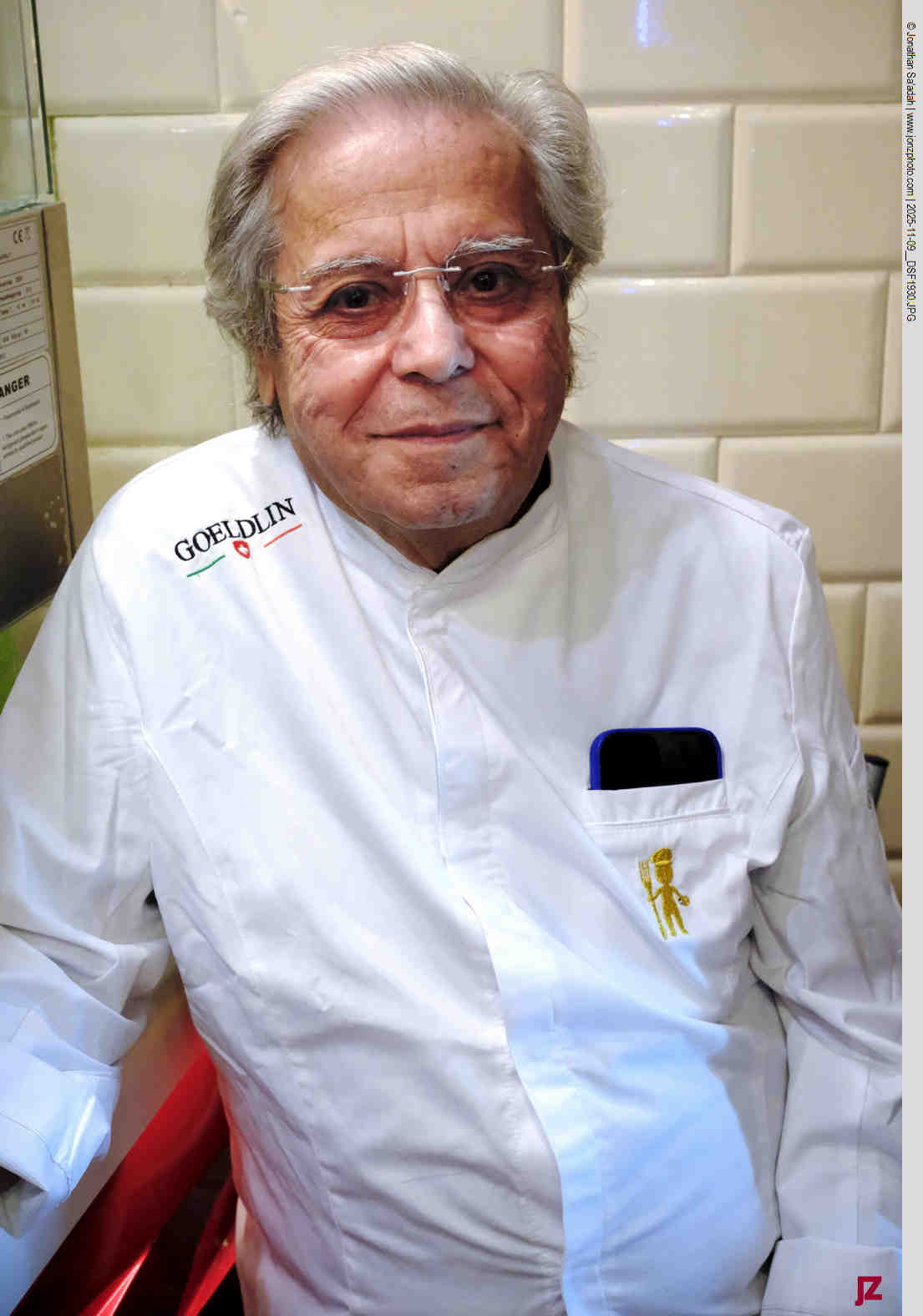
    Antonio Starita is the third-generation owner of Starita and a central figure in the institutional protection of Neapolitan pizza culture. In 2016, he became the founding president of the Unione Pizzerie Storiche Napoletane, which brings together ten of Naples’ oldest pizzerias (Antica Pizzeria Port’Alba, L’Antica Pizzeria da Michele, Pizzeria Lombardi, Starita, and others). He is currently transitioning the business to the fourth generation – his son and daughter.

    For more:
    YouTube video of how they make their dough link (this will make you hungry!)
    YouTube video of the Sophia Loren scene from L’Oro di Napoli link link2 (both worth watching!)
  • My Favorite Pizzerias: Ai Marmi, Rome

    My Favorite Pizzerias: Ai Marmi, Rome

    My Favorite Pizzerias: Ai Marmi in Rome

    I noticed the place because it always seemed to be closed, metal-shutters drawn tight to the ground. Since it was nearby the apartment we were renting and I passed by it frequently, wondering what was this phantom pizzaria. A failed business? A front for some nefarious project? It was hard to tell.

    One evening I was out in the neighborhood and to my surprise the shutters had just been pulled up and the pizzeria was open. Not only was it open but it was large, bright, and beginning to fill up. I went back to the apartment and alerted Beth, and together we returned just early enough to get in among the first sitting.

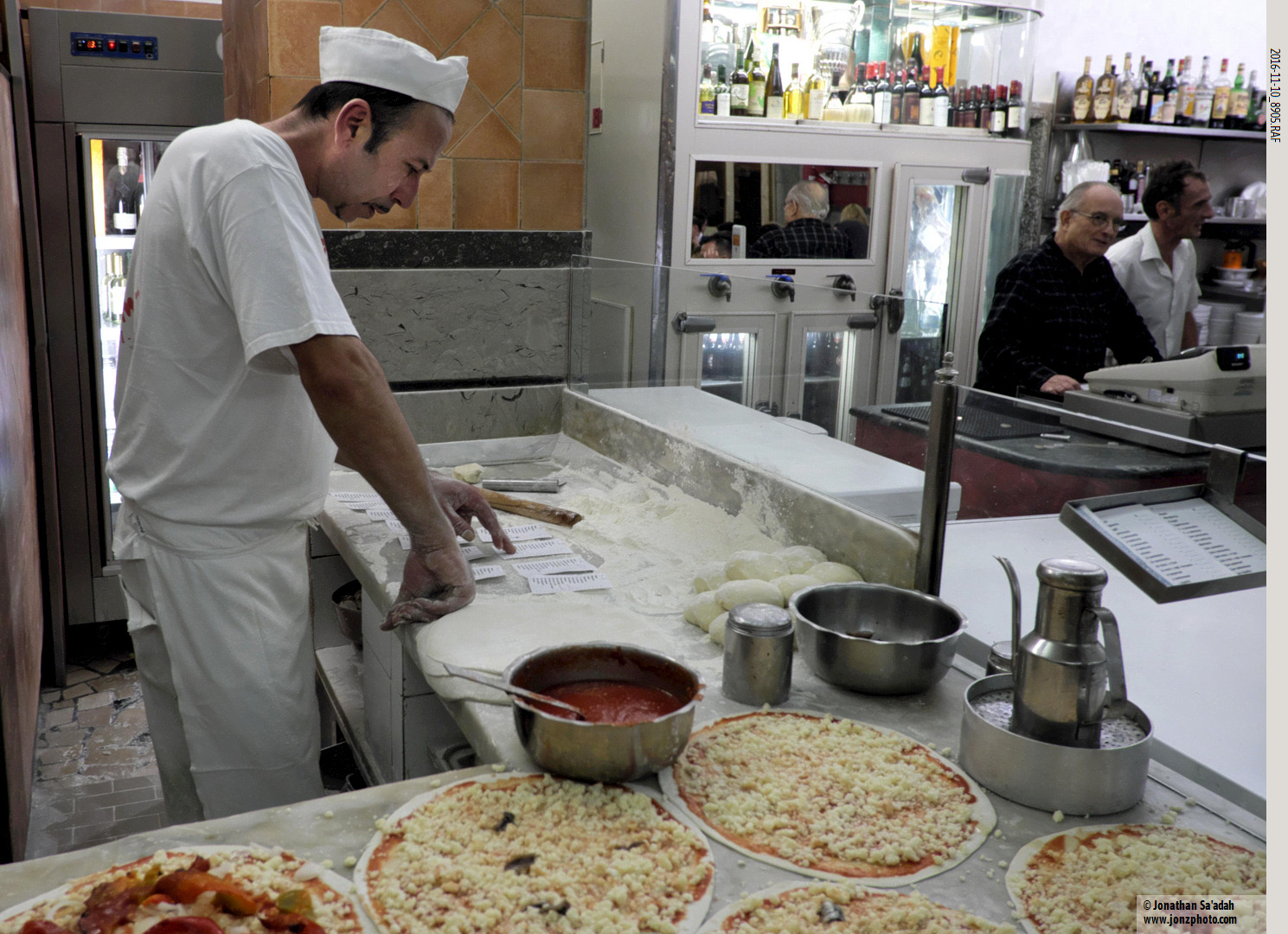
    Ai Marmi is my dream pizzeria. Not self-conscious, delicious food, with an easy, social atmosphere. It should know what it’s doing, it’s been in business in the same place for over 90 years, serving thin crust Roman-style pizzas. It’s easily one of my favorite restaurants on earth.

    History of Pizzeria Ai Marmi in Trastevere

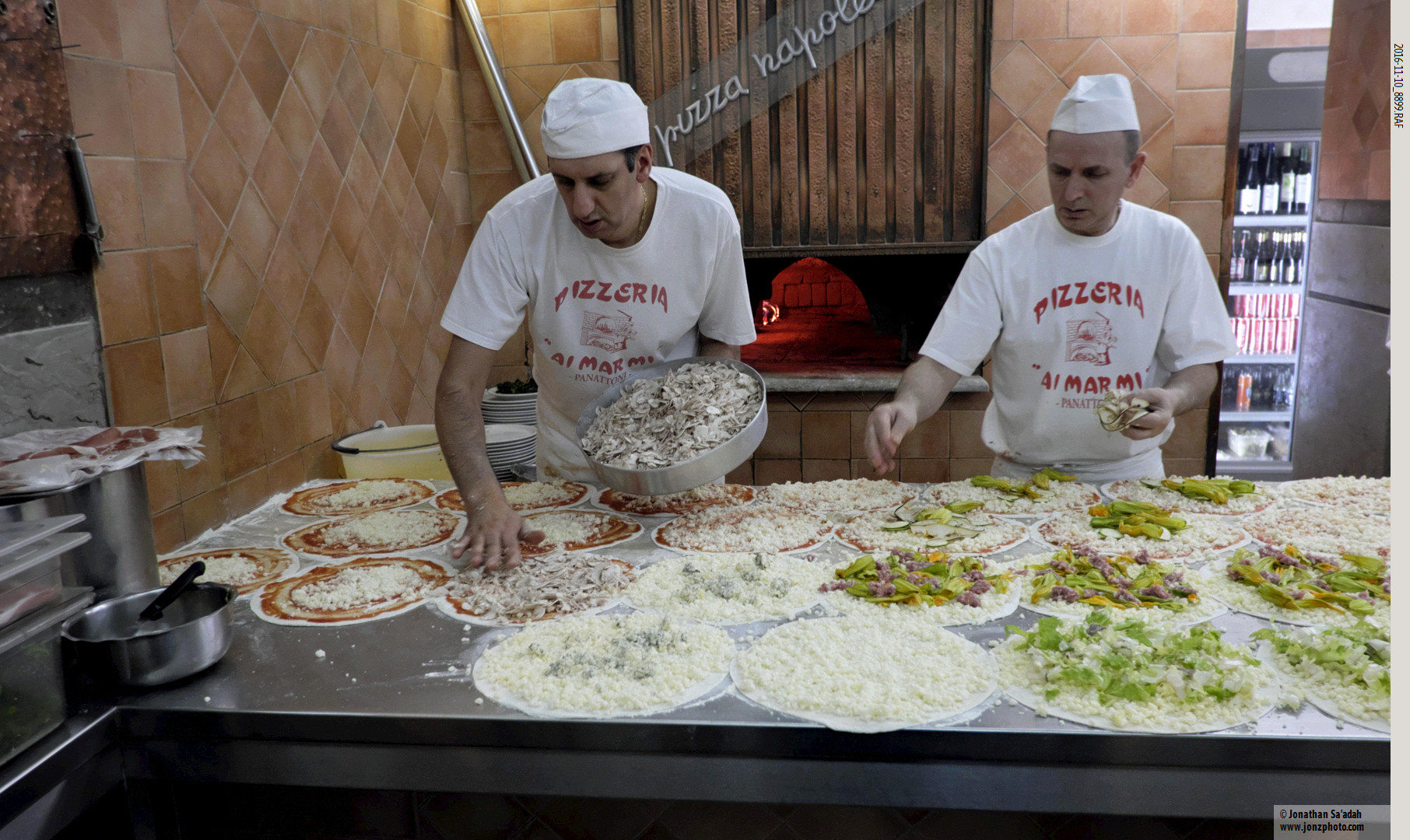
    Ai Marmi has been serving pizza since it opened its doors in 1931 as an ancient wood-fired oven bakery. The restaurant was originally known as “Panattoni Pizza,” named after its founding family. Since 1980, it has been operated by the Panattoni brothers – Paolo, Renzo, and Carlo – who inherited the business and continue to use pizza recipes handed down from their great-grandfather.

    Distinctive Characteristics and Nicknames

    The establishment is affectionately known by Romans through two distinctive nicknames:

    “Ai Marmi” (The Marble Slabs) – This name derives from the restaurant’s signature marble-slab tables that have remained a constant feature since its opening. These thick marble surfaces serve both functional and aesthetic purposes in the pizza-making process.

    “L’Obitorio” (The Morgue) – This more colorful nickname was coined by renowned Italian poet Pier Paolo Pasolini, who lived nearby and frequently dined at the its tables. The moniker refers to the cold marble tables that resemble those found in traditional morgues or classic old-style Neapolitan pizzerias.

    Cultural Impact and Atmosphere

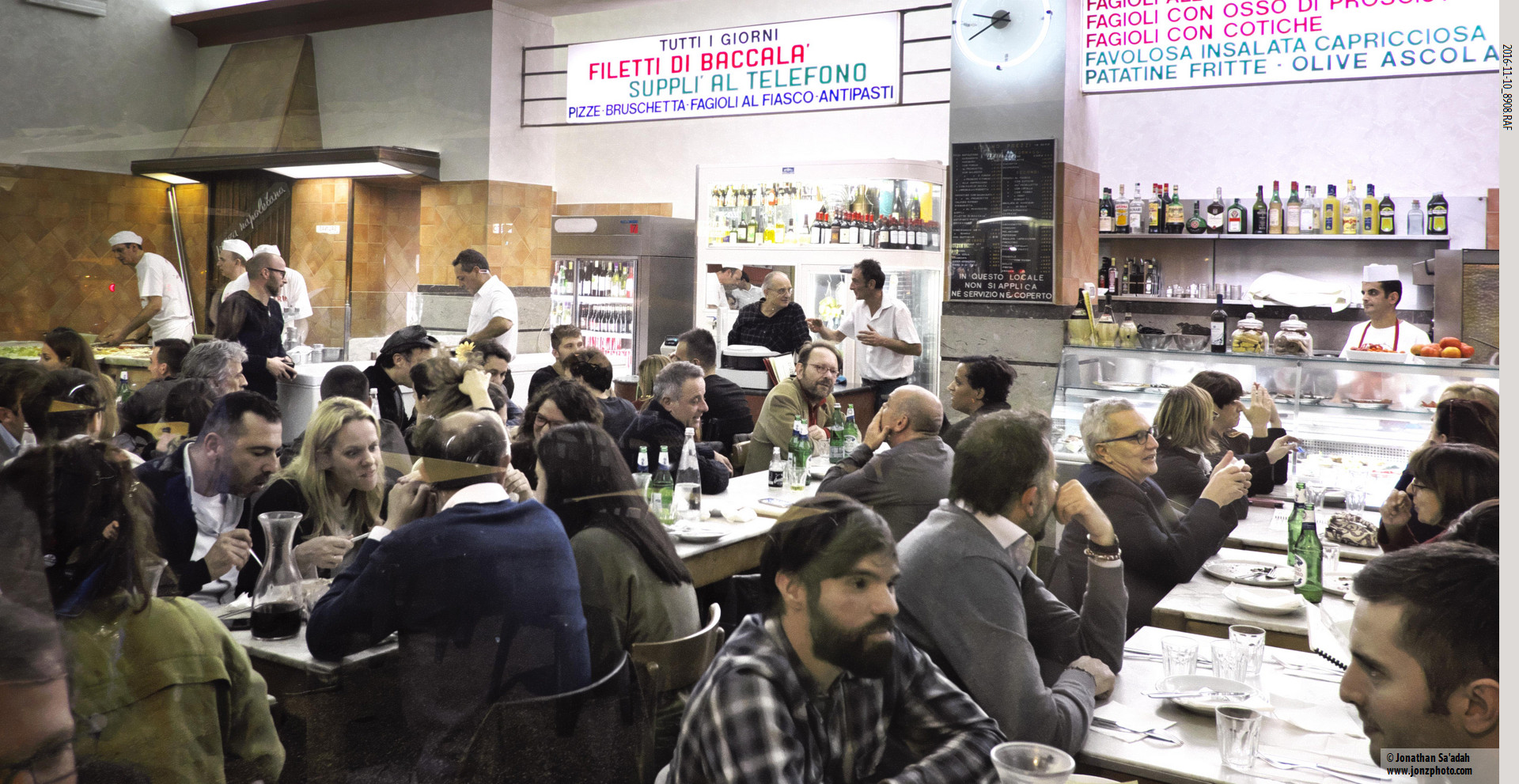
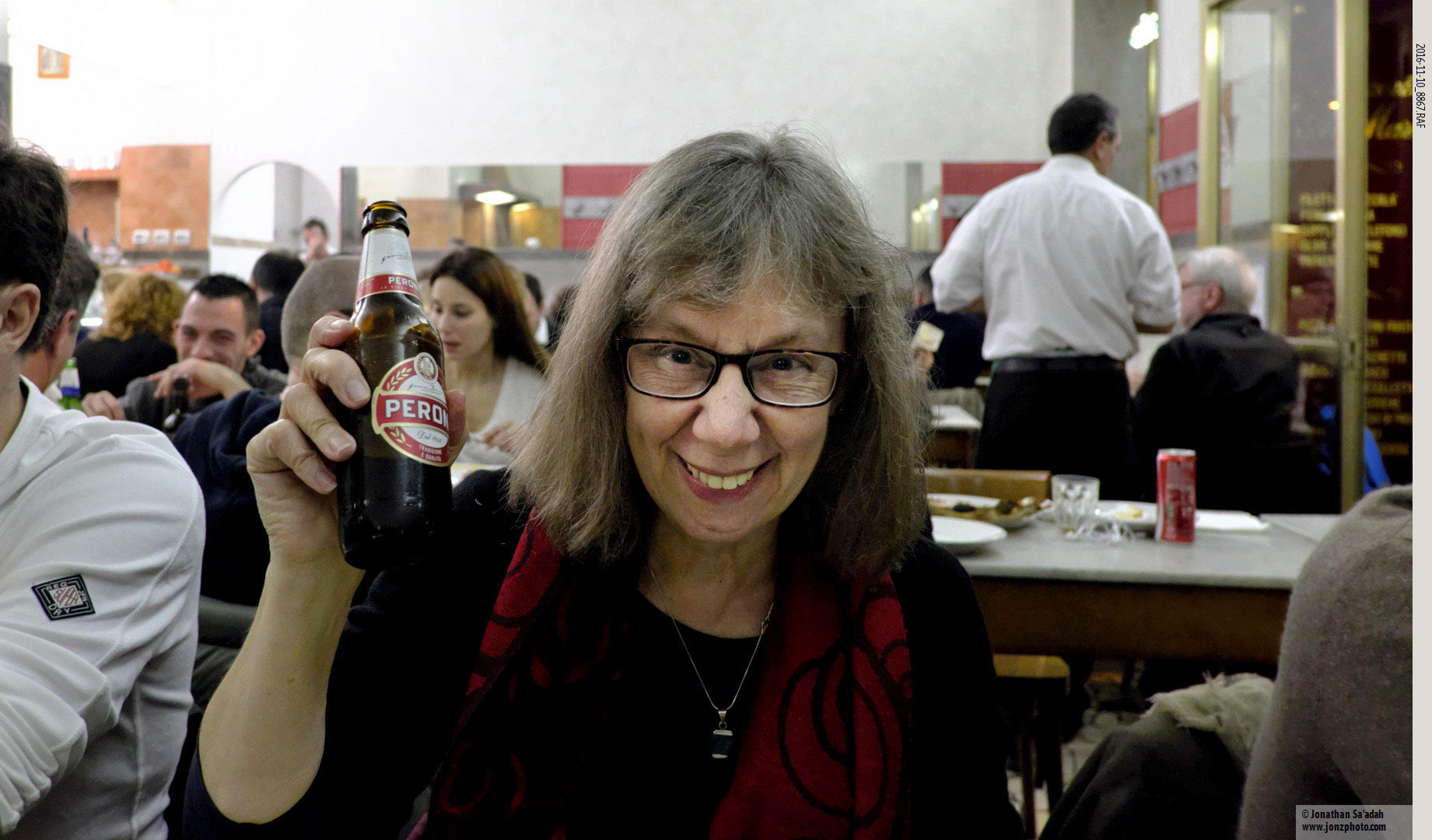
    Throughout its nine decades of operation, Ai Marmi has maintained its authentic Roman character, creating a gastronomic and cultural experience that to me puts it at the pinnacle of the pizza world. The restaurant’s bustling, hectic atmosphere, where tourists are consistently outnumbered by local Romans, creates an authentically chaotic environment that’s part of the Marmi’s charm.

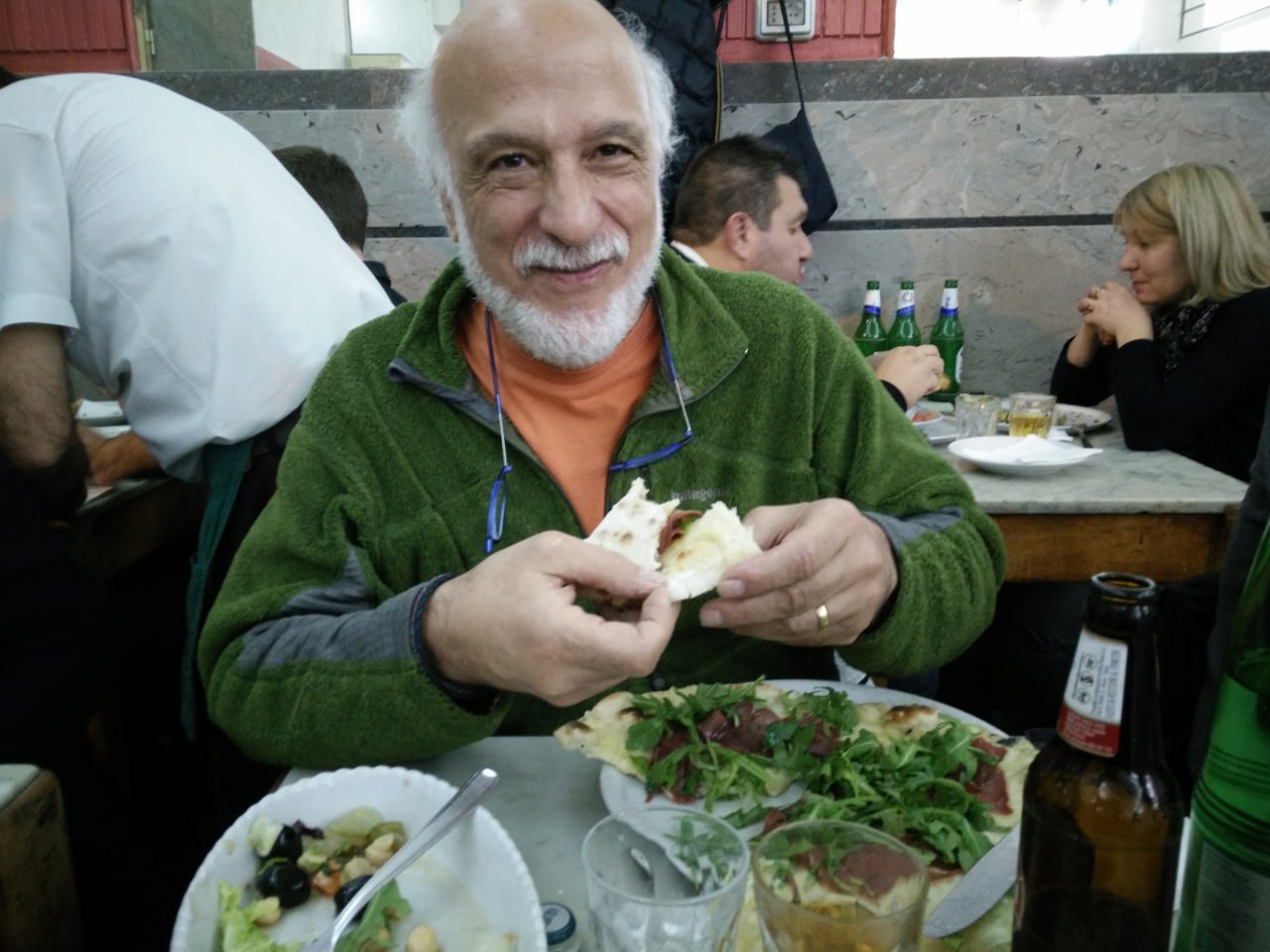
    The pizzeria serves as a time capsule of Roman dining culture, with fluorescent lighting, no tablecloths, and communal marble tables where diners sit elbow-to-elbow. This unpretentious setting has remained largely unchanged since its founding, maintaining the authentic experience of a working-class Roman pizzeria.

    Culinary Tradition

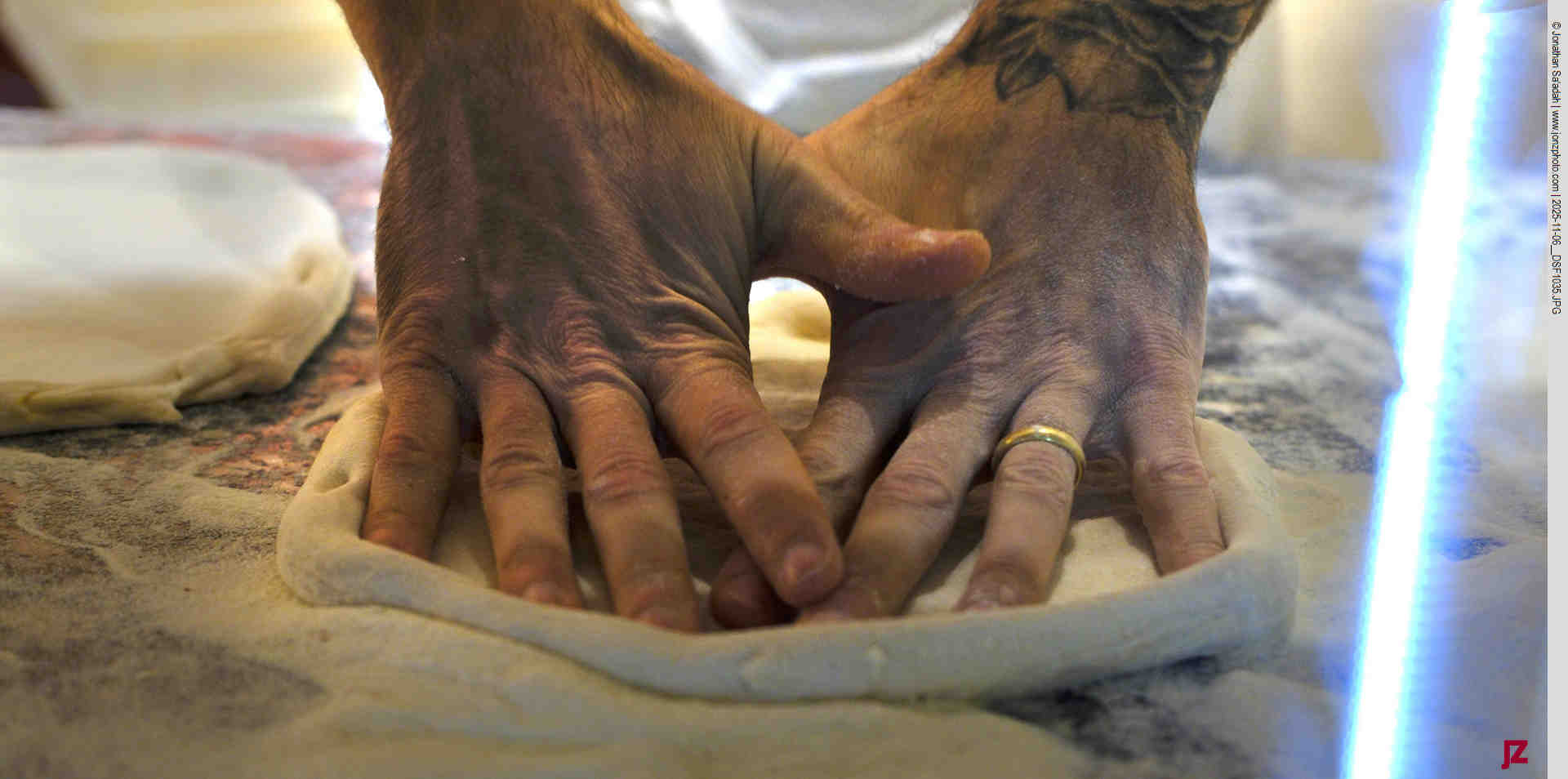
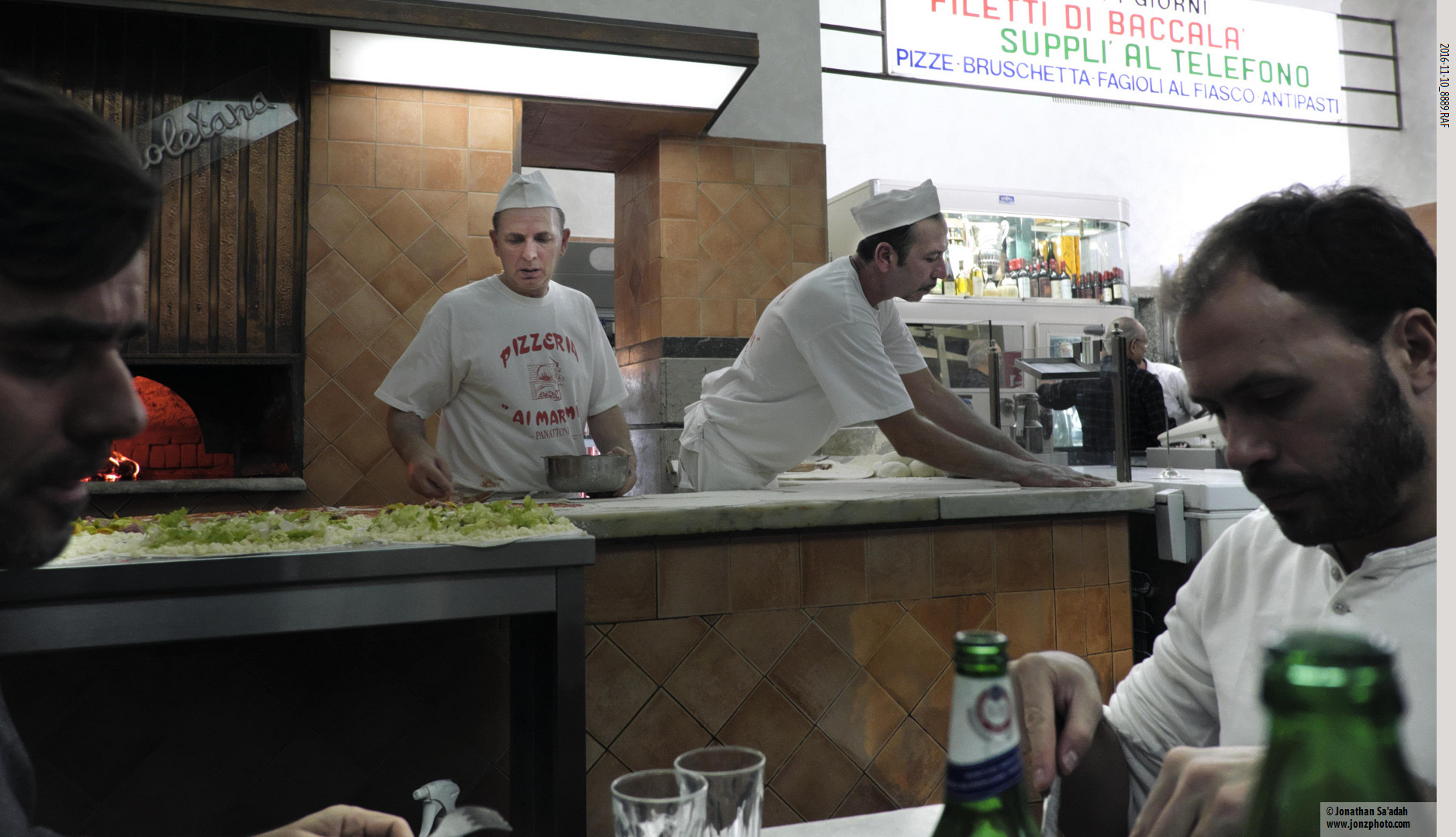
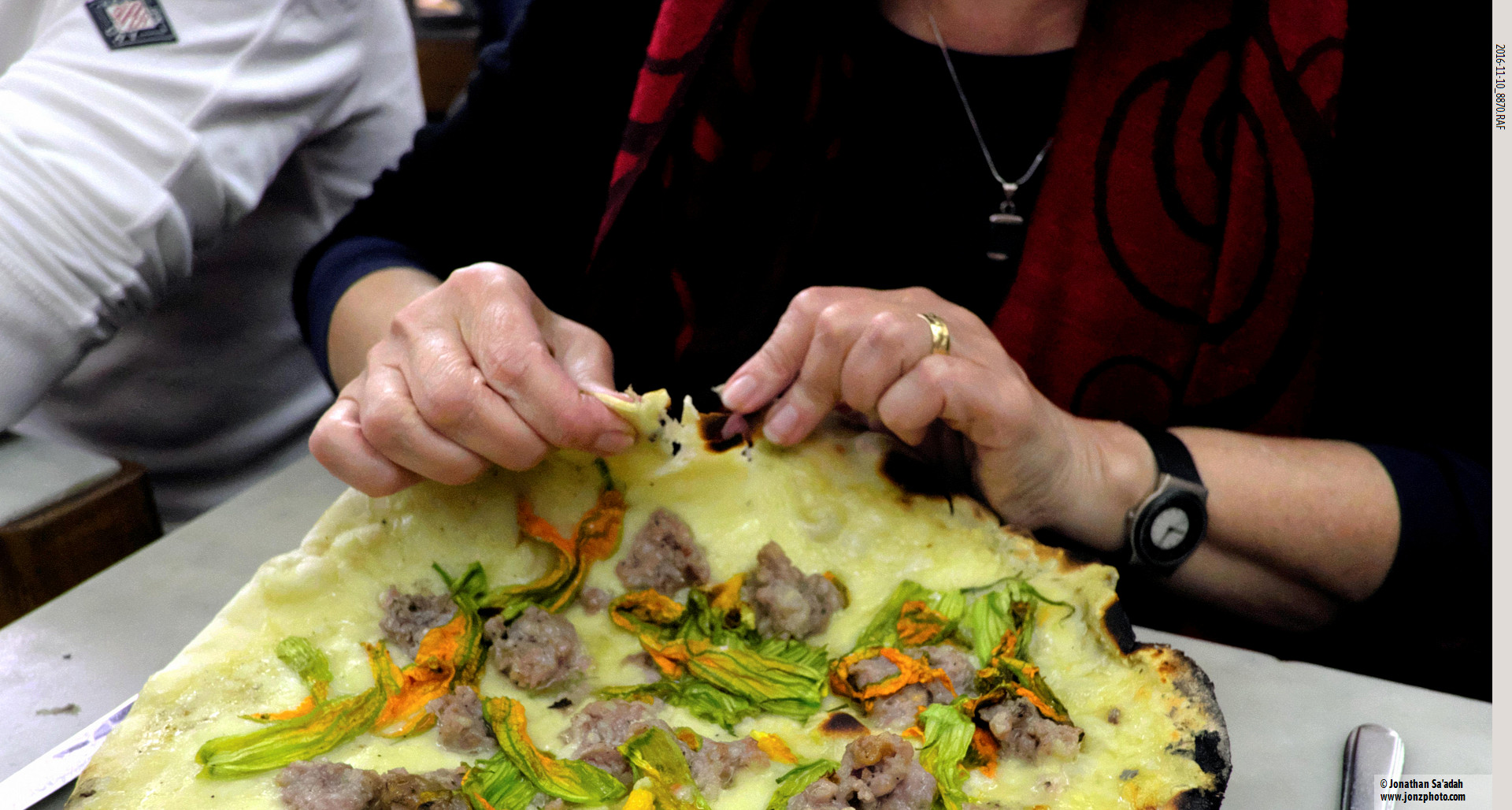
    Ai Marmi specializes in traditional Roman-style pizza – characterized by its thin, crispy crust that’s rolled out with a traditional rolling pin and baked in their original wood-fired oven dating back to 1931. The restaurant continues to prepare pizza using time-honored techniques, with pizzaiolos working continuously to serve the constant stream of customers who nightly queue outside. Being there when Marmi opens, just when the shutters are rolled up, is an exciting experience and not at all like what’s happening at the more curated restaurants in Trastevere and Rome.

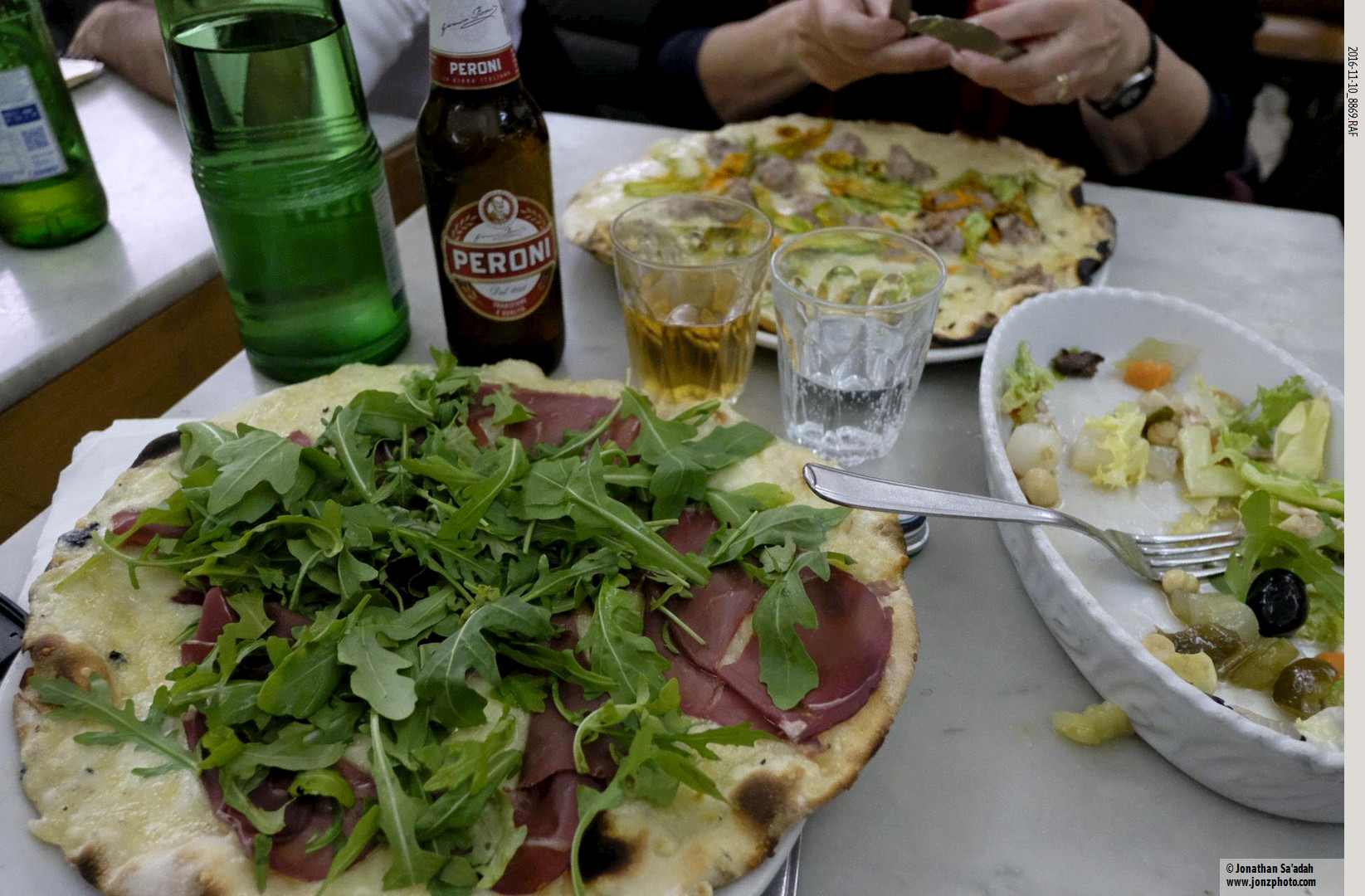
    Beyond pizza, the establishment is known for traditional Roman appetizers including supplì (rice croquettes), fiori di zucca (fried zucchini flowers), and baccalà (fried cod), maintaining the full spectrum of authentic Roman street food culture.

    This is pizza authenticity at its best – a restaurant serving the same style of super-thin, slightly burnt crispy Roman-style pizza that has been its signature for nearly a century. It’s no wonder that it’s a beloved institution for both locals and visitors seeking an authentic taste of Roman culinary history.


    Knezovic, Jasmina. “Roman Holiday: Pizza Mia!” Zamezi, May 28, 2013. https://zamezi.wordpress.com/2013/05/28/roman-holiday-pizza-mia/.
    Macchioni, Phyllis. “This Italian Life: AUNTIE PASTA: When in Rome.” This Italian Life, November 15, 2012. https://thisitalianlife.blogspot.com/2012/11/auntie-pasta-when-in-rome.html.
    Old Friends, New Places Pizzeria Ai Marmi Trastevere. July 5, 2013. http://www.gillianslists.com/2013/07/old-friends-new-places-pizzeria-ai.html.
    “One Last Pizza in Rome, Italy-Trastevere’s Pizzeria Ai Marmi Is Magnifico!” The Pizza Snob, October 11, 2015. https://thepizzasnob.net/2015/10/11/one-last-pizza-in-rome-italy-trasteveres-pizzeria-al-marmi-is-magnifico/.
    Roma food, dir. The INCREDIBLE Work in the Roman Pizzeria “Ai Marmi” in Rome Trastevere Since 1931 – SUBTITLES. 2023. 9:09. https://www.youtube.com/watch?v=gGMVmetvHXA.
    So Hungry Italy, dir. For Over 90 Years! Rome’s Artisanal Iconic Pizzeria! “Pizzeria Ai Marmi.” 2024. 26:05. https://www.youtube.com/watch?v=qwFjj-OtXd0.

  • Pizza’s Enduring Stigma

    The Enduring Stigma: How Pizza’s Working-Class Roots and Ethnic Identity Shaped Its Journey from Naples to North America

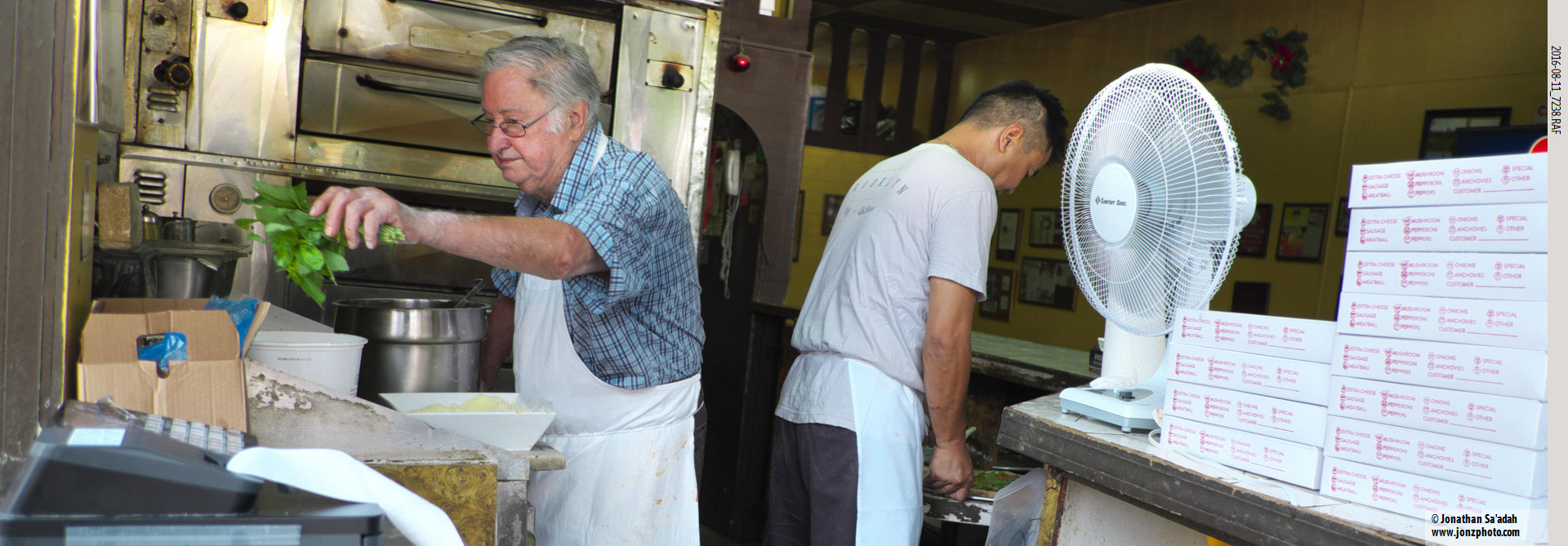
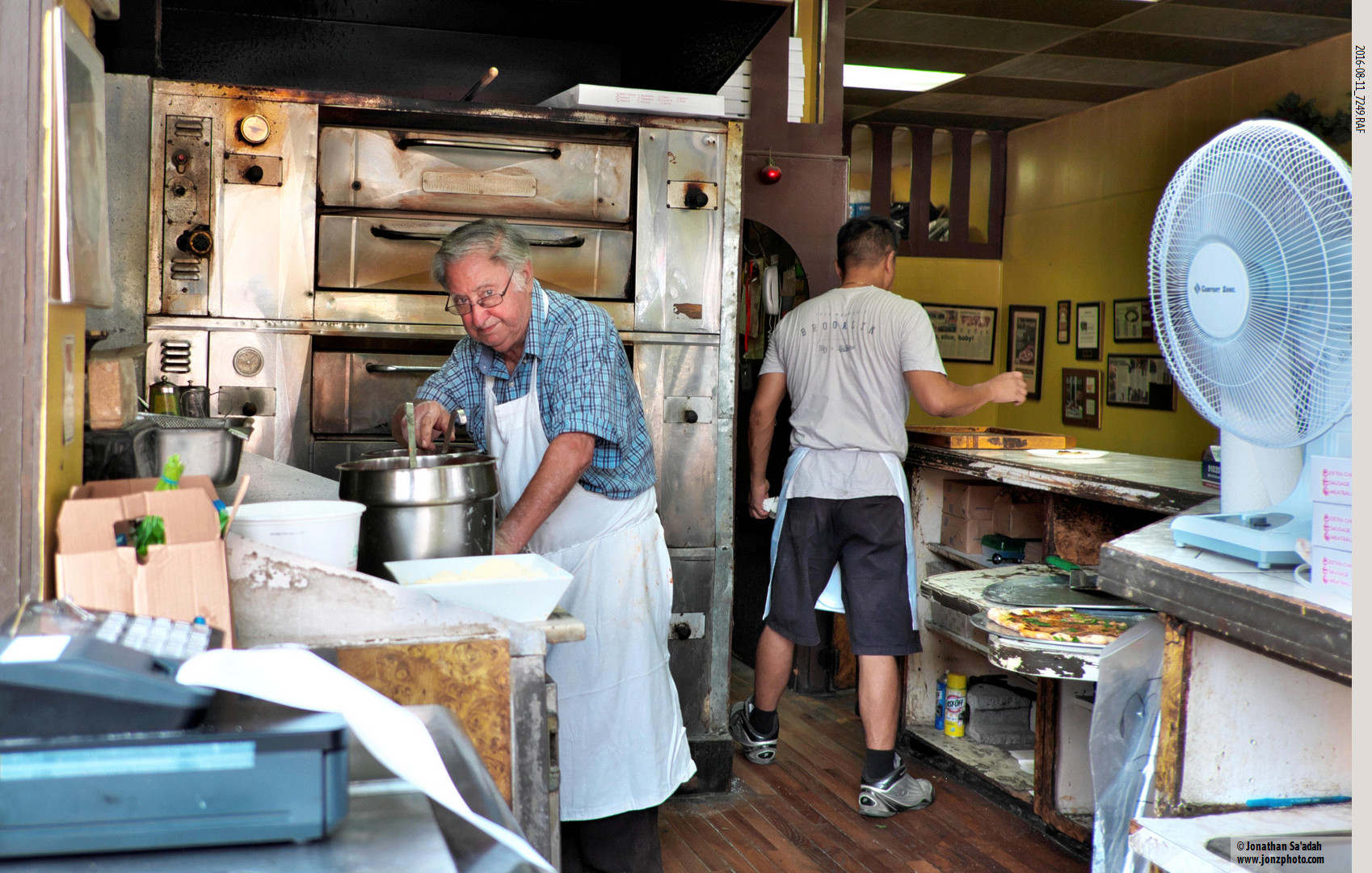
    Domenico DeMarco arrived from the Province of Caserta in 1959 and opened his Brooklyn pizzeria in 1965, making pizzas personally by hand for over fifty years. He became a touchstone to younger chefs because of his unwavering commitment to quality. In spite of the recognition, he never stepped out of his working-class background. He died in 2022. I took this picture in 2016.

    Pizza’s story in North America is far more complex than the simple tale of an Italian dish finding universal love. While today for many of us pizza ranks among our most beloved foods its journey from the narrow streets of Naples to North American ubiquity carries with it a persistent narrative about class, ethnicity, and the ongoing struggle for acceptance that defines the immigrant experience.

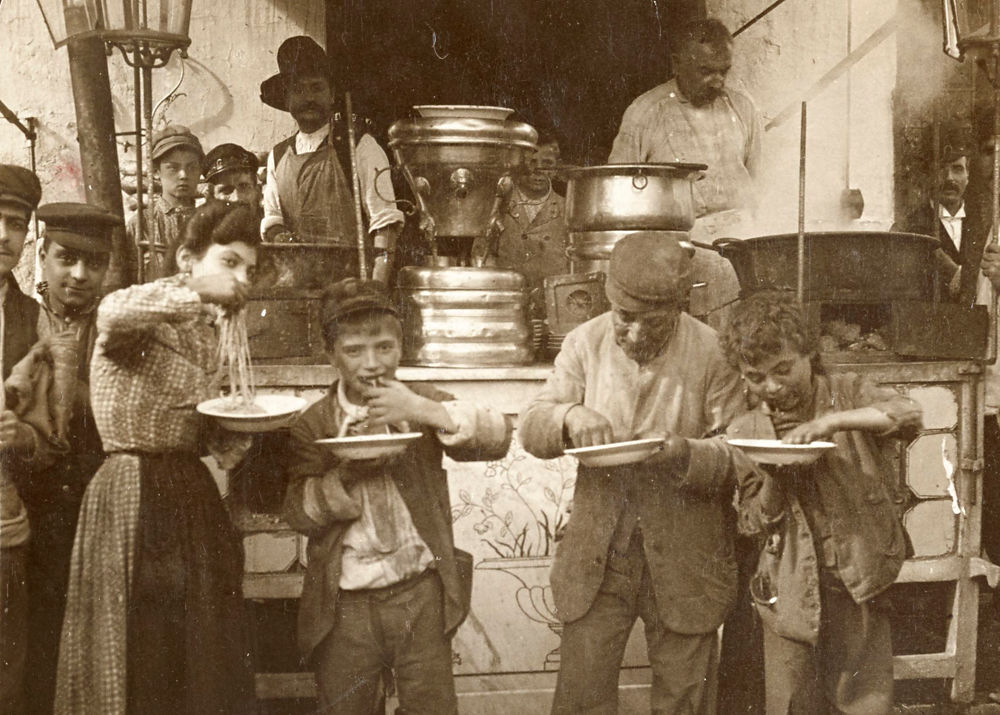
    The Lazzaroni (“Happy Beggars”), Naples, Italy, about 1903. (Credit: H.C. White Co. taken from a stereograph, US Library of Congress)

    Pizza began as food for society’s most marginalized. In 18th century Naples, pizza served as sustenance for the lazzaroni – the disheveled working poor who flocked to the thriving seaport city seeking labor. These street vendors balanced hot tin stoves on their heads, selling simple flatbreads topped with whatever was affordable: oil, garlic, tomatoes, and occasionally fish or cheese for those with extra coins. The food embodied desperation and survival – Alexandre Dumas noted in 1835 that Naples’ poor “existed exclusively on pizza in winter and watermelon in summer”. Even a credit system emerged called “Pizza al Otto,” allowing the destitute to pay for stale pizza eight days later, grimly nicknamed “the last supper” if they died before settling their debt.

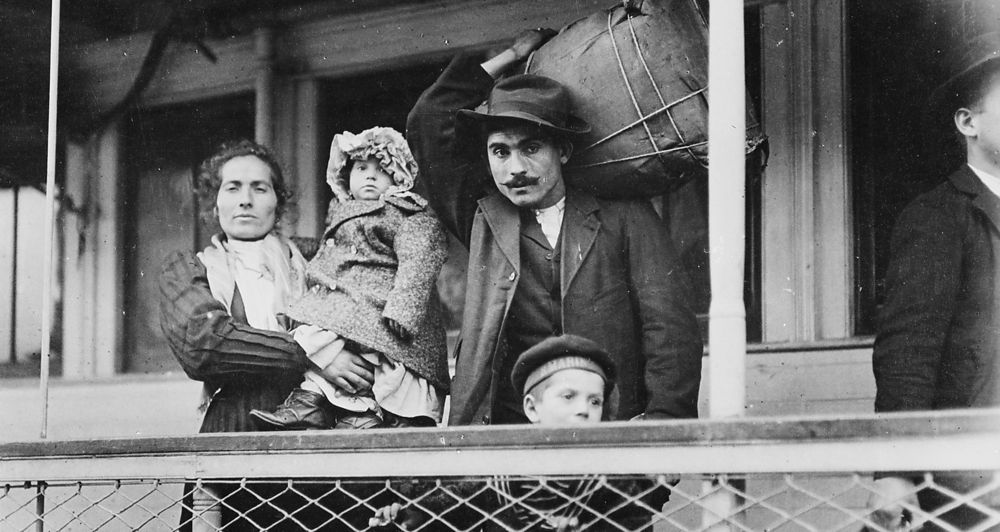
    Italian immigrant family on ferry, leaving Ellis Island. (Credit: Lewis Hine, US Library of Congress)

    The Double Burden of Ethnicity and Class

    When Italian immigrants began arriving in North America during the late 19th and early 20th centuries, they carried with them not just their culinary traditions, but also their association with poverty and marginalization. Between 1880 and 1920, over 4 million Italians immigrated to the United States and about 70,000 to Canada (about 70,000)1, most fleeing the grinding poverty of Southern Italy and Sicily. They encountered hostile societies that viewed them as racially inferior, culturally unassimilable, and dangerously foreign.

    Italians faced systematic discrimination that went far beyond mere prejudice. In the US they were subjected to lynchings – approximately 50 documented cases between 1877 and 1920, including the infamous New Orleans massacre of 1891 where eleven Italian men were killed by a mob. The New York Times editorial response to that lynching reveals the depth of anti-Italian sentiment: “These sneaking and cowardly Sicilians, the descendants of bandits and assassins…are to us a pest without mitigation. Our own rattlesnakes are as good citizens as they”.2

    Within this climate of hostility, pizza remained what it had always been – food for the poor and marginalized. Italian immigrants, crowded into urban slums and “Little Italy” neighborhoods, continued making pizza as they had in Naples, both as sustenance and as a connection to their homeland. But pizza’s association with these discriminated communities meant it carried a double stigma: it was both the food of the poor and the food of an undesirable ethnic group.

    Over time things changed. In the United States those changes were brought on largely by the Second World War, when Italian Americans demonstrated their patriotism through military service and “mainstream” American servicemen encountered pizza in its homeland, returning with appetites for the dish.

    In this changing culinary landscape traditional family pizzerias began to form the foundation of the nascent industry. These small, neighborhood establishments – often identified by their red-and-white checkered tablecloths, a symbol that emerged from Italian American restaurant culture rather than authentic Italian tradition – served as both businesses and community gathering places. Operated by immigrant families who worked grueling hours, these pizzerias provided a pathway to economic stability while preserving cultural identity.

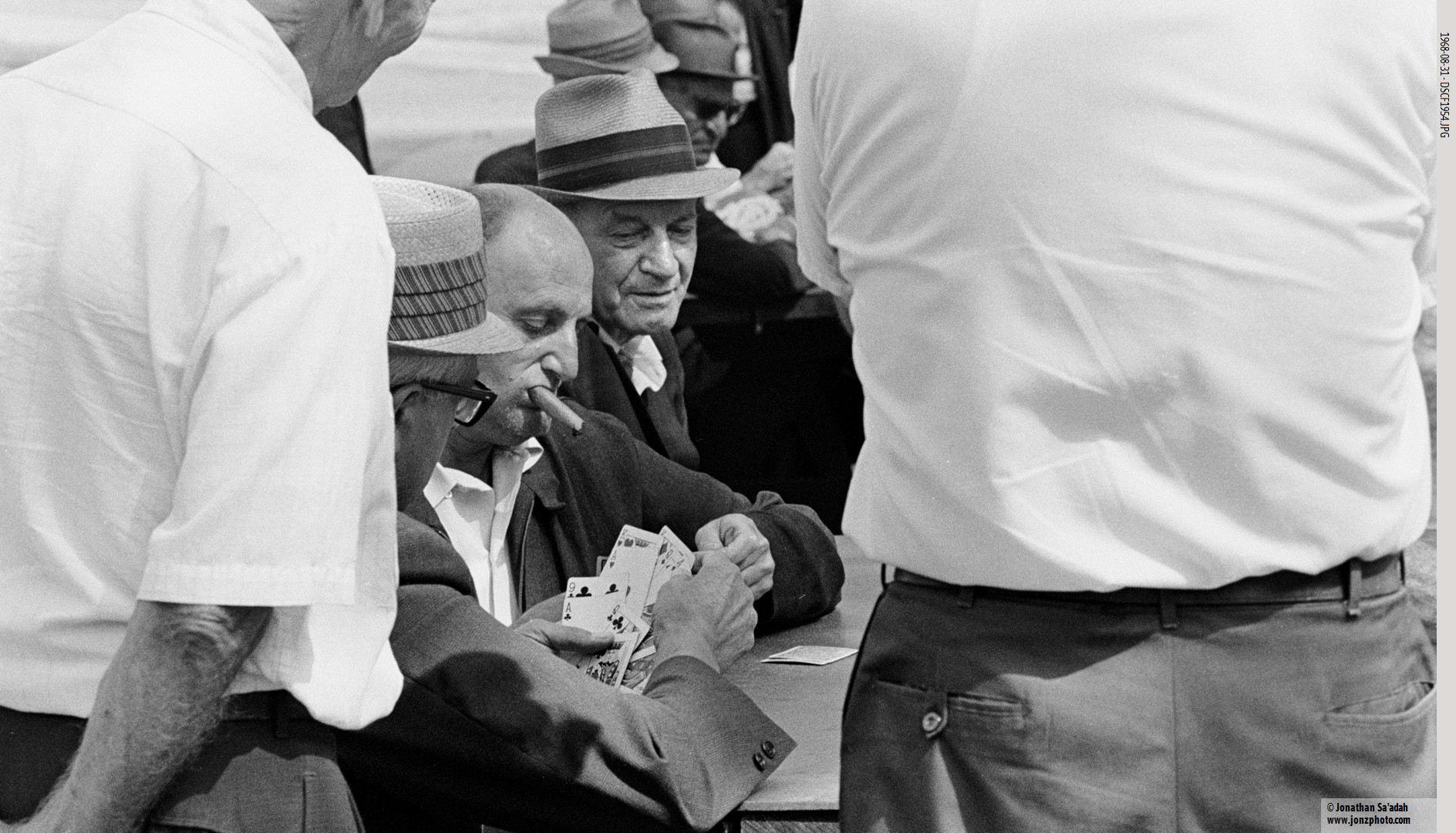
    New Haven Green Sunday poker game One of the reasons there was so much good pizza in New Haven was the city’s Italian community. Other US cities such as Chicago, Detroit, Buffalo, Trenton (NJ), Boston, and New York had been magnets for Italian immigration and after WWII those families started outward-facing pizzerias to satiate the newfound American taste for pizza.

    The Family Restaurant as Immigrant Vehicle

    The small, family-owned pizzeria became a quintessential vehicle for immigrant advancement, offering advantages that few other businesses could provide. Pizza required minimal startup capital, used simple ingredients, and could be learned through family apprenticeship rather than formal training. This business model allowed entire families to work together, with children learning the trade while contributing labor.

    These establishments served multiple functions beyond mere commerce. They provided employment for newly arrived relatives, created spaces where Italian was spoken and cultural practices maintained, and generated the capital necessary for families to purchase homes, educate children, and establish themselves in society. The pizza business became a pathway to the success precisely because it built upon skills and traditions immigrants already possessed.

    Di Fara Pizza: The Apotheosis of Immigrant Pizza Culture

    Di Fara Pizza in Brooklyn represents the perfect embodiment of pizza’s immigrant success story while maintaining its artisanal, working-class character. Domenico DeMarco arrived from the Province of Caserta in 1959 with typical immigrant circumstances – he worked on a Long Island farm before opening his pizzeria in 1965 with partner Franco Farina (whose surname provided the “Fara” in “Di Fara”).

    DeMarco’s story exemplifies the immigrant work ethic that built America’s pizza culture. For over 50 years, he worked seven days a week, making each pizza by hand with obsessive attention to detail. He sourced the finest Italian ingredients – San Marzano tomatoes, imported olive oil, fresh basil – creating pies that food critics consistently rated among New York’s best. His dedication was legendary: he rarely took vacations and personally made virtually every pizza sold at Di Fara until well into his seventies.

    What makes Di Fara particularly significant is how it bridges pizza’s working-class origins with its elevation to culinary art. DeMarco never abandoned the fundamental character of pizza as accessible, honest food, yet his meticulous craftsmanship attracted celebrities like Leonardo DiCaprio and Anthony Bourdain. The restaurant’s success came not from gentrification or marketing but from unwavering commitment to quality and authenticity.

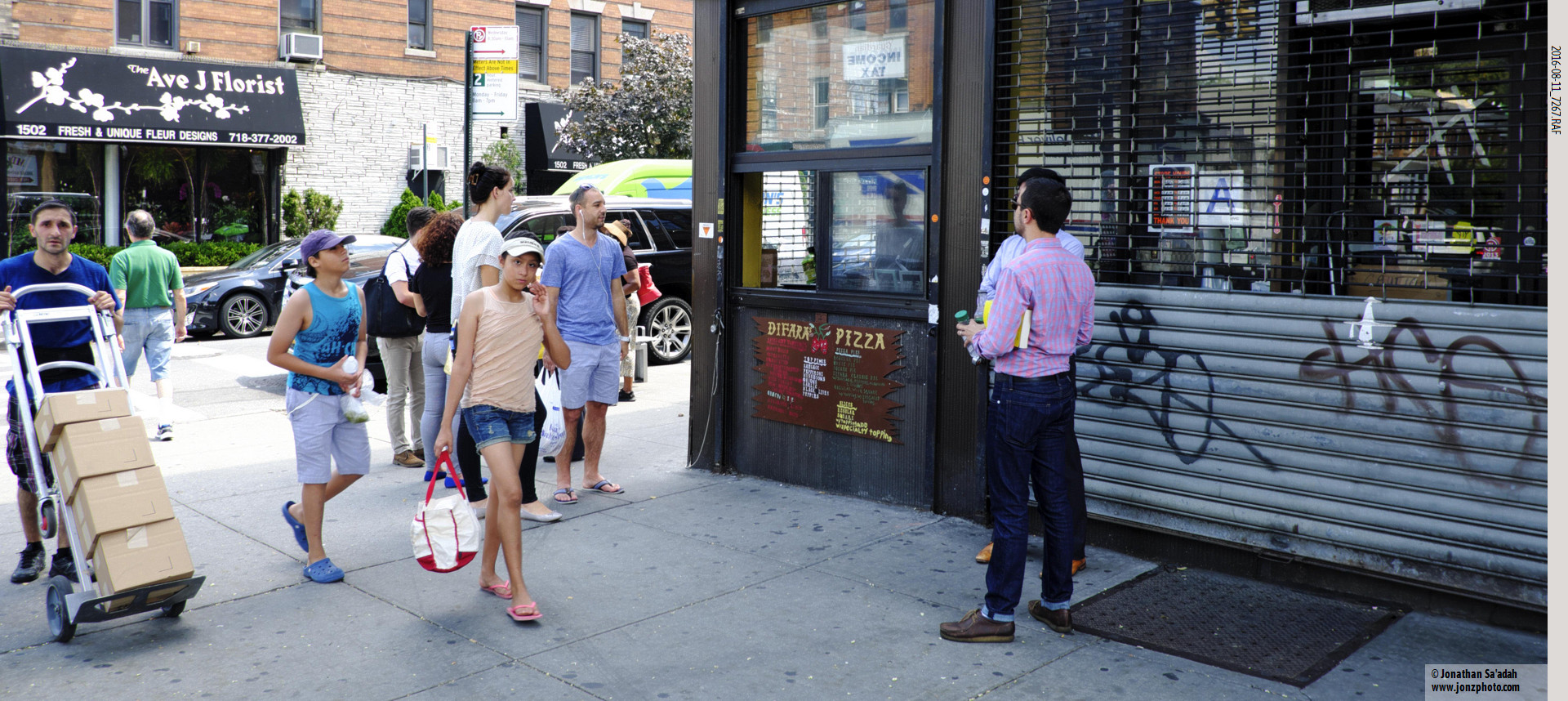
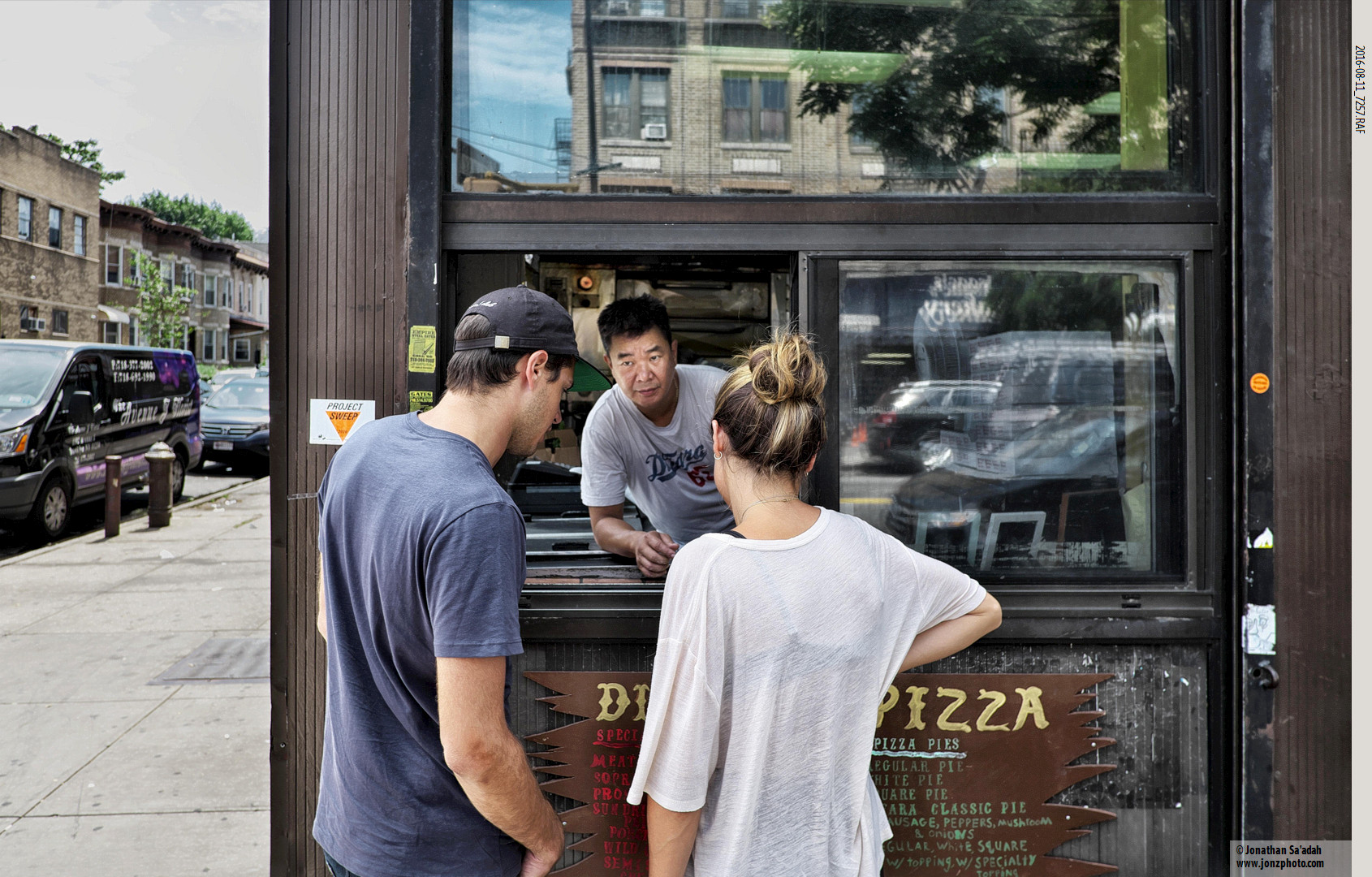
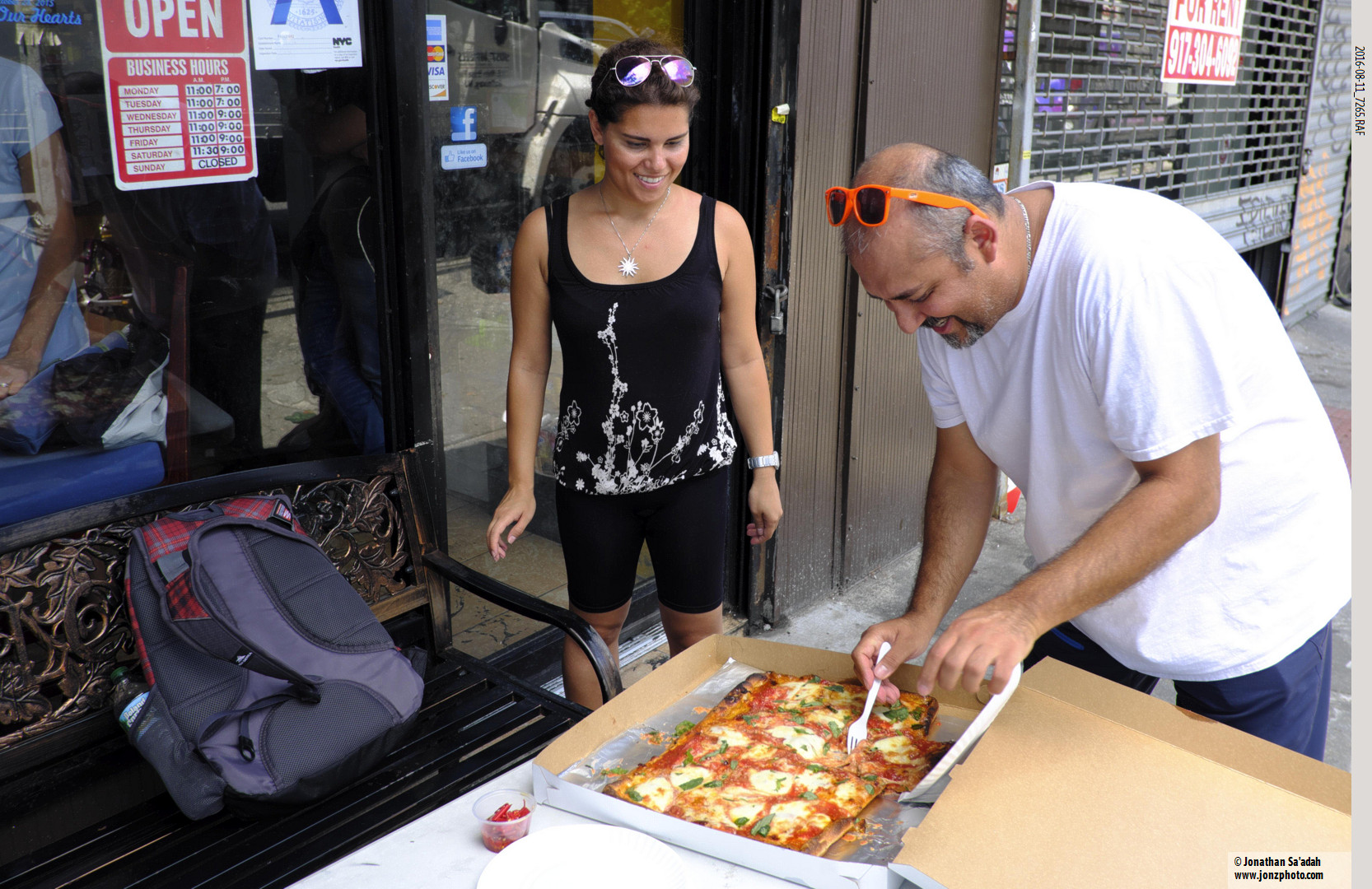
    Di Fara’s never scored a lot of points for “The Restaurant Experience” There was inside “seating” but since this August day was 32c just being able to get a pizza seemed like a victory! Never one to be stopped from selling pies, DeMarco had fans set up near the ovens to cool himself, but it really wasn’t a pizza sort of day.

    The Persistent Labels and Continuing Evolution

    Despite pizza’s mainstream acceptance, traces of its original stigmas persist in subtle ways. Premium artisanal pizza often emphasizes its “authentic” Italian character, suggesting that standard American pizza remains somehow lesser or inauthentic.

    Yet pizza’s success story demonstrates how immigrant foods can break out of their origins while maintaining cultural significance. Today’s pizza landscape includes innovations from subsequent immigrant waves – Indian pizza joints, Lebanese-owned establishments, Mexican-influenced toppings – showing how the model pioneered by Italian immigrants continues serving new generations of fledgling ethnic entrepreneurs.

    It’s a long way from Naples to Brooklyn, however, and pizza’s journey reflects the broader immigrant experience – the struggle against prejudice, the gradual building of acceptance, and the transformation of survival strategies into success stories. While pizza may have somewhat shed its reputation as poor people’s food, its institutional memory remains embedded in the thousands of family pizzerias that dot the North American landscape, many representing individual family stories, served up one slice at a time.


    1: The Canadian government did not actively encourage Italian immigration during this period, as they were considered “ill-suited to the pioneering lifestyle” and were not the preferred northern European farmers sought to settle the prairies. Instead, most Italian immigrants found work as seasonal laborers on railways and in mining and construction industries.
    2: March 15, 1891 New York Times. I can’t link directly to the NYT but here’s a related article.

  • I love pizza!

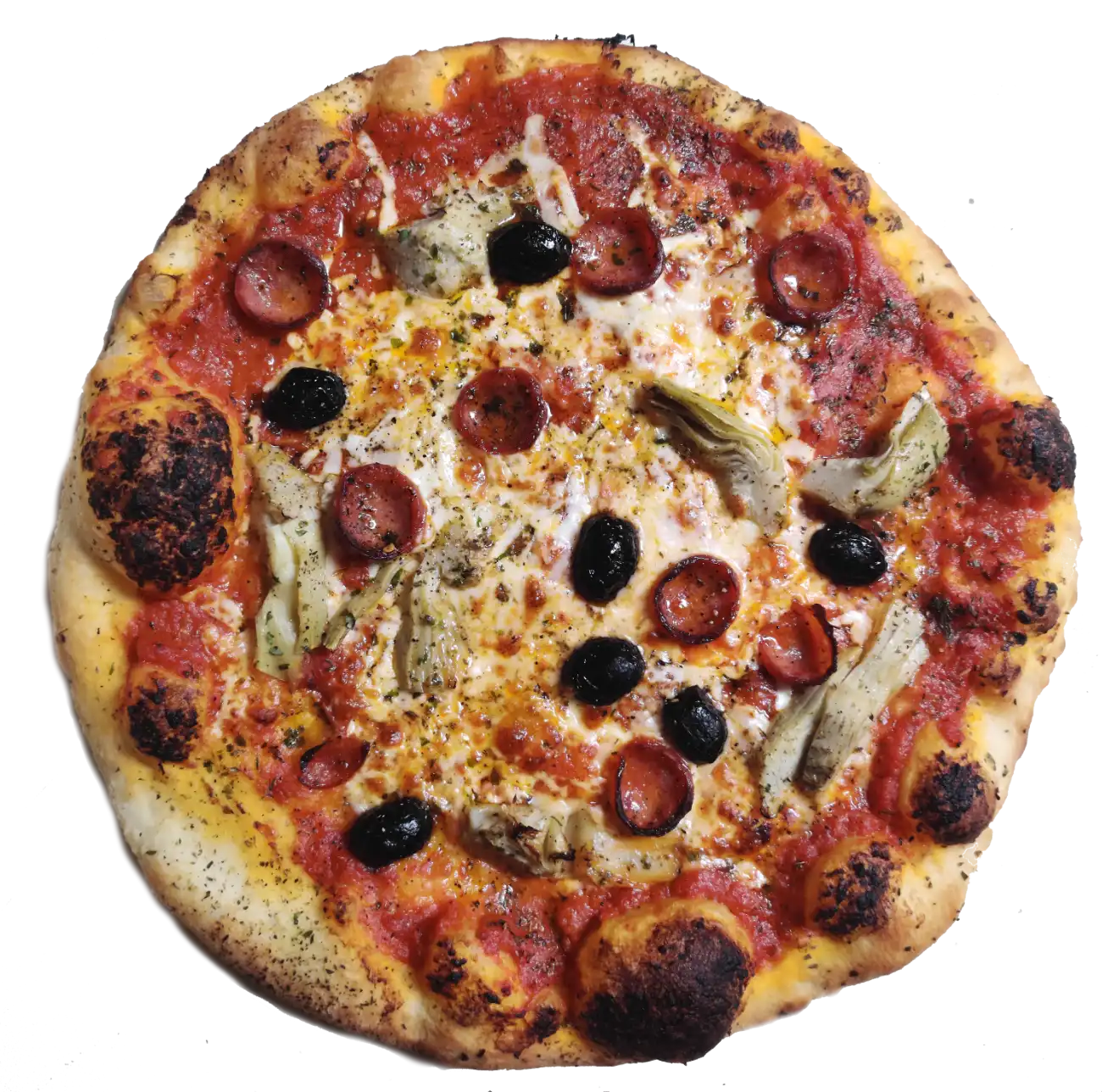
    ▲ One of my home-made pizzas, ready to eat.

    I love pizza. I don’t remember how this romance started, perhaps it was because of a stint I spent when I was young living near New Haven, Connecticut. My mother was reaching the point in her life where she was resenting cooking (though she was a great cook) and I filled in the spaces with pepperoni pizzas from a nearby pizza joint, named (as they always were at the time) “Tony’s Pizza”. I still remember the hot ovens with the smell of tomato and oregano with the rudimentary counter, all the boxes stacked up against the wall. Each pie “Tony” made for me was a perfectly rendered American pepperoni pizza. I don’t remember ever ordering anything else. I think a 12″ round cost $2.70 US. Those were the days.

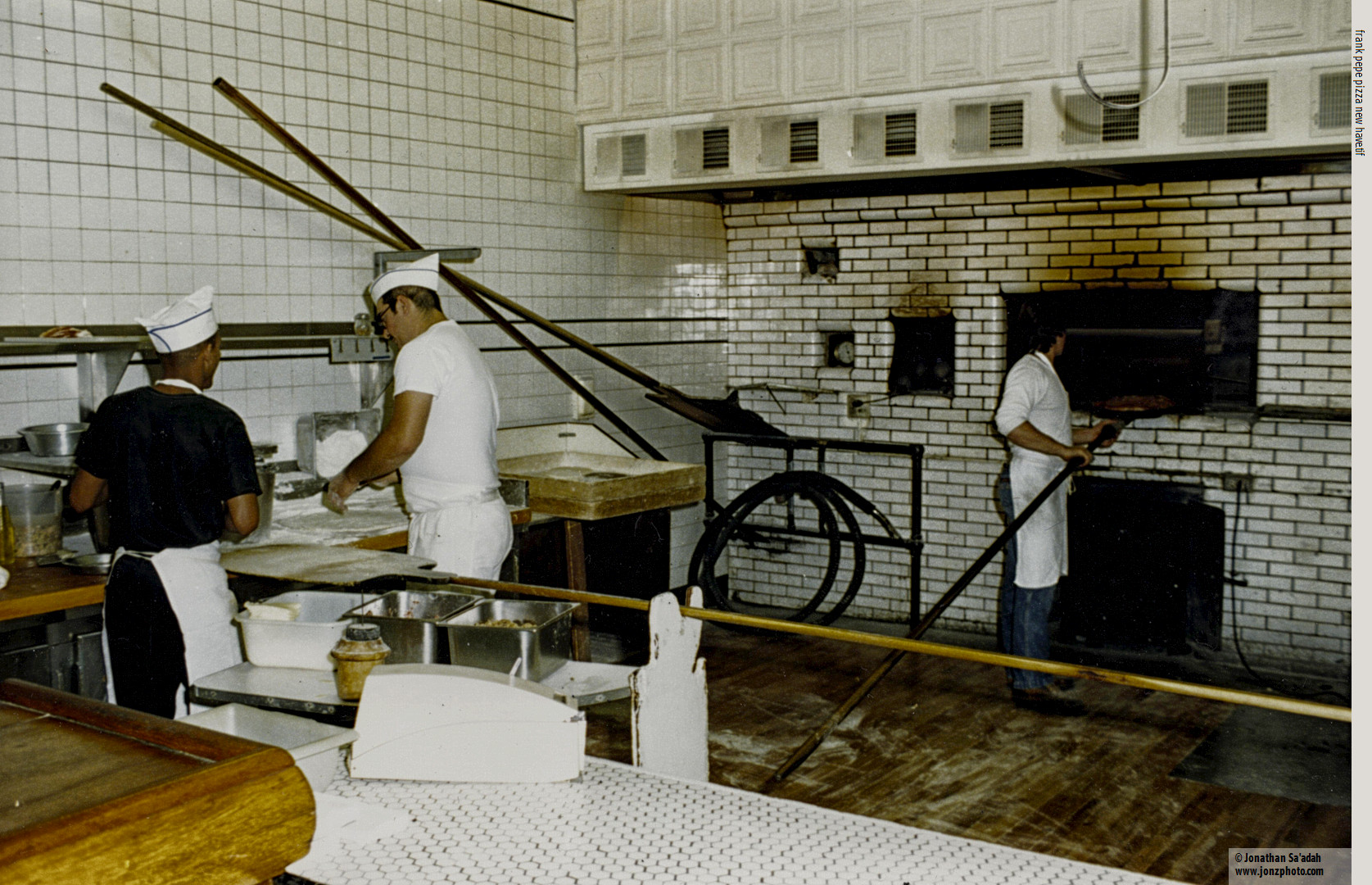
    Frank Pepe’s in the 1980s. Pepe’s is still going strong, though it doesn’t look much like this any more. I like the vents above the ovens (coal fired). The stains on the ceramic bricks indicate that worker health may have been an issue.

    My range increases

    When I got so I could drive New Haven came into the picture where there were legendary pizza “restaurants”. My favorite was Frank Pepe’s. I usually hated clams but for some reason at Pepe’s my favorite was their white pizza, spread with a generous helping of the slimy little animals. It was probably the garlic, olive oil, and the parmesan (romano?) that attracted me, a sure combination. Pepe didn’t go in for any obvious aesthetic. The pizza was served on a rectangular aluminum serving tray with parchment paper, and there were diner-style booths for sitting. But the crust was to die for. Pepe had a legendary coal oven with a baking chamber the size of a small car, and to add to the drama pizzas were placed in it with ultra-long-handled peels. I’ve never seen another place quite like Pepe’s. The crusts came out a bit charred; not pretending to be a Naples ripoffs but being happy just being themselves, as they should have been.

    Moving north from Connecticut

    But I didn’t last long in Connecticut, and further north in Greenfield Massachusetts was a non-imposing but favorite stop on my pizza journey called “Village Pizza”. It was run by a welcoming family who in retrospect seem like they were Greek and the pizzas were traditional style, a bit like Tony’s. Either I had graduated to more sophisticated toppings by then or it was just a fancier place. My friend Stephen, who went on to be a food editor, found the place and for years I’d stop every time I was going by Greenfield. There were seats to sit down, but for me it was more a place to drop in on while driving north on I-91 and get back on the road with the warm smell of a fresh pizza filling the car. Nothing could be better.

    The wasteland that was Vermont

    But “north”, where I was living, was Vermont and there no one had heard of pizza in the early 70s, unless it came as a dry frozen food relic. In those days you were lucky if you could find green vegetables in stores. I mostly ate food out of a food coop called The Do-It store. It was in 1973 when I tried baking my first home-made pizza. The girlfriend I had then fed me mostly a sludge of something called “Tiger’s Milk” and I was desperate for anything that came from the shores of the Mediterranean. My cooking skills were about as limited as the available ingredients. But to augment our diet along with the Tiger’s Milk we had a cookbook by Frances Moore Lappé called “Diet for a Small Planet”. The cookbook was pushing some theory of complementary grain proteins but more importantly, for me, it had a pizza “recipe”. Unfortunately the ingredient list called for a mostly cornmeal crust. I remember laboring over this inedible monstrosity of a recipe for several months before I concluded that it wasn’t for me, as were a lot of the other recipes in that book. We split up before I died of hunger but it was shortly after that time that I started doing wheat-crust pizzas. By the late 70s I had my own pizza peel and was regularly smoking up the kitchen with my then-messy technique.

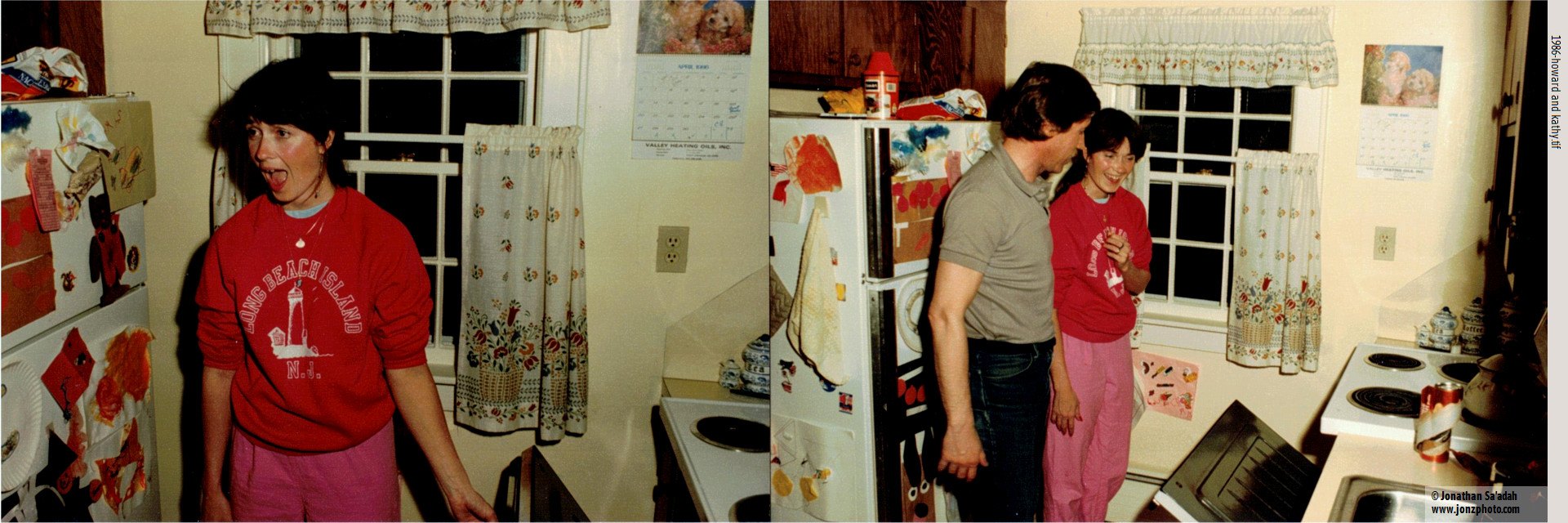
    ▲ They invited me over to make pizza, I put their oven on fire. Early (1985) experiments in high temperature crusts.

    Putting pizza into context

    My patient and loving wife, Beth, has eaten what we calculate to be between 2 and 3 thousand of those pizzas since the late 70s. Wherever we travel we look for good pizza, from non-presumptuous joints to fancy sit-down restos. I love other people’s pizzas too and have friends who make wonderful renditions. Tia, whose family roots extend into Chicago, makes a fantastic deep-dish that we always laugh wildly over. Her husband, who is Italian, loves pizza too (of course) and he and I have pizza-eaten together as far west as Anaheim CA in our shared journey. Closer to home, Ed makes a wonderful Naples ripoff in his super-charged backyard oven. In New York I was friends with a guy who worked at John’s when it was first starting up, and there the waiters (including him, he was one) used to get up on the tables and dance, so there was never any lack of excitement. So I have really good pizza friends, and at the top among them is Beth.

    Pizza as a universal food source

    I know that pizza is a topic a lot of people have strong opinions about, so I think it would be fun to do an intermittent series of posts about my journey through pizza. Cooking it, searching for the perfect pizza, and sharing our pizza journeys and the love of the warm smell of a freshly baked pie, along with recipes.

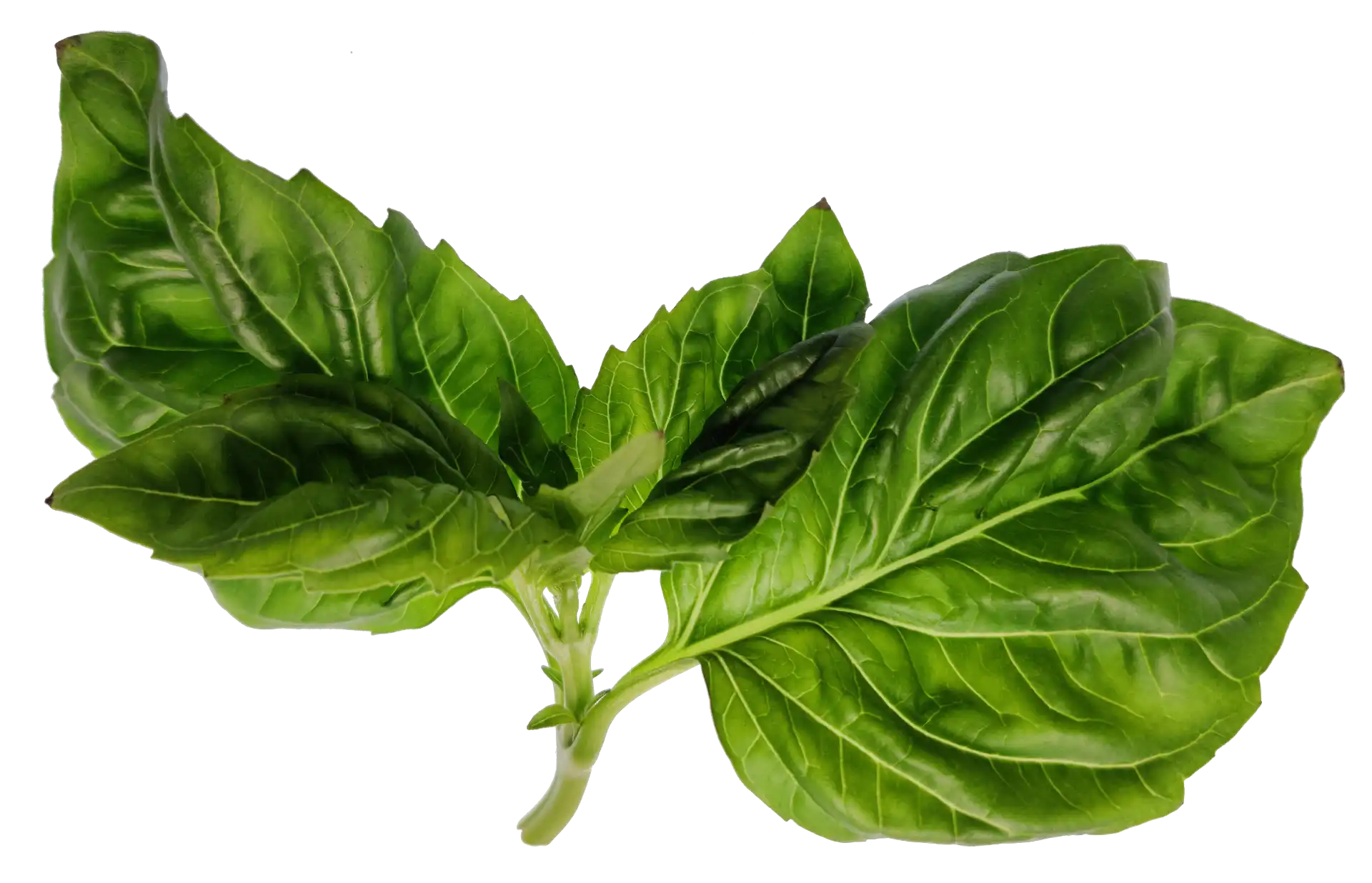
    ▲ Basil, ready for a Margherita pizza.